

What Happens After Your Energy Contract Expires?

by Jenna Mendez
Updated: July 26, 2026
15.1 min read

Key Points of This Article:
- Your energy service does not shut off when your energy contract expires; your utility continues delivering electricity or natural gas without interruption.
- As your contract end date approaches, suppliers send renewal notices and may automatically move you to a new plan or variable rate if you take no action and after expiration, your plan and rate may change, but your supplier relationship remains active until you choose to renew, switch, or return to your utility’s default service.
Most homeowners don’t think about their energy plan until the renewal notice arrives, and then the questions start piling up. Does your service stop? Does your rate change? Do you need to renew, switch, or just wait and see? And more importantly…what happens if my energy contract expires?
If you have all these questions and more, you’ve tapped on the right shoulder for answers. As an energy supplier with more than 35 years of experience, we get these questions ALL the time and know just what you should do if your energy contract expires.
We’ll break down everything in a clear, simple way, so you know what to expect before, during, and after your contract expires. Ready to feel more confident about your next steps? Let’s get into it.
What Happens Before Your Energy Contract Expires?
The best way to avoid panic when your electricity or natural gas contract ends is to know what happens before your contract expires so you can act proactively.
Here’s the simple timeline you can expect:
What Happens 60 Days Before Your Energy Contract Ends
As your energy contract approaches its end, whoever supplies you with your energy, whether it’s your utility or your supplier, will send you a renewal notice a few weeks before your contract ends.
In deregulated areas, suppliers are required to notify customers between 30 and 60 days in advance, depending on the state.
At Santanna, we send renewal notices in line with these state requirements; typically by postal mail 30–60 days before your contract expires, and by email about 30 days before expiration.
Of course, depending on who supplies your energy, these rules could vary slightly. Your specific renewal timing and terms are always outlined in your contract documents from the time of enrollment. If you have questions or want to confirm details, you can contact your energy supplier or utility directly for clarification or visit your bill for your official timeline!
What Happens 30 Days Before Your Contract Ends
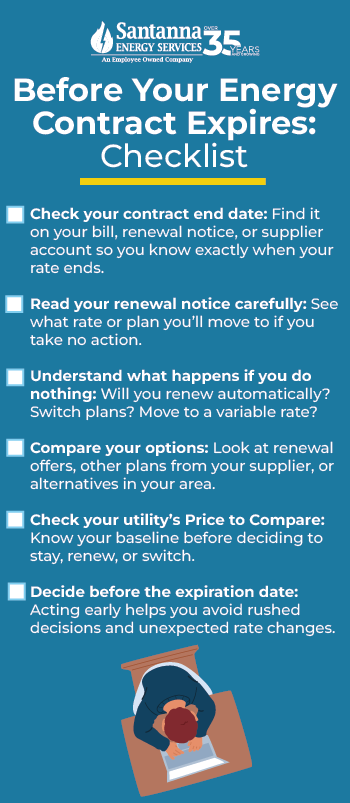
If you’re not satisfied with your current energy plan or service, this is the most important decision window for most homeowners to explore their options. About 30 days before your contract ends, you still have time to make changes before any automatic rate or plan changes take effect.
During this period, nothing changes with your service or billing yet. Your electricity or natural gas continues as normal. What does change is your opportunity to be proactive rather than reactive.
This is a good time to:
- Review your renewal offer to see what rate and term you’ll move into if you do nothing
- Compare new plan options from your current supplier, such as longer terms or different plan features to fit your lifestyle
- Look at offers from other suppliers if you want to compare pricing or benefits
- Check your utility’s default service rate to understand your baseline option
Taking a few minutes to compare options now can help you avoid rushed decisions later, especially if your rate changes unexpectedly and you’re left stuck in a plan that doesn’t fit your needs or budget.
If you’re at this stage and you’re currently happy with your service, you can skip this step and depending on your supplier, your plan will renew automatically under the same supplier.
What Happens After Your Energy Contract Expires?
Once your energy contract expires, your electricity or natural gas continues to flow exactly as it always has. Your lights stay on, your heat keeps running, and your utility continues delivering your electricity or natural gas.
What does change is your energy supply agreement. When your contract ends, the specific rate and plan you originally signed up for no longer apply.
At that point, your supplier follows the next step outlined in your contract, which may mean moving you to a different plan type and pricing structure until you take action.
It’s important to note that energy rates change all the time (almost daily), so there’s a good chance, the new supply rate you’re rolled over to will be different than the original rate you signed up for.
If you’ve signed up with a supplier, when your energy contract expires, your supplier does not disappear, and your utility does not take over the supply because of an expiration. The expiration only affects the terms of your energy plan, this means, if you don’t cancel your service before your contract ends, in most cases you’ll be automatically enrolled under your supplier again.
What Happens Immediately After Your Contract Ends
Right after your contract ends, nothing stops or resets. Your home keeps receiving reliable service because your utility is still responsible for maintaining the power lines or gas pipelines that deliver energy to you. The only thing that may change is how your supplier bills you for the energy you use.
At this stage, your original contract terms no longer apply, which means your pricing and plan structure will follow whatever your supplier has outlined in your agreement or in your renewal notice if you don’t take action to switch your energy plan before your contract ends.
What Happens If You Don’t Take Action
If you don’t renew or switch to a different plan right away, your supplier will automatically move you into the next step outlined in your contract; and this varies by supplier:
- Some suppliers move customers to a month-to-month variable rate, which changes from one month to the next based on energy market conditions, demand, and seasonal factors.
- Other suppliers automatically renew your contract, sticking you on the same plan, which may come with a different rate or updated plan details.
If you don’t take action, in most cases your contract renews automatically, and the rate may be higher or lower depending on current market prices or changes to the plan features.
This is why reviewing your renewal notice is so important; it explains exactly what will happen and what rate you should expect.
Because each supplier handles expirations differently, your renewal notice and contract terms will vary if you switch plans or suppliers frequently. So be sure to contact your supplier with any questions you may have.
Does My Service Stop When My Energy Contract Ends?
A lot of people worry that their electricity or natural gas might shut off the day their contract ends, but don’t worry, that doesn’t happen. Your lights stay on, your heat keeps running, and nothing suddenly stops.
Here’s what really goes on:
- Your energy keeps flowing without interruption. Your utility continues delivering electricity or natural gas through its power lines or pipelines, stays responsible for outages, and maintains the system that powers your home, regardless of whether your contract has expired or which supplier you use.
- Your supplier relationship stays in place. A supplier like Santanna Energy Services still supplies the electricity or natural gas you use. Your contract expiring does not cancel your supplier or automatically switch you back to the utility. In most cases, you’re rolled over to a new plan.
- What changes is your plan and rate, not your service. When a contract ends, some suppliers move customers to a different plan. At Santanna when your contract ends, you will receive advanced renewal notices, and if no action is taken, you’ll be moved to a comparable “like” plan so there’s no sudden disruption to service or plan structure.
Your Options After Your Energy Contract Expires
Once your contract ends, you have several options, and you can choose whichever one feels right for your home and budget. While these options may vary based on who supplies your energy, here’s what you can expect:
1. Renew Your Current Plan With Your Current Supplier
Renewing your plan means signing a new agreement with the supplier you already use if you’re enjoying how your energy experience has been going.
This keeps things familiar and ensures your service continues without a switch in who supplies your energy. You’ll stay on the same plan too but just note, your new contract will most likely come with a different rate than what you locked in before.
2. Upgrade to Another Plan From Your Supplier
Upgrading lets you choose a different plan from your current supplier, such as a more longer-term plan, or a plan with added benefits.
It’s a simple change that doesn’t affect your service, and it can help you find a plan that better matches your household’s energy needs. If you’re considering changing your energy plan, be sure to do your research on your options before your contract expires so you can ensure the switch goes smooth once your contract ends.
3. Switch to a New Supplier
Service with your current supplier not working out? You can always switch to another supplier once your contract ends to try something new.
This option may help you find a better fit for your budget or preferences but you’ll have to do a little bit of research to ensure your new supplier services your area and fits your needs.
In most cases, switching your energy supplier happens seamlessly and you won’t experience any downtime during the transition. But you will have to enroll with your new supplier in order to lock in your plan and switch who supplies your energy.
4. Return to Your Utility’s Default Service
If you’d like, you can return to your utility’s standard supply rate, called the Price to Compare. This option offers straightforward pricing, but it might not always be the most competitive, and you don’t have many plan options to choose from (or at all).
To switch back to your utility’s default rate, you’ll want to contact your supplier to express that you’re interested in canceling your contract, and your supplier will usually take care of the rest.
5. Switch From Your Utility to a Supplier
If your contract expired and you rolled back to utility service, you can also choose to switch to a supplier at any time as long as you’re in a deregulated energy market.
This gives you access to different plan types, potential perks, and pricing options that utilities don’t typically offer. The switch is easy, and your service remains uninterrupted. All you have to do is find a supplier you like, enroll on their website, and they’ll take care of the rest.
How Your Bill Can Change After Your Energy Contract Expires
When your energy contract ends, the most noticeable change is usually your rate. This happens because your contract’s guaranteed pricing no longer applies, and some suppliers move customers to their standard plan after their contract expires.
At Santanna, we do our best to keep customers on a plan similar to their current one, but may move customers, depending on the terms of their agreement.
What Happens If I Do Nothing After My Energy Contract Expires?
If you take no action when your contract ends, your service will continue without interruption; you’ll typically stay on the same plan you were on before (but likely with a different rate) and your utility remains the same.
What happens to your plan next depends on your supplier.
In many cases, suppliers may move customers to a different plan with a different rate once the contract expires. This type of rate can change from month to month based on market conditions. But not always; this depends on the supplier.
In some situations, your contract may automatically renew into a new term on the same plan type, often at a different rate than your previous one.
Because suppliers handle this differently, it’s important to check your renewal notice or contract terms so you know exactly what to expect.
Understanding this helps you avoid surprises and gives you the chance to choose the plan that best fits your budget before any automatic changes take place.
How To Check Your Contract End Date
Knowing when your energy contract ends helps you stay ahead of any rate changes and gives you time to compare your options without feeling rushed. Fortunately, checking your end date is simple and only takes a minute.
To find your contract end date…
- Look at your monthly bill. Most suppliers list your contract start and end date in the Plan Details or Account Summary section on your electricity or gas bill. This is usually the fastest way to find it.
- Search your email for your original confirmation. When you first enrolled, your supplier should have sent a confirmation email that includes your plan type, rate, and contract length. Try to look for that guy, and it’ll tell you what you need to know.
- Call your supplier’s customer service team. A quick call can give you your exact expiration date and answer any questions you have about your renewal options available to you.
- Sign in to your online account (if your supplier offers one). Many suppliers allow customers to view their contract details, plan history, and upcoming renewal dates online.
Does Renewing My Energy Contract Save Me Money?
Renewing your energy contract can potentially help you save money, depending on when you lock in your rate and which plan you choose if you’re with an energy supplier. When you renew, depending on the plan you choose, you can lock in a known rate for the length of your new contract, which makes budgeting easier and helps protect you from unexpected bill changes.
Let’s say that your current contract ends during a high-demand season (like the middle of summer), renewing ahead of time could help you lock in a steadier rate before market prices rise. That stability can make a noticeable difference on your monthly bill.
However, savings aren’t guaranteed. Your renewal rate may be higher or lower than your previous rate depending on current market conditions, energy demand, and the type of plan you choose.
And if you’re happy with your current plan and the way it works for your home, renewing can simply help you continue with a setup that already fits your needs without having to shop around or make changes. This in itself could outweigh the potential of savings.
The ultimate goal when consider whether or not to renew your energy comes down to finding the plan that gives you the right balance of comfort, predictability, and value for your household.
How Santanna Makes Energy Contract Renewal Simple
When your contract is nearing its end, our goal at Santanna Energy Services is to make the renewal process clear, easy, and free of surprises.
Whether you’re renewing for the first time or the tenth, the process is designed to give you confidence and control over what happens next. Here are your options:
- You receive a renewal notice 30-60 days before your contract ends, giving you plenty of time to see when your plan expires and review your options.
- Happy with your current plan and service? You can stay on your current plan, and depending on your contract terms, it may renew automatically if that plan type is still available.
- You can explore other available plans if you want something with different features, a new rate structure, or more long-term predictability. Be sure to give our team a call with any questions you may have about your options. We’re always happy to assist you!
- Your service continues without interruption, even while you’re deciding what to do next. Your energy never stops flowing in your home even if you’re still in between plans.
No matter what you choose, your energy stays on, and the transition into your next contract is designed to be as smooth as possible.
FAQs
Will my electricity turn off when my contract expires?
No. Your electricity does not shut off when your contract expires. Utilities are responsible for maintaining service and must continue delivering power as long as your account is in good standing.
Does my rate automatically go up when my contract ends?
Your rate doesn’t automatically “go up,” but it usually changes. When a contract ends, the rate you were on may no longer be available, and it can increase or decrease based on market prices, energy demand, and weather conditions.
Can I renew my energy plan early, or do I have to wait?
In many cases, you can renew early. Suppliers are required to send renewal notices 30–60 days before your contract expires, but many allow you to renew even earlier if you prefer but this depends on the supplier. Renewing ahead of time helps you review your options before your rate changes.
How long does it take for a new rate or new supplier to take effect?
A new rate or supplier typically takes effect on your next billing cycle, which can range from 1 to 2 billing periods depending on your utility’s meter-read schedule. This timing is set by the utility, not the supplier. So even if you make the switch today, you might not see the change until the next meter read.
Can I switch suppliers before my contract ends?
Yes, you can switch suppliers at any time, but check your contract for an early termination fee (ETF), which some suppliers charge.
By knowing when your contract ends and what your options are, you put yourself in the driver’s seat. You can keep your costs steady, explore new plans, or choose the kind of pricing that fits your home and budget. You have more control than you think, and the sooner you review your options, the easier it is to avoid unwanted surprises.
Santanna can help you compare your choices so you feel confident about the plan you choose moving forward. Explore energy options that fit your lifestyle here.
Jenna Mendez is a Midwest native with lifelong roots in Illinois and time spent in Ohio during college, giving her a deep understanding of the Midwest region’s people, climate, and energy needs. She brings firsthand experience and local insight to topics that matter to Midwest homeowners, especially energy efficiency, sustainability, and home living. Jenna specializes in writing about eco-friendly living, all things Midwest, renewable energy, and practical ways to reduce energy costs. Jenna brings a trusted, and local hometown voice to every article she writes, helping readers live well, and sustainably, right where they are.