
How Is Natural Gas Made? And How Does It Get to Your House in the Midwest?

by Tyler Castle
Updated: July 20, 2026
10.2 min read
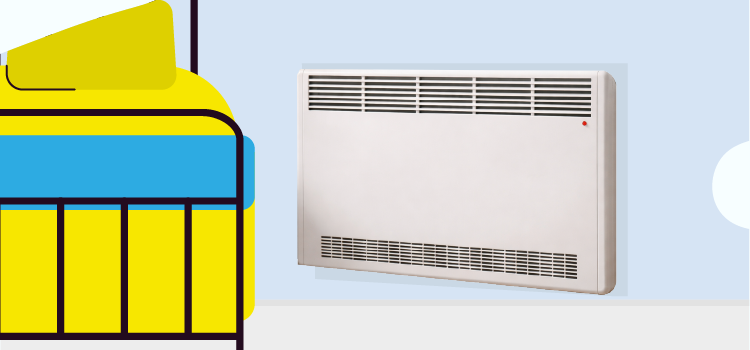
Natural gas is one of the main energy sources used in Midwest homes, especially for heating, cooking, and hot water. During the coldest months, natural gas use increases sharply. In recent winters, U.S. natural gas demand rose by about 5% compared to previous winter records, mainly because more homes need heat during colder weather.
This might get you wondering about how natural gas is made.
If you're not sure how natural gas is made, you're not alone. In a recent survey, we found that 35% of employee-owners at Santanna Energy Services don't know how natural gas is made either.
As a natural gas supplier with over 35 years of experience, we know exactly how the process goes. So, let us tell you exactly what you need to know about the process. Let's get started!
Key Points of This Article:
-
Natural gas is formed when plants and animals settle underwater, become buried over time by layers of sediment, are subjected to increasing heat and pressure deep underground that transform their remains into fuel, and then the newly formed gas rises through porous rock until it becomes trapped beneath harder rock layers.
- Once extracted, natural gas is cleaned and transported through a large pipeline network, eventually reaching homes through local utility distribution systems.
- Although natural gas is not renewable, it remains a major energy source today, and while renewable natural gas exists, it is not yet produced at a scale that could replace traditional natural gas.
How Is Natural Gas Made?
Natural gas forms through a natural process that starts when tiny plants and animals die, become buried deep underground, and the heat and pressure that build up inside the Earth turn these remains into natural gas.
This process takes millions of years and happens far below the surface, without any human involvement.
Here’s how the whole process happens, step by step:
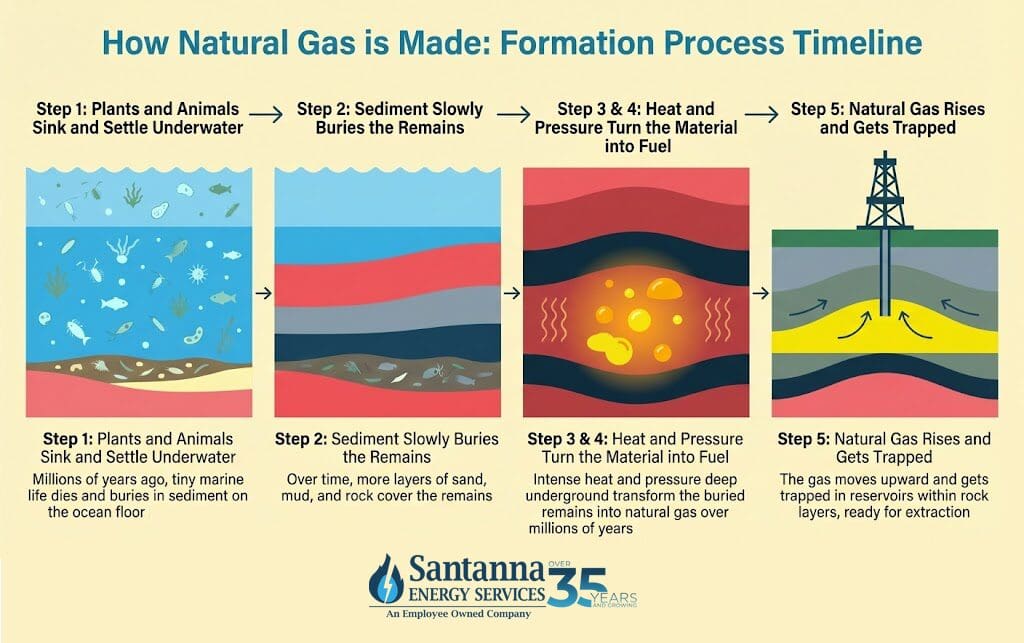
Step 1: Plants and Animals Sink and Settle Underwater
The process of natural gas forming began millions of years ago, when tiny plants and animals lived in oceans and lakes. After they died, their remains sank to the bottom, mixed with mud, sand, and silt, and were gradually buried as new layers of sediment built up above them.
Step 2: Sediment Slowly Buries the Remains
Next, over a very long time (we’re talking YEARS), more layers of sand, mud, and rock built up on top of the buried remains of plants and animals. These layers slowly cover and press down on the remains below them.
Step 3: Heat and Pressure Build Deep Underground
As the layers grow thicker, the weight creates strong pressure, and the heat from this pressure is also increased deep underground as the buried material is pushed farther below the surface.
Step 4: Heat and Pressure Turn the Material into Fuel
Over millions of years, and due to the intense heat and pressure changes, the buried plants and animals get pressurized into natural gas.
According to the U.S. Energy Information Administration, this same natural process can create coal, oil (petroleum), or natural gas, depending on how much heat and pressure are present.
Step 5: Natural Gas Rises and Gets Trapped in Rock
Natural gas is lighter than oil and water, so when it’s formed, it slowly moves upward through tiny spaces in the rock. With this, some fuel become trapped when they reach hard rock layers that block its path.
These trapped areas are called underground gas reservoirs. From here, humans can tap into these natural gas reservoirs to extract the natural gas that we use to power our homes today!
It’s important to know that natural gas is not made by people or factories. It forms naturally inside the Earth over a very long time due to pressure and heat. Once it is trapped underground, it can be collected and used to heat homes, cook food, and make electricity.
What Natural Gas Is Made Up Of?
According to the Environmental Protection Agency, natural gas is made up mostly of methane, a gas that burns efficiently and produces steady heat. This makes natural gas well-suited for common household uses like furnaces, water heaters, stoves, and dryers.
Methane’s high efficiency means natural gas appliances respond quickly and provide consistent heat, which is especially important during cold Midwest winters.
However, methane is often referred to as one of the most harmful gases to the environment. The Climate and Clean Air Coalition cites methane as having a warming impact 86 times stronger than CO2. This means natural gas isn’t the most environmentally-friendly, but the good news is, it’s way more friendly than oil-based fuels.
How Is Natural Gas Extracted Today?
Natural gas is extracted using modern drilling and fracking methods that allow energy companies to safely access gas trapped deep underground. After extraction, the gas is cleaned to remove impurities and then sent into pipeline systems that deliver it to homes and businesses.
How Does Natural Gas Get to Your House?
After natural gas is taken from the ground and cleaned, it needs to be delivered to homes. This happens through a system designed to move gas safely and reliably from one place to another, including to homes across the Midwest.
Here’s how the process works.
Step 1: Natural Gas Moves into Large Pipelines
Once natural gas is cleaned and ready for use, it enters large pipelines that carry it over long distances from where it is produced to where people live and work.
Step 2: The Pipes Carry Gas Across States and Regions
These large pipelines move natural gas across state lines and connect supply areas to cities and towns. This is why the gas used in Midwest homes may come from far away.
In fact, according to the Energy Information Association, the U.S. produces most of its natural gas from the Permian Basin across Texas and New Mexico.
Step 3: The Gas is Handed Off to Local Utilities
When natural gas reaches your region, it is passed to local utility companies. These utilities manage smaller pipelines that run through neighborhoods and they decide where the quantities go.
Step 4: Gas is Delivered to Your Home
Local utility lines bring natural gas directly to your home through underground pipes. The gas flows through a meter that tracks how much your household uses for heating, cooking, and hot water.
Step 5: Where Your Natural Gas Supplier Fits In
While utilities physically move natural gas through pipelines, a natural gas supplier is responsible for purchasing that gas and ensuring it enters the pipeline system in the first place.
In states with energy choice, suppliers like Santanna Energy Services secure natural gas on your behalf and offer energy plans that fit different household needs.
In simple terms, suppliers manage the supply side of the journey before the gas ever reaches your neighborhood, while utilities handle the delivery side once it arrives locally. Choosing a supplier only affects the supply portion of your bill, and it does not change how gas is delivered or how pipelines are maintained.
Sticking with a supplier simply gives you more choice on your energy options.
Is Natural Gas Renewable or Will It Be Replaced?
Natural gas itself is not a renewable energy source. It is a fossil fuel that forms naturally over millions of years underground. Because it takes so long to form, it cannot be replaced once it is used.
You may hear the term “renewable natural gas” (RNG) but, RNG is mostly methane, the same main gas used in homes today. It comes from sources like landfills or farm waste instead of underground deposits.
While it can be used in the same pipelines as natural gas, it is produced in much smaller amounts and is not available at a scale large enough to replace traditional natural gas for most homes.
For now, natural gas continues to play a major role in the U.S. energy system. According to the U.S. Energy Information Administration, natural gas use has grown as older coal power plants retire, especially in regions like the Midwest.
Because natural gas is reliable, widely available, and works well in cold climates, it is expected to remain part of the energy mix for the foreseeable future.
For homeowners, this means natural gas is not being phased out overnight. While energy systems continue to change over time, natural gas remains a key source of heating and electricity for many Midwest households today.
How Is Natural Gas Made Into Electricity?
At power plants, natural gas is burned to produce electricity that turns turbines. Those turbines generate electricity, which is then sent through the electric grid to homes across the country.
For residential households, this electricity is what powers lights, electronics, and appliances that do not run on natural gas. Even if a home uses natural gas for heating or cooking, electricity generated from natural gas may still support daily needs throughout the house.
In simple terms, natural gas can support a home in two ways: it can provide heat directly through gas appliances, and it can help produce the electricity used every day. This dual role is especially important during cold Midwest winters, when both gas and electricity use increase.
Where Does The Midwest Get Its Natural Gas?
The Midwest gets its natural gas from a mix of nearby production areas and national supply networks. Natural gas does not come from one single place. Instead, it is gathered from several regions and moved through pipelines to homes across Illinois, Ohio, Pennsylvania, Michigan, and Indiana.
According to the U.S. Energy Information Administration, some of the natural gas used in the Midwest comes from nearby regions like Pennsylvania and Eastern Ohio, where natural gas is produced from shale formations. Other supplies may come from other states, depending on demand, weather, and pipeline routes.
The Midwest is connected to a broad pipeline network that allows natural gas to keep flowing even if it is produced far away. Using multiple supply sources helps support reliable service, especially during cold winters when heating demand is highest.
FAQs
Is natural gas safe for homes?
Yes, natural gas is considered safe for residential use when it is delivered and used properly. Utilities monitor pipelines, appliances are designed with safety features, and a scent is added to natural gas so leaks can be detected quickly.
How many years of natural gas are left?
Based on current estimates from the U.S. Energy Information Administration, the United States has enough natural gas to last about 86 years at recent production levels. This estimate can change over time.
Does switching suppliers change how gas is delivered?
No. Switching suppliers does not change how natural gas is delivered to your home. Your local utility still owns and maintains the pipelines, delivers the gas, and handles safety and emergencies. A supplier only affects the supply portion of your bill.
Can natural gas service be interrupted?
Interruptions are rare, but they can happen due to maintenance, equipment issues, or emergency situations. Utilities plan ahead and use storage systems to reduce the risk of interruptions, especially during winter.
Is natural gas better for cold climates like the Midwest?
Natural gas performs well in cold weather, which is why it is widely used for heating in Midwest states. It provides consistent heat and is less affected by outdoor temperatures than some other heating options.
Why does natural gas smell?
Natural gas is naturally odorless. A strong sulfur-like scent is added on purpose so leaks can be detected easily. If you smell gas, it is important to leave the area and contact your utility right away.
Natural gas plays an important role in many Midwest homes, from keeping houses warm during cold winters to powering everyday cooking and hot water. The way natural gas is formed, moved through pipelines, and delivered to homes explains why it continues to be a dependable energy source and how supply and delivery work together.
If natural gas fuels your home, choosing the right supply plan can help you find an option that fits your household’s needs and preferences. We offer a range of natural gas plans designed to provide reliable service and flexible choices—without changing how energy is delivered to your home. Explore your options to find a plan that works for you.
Tyler is an experienced energy professional, having worked for Santanna Energy Services, for the past four years. He is passionate about renewable energy and believes that diversifying the energy grid is the key to a sustainable future. Tyler is dedicated to supplying consumers with the best possible energy solutions and works diligently to make sure that Santanna can deliver the highest quality service.