

Energy-Efficient Basement Finishing Tips for Midwest Homes

by Jenna Mendez
Updated: April 30, 2026
15.4 min read
Finishing a basement is a great way to gain extra living space, but it often raises important questions. Will it feel warm enough in winter? Will moisture be a problem? Will finishing the space affect my energy bills? And how can I finish my basement to ensure it pays off in the long run?
In many Midwest homes, basements behave differently from the rest of the house. They sit below ground, stay cooler, and often house heating equipment. This can make it hard to know what really matters when planning a finished space.
At Santanna Energy Services, we believe in empowering the customers we serve in the Midwest with clear, reliable insights. That's why we've written this guide that breaks down energy-efficient basement finishing tips in a simple, homeowner-friendly way. You'll learn what to consider before starting, how basement finishing can impact comfort and energy use, and which choices help avoid common problems like cold floors or damp air. If you're thinking about finishing your basement or just want to understand your options, keep reading to make informed decisions with confidence.
Key Points of This Article:
- Planning the basement layout with energy efficiency in mind from the beginning helps avoid costly changes later and supports even temperatures, better airflow, and manageable energy use.
- In Midwest homes, basements behave differently than upper levels because they sit below ground, stay cooler, hold more moisture, and often contain heating and utility systems that affect the entire house.
- An unfinished or poorly insulated basement can allow cold air and moisture to move upward, leading to chilly floors, drafty rooms, and heating systems that run longer than necessary.
- Proper preparation is the most important part of finishing a basement, as skipping steps like moisture control, insulation, and air sealing often leads to long-term comfort and energy problems.
How an Unfinished Basement Affects Your Home's Energy Efficiency
An unfinished basement isn't separate from the rest of your home, even if it feels out of sight and out of mind. It plays a direct role in how comfortable and energy-efficient the entire house feels, whether or not you spend much time down there.
Because basements sit below ground, they naturally stay cooler and tend to hold more moisture than upper levels.
When basement walls are uninsulated or air leaks are present, that cold air doesn't always stay contained. Over time, it can move upward into the main living areas. This often shows up as chilly floors, drafty rooms, or a heating system that seems to run longer than it should.
Basements also influence airflow and how hard your home systems have to work. Many homes have furnaces, ductwork, or water heaters located downstairs. If the basement stays cold or damp, those systems may have to work harder just to keep the rest of the house comfortable.
Guidance from ENERGY STAR shows that insulating a basement helps improve the home's overall temperature control while creating a drier, more usable space for both everyday living and heating equipment.
Once you start thinking of the basement as part of your home's overall energy system, it becomes easier to see why preparation matters, especially if you're thinking about finishing your basement.
How To Prepare a Basement for Finishing
If you're wondering how to finish a basement, preparation is the first step. Basements sit below ground, are more prone to moisture, and often house heating equipment or utilities.
Skipping preparation and jumping straight into construction is one of the main reasons finished basements end up cold, damp, or uncomfortable.
Here's how to prepare your space to finish your basement:
Step 1: Decide the Layout and Plan for Energy Efficiency
A family room, home office, guest space, or playroom will each have different lighting, heating, and airflow needs. Making these decisions early helps avoid costly or difficult changes later, once walls are up.
This is also the best time to plan energy-efficient upgrades, since they're easiest to add before construction begins. As you plan the layout, consider:
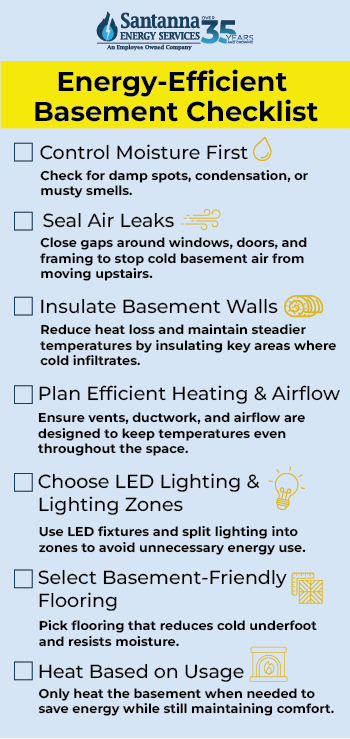
- Adding insulation along basement walls and at the rim joist to reduce heat loss.
- Sealing air leaks to prevent cold drafts from moving upstairs.
- Planning airflow and vent placement to keep temperatures even.
- Using lighting zones and LED fixtures to avoid over-lighting the space.
- Preparing for moisture control, such as a dehumidifier outlet or sealed foundation walls.
- Choosing flooring that reduces cold underfoot instead of relying on extra heat.
- Thinking about how often the space will be heated, especially if it won't be used every day.
Planning these upgrades from the start helps ensure the finished basement feels comfortable, efficient, and easy to maintain year-round.
Step 2: Clear and Reset the Space
Remove everything from the basement so you have a clear view of the walls, floors, and mechanical systems. An open space makes it easier to inspect conditions and plan without building around issues you didn't notice.
Step 3: Check for Moisture Before Anything Else
Basements must be dry before insulation or finishes are added. Look for damp spots, condensation, staining, or musty smells. Because basements dry out slowly, moisture problems should be addressed first so they don't get trapped behind finished walls. Fixing these issues early protects comfort and finished materials.
Step 4: Confirm Permits and Local Requirements
In many areas, finishing a basement requires a permit. Skipping this step can lead to fines or problems later when selling your home. Checking your local building department's website or calling them early helps keep the project on track.
Step 5: Plan the Layout Around Existing Systems
Basements usually include pipes, ducts, support posts, and electrical panels that limit where walls, lighting, and outlets can go. Planning around these systems early helps create a space that's functional and easier to maintain over time.
Step 6: Think About Comfort Before Construction Begins
Before any building starts, consider how the basement will stay warm, dry, and well-ventilated. Decisions about insulation, airflow, and heating have a much bigger impact on comfort and energy use than cosmetic finishes added later.
How To Finish a Basement
Once the basement is properly prepared, finishing the space becomes a step-by-step process. Each stage builds on the one before it, and taking things in the right order helps avoid headaches later. This is where planning pays off, and the space starts to come together in a way that feels comfortable and intentional.
Step 1: Insulate and Frame With Comfort in Mind
Insulation plays a major role in how warm and comfortable a finished basement feels. Basement walls behave differently from above-ground walls, so insulation choices should support both temperature control and moisture management. Framing should follow the planned layout and allow insulation to work properly.
When this step is done right, the basement feels less like a lower level and more like part of the home.
Step 2: Install Utilities Before Closing Anything In
This is the stage where electrical wiring, plumbing, and ventilation are installed. Basements usually need more lighting than other areas of the home, so outlets and fixtures should be planned carefully.
If plumbing is being added for a bathroom, sink, or wet bar, it needs to be installed before the walls are closed. Some basements also contain natural gas or other fuel lines for heating equipment or water heaters, which should be planned with proper ventilation and clearances in mind.
Installing utilities early helps avoid costly changes later and ensures the space is safe and comfortable.
Step 3: Finish Walls and Ceilings Carefully
Once insulation and utilities are in place, walls and ceilings can be finished. This is when the basement starts to look like a real living space.
Ceiling choices should balance appearance with access to utilities, since future maintenance may still be needed. Keeping that access in mind now can save time and stress later.
Step 4: Install Flooring Designed for Basement Conditions
Basement floors often feel colder because they sit on or near concrete. Flooring made for basement environments helps improve comfort and manage moisture. Warmer-feeling floors can make the space more usable without relying on extra heating.
Step 5: Add Final Touches and Set Up the Space
Trim, doors, lighting fixtures, and decor help define how the space feels and how often it's used. Thoughtful lighting and layout choices make the basement feel like a natural extension of the home while keeping energy use reasonable. When everything comes together, the space feels intentional, comfortable, and easy to enjoy.
How Much Does It Cost To Finish a Basement?
On a national level, basement finishing projects often fall in the range of about $7 to $23 per square foot.
But the overall cost to finish a basement can vary widely based on how much work is involved and the materials you choose. Simpler projects that focus on basic living space tend to fall on the lower end, while more detailed finishes and added features increase the cost.
Permits are another expense to plan for. In many areas, permit and inspection fees can add roughly $1,200 to $2,000 to the total project cost. These inspections are required to make sure the finished basement meets local building and safety codes, especially when electrical, plumbing, or heating systems are involved.
Labor is usually the largest portion of the budget. For most basement finishing projects, labor accounts for around 30% – 50% of the total cost. This reflects the time and skill needed to install insulation, utilities, walls, ceilings, and flooring correctly.
For homeowners, these ranges work best as planning guidelines rather than exact prices. The final cost depends on how much of the basement is finished, how complex the layout is, and whether upgrades like bathrooms, custom lighting, or energy-efficient improvements are included.
Here's what you might expect for the cost:
Estimated Cost To Finish a Basement by Size
| Basement Size | Estimated Cost to Finish |
| 20 × 25 (500 sq ft) | $3,500 – $11,500 |
| 20 × 30 (600 sq ft) | $4,200 – $13,800 |
| 20 × 40 (800 sq ft) | $5,600 – $18,400 |
| 25 × 40 (1,000 sq ft) | $7,000 – $23,000 |
| 30 × 50 (1,500 sq ft) | $10,500 – $34,500 |
Disclaimer: These hypothetical estimates are meant to show how basement size affects overall cost. Smaller spaces usually cost less, while larger basements require more materials and labor. Actual costs vary based on how much of the basement is finished and the level of detail involved. This estimate does not include permits and the cost of extra labor.
How Long Does It Take To Finish a Basement?
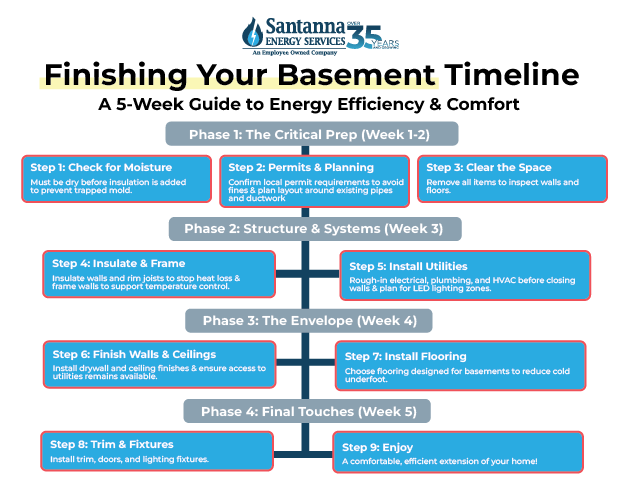
On average, finishing a basement takes about 5 weeks, though timelines can be shorter or longer depending on the condition of the space and the scope of work.
Basements with moisture issues, added plumbing, or multiple inspections usually take longer. Rushing the process often leads to comfort or energy problems later, such as cold floors, trapped moisture, or poor airflow.
Do You Need a Permit To Finish a Basement?
In many cases, yes, a permit is required to finish a basement, especially when the space is being turned into a livable area. Permit rules vary by state and local municipality, which is why it's important to check before starting any work. It's one of those steps that's easier to handle upfront than to fix later.
In Ohio, most basement finishing projects require permits. Skipping this step can create problems later, including failed inspections or issues with insurance claims.
In Pennsylvania, a permit is required when unfinished basement space is converted into rooms like a family room, bedroom, bathroom, or recreation area. Cosmetic updates to an already finished basement, such as replacing ceiling tiles, wall finishes, or electrical fixtures, usually do not require a permit.
In Illinois, permit requirements depend on the type of work being done. Some minor projects do not require permits, but finishing a basement typically involves structural, electrical, or system changes that may require approval. Local rules can vary, so verification is important.
Since permit requirements can change and differ by city or county, the safest way to avoid delays, fines, or future resale issues is to check with your local building department before starting. A quick phone call or website visit can help keep your project moving smoothly from start to finish.
What Is Considered a Finished Basement?
A basement is considered finished when it has been turned into a usable living space rather than just storage or a utility area. This usually means the space has finished walls and ceilings, permanent flooring, lighting, and is meant to be used regularly.
A basement can look finished but still fall short if it isn't comfortable year-round. To truly be considered finished, the space typically needs proper heating, insulation, and ventilation so it doesn't feel cold, damp, or stuffy. Because basements sit below ground, they require extra attention to temperature and airflow, as explained by the U.S. Department of Energy.
Does a Finished Basement Count as Square Footage?
According to Realtor.com, a finished basement doesn't typically count toward official square footage because it is below ground. Most listings and appraisals include only above-grade living space.
Even when it isn't counted, a finished basement still affects comfort and energy use. How well the space is insulated and heated matters more than how it's listed on paper.
How Much Value Does a Finished Basement Add to Your Home?
A finished basement can add value to a home, but it usually doesn't increase value the same way above-grade living space does. According to Zillow, finished basements typically aren't valued as highly as main-floor living areas or above-grade bedrooms. That surprises some homeowners, but it's a common part of how homes are evaluated.
This is largely because basements are below ground and are often listed separately from a home's official square footage.
Even so, a finished basement can still make a home more appealing to buyers by adding usable space for things like a family room, home office, workout area, or guest space. For many buyers, that extra flexibility matters just as much as the number of rooms on the listing.
Where a finished basement really adds value is in how it feels. A space that is dry, well-insulated, and easy to heat tends to stand out far more than one that simply looks finished.
Buyers are often more drawn to basements that feel comfortable and livable year-round, rather than ones that feel cold or damp, even if both technically count as finished space.
When to DIY vs. When to Call a Professional for Finished Basement Projects
Finishing a basement usually involves a mix of tasks. Some are very manageable for homeowners, while others directly affect safety, comfort, and long-term energy use. Knowing where to draw that line can save time, money, and frustration later on.
Here's what to know about what projects for your finished basement you should DIY or leave to the professionals:
DIY If…
- You're clearing and preparing the basement before work begins.
- You're planning how the space will be used and mapping out rooms or furniture placement.
- You're choosing finishes like paint, trim, flooring, or light fixtures.
- You're managing everyday moisture with a dehumidifier.
- You're upgrading lighting fixtures or bulbs without changing the wiring.
These tasks allow homeowners to stay involved without affecting airflow, insulation performance, or system safety.
Call a Pro If…
- Electrical wiring, new outlets, or panel work is involved.
- Plumbing is being added or modified, such as a bathroom or sink.
- HVAC systems, ductwork, or ventilation need to be adjusted.
- Structural changes are needed, such as adding or modifying walls or supports.
- Moisture problems involve water intrusion, drainage, or foundation issues.
Work in these areas has a direct impact on energy efficiency, indoor air quality, and how well the basement stays comfortable through Midwest temperature swings.
Energy tip: Problems with insulation, airflow, or moisture in the basement often show up as cold floors upstairs or higher energy bills. Getting help early from professionals to identify these problems can prevent those issues.
Energy-Efficient Upgrades To Add to a Finished Basement
Once a basement is finished, a few smart upgrades can make a big difference in comfort and long-term energy use. These energy-efficient upgrades help the finished basement stay warm, dry, and efficient without relying on constant heating or high electricity use:
Add Insulation Along Basement Walls and at the Rim Joist
Insulating basement walls and sealing the rim joist helps reduce heat loss to the surrounding ground and outside air. This keeps the basement warmer and helps prevent cold air from affecting the floors above.
Seal Air Leaks to Stop Cold Drafts
Small gaps around doors, windows, and framing can let cold air move upstairs. Sealing these leaks helps maintain more consistent temperatures and reduces how hard your heating system has to work.
Use LED Lighting and Lighting Zones
Basements often rely on artificial lighting. LED fixtures use less electricity, and dividing lights into zones lets you light only the areas in use instead of the entire space.
Prepare for Moisture Control
Moisture makes basements feel colder than they are. Adding a dehumidifier outlet or sealing foundation walls helps keep humidity levels under control, which improves comfort and supports insulation performance.
Choose Flooring that Reduces Cold Underfoot
Concrete floors hold cold temperatures. Flooring designed for basement conditions helps reduce that cold feeling and makes the space more comfortable without needing extra heat.
Heat the Space Based on How Often It's Used
Not every finished basement needs constant heating. Adjusting temperatures based on how often the space is occupied helps control energy use while keeping the basement comfortable when it's in use.
Finishing a basement is about more than just gaining extra space. What you do below ground can quietly affect how comfortable the rest of your home feels, from how evenly rooms heat and cool to how often your system has to run. It's one of those areas that doesn't get much attention until you notice something feels off.
Before moving forward, it helps to pause and think about how energy moves through the space. When a basement is finished with comfort and airflow in mind, the entire home tends to feel more balanced. Fewer cold spots, steadier temperatures, and a space you actually enjoy using year-round.
If you're planning ahead for predictable energy supply charges, exploring options like Santanna's Unlimited Energy Plan can be a helpful next step as part of long-term comfort and efficiency planning. Check it out today!
Jenna Mendez is a Midwest native with lifelong roots in Illinois and time spent in Ohio during college, giving her a deep understanding of the Midwest region’s people, climate, and energy needs. She brings firsthand experience and local insight to topics that matter to Midwest homeowners, especially energy efficiency, sustainability, and home living. Jenna specializes in writing about eco-friendly living, all things Midwest, renewable energy, and practical ways to reduce energy costs. Jenna brings a trusted, and local hometown voice to every article she writes, helping readers live well, and sustainably, right where they are.