

Why Is My House So Humid? How Moisture Affects Comfort and Cooling Costs

by Jenna Mendez
Updated: September 22, 2026
26.3 min read
Key Points of This Article:
- Your home becomes humid when moisture enters or builds up faster than it can be removed, often from humid outdoor air, poor ventilation, damp basements, air leaks, or daily activities like cooking, showering, and laundry.
- High humidity makes your AC work harder and can increase energy costs. When moisture levels are elevated, air conditioners run longer to maintain comfort, potentially increasing cooling expenses throughout the summer.
- The best way to reduce indoor humidity is to control moisture at the source. Use exhaust fans, keep humid outdoor air out, address leaks and drainage issues, manage basement moisture, and consider a dehumidifier to maintain an ideal indoor humidity level of 30% to 50%.
If your house feels sticky, heavy, or almost damp inside, even when the thermostat looks normal, your home might simply be humid. And you're not imagining it.
A humid home can feel uncomfortable even when the temperature is not especially high. Rooms can feel clammy, sleep can feel restless, and the air can feel slightly musty or heavy. Many homeowners lower the thermostat, hoping cooler air will fix it, only to see the AC run longer and the electric bill climb without much real relief.
In most cases, your house feels humid because moisture is either getting inside or being created faster than your home can remove it. As an energy supplier serving the Midwest for more than 35 years, we understand how indoor humidity can affect both home comfort and overall energy efficiency.
Lowering the temperature might seem like the fix. But getting humidity under control? That's what really changes how your home feels.
In this guide, we'll walk through why your house feels humid, how to measure and identify the real cause, how humidity affects your cooling efficiency and energy bill, and what simple steps you can take to make your home feel comfortable again.
Why Is My House So Humid?
Your house is usually humid because moisture is building up faster than it can leave.
That moisture can come from outside, from normal daily living inside the home, or from areas that naturally hold dampness, like basements and crawl spaces. And once moisture builds up, it tends to stick around. Humid air does not leave on its own unless it has a clear path out.
This is why humidity is usually a moisture control issue, not just a temperature issue. You can lower the thermostat and still feel uncomfortable because the air itself is holding extra water. That is also why a home can feel sticky even when the temperature looks fine.
Think of your house like a container. Moisture gets added through small air leaks, damp spaces, and everyday activities like showering and cooking. Moisture gets removed through ventilation, air conditioning, and airflow.
When more moisture comes in than goes out, indoor humidity rises.
In many homes, especially older ones, this can happen more easily. They were not always built with modern sealing and moisture control in mind, so it is easier for humid air to get in and harder for it to leave.
Why Midwest Homes Often Feel More Humid Than Other States
Did you know Midwest homes are more humid than other homes in the country because of corn? In many Midwest Corn Belt areas, humidity often rises during the cooling season because outdoor air is naturally moist, summer storms are frequent, and large cornfields release moisture into the air during peak growing months, a process often nicknamed “corn sweat,” making areas around large cornfields much more humid!
Corn plants pull water from the soil and release it into the air through their leaves as part of a natural process called evapotranspiration. When corn is at peak growth, that moisture release can be significant across large farming regions, raising local humidity and making hot days feel even muggier.
At its peak, an acre of corn can release thousands of gallons of water vapor per day into the atmosphere, which helps explain why July and August can feel especially sticky in heavily farmed Midwest areas.
When the outdoor air is already full of moisture, your home starts the day trying to manage it. Then everyday indoor activities like showers, cooking, and laundry add even more moisture on top. Over time, this can make your AC run longer just to keep your home feeling comfortable.
What Are the Most Common Signs Your House Is Humid?
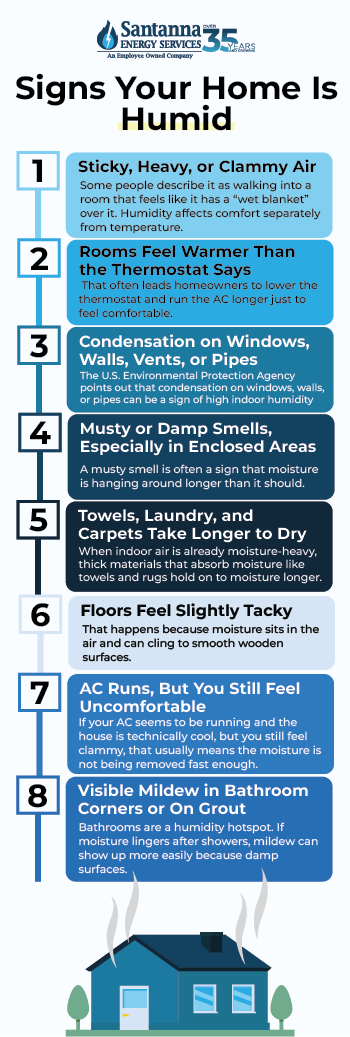
The most common signs of high house humidity are sticky air, window condensation, musty smells, and rooms that feel warmer than the thermostat says. When indoor moisture builds up, your home can feel “heavy” even if the temperature looks normal, because humid air holds onto moisture and your body does not cool off as easily.
Here are the signs your house is humid:
Sticky, Heavy, or Clammy Air
If the air feels thick or damp, that is often your first clue. Some people describe it as walking into a room that feels like it has a “wet blanket” over it. This can happen even when the thermostat is set low, because humidity affects comfort separately from temperature.
Rooms Feel Warmer Than the Thermostat Says
This is one of the most frustrating parts. You look at the thermostat and think, “It should feel fine in here,” but the room still feels warm and sticky. That often leads homeowners to lower the thermostat and run the AC longer just to feel comfortable, which can drive up cooling costs without fixing the moisture issue.
Condensation on Windows, Walls, Vents, or Pipes
Foggy windows or water droplets are a big clue because they often show up when moist indoor air hits a cooler surface. The U.S. Environmental Protection Agency points out that condensation on windows, walls, or pipes can be a sign of high indoor humidity, and it is worth addressing quickly so moisture does not linger.
Musty or Damp Smells, Especially in Enclosed Areas
A musty smell is often a sign that moisture is hanging around longer than it should. It tends to show up first in basements, closets, laundry rooms, and bathrooms because those areas trap humidity more easily. Keeping indoor humidity in a healthier range helps reduce the conditions that support mold and mildew growth.
Towels, Laundry, and Carpets Take Longer to Dry
When indoor air is already moisture-heavy, it cannot absorb much more. That is why towels can stay damp, laundry dries slowly, and even rugs can feel like they never fully dry out after cleaning. This is a comfort clue that the air is staying too moist for too long.
Floors Feel Slightly Tacky
Some homeowners notice hard floors feel a little sticky in humid months. That happens because moisture sits in the air and can cling to surfaces. It is subtle, but it is a real “this house feels humid” signal.
AC Runs, But You Still Feel Uncomfortable
If your AC seems to be running and the house is technically cool, but you still feel clammy, that usually means the moisture is not being removed fast enough. The Department of Energy notes that people may run air conditioning longer to dehumidify, yet still feel “cold and clammy” if humidity stays high.
Visible Mildew in Bathroom Corners or On Grout
Bathrooms are a humidity hotspot. If moisture lingers after showers, mildew can show up more easily because damp surfaces give it a place to grow. Keeping indoor humidity in a healthy range helps reduce the conditions where mold and mildew are more likely to develop.
Why Is My House So Humid? 23 Common Reasons Your Home Feels Damp
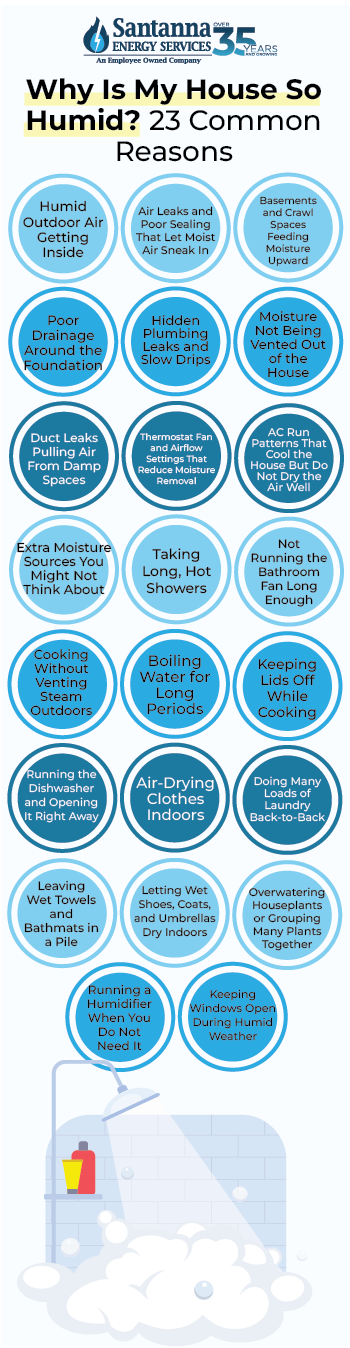
High house humidity usually happens when moisture gets in, is produced inside, or gets trapped with nowhere to go. If your home has been feeling sticky or heavier than usual, there’s usually a reason behind it.
Sometimes it is one clear source. Other times, there are a few small things stacking up, especially during Midwest summer storms and long humid stretches.
Let’s walk through the most common causes of why your house is humid, so you can start to narrow down what might be happening in yours:
Humid Outdoor Air Getting Inside
On humid days, the air outside holds a lot of moisture. If that air gets inside, your home now has to deal with that moisture, too. This is why humidity often feels worse after rainstorms, on muggy afternoons, or during weeks when it never really dries out.
A simple way to think about it is this: Bringing in humid air is like bringing in moisture. If your home cannot vent it out or dry it out fast enough, humidity rises.
Air Leaks and Poor Sealing That Let Moist Air Sneak In
Even if you keep windows closed, small gaps can let outdoor air seep in around doors, windows, attic access points, and other openings. In summer, that incoming air often carries moisture.
This is one reason some rooms feel more humid than others. If one area has more small leaks, it can feel stickier and harder to keep comfortable.
Basements and Crawl Spaces Feeding Moisture Upward
Basements and crawl spaces often hold moisture because they sit next to soil and are made of materials that can stay cool and damp. Even without standing water, moisture can slowly release into the air over time.
In many Midwest homes, the basement is the “starting point” for house humidity because air moves upward through the home, and humidity often moves with it.
Poor Drainage Around the Foundation
Sometimes the source of humidity is from outside the house, right at ground level. If gutters are clogged, downspouts dump water near the foundation, or the ground slopes toward the home, the soil stays wetter than it should. That extra ground moisture can raise basement or crawl space dampness over time.
This is especially common after repeated storms, long rainy weeks, or seasonal snowmelts.
Hidden Plumbing Leaks and Slow Drips
Not all humidity problems come from the weather. A slow leak under a sink, behind a toilet, near a water heater, or around a pipe can add moisture day after day. Because it is gradual, it can be easy to miss.
If humidity seems high even when outdoor air is not especially humid, a hidden leak is one of the quiet causes worth keeping in mind.
Moisture Not Being Vented Out of the House
If you’re wondering why your house is so humid, remember that moisture that stays trapped is a major cause of humidity. Bathrooms, kitchens, and laundry areas create moisture quickly. If moist air is not vented outdoors, it lingers, spreads, and raises humidity in nearby rooms.
This is common in older homes where fans are weak, rarely used, or not vented outside.
Duct Leaks Pulling Air From Damp Spaces
If ductwork has leaks, it can pull air from places like a damp basement, crawl space, or humid attic, which can make your home feel humid. That air gets mixed into the air your home circulates, which can raise indoor humidity.
This can also make cooling feel harder because your system is trying to cool and dry air that never should have been pulled in.
Thermostat Fan and Airflow Settings That Reduce Moisture Removal
Some humidity issues come from how air is being moved around the home. For example, when the thermostat fan is set to run continuously, moisture can stay in the air longer instead of draining away during normal cooling cycles.
Nothing may be broken. It can simply be a setting or airflow pattern that makes the home feel stickier.
AC Run Patterns That Cool the House But Do Not Dry the Air Well
Air conditioners remove some moisture while they cool, but moisture removal often takes time. If your system cools the house quickly and shuts off, it may not run long enough to pull much moisture out. The temperature improves, but the air still feels damp.
This is one reason homeowners say, “The AC is on, but it still feels humid.” It is a comfort mismatch, not always a repair issue.
Extra Moisture Sources You Might Not Think About
Some homes have steady moisture sources that quietly add up. A humidifier left running into spring or summer, a large aquarium, or lots of houseplants grouped together can all add moisture to indoor air.
These usually are not the only cause, but during humid Midwest months, they can push a home from “almost fine” into “why does it feel sticky in here.”
Taking Long, Hot Showers
Hot showers release steam fast. That moisture can spread beyond the bathroom, especially if the door is open. If showers are long or happen back-to-back, humidity can build up quicker than your home can clear it.
Not Running the Bathroom Fan Long Enough
Turning the fan off right after a shower often leaves a lot of moisture behind. Steam keeps lingering in the air and settles onto surfaces. When moisture does not escape, it slowly raises indoor humidity.
Cooking Without Venting Steam Outdoors
Why is your house so humid? Think about your cooking habits. Boiling, simmering, and steaming food releases moisture into the air. If it is not vented out, it can move into nearby rooms and make the whole home feel heavier, especially in open layouts.
Boiling Water for Long Periods
A long boil releases steady moisture the whole time it is happening. Pasta nights, soups, big batches of rice, and canning can push indoor humidity up faster than most homeowners expect.
Keeping Lids Off While Cooking
Cooking without lids lets more steam escape into the room. Using a lid keeps more moisture in the pot instead of in your kitchen air. It is a small habit that can make a real difference during humid weeks.
Running the Dishwasher and Opening It Right Away
Dishwashers release heat and steam, especially at the end of a cycle. Opening the door immediately lets that moisture dump into the kitchen air. It is not always the main problem, but it can add to the overall humidity load.
Air-Drying Clothes Indoors
When clothes dry indoors, that moisture goes into the air. One load can release moisture for hours, especially towels and heavier items. During humid weather, this can make a room feel damp and keep humidity elevated.
Doing Many Loads of Laundry Back-to-Back
Laundry can add moisture multiple times in a single day. If the laundry area has limited airflow, humidity can build up there and spread into nearby rooms. This is even more noticeable when the laundry space is in the basement.
Leaving Wet Towels and Bathmats in a Pile
Wet towels and mats release moisture as they dry. When they are piled up, they dry slowly and keep releasing moisture longer. In a small bathroom, that can keep the air damp for hours.
Letting Wet Shoes, Coats, and Umbrellas Dry Indoors
Rain gear and snow gear bring moisture inside and release it as it dries. Mudrooms, entryways, and closets can become mini humidity zones during stormy seasons.
Overwatering Houseplants or Grouping Many Plants Together
Plants release moisture naturally, and damp soil adds more. A few plants are usually fine, but a cluster of plants in one area, plus frequent watering, can raise humidity in that space.
Running a Humidifier When You Do Not Need It
Humidifiers are helpful in dry winter months. But if one is still running during spring or summer, it can push indoor humidity too high and make the home feel sticky.
Keeping Windows Open During Humid Weather
Fresh air is nice, but on muggy days it often brings moisture inside. If outdoor humidity is high, open windows can raise indoor humidity quickly, especially after rain and storms.
Why Is My House So Humid With the AC On?
Even with the AC running, your house can still feel humid if the system is not running long enough to pull moisture out, or if humid air is constantly getting inside. In other words, the temperature can come down, but the moisture level may not.
This surprises a lot of homeowners because most people think AC equals dry air. The truth is, your air conditioner is trying to do two jobs at once. It cools the air, and it removes some moisture.
When the house is gaining moisture faster than the AC can remove it, you can end up with a home that feels cool but still sticky.
Here are the most common reasons an AC might not seem to “dehumidify,” in a way you can actually observe:
Thermostat Fan Set to ON Instead of AUTO
When the fan is set to ON, it keeps blowing air even when the AC is not actively cooling. That can make the house feel more humid because moisture that was collected during cooling can get pushed back into the air instead of fully draining away.
If your home feels cool but clammy, this is one of the easiest things to check. Switching the fan setting to AUTO often helps the air feel less damp.
The AC Turns On and Off Too Quickly
If the AC kicks on, cools the house fast, then shuts off, it may not run long enough to remove much moisture. Moisture removal usually improves when the system has time to run and steadily pull water out of the air.
A common clue is if the temperature changes quickly, but the air never feels truly dry or comfortable.
Dirty HVAC Filter Reducing Airflow
A dirty filter can reduce airflow through your system. When airflow is limited, comfort can drop, and moisture removal can suffer too. The house might feel stuffy, uneven, or sticky even though the AC is running.
This is also one of the safest and simplest checks you can do yourself. If the filter looks dusty or clogged, replacing it is a smart first step.
Supply Vents Closed in Unused Rooms
Closing too many vents can throw off airflow in the home. It can reduce how evenly the system runs and how well it manages moisture across the house.
A common result is that some rooms feel colder while others still feel humid or uncomfortable.
Duct Leaks Pulling Humid Air from Basements, Crawl Spaces, or Attics
If there are leaks in ductwork, the system can pull in air from places you do not want, like a damp basement or a humid crawl space. That extra moisture gets mixed into your indoor air, so it can feel like the AC is not keeping up.
A clue here is when certain areas always feel more humid, especially if the ductwork runs through a basement, crawl space, or attic.
Basement Humidity Feeding the Rest of the Home
In many Midwest homes, the basement is a quiet humidity source. Even if the upstairs feels mostly fine, moisture downstairs can slowly spread upward. The AC may be cooling the main floor, but it is still fighting the moisture coming from below.
A good quick check is comparing humidity readings. If the basement humidity is much higher than the main floor, it often explains why the whole house feels sticky.
What Is the Ideal Indoor Humidity Level?
In most homes, indoor humidity should stay between 30% and 50% to support comfort and reduce moisture problems. The U.S. Environmental Protection Agency recommends keeping humidity below 60%, since higher levels increase the risk of condensation and mold growth.
Within that range, most homes feel comfortable closer to 30% to 45% in winter and 40% to 50% in summer, depending on outdoor weather and how well the home is sealed and ventilated.
When humidity drops below 30%, the air can feel dry and irritating, sometimes causing dry skin, static, or scratchy throats. When it consistently rises above 50% to 60%, the air often feels heavy or muggy, and your cooling system may need to run longer to keep the home comfortable.
If you want a deeper breakdown of what each range feels like and how to lower humidity effectively, we’ve covered it in detail in our blog.
How To Measure Humidity in Your Home
The easiest way to measure house humidity is with a simple digital hygrometer, which is a small device that shows the humidity percentage in the room. It is inexpensive, easy to use, and it takes the guesswork out of the question, “Is my house actually too humid, or does it just feel that way?”
To get a clear picture, you do not want to measure humidity in just one spot because it can be very different from room to room, especially in Midwest homes with basements, bathrooms, and upstairs bedrooms.
Let’s walk through how to measure humidity in your home, so you can see what’s really going on:
Step 1: Place One Hygrometer in Your Main Living Area
Start with the room where you spend most of your time, like the living room or a central hallway. This gives you a good baseline for what the main part of the house is doing.
Try to keep it away from direct sunlight, vents, or right next to a window, since those can throw off readings.
Step 2: Place One in the Basement or Lowest Level
If you have a basement, this is a must. Basements often hold extra moisture, and that moisture can slowly spread upward into the rest of the home.
If you do not have a basement, place it on the lowest level near your laundry room, a crawl space access point, or an exterior wall area that tends to feel cooler.
Step 3: Check the Bathroom After a Shower
Bathrooms are one of the fastest ways to see how your home handles moisture. Check the humidity level about 10 to 15 minutes after a shower. If humidity stays high for a long time, it can be a sign that moisture is not leaving that space efficiently.
You are not trying to get a perfect number here. You are looking for patterns. Does the bathroom bounce back quickly, or does it stay damp for a long time?
Step 4: Track Readings for 3 days
Humidity usually follows a daily cycle, and that cycle tells you where the moisture is coming from.
When you track it for three days, you’re looking for patterns like:
- Morning spikes – Often from showers, cooking breakfast, or overnight moisture buildup in bedrooms.
- Afternoon increases – Can happen when outdoor humidity rises or doors are opened more often.
- Evening peaks – Common after cooking, laundry, or back-to-back showers.
- Basement staying high all day – Often points to ground or foundation moisture.
- Bathroom staying high long after showers – Suggests ventilation is not clearing moisture effectively.
The goal is not just the number. It’s noticing when humidity rises, where it rises, and whether it drops back down naturally.
If it spikes and then returns to normal, that’s usually manageable. If it stays elevated for most of the day, that tells you moisture is lingering somewhere.
A helpful rule of thumb is that if the basement humidity is higher than the main floor, start there first. Moisture often spreads upward through a home, so improving conditions at the lowest level can make a noticeable difference throughout the rest of the house.
Measuring first can also save you money. When you know where humidity is highest, you can focus your effort where it will make the biggest difference, instead of overcooling the whole house just to feel comfortable. That helps your AC run more efficiently and can reduce unnecessary run time during the most expensive cooling months.
Does Humidity Make Your AC Work Harder, and How Much Does It Raise Cooling Costs?
Yes, humidity can make your AC work harder because your air conditioner has two jobs. It controls humidity and improves air quality. When humidity is high, it usually takes longer to do both, which means the system runs longer to reach the same comfort level.
That is why a humid house can feel like it never quite cools down. The temperature may drop, but if the air is still holding extra moisture, the house can still feel sticky. Many homeowners lower the thermostat, hoping it will fix the problem.
But if moisture is the real issue, lowering the temperature often just increases runtime.
Here is a simple baseline to understand the impact.
In many homes, air conditioning is already one of the largest parts of summer electricity use. If humidity causes your system to run even 1 to 2 extra hours per day, that can increase monthly cooling usage by roughly 10% to 20%, depending on your system and home size.
Using the U.S. average residential electricity rate of 17.24 cents per kWh as of December 2025 (EIA), that extra runtime could translate to roughly $15 to $35 more per month during especially humid stretches. Larger homes or older systems could see higher increases.
The key takeaway is not the exact number; it is this: even small daily increases in AC runtime can quietly add up over a full cooling month.
That is why managing humidity is not just about comfort; it also helps your cooling system operate more efficiently and keeps summer electricity costs from creeping up.
How To Make Your House Less Humid
The fastest way to make a house less humid is simple: push moisture out, keep new moisture from getting in, and control the dampest area first.
You don’t have to fix everything at once. The goal here isn’t perfection; it’s bringing your home back into a comfortable range, usually around 30% to 50%, and keeping it below the level where moisture starts to cause problems.
Vent Moisture Out Immediately
Use exhaust fans during showers and while cooking. Let bathroom fans run for 15 to 20 minutes after showers so steam actually leaves the space.
Make sure your dryer vents outdoors. Dryer exhaust carries significant moisture, and if it stays inside, it can raise humidity throughout the house.
Small consistency makes a big difference here.
Keep Outdoor Humidity Outside
On muggy days, keep windows closed. Only open them when the outdoor air is clearly drier than indoor air.
After storms, avoid propping doors open and check for obvious air gaps around windows and doors. Reducing the entry of humid air lowers your AC’s workload.
Use Your AC the Right Way
Set your thermostat fan to AUTO so moisture can drain properly during cooling cycles.
Avoid lowering the thermostat repeatedly to chase comfort. Carrier recommends setting your thermostat around 78°F in summer for balanced cooling and humidity control. The goal is steady comfort, not large temperature swings that increase cooling costs.
Dry Wet Areas Quickly
If something leaks, spills, or gets soaked, dry it within 24 to 48 hours. Lingering damp surfaces continue releasing moisture into the air even after the visible water is gone.
This applies to basements, bathrooms, laundry areas, and entry spaces after storms.
Use a Dehumidifier Strategically
Place a portable dehumidifier in the dampest area first, often in the basement.
Keep doors and windows closed while it runs, so it is not fighting outdoor humidity. Set it to about 50% and allow it to cycle naturally instead of running nonstop.
Dehumidifiers do use electricity, so they work best when paired with sealing and proper ventilation, not as the only solution.
Manage Basement and Foundation Moisture
If the basement stays damp, humidity will continue spreading upward.
Keep gutters clear, extend downspouts away from the foundation, and make sure the ground slopes away from the home. Controlling outside drainage often reduces inside humidity.
Reduce Small Daily Moisture Sources
During humid weeks, it’s often the small, everyday habits that quietly add up. Keeping lids on pots while cooking helps hold steam in instead of letting it spread through the kitchen. Letting the dishwasher cool before opening it can also keep that burst of moisture from escaping into the air.
If you’re air-drying clothes indoors, especially when it already feels damp, that moisture has nowhere to go and can linger in the room. The same goes for towels. When they’re left in a pile, they stay wet longer and continue to release moisture. Hanging them up helps them dry faster and keeps the air from feeling heavy.
These may seem like small changes, but together they can make a noticeable difference in how your home feels.
When House Humidity Requires Professional Help
Most humidity problems can improve with better ventilation, simple sealing, or small habit changes. But sometimes high indoor humidity is a sign of a deeper moisture issue that needs professional evaluation.
If you notice any of the situations below, it may be time to bring in an expert to prevent long-term damage and rising cooling costs:
Call a Pro If…
- You notice recurring water intrusion, such as damp basement corners or water stains that return after heavy rain.
- There is standing water in the basement, crawl space, or near the foundation.
- Mold or mildew keeps coming back after cleaning, or a musty smell does not go away despite better ventilation.
- You see signs of hidden moisture, like bubbling paint, soft drywall, warped flooring, or damp spots that never fully dry.
- Indoor humidity stays above 60% most days, even after using exhaust fans, fixing visible leaks, and running a dehumidifier.
- Your AC is not performing normally, such as freezing up, leaking unusually, short cycling, or running constantly without improving comfort.
- You are unsure whether the issue is related to drainage, ventilation, insulation, or HVAC performance, and trial-and-error fixes are not helping.
- Someone in the home is especially sensitive to heat and humidity, and indoor comfort is not improving with basic adjustments.
A qualified professional can help identify the true source of moisture, prioritize what needs attention first, and recommend solutions that address the root problem instead of just the symptoms. That often saves time, prevents repeat issues, and helps your home stay more comfortable and energy-efficient over the long term.
FAQs About Humidity in Your House
Should I open windows to reduce humidity?
Only if it is not humid outdoors. If it is humid outside, opening windows can add moisture indoors.
What is the fastest way to lower the humidity in a house?
Use exhaust fans during showers and cooking, fix water leaks, and use a dehumidifier if needed.
Do fans reduce humidity or just make you feel cooler?
Fans mostly improve comfort by moving air. They do not remove moisture.
What should the humidity be in a house in summer?
Aim for 40% to 50% humidity levels in your house during summer and try to keep it below 60%.
Does sealing and insulating your home drastically change the humidity levels?
Yes, they can help reduce moisture infiltration and improve moisture control, but ventilation still matters.
If your house feels humid, the solution is usually simpler than it seems. Humidity is about balance. When moisture builds up faster than it leaves, comfort drops, and cooling costs can quietly rise.
Start by understanding your numbers, make a few targeted adjustments, and focus on the dampest area first. Small changes in ventilation, airflow, and moisture control often make a noticeable difference.
Managing humidity is not just about comfort; it also helps your cooling system run more efficiently during peak summer months.
If you want added peace of mind during humid summer months, Santanna’s Unlimited Energy plan can be a helpful option to explore for more predictable supply charges when your cooling usage is at its peak.*
* Restrictions apply. Enrollment based upon program eligibility. Customers using more than 125% of normal monthly usage as determined by Santanna may be required to switch plans.
Jenna Mendez is a Midwest native with lifelong roots in Illinois and time spent in Ohio during college, giving her a deep understanding of the Midwest region’s people, climate, and energy needs. She brings firsthand experience and local insight to topics that matter to Midwest homeowners, especially energy efficiency, sustainability, and home living. Jenna specializes in writing about eco-friendly living, all things Midwest, renewable energy, and practical ways to reduce energy costs. Jenna brings a trusted, and local hometown voice to every article she writes, helping readers live well, and sustainably, right where they are.