
Why Your Furnace Pilot Light Keeps Going Out – Causes and Fixes

by Jenna Mendez
Updated: October 9, 2026
18.7 min read
Key Points of This Article:
- A furnace pilot light usually goes out because of airflow problems, dirt buildup, or worn furnace components.
- Common causes include a faulty thermocouple, drafts, dirty burners, blocked vents, or aging furnace parts.
- A pilot light that won't stay lit can affect furnace efficiency and increase energy usage. When the furnace struggles to ignite properly, it may run longer or cycle more often, potentially increasing natural gas consumption and heating costs.
Your furnace is working one moment and then suddenly stops without warning. You check it, and the pilot light is out again. Why does this keep happening, especially when you need heat the most?
This is something many homeowners deal with, especially during colder months when furnaces are running more often.
In most cases, the reason your pilot light keeps going out is because of airflow issues, worn furnace parts, or buildup around the pilot assembly. But sometimes it can point to a deeper furnace problem that needs attention.
The key is knowing what's normal, what's not, and when to take the next step.
That's where we come in. With over 35 years' experience as a natural gas supplier in the Midwest, we understand how important it is for your home to stay warm and dependable.
Let's walk through what could be causing your furnace pilot light to keep going out, what you can safely check yourself, and when it makes sense to call for help.
What Is a Furnace Pilot Light?
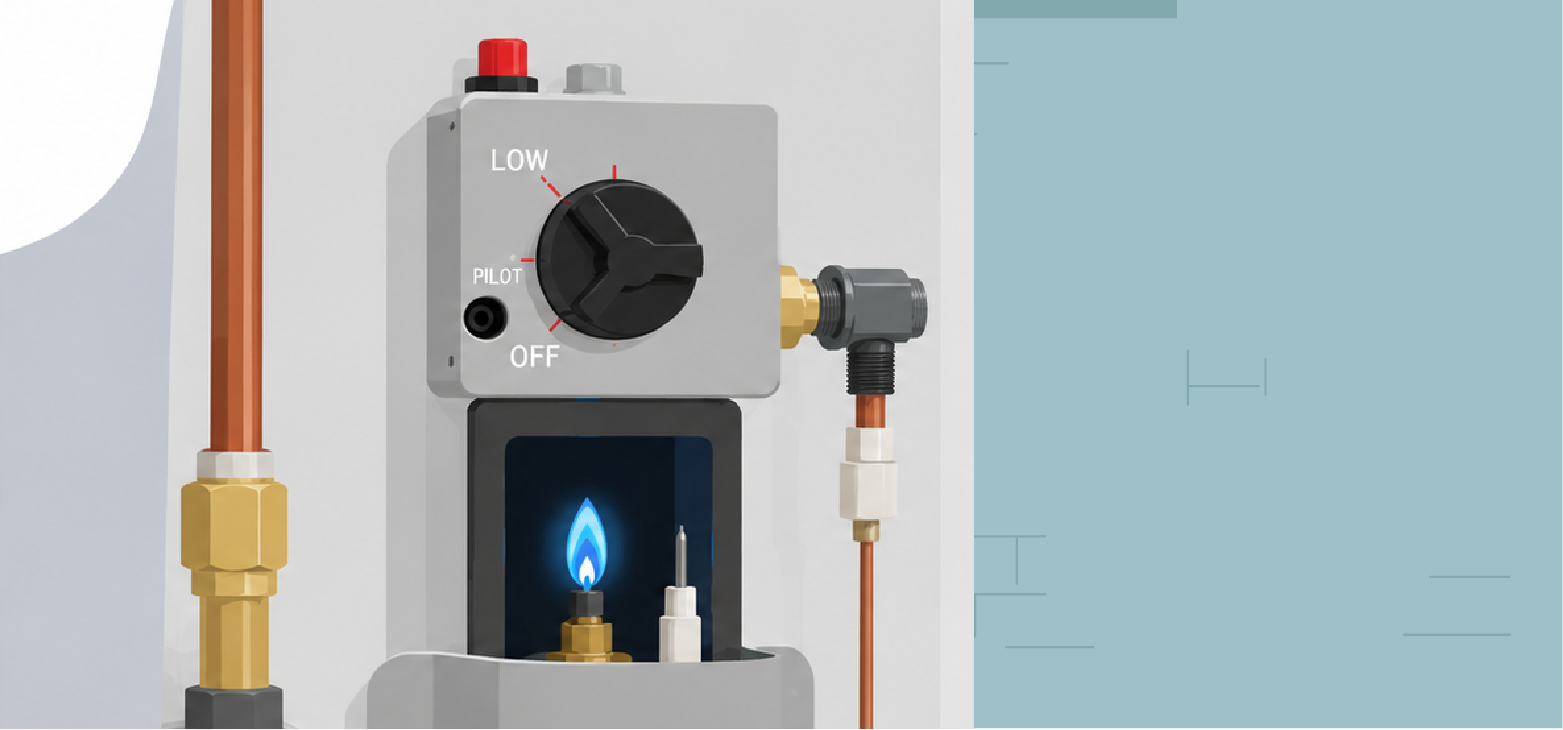
A furnace pilot light is a small, continuous flame that ignites the gas burner, so your furnace can produce heat.
It is usually located inside your furnace near the burner assembly, often behind a small access panel. When you look at it, your pilot light appears as a small blue flame that stays on at all times in older furnace systems.
When your thermostat calls for heat, the pilot light lights the burner within your furnace, and the burner is what creates the heat that warms the air in your home.
If the pilot light keeps going out, the furnace cannot ignite the burner, which means your home will not heat properly or may not produce heat at all.
With a traditional pilot light system, you can see the flame and relight it if it goes out. Newer furnaces with electronic ignition do not have a standing flame, so if the system is not heating, the issue is usually tied to the ignition components, sensors, or controls and should be diagnosed differently.
Why Does Your Furnace Pilot Light Keep Going Out?
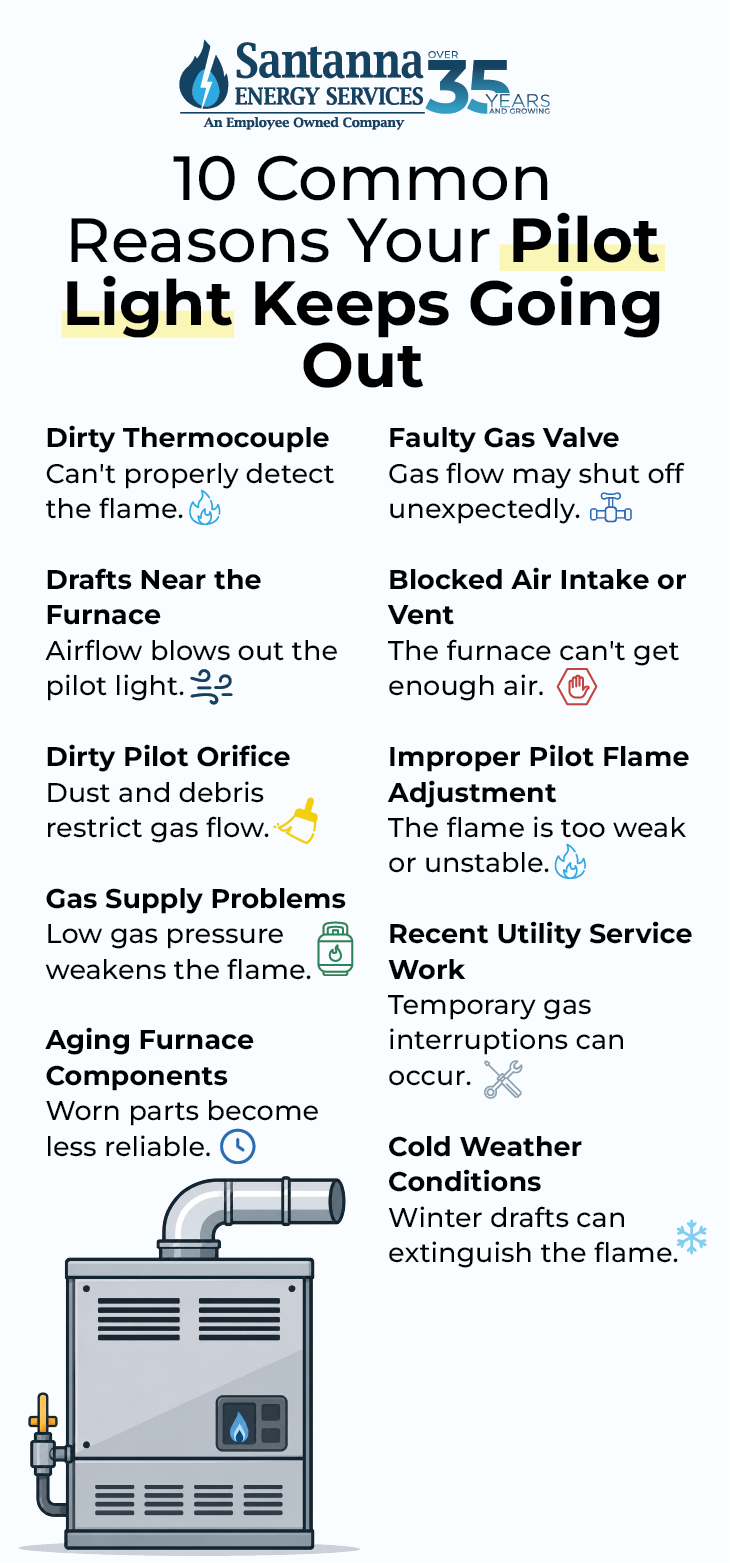
Your furnace pilot light usually keeps going out because something is affecting the flame, such as airflow, dirt buildup, or worn furnace parts.
In most homes, an issue with your pilot light is not a problem with your gas service. Some causes are simple and can be addressed with basic cleaning or small adjustments, while others may need a professional to fix safely. Here are some of the most common reasons why your furnace piolet light keeps going out:
You Have a Dirty or Faulty Thermocouple
A dirty or faulty thermocouple is one of the most common reasons a pilot light goes out. The thermocouple is a small safety device that senses the heat from the pilot flame and signals the furnace to keep the gas flowing.
If it becomes dirty or worn out, it may not detect the flame properly.
When that happens, your thermocouple shuts off the gas as a safety measure, which causes the pilot light to go out shortly after you try to relight it.
In some cases, gently cleaning the thermocouple can help, but if the issue continues, it usually needs to be replaced.
There are Drafts or Airflow Issues
Drafts or airflow around your furnace can blow out the pilot light, especially if the flame is already weak. This is common in basements, garages, or utility rooms where there may be small openings, vents, or gaps that allow air to move through.
During Midwest winters, stronger temperature differences between indoor and outdoor air can create more noticeable drafts. You might see the pilot light go out more often on windy days or in areas where the furnace is exposed.
Sealing gaps, closing nearby openings, or reducing airflow disruptions around the furnace can help keep the flame steady.
You Have a Dirty Pilot Orifice or Burner
A dirty pilot orifice or burner can prevent enough gas from reaching the flame, which makes it weak and unstable.
The pilot orifice is a small opening where gas comes out to create the pilot flame, while the burner is the part that produces heat once the gas is ignited. Over time, dust and debris can build up in this opening or around the burner area, which can block gas flow and make the flame more likely to go out.
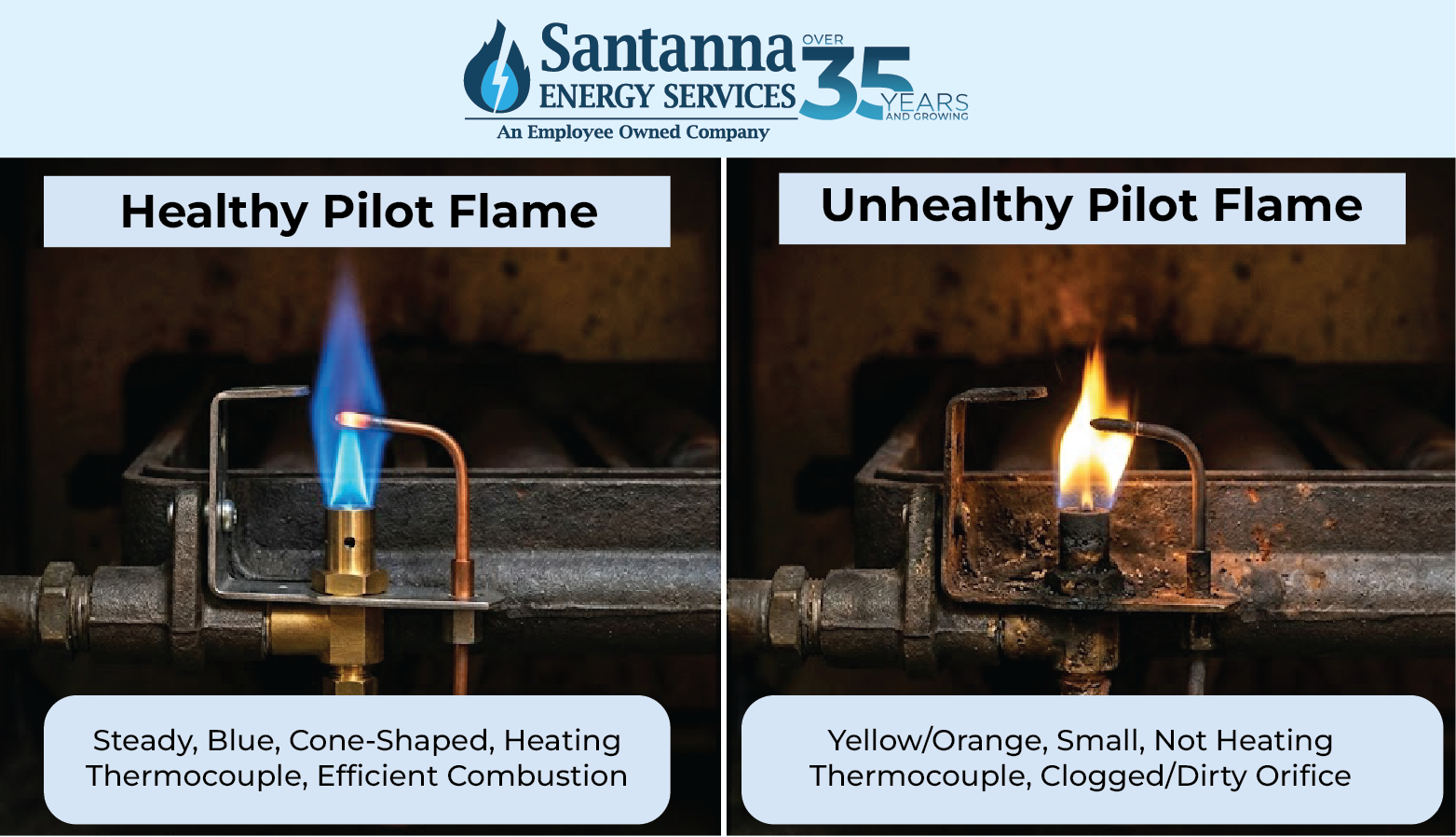
When this happens, the flame may look small, flicker, or turn yellow instead of a steady blue which indicates a weak flame.
Light cleaning may help restore proper gas flow, but if buildup is heavy or hard to reach, a professional cleaning is usually the safest option.
Gas Supply Problems
Gas supply problems can sometimes cause a pilot light to go out, but this is less common than furnace-related issues. Low gas pressure, temporary interruptions, or multiple gas appliances running on one gas line that is not properly sized for total demand can reduce gas flow to the pilot light, causing the flame to weaken, become unstable, or go out.
If this is the case, you may notice other gas appliances in your home not working properly or having weak flames as well. When the issue affects more than just your furnace, it may be worth checking your gas service.
If it is only happening with the furnace, the cause is more likely within the unit itself.
There's Worn-Out or Aging Furnace Components
According to Carrier, furnaces are only meant to last 15-20 years. If your furnace is older than this, your appliance's parts are bound to wear out over time.
Worn-out or aging furnace components can lead to repeated pilot light problems over time. As your furnace gets older, parts like sensors, connections, and valves can lose reliability and may not work as consistently as they once did.
You may find yourself relighting the pilot light more often, or the furnace may struggle to stay running. When this happens repeatedly, it is often a sign that something inside the system is wearing out and needs attention.
In these cases, a professional inspection can help identify which parts need to be repaired or replaced.
You Have a Faulty Gas Valve or Control System
A faulty gas valve or control system can prevent the pilot light from staying lit because it controls how gas flows to the furnace. If this part is not working correctly, it may not deliver enough gas to keep the flame going or may shut off the gas unexpectedly.
Homeowners may notice that the pilot light will not stay lit at all or that the furnace does not respond when trying to relight it. Because this involves gas flow and internal controls, it is not something to fix on your own.
A professional technician will need to inspect and repair the system safely.
You Have a Blocked or Dirty Air Intake or Venting
A blocked or dirty air intake or vent can affect how your furnace gets the air it needs for proper combustion. Your furnace relies on a steady mix of gas and air to keep the pilot flame stable.
If vents, flues, or intake pipes are partially blocked by dust, debris, or even outdoor elements, it can disrupt airflow and cause the flame to become weak or go out.
Homeowners may not always notice this right away, but signs can include inconsistent heating or pilot lights going out more often during certain conditions.
Clearing visible blockages may help, but if the issue continues, a professional inspection is the safest way to check the venting system.
There Has Been an Improper Pilot Flame Adjustment
The pilot flame itself may not be set at the correct level, which can make it harder to stay lit. The flame should be strong enough to fully cover the thermocouple so it can properly detect heat.
If the flame is too small, it may not generate enough heat to keep the gas flowing, causing the system to shut off. If it is too large, it can also burn unevenly and become unstable.
This issue can happen over time as parts shift or wear. While it may seem minor, adjusting the flame usually requires careful handling, so it is best checked by a professional if you are unsure.
There's Been a Service Interruption or Recent Utility Work
A service interruption or recent work by your local gas utility can sometimes affect how gas flows to your furnace. While this is less common, it can happen during maintenance, repairs, or upgrades in your area.
If gas flow is briefly reduced or interrupted, the pilot light may go out or have trouble staying lit. In some cases, it may not relight right away until normal service is fully restored.
Homeowners may notice this if the issue starts suddenly and other gas appliances are also affected at the same time.
If you suspect this might be the cause, it can help to check for any service notices in your area or contact your local gas utility to confirm if work is being done nearby.
Cold Weather and Temperature Changes
Cold weather can affect how your furnace pilot light behaves, especially during winter months. Lower outdoor temperatures and strong temperature differences between inside and outside air can create drafts that weaken or blow out the pilot flame.
In colder conditions, air can move more aggressively through small gaps, vents, or flue pipes, which can disrupt the steady flame needed to keep the pilot light on. You may notice this happening more often on very cold or windy days.
In some cases, condensation or freezing around vents can also affect airflow, making it harder for the pilot light to stay stable. Sealing drafts and making sure vents are clear can help, but if the problem continues during cold weather, it may be worth having your system checked.
How Can You Tell if the Pilot Light Is Out on Your Furnace?
You can tell your pilot light is out if your furnace stops producing heat and there is no visible flame inside the unit.
Here are the most common signs to look for:
- Your home is not heating even though the thermostat is set correctly: This happens because the pilot light is needed to ignite the burner. Without it, the furnace cannot create heat even if the thermostat is calling for it.
- Air from the vents feels cool or there is no airflow: If the burner is not igniting, the air moving through your system will not be heated. In some cases, the furnace may not run at all.
- The furnace starts but shuts off quickly: The system may try to start, but without a pilot flame, it cannot stay running, so it shuts off as a safety response.
- You hear clicking or repeated attempts to start without ignition: The furnace is trying to ignite the gas, but without a stable pilot flame, it cannot complete the process.
- There is no visible flame in the pilot light area: In older furnaces, the pilot light should always be on. If you do not see a small blue flame, it is likely out.
- The furnace blower runs, but no heat follows: The fan may still push air through your home, but without the burner lighting, that air will stay cool.
- The issue starts suddenly without any clear reason: A pilot light can go out due to drafts, buildup, or worn parts, even if the furnace was working normally before.
- You recently had a power outage or strong winds in your area: Changes in airflow or system interruptions can affect the stability of the pilot flame.
- Other parts of the furnace seem to have power, but no heat is produced: The system may still receive power, but without ignition, it cannot generate heat.
If you are noticing several of these at the same time, your pilot light is likely out or not staying lit. The next step is knowing how to relight it safely and what to watch for when you do.
How To Light the Furnace Pilot Light Safely
You can relight your furnace pilot light by following your furnace instructions and a few basic safety steps.
Before you begin, take a moment to check the following:
- Make sure the area around the furnace is clear
- Do not attempt to relight if you smell gas
- Give the system a few minutes to settle if it was just turned off
- Have proper lighting so you can see the pilot area clearly
Here is a simple overview of how relighting typically works:
- Turn the gas control to "off" and wait a few minutes
- Switch the control to the "pilot" setting
- Press and hold the control or reset button
- Light the pilot using a built-in igniter or lighter
- Keep holding for about 30 to 60 seconds
- Release and check if the flame stays lit
Once the pilot light stays on, you can return the control to the "on" position and allow the furnace to run normally.
Because furnace models can vary, especially between older pilot light systems and newer electronic ignition systems, it is important to follow the instructions for your specific unit rather than relying only on general steps. Some furnaces have built-in igniters, while others may require a lighter to relight the pilot.
If the pilot light goes out again after one or two attempts, do not keep trying to relight it. Repeated failure usually points to an underlying issue that needs attention. In that case, it is safer to stop and have a professional take a closer look.
Is It Dangerous If the Furnace Pilot Light Goes Out?
A furnace pilot light going out is usually not dangerous, but it can become a safety concern depending on the situation.
In most homes, modern furnaces are designed with safety features that automatically shut off the gas if the pilot light goes out. This means that if the flame goes out occasionally and there is no gas smell, it is generally not an emergency. It is often a sign that something inside the furnace needs attention, but not immediate danger.
However, older furnaces may not have the same safety features or may rely on components that wear down over time. In these systems, a pilot light going out could pose risks, including potential gas leaks or carbon monoxide buildup if the system does not shut off properly.
That is why it is especially important to be cautious if you have an older unit and to avoid repeated relighting. If the problem continues, it is safer to stop and call a professional to inspect the system.
There are also situations where a pilot light issue should be taken seriously. If you smell gas at any time, this could mean gas is not shutting off properly, and you should leave the area and seek help right away. A pilot light that will not stay lit, a yellow or unstable flame, or visible soot around the furnace can also point to ventilation or combustion problems that should be checked.
Can a Furnace Pilot Light Problem Affect Your Energy Bill?
Yes, a pilot light problem can increase energy use by making your furnace run less efficiently.
When the pilot light does not stay lit or struggles to ignite the burner, your furnace may not run the way it should.
It may turn on and off more often than normal, or take longer to heat your home. This means the system runs more frequently and uses more gas over time.
In some cases, gas is used without fully heating your home if the flame is weak or unstable. All of this leads to reduced efficiency and higher energy use.
To give you a simple example of how a pilot light that keeps going out could affect your energy bill, imagine your furnace normally uses about 30 therms of natural gas in a winter month.
If a pilot light issue causes your system to run less efficiently, even a small increase of 10% to 20% more usage could add about 3 to 6 extra therms.
Based on an average residential natural gas rate of $13.94 per thousand cubic feet, according to the U.S. Energy Information Administration (EIA) as of January 2026, that increase could translate to roughly $4 to $8 more per month, depending on your home and usage.
It may not seem like a big change at first, but over the course of a full heating season, it can add up. Even a small issue like a pilot light problem can quietly affect both your comfort and your monthly energy costs if it is not addressed.
How Can You Prevent Your Furnace Pilot Light from Going Out Again?
You can prevent pilot light issues by maintaining your furnace and keeping airflow and components in good condition.
In many cases, pilot light problems do not happen suddenly. They build up over time due to dust, airflow changes, or normal wear on furnace parts.
Taking a few simple steps to care for your system can help keep the flame steady and reduce the chances of repeated outages. Here's how to do just this:
Schedule Annual Furnace Maintenance
Having your furnace checked once a year helps catch small issues before they turn into bigger problems. A professional can clean internal parts, check the pilot system, and make sure everything is working safely and reliably before the colder months begin.
Keep the Area Around the Furnace Clean
Dust and debris can build up around the pilot light and burner over time. Keeping the area clean and free from clutter helps maintain proper airflow and reduces the chance of buildup affecting the flame.
Seal Drafts Near the Furnace
Air movement can weaken or blow out the pilot light, especially in basements or utility rooms. Check for gaps, vents, or openings nearby and seal them if possible to create a more stable environment for the flame.
Watch the Flame Color and Strength
A healthy pilot light should be a steady blue flame. If you notice it becoming weak, flickering, or turning yellow, it may be a sign that something needs attention before it leads to a full outage.
Replace Worn or Aging Parts Early
Over time, parts like the thermocouple and gas valve can wear out. Replacing these components early can help prevent repeated pilot light problems and keep your furnace running more reliably. The thermocouple, in particular, is a relatively inexpensive part to replace, with costs starting around $7.83.
Avoid Blocking Airflow Around the Unit
Make sure nothing is placed too close to your furnace that could restrict airflow. Proper air circulation helps the system run smoothly and keeps the pilot flame stable.
Pay Attention to Changes in Performance
If your furnace starts behaving differently, such as taking longer to heat your home or needing frequent relighting, it is a sign that something may be off. Addressing these changes early can help prevent ongoing pilot light issues.
By keeping up with these simple habits, you can reduce the chances of your pilot light going out and keep your furnace running more consistently. Up next, it also helps to understand what it means if your furnace does not use a pilot light at all.
What If I Have a Newer Furnace Without a Pilot Light? Can My Gas Still Go Out?
Yes, your gas can still stop flowing or your furnace can still fail to heat even if your system does not have a pilot light.
Newer furnaces, however, do not have a pilot light because they use an electronic ignition system to light the gas only when heat is needed.
In these systems, there is no small flame that stays on all the time. Instead, the furnace creates a spark or heats a small component to ignite the gas when your thermostat calls for heat. Once your home reaches the set temperature, the flame turns off until the next heating cycle.
If your newer furnace is not producing heat, the problem is more likely related to how the system ignites the gas or another part of the unit. This means the usual steps for relighting a pilot light will not apply.
FAQs
Why does my furnace pilot light go out after I release the control knob?
This usually happens when the thermocouple is not sensing enough heat from the pilot flame, so it shuts off the gas as a safety measure when you release the pilot control knob on the furnace.
How much does it cost to fix a furnace pilot light issue?
Fixing a pilot light issue typically costs between $125 – $480, depending on whether cleaning or part replacement is needed.
Do all furnaces have pilot lights?
No, many newer furnaces do not have a pilot light and instead use an electronic ignition system that lights the gas only when heat is needed.
Should I leave the furnace pilot light on all year?
You can turn off the pilot light during warmer months to save energy, especially if your furnace is not in use.
Pilot light issues are common and usually manageable once you understand what is causing them. Knowing the cause helps you act quickly and safely, instead of guessing or relighting it over and over.
For Midwest homeowners, this matters most in winter when your furnace runs more often and small issues can quietly affect comfort and energy use. Even a minor pilot light problem can lead to longer run times and higher bills if it is left unchecked.
If you are already taking steps to keep your furnace running smoothly, your energy choice can support that effort too. Santanna's Earth-Friendly Natural Gas helps offset carbon emissions from your usage, so you can keep your home warm while making a more mindful energy choice. It is a simple way to add a little more purpose to the energy you use every day.
Jenna Mendez is an experienced energy content professional who has spent four years researching, writing, and managing authoritative educational content for Midwest energy consumers at Santanna Energy Services. As a lifelong Illinois resident, Jenna brings firsthand knowledge of the region’s climate, communities, and household energy needs to her work.
She specializes in translating complex energy topics into clear, practical guidance about electricity and natural gas costs, appliance energy use, energy efficiency, and everyday home living. Drawing on industry research, Santanna customer data, and insights from experienced energy professionals, Jenna incorporates this knowledge into her content to help homeowners better understand their energy choices and make informed decisions for their households.