
How Do You Clean an Air Conditioner Window Unit?

by Jenna Mendez
Updated: July 24, 2026
8.4 min read
Key Points of This Article:
- Weak airflow, musty odors, longer run times, and a dirty filter are some of the clearest signs your window AC needs cleaning.
- A clean window AC can use energy more efficiently, while a dirty air filter may increase energy use by about 15% to 25%.
- Cleaning the filter every 30 to 60 days and deep cleaning the unit once each cooling season can help restore airflow and cooling performance.
Is your window air conditioner running but not cooling like it used to? Before assuming it needs repairs or replacing, it may simply need a good cleaning.
Over time, dust, dirt, pet hair, and other debris can build up inside the unit, restricting airflow and making it work harder to keep your room cool, which can reduce energy efficiency.
In this guide, you'll learn how to clean a window air conditioner, the signs it needs cleaning, and what to do if it's still not cooling properly afterward.
How Do You Know If Your Window Air Conditioner Needs Cleaning?
Over time, dust, dirt, pet hair, moisture, and other debris can build up inside the unit, restricting airflow, reducing cooling performance, and forcing the air conditioner to work harder to keep the room comfortable. If you notice:
- Weak airflow coming from the vents
- The room takes longer than usual to cool
- The unit runs longer or more often than it used to
- Musty or moldy odors when the AC is running
- Dust buildup on the filter or front grille
- Visible dirt or debris inside the unit
- Water dripping inside the room
- The air conditioner feels less powerful than before
- The unit seems louder than normal
- Certain areas of the room stay warm
- The filter looks dirty or clogged
- Electricity usage seems higher than expected
These are clear signs your window air conditioner may need cleaning.
How Do You Clean an Air Conditioner Window Unit?
For best results, clean the AC filter every 30 to 60 days and deep clean the unit once each cooling season to help maintain cooling performance and efficiency.
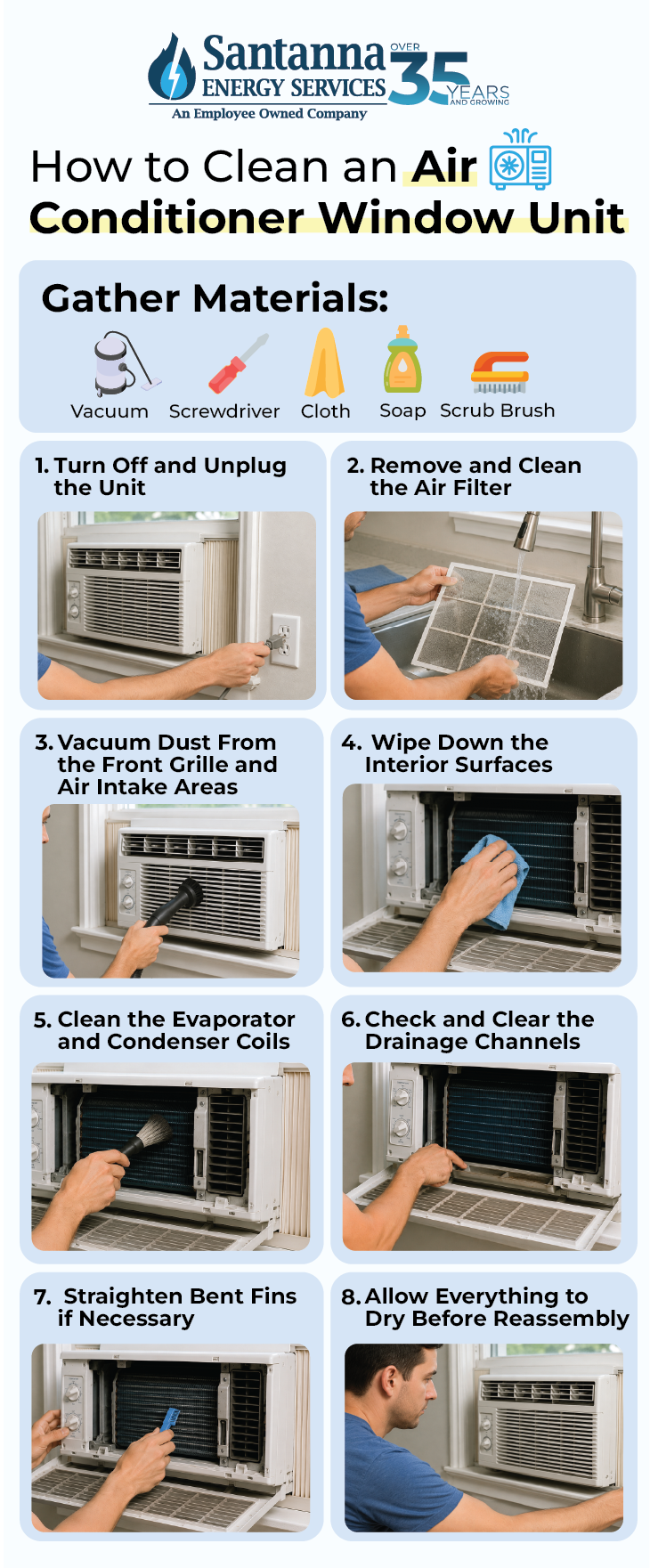
Here's how you clean your air conditioner window unit with simple household supplies:
Step 1: Gather Your Cleaning Supplies
Before you begin, gather the supplies you'll need for cleaning. Most window AC units can be cleaned using:
- Vacuum with a brush attachment
- Soft cloth or microfiber cloth
- Mild soap and warm water
- Soft brush
- Spray bottle
- Screwdriver (if needed to remove the cover)
- Fin comb (optional)
- Air conditioner coil cleaner (optional)
Preparing these first can make the cleaning process easier and help prevent unnecessary interruptions.
Step 2: Turn Off and Unplug the Unit
Turn the air conditioner off and unplug it from the electrical outlet before cleaning to prevent electrical hazards and ensure the fan cannot accidentally start while you're working inside the unit.
Step 3: Remove and Clean the Air Filter
Remove the filter according to the manufacturer's instructions.
Vacuum off loose dust, and if it's washable, wash it with warm water and mild soap and let it dry completely before reinstalling it.
Replace the filter if it's damaged or no longer cleaning effectively. Keeping the filter clean helps maintain proper airflow and cooling performance.
Step 4: Vacuum Dust From the Front Grille and Air Intake Areas
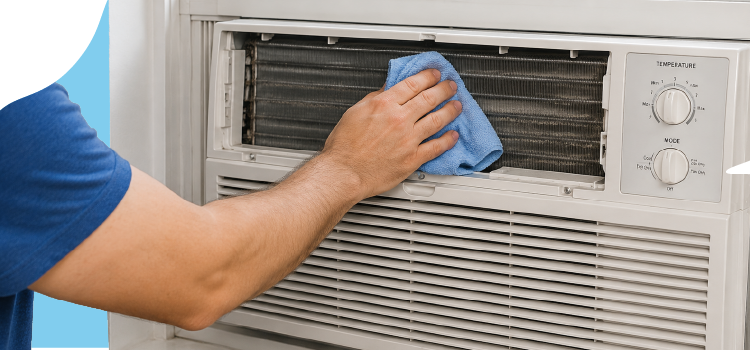
Use a vacuum with a brush attachment to remove dust, pet hair, and debris from the front grille and air intake areas.
Pay extra attention to areas where dust collects, as buildup can restrict airflow.
Step 5: Wipe Down the Interior Surfaces
Use a damp cloth to wipe away dust and dirt from accessible interior surfaces.
Avoid soaking electrical components or spraying excessive water inside the unit. The goal is simply to remove loose dirt and buildup.
Step 6: Clean the Evaporator and Condenser Coils
Carefully clean the coils with a soft brush, vacuum, or an air conditioner coil cleaner.
Removing dirt and debris can help improve airflow and cooling performance. Work gently to avoid damaging the thin metal fins.
Step 7: Check and Clear the Drainage Channels
Inspect the drainage areas for dirt, debris, or buildup that could block water from draining properly.
Removing obstructions can help prevent moisture buildup and reduce the chance of water leaking inside your home.
Step 8: Straighten Bent Fins if Necessary
If you notice bent fins, carefully straighten them with a fin comb or gentle pressure.
Straight fins help improve airflow. If they are badly damaged, it's best to leave them alone to avoid causing further damage.
Step 9: Allow Everything to Dry Before Reassembly
Make sure all cleaned components are completely dry before putting the unit back together.
Allowing moisture to dry helps reduce the risk of mold growth and prevents water from being pulled into the airflow when the unit starts running again.
Step 10: Reinstall the Filter and Test the Unit
Reinstall the filter, replace any covers, and plug the unit back in.
Turn the air conditioner on and check for improved airflow and cooling. If it still isn't cooling properly, another issue may be affecting its performance.
How Do You Clean Air Conditioner Coils?
To clean air conditioner coils, gently remove dust and debris with a soft brush, a vacuum with a brush attachment, or an air conditioner coil cleaner.
Clean coils help your window AC cool more efficiently, while dirt and buildup can reduce cooling performance and make the unit work harder.
To clean the coils:
- Turn off and unplug the unit.
- Remove any covers needed to access the coils.
- Gently vacuum loose dust and debris.
- Use a soft brush to remove buildup.
- Apply a coil cleaner if recommended by the manufacturer.
- Avoid bending the thin metal fins surrounding the coils.
If the coils are heavily coated with dirt or difficult to access, a deeper cleaning may be needed.
How Do You Clean Mold From an Air Conditioner Unit?
To clean mold from a window air conditioner, turn the unit off, remove the filter, clean affected areas with mild soap and water, and let everything dry completely before using the unit again.
Mold can develop when dust, dirt, and moisture build up inside the unit. A musty odor when the AC is running is often one of the first signs it needs cleaning.
To clean visible mold:
- Turn off and unplug the unit.
- Remove and clean the air filter.
- Wipe affected surfaces with a soft cloth, warm water, and mild soap.
- Use a soft brush to remove stubborn buildup.
- Allow all cleaned surfaces to dry completely before reassembling the unit.
If mold covers a large area, keeps returning after cleaning, or is difficult to safely reach, it may be best to consult a professional. Regular cleaning and keeping drainage channels clear can help reduce the chances of mold developing in the future.
Can a Dirty Window Air Conditioner Unit Increase Energy Costs?
Yes, a dirty air filter can increase energy consumption by roughly 15% to 25% because the air conditioner has to work harder to move air through the unit.
When dust, dirt, and debris build up inside a window AC unit, airflow can become restricted, and cooling performance can decline. As a result, the unit may need to run longer to reach the temperature you've selected, which can increase electricity use over time.
Regular cleaning can help improve airflow, cooling performance, and overall efficiency, helping the unit operate more effectively throughout the cooling season.
What Should You Do If Your Window AC Still Isn't Cooling Properly?
If your window AC still isn't cooling properly after cleaning, it's a good idea to have the unit inspected by a qualified HVAC professional or appliance repair technician.
Cleaning can improve airflow and cooling performance, but it won't fix every issue. If the problem continues after you've cleaned the filter, coils, and other accessible parts, another issue may be affecting the unit.
Consider contacting a professional if:
- The unit still blows weak or warm air after cleaning.
- Cooling performance has not improved.
- The air conditioner makes unusual noises.
- Water continues leaking inside the home.
- The unit frequently turns on and off.
- The air conditioner is several years old and has recurring problems.
In many cases, cleaning restores normal performance. If it doesn't, a professional can help determine whether the unit should be repaired or replaced.
FAQs
Can You Clean a Window Air Conditioner Without Removing It?
Yes, most window air conditioners can be cleaned without removing them by cleaning the filter, front grille, coils, and accessible interior surfaces while the unit remains installed.
Can You Spray Water Into a Window Air Conditioner?
Yes, small amounts of water can be used to clean certain components after the unit is unplugged, but avoid spraying water directly onto electrical parts.
Can You Use Vinegar to Clean a Window Air Conditioner?
Yes, vinegar can be used to clean certain non-electrical surfaces, such as the filter, drain areas, or visible mold and dirt, but it should not be sprayed directly onto electrical components.
Is It Safe to Use a Pressure Washer on a Window Air Conditioner?
No, pressure washers can damage the delicate fins and internal components of a window air conditioner and are generally not recommended.
Keeping a window air conditioner clean is one of the simplest ways to help it cool more effectively and avoid unnecessary energy waste. A little maintenance can go a long way toward improving airflow, reducing strain on the unit, and helping your home stay comfortable during the hottest days of the year.
While cleaning can help your air conditioner operate more efficiently, your energy plan also plays a role in how predictable your energy costs feel month after month. Santanna's Unlimited Energy plan offers predictable supply charges throughout the year,* helping protect your peace of mind from unexpected supply cost fluctuations, so you can spend less time worrying about surprises and more time enjoying a cool, comfortable home.
After all, summer is a lot more enjoyable when the only thing working overtime is your air conditioner, not your stress level.
* Restrictions apply. Enrollment based upon program eligibility. Customers using more than 125% of normal monthly usage as determined by Santanna may be required to switch plans.
Jenna Mendez is a Midwest native with lifelong roots in Illinois and time spent in Ohio during college, giving her a deep understanding of the Midwest region’s people, climate, and energy needs. She brings firsthand experience and local insight to topics that matter to Midwest homeowners, especially energy efficiency, sustainability, and home living. Jenna specializes in writing about eco-friendly living, all things Midwest, renewable energy, and practical ways to reduce energy costs. Jenna brings a trusted, and local hometown voice to every article she writes, helping readers live well, and sustainably, right where they are.