

What Causes Icicles on a House and What Do They Mean for Energy Efficiency?

by Jenna Mendez
Updated: August 18, 2026
17.9 min read
Key Points of This Article:
- Icicles form when snow on your roof melts into water and then refreezes along the colder edges of the roof, often because of sunlight, changing temperatures, or heat escaping through the attic.
- Small, occasional icicles are usually normal, but large or recurring icicles may indicate poor insulation, air leaks, or ventilation issues that allow heat to escape and increase the risk of ice dams.
- Recurring icicles can indicate energy loss, forcing your heating system to work harder and potentially increasing winter heating costs.
- The best way to prevent excessive icicles is to improve attic insulation, seal air leaks, maintain proper ventilation, and keep gutters clear so snow is less likely to melt and refreeze along the roof edge.
If you've ever looked outside on a cold winter morning and noticed long icicles hanging from your roof, you may have wondered whether they're just part of winter or a sign that something is wrong.
In a recent internal survey, we found that 40% of employee-owners surveyed say that icicles regularly form on their homes during the winter, showing just how common this issue is.
If you're wondering why these icicles show up, we've done the research for you to explain exactly what causes icicles to form on your roof and whether it means a deeper problem for your energy efficiency. Let's dive in.
What Causes Icicles on a House?
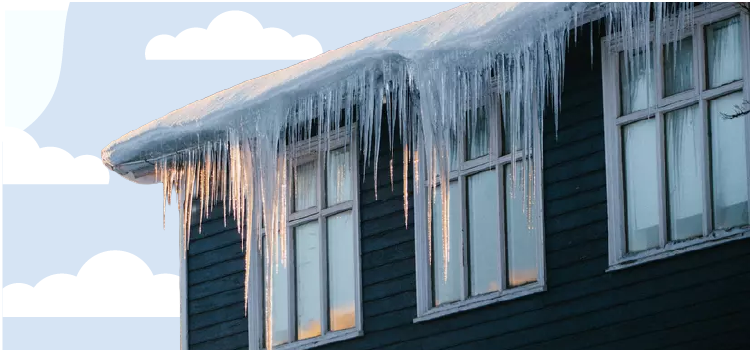
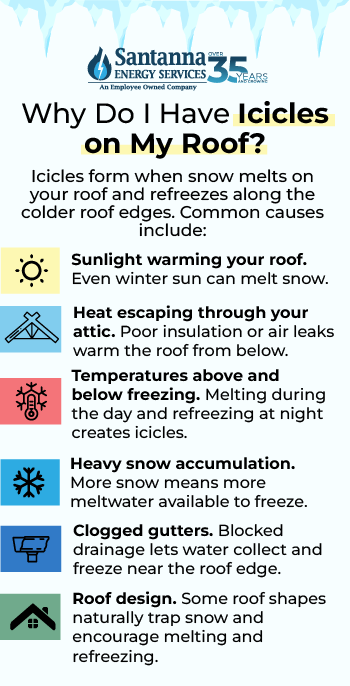
Icicles form when snow on your roof melts into water and then refreezes along the colder edges of the roof.
In some cases, icicles can indicate that heat is escaping through the attic and warming your roof, meaning the heat you’re paying for may be escaping instead of staying inside your home.
Let’s take a closer look at the most common causes of icicles forming:
Heat Escaping Through the Attic
One of the most common causes of icicles on a roof is heat escaping through the attic and warming the roof from underneath. According to the U.S. Department of Energy, about 15-25% of heat is lost through the attic, which can cause icicles to form on your roof.
When warm air rises and reaches the upper levels of your home, it can melt the snow sitting on the roof. The melted water then flows toward the colder roof edges, where it refreezes into icicles.
Sunlight Hitting the Roof
Even on cold winter days, direct sunlight can warm parts of a roof enough to melt snow, leading to icicle formation. This is especially common on south-facing and west-facing roof sections that receive more sunlight throughout the day. As temperatures drop later in the afternoon or evening, the melted water can refreeze and form icicles.
Outdoor Temperature Swings
Icicles often form when temperatures fluctuate between above and below freezing. For example, a sunny afternoon may cause snow to melt, while freezing overnight temperatures can turn that water back into ice. Repeated cycles of melting and refreezing can create larger icicles over time.
Warm Roof Surfaces and Colder Roof Edges
Areas directly above heated living spaces are often warmer than roof edges that extend beyond the home’s interior walls. As meltwater travels from warmer areas to colder ones, it can refreeze and form icicles.
Heavy Snow Accumulation
As more snow builds on the roof, more water is available to melt off. Even a small amount of melting can produce a significant amount of water when a thick layer of snow is present. More water means a greater opportunity for icicles to form and grow larger.
Poor Attic Insulation
If you’re seeing icicles on your roof, you might want to check your attic insulation. When insulation is insufficient or uneven, heat can move upward more easily, warming sections of the roof. This can increase snowmelt and create ideal conditions for icicle formation. We’ve found that adding proper attic insulation can reduce your home’s total energy spending by around 10%!
Clogged Gutters
Blocked gutters can slow the movement of melting snow and water. When water cannot drain properly, it may collect near the roof’s edge where it can freeze more easily. Over time, this can contribute to larger icicles and additional ice buildup.
Roof Design and Shape
Some roof designs naturally create conditions that make snow and water more easily collected. Roof valleys, dormers, and areas where different roof sections meet can hold snow longer and increase the chances of repeated melting and refreezing.
Older Homes With More Air Leaks
Many older homes have small openings around light fixtures, attic access points, plumbing pipes, and other areas where warm indoor air can escape. Over time, these small leaks can contribute to roof warming and snowmelt, especially when combined with limited insulation.
How Do Icicles on My Roof Form?
While icicles may look complicated, the process is actually quite simple. It all comes down to melting snow, moving water, and freezing temperatures.
Step 1: Snow Accumulates on the Roof
The process starts after a snowfall. Snow settles across the roof and remains there as long as temperatures stay cold enough. The more snow on the roof, the greater the potential for melting and refreezing later.
Step 2: Heat Warms the Roof Surface
Parts of the roof become warmer than the outdoor air. This can happen because of sunlight, changing weather conditions, or heat escaping from inside the home.
Even a small increase in temperature can be enough to start melting the bottom layer of snow sitting on the roof.
Step 3: Snow Begins to Melt
As the snow melts, it turns into water and starts moving down the roof. Homeowners may not notice this happening because the water is often flowing underneath the snow.
Step 4: Meltwater Flows Toward Colder Roof Edges
As the water travels downward, it eventually reaches the edge of the roof. These areas are usually colder because they extend beyond the home’s interior heated areas and are more exposed to outdoor temperatures.
Step 5: Water Refreezes Into Icicles
When the flowing water reaches the colder roof edge, it freezes again. Over time, more meltwater drips down and freezes onto the existing ice. Layer by layer, the icicle grows longer and thicker.
Are Icicles on a Roof Normal?
Small icicles are often a normal part of winter and do not automatically mean your home has an energy efficiency problem.
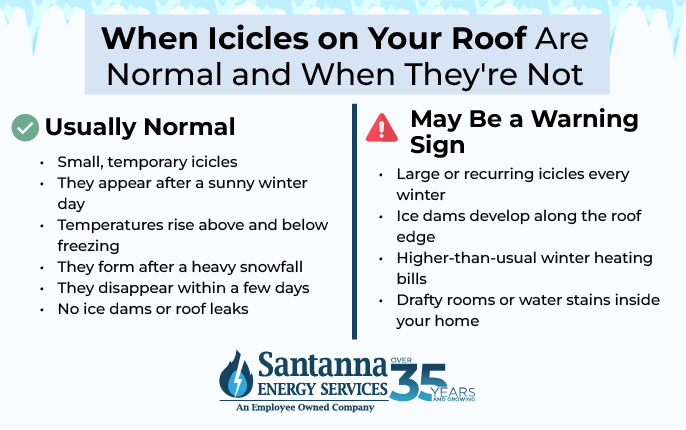
Icicles are more likely to be normal when:
- They are small and temporary. A few icicles that appear after a snowfall and disappear within a few days are usually not a cause for concern.
- They form after a sunny winter day. Sunlight can warm the roof enough to melt some snow, even when outdoor temperatures remain cold.
- Temperatures move above and below freezing. Natural melting during the day and refreezing at night can create occasional icicles.
- They occur after a major snowstorm. A large amount of snow provides more opportunity for melting and refreezing.
- They appear occasionally rather than every winter. Icicles that form only from time to time are often related to weather conditions rather than an ongoing issue with the home.
- There are no signs of ice dams, leaks, or unusually high heating bills. In many cases, small icicles without other warning signs are simply part of winter weather.
Why Are Icicles Bad for Your Home?
Large or recurring icicles can sometimes be a sign of conditions that may affect your home’s comfort, energy efficiency, and overall condition over time.
Potential issues include:
- Ice dams may form. Repeated melting and refreezing can create ridges of ice along the roof edge that trap water behind them.
- Water damage can develop. Trapped water may eventually work its way beneath roofing materials and into the home.
- Gutters can become stressed. Heavy ice buildup can place extra weight on gutters and increase the risk of sagging or damage.
- Heat loss may continue. If heat is escaping through the attic, your home may continue losing warmth through the roof during cold winter months.
- Heating costs may remain higher than necessary. When heat escapes from the home, your heating system may need to work harder to maintain indoor comfort.
- Small issues can become larger repairs. Addressing insulation, ventilation, or air leak concerns early may help prevent more costly problems later.
The good news is that not every icicle signals a major problem. However, if large icicles return year after year, especially when accompanied by ice dams, uneven snowmelt, drafty rooms, or rising heating bills, they may warrant further investigation.
In many cases, the sooner the underlying cause is identified, the easier it may be to improve comfort, reduce heat loss, and help prevent larger issues from developing.
Icicles and the Dangers of Ice Dams
One of the biggest concerns with recurring icicles on a roof is that they can contribute to ice dams. An ice dam forms when melting snow refreezes along the roof edge, creating a ridge of ice that prevents water from draining properly. As more snow melts, the trapped water can back up beneath roofing materials and potentially enter the home.
While not every home with icicles will develop an ice dam, recurring icicles can sometimes be an early warning sign that conditions are in place for larger problems to develop.
Potential risks of ice dams include:
- Roof leaks
- Water stains on ceilings or walls
- Mold and moisture problems
- Damaged insulation
- Gutter damage
Ice dams are only one possible consequence of recurring icicles. If the underlying cause is heat escaping from your home, it may also affect your comfort, increase heating demand, and raise winter energy costs. That’s why it’s important to address the cause of recurring icicles rather than simply removing the ice itself.
What Are the Signs Your Icicles May Be Indicating an Energy Efficiency Problem?
While occasional icicles are usually nothing to worry about, certain warning signs may indicate that heat is escaping through the roof and contributing to unnecessary energy loss.
Signs your icicles may be indicating an efficiency problem include:
- Large icicles returning every winter. Recurring icicles in the same locations may point to an ongoing issue rather than a temporary weather event.
- Uneven snowmelt across the roof. If some roof sections are clear while others remain snow-covered, parts of the roof may be warming more than they should.
- Ice dams forming along roof edges. Thick ridges of ice often indicate repeated melting and refreezing of snow.
- Drafty rooms and uneven temperatures indoors. Rooms that feel colder than others may be experiencing the same heat-loss issues contributing to icicle formation.
- Higher-than-expected winter heating bills. If heating costs seem unusually high, some of the heat you’re paying for may be escaping through the upper parts of the home.
- A warm attic during cold weather. An attic that feels noticeably warmer than the outdoor temperature may be allowing heat to reach the roof.
- Water stains on ceilings or exterior walls. Moisture inside the home can sometimes be linked to recurring ice buildup and roof drainage issues.
No single sign automatically means your home has an energy efficiency problem. However, if you notice several of these warning signs together, your icicles may be doing more than reflecting winter weather. They may be providing clues that heat is escaping from your home and contributing to conditions that can affect comfort, energy use, and roof performance over time.
Can Icicles Increase My Energy Bills?
Icicle formation can be a sign that your home is experiencing heat loss; and heat loss can lead to higher electricity bills.
When large icicles form on a roof due to heat escaping through the upper parts of the home, your heating system may need to work harder to maintain the indoor temperature you’ve set. Over time, this can contribute to higher heating costs.
In fact, building scientists calculate that for every single degree Fahrenheit the outdoor temperature drops, a home’s heat loss increases linearly, forcing a heater to use 3% to 5% more energy just to maintain a steady indoor climate.
For example, imagine a homeowner spends about $180 per month on heating during the winter. If poor roof insulation causes severe heat loss and forces the system to work 20% harder to keep up, it would add about $36 per month to winter heating costs.
Over a five-month heating season, that structural inefficiency could amount to roughly $180 in completely avoidable expenses.
That said, not every icicle means you’re wasting energy. Weather conditions alone can create icicles, especially after heavy snowfall, on sunny winter days, or during periods when temperatures fluctuate between freezing and above freezing.
So, while icicles do not directly raise your energy bill, they can sometimes be a visible reminder that some of the heat you’re paying for may not be staying inside your home.
How Can You Prevent Icicles From Forming on Your Roof?
The best way to prevent icicles from forming on your roof is to reduce the conditions that allow snow to melt and refreeze in the first place.
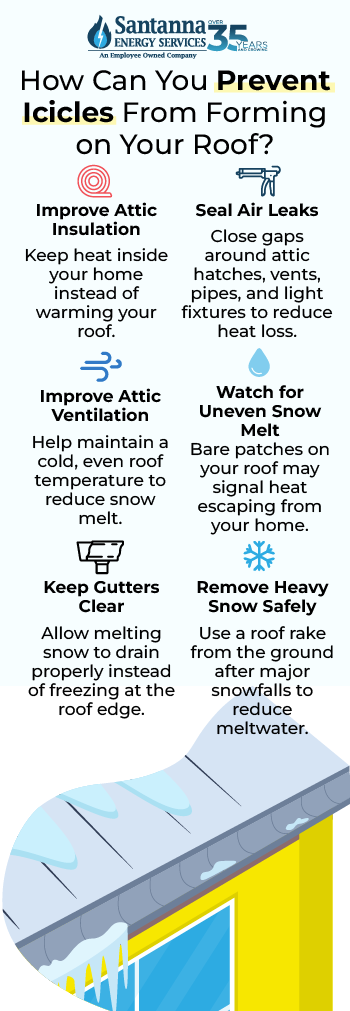
Reducing heat loss, improving airflow, and ensuring proper drainage can often lower the chances of excessive icicle buildup. Here are a few more solutions we’ve found that can help:
Improve Attic Insulation
Attic insulation helps keep heat in the living areas of your home rather than letting it reach the roof. When less heat escapes into the attic, there is less opportunity for snow to melt beneath it and create water that eventually forms icicles.
For homeowners, improving insulation can do more than help reduce icicles. It may also help maintain more consistent indoor temperatures and reduce the amount of energy needed to heat the home during winter.
Seal Air Leaks
Small openings in the upper parts of a home can allow warm indoor air to escape into the attic.
Common areas where air leaks may occur include:
- Attic hatches
- Recessed lighting
- Plumbing openings
- Electrical penetrations
- Areas around vents and ductwork
Sealing these gaps can help keep warm air inside the living space where it belongs and reduce the amount of heat reaching the roof.
Improve Attic Ventilation
Good attic ventilation helps keep roof temperatures more consistent during winter.
When air moves properly through the attic, it helps prevent certain areas of the roof from becoming significantly warmer than others. This can reduce uneven snowmelt and lower the likelihood of water refreezing into large icicles.
Ventilation works best when combined with proper insulation and air sealing.
Keep Your Attic as Close to Outdoor Temperatures as Possible
How can you prevent icicles from forming on your roof? Control your attic temperature. A cold attic helps prevent snow from melting unevenly across the roof.
When heat stays inside your living spaces instead of escaping into the attic, there is less opportunity for snow to melt and refreeze into icicles. Proper insulation, air sealing, and ventilation all work together to help keep attic temperatures more consistent during winter.
Keep Gutters Clear and Functioning Properly
Gutters help direct melting snow and water away from the roof. When gutters become clogged with leaves, debris, or ice, water may collect near the roof edge and freeze more easily. Keeping gutters clear can help water drain properly and reduce additional ice buildup along the roofline.
Remove Excess Snow Safely When Necessary
After heavy snowstorms, removing excess snow from the roof can sometimes help reduce the amount of water available to form icicles.
Many homeowners use a roof rake from the ground to remove snow near the roof edge. However, safety should always come first. Avoid climbing onto snowy or icy roofs, and consider professional assistance if snow accumulation is significant.
Inspect Your Attic Before Winter
Checking your attic before the heating season can help identify insulation gaps, air leaks, moisture issues, or ventilation problems before they contribute to excessive icicle formation.
Addressing small issues early may help reduce heat loss and prevent larger problems later in the winter.
Consider a Home Energy Assessment
If you’ve already addressed obvious issues but recurring icicles continue to form, a professional home energy assessment may help identify hidden sources of heat loss, air leaks, or insulation problems that are not easily visible.
Finding and addressing these issues can improve your home’s overall energy efficiency while helping reduce the conditions that contribute to excessive icicle formation.
While it may not be possible to eliminate every icicle, especially during harsh Midwest winters, reducing the conditions that cause excessive melting and refreezing can often make a noticeable difference. In many cases, preventing excessive icicles starts with keeping heat where it belongs: inside your home.
How Can You Safely Remove Icicles From Your Roof?
The safest way to remove icicles from your roof is to do so from the ground whenever possible. If the icicles are large, difficult to reach, or located high above walkways and entrances, it is usually best to contact a professional.
Many homeowners are tempted to knock down icicles as soon as they appear. However, removing them incorrectly can damage gutters, roofing materials, or create a risk of injury from falling ice.
If you choose to remove small icicles yourself, follow these safety tips:
Step 1: Stay on the Ground
Avoid climbing onto a snowy or icy roof. Slippery conditions can make falls much more likely during winter. Whenever possible, use tools that allow you to work safely from the ground.
Step 2: Use a Roof Rake for Snow Removal
If snow buildup is contributing to icicle formation, a roof rake can help remove snow near the roof edge without requiring you to climb a ladder. Reducing excess snow can help limit the amount of meltwater available to form additional icicles.
Step 3: Keep a Safe Distance From Falling Ice
Icicles can be surprisingly heavy. Before attempting to remove any ice, make sure people, pets, vehicles, and outdoor equipment are clear of the area below.
Step 4: Avoid Hitting Gutters or Roofing Materials
Do not use hammers, metal tools, or excessive force to break off icicles. Striking gutters or roofing materials can cause damage that may be more expensive to repair than the icicles themselves.
Step 5: Monitor for Ice Dams
If large icicles are accompanied by thick ice buildup along the roof edge, an ice dam may already be forming. In these situations, removing the visible icicles may not solve the underlying problem because additional ice can remain on the roof.
When Should You Call a Professional?
Consider contacting a professional if:
- Icicles are too high to reach safely from the ground
- Large icicles are hanging over entryways, driveways, or walkways
- Ice dams have formed along the roof edge
- You notice water stains or signs of a roof leak
- The ice buildup returns repeatedly throughout the winter
Professionals have specialized equipment and experience in safely removing icicles while minimizing the risk of damage to the roof and gutters.
While removing icicles can improve safety around your home, it is important to remember that removal does not address the reason they formed in the first place. If large icicles keep returning, it may be worth investigating whether heat loss, insulation, ventilation, or drainage issues are contributing to the problem.
FAQs
Are Icicles Dangerous?
Yes, large icicles can be dangerous because they can fall unexpectedly and cause injury or property damage.
Can Large Icicles Damage Gutters?
Yes, large icicles and ice buildup can put extra weight on gutters, causing them to sag, bend, or pull away from the house.
Can Icicles Lead to Water Damage?
Yes, recurring icicles can sometimes indicate ice dams, which may trap water on the roof and lead to leaks and water damage inside the home.
Should I Break Icicles Off the Roof?
Small icicles that can be safely reached from the ground may be removed carefully, but large icicles or roof ice should generally be left to professionals to avoid injury or damage to the roof and gutters.
Can New Roofs Still Get Icicles?
Yes, a new roof can still develop icicles if heat loss, attic insulation, ventilation, weather conditions, or roof design contribute to snow melting and refreezing.
Do Icicles Always Mean My Home Is Losing Heat?
No, icicles can form naturally from sunlight, snowfall, and temperature changes, although large or recurring icicles may sometimes indicate heat loss.
Icicles are often a normal part of winter, but large or recurring icicles may be a sign that heat is escaping from your home. While weather conditions can certainly play a role, recurring icicles may point to issues with insulation, ventilation, air leaks, or other factors that affect how well your home holds onto heat.
Bottom line: Small icicles are often harmless. Large, recurring icicles are sometimes one of the easiest visible signs that heat is escaping from your home. Improving insulation, sealing attic air leaks, and maintaining proper ventilation can reduce both icicle formation and winter energy waste.
Understanding what causes them can help you improve comfort, reduce unnecessary energy loss, and lower the risk of problems like ice dams and water damage.
Just as identifying the cause of recurring icicles can help prevent unwanted surprises during winter, having more predictable energy costs can help bring greater confidence to your household budget. Santanna’s Unlimited Energy plan offers more predictable supply charges and fewer surprises from month to month*, helping you focus less on energy uncertainty and more on keeping your home comfortable all season long.
* Restrictions apply. Enrollment based upon program eligibility. Customers using more than 125% of normal monthly usage as determined by Santanna may be required to switch plans.
Jenna Mendez is an experienced energy content professional who has spent four years researching, writing, and managing authoritative educational content for Midwest energy consumers at Santanna Energy Services. As a lifelong Illinois resident, Jenna brings firsthand knowledge of the region’s climate, communities, and household energy needs to her work.
She specializes in translating complex energy topics into clear, practical guidance about electricity and natural gas costs, appliance energy use, energy efficiency, and everyday home living. Drawing on industry research, Santanna customer data, and insights from experienced energy professionals, Jenna incorporates this knowledge into her content to help homeowners better understand their energy choices and make informed decisions for their households.