
Are Space Heaters Energy Efficient?

by Tyler Castle
12 min read
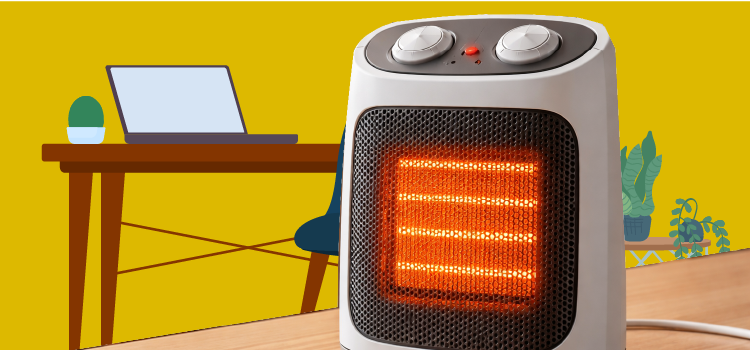
When winter temperatures drop, space heaters become a common solution for bedrooms, basements, and home offices. They promise fast warmth and are often marketed as energy efficient, which makes them appealing when heating bills start to climb.
In fact, in a recent internal survey, 67% of employee-owners at Santanna Energy Services own a space heater. Space heater use is becoming increasingly more common, especially in states with harsh winter weather.
However, many homeowners and renters notice higher electric bills after using them regularly. This raises an important question: are space heaters truly energy efficient, or do they simply feel that way? And if they're not, how can you offset your costs so you don't lose out on the comfort you need?
We're here with our 35 years of experience as an energy supplier to answer just this. We'll explain how space heaters work and if they're truly energy-efficient. Let's dive in!
Key Points of This Article:
- Space heaters are 100% energy efficient at converting electricity into heat, but whether they save energy depends entirely on how they’re used.
- They are most efficient when heating one occupied room while the central thermostat is lowered, especially in well‑insulated spaces.
- Space heaters become inefficient and expensive when used alongside normal central heating settings, run for long hours, or used as whole‑home heating.
- Electric space heaters do not produce carbon monoxide, but safety practices like avoiding extension cords and keeping heaters three feet from object, are essential.
How Do Space Heaters Work?
Space heaters create warmth by using electric resistance to turn electricity into heat. When electricity flows through internal components, such as metal coils or heating elements, those components heat up and release warmth into the room.
Different space heaters spread that heat in different ways. Some use fans to push warm air into the space, while others rely on radiant heat that warms nearby objects and people directly. Oil-filled models heat internal fluid first, then slowly release warmth over time.
Regardless of the design, most electric space heaters draw a similar amount of power while running at around 750-1500 watts. So, the true mark of how efficient your space heater depends on how you use it and how you heat the rest of your home.
Are Space Heaters Energy Efficient?
Space heaters can be energy efficient when used to heat small, occupied spaces for short periods of time.
In fact, according to the U.S. Department of Energy, electric resistance heaters like space heaters are 100% energy efficient in the sense that all the incoming electric energy is converted to heat.
However, space heaters are not designed to replace a central heating system or to run continuously throughout the day.
The more you use your space heater, especially if you run central heat at the same time, the less energy-efficient it will be, and you'll lose energy and money.
For example, someone who lowers their central heating temperature and uses a space heater only in their office for a few hours a day will typically use a lot less total energy than someone who keeps their central heating at the same temperature and runs one or more space heaters on top of it.
In the second scenario, the home is being heated twice, once by the central system and again by the space heater, which drives up electricity use without adding meaningful efficiency.
In a nutshell, a space heater can be energy efficient if it's used to spot heat one room as long as you don't increase the temperature from your central heating unit. Space heater can be inefficient if they're used as a primary heating source and multiple units are used to heat your home at the same time.
Are Space Heaters More Energy Efficient Than Central Air?
In most cases, central heating is more energy efficient for heating an entire home than using space heaters alone. Space heaters become more efficient only when they are used to heat a single, occupied room instead of the whole house.
Central heating systems are designed to distribute heat evenly and efficiently throughout a home. Space heaters are designed for targeted, short-term comfort in one area. Problems arise when both systems are used at the same time without adjusting the thermostat. And the same can be said about your next bill.
Using several space heaters at once often costs more than running a central furnace, especially in electrically heated homes.
In colder Midwest winters, longer runtimes make central heating the more efficient option for whole-home comfort, while space heaters work best only for limited, room-specific use.
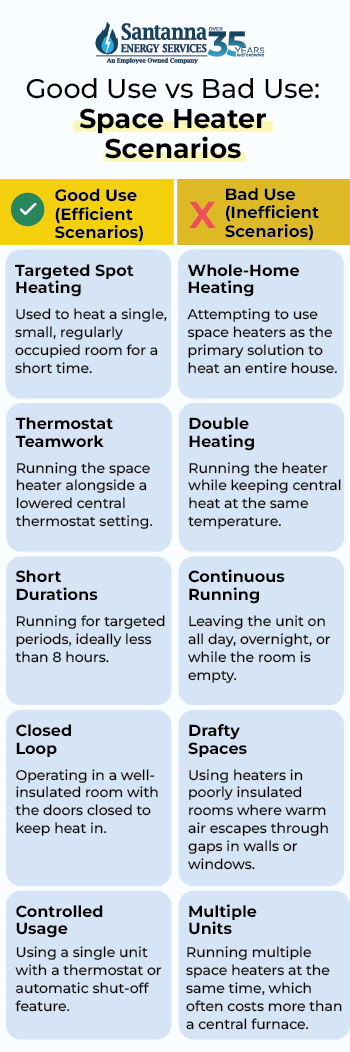
When Space Heaters ARE Energy Efficient
Space heaters work best when used intentionally. If you're interested in a space heater for an extra heating solution, it could pay off in the long run. Here's when a space heater is most efficient:
- When they're used for heating one regularly occupied room.
- When they're used alongside a lower central thermostat setting.
- When the room is well insulated, and doors are closed.
- The heater runs for short, targeted periods of time. As a rule of thumb, don't run your space heater for more than 8 hours.
- The unit includes a thermostat or automatic shut-off where its efficiency can be controlled and maintained.
When Space Heaters Are NOT Energy Efficient
Space heaters become inefficient when they are misused. They are not energy efficient when:
- They're used as a whole-home heating solution without central heating.
- They're left running all day or overnight. Especially when no one is in the room, it's heating. That's a total waste of energy!
- When there's multiple heaters running at the same time. The more space heaters you have, the less efficient they become.
- When they're used in drafty or poorly insulated spaces. Poorly insulated rooms allow warm air to escape through gaps in walls, windows, and doors. Running a space heater in these conditions means much of the heat leaks out instead of staying in the room, making the heater work harder without effectively warming the space.
- When electricity rates are high. Space heaters rely entirely on electricity, so when electric rates spike during winter months, the cost of running a heater rises quickly. In areas with higher per‑kWh rates, even short daily use can noticeably increase your bill, making space heaters far less cost‑effective.
What Are the Most Energy-Efficient Space Heaters?
When people ask which space heaters are the most energy efficient, the answer depends less on electricity savings and more on how effectively the heater delivers and retains heat in a single space.
In general, the most energy-efficient space heaters are those that provide steady, consistent warmth without cycling on and off as often. Here are some of our favorite options for the most energy-efficient space heaters:
- Oil-filled radiators: Often the most energy efficient option for long, steady use. They retain heat well, run quietly, and continue warming a room even after the unit cycles off.
- Infrared heaters: Highly efficient for occupied spaces because they heat people and objects directly rather than warming all the air in the room.
- Micathermic heaters: Combine radiant and convective heat, offering even warmth with minimal noise and steady performance.
- Ceramic or fan heaters: Efficient for short bursts of heat, but less efficient for long runtimes due to frequent cycling.
In the end, no space heater uses less electricity by design. Efficiency comes from choosing the right type of heater for your use case and avoiding unnecessary runtime. If you're looking for specific models for the most energy-efficient heaters, check out our blog!
Do Space Heaters Emit Carbon Monoxide?
Electric space heaters do not emit carbon monoxide because they do not burn fuel, and with proper maintenance and ventilation, carbon monoxide won't be emitted.
Space heaters work by using electric resistance to generate heat, which means there is no combustion and no carbon monoxide byproduct involved.
But according to the U.S. Department of Energy, improperly vented, rusted or corroded space heaters may emit dangerous levels of carbon monoxide (CO) and other gases into the home, causing sickness and death.
As a rule of thumb, if your model is over 5 years old, it's probably a good idea to invest in a new model or get your older model serviced.
Also, keep an extra eye on non-electric heaters. Some of these, such as propane, kerosene, or natural gas space heaters, can emit carbon monoxide and must be used with proper ventilation.
These types of heaters are not intended for enclosed indoor spaces unless specifically designed and rated for indoor use.
Here's the key to remember: If a space heater plugs into a standard electrical outlet, it does not produce carbon monoxide. Carbon monoxide risks come from fuel-burning heaters, not electric models.
Always follow manufacturer guidance and local safety recommendations when using any supplemental heating source.
Do Space Heaters Dry Out the Air?
Space heaters do not directly remove moisture from the air, but they can make indoor air feel drier during the winter.
As air warms, its ability to hold moisture increases. When a space heater raises the temperature in a room, relative humidity drops, which can lead to dry skin, irritated sinuses, or static electricity, even though no moisture is actually being removed.
If your space heater is making the air in your home dry, here are some ways you can reduce these effects in a few simple ways:
- Use a humidifier in frequently heated rooms to replace moisture lost as temperatures rise and help prevent dry skin, static electricity, and irritated sinuses.
- Keep doors closed to limit over-drying larger areas and concentrate both heat and humidity where you actually need it.
- Avoid running space heaters longer than necessary, since extended runtimes continue warming the air and can further lower relative humidity.
- Monitor indoor humidity levels during winter and aim for a healthy range of about 30–50% for comfort and respiratory health.
- Place a small bowl of water near (but not on) the heater to add a bit of passive moisture to the air as the room warms.
- Seal air leaks around windows and doors to keep warm, humid air inside instead of letting it escape and be replaced by cold, dry outdoor air.
It's important to note that space heaters don't dry out the air themselves, but warmer air can feel drier if your humidity isn't managed.
Will a Space Heater Save You Money?
A space heater can save money in limited situations, but it can just as easily increase costs if used incorrectly.
Space heaters may help reduce heating costs when they allow you to lower your central thermostat and heat only the room you are actively using. This works best for short periods and in well-insulated spaces.
However, if a space heater is used while the central system continues running at the same temperature, overall energy use increases. Long runtimes, overnight use, and running multiple heaters can quickly erase any potential savings.
Space Heater Safety Tips
Using a space heater safely is just as important as using it efficiently. Here at Santanna, we always preach safety even when using the most basic appliances. While you use your space heater, some safety tips you should keep in mind:
- Keep heaters at least three feet away from furniture, curtains, and bedding. This clearance reduces the risk of nearby materials overheating or catching fire, which is one of the most common causes of space heater-related incidents.
- Plug space heaters directly into a wall outlet (never use extension cords). Space heaters draw a lot of power, and extension cords or power strips can overheat, increasing the risk of electrical fires.
- Turn heaters off when sleeping or leaving the room. Unattended heaters can become a safety hazard if they tip over, malfunction, or overheat while no one is around to monitor them.
- Avoid using space heaters in bathrooms unless the model is specifically rated for it. Bathrooms have higher moisture levels, which increases the risk of electric shock if the heater is not designed for wet environments.
- Choose models with tip-over protection and automatic shut-off features. These built-in safeguards turn the heater off if it falls, overheats, or reaches unsafe conditions, adding an extra layer of protection.
- Place heaters on a flat, stable surface to prevent tipping, especially in high-traffic areas or homes with pets and children.
- Keep space heaters away from water sources and never handle them with wet hands to reduce the risk of electrical shock.
FAQs
How much does it cost to run a space heater overnight?
If you run it every night, you'd add roughly $64 per month to your electricity bill.
Running a typical 1,500‑watt space heater overnight (about 8 hours) uses roughly 12 kWh of electricity. At the U.S. average rate of 17.78¢ per kWh as of November 2025, that comes out to about $2.13 per night.
Can a space heater raise your electric bill?
Space heaters draw a significant amount of electricity and can absolutely raise your electricity bill.
Long runtimes, overnight use, or running multiple heaters at once can quickly increase your electric bill. Bills are also more likely to rise if the space heater is used in addition to central heating rather than as a replacement.
Is it cheaper to turn up the heat or use a space heater?
For heating an entire home, turning up central heat is usually more efficient and can be cheaper. For heating one occupied room, using a single space heater while slightly lowering the central thermostat can be cheaper. The key difference is whether the space heater replaces some central heating or simply adds to it.
Space heaters can be energy efficient when used the right way; as a short-term, room-specific heating solution. They are not designed to replace central heating systems or to run continuously throughout the day.
Understanding how efficient a space heater is, where you use it, and whether you adjust your central thermostat matters far more than the heater itself. When paired with smart usage habits and the right energy plan, space heaters can provide comfort without unnecessary energy waste. Consider potentially offsetting your space heater consumption by enrolling in an Unlimited Energy Plan which keeps your supply charge the same no matter how much energy you use.* Interested? Check it out now!
* Restrictions apply. Enrollment based upon program eligibility. Customers using more than 125% of normal monthly usage as determined by Santanna may be required to switch plans.
Tyler is an experienced energy professional, having worked for Santanna Energy Services, for the past four years. He is passionate about renewable energy and believes that diversifying the energy grid is the key to a sustainable future. Tyler is dedicated to supplying consumers with the best possible energy solutions and works diligently to make sure that Santanna can deliver the highest quality service.