

Do Ohio New Construction Homes Need Termite Control? Here’s What To Know

by Jenna Mendez
16.2 min read
New construction homes are popping up all over Ohio, and many buyers assume a brand-new house means no worries about termites. But even a fresh build isn’t automatically protected.
Termites are simply a reality of homeownership. In fact, in a recent survey of Santanna’s employee-owners, 24% reported experiencing a termite infestation in their homes. That prevalence is exactly why even new homeowners should understand what protections are in place and where gaps can exist.
Looking to build a new home in Ohio? We’ll walk you through what to know about termite risk in Ohio, what builders are required to do, what protection options cost, and the smart steps every homeowner can take to safeguard their investment. After all, termite control isn’t just about keeping pests away; it’s about protecting your home’s structure, avoiding long-term repair costs, and even preserving its energy efficiency.
Key Points of This Article:
- Ohio is classified as a moderate-to-heavy termite risk zone, meaning termites are active in most counties and pose a significant threat to homes, including new construction.
- New construction homes in Ohio need termite control, because termites live in soil and can attack fresh wood and foundations.
- Pre-construction termite treatment is highly recommended as it creates a protective barrier around the foundation, preventing costly structural damage and supporting long-term energy efficiency.
What Types of Termites Are Found in Ohio?
Before we get into the nitty-gritty, let’s review the different types of termites in Ohio that you could encounter. Understanding which termite species are found in Ohio is an important part of protecting your home.
Termites behave differently depending on their species, and knowing which ones are active in your area helps you recognize real risks, spot early warning signs, and choose the right type of protection. Below are the termite species you may encounter in Ohio and what you need to know about each one.
Eastern Subterranean Termites
The Eastern Subterranean Termite is the most common and destructive termite species in Ohio, responsible for nearly all termite problems across the state.
These termites live in large underground colonies and feed on anything containing cellulose, including wood, cardboard, and paper. They prefer moist soil and typically enter homes through tiny cracks in the foundation, crawl spaces, porch posts, or any wood that touches the ground.
One of the earliest signs of a termite infestation is the presence of mud tubes along exterior walls or foundation surfaces, which termites use to travel above ground while protecting themselves from air and light exposure.
Because they live out of sight and require constant moisture, they can cause significant structural damage long before a homeowner notices anything wrong. Their ability to spread quietly through framing, flooring, and insulation makes them a serious risk for both new and older Ohio homes.
Drywood Termites
Drywood Termites are not native to Ohio’s climate, but they can appear in rare situations when they are accidentally brought into the state. So, it’s important we cover these guys too, just in case you encounter them.
Drywood termites usually appear when infested furniture, wooden décor, shipping crates, or lumber arrives from warmer regions where drywood termites are common. Unlike subterranean termites, drywood termites do not require soil or moisture to survive; they live entirely inside the wood they infest.
Because of this, they can remain hidden inside furniture, hardwood trim, or structural pieces long enough to cause damage if not detected.
Although drywood termites cannot survive Ohio winters outdoors, according to Griffin Pest, they can continue to thrive inside heated homes and can thrive in Ohio’s hot summer temperatures.
While drywood termites are far less common than subterranean termites in Ohio, homeowners should still be aware of the possibility, especially when purchasing secondhand furniture or bringing in wood products from out of state.
Dark Southeastern Subterranean Termites
Dark Southeastern Subterranean Termites are another soil-dwelling termite species found mainly in the eastern and southern U.S. While they’re less common in Ohio, they can appear in areas with the right conditions, especially in warm, moist soil or shaded spots around the home.
Like other subterranean termites, they live underground, need moisture to survive, and build mud tubes to reach wood. They can damage foundations, framing, and flooring if the colony becomes established.
While Ohio’s colder winters limit their spread outdoors, these termites can still survive in heated crawl spaces, damp basements, or areas with ongoing moisture issues. Homes with poor drainage, heavy mulch, or soil-to-wood contact are more likely to attract them.
What Do Termites Look Like in Ohio?
Termites can be easy to miss because they spend most of their time hidden in soil or wood. But knowing what they look like helps Ohio homeowners recognize early warning signs before major damage occurs. Here’s what the two termite types found in Ohio typically look like.
Eastern Subterranean Termites (Common in Ohio)
Eastern Subterranean Termites are typically pale to light brown, with soft, elongated bodies and straight antennae.
They have a uniform body shape without a narrow waist. When they swarm in spring, the winged termites have dark brown bodies and two long wings of equal length that extend past the abdomen. Their wings are often found around windows and doors after warm, rainy days. These termites are the most common in Ohio.
Drywood Termites (Rare in Ohio)
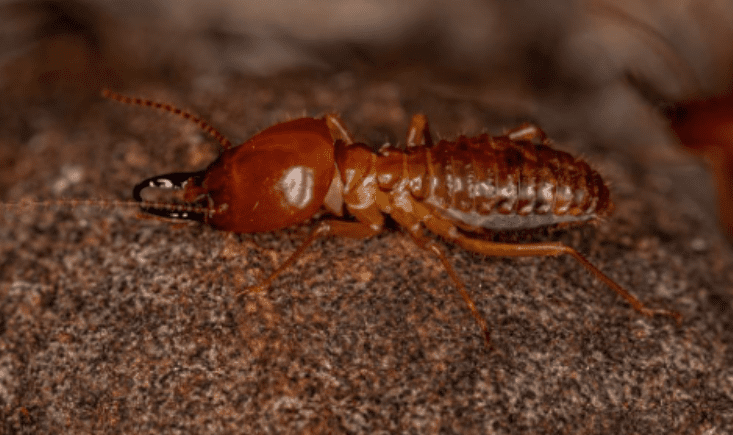
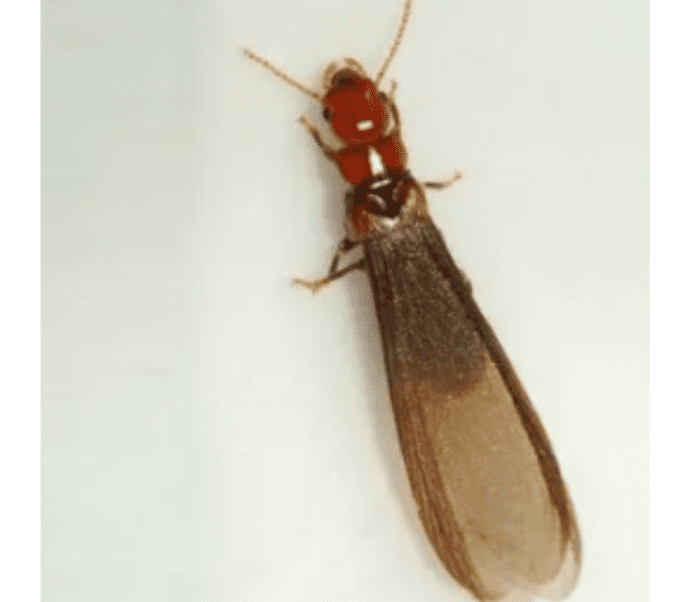
Drywood Termites have a light brown to reddish-brown body, with a smooth, oval-shaped appearance. Their wings are long, clear to light brown, and have visible veins. Like subterranean termites, their antennae are straight, but drywood termites tend to have a slightly more rounded, thicker body. They can appear indoors when infested furniture or wood from other states is brought into a home.
Dark Southeastern Subterranean Termites
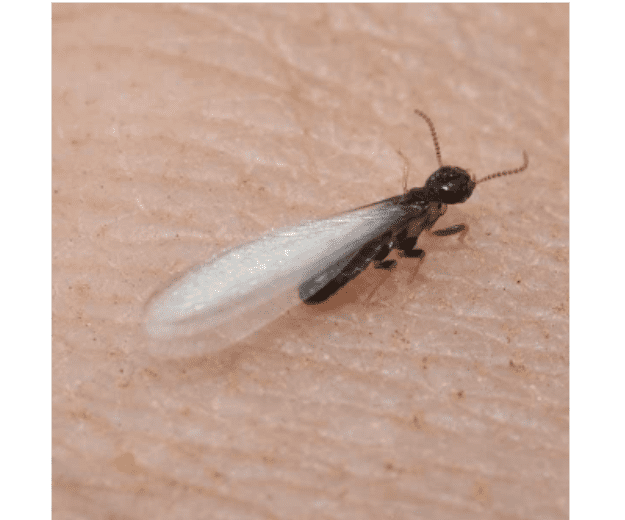
Dark Southeastern Subterranean Termite swarmers have a dark, slender body with a smooth, uniform shape and a rounded head. Their wings are long, pale, and translucent, stretching well beyond the tip of their abdomen and giving off a soft, shimmery appearance.
They have straight, bead-like antennae, and their waist does not narrow like an ant’s. These winged termites are usually seen during swarm season when they leave the colony to start new ones, often gathering around windows, doors, or lights after warm, humid weather.
Do Ohio New Construction Homes Need Termite Control?
The short answer is yes, new construction homes in Ohio need termite protection primarily because Ohio falls within a moderate-to-heavy termite pressure zone according to pest control giant Orkin.
This means that termites are active in most Ohio counties, and that builders of new homes are required to use termite pest control.
Many homeowners assume termites only attack older homes, but that’s not the case. Termites live in the soil, not the house itself. New homes still settle, and if the soil around the foundation remains disturbed for months after or during construction, moisture can build up around new landscaping or fresh concrete. All of these conditions make a home attractive to subterranean termites.
Pre-construction termite treatment is important because it forms a long-lasting protective barrier around the foundation and wood framing. This barrier helps prevent costly structural damage, protects insulation, and supports long-term energy efficiency by keeping the building envelope intact.
Is Termite Protection Required by Law in Ohio?
In Ohio, termite protection requirements vary by location. There isn’t one statewide rule that applies to every new construction home, but many areas and lenders have their own guidelines that homeowners need to know about.
Some counties and cities in Ohio, especially those with a long history of termite activity, such as Cleveland, Columbus, and Cincinnati, may require termite pretreatment or inspection as part of their local building practices.
These rules can differ from one community to another and may change as local building departments update their standards.
Because most of Ohio is classified as a moderate-to-heavy termite risk zone, many new construction homes receive pretreatment through builder practices, loan requirements, or local inspection rules.
Why Ohio New Construction Homes Need Termite Control
Even though a home may be brand-new, several factors unique to Ohio’s climate, soil conditions, and construction process make termite protection a smart move from day one.
These are the most common reasons new construction is still vulnerable to termites and why early prevention matters:
Ohio has an active subterranean termite population.
As we’ve said, Subterranean termites are common throughout Ohio, and they can enter a home from the soil even if the structure is brand-new. Plus, if you’re building your home during spring or summer, when termites tend to swarm, according to Ohio State University Extension, your brand-new home will be especially vulnerable.
Construction sites create ideal conditions for termites.
Disturbed soil, moisture around new concrete, and leftover wood or debris can attract termites before the home is even completed. In Ohio, these conditions can persist for weeks or months as homes are framed, poured, and finished, giving termites plenty of time to establish nearby colonies. Without early protection, termites may already be present around the foundation before homeowners ever move in.
Brand-new wood is still a food source.
Termites feed on cellulose in wood and will exploit any accessible wood near the soil, including fresh framing lumber used in new construction. This makes early protection critical before framing lumber has prolonged contact with surrounding soil and moisture.
Pre-construction treatment is more protective and cost-efficient.
Applying a termite barrier during construction is far more effective than treating later, because it protects the foundation before any pathways into the home develop. It also avoids the need for drilling, trenching, or invasive treatments after the home is finished.
Termite damage often goes unnoticed.
Termites can eat through walls, floors, and support beams for years without showing visible signs, leading to expensive hidden damage. By the time symptoms appear, repairs are often far more extensive and costly than early prevention.
Most homeowner insurance policies do not cover termite damage.
Repairs can cost thousands of dollars, and insurance typically excludes termite-related destruction, leaving homeowners fully responsible. This makes preventive treatment one of the few ways to financially protect your home from termite-related losses.
Some Ohio counties and lenders require termite treatment.
Some Ohio counties and lenders require termite treatment, especially for homes financed with VA or FHA loans. Lenders such as Huntington National Bank, Fifth Third Bank, and CrossCountry Mortgage follow these loan guidelines, which often require termite inspections or pretreatment in moderate-to-heavy termite zones, such as Ohio.
Why New Homes Are Still Vulnerable to Termites
Many Ohio homeowners assume a brand-new house is safe from termites—but termites don’t care how old the home is. What matters to them is wood, moisture, and access to the soil, and new construction often provides all three.
Here’s why new homes are still at risk:
- Settling creates small cracks and gaps: As a new home settles during the first few years, tiny cracks can form in the foundation or around utility lines. These small openings give termites the perfect entry point into the home without being noticed.
- Landscaping and mulch can break the barrier: Even if the soil was treated during construction, adding mulch, flowerbeds, or shrubs too close to the foundation can create new termite pathways. Mulch holds moisture and provides cover, allowing termites to cross treated areas.
- Moisture from AC condensation and drainage issues: Termites are drawn to moisture. New homes often have damp soil around the foundation due to settling, sprinkler systems, or AC condensation lines. Poor drainage or downspouts that dump water near the house can make conditions even more attractive.
- Fresh lumber is easy food for termites: New framing lumber is softer and contains more cellulose than older, dried wood. Subterranean termites can tunnel through this newer wood quickly, especially where it touches soil or has higher moisture content.
Even though new homes look strong and spotless on the outside, the conditions around new construction are exactly what termites need: fresh wood, warm soil, and hidden entry points.
What Areas of Ohio Have the Highest Risk of Termite Infestation?
Termites are found throughout Ohio, but some regions experience higher activity because of soil moisture, older housing stock, dense neighborhoods, and warmer microclimates.
Cities with older foundations, high groundwater levels, and dense tree cover tend to have the most consistent termite pressure. Even new construction neighborhoods in these areas can face elevated risk due to fresh soil disturbance and moisture around new foundations.
Below are the Ohio cities and surrounding areas considered higher-risk zones for termite activity:
Akron, Alliance, Ashland, Ashtabula, Athens, Barberton, Beavercreek, Bowling Green, Brook Park, Brunswick, Canton, Centerville, Chillicothe, Cincinnati, Cleveland, Cleveland Heights, Columbus, Cuyahoga Falls, Dayton, Delaware, Dublin, East Cleveland, Eastlake, Elyria, Euclid, Fairborn, Fairfield, Findlay, Gahanna, Garfield Heights, Green, Grove, Hamilton, Hilliard, Huber Heights, Hudson, Kent, Kettering, Lakewood, Lancaster, Lima, Lorain, Mansfield, Maple Heights, Marion, Mason, Massillon, Medina, Mentor, Middletown, Newark, Niles, North Olmsted, North Ridgeville, North Royalton, Norwood, Oxford, Parma, Parma Heights, Piqua, Portsmouth, Reynoldsburg, Riverside, Rocky River, Sandusky, Shaker Heights, Sidney, Solon, South Euclid, Springfield, Steubenville, Stow, Strongsville, Toledo, Trotwood, Troy, Upper Arlington, Warren, Westerville, Westlake, Willoughby, Wooster, Xenia, Youngstown, and Zanesville.
These areas aren’t the only places termites appear, but they are locations where termite activity has been consistently documented. Homeowners in or near these cities should be especially mindful of termite prevention and inspections, whether they live in a brand-new build or an older home.
How Much Does Termite Protection Cost for New Construction Projects in Ohio?
Termite protection for a newly built home in Ohio typically falls within a moderate price range, around $500 to $600 for professional termite protection, though the exact cost depends on the home’s size and the type of treatment used.
The lower end usually reflects smaller homes or basic soil treatments, while higher-priced treatments cover larger foundations or more advanced barrier systems.
Because soil conditions, moisture levels, and construction design can all affect how much protection a home needs, the most reliable way to get an accurate estimate is to have a licensed pest control company inspect the property.
A professional can explain which treatment options work best for new construction in Ohio’s termite-risk zones and help ensure your home is properly protected from day one.
How Termites Affect Energy Efficiency and Home Comfort
Termites don’t just damage wood; they can also make your home harder and more expensive to heat and cool. When they chew through beams or wall studs, they create small gaps that let indoor air escape and outdoor air seep in. This means warm air leaks out in winter and hot, humid air enters in summer, forcing your HVAC system to work overtime.
Termites can also damage insulation, especially when tunneling through walls. Insulation that’s chewed through or holding moisture can’t block heat properly. This reduces your home’s ability to stay cool in summer and warm in winter, raising your energy bills.
Imagine a home in Columbus with a small patch of termite damage behind a living room wall. Because air slips through gaps in the wood and insulation, the AC has to run longer on hot July days. A summer electric bill that used to stay steady can suddenly climb higher simply because the home is leaking air due to termite damage.
Here are a few more ways termites quietly affect your home’s energy use:
Increased humidity inside the home
Moisture from termite tunnels and damaged insulation can raise indoor humidity levels. This makes your AC work harder to remove moisture and cool the air. This could lead to higher electricity bills in the long run and wear and tear on your air conditioning system.
Reduced structural tightness
Homes rely on tight construction to maintain temperature. Termite-damaged framing weakens that “seal,” allowing more drafts and uneven room temperatures.
Cold or hot spots in certain rooms
As termites hollow out wood and disrupt insulation, some areas of the home may stay warmer or cooler than others, reducing overall comfort and increasing energy use.
Even a small termite issue can quietly drive up your utility bills and reduce your home’s overall comfort. This is why early prevention and energy awareness go hand in hand.
When Is Termite Season in Ohio?
In Ohio, termite season typically runs from March through early May when winged termites swarm to start new colonies.
This is the time of year homeowners are most likely to notice termites around windows, doors, or foundations.
Cold winters don’t wipe out termite colonies completely. Instead, termites move deeper underground to stay warm and active, then return closer to the surface once spring temperatures rise. Because they continue feeding year-round, even when you can’t see them, termites can cause hidden damage long before they’re discovered.
How Do Termites Enter Your Home?
In Ohio, most termite activity comes from Eastern Subterranean Termites, which live deep in the soil and work their way upward as temperatures warm. Even in brand-new construction, termites often enter through:
- Small cracks in the foundation that are created as the home settles
- Gaps around plumbing or utility lines where soil stays moist
- Mulch or landscaping placed too close to the foundation
- Areas with poor drainage or standing water, which create ideal soil conditions for termites
Because these are soil-based pests, termites don’t need old wood or a damaged home — just moisture and a hidden pathway.
FAQs
Are termite treatments safe?
Yes. When applied by a licensed professional, termite treatments are considered safe and follow strict EPA regulations. Products are applied to soil or sealed areas, not sprayed inside living spaces.
What’s the difference between termite pretreatment and a termite bond?
Pretreatment is done during construction to protect the home before termites ever show up. A termite bond is a service contract that covers ongoing inspections and may include retreatment or repair guarantees after the home is built.
How long does a termite pretreatment last?
Most soil pretreatments last 5 to 10 years, depending on the product and soil conditions. Some physical barriers last even longer.
How do I know if my builder used termite protection?
Check your closing documents or ask the builder directly. Most pretreatments come with a certificate, warranty card, or treatment record that you should receive at closing.
Is one-time pretreatment enough?
Not always. A pretreatment protects your home in the early years, but most products eventually break down.
How often should new homes be checked for termites?
Experts recommend a professional inspection once a year to catch early signs before damage spreads.
Can I treat termites at home by myself?
No. DIY sprays only kill the termites you can see and can actually make the colony harder to eliminate. It’s recommended to hire a licensed professional because they use tools and products that homeowners cannot safely or effectively apply themselves.
Protecting your new Ohio home from termites is one of the most important steps you can take to keep it strong, efficient, and worry-free for years to come. With the right pretreatment, drainage, and moisture control, your home stays safer, healthier, and much more energy efficient.
And if you’re already thinking about long-term protection and supporting renewable energy, take a look at our Earth-Friendly Electricity plans! Get the energy you need for your home and match 100% of your usage with renewable energy credits while doing it!
Jenna Mendez is a Midwest native with lifelong roots in Illinois and time spent in Ohio during college, giving her a deep understanding of the Midwest region’s people, climate, and energy needs. She brings firsthand experience and local insight to topics that matter to Midwest homeowners, especially energy efficiency, sustainability, and home living. Jenna specializes in writing about eco-friendly living, all things Midwest, renewable energy, and practical ways to reduce energy costs. Jenna brings a trusted, and local hometown voice to every article she writes, helping readers live well, and sustainably, right where they are.