
Electric vs Gas Pressure Washers: Which Is More Energy Efficient for Home Use?

by Tyler Castle
19.9 min read
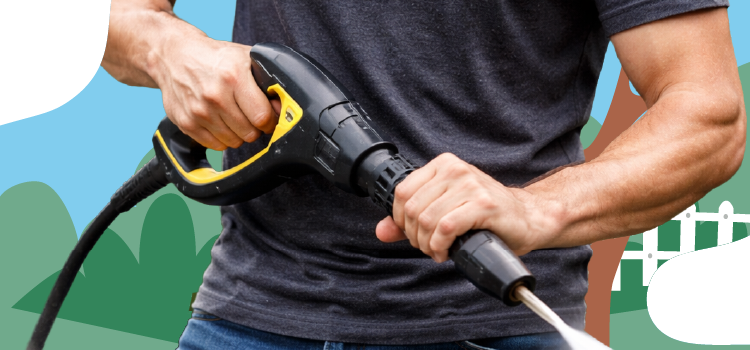
If you're shopping for a pressure washer, the biggest decision usually isn't about brands or attachments. It's whether electric or gas will actually handle your cleaning needs without wasting money or energy.
In fact, in a recent internal survey, 58% of Santanna Energy Services employee-owners said energy efficiency would influence their decision when choosing between an electric or gas pressure washer for outdoor home maintenance. So, you're not alone if you're factoring energy efficiency in your purchasing decision, too.
Many homeowners assume gas pressure washers are more powerful, while electric ones are cheaper but weaker. That assumption often leads to buying a more expensive machine than needed or spending more on fuel, maintenance, and energy than expected, especially if pressure washing only happens a few times a year.
In this guide, we break down electric vs gas pressure washers and what you need to know about cost and efficiency so you can make the right choice for your lifestyle.
Key Points of This Article:
- For most everyday home cleaning, an electric pressure washer is usually the more energy-efficient and budget-friendly option.
- Gas pressure washers provide stronger cleaning power but use more fuel and require more maintenance, which can cost more over time.
- Pressure washing has very little impact on your electric bill; a typical 30-minute session usually costs less than 30¢ and is small compared to heating, cooling, and other major appliances.
- If you live in a colder climate, especially in Midwest states where temperatures drop below freezing, winterizing your pressure washer is important to prevent damage.
How Electric and Gas Pressure Washers Work
Pressure washers clean by pushing water through a pump at high pressure and forcing it out through a small nozzle. That strong spray helps lift dirt, mildew, algae, and grime from hard surfaces like concrete, siding, decks, and fences.
Electric and gas pressure washers do the same basic job. The main difference is what powers the pump.
An electric pressure washer uses an electric motor. You plug it into a grounded outlet, connect to a garden hose, and the pump builds pressure when you squeeze the trigger. Many electric models are built for light to moderate home cleaning, like washing a patio, outdoor furniture, or your car, and are easy to start and stop during a job.
Because electricity and water are used together, electric pressure washers require attention to outlets, cords, and GFCI protection.
A gas pressure washer uses an engine to power the pump. It is designed for outdoor use and heavier cleaning jobs, like long driveways or heavily stained siding. Once running, the engine may continue to run even when you stop spraying, which can affect fuel use and noise.
Gas engines also release emissions, including carbon monoxide. The National Institute for Occupational Safety and Health (NIOSH) advises that gas pressure washers must never be used in enclosed or partially enclosed spaces.
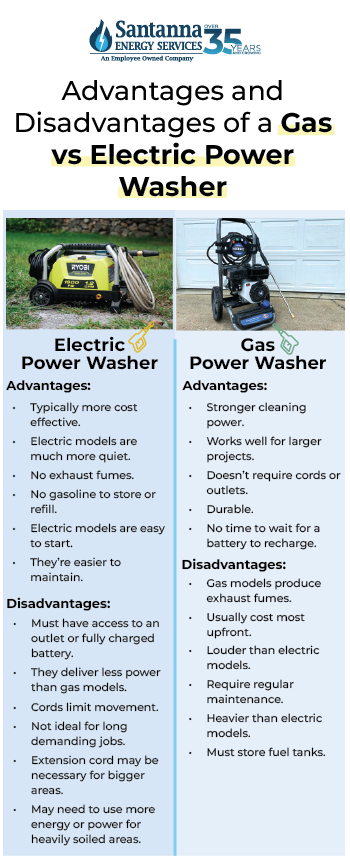
Gas vs Electric Pressure Washer Advantages
Both gas and electric pressure washers have clear advantages. The right choice depends on the size of your projects, how often you clean, and how much power you truly need. Below are the key advantages of each type to help you compare them side by side.
Advantages of an Electric Pressure Washer
Electric pressure washers use electricity instead of gasoline. Most models plug into a standard outlet, while others run on a rechargeable battery. Below are the main advantages of choosing an electric pressure washer for home use:
- Electricity typically costs less than natural gas. That means it usually costs less to purchase than gas models, which makes them practical for homeowners who only need light cleaning a few times a year.
- They are much quieter, which can be helpful in neighborhoods where noise carries far.
- They do not produce exhaust or fumes while cleaning. This means electric power washers most often burn clean energy!
- There is no gasoline to store or refill, which keeps things simpler.
- Many models are lightweight and easy to move around patios, decks, or small yards.
- They are easy to start, often with a simple push button.
- They are easier to maintain because there is no engine oil, spark plug, or fuel system to manage.
For simple, light cleaning tasks, electric pressure washers often feel straightforward and low maintenance.
Advantages of a Gas Pressure Washer
Gas pressure washers use a small gasoline-powered engine and are built for tougher cleaning jobs. Below are the main advantages of choosing a gas pressure washer for home use:
- They provide stronger cleaning power, which can make a noticeable difference on driveways, sidewalks, and heavily stained surfaces.
- They work well for larger projects that take longer to finish.
- They do not require cords or outlets, giving you more freedom to move across wide areas.
- They are often durable when properly maintained.
- They have no battery to recharge, so runtime is not limited by cord length or battery life.
Gas pressure washers are often chosen when heavy cleaning power matters more than convenience.
Gas vs Electric Pressure Washer Disadvantages
Every pressure washer comes with trade-offs. Understanding these ahead of time can help you choose the right tool for your home and avoid paying for more power or complexity than you truly need. Below are the disadvantages to consider for each type.
Disadvantages of an Electric Pressure Washer
Electric models are convenient and easy to handle, but they do have limits, especially for larger or heavier cleaning projects. Below are the main drawbacks to keep in mind if you are considering an electric pressure washer for home use:
- Electric pressure washers need electricity to run, which means you must have access to an outlet or a fully charged battery.
- They usually deliver less power than gas models, which can make tough concrete or deeply stained surfaces take longer to clean.
- Power cords or battery life can limit movement during larger projects.
- For long or demanding jobs, electric models may need occasional pauses to prevent overheating, which can slow down the cleaning process.
- Extension cords may be necessary for bigger areas, which adds setup time and requires careful attention to safety.
Electric pressure washers may feel underpowered if fast results are expected on very dirty or large surfaces.
Disadvantages of a Gas Pressure Washer
Gas models provide more power but require more maintenance and attention. Below are the main disadvantages to consider before choosing a gas pressure washer:
- Gas pressure washers produce exhaust fumes and must only be used outdoors.
- They are significantly louder than electric models, which may be a concern in residential neighborhoods.
- They usually cost more upfront compared to electric units.
- They require regular maintenance, such as oil changes and engine care.
- They are often heavier and can be harder to start.
- They use gasoline, which means storing fuel and refilling the tank as needed.
- For homeowners who clean infrequently, a gas pressure washer can feel like more machine than necessary.
To make these differences easier to see side by side, let’s look at a simple comparison table that highlights the key factors homeowners usually care about most.
Key Comparison: Electric vs Gas Pressure Washers
| What you’re comparing | Electric pressure washer | Gas pressure washer | Which is better for you? |
| Energy use and efficiency | Uses electricity. Cost depends on run time and electric rate. | Uses gasoline. Cost depends on fuel use and run time. | Electric is usually easier to budget for occasional use. |
| Power and performance | Usually 1,300 to 1,700 PSI. | Usually 2,000 to 2,800 PSI. | Gas cleans heavy grime faster. |
| Cost to buy and run | Lower purchase cost. Lower operating cost. | Higher purchase cost. Higher fuel cost. | Electric costs less for light use. |
| Convenience | Plug in and start. Limited by cord length. | Portable. Heavier and often pull-start. | Electric is simpler. Gas offers mobility. |
| Maintenance | Minimal upkeep. | Regular engine maintenance. | Electric is easier to own. |
| Noise | Quieter. | Louder, up to about 85 dB. | Electric is more comfortable. |
| Environmental impact | No exhaust at home. | Produces exhaust while running. | Electric keeps local air cleaner. |
| Safety | Electrical safety matters. | Carbon monoxide risk. | Gas adds extra safety concerns. |
Electric vs Gas Pressure Washer: Which Is More Energy Efficient for Your Home?
Now that you’ve seen the side-by-side comparison, let’s slow it down and focus on one important question. Which one actually uses less energy in a typical home setting? Efficiency is so important to homeowners when purchasing a pressure washers.
In fact, our internal survey found that 42% of Santanna employee-owners consider energy efficiency a deciding factor when purchasing a pressure washer. So, let’s break down which option truly uses less energy in real home settings.
For most homes, an electric pressure washer uses less energy and is typically more efficient. It only uses power when you are actually spraying, and it costs just a few cents to run for short cleaning jobs.
Some people think gas pressure washers are better because they are stronger. That is true for very big or very dirty jobs. But gas models use gasoline and often keep running even when you stop spraying. This means they can use more energy, especially for small jobs.
Electric pressure washers work well for the kind of cleaning most homeowners do. Washing cars, cleaning patio furniture, or rinsing siding usually takes only a short time. For these jobs, electric models finish the work without wasting energy.
Gas pressure washers can make sense when the job is large, like a long driveway or thick dirt on concrete. They use more energy, but they clean faster. For big jobs done often, finishing quicker can help balance out the extra fuel used.
The key is matching the washer to the job. Using a gas pressure washer for small tasks can mean using more fuel than needed. On the other hand, using an electric model for heavy-duty cleaning can take longer and feel less efficient.
Here’s a simple way to think about it:
- Use an electric pressure washer for most light-to-moderate home cleaning, especially when energy savings and convenience matter.
- Use a gas pressure washer when the project is large, stubborn, or needs stronger power to finish more quickly.
Energy efficiency is not just about power. It is about using the right tool, so you do not use more energy than you need.
Cost to Run an Electric Pressure Washer Per Day, Week, Month, Year (at 17.78 cents per kWh)
| Electric Pressure Wattage | 1 Day (30 min) | 1 Week (7 days) | 1 Month (30 days) | 1 Year (365 days) |
| 1500 W (1.5 kW) | $0.13 | $0.93 | $4.00 | $48.67 |
| 2000 W (2.0 kW) | $0.18 | $1.24 | $5.33 | $64.90 |
| 2500 W (2.5 kW) | $0.22 | $1.56 | $6.67 | $81.12 |
| 3000 W (3.0 kW) | $0.27 | $1.87 | $8.00 | $97.35 |
For this guide, we use the U.S. average residential electricity price of 17.78 cents per kWh as of November 2025, reported by the U.S. Energy Information Administration.
Cost to Run a Gas Pressure Washer Per Day, Week, Month, Year (at $2.796 Per Gallon)
| Gas Pressure Washer Fuel Rate | 1 Day (30 min) | 1 Week (7 days) | 1 Month (30 days) | 1 Year (365 days) |
| 0.3 gal per 30 min | $0.84 | $5.87 | $25.16 | $306.16 |
| 0.4 gal per 30 min | $1.12 | $7.83 | $33.55 | $408.22 |
| 0.5 gal per 30 min | $1.40 | $9.79 | $41.94 | $510.27 |
For this guide, we use an average gasoline price of $2.796 per gallon as of January 2026, reported by the U.S. Energy Information Administration.
How Much Will Pressure Washing Affect My Electric Bill?
For most homeowners, pressure washing has very little impact on the electric bill. Electric pressure washers run for short periods and use far less electricity than major appliances.
In many cases, a typical 30-minute cleaning session with an electric pressure washer costs less than 30¢, depending on your local electricity rate and the model you’re using. When you compare that to your total monthly energy use, it’s a very small amount.
Think about what really drives your electric bill. Heating and cooling systems, water heaters, laundry machines, ovens, and refrigerators run much more often and use far more energy over time. Pressure washing is usually occasional and short-lived.
So, while it may feel like a powerful tool, the overall impact on your monthly electricity cost is minimal for most households.
How Can You Pressure Wash More Efficiently and Lower Your Energy Use?
Let’s bring it back to something you can control: your pressure washer’s energy consumption. The way you prepare and operate the washer can make a noticeable difference.
The goal is simple: do the job well without running the pressure washer longer than necessary. Here’s how you can pressure wash more efficiently and lower your energy use without making the process more complicated:
Step 1: Plan the job before you turn the washer on
Walk around the area first. Then move furniture, toys, and rugs out of the way. Pick a start point and an end point, so you do not miss spots and go back over the same area. Planning your job with intentionality makes sure you don’t waste energy on unnecessary cleaning.
Step 2: Sweep off loose dirt and debris
Sweep leaves, sand, and loose dirt first. This makes cleaning faster because the pressure washer is not doing work that a broom can do in two minutes.
Step 3: Pre-soak tough grime when needed
If you see mildew, algae, or greasy buildup, use a cleaner made for pressure washers and let it sit for a few minutes. This helps loosen dirt, so you spend less time spraying.
Step 4: Start with a wider spray tip
Use a wider spray pattern first. It covers more areas and helps you clean faster. Narrow tips can slow you down and may damage wood, paint, or siding.
Step 5: Work in small sections and use smooth passes
Clean one small area at a time. Move the wand in steady lines, like mowing the lawn. Do not spray the same spot repeatedly unless you truly need to.
Step 6: Keep a steady distance from the surface
Hold the nozzle at a steady distance so the spray stays even. Getting too close can cause damage and force you to redo work.
Step 7: Reduce stop-and-start time
If you’re using an electric pressure washer, set up your cord, hose, and tools so you don’t have to stop every few minutes. More stops usually mean longer run time, which means more energy use. Gas models can also waste fuel during long pauses if the engine stays running.
Step 8: Rinse and shut down the right way
When you finish, do a quick rinse pass if needed, then shut the washer off. Do not keep it running while you put things away. Turn it off first, then disconnect the hose and store it.
Step 9: Clean more often so each job is shorter
A quick seasonal rinse is easier than waiting until the grime is thick. Less buildup means less spray time, and less spray time means less energy use.
Best Jobs for Electric and Gas Pressure Washers
Electric and gas pressure washers are designed for different types of home projects. Choosing the right one often comes down to what you are actually cleaning and how often you plan to do it.
Let’s break it down.
Best Jobs for an Electric Pressure Washer
Below are the types of projects where an electric pressure washer usually works best:
- Cars, bikes, and outdoor toys
- Patio furniture
- Small porches and steps
- Light dirt on siding
- Screens and shutters
Electric pressure washers are quieter, quicker to start, and well-suited for smaller cleaning tasks that do not require heavy-duty power. For quick weekend refresh jobs, they often get the job done without extra noise or fuel.
Best Jobs for a Gas Pressure Washer
Below are the types of projects where a gas pressure washer tends to make more sense:
- Large driveways and sidewalks
- Big decks and fences
- Concrete, brick, and stone
- Heavy algae or oil stains
Gas pressure washers can clean large, tough areas faster, especially when deep buildup is involved. However, they do require more setup, fuel, and ongoing care.
If you’re unsure about which direction to lean, think about the largest surface you plan to clean most often. That usually points you toward the right fit for your home.
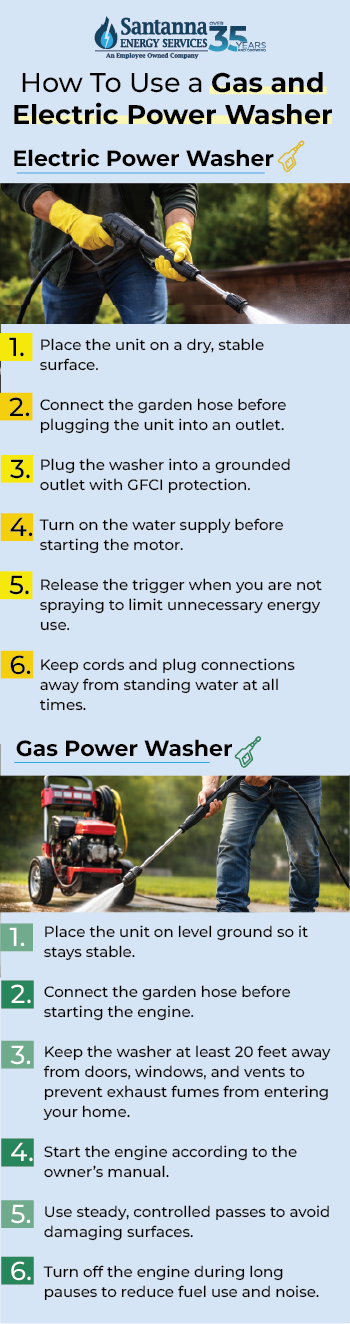
How To Use an Electric Pressure Washer Safely at Home
Electric pressure washers are designed for simple, light cleaning around the house. Think of rinsing patio furniture, washing your car, freshening up a small deck, or clearing light dirt from siding. They’re not built for deep concrete stains or large commercial-style projects, and that’s completely okay.
Here’s how to use an electric pressure washer safely at home:
- Place the unit on a dry, stable surface before starting.
- Connect the garden hose before plugging the unit into an outlet.
- Plug the washer into a grounded outlet with GFCI protection.
- Turn on the water supply before starting the motor.
- Release the trigger when you are not spraying to limit unnecessary energy use.
- Keep cords and plug connections away from standing water at all times.
Safety Precautions While Using the Pressure Washer
Even for simple, light cleaning, the spray is strong enough to cause injury if misused. A few basic precautions can make the job safer and less stressful.
- Never point the spray at yourself or anyone else.
- Keep children away and do not allow them to operate the washer.
- Wear rubber-soled shoes and avoid standing in water.
- If using an extension cord, use one rated for wet locations and keep connections dry.
How To Use a Gas Pressure Washer Safely at Home
Gas pressure washers are built for tougher jobs, like cleaning a long driveway, heavily stained concrete, a large fence, or years of buildup on siding. They deliver more power, which can help larger projects move faster.
That extra power comes from a gasoline engine. This means one very important thing: gas pressure washers must only be used outdoors. They produce exhaust fumes, including carbon monoxide, and should never be operated in garages, sheds, or partially enclosed areas.
Here’s how to use a gas pressure washer safely at home:
- Place the unit on level ground to keep it stable.
- Connect the garden hose before starting the engine.
- Keep the washer at least 20 feet away from doors, windows, and vents to prevent exhaust fumes, including carbon monoxide, from entering the home.
- Start the engine according to the owner’s manual.
- Use steady, controlled passes to avoid damaging surfaces.
- Turn off the engine during long pauses to reduce fuel use and noise.
- Never operate a gas pressure washer in enclosed or partially enclosed areas.
Gas Washer Safety Precautions That Matter Most
Once your washer is running and you’re focused on the job, it’s easy to forget how powerful the spray and engine really are. Before you continue, keep these key safety reminders in mind. They may seem simple, but they matter.
- Keep children at a safe distance at all times.
- Never use the spray to push objects.
- If anyone feels dizzy, weak, or nauseated near the exhaust, stop and move to fresh air.
Both electric and gas pressure washers can clean well. The best choice depends on the size of the job and how often you plan to use it.
How To Maintain an Electric Pressure Washer
Electric pressure washers need very little upkeep. Maintenance is mostly about shutting the unit down properly, removing water, and storing it correctly.
Here’s how to maintain an electric pressure washer:
- Turn the unit off and unplug it from the outlet. Disconnect the garden hose and the pressure hose.
- Squeeze the trigger for a few seconds to release leftover water from the hose and pump.
- Look for cracks, leaks, or clogs. Rinse the spray tip with clean water if it looks blocked.
- Use a dry cloth to remove dirt and moisture from the outside of the washer.
- Store the unit indoors in a dry area. Make sure all water is drained before storing in cold climates.
A few minutes of care after each use can help the unit last longer and perform consistently the next time you need it.
How To Maintain a Gas Pressure Washer
Gas pressure washers need more routine care because they have an engine. Basic checks and regular maintenance help them stay reliable.
Here’s how to maintain a gas pressure washer:
- Shut off the engine and let it cool completely. Disconnect the spark plug wire.
- Check the oil level and look for leaks. Avoid leaving old gasoline in the tank for long periods.
- Check hoses for wear and clean the spray tip if the pattern looks uneven.
- Follow the owner’s manual for oil change timing. Clean or replace the air filter as needed.
- Drain water from the pump and hose. Store the unit in a well-ventilated area, never inside living spaces.
Regular maintenance not only keeps the washer reliable, but it also helps prevent unnecessary fuel waste and engine strain over time.
How To Winterize an Electric Pressure Washer
If you live in a colder climate, especially in Midwest states where winter temperatures regularly drop below freezing, winterizing your electric pressure washer is an important step. Freezing temperatures can damage the pump if water is left inside.
Here’s how to winterize an electric pressure washer:
- Shut off the unit and unplug it. Disconnect the garden hose and pressure hose.
- Squeeze the trigger for a few seconds to push out trapped water.
- Remove the small screen filter at the hose connection, rinse it, and let it dry.
- Use a pump protector if the owner’s manual calls for it.
- Store the unit indoors in a dry location.
Taking a few extra minutes before winter can help prevent costly repairs in the spring.
How To Winterize a Gas Pressure Washer
Gas pressure washers need winter care for both the pump and the engine. Because they run on gasoline and contain more internal components, the process requires a few additional steps.
Here’s how to winterize a gas pressure washer:
- Shut off the engine and disconnect the spark plug wire.
- Disconnect the hoses, then squeeze the trigger to release pressure and water.
- Use pump saver or antifreeze as directed in the owner’s manual.
- Drain the gas tank or add fuel stabilizer. Run the engine briefly if using a stabilizer.
- Check oil levels and clean the air filter area.
- Store in a dry, well-ventilated place away from sparks or flames.
Proper winter storage helps extend the life of the washer and ensures it is ready to go when warmer weather returns.
FAQs
Does higher power always mean higher energy use?
No. Run time matters more than power alone.
Does more cleaning power always mean more efficiency?
No. Using more power than needed can waste energy.
Do gas pressure washers create emissions while running?
Yes. They produce exhaust gases, including carbon monoxide.
What is the typical lifespan of a pressure washer?
Electric pressure washers typically last 3-5 years, while gas models often last 5-7 years. However, lifespan depends on care and use.
Are gas pressure washers hard to maintain?
They need more upkeep, but it is manageable.
Choosing between an electric and a gas pressure washer comes down to how you plan to use it. Electric models are simple, quiet, and inexpensive to run for everyday home cleaning. Gas models offer more power for big, tough jobs but come with higher fuel costs and more maintenance.
Why does this matter? Because the right choice saves you time, effort, and money. Using a pressure washer that matches your actual needs means shorter cleaning sessions, lower energy use, and fewer surprises later. It also helps you feel more confident about the choices you make around your home, instead of guessing or overbuying.
If you like that sense of predictability, it should not stop with pressure washing. Explore Santanna’s Unlimited Energy plan to help keep your supply charge steady all year long, so you can plan ahead without worrying about surprise changes as your energy use shifts with the seasons.*
* Restrictions apply. Enrollment based upon program eligibility. Customers using more than 125% of normal monthly usage as determined by Santanna may be required to switch plans.
Tyler is an experienced energy professional, having worked for Santanna Energy Services, for the past four years. He is passionate about renewable energy and believes that diversifying the energy grid is the key to a sustainable future. Tyler is dedicated to supplying consumers with the best possible energy solutions and works diligently to make sure that Santanna can deliver the highest quality service.