
What Are the Differences Between Heat and Temperature? Why It Matters for Your Home

by Tyler Castle
20.4 min read
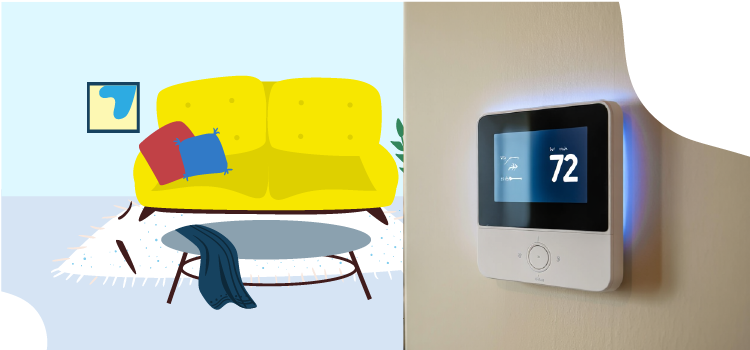
If you've ever set it to 72°F and still felt too warm upstairs or chilly near the windows, you're not alone. Many homeowners assume temperature and heat mean the same thing. So, when a room feels off, the first instinct is to adjust the thermostat again. But sometimes the issue isn't the number on the wall. It's the energy moving through your walls, attic, windows, and air.
The difference between heat and temperature sounds technical, but in real life, it directly affects how your home feels, how hard your heating and cooling system has to work, and can even affect your electricity bills.
In this article, we'll explain the difference between heat and temperature in clear, simple terms and show you how understanding it can help you improve comfort, reduce strain on your HVAC system, and make smarter decisions for your home.
Key Points of This Article:
- Temperature is the number you see; heat is the energy moving in and out of your home.
- Rooms can feel different at the same temperature because heat moves unevenly.
- Faster heat gain or loss makes HVAC systems run longer and raises energy costs.
What Is Heat and How Does It Affect Your Home?
Heat is the warmth that moves from a warmer place to a cooler place, and in a home, it is always trying to move in or out.
In summer, heat moves from the hot outdoors into your cooler home. Sunlight through windows, a hot attic, and warm outdoor air leaking through small gaps can all bring heat inside. Your air conditioner has to remove that heat to keep you comfortable, which is why it may run longer on hot days.
In winter, heat moves from your warm home out into the cold air outside. Heat can escape through thin insulation, drafty doors, older windows, and small gaps around pipes or wiring. When that happens, your furnace has to keep adding heat to keep the house at your set temperature.
Heat also helps explain why rooms feel different. A west-facing room may feel warmer in the afternoon because the sun heats up surfaces inside. A room above a garage may feel colder in winter because heat escapes through the floor. An upstairs bedroom may feel hotter because heat rises and can build up near the attic.
In simple terms, heat is what your heating and cooling system is constantly dealing with. When your home slows heat movement with insulation, sealing, and good airflow, it stays more comfortable and your system does not have to work as hard.
What Is Temperature and What Does Your Thermostat Read?
Temperature is how warm or cool the air is at a specific moment.
In your home, temperature is what you see on your thermostat. It tells you the air temperature in one area, not how every room feels.
Temperature matters because it is the signal your HVAC system responds to. When the temperature drops below your thermostat setting in winter, the furnace turns on, and when it rises above your setting in summer, the air conditioner turns on.
But temperature can still vary around the house. Upstairs rooms can run warmer in summer, while rooms with lots of windows can heat up faster on sunny days. This is also why thermostat placement matters. If it's located in a hallway, near a sunny window, or close to a vent, it may reflect the temperature in that specific spot rather than the rest of the home.
The simple takeaway is this: temperature tells you what the air is like right now in one area. It does not explain why certain rooms feel different, which is where heat movement comes in.
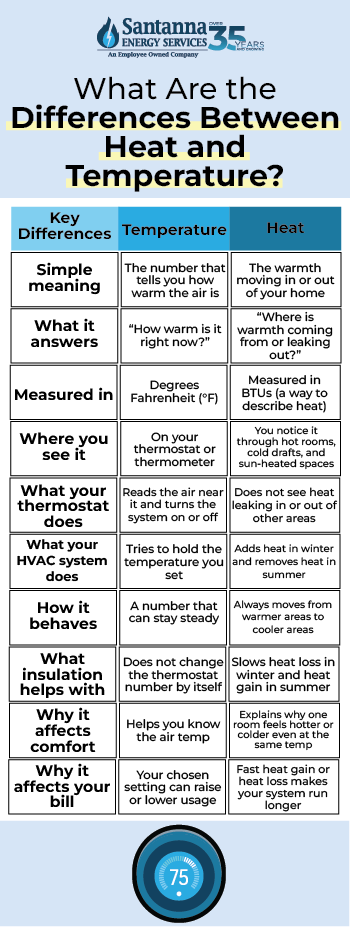
What Are the Differences Between Heat and Temperature?
The main difference between heat and temperature is that temperature is the number you see, and heat is the warmth moving into or out of your home.
Temperature helps your HVAC system know when to turn on and off and heat explains why the system may need to run longer, especially during intense winters and humid summers.
This is why two rooms can show the same temperature but feel different. A room can feel chilly near a cold window, while another room can feel warmer because sunlight is heating the space or because heat is building up upstairs.
It also matters for energy use. If your home gains heat quickly in summer or loses heat quickly in winter, your heating and cooling system runs longer to keep the temperature steady, which can raise your energy bill.
Here's the easiest way to remember it. The chart below shows the full differences between heat and temperature:
Heat vs Temperature: A Simple Comparison for Homeowners
| Key Differences | Temperature | Heat |
| Simple meaning | The number that tells you how warm the air is | The warmth moving in or out of your home |
| What it answers | “How warm is it right now?” | “Where is warmth coming from or leaking out?” |
| Measured in | Degrees Fahrenheit (°F) | Measured in BTUs (a way to describe heat) |
| Where you see it | On your thermostat or thermometer | You notice it through hot rooms, cold drafts, and sun-heated spaces |
| What your thermostat does | Reads the air near it and turns the system on or off | Does not see heat leaking in or out of other areas |
| What your HVAC system does | Tries to hold the temperature you set | Adds heat in winter and removes heat in summer |
| How it behaves | A number that can stay steady | Always moves from warmer areas to cooler areas |
| What insulation helps with | Does not change the thermostat number by itself | Slows heat loss in winter and heat gain in summer |
| Why it affects comfort | Helps you know the air temp | Explains why one room feels hotter or colder even at the same temp |
| Why it affects your bill | Your chosen setting can raise or lower usage | Fast heat gain or heat loss makes your system run longer |
When you understand the differences between heat and temperature, you stop adjusting the thermostat repeatedly and start focusing on insulation, air sealing, and smart HVAC use. That is where real comfort and more predictable energy use begin.
How Are Temperature and Heat Related?
Heat and temperature are related because heat is what makes temperature go up or down.
Temperature is the reading that tells you how warm or cool something is right now. Heat is the warmth being added or removed. When heat enters a space, the temperature usually rises. When heat leaves a space, the temperature usually drops.
You see this in your home every day. When your furnace runs, it adds heat to the air and the temperature goes up. When your air conditioner runs, it removes heat from inside your home and the temperature goes down.
Here is what helps homeowners most: Two homes can be set to the same thermostat temperature and still behave and process heat very differently. One home may warm up or cool down quickly because heat moves easily through gaps, windows, or the attic. Another home may stay steadier because it slows heat movement and traps it with strong insulation.
So, the relationship is simple: Temperature is the result you can measure, and heat movement is what causes that result and explains why your home changes temperature faster or slower throughout the day.
Why Understanding Heat vs Temperature Can Improve Comfort in Your Home
When you understand the differences between heat and temperature, it becomes clear that uneven comfort is usually caused by heat escaping or entering through insulation gaps or cracks, not by the thermostat alone.
Temperature is simply a measurement of heat, but how well that heat is maintained your house is what affects the comfort of your home. If heat is moving too quickly out of your home, your home can feel uncomfortable even when the thermostat looks right.
The number on the thermostat may be fine, but heat may be building up in the attic, pouring in through sunny windows, or leaking in and out through small gaps, making your home feel uneven in temperature.
Once you understand the difference, troubleshooting gets easier. You stop chasing the thermostat and start looking for what is driving heat movement, like sun exposure, weak attic insulation, air leaks around doors, or uneven airflow, and give you a blueprint on how to make your home even in temperature.
How Heat Moves Through Your Home and Why It Changes Room Comfort
Heat moves through your home in a few simple ways, and that movement is a big reason one room can feel comfortable while another feels too hot or too cold.
The first thing to know is that heat always moves from warmer areas to cooler areas. So in winter, heat inside your home wants to move out to the colder outdoors. In summer, outdoor heat wants to move into your cooler home. This movement happens even when your thermostat setting never changes.
Here are the main ways heat moves in a typical home:
Heat Moves Through Solid Surfaces
Heat can pass through walls, ceilings, floors, and windows. If an exterior wall has less insulation, or a window is older, heat can move through that area more easily. That room may feel colder in winter or warmer in summer because it is closer to outdoor temperatures.
Heat Moves with Air Leaks and Drafts
Air slipping in or out through small gaps around doors, windows, attic hatches, and plumbing openings carries heat with it. A tiny gap can make a room feel drafty, and it can also make your heating or cooling system run longer because you are constantly losing treated air.
Heat Rises and Collects Upstairs
Warm air naturally rises, which is why second floors and upstairs bedrooms often feel warmer. In summer, this is even more noticeable if the attic is hot or the roof gets direct sun, because heat can build up above the ceiling and warm the rooms below.
Heat Moves in From Sunlight
Sunlight coming through windows can warm up floors, furniture, and walls, which then warms the room. That is why a room can feel hotter in the afternoon even if the thermostat number stays the same. This is common in west-facing rooms in the Midwest during summer.
All of this changes room comfort because your thermostat only reacts to one temperature reading, but heat is moving differently in different parts of the home. A room with more sun, more exterior exposure, less insulation, or more air leaks will feel different even when the thermostat says the home is at the right temperature.
The takeaway is simple: when rooms feel uneven, it often helps to look at where heat is getting in, where it is escaping, and which parts of the home are most exposed to the outdoors.
What's the Difference Between Heat Index and Temperature?
Heat index is different from temperature because temperature is the actual air temperature, while heat index is what that temperature feels like when humidity is added.
Here is how we got the numbers in the Midwest example, in a simple way. Heat index is not a guess. NOAA uses a chart and formula that combines air temperature and humidity. Once you know those two numbers, you can look up or calculate the heat index.
For example, imagine a sticky summer afternoon in Ohio, Illinois, or Pennsylvania where the air temperature is 88°F and the humidity is around 70%. When you combine 88°F with 70% humidity using the NOAA heat index chart, it comes out to a heat index of about 95°F. That means the air feels closer to 95°F to your body, even though the thermometer still says 88°F.
If you want to calculate it for your own area, you can use NOAA's heat index calculator here:
You simply enter the temperature and the relative humidity, and it will show you the heat index value. This is a helpful tool on humid Midwest days because it explains why the same temperature can feel much hotter and why your home may feel sticky even before the thermostat number changes.
How To Tell If You Have a Heat Transfer Problem or a Thermostat Issue
You can tell the difference by checking whether the discomfort is happening in specific rooms and times of day, or whether the whole house seems "off" no matter what you do.
A thermostat issue usually shows up as a control problem. A heat transfer problem usually shows up as a room comfort problem.
Here are simple signs to look for.
Signs it Is Likely a Heat Transfer Problem
This means heat is getting in or getting out too easily.
- Only certain rooms feel uncomfortable.
One bedroom is always hotter, or the living room is always colder, even though the thermostat reading looks normal.
- The problem gets worse at predictable times.
Rooms feel hotter in the afternoon because of sun exposure, or colder at night because exterior walls and windows cool down.
- You feel drafts or "cold spots."
If you feel a chill near windows, doors, outlets, or the floor, air leaks and weak insulation are often involved.
- Upstairs is hotter in summer or colder in winter.
Heat rises and attics can drive big temperature differences between floors, especially in Midwest homes.
- Your system runs a lot but comfort still feels uneven.
That often means the HVAC is fighting constant heat gain or heat loss in certain parts of the home.
Signs It Is Likely a Thermostat Issue
This means the thermostat may not be reading the home accurately or controlling the system well.
- The whole house feels too warm or too cool compared to the set temperature.
Example: you set 72°F, but everywhere feels more like 76°F or 68°F.
- The HVAC turns on and off more than usual.
Short cycling can happen if the thermostat is in a bad spot or something is interfering with its reading.
- The thermostat is near a heat source or draft.
If it is near a sunny window, a supply vent, a kitchen, a hallway door, or a drafty entry, it can get "fooled" and trigger extra heating or cooling.
- Changing the thermostat setting does not behave the way you expect.
Example: you raise the temperature but the heat does not come on, or you lower it and the AC does not respond.
A Quick Homeowner Check You Can Do Today
If one room feels off, compare it to the thermostat area.
- If the thermostat area feels fine but one room does not, it is usually a heat transfer or airflow issue in that room.
- If the thermostat area also feels wrong and the whole house is uncomfortable, the thermostat placement or settings may be part of the issue.
The key takeaway is simple. If the problem is isolated to certain rooms, it is usually heat transfer or airflow. If the whole house feels wrong all at once, the thermostat may be part of the problem.
Quick Fixes If Your Home Is Gaining or Losing Heat Too Fast
If it is a heat problem, the goal is to slow down how quickly heat is getting in during summer or escaping during winter.
Step 1: Block heat from sunlight
Close blinds or curtains on the sunny side of your home, especially west-facing windows in the afternoon. This can quickly reduce how much heat builds up in certain rooms.
Step 2: Use fans the right way
Run ceiling or portable fans only when you are in the room. Fans do not lower the room temperature, but they help you feel cooler so you may not need to lower the thermostat as much.
Step 3: Stop obvious drafts and air leaks
If you feel air coming in around a door or window, use a door draft stopper, temporary weatherstripping, or even a rolled towel at the base of the door. These small gaps can make rooms feel uncomfortable fast.
Step 4: Check your attic hatch and other common leak spots
Make sure the attic hatch is fully closed and sits snugly. Heat often enters or escapes through the attic area, especially in older Midwest homes.
Step 5: Reduce indoor heat from appliances
On hot days, try to limit oven use, run dryers or dishwashers later in the evening, and use bathroom or kitchen exhaust fans to push warm air out when cooking or showering.
If these steps help but the problem keeps coming back, that usually points to a longer-term heat flow issue like insulation gaps, air leaks, or uneven airflow.
Quick Fixes If the Thermostat Reading Seems Off
If it is a temperature problem, the goal is to make sure your thermostat is reading the home accurately and controlling the system the way you expect.
Step 1: Confirm thermostat mode and settings
Make sure it is set to Heat in winter and Cool in summer. Set the fan to Auto if you want normal cycling instead of constant airflow.
Step 2: Replace thermostat batteries if needed
If the screen looks dim, the thermostat is slow to respond, or settings keep resetting, new batteries can fix the issue quickly.
Step 3: Make sure the thermostat is not being "fooled"
Check if the thermostat is getting hit by sunlight, near a supply vent, close to the kitchen, or next to a drafty door. Any of these can cause inaccurate readings and uneven comfort.
Step 4: Compare how the thermostat area feels to other rooms
If the thermostat area feels comfortable but one room feels off, it is usually heat transfer or airflow. If the thermostat area also feels wrong compared to the set temperature, the thermostat may be misreading.
Step 5: Check and replace a dirty air filter
A clogged filter can reduce airflow and make temperatures uneven, and it can also cause the system to run longer. This is one of the simplest homeowner fixes with the biggest impact.
If the thermostat still seems inaccurate after these checks, the next step is usually looking at thermostat placement, HVAC airflow balance, or having a technician verify the system is cycling correctly.
Why Heat Flow, Not Just Thermostat Settings, Affects Your Energy Bill
Heat transfer impacts your energy bill because heating and cooling typically account for about 29% of your utility bill, according to the U.S. Department of Energy, and heat movement determines how long your system has to run to maintain the temperature you set.
Your thermostat setting is just the target. Heat transfer is what pulls your home away from that target when heat leaks out in winter or pushes in during summer, forcing your system to work longer to "catch up."
Here is a hypothetical example that shows how this can add up in real dollars.
Let's say your home gains heat quickly in summer because the attic gets very hot and afternoon sun pours through a few windows, so your AC ends up running about 2 extra hours per day during a hot month.
If your AC uses about 3 kW while running, that is 6 extra kWh per day. Over 30 days, that becomes 180 extra kWh. Using the U.S. average residential electricity price of 17.24 cents per kWh (December 2025, EIA), that would be about $31.03 extra for the month (180 × $0.1724).
The same pattern can happen in winter, too.
This is also hypothetical, but imagine drafts and weak insulation cause your heating setup to run the equivalent of 1 extra hour per day during a cold month.
If that adds around 4 kW of electric use while running, that is 4 extra kWh per day, or 120 extra kWh over 30 days. At 17.24 cents per kWh, that is about $20.69 extra for the month (120 × $0.1724).
If you heat with natural gas, the math looks different, but the pattern is the same. More heat loss means more run time.
The point is not the exact numbers for every home, since systems and rates vary. The pattern is what matters: when your home gains or loses heat quickly, your HVAC runs longer, and longer run time is what pushes energy use and bills higher.
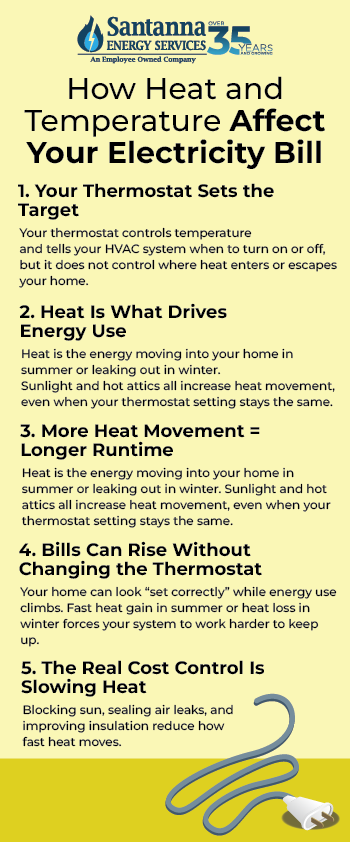
Why Understanding the Differences Between Heat and Temperature Matters for Your Comfort and Energy Costs
Understanding the differences between heat and temperature matters because it helps you solve comfort problems and reduce wasted energy instead of only changing the thermostat setting.
When you only focus on temperature, it is easy to assume the fix is simple. Turn the thermostat down if you feel warm. Turn it up if you feel cold. But if heat is moving into your home quickly in summer or escaping quickly in winter, the thermostat number becomes more of a reaction than a solution. Your system may run longer, certain rooms may stay uncomfortable, and your energy costs can climb even when you feel like you are doing everything right.
This is where the heat versus temperature difference becomes useful. Temperature is the result you can see and measure. Heat flow is the reason that result keeps changing.
It also explains why your HVAC system might seem like it never stops. Your air conditioner is not just trying to reach a temperature. It is removing heat that keeps coming in. Your furnace is not just "making the air warm." It is replacing heat that keeps leaking out. If heat moves easily through your home, your system has to work harder to keep the temperature steady, which often shows up as higher energy use.
The simple homeowner takeaway is this. If your home feels uneven or your bills jump during Midwest winters and humid summers, the problem is often not the temperature you set. It is how much heat your home is gaining or losing. Once you understand that, you can make smarter choices that actually improve comfort, reduce system strain, and keep energy costs more predictable.
FAQs
Are Heat and Temperature the Same Thing?
No. Temperature is the number that tells you how warm the air is, and heat is the warmth moving into or out of your home, which is what affects comfort and how long your HVAC runs.
Which Matters More for Your Home: Heat or Temperature?
Both matter, but in different ways. Temperature affects how warm or cool the air feels. Heat transfer determines how hard your HVAC system must work, which impacts your energy usage.
Does Lowering My Thermostat Stop Heat From Entering My Home?
No. Lowering the thermostat changes your target temperature. It does not stop heat from moving through walls, windows, or ceilings. Insulation and sealing control heat flow.
Do Ceiling Fans Lower Room Temperature?
No. Fans do not reduce air temperature. They help your body lose heat faster, which makes you feel cooler without changing the thermostat reading.
How Does Insulation Affect Heat and Temperature?
Insulation slows heat movement. It does not raise temperature directly. It reduces heat loss in winter and heat gain in summer, which helps stabilize indoor comfort.
If My Thermostat Is Working, Why Does My Home Still Feel Uncomfortable?
Because thermostats only measure air temperature in one location. They do not measure surface temperatures, drafts, solar gain, or humidity levels.
Why Does My Home Feel Sticky Even at the Same Temperature?
Your home can feel sticky at the same temperature because humidity is higher, and humid air makes it harder for sweat to dry and cool you down. If you want a quick check, a small humidity monitor can tell you if indoor humidity is running high.
Comfort gets easier when you remember this. Temperature is the number you see, but heat flow is what drives how your home feels and how much energy you use. When heat moves in fast during humid Midwest summers or leaks out during long winters, your system runs longer and bills can climb even if your thermostat setting stays the same.
Simple home fixes like sealing air leaks, improving insulation, and managing sunlight and airflow can help your home hold comfort longer. When your home slows heat loss and heat gain, your HVAC does not have to work as hard and energy use often feels more predictable.
If you want more long-term predictability in your monthly energy costs, you can also explore Santanna's Unlimited Energy plan, which is designed to keep supply charges more predictable and make high-usage months easier to budget for. If it feels like a fit, take a look and see how it lines up with your household's needs.
Tyler is an experienced energy professional, having worked for Santanna Energy Services, for the past four years. He is passionate about renewable energy and believes that diversifying the energy grid is the key to a sustainable future. Tyler is dedicated to supplying consumers with the best possible energy solutions and works diligently to make sure that Santanna can deliver the highest quality service.