
How Is Heat From the Earth Used To Create Electricity?

by Tyler Castle
12.8 min read

When you hear that electricity can come from heat inside the Earth, it usually stops you for a second.
Heat turning into electricity isn’t something most of us think about when we flip a light switch or turn on the TV. And yet, it’s one of the ways electricity is made and sent to homes every day. Electricity isn’t made in just one way, and most of how it’s created happens far away from our homes.
In this guide, we’ll walk through how heat from the Earth is turned into electricity, in a way that even the most intermediate energy users can understand. Let’s get started so you can understand what this process means for your home.
Key Points of This Article:
- Heat from the Earth is used to create electricity from deep underground is tapped by drilling wells, bringing hot water or steam to the surface, and using that steam to spin turbines that generate electricity.
- Geothermal electricity flows into the shared power grid and mixes with other energy sources, so homes don’t receive a separate “geothermal-only” power supply.
- While geothermal electricity supports the grid, the biggest direct efficiency benefits for homeowners often come from geothermal heat pumps used for heating and cooling.
- Renewable Energy Certificates (RECs) allow consumers to support geothermal and other renewable energy sources even though all electricity on the grid is blended together.
How Is Heat From the Earth Used To Create Electricity?
Heat from the Earth is used to create electricity by capturing natural underground heat, using it to create movement, and turning that movement into power. This entire process is called geothermal energy.
Geothermal energy does not mean the Earth is directly producing electricity. Instead, the Earth’s heat provides the energy that power plants use to get their equipment moving. That motion, created by heat turning turbines, is what ultimately allows electricity to be generated.
Here’s a deeper dive on how this process works:
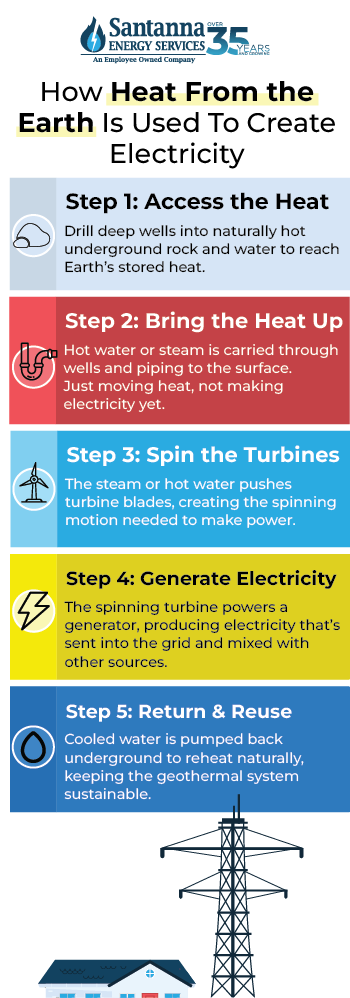
Step 1: Accessing Heat
The process of using heat from the Earth to make electricity starts underground. Deep underground, the Earth is naturally hot. Because that heat exists, it warms rock and underground water in certain locations.
To reach this heat to make electricity, wells are drilled down into these hot areas and at the surface, a production area is set up to safely bring that heat up from underground.
You can think of this step as opening a doorway between the heat below the ground and the equipment above it. At this stage, nothing is moving yet. The goal is simply to reach the heat and make it available. Because of that depth, geothermal electricity is much harder to develop in most Midwest regions.
Step 2: Transporting Energy
Once the underground heat is brought to the surface, it must be moved to the equipment that will use it to generate electricity. At this point, the focus is simply on transferring heat safely and efficiently.
You can picture this like a home boiler system. A boiler heats water in one place, and pipes carry that hot water to where it is needed. In a geothermal system, the Earth is the heat source, and the wells and surface piping carry that heat to the power plant equipment.
No electricity is created during this step. The system is only transporting heat so it can be used in the next phase of the process.
Step 3: Driving Turbines
With the heat now at the surface and moving through the system, the next step is where electricity generation truly begins. This is the point where thermal energy is converted into mechanical movement. According to the Energy Information Administration, wind turbines are responsible for 10.3% of total U.S. utility-scale electricity generation. In a similar way, geothermal systems also rely on spinning turbines to create power.
In this stage, hot water or steam extracted from the Earth moves across turbine blades, pushing them and causing the turbine to spin, ultimately making electricity generation possible.
Without this spinning step, geothermal heat would stay heat and never become power.
Step 4: Generating Electricity
Now for the good part! This is how electricity is made from heat from the Earth. In this step, the spinning turbines that move from the steam is connected to a generator.
As the turbine turns, the generator converts that motion into electricity. This is where electricity is actually created.
Once generated, the electricity is sent into the power grid. From this point on, geothermal electricity is mixed with electricity from other sources and delivered to homes, schools, and businesses.
Step 5: Reinjection
After the heat has been used, the water cools down.
Instead of wasting it, the cooled water is often sent back underground through reinjection wells. These wells return the water to the same deep rock formations it originally came from. Over time, the Earth’s natural heat warms the water again so it can be reused in the system.
Reinjection also helps maintain underground pressure, which keeps the geothermal reservoir stable and supports consistent energy production.
What Is Geothermal Energy and How Does It Work?
Geothermal energy comes from heat that is stored deep inside the Earth. That heat has been there since the planet formed, and it never really shuts off. It’s always there, quietly warming things far below the surface.
In some places, that heat shows up naturally as hot springs, geysers, or volcanic activity. Most of the time, though, it stays underground, warming rock and water. When that heat is brought up to the surface in the right locations, it can help create electricity.
Here’s an easy way to picture it using something familiar at home. Think about boiling water on your stove. The heat doesn’t turn into electricity on its own. Instead, it makes the water move and creates steam. That movement is useful. Geothermal energy works in a similar way, just on a much larger scale and deep underground.
Because the Earth keeps producing heat all the time, geothermal energy can provide steady power in places where that heat is easy to reach.
Do Midwest Homes Use Geothermal Electricity?
Most Midwest homes do not use geothermal electricity in the direct sense, because utility-scale geothermal power plants are mostly located in the western U.S., where Earth’s heat is closer to the surface and easier to tap for power generation. That’s normal, and it doesn’t mean geothermal energy is missing or unavailable to you.
The U.S. Energy Information Administration explains that geothermal electricity generation in the U.S. is concentrated in western states (plus Hawaii), not across the Midwest.
What can be true at the same time is this:
- You can still use geothermal energy at a home or building, but that usually means a geothermal heat pump (heating and cooling), not electricity generation. Heat pumps move heat in and out of the ground to help warm or cool a building. They do not make electricity.
- Geothermal electricity is made at power plants, then it gets mixed into the grid with electricity from many other sources before it ever reaches a neighborhood. So even in places that do have geothermal power plants, homes are still pulling from the shared grid, not a single geothermal source.
Here’s a simple way to picture it at home. When you turn on your kitchen light, that electricity is coming from the shared grid mix serving your area.
If geothermal power exists anywhere on that grid, it is “blended in” behind the scenes, the same way wind or solar would be. You are not getting a special geothermal line running to your house.
Does Geothermal Energy Change Anything About How I Use or Pay for Electricity?
For most homeowners, geothermal energy does not change how electricity is used in the home or how a bill works.
Once electricity reaches your house, it all functions the same way, no matter where it was generated. Lights turn on, appliances run, and heating or cooling systems work just as they always have.
Geothermal energy is simply just another way to generate electricity in a different and renewable way. Electricity from geothermal sources mixes into the power grid along with electricity from natural gas, wind, solar, and other sources.
By the time it reaches your home, it is not separated or labeled by source. Your bill is based on how much electricity you use and the plan you choose, not on whether the electricity started as geothermal heat.
You do not need special equipment, plan changes, or new habits to use geothermal energy in your home. Geothermal energy works quietly in the background and does not require action from homeowners.
The simple takeaway is this: geothermal energy helps support the electricity system, but it does not change how electricity shows up or is used inside your home.
Is Electricity From the Earth’s Heat More Efficient for Homes?
Electricity generated from the Earth’s heat is not usually considered more efficient for home use on its own. Geothermal power plants are great at producing steady electricity, and turning heat into electricity always has limits, no matter the energy source.
When people hear that geothermal is “very efficient,” they are often thinking about geothermal heat pumps, which are used for heating and cooling buildings, not making electricity.
According to the U.S. Environmental Protection Agency, those heat pump systems are among the most energy-efficient and environmentally clean options for heating and cooling because they move heat instead of creating it.
So, while geothermal electricity helps support the power grid, its biggest efficiency benefits for homes usually come from heating and cooling systems, not from the electricity itself.
Is Geothermal Energy Something I Have or Can Choose as a Homeowner?
For most Midwest homeowners, the answer is no. Geothermal energy is not something you already have, and it’s not something you directly choose the way you choose an electricity plan. Geothermal energy is just another way for power plants to generate electricity to keep up with energy demand.
In the Midwest, geothermal electricity is not commonly generated, because the Earth’s heat is usually much deeper underground. That means there are very few geothermal power plants in this region. Any geothermal electricity that does exist flows into the shared power grid and mixes with electricity from many other sources before it reaches homes.
You can however, support geothermal energy in your home. If this is important to you, some Midwest homeowners may choose to install geothermal heat pumps for heating and cooling.
So, for most Midwest residents, geothermal energy works quietly in the background, if at all. It supports the larger electricity system in certain parts of the country, but it is not something most homeowners here directly have or actively choose for their electricity.
Is Geothermal Energy the Same Thing as a Geothermal Heat Pump?
No, geothermal energy and geothermal heat pump are not the same thing.
Geothermal energy usually refers to using heat from deep underground to generate electricity at power plants. That electricity then goes into the power grid and is shared like all other electricity.
A geothermal heat pump, on the other hand, is a heating and cooling system for a home and is a separate appliance that does not make electricity. Instead, it moves heat between your home and the ground just a few feet below the surface to warm your home in winter and cool it in summer.
Here’s the simple way to think about it:
- Geothermal electricity = making electricity far away at a power plant
- Geothermal heat pump = heating and cooling a home using ground temperature
They both use the Earth’s heat, but they do very different jobs, and having one does not mean you have the other.
How Electricity Generated From the Heat of the Earth Relates to Earth‑Friendly Plans & RECs
Because electricity from different sources mixes together on the grid, Earth-Friendly plans use Renewable Energy Certificates (RECs) to track and incentivize renewable energy generation.
Because all electricity blends together once on the grid, Earth‑Friendly plans rely on Renewable Energy Certificates (RECs) to track and encourage renewable generation.
A REC is created for every set amount of renewable electricity produced, representing the environmental benefits of that earth-friendly energy, including sources like geothermal. When you choose an Earth‑Friendly plan from us at Santanna Energy Services, Santanna matches 100% of your electricity use with RECs, ensuring the amount of renewable energy added to the grid equals your consumption.
This allows you to support renewable energy without changing how electricity is delivered to your home.
So, what does this mean for your home? You still use the same reliable grid power you always have, but the REC is what links your plan directly to renewable energy, including geothermal.
It’s a simple, powerful way to support earth-friendly energy on the grid without changing anything about how electricity flows into your home.
Common Misunderstandings About Using Heat From the Earth To Generate Electricity
When learning how heat from the Earth is used to create electricity, it’s easy to mix geothermal electricity up with other ideas. Clearing up these common misunderstandings helps the process make sense and keeps expectations realistic.
- Homes are not built on top of geothermal power plants. The heat-to-electricity process happens at large power plants, not underneath individual houses. Once electricity is generated, it’s sent through the power grid and delivered to homes just like electricity from any other source.
- Volcanoes are not required to make geothermal electricity. Most geothermal power plants operate without lava or eruptions. They use underground heat in a controlled way, which is why geothermal electricity can exist even in places without visible volcanic activity.
- Geothermal electricity is not available everywhere. Heat exists beneath the Earth’s surface in all regions, but geothermal electricity is only practical where that heat can be accessed efficiently. This is why geothermal power plants are common in some areas and rare in others.
Understanding these points helps connect the dots between underground heat and the electricity that eventually reaches homes, without adding confusion or unrealistic assumptions.
Frequently Asked Questions
Is geothermal electricity used in every state?
Geothermal electricity is only produced in certain regions where underground heat is close enough to the surface to reach economically.
Can geothermal energy power my home directly?
No. Geothermal electricity enters the shared power grid, and homes receive electricity from that combined system.
Geothermal electricity is a good example of how steady energy sources help support a reliable power system, even though they only work in certain locations. Understanding how electricity is generated helps explain why different energy sources are used together to keep power available every day.
That same idea of balance shows up in Santanna’s Earth-Friendly plans. While geothermal power may not supply your home directly, our Earth-Friendly Plan supports earth-friendly energy sources that feed into the grid as a whole, without requiring changes to how your home uses electricity.
At Santanna, our role is to help homeowners understand where their electricity comes from and how different choices fit into the bigger picture. If supporting Earth-Friendly energy matters to you, you can explore these plans at your own pace and decide what feels right for your household.
Tyler is an experienced energy professional, having worked for Santanna Energy Services, for the past four years. He is passionate about renewable energy and believes that diversifying the energy grid is the key to a sustainable future. Tyler is dedicated to supplying consumers with the best possible energy solutions and works diligently to make sure that Santanna can deliver the highest quality service.