
How Many Watts Does a Coffee Maker Use? Energy Use Explained

by Tyler Castle
19.9 min read
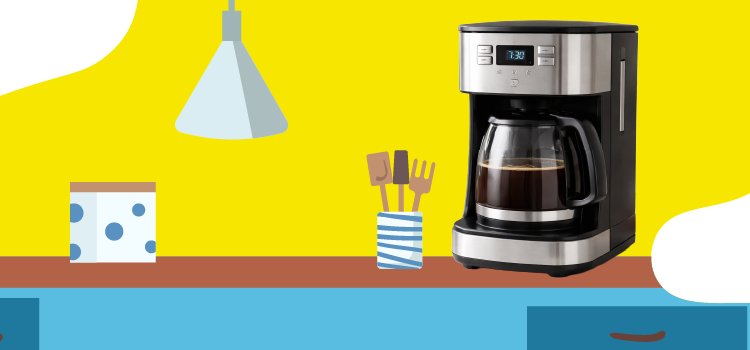
Looking for that perfect cup of Joe? What if we told you your coffee habits could really raise your electric bill? They're used every day, they heat water fast, and the wattage number on the label can look big at first glance.
Most people want to use energy wisely, but appliance numbers don't always explain what's actually happening behind the scenes.
At Santanna Energy Services, in addition to providing reliable natural gas and electricity plans for more than 35 years, we also love helping Midwest residents understand everyday energy use. We believe energy should make sense, not feel confusing or stressful.
If you're curious about the energy consumption of your coffee maker, you've come to the right place. In this guide, we'll walk through how much power coffee makers really use, what that means for your electric bill, when they use the most energy, and a few easy ways to be energy-smart without changing how you enjoy your coffee. Let's grind out the details.
Key Points of This Article:
- Most coffee makers use between 550 and 1,500 watts while brewing, with higher‑watt models heating water faster but not necessarily using more total electricity.
- Coffee makers consume most of their energy during the brief water‑heating stage, which can use 1,200–1,500 watts, far more than grinding or pumping water.
- Even though the wattage may appear high, a coffee maker typically runs only a few minutes per day, keeping total electricity use low—usually 0.09 to 0.25 kWh daily, or just a few cents.
- Different machine types vary: drip makers use the least power, single‑serve brewers like Keurig and Nespresso use more, and espresso machines often use the most due to rapid water heating and added features.
How Many Watts Does a Coffee Maker Use?
Most coffee makers use between about 550 watts and 1,500 watts while they are brewing. That number can feel surprising at first. But think about a typical morning.
You turn the coffee maker on, it heats water quickly, makes your coffee, and then it's done. That short burst of heating is what the wattage number represents. When you compare it to appliances like refrigerators that use 300 to 800 watts and run all day, a coffee maker's overall energy use is relatively small.
But different coffee makers consume a wide range of wattage. Basic drip coffee makers usually use fewer watts on average because they heat water more gradually. Single-serve and espresso machines tend to use more watts on average since they are built to heat water very quickly and power extra features.
When it comes to how much electricity this will cost you, what really matters is how you use the coffee maker.
If you brew one cup a day, your coffee maker only runs once and then shuts off. Brewing three cups a day means the machine heats water multiple times, which uses a bit more electricity. The difference is still small, but the extra run time adds up over time.
If you leave the warming plate on for one hour, it uses a steady amount of electricity to keep the coffee hot. Leaving it on for four hours uses much more electricity than the brewing itself. Turning it off sooner can make a noticeable difference.
Even with these differences, how many watts a coffee maker uses, even on a higher end, does not automatically mean higher energy use. Because coffee makers only run for a few minutes at a time, their overall impact on your electric bill is usually small in most homes with the right habits in mind.
How Many Amps Does a Coffee Maker Use?
Most coffee makers draw between 4.5 and 12.5 amps while brewing.
That range comes from a coffee maker's typical wattage and if it's plugged into a standard 120‑volt outlet found in most Midwest homes. A 550‑watt model uses about 4.5 amps, while a 1,500‑watt model draws closer to 12.5 amps.
This level of electrical draw is normal for kitchen appliances that heat water. The higher amperage only occurs during the brief heating cycle. Once brewing finishes, the power demand drops quickly.
For most households, this load is well within the safe capacity of a standard 15‑ or 20‑amp kitchen circuit.
How Many Watts Do Different Coffee Maker Brewing Stages Use?
A coffee maker isn't just doing one job. It moves through several stages during the brewing cycle, and each stage draws a different amount of power.
The biggest energy demand comes from heating water. The internal heating element has to quickly raise the water temperature to around 195–205°F, which requires the highest wattage.
By comparison, grinding beans, powering the control panel, and moving water through the machine use much less electricity. Here's how many watts each stage of the brewing process uses:
Coffee Maker Wattage by Brewing Stage
| Brewing Stage | Typical Wattage Range | What’s Happening |
| Coffee Grinder | 150–200 W | The motor spins heavy burrs that do most of the grinding work. |
| Heating Water | 1,200–1,500 W | Water is heated quickly for brewing. This uses the most power. |
| Water Pump | 28–48 W | The pump moves water through the coffee grounds. |
Disclaimer: The wattage ranges shown above are based on data compiled by Cafely and reflect typical values across common coffee maker models. Actual wattage may vary by brand, model, and settings.
To put this into perspective, the heating element can use six to ten times more power than the grinder and more than 25 times more power than the water pump while it is running.
For example, a 1,500‑watt heating cycle compared to a 150‑watt grinder shows just how concentrated the energy demand is during water heating. That difference explains why brew time and warming plate use have a much bigger impact on electricity consumption than grinding or pumping water.
How Many Watts Do Different Types of Coffee Makers Use?
If you've ever compared coffee makers online, you've probably noticed that wattage numbers can vary quite a bit. That's because coffee makers are built differently, and some are designed to heat water faster than others for a more efficient coffee-making experience.
If you're interested in a certain type of coffee maker but you're worries about how much electricity it might use, we've done the research for you. Here's what you need to know:
Coffee Maker Wattage by Type
| Type of Coffee Maker | Typical Wattage Range |
| Drip Coffee Makers | 550–1,200 watts |
| Single-Serve Machines (Keurig, Nespresso) | 900–1,500 watts |
| Espresso Machines | 1,000–1,500 watts |
It helps to remember that wattage mostly reflects how quickly the machine heats water, not how long it runs. A higher-wattage coffee maker usually heats faster, then shuts off sooner.
To put these numbers in perspective, a single‑serve coffee machine uses about 37% more power than a drip coffee maker, while an espresso machine uses roughly 43% more. Overall, espresso machines draw only about 4% more power than single‑serve brewers.
Keep in mind that a coffee maker's wattage always depends on the specific model you own. Size, brew speed, and extra features can all shift these numbers slightly, even within the same category.
How Many Watts Do Popular Coffee Maker Brands Use?
If you're shopping for a coffee maker or checking the one you already own, electricity consumption should be on your mind. Even the brand of a coffee maker can use wildly different amounts of electricity to power your appliance.
Wattage can vary by brand, but it's important to remember that the exact number always depends on the specific model and its features.
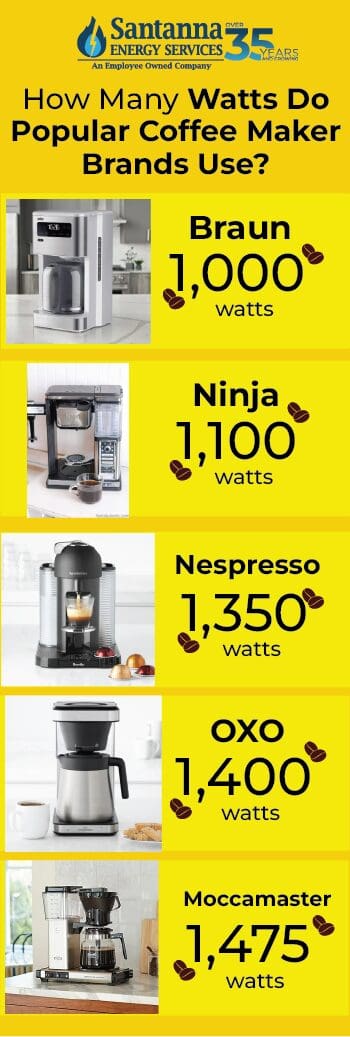
We've gathered the typical wattage ranges for popular coffee maker brands. Here's what to expect based on the brand you choose.
How Many Watts Do Popular Coffee Maker Brands Use?
If you're shopping for a coffee maker or checking the one you already own, electricity consumption should be on your mind. Even the brand of a coffee maker can use wildly different amounts of electricity to power your appliance.
Wattage can vary by brand, but it's important to remember that the exact number always depends on the specific model and its features.
We've gathered the typical wattage ranges for popular coffee maker brands. Here's what to expect based on the brand you choose.
Typical Coffee Maker Wattage by Brand
| Coffee Maker Brand | Typical Wattage Range |
| Ninja | 1,100 watts |
| Nespresso | 1,350 watts |
| OXO | 1,400 watts |
| Braun | 1,000 watts |
| Moccamaster | 1,475 watts |
We found that Ninja coffee makers use about 10% more electricity than Braun models, while Nespresso machines draw roughly 35% more electricity.
OXO brewers require 40% more power than Braun, and Moccamaster machines use the most energy of all, at about 47.5% more than the baseline.
These wattage levels reflect how quickly each machine is designed to heat water. A higher wattage usually means faster brewing, not higher daily electricity use.
How Many Watts Does a Keurig Coffee Maker Use?
On average, a Keurig coffee maker uses about 1,470 watts while brewing.
This number is usually printed on the label on the bottom or back of the machine. Keurig machines are built to heat water very quickly, which is why the wattage looks high. Because brewing only takes a minute or two, the overall energy use stays modest.
Compared to other brands, Keurig coffee makers use 35%-47% more electricity than lower‑wattage models like Braun, and still more than many mid‑range options from brands such as Ninja and OXO.
How Can You Find the Wattage of Your Coffee Maker?
Looking to stick to your current model instead of buying a new one? All good! If you're wondering how to find the wattage of your current coffee maker, here's how you can do it:
Start by looking at the bottom or back of your coffee maker. Most machines have a small label that lists the wattage. This label is usually white and easy to see on most machines.
Check the user manual. Can't find the label on your coffee maker? No problem, if you've saved your appliance manual, you can usually find how many watts your coffee maker uses in the "specs" or specifications section of the manual.
Search the model online. No manual, no problem! Try looking up the brand and model of your coffee maker online. Type the brand and model number (usually on the appliance itself) into Google and look under product details and "specs" section to find the wattage.
Check the retailer's product page. Go straight to the source! Go directly to your brand's online stores and the specific model page lists wattage under specifications.
Does a Coffee Maker Use a Lot of Electricity?
No, a coffee maker does not use a lot of electricity, especially compared to other appliances.
Even though the wattage that a coffee maker uses may seem high, it only applies for a short time. Brewing usually takes just a few minutes, and then power use drops off. Coffee makers only use 0.09–0.25 kWh of electricity during the brewing cycle.
Because electricity use depends on both power and time, coffee makers typically use much less total electricity than appliances that run for hours, like a space heater or even a similar appliance like an air fryer.
A coffee maker uses less than a quarter of a kilowatt-hour per day, while things like refrigerators, space heaters, and air conditioners can use 10 to 100 times more electricity in the same day, even though its wattage can look high. That longer run time is what leads to much higher electricity use overall.
How Does a Coffee Maker's Electricity Use Compare to Other Kitchen Appliances?
Even appliances with similar power ratings can use dramatically different amounts of electricity depending on how long they operate each day.
It helps to see coffee makers next to appliances you already use every day. That's when the numbers really start to make sense.
The table below compares typical daily electricity use, based on common wattage and how long each appliance usually runs.
Daily Electricity Use by Common Household Appliances
| Appliance | Typical Wattage | Usage Time | Electricity Used (kWh) |
| Coffee Maker | 550–1,500 W | 10 minutes | 0.09–0.25 kWh |
| Ceiling Fan | 60 W | 8 hours | 0.48 kWh |
| Television | 100 W | 6 hours | 0.60 kWh |
| Microwave Oven | 1,000 W | 30 minutes | 0.50 kWh |
| Hair Dryer | 1,000 W | 30 minutes | 0.50 kWh |
| Laptop | 100 W | 10 hours | 1.00 kWh |
| Dishwasher | 1,800 W | 2 hours | 3.60 kWh |
| Space Heater | 1,500 W | 8 hours | 12.00 kWh |
| Refrigerator | 500 W | 24 hours | 12.00 kWh |
| Air Conditioner | 3,000 W | 8 hours | 24.00 kWh |
Note: Actual energy consumption may vary based on appliance efficiency and usage patterns.
Even though a coffee maker can have a high wattage, it runs for such a short time that its total electricity use stays low. Many everyday appliances use two to ten times more electricity in a single day because they run much longer.
That's why coffee makers usually aren't a major factor in a home's electric bill. The length of time an appliance runs matters just as much as how powerful it is.
Even if you imagine all these appliances running for the same amount of time, coffee makers still come out on the low end of total electricity use.
Because a coffee maker's wattages are only high during a brief heating cycle, its overall energy draw stays small compared to appliances like microwaves, hair dryers, and dishwashers, which consume larger amounts of power the entire time they run.
How Much Electricity a Coffee Maker Uses By Type
Looking for a special type of coffee maker? If espresso or drip coffee is your thing, that actually plays a part in how much electricity your coffee maker uses. Here's how much of a difference your choice of model can make to your energy bill:
How Much Electricity a Coffee Maker Uses by Type (kWh based on 10 minutes of daily use)
| Type of Coffee Maker | Typical Wattage Range | Electricity Used Per Day (kWh) | Electricity Used Per Week (kWh) | Electricity Used Per Month (kWh) | Electricity Used Per Year (kWh) |
| Drip Coffee Makers | 550–1,200 W | 0.1–0.2 | 0.6–1.4 | 2.8–6.0 | 33.5–73.0 |
| Single-Serve Machines | 900–1,500 watts
|
0.2–0.3 | 1.1–1.8 | 4.5–7.5 | 54.8–91.3 |
| Espresso Machines | 1,000–1,500 W | 0.2–0.3 | 1.2–1.8 | 5.0–7.5 | 60.8–91.3 |
The differences here come from how quickly each type of coffee maker heats water. Machines that heat water faster use a bit more electricity at one time. Even so, all coffee makers run for only a few minutes, which keeps total electricity use low over the day and year.
Let’s put this in perspective: single‑serve coffee makers use about 50–60% more electricity per year than drip coffee makers, mainly because of their higher wattage.
On the other side of this, espresso machines use roughly 55–65% more electricity than drip models, though the difference remains small in absolute terms because all machines run for only a few minutes a day.
How Much Electricity a Coffee Maker Uses Based on Brand (kWh for 10 minutes of use per day)
| Coffee Maker Brand | Typical Wattage | Electricity Used Per Day (kWh) | Electricity Used Per Week (kWh) | Electricity Used Per Month (kWh) | Electricity Used Per Year (kWh) |
| Ninja | 1,100 W | 0.18 | 1.28 | 5.50 | 66.9 |
| Nespresso | 1,350 W | 0.23 | 1.58 | 6.75 | 82.1 |
| OXO | 1,400 W | 0.23 | 1.63 | 7.00 | 85.2 |
| Braun | 1,000 W | 0.17 | 1.17 | 5.00 | 60.8 |
| Moccamaster | 1,475 W | 0.25 | 1.72 | 7.38 | 89.7 |
The differences between brands are mostly about how the machines are built and how fast they brew. A higher wattage usually means faster heating, not higher daily electricity use. Because brewing time is short, most brands use a similar amount of electricity over time.
How Much Does It Cost to Run a Coffee Maker?
Depending on the type of coffee maker you choose, a coffee maker can cost you anywhere from $5-$16 dollars to make one pot of coffee.
How Much It Costs to Power a Coffee Maker by Type (Based on 10 minutes per day at 17.78¢ per kWh)
| Type of Coffee Maker | Electricity Used Per Day (kWh) | Electricity Used Per Month (kWh) | Electricity Used Per Year (kWh) | Monthly Cost | Yearly Cost |
| Drip Coffee Makers (550–1,200W) | 0.1–0.2 | 2.8–6.0 | 33.5–73.0 | $0.49–$1.07 | $5.95–$12.98 |
| Single-Serve Machines (900–1,500W) | 0.2–0.3 | 4.5–7.5 | 54.8–91.3 | $0.80–$1.33 | $9.73–$16.22 |
| Espresso Machines (1,000–1,500W) | 0.2–0.3 | 5.0–7.5 | 60.8–91.3 | $0.89–$1.33 | $10.82–$16.22 |
How Much It Costs to Power a Coffee Maker by Brand (Based on 10 minutes of use per day at 17.78¢ per kWh)
| Coffee Maker Brand | Electricity Used Per Day (kWh) | Electricity Used Per Month (kWh) | Electricity Used Per Year (kWh) | Monthly Cost | Yearly Cost |
| Ninja | 0.18 | 5.50 | 66.9 | $0.98 | $11.90 |
| Nespresso | 0.23 | 6.75 | 82.1 | $1.20 | $14.60 |
| OXO | 0.23 | 7.00 | 85.2 | $1.24 | $15.15 |
| Braun | 0.17 | 5.00 | 60.8 | $0.89 | $10.81 |
| Moccamaster | 0.25 | 7.38 | 89.7 | $1.31 | $15.94 |
When you look at these numbers, one thing becomes clear. Making coffee at home is far less expensive than buying coffee every day, even when you factor in electricity use.
Most coffee makers cost around $1 to $1.30 per month for electricity for daily use. That's roughly $12 to $16 per year. By comparison, buying one coffee each day at the average cost of $3.52 per cup of coffee can easily cost several hundred dollars over the same time period.
The point isn't to rethink your routine. It's to show that making coffee at home uses very little electricity and rarely affects your day-to-day energy costs.
The differences between brands are mainly tied to heating speed and design. Higher energy consumption usually means the machine heats water faster or maintains temperature more precisely. Because brewing only takes a few minutes, these differences stay small over the month and year.
What Factors Affect a Coffee Maker's Energy Use?
Coffee makers can use different amounts of electricity depending on how they are used and what features they have. These differences are normal and easy to understand once you know what's happening.
Brew Size
Brew size affects energy use because more water takes more energy to heat. A full pot needs more electricity than a single cup, simply because the machine has to warm a larger amount of water.
Heating Speed
Heating speed affects energy use because faster heating requires more power at one time. Coffee makers designed to heat water quickly use higher wattage for a short period, while slower machines use less power over a longer brew time.
Built-In Grinders or Frothers
Built-in grinders or frothers affect energy use because they add extra steps to the brewing process. These features use additional electricity while they are running, even though they usually operate for only a short time.
Auto-Start and Warming Features
Auto-start and warming features affect energy use because they can keep the coffee maker drawing power longer than the brewing cycle alone. A warming plate that stays on for hours often uses more electricity than the actual brewing.
Scale Buildup and Maintenance
Scale buildup affects energy use because mineral deposits make it harder for the machine to transfer heat to the water. When this happens, the coffee maker has to work longer or harder to reach the right temperature.
How Does Your Coffee Habit Affect Your Electric Bill?
For most homes, your coffee habit adds only a few cents a day to your electric bill.
Even if you make coffee every day, a typical coffee maker uses about 0.09 to 0.25 kWh per day when it runs for around 10 minutes. At an electricity rate of 17.78 cents per kWh, that's roughly 2 to 4 cents per day.
Over a month, that usually comes out to about $0.70 to $1.30, and over a full year it's typically between $9 and $16. Those numbers stay low because brewing coffee is quick. The machine turns on, heats water, and shuts off.
So, while coffee is a daily habit, it's not a costly one from an energy standpoint. Compared to appliances that run for hours, your coffee routine has a very small and predictable effect on your electric bill.
But be aware that habits like leaving the warming plate on for hours, brewing multiple pots a day, or using features like built‑in grinders and auto‑start can keep the machine drawing power, leading to slightly increased energy consumption over time.
How To Make Coffee Without Electricity
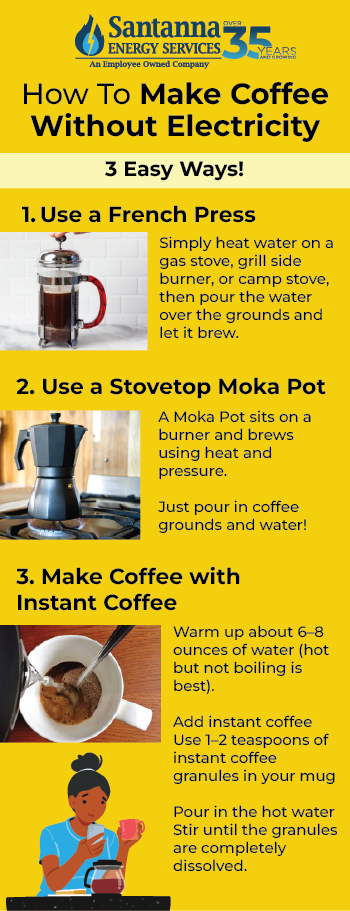
You can make coffee without electricity by using a manual method and a heat source for hot water.
This usually comes up during a power outage or a weekend trip, but it's also just good to know. Many Midwest homes already have what they need in a cabinet.
A French press or pour-over is a simple option. To do this, simply heat water on a gas stove, grill side burner, or camp stove, then pour the water over the grounds and let it brew.
A stovetop Moka pot also works well. It sits on a burner and brews using heat and pressure. It's a classic for a reason.
And when you need something fast, instant coffee works too. Hot water is all you need!
How To Clean an Electric Coffee Maker
Keeping your coffee maker clean helps it brew better coffee and use energy more efficiently. Mineral buildup is common, especially in Midwest homes with hard water, and cleaning helps prevent that.
Step 1: Unplug the coffee maker and let it cool
Always start by unplugging the machine and giving it time to cool down. This keeps you safe and makes the cleaning process easier.
Step 2: Empty the carafe and remove the filter basket
Pour out any leftover coffee or water. Take out the filter basket and any used filter so nothing blocks the cleaning solution later.
Step 3: Wash the removable parts with warm, soapy water
Wash the carafe, filter basket, and lid in the sink. These parts collect oils from coffee over time, and a quick wash helps remove buildup.
Step 4: Mix a simple cleaning solution
Fill the water reservoir with a mix of white vinegar and water. Many people use equal parts, but even a lighter mix works well for regular cleaning.
Step 5: Run a cleaning cycle through the coffee maker
Turn the coffee maker on and let the vinegar solution run through like a normal brew. This helps break down mineral buildup inside the machine.
Step 6: Rinse by running plain water through 1 to 2 cycles
After the cleaning cycle finishes, run plain water through the machine once or twice. This clears out any vinegar taste or smell.
Step 7: Wipe down the outside and let everything dry
Wipe the outside with a damp cloth and let all parts air dry before putting them back together. Once dry, the coffee maker is ready to use again.
Regular cleaning is a simple habit that keeps your coffee maker running smoothly, helps it heat water efficiently, and can even extend its lifespan.
Frequently Asked Questions About Coffee Maker Electricity Use
Does a coffee maker use electricity when it's off but plugged in?
Sometimes, but very little. Coffee makers with clocks, digital displays, or auto-start features can draw a small amount of standby power when plugged in. Basic models without electronics usually draw none.
Is a higher-wattage coffee maker more energy-efficient?
Not necessarily. Higher wattage usually means the coffee maker heats water faster, not that it uses more electricity overall. Total energy use depends on both wattage and how long the machine runs.
Is it better to unplug my coffee maker?
It can help, especially for older models. Unplugging stops any standby power use from clocks or displays. The savings are small, but it's a simple habit if the outlet is easy to reach.
Is an inverter's surge rating important for a coffee maker?
Yes. Coffee makers need a higher surge of power when heating starts. The inverter must handle both the running wattage and the brief startup surge.
Coffee makers look power-hungry because the wattage number is big, but the run time is short. That's why most coffee makers only cost a few cents per brew and usually are not a major driver of your electric bill.
When you understand watts and kWh, it gets easier to spot what really matters in your home. You can stop guessing and start making decisions that actually help with planning and budgeting.
If predictability is important to you, it can also help to look at how your electricity supply is set up. Santanna's Unlimited Energy plan is designed to offer predictable supply charges, so you can budget more easily without worrying about small daily uses like brewing coffee.*
Exploring options that bring more consistency to your energy costs is another simple way to keep your household running smoothly and stress-free.
* Restrictions apply. Enrollment based upon program eligibility. Customers using more than 125% of normal monthly usage as determined by Santanna may be required to switch plans.
Tyler is an experienced energy professional, having worked for Santanna Energy Services, for the past four years. He is passionate about renewable energy and believes that diversifying the energy grid is the key to a sustainable future. Tyler is dedicated to supplying consumers with the best possible energy solutions and works diligently to make sure that Santanna can deliver the highest quality service.