
How To Air-Dry Clothes: Indoor & Outdoor Methods That Cut Energy Use

by Jenna Mendez
25.3 min read
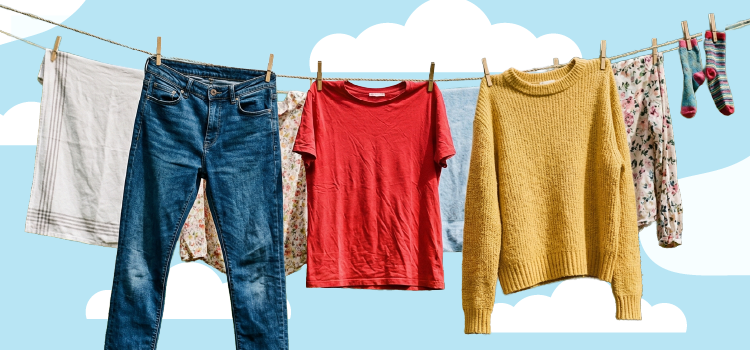
Air-drying clothes sounds simple, until you pull a shirt off the rack and it's stiff, wrinkled, and smells a little… off. While air-drying is one of the simplest ways to cut energy use at home, getting it right depends on a few key factors, like airflow, spacing, and where you dry your clothes.
The good news is, air-drying can work in almost any home, whether you're using a drying rack in a small apartment or a clothesline outdoors. When done properly, it can also help your clothes last longer and simplify your laundry routine without extra effort.
Here at Santanna Energy Services, we're using our energy expertise to help you understand how everyday habits, like doing laundry, affect your energy use and monthly costs so you can make smarter, more confident choices at home.
In this guide, we'll walk through the best way to air-dry clothes, what affects drying time, and simple methods you can start using right away to make the process easier and more reliable.
Key Points of This Article:
- Air-drying even a few loads each week can help lower electricity use and reduce long-term energy costs without changing your routine too much.
- Simple steps like improving airflow, spacing clothes properly, and using a high-spin cycle can make air-drying clothes faster and more effective.
- Air-drying indoors works well when done right, but poor ventilation is usually what causes musty smells.
Why Households Are Choosing Air-Drying
More households are turning to air-drying for reasons that go beyond the monthly bill. If you've ever pulled clothes out of the dryer and noticed shrinking, fading, or worn-out fabric sooner than expected, you're not imagining it.
Modern dryers are convenient, but frequent high-heat cycles can contribute to fabric wear over time. Heat exposure may cause shrinkage, weaken elastic fibers, and fade certain materials, such as denim, activewear, and delicate garments.
According to a 2025 study from YouGov, at least 59% of Americans report using air-drying sometimes, and 7% report exclusively air-drying. For many of these households, making air-drying part of their laundry routine helps balance convenience, clothing care, and environmental impact.
At Santanna, we've seen this trend reflected internally as well. A survey of our employee‑owners found that 39% air-dry clothes at least occasionally to reduce dryer use, with cost savings being the highest motivator.
There's also a bigger shift happening in how people use appliances at home. Instead of running everything automatically, more homeowners are becoming intentional about when and how they use high-energy appliances like dryers.
That might look like air-drying lighter loads, skipping the dryer on milder days, or using an outdoor line when the weather allows. Small changes like these can feel simple, but over time, they can make a noticeable difference in both clothing care and overall energy use.
How To Air-Dry Clothes: Indoor & Outdoor Methods That Work
Air‑drying clothes is one of the simplest ways to lower energy use at home without making major changes to your routine. Even a few air‑dried loads each week can help reduce electricity consumption and extend the life of your clothing.
If you’re looking for the most effective methods to air-dry your clothes, here’s how to do it:
How To Air-Dry Clothes Inside (Without Musty Smells)
Air-drying clothes indoors is often the most practical option, especially during colder months or if you don’t have outdoor space. If you’ve ever tried it and ended up with clothes that still feel damp or smell a little off, you’re not alone. Indoor drying works well, but airflow and humidity make all the difference.
Here are some easy ways to get better results when air-drying clothes indoors:
- Choose a ventilated spot: Dry clothes near an open window, vent, or fan so moisture can escape.
- Use a drying rack for airflow: Spread items out, avoid overlap, keep the rack away from walls, and rotate thicker pieces to dry evenly.
- Hang and lay items correctly: Use hangers for shirts and light weight fabrics, and lay heavy garments like sweaters flat to prevent stretching.
- Avoid closed or humid rooms: Skip bathrooms or small unventilated spaces. Choose a room with consistent airflow to prevent musty smells.
Looking for more details? Keep reading!
Choose a Well-Ventilated Area
Air circulation is the most important factor when drying clothes indoors. As moisture evaporates from fabric, it needs somewhere to go. Without proper airflow, moisture can linger in the air and slow the drying process.
Placing clothes near natural airflow, like an open window, air vent, or even a frequently used room, helps moisture dissipate more easily. If the air feels still, running a ceiling fan or a small portable fan can make a noticeable difference by keeping air moving around the clothes.
It also helps to be mindful of indoor humidity. Keeping it in a comfortable range, usually around 30% to 50%, supports faster drying and helps prevent excess moisture from building up in your home.
Use a Drying Rack for Better Airflow
Drying racks are one of the most effective tools for indoor air drying. They allow air to circulate around each garment, which helps clothes dry more evenly.
When using a drying rack:
- Leave space between each item
- Avoid overlapping fabrics
- Position the rack in an open area rather than against a wall
- Rotate thicker items if needed to ensure even drying
Overcrowding traps moisture and increases drying time, which can lead to musty odors.
Hang Clothes Strategically
Using hangers for certain garments can improve airflow and reduce wrinkles. Shirts, dresses, and lightweight fabrics dry efficiently when hung individually with space around them.
For heavier pieces like sweaters, it’s better to lay them flat. Hanging them while wet can stretch the fabric because of the extra weight from moisture. If you’ve ever noticed a sweater losing its shape after drying, this is often why.
Following the care label and choosing the right method for each fabric helps your clothes last longer and look better after drying.
Avoid Drying Clothes in Closed or Humid Spaces
It might seem convenient to hang clothes in a bathroom or a small room, but if the space does not have good ventilation, moisture can build up quickly. This slows drying and increases the chance of that damp, musty smell.
If indoor drying is your only option, choosing a room with consistent airflow and moderate humidity will help clothes dry faster and more effectively.
How To Dry Clothes Outside Safely and Effectively
Drying clothes outside is one of the easiest and most efficient ways to air-dry laundry. If you’ve ever noticed how clothes feel lighter and fresher after being outside, that’s because natural airflow and sunlight help moisture evaporate more quickly than indoor drying.
Here’s a quick tutorial on how to air-dry clothes outside:
- Choose the right weather conditions: Pick a warm, dry, breezy day. Airflow, temperature, and humidity all affect how fast clothes dry.
- Hang clothes with plenty of spacing: Give each item enough room so air can move freely around the fabric and moisture can escape.
- Use sunlight wisely: Sunlight helps speed up drying and reduces odor‑causing bacteria, but turn dark or bright-colored items inside out to prevent fading.
- Place delicate or color‑sensitive items in partial shade: This protects them from UV damage while still allowing airflow for effective drying.
- Be mindful of outdoor factors like pollen or dust: These can collect on clothes if left out too long; shake garments out before bringing them inside.
- Monitor changing weather: Bring clothes in promptly once dry to protect them from moisture, pollution, or sudden shifts in conditions.
When conditions are right, outdoor drying can significantly reduce drying time while helping clothes get that fresh outdoor linen smell. Here are some more things to keep in mind when drying clothes outside safely and effectively:
Choose the Right Weather Conditions
Airflow, temperature, and humidity all affect how quickly your clothes will dry. Warm, dry, and breezy days are ideal because moving air helps carry moisture away from the fabric. Even on cooler days, a steady breeze can still dry clothes effectively.
Humidity plays a major role in drying speed. When outdoor humidity is high, the air already contains more moisture, which slows evaporation. Lower humidity levels allow fabrics to dry much faster because the air can absorb more moisture.
Use Sunlight Carefully to Protect Fabrics
Sunlight can help speed up the drying process, and ultraviolet (UV) exposure can help reduce odor-causing bacteria. That’s why clothes dried outside often smell fresher.
However, prolonged direct sunlight may cause some fabrics and colors to fade over time. A simple way to protect your clothes is to turn darker or bright-colored items inside out and avoid leaving them in direct sunlight longer than needed.
For more delicate fabrics, placing them in a shaded area can help prevent damage while still allowing them to dry properly. Managing the right balance of sunlight exposure helps clothes dry efficiently while preserving fabric quality.
Be Aware of Environmental Factors
Outdoor drying conditions can vary depending on location and season. Pollen, dust, and pollution can settle on clothes if they stay outside too long. It is generally a good idea to shake out garments again before bringing them inside.
It also helps to keep an eye on changing weather. Monitoring outdoor conditions and bringing clothes inside promptly when dry helps protect fabric quality.
The Best Way To Air-Dry Clothes
When air-drying is done properly, it helps prevent wrinkles, stretching, and that musty smell that can happen when moisture lingers too long. It also allows clothes to dry more evenly, which improves overall efficiency and saves time.
The best way to air-dry clothes is to start by removing as much moisture as possible using a high-speed spin cycle, then gently shake and reshape each garment before hanging or laying items flat in a space with good airflow.
Once you get these basics right, the next step is choosing the right setup depending on your space, the weather, and the type of clothing you’re drying.
Let’s take a closer look at the best indoor and outdoor air-drying methods you can start using:
Start With the Right Spin Cycle
Air-drying really begins in the washing machine. Before you even hang anything up, using a high-speed spin cycle helps remove as much water as possible from your clothes.
The less moisture left in the fabric, the faster everything dries once it’s out. If you’ve ever felt like clothes take forever to air-dry, this is often the step that makes the biggest difference.
Most modern washers have a high-spin option designed to pull out extra water without damaging fabrics. Taking advantage of this setting can shorten drying time and help prevent damp spots that can lead to that musty smell later on.
Shake and Reshape Each Garment
Before hanging your clothes, take a few seconds to gently shake each item and smooth it out. It’s a small step, but it helps more than most people expect. This helps fabric dry more evenly and prevents creases from setting as moisture evaporates.
Natural fabrics like cotton can shift slightly during the wash, so reshaping them early helps maintain their fit. It also means less time dealing with wrinkles later.
This step is especially helpful for everyday items like T-shirts, sweaters, button-down shirts, and athletic wear, where shape and fabric structure matter more once they dry.
Choose the Right Drying Method for the Fabric
Not all clothes should be dried the same way, and choosing the right setup can make a big difference in both drying time and how your clothes hold up over time. If you’ve ever noticed stretched-out sweaters or uneven drying, the method you use is often the reason.
Here are some common air-drying options:
- Drying racks: Great for indoor spaces and delicate items
- Clotheslines: Ideal for outdoor drying and larger loads
- Hangers: Helpful for shirts, dresses, and wrinkle-prone fabrics
- Flat surfaces: Best for sweaters and heavier items that can stretch when hung (just remember to flip them after a few hours)
No matter which method you use, spacing matters. When clothes are packed too closely together, moisture gets trapped, and drying slows down.
Good airflow is what allows moisture to escape. When air can move freely around each item, clothes dry faster, more evenly, and with less risk of that damp smell.
Pay Attention to Fabric Care Labels
If you’re ever unsure how to dry a specific item, the care label is a good place to start. It’s easy to overlook, but it can help prevent shrinking or damage to the clothes you want to keep longer.
You’ll usually see simple instructions to guide you on how the fabric holds up best during drying, like:
- “Line dry”
- “Lay flat to dry”
- “Dry in shade”
Following these recommendations helps protect fabric quality and can extend the lifespan of clothing. The Federal Trade Commission (FTC) requires manufacturers to include fabric care labels that list safe cleaning and drying practices.
How Long Do Clothes Take to Air-Dry?
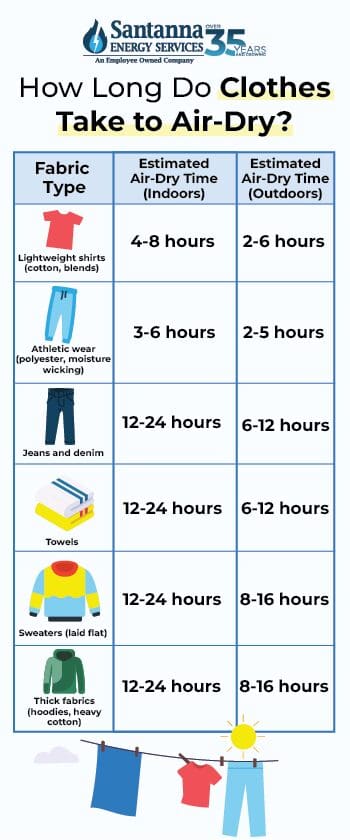
Air-drying time can vary depending on fabric type, airflow, humidity, and temperature. Lightweight fabrics may dry in just a few hours, while thicker materials can take significantly longer.
In general, most clothes air-dry within 2 to 24 hours, depending on conditions. Airflow and humidity tend to have the biggest impact.
When the air is dry and moving, moisture evaporates faster. When humidity is high, drying can take longer because the air is already holding more moisture.
The ranges below are based on commonly referenced laundry-care guidance and typical indoor/outdoor drying conditions. Actual drying times vary depending on humidity, airflow, fabric thickness, and washer settings. They’re meant to give you a realistic expectation of what to expect, not exact results.
Here’s a breakdown of typical air-drying times based on different fabric types and conditions:
Typical Air-Drying Times by Fabric Type
| Fabric Type | Estimated Air-Dry Time (Indoors) | Estimated Air-Dry Time (Outdoors) |
| Lightweight shirts (cotton, blends) | 4-8 hours | 2-6 hours |
| Athletic wear (polyester, moisture wicking) | 3-6 hours | 2-5 hours |
| Jeans and denim | 12-24 hours | 6-12 hours |
| Towels | 12-24 hours | 6-12 hours |
| Sweaters (laid flat) | 12-24 hours | 8-16 hours |
| Thick fabrics (hoodies, heavy cotton) | 12-24 hours | 8-16 hours |
These times are for clothes straight out of the washer on an average spin cycle. High-speed spin cycles, drying racks, and proper spacing can significantly reduce these times.
Factors that Affect Drying Time
If you've ever noticed that the same load dries quickly one day and takes much longer the next, you're not doing anything wrong. Here are the main factors that influence how quickly clothes dry:
- Airflow – Moving air helps carry moisture away from fabric, allowing clothes to dry faster. Fans, open windows, or outdoor breezes can make a noticeable difference.
- Sunlight Exposure – Direct sunlight can speed up evaporation, especially on cooler days. For darker fabrics, turning items inside out can help prevent fading while still drying efficiently.
- Humidity – High humidity slows evaporation because the air already holds more moisture. Lower humidity allows clothes to dry more quickly.
- Temperature – Warmer air helps moisture evaporate, but airflow often has a bigger impact than temperature alone.
- Fabric Type & Thickness – Heavier materials like denim, fleece, and towels hold more water and take longer to dry than lightweight fabrics.
- Garment Size & Surface Area – Larger items like sheets and blankets need more time. Spreading clothes out fully instead of folding them over helps moisture escape faster.
- Initial Moisture Level – Clothes that come out of the washer with more water will take longer to dry. A high-speed spin cycle can help remove extra moisture upfront.
How To Tell When Clothes Are Fully Dry
Clothes should feel completely dry to the touch, including thicker areas like seams, waistbands, and pockets. Even slight dampness in these areas can still lead to musty odors if clothes are folded and stored too soon.
Allowing clothes to fully dry before storing them helps maintain freshness and prevents moisture buildup.
How To Air-Dry Clothes Faster
While air-drying typically takes longer than using a dryer, a few simple techniques can noticeably reduce drying time. If you've ever felt like your clothes are taking too long to dry, small adjustments to airflow, moisture removal, and placement can make a real difference.
Here are a few practical ways to help your clothes dry faster and more evenly:
Try a Second Short Spin Cycle
If clothes still feel heavily saturated after washing, running a short additional spin cycle can remove more moisture before air-drying. Reducing retained water upfront shortens evaporation time and can noticeably speed up drying, especially for heavier fabrics like denim and towels.
Increase Airflow Around Clothing
Air movement plays a critical role in evaporation. Improving airflow helps carry moisture away from fabrics, allowing them to dry faster. Even gentle airflow can make a noticeable difference in drying speed.
Use Natural Ventilation
Placing clothes near an open window or in a breezy outdoor area increases air circulation and speeds up drying.
Use Fans to Boost Circulation
A ceiling fan or portable fan can significantly reduce drying time by continuously moving air across damp fabric.
Use the Towel Method to Remove Excess Moisture
For thicker fabrics, placing clothing flat on a clean, dry towel and gently rolling it up can help absorb additional moisture. Pressing lightly helps transfer water from the garment into the towel without damaging the fabric.
This method works especially well for items like jeans, sweaters, heavy cotton fabrics, and athletic wear. Removing excess moisture early helps shorten the overall drying time.
Hang Clothes Strategically
Proper positioning improves airflow and prevents moisture from collecting in certain areas.
For best results:
- Hang shirts and lightweight items on hangers
- Lay heavier garments flat to prevent stretching
- Avoid overlapping fabrics
- Rotate thicker garments as needed
Giving each piece enough space allows moisture to evaporate more efficiently.
Choose the Right Drying Location
Warmer rooms with steady airflow help clothes dry faster than cool, enclosed spaces. Avoid placing clothes in humid areas like bathrooms or basements unless airflow is available. Even small adjustments, like moving a drying rack closer to an air vent, can improve drying efficiency.
When You Should NOT Air-Dry Clothes
Air-drying works well for many types of clothing, but it isn't always the best option. Some fabrics and situations require heat drying to maintain fabric quality, ensure proper sanitation, or achieve the desired texture.
Knowing when to switch from air-drying to machine-drying can help you protect your clothes while still being mindful of energy use. Here are a few situations where using a dryer may be the better choice:
When Care Labels Recommend Tumble Drying
Clothing care labels provide the most reliable guidance for proper drying methods. Some garments are designed to be tumble-dried at specific temperatures to maintain their shape, texture, or performance.
You may see instructions like "tumble dry low", "tumble dry medium", or "do not line dry". These recommendations are based on how the fabric responds to moisture, airflow, and heat. Following care label instructions helps preserve garment quality and longevity.
When Air-Drying May Cause Stiffness
Air-drying can sometimes leave fabrics like towels, denim, and heavier cotton feeling stiff. This happens because the tumbling action in dryers helps soften fibers as they dry. For items where softness is important, like towels or certain cotton fabrics, using a dryer for part of the process may produce better results.
Some households use a combination approach by air-drying clothes most of the way and finishing them in the dryer for a few minutes to soften the fabric.
When You Need Faster Drying Times
Air-drying takes longer than machine drying, which may not always be practical. Situations such as cold weather, high humidity, or time constraints may make using a dryer the more convenient option.
In these situations, dryers provide consistent heat and airflow that can dry clothes quickly regardless of conditions, making them the more convenient option when you need a faster turnaround.
When Drying Thick or Heavy Items
Large or thick items such as comforters, blankets, and heavy cotton garments can take much longer to air-dry. In some cases, trapped moisture may remain inside thick fabrics even when the outer surface feels dry.
Using a dryer helps ensure moisture is removed completely, which can help prevent musty odors and maintain fabric freshness.
When Sanitation is a Priority
Heat from dryers can help reduce bacteria and dust mites that may remain in fabrics. For items like bedding, towels, and certain garments, machine-drying may provide additional sanitation benefits.
Does Air-Drying Clothes Really Save Money?
Yes, air-drying clothes can save you money, but how much depends on how often you use your dryer and the cost of electricity in your area.
A typical electric dryer uses about 1.8 to 5 kWh per cycle, and based on the average U.S. electricity rate of 17.45 cents per kWh as of January 2026, each load can cost around $0.30 to $0.90. While that may seem small, it adds up over time.
For example, doing about five loads per week can cost roughly $80 to $230 per year just for drying. If you air-dry two of those loads per week, you could save $30 to $90 or more each year.
How much you save depends on your electricity rate. Higher rates mean bigger savings, while lower rates mean smaller, but still noticeable, reductions. Understanding your electricity supply rate can help you see how everyday habits, like doing laundry, affect your monthly bill.
Air-drying can also help your clothes last longer by avoiding heat damage from the dryer, which may reduce how often you need to replace them.
You don't have to stop using your dryer completely. Many households save money by air-drying some loads and using the dryer when needed.
Air-Drying vs. Using a Dryer: Environmental & Financial Impact
Both air-drying and using a dryer have their place in your daily routine. Dryers are fast and convenient, but they use more electricity, while air-drying relies on natural airflow and uses no electricity.
A typical dryer uses about 3.4 kilowatt-hours per load, and over time, that can add up if you do laundry regularly. Even air-drying a few loads each week can help lower your overall energy use.
To better understand the overall impact, it helps to look at both the environmental and financial effects of using a dryer:
Environmental Impact of Dryer Energy Use
Dryers don't just affect your electricity bill; they also use a noticeable amount of energy overall.
A study from the University of Michigan found that dryers account for about 3% of household energy use, which is much higher than washing machines. Across the U.S., they cost households over $7 billion each year and are linked to millions of tons of carbon emissions.
Using your dryer less often can help reduce overall energy use. Even air-drying a few loads each week can make a difference over time.
Financial Impact of Reducing Dryer Run Time
Using your dryer less can also lead to savings over time. That same University of Michigan study found that switching completely to air-drying could save the average U.S. household about $2,100 over the life of a dryer.
Even using a mix of air-drying and machine drying can still save around $900 or more over time. These savings come from small, consistent changes in how often you use your dryer.
A Balanced Approach Works Best
Air-drying and machine-drying both have their place, and most households benefit from using a mix of both. You might air-dry lighter fabrics or occasional loads, then use the dryer when you need faster results or for heavier items.
Finding that balance can help you lower energy use while still keeping your routine simple and convenient. It also gives you more control over how your home uses energy day to day.
The Best Air-Drying Setup for Any Home (Small Apartments to Large Homes)
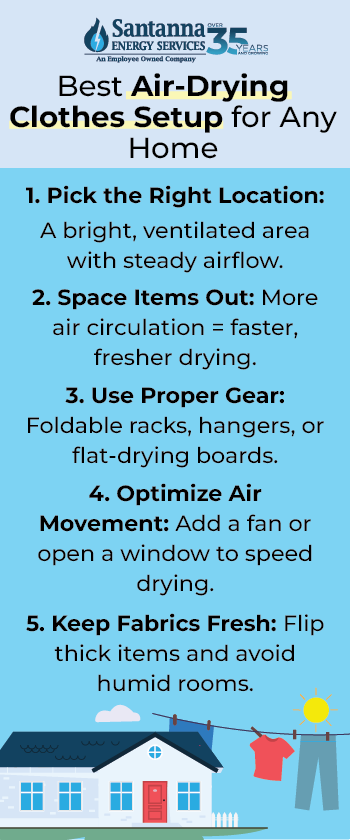
The best air-drying setup depends on your space, airflow, and whether you can dry clothes outside. The good news is, with the right setup, air-drying can work in almost any home.
You don't need anything complicated. A few simple adjustments can make the process easier and more efficient, no matter where you live.
Here are some setups that work well, depending on your space:
Best Air-Drying Setup for Small Apartments
Limited space does not mean you have to rely on the dryer all the time. Many people in apartments use compact drying racks or vertical setups that don't take up much room.
Collapsible drying racks are a popular option because you can fold them away when you're done. Placing them near a window, fan, or air vent can help clothes dry faster by improving airflow.
If floor space is tight, wall-mounted or over-the-door racks can help you dry clothes vertically instead of spreading them out across the room.
These setups work well for everyday items like T-shirts and athletic wear, as well as for smaller loads.
Best Air-Drying Setup for Laundry Rooms
Homes with dedicated laundry rooms often have more flexibility for air-drying larger loads of clothing.
A freestanding drying rack placed near the washing machine allows clothes to be hung immediately after washing. If the laundry room has good ventilation or a nearby window, airflow will help speed up the drying time.
Some homeowners also install retractable clotheslines or ceiling-mounted drying racks in laundry rooms. These systems allow clothes to hang higher, where air circulates more freely, while keeping floor space clear.
For heavier fabrics like jeans, towels, and sweaters, laying garments flat on a mesh drying rack can help maintain their shape while allowing air to circulate underneath.
Best Air-Drying Setup for Outdoor Spaces
If you have outdoor space, this is often the easiest and fastest way to air-dry clothes. Natural sunlight and airflow help clothes dry more quickly than indoor setups.
A simple clothesline or outdoor drying rack works well for most households. The key is to give clothes enough space so air can move around each item.
If you've ever noticed clothes drying unevenly outside, it's often because they're too close together. Spacing them out and placing thicker items where airflow is strongest can help everything dry more evenly.
Turning darker clothing inside out may also help reduce sun fading during long drying periods.
Helpful Air-Drying Tools and Products
You don't need much to get started, but a few simple tools can make air-drying easier.
Common options include foldable drying racks, mesh racks for sweaters, retractable clotheslines, wall-mounted racks, and sturdy hangers for shirts and dresses.
These tools help improve airflow and keep clothes from stretching or wrinkling while they dry.
How Air-Drying Clothes Differs by Season and Region
Air-drying clothes works differently depending on the weather, humidity levels, and airflow in your region. Because drying relies on evaporation, conditions like temperature, wind, and moisture in the air can significantly influence how quickly clothes dry.
In many parts of the Midwest, including Pennsylvania, Ohio, Indiana, Illinois, and Michigan, seasonal weather patterns can noticeably affect air-drying performance throughout the year. Because these states experience four distinct seasons, many households naturally switch between outdoor air-drying in warmer months and indoor drying setups during colder periods.
Understanding how these environmental factors change throughout the year can help you choose the most effective drying method for each season.
How Seasonal Humidity Impacts Air-Drying
Humidity levels change throughout the year, and these seasonal shifts can affect how quickly clothes dry outside. In the Midwest and Great Lakes areas, humidity levels vary widely between summer and winter. Understanding seasonal patterns can help you choose the best time and location to air-dry clothes.
Spring and Fall offer the ideal conditions for air drying in these areas. Moderate temperatures combined with lower humidity and steady airflow create the most efficient conditions for moisture to evaporate from fabrics.
Summer: Warm but Often Humid
Summer temperatures can help speed evaporation, but high humidity levels, which are common across the Midwest, can slow drying time despite the heat. On especially humid days, increasing airflow and proper spacing are the keys to efficient drying.
Winter: Indoor Drying Works Best
During winter months, outdoor air-drying becomes nearly impossible across the Great Lakes and Midwest regions. Cold temperatures and limited sunlight can slow or even freeze evaporation outdoors.
Indoor air-drying is often the most practical option during winter. However, the keys to effective air-drying are the same as on a humid summer day. Placing drying racks near circulating air like fans, HVAC vents, or open interior spaces, can help maintain airflow and prevent moisture from lingering in fabrics.
FAQs
Is it safe to air-dry clothes indoors?
Yes, as long as there is good airflow. Drying near a window or fan helps prevent moisture buildup and keeps indoor air balanced.
Do clothes smell different when air-dried?
Clothes that are air-dried properly should smell clean and fresh. Musty odors typically occur when clothes dry too slowly or remain damp for extended periods.
Is air-drying better for clothes than using a dryer?
Air-drying is gentler on fabrics because it avoids heat, which can cause shrinking and wear. Many people use a mix of both methods depending on the load.
Can you air-dry clothes in cold weather?
Yes, but it may take longer. Airflow matters more than temperature, but indoor drying is often the best option during colder months.
Does air-drying clothes help reduce energy use?
Yes, because it avoids using a dryer. Even air-drying a few loads can help lower your overall electricity use over time.
Air-drying clothes is one simple way to better understand how everyday habits influence your home's energy use. While small changes can help reduce electricity consumption, your overall energy costs are also shaped by your electricity supply plan.
Santanna Energy Services offers a variety of options designed to provide predictable pricing and long-term value, including the Unlimited Electricity plan that helps make monthly energy supply costs more consistent.*
If you're looking for more control over your energy supply charge, explore Santanna's Unlimited Electricity plan to see if it fits your household's needs.
* Restrictions apply. Enrollment based upon program eligibility. Customers using more than 125% of normal monthly usage as determined by Santanna may be required to switch plans.
Jenna Mendez is a Midwest native with lifelong roots in Illinois and time spent in Ohio during college, giving her a deep understanding of the Midwest region’s people, climate, and energy needs. She brings firsthand experience and local insight to topics that matter to Midwest homeowners, especially energy efficiency, sustainability, and home living. Jenna specializes in writing about eco-friendly living, all things Midwest, renewable energy, and practical ways to reduce energy costs. Jenna brings a trusted, and local hometown voice to every article she writes, helping readers live well, and sustainably, right where they are.