

How to Bleed a Radiator and Know When Trapped Air Is the Problem

by Jenna Mendez
Updated: November 10, 2026
18.1 min read
Key Points of This Article:
- A radiator that is warm at the bottom but cold at the top, especially with gurgling or bubbling sounds, is one of the clearest signs that trapped air may be the problem, and you should definitely bleed your radiator.
- If you have a hot-water radiator with a manual bleed valve, you can usually release the air safely by turning off the heat, letting the radiator cool, and closing the valve once water flows steadily.
- Bleeding can help a room warm more evenly and may prevent you from turning up the thermostat or running the heat longer, though it does not guarantee lower heating costs.
- Call an HVAC professional if the valve leaks or is damaged, several radiators stay cold, boiler pressure keeps dropping, or the same radiator repeatedly fills with air.
If you have a radiator, you may have run into a few common issues. It might be warm at the bottom but cold at the top, gurgle or bubble while it runs, or take longer to heat one room than the rest of the house. This doesn't always mean there's an issue; it might mean you just need to bleed your radiator!
Bleeding the radiator can release that trapped air, but it only helps when air is actually the cause. In this simple guide, we'll help you recognize the signs of trapped air, how to bleed your radiator safely, and know when it is time to call an HVAC professional.
What Does It Mean to Bleed a Radiator?
Bleeding a radiator means briefly opening its bleed valve to release trapped air from a hot-water heating system. This gives hot water more room to circulate through the radiator, heating it more evenly.
When air collects inside a radiator, it takes up space that should be filled with hot water. You may notice that the top stays cold while the bottom feels warm, or you may hear gurgling as the system runs. Releasing that air can help restore normal water flow and improve how the radiator warms the room.
Can You Bleed Every Type of Radiator?
No, you cannot bleed every type of radiator because different heating systems handle air differently. Bleeding is meant for water-filled radiators with a manual valve that allows trapped air to escape.
Steam radiators use air vents instead, while sealed electric or oil-filled radiators do not use circulating hot water from a boiler. Some hot-water systems also have automatic air vents and may not need you to bleed individual radiators.
Before you try anything, take a close look at your radiator and its valve. Opening the wrong fitting can cause a leak or damage the radiator. If you are not sure what type of system you have, it is safest to ask an HVAC professional.
Why Bleed Radiators? Benefits for Your Heating System
Bleeding a radiator gets trapped air out of the way so hot water can fill more of the radiator. When trapped air is the issue, that can make a noticeable difference in how evenly a room warms up.
Here is what you may notice after bleeding a radiator:
- More even heating and better room comfort: If the top of the radiator was cold, releasing the air may help hot water reach that area. More of the radiator can warm up, which may help the room feel comfortable sooner.
- Less gurgling and bubbling: Trapped air can make gurgling, bubbling, or trickling sounds as your heating system runs. Bleeding may quiet those sounds. Banging or clanging noises can have other causes.
- Better heat transfer across the radiator: A radiator gives off heat when hot water moves through it. When air is taking up space inside, less of the radiator can do that job. Releasing the air helps the radiator use more of its surface to warm the room.
- Improved heating efficiency: Bleeding radiators can improve heating efficiency and home warmth by removing air that prevents hot water from flowing freely. If uneven heating was leading you to raise the thermostat or run the heat longer, bleeding may help reduce that unnecessary energy use. However, it does not guarantee a lower heating bill.
Bleeding is a simple fix when trapped air is the cause. It will not solve problems such as a damaged valve, low boiler pressure, sludge buildup, or a larger issue with the heating system.
How Do You Know If Your Radiator Needs Bleeding?
Your radiator may need bleeding if it is warm at the bottom but cold at the top, especially if you hear gurgling while the heat is running. That often means trapped air has risen inside the radiator and is keeping hot water from reaching the top.
Let's take a closer look at the signs that your radiator may need bleeding:
- The top is cold, but the bottom is warm. This is one of the clearest signs of trapped air. Air rises while hot water continues to move through the lower part of the radiator.
- You hear gurgling, bubbling, or trickling. Those sounds can happen when water moves around pockets of air inside the radiator.
- The radiator has uneven cold spots. It may feel warm in some places but stay cool across the top, even after the heating has been on for a while.
- One radiator warms much more slowly than the others. If nearby radiators heat up normally but one lags behind, trapped air may be limiting the flow of hot water through it.
- That room stays chilly longer than the rest of the home. A radiator that is only partly warm cannot give off as much heat to the room.
The biggest clue is usually a cold top along with gurgling or trickling sounds. If the whole radiator stays cold, or it is cold at the bottom, bleeding may not be the answer. A closed valve, sludge buildup, or another heating-system issue could be involved.
What Do You Need Before Bleeding a Radiator?
Before you try bleeding your radiator, grab the right tool for the radiator valve, a towel, and a small container to catch any water that comes out. Then turn off the heat, let it cool down, and take a quick look at the valve before opening it.
You do not need many supplies, but having everything within reach makes the process less stressful and helps protect the area around the radiator.
Tools You'll Need
Here are the basic items to gather before you begin:
- Radiator bleed key: Most manual bleed valves have a small square fitting that requires a radiator key.
- Flat-head screwdriver: Some valves have a straight slot instead. Use a screwdriver only if it fits the valve securely.
- Small container or cup: Hold it beneath the valve to catch water after the trapped air escapes.
- Towel or rag: Place it below the valve to protect the floor or wall from sputtering water.
- Protective gloves: These are optional but can keep your hands clean and provide extra protection from dirty radiator water.
You will usually need either a radiator key or a screwdriver, not both. Check the valve first and never force an incompatible tool into it.
Before You Begin
Once your supplies are ready, do a few quick checks before opening the valve. This helps you avoid handling hot water or accidentally opening the wrong fitting:
- Confirm that it is a hot-water radiator with a manual bleed valve. Do not open a fitting you cannot identify.
- Turn off the heating system. This stops the pump from moving hot water and air through the radiator while the valve is open.
- Allow the radiator to cool. Wait until it is cool enough to handle safely before opening the valve.
- Protect the surrounding area. Place the towel and container beneath the bleed valve before opening it.
- Inspect the valve. Stop if it is damaged, already leaking, or will not turn with gentle pressure. Forcing it could damage the valve or make a leak worse.
Once the radiator is cool, the area is protected, and you have the right tool, you are ready to begin.
How to Bleed a Radiator
This is a quick job for many hot-water radiators with a manual bleed valve, but it is still important to take your time and work safely. If the valve is damaged, already leaking, or will not turn gently, stop and contact an HVAC professional.
Here is how to bleed your radiator, one step at a time:
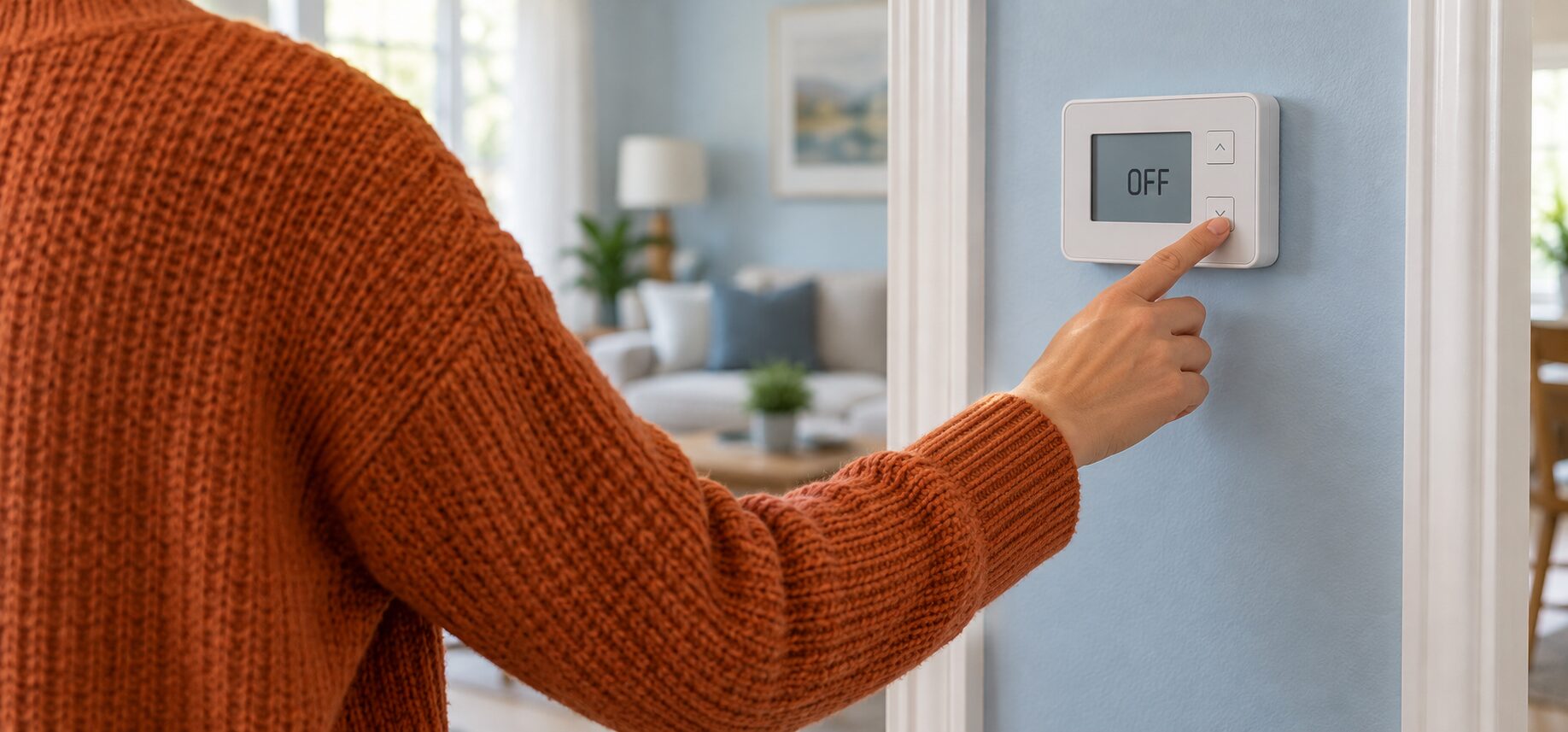
Step 1: Turn Off the Heating System
Turn off the heating system before opening the bleed valve. This stops the circulation pump from moving hot water and air through the radiator while you work.
Do not bleed the radiator while the heat is running. Moving water can make it harder to release the trapped air and may increase the chance of hot water escaping.
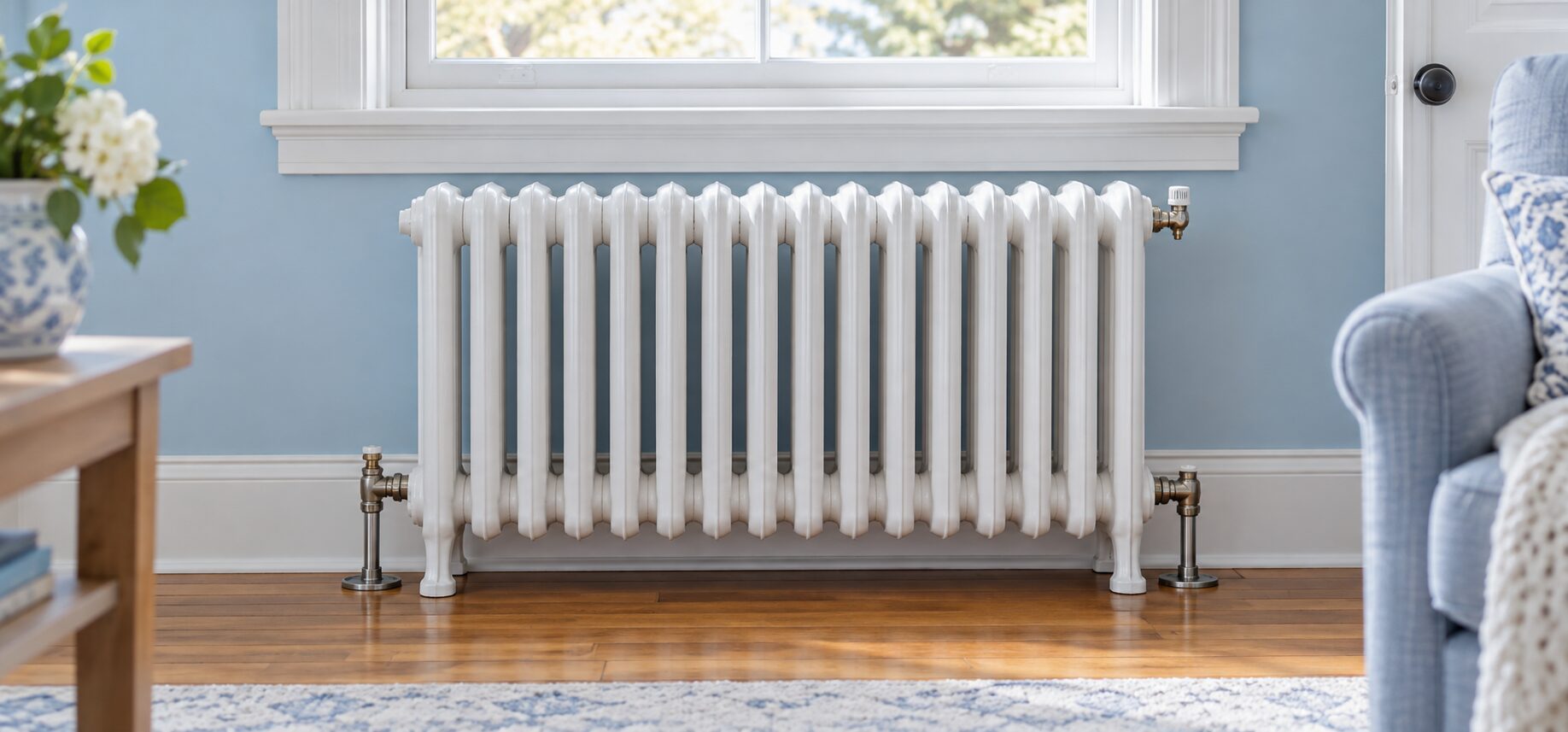
Step 2: Allow the Radiator to Cool
Wait until the radiator feels cool enough to handle safely. The water inside may remain hot even after the heating system is turned off, so give it enough time to cool.
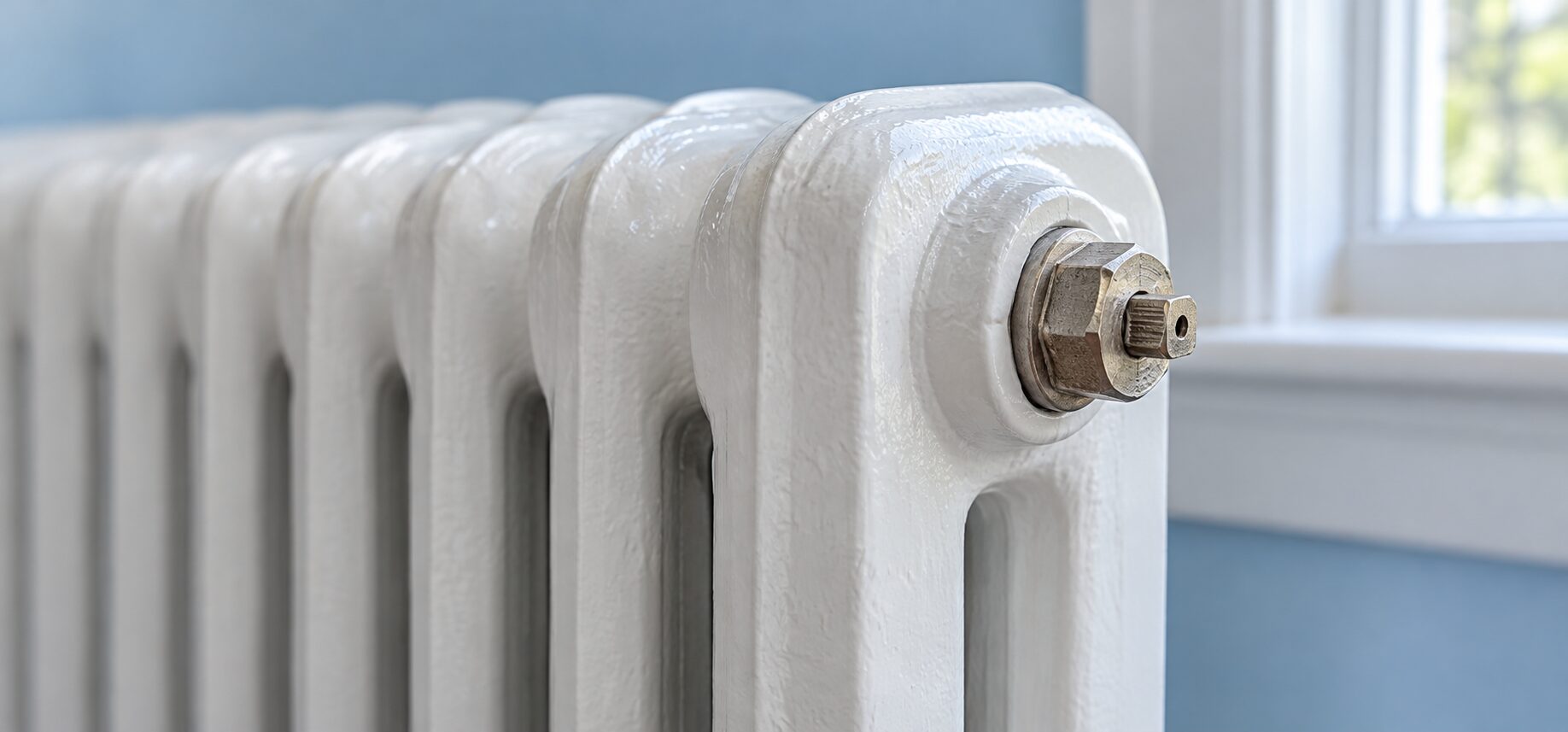
Step 3: Locate the Bleed Valve
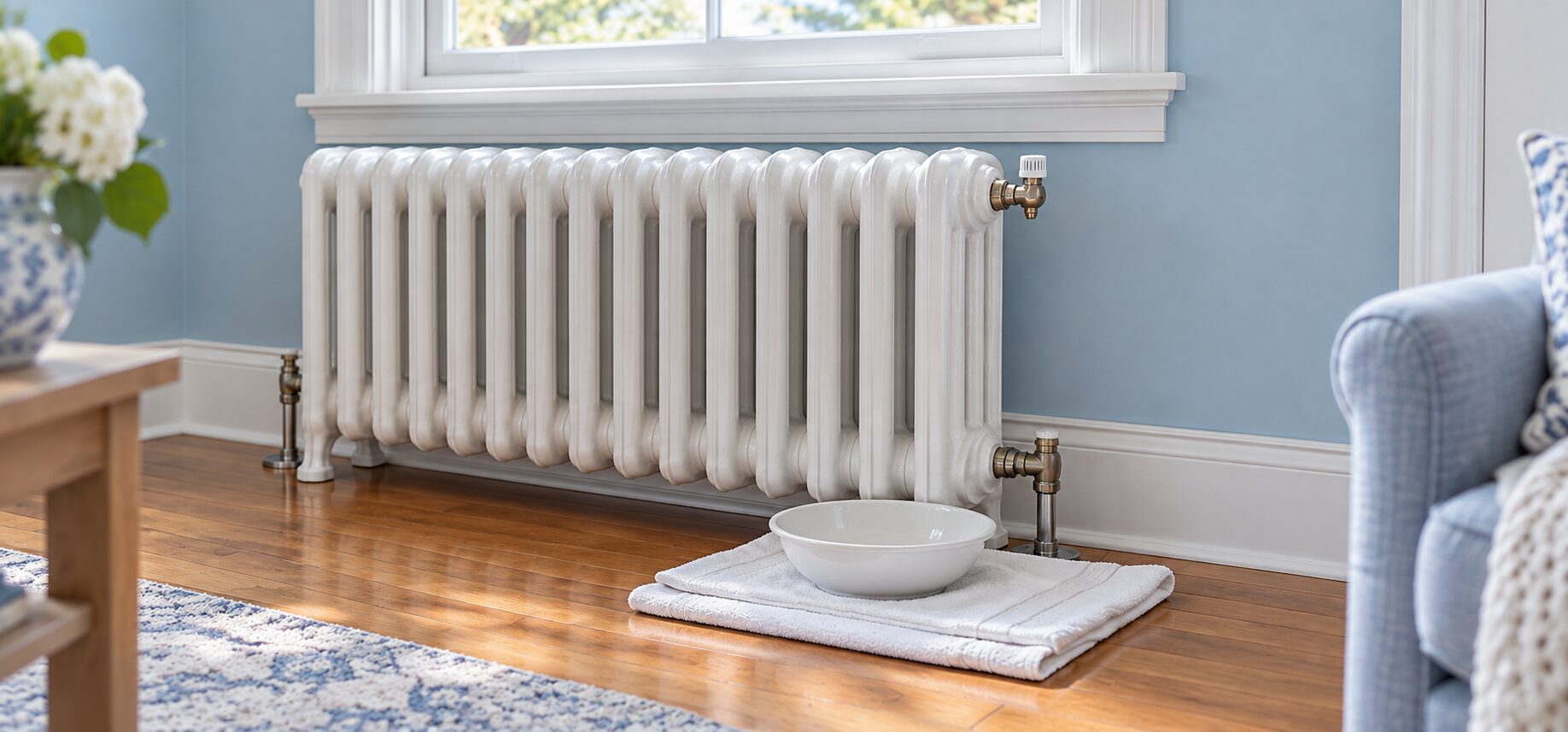
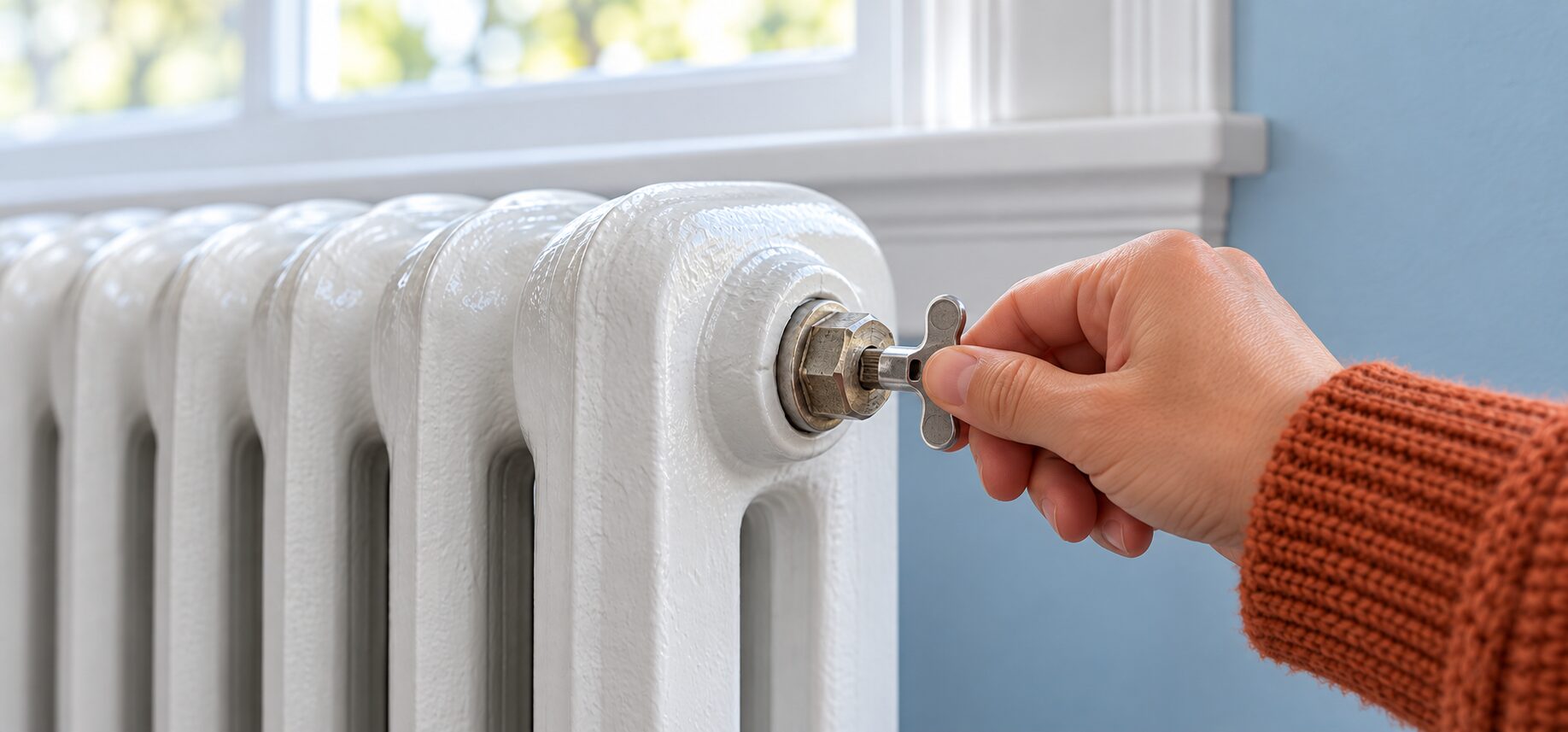
Look near one of the radiator's upper corners for a small manual bleed valve. It often looks like a small round metal piece with a tiny square fitting or straight slot in the center. The square fitting accepts a radiator key, while the slot may accept a flat-head screwdriver.
The bleed valve is much smaller than the regular control valves usually found near the bottom of the radiator. Make sure you have identified it correctly, and do not loosen a pipe connection or another unfamiliar fitting.
Step 4: Place a Towel and Container Below the Valve
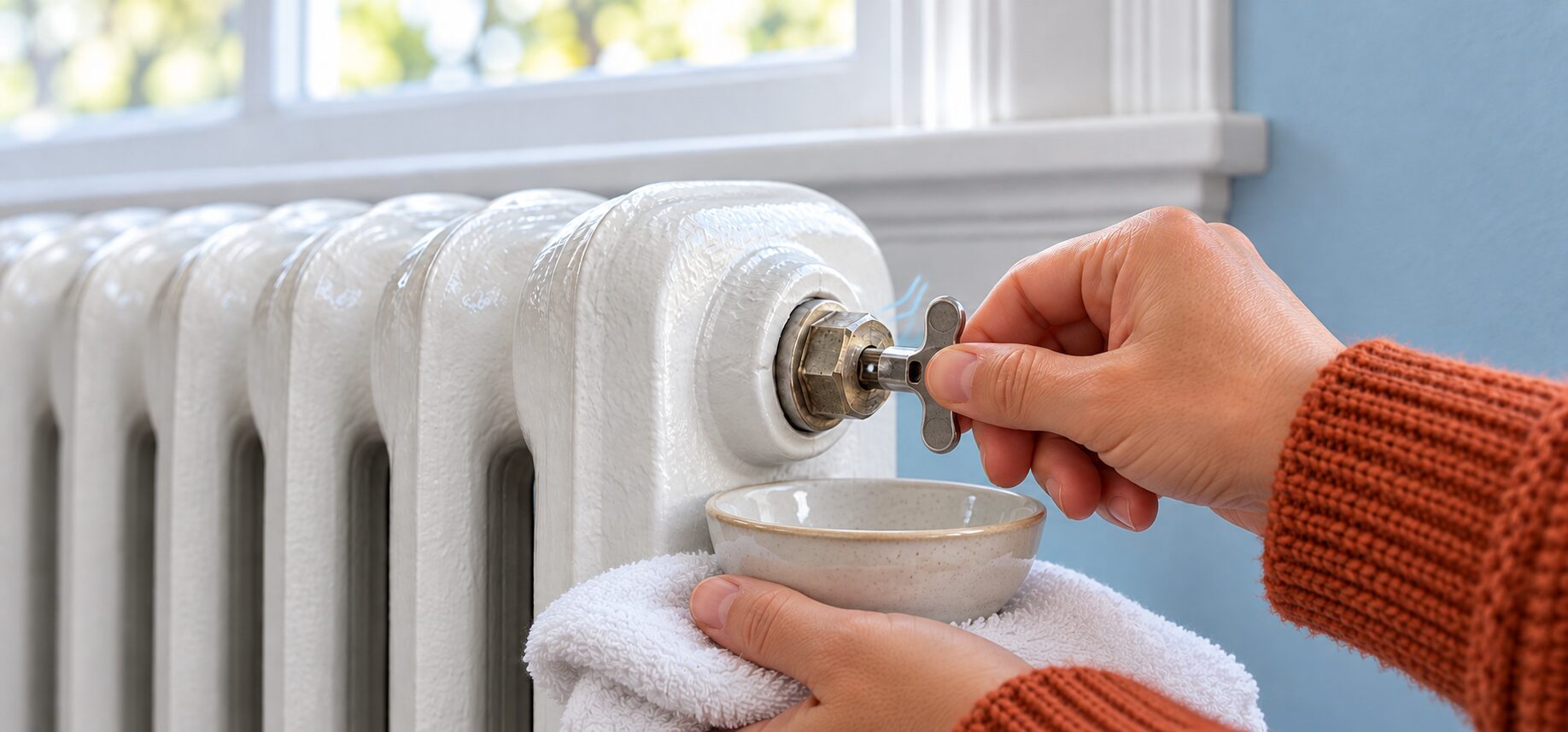
Place a towel below the valve to protect the floor or wall. Hold a small container directly beneath the opening to catch water that may sputter or flow out when you open the bleed valve.
Radiator water may look dirty or discolored, so keep the towel and container in place until the valve is completely closed.
Step 5: Slowly Open the Bleed Valve
Insert the correct radiator key or a compatible flat-head screwdriver. Slowly turn the valve counterclockwise just enough to let air escape.
Do not remove the valve or open it farther than necessary. If it does not turn with gentle pressure, stop rather than forcing it.
Step 6: Listen for Escaping Air
A hissing sound usually indicates trapped air is escaping from the radiator. Keep the valve open while the air escapes and be ready for water to begin sputtering from the opening.
If no air or water comes out, do not continue opening the valve. The radiator may not contain trapped air, the valve may be blocked, or system pressure may be low.
Step 7: Close the Valve When Water Flows Steadily
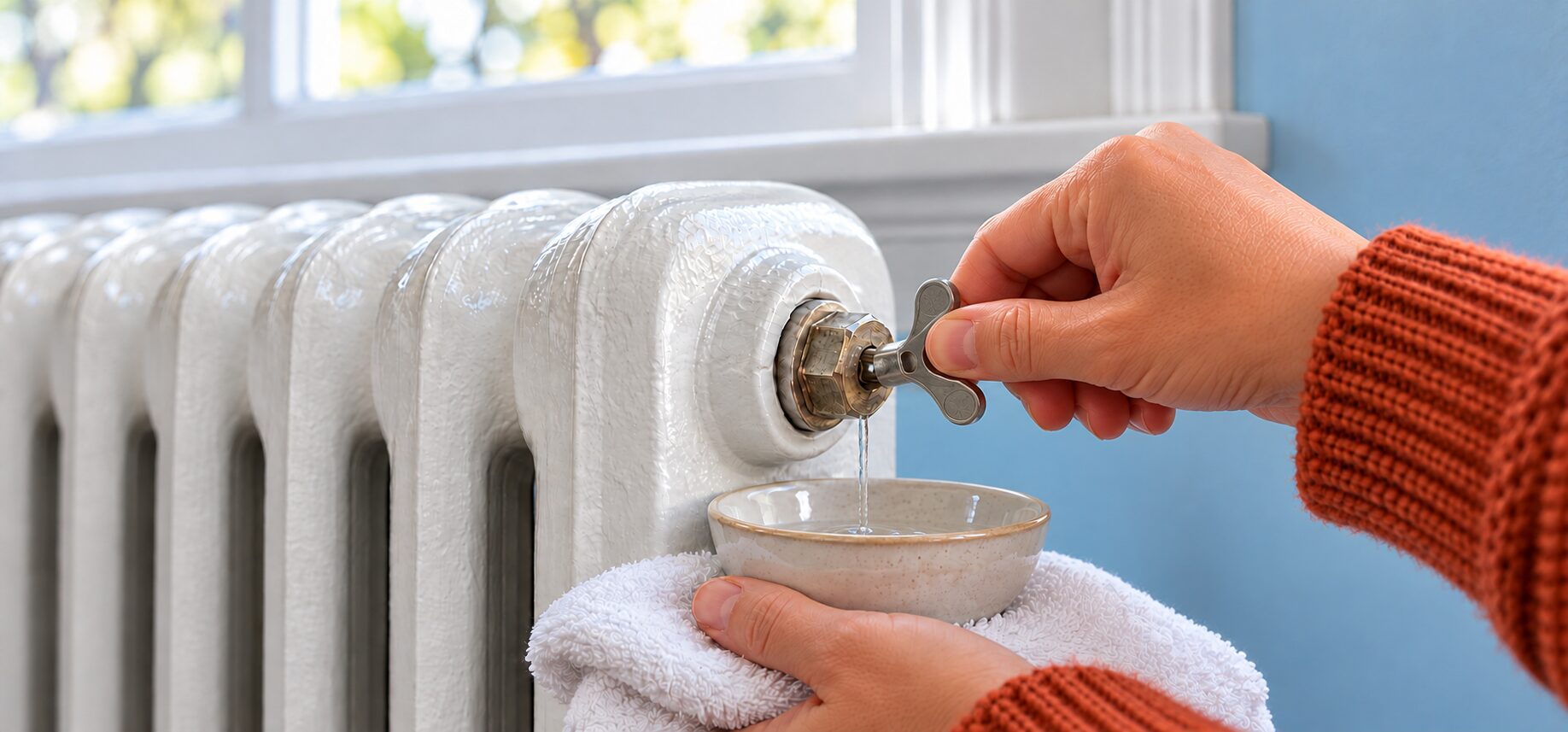
Once the hissing stops and water flows without sputtering, gently turn the valve clockwise to close it. This usually means the trapped air has been released.
Close the valve until it is secure, but do not overtighten it. Too much force could damage the valve.
Step 8: Check the Valve for Leaks
After closing the valve, wipe the area dry and watch it for a moment. You want to make sure no water is still dripping out.
If you see a small drip, try closing the valve gently again. If it will not stop leaking, do not keep forcing it. The valve may need professional repair.
Step 9: Turn the Heating Back On and Test the Radiator
Finally, turn the heating system back on and give the radiator time to warm up. Check whether the top now gets warm, the heat feels more even, and the gurgling has stopped.
If the radiator still has the same cold spots or keeps filling with air, trapped air may not be the only problem. An HVAC professional can check for issues with the valve, boiler pressure, or water circulation.
How to Bleed a Radiator Without a Key
You can bleed a radiator without a key only if the bleed valve has a straight slot made for a flat-head screwdriver. If the valve has a small square fitting, you will need a properly sized radiator key.
Before you begin, make sure the screwdriver fits securely. A loose or improvised tool can damage the valve and create a leak. Never use pliers, scissors, a knife, or another improvised tool in place of a radiator key. A loose or improvised tool can damage the valve and create a leak.
Here is how to do it safely:
Step 1: Check the Bleed Valve
Look near the upper corner of the radiator for a small valve. Check the fitting in the center:
- A straight slot may accept a flat-head screwdriver.
- A square fitting normally requires a radiator key.
If the screwdriver does not fit snugly into the slot, do not try to force it. It is better to get the correct radiator key than risk damaging the valve.
Step 2: Follow the Same Steps Above With Your Screwdriver
Once you've confirmed the screwdriver fits securely, the rest of the process is the same as bleeding with a key:
- Turn off the heating system and let the radiator cool.
- Place a towel and a small container beneath the valve.
- Slowly turn the screwdriver counterclockwise until you hear air hissing.
- Close the valve gently once water flows steadily without sputtering.
- Wipe the valve dry and check for leaks.
- Turn the heat back on and check that the radiator warms evenly.
If the valve is stuck, damaged, or keeps leaking, stop and contact an HVAC professional.
Why Does Air Get Trapped in Radiators?
Air can get trapped in a hot-water heating system when small air or gas bubbles enter the water and rise to the highest points. Inside a radiator, that usually means the air collects near the top, where hot water should be. The result can be a radiator that is warm at the bottom but cold at the top.
This can happen for a few everyday reasons:
- Small amounts of gas come out of the water. Heating-system water naturally contains dissolved gases. As the water heats and moves through the system, some of those gases can form small bubbles.
- The system was recently serviced. Air can get into the pipes and radiators when someone opens the system for maintenance or repairs.
- The system was drained and refilled. Fresh water can bring air into the system. Some of it may stay behind if the system is not fully cleared afterward.
- The system has low pressure or a small leak. If the boiler pressure drops too low, often due to a slow leak, air can be pulled in through small gaps in fittings or valves. If air keeps coming back soon after you bleed the radiator, this may be part of the problem.
Finding trapped air once in a while, especially after heating-system work, does not always mean there is a serious problem. But if you need to bleed the same radiator repeatedly, or the boiler pressure keeps dropping, it is worth having an HVAC professional look for the underlying cause.
Can Bleeding a Radiator Help Lower Heating Costs?
Bleeding a radiator may help prevent unnecessary energy use when trapped air is keeping the radiator from heating evenly. It does not guarantee a lower heating bill, but it can help the radiator do its job better when air is the problem.
Think of trapped air like an air pocket in a water hose. The water may still move through, but the air takes up space and keeps the hose from filling smoothly. In a radiator, that means less hot water can reach the upper part, so less of its surface gets warm.
When a room stays cold, you may respond by turning up the thermostat or letting the heating system run longer. If trapped air is causing the uneven heating, bleeding the radiator may help the room feel comfortable without those extra adjustments.
Bleeding does not change your boiler's rated efficiency, and there is no set amount you will save. Any effect on heating costs depends on how much air was trapped, how long the issue lasted, your thermostat habits, outdoor temperatures, and the condition of the rest of the heating system.
How Often Should You Bleed Your Radiator?
NeighborWorks Home Partners recommends bleeding radiators at the start of the heating season and again as needed if cold spots or other signs of trapped air return.
You may also need to check them after the heating system has been serviced, drained, or refilled because these activities can allow air to enter. A radiator that heats quietly and evenly does not need bleeding simply because a certain amount of time has passed.
If the same radiator repeatedly fills with air, avoid making bleeding a constant routine. Ask an HVAC professional to check why the air keeps returning.
When Should You Call an HVAC Professional?
Call an HVAC professional if the radiator leaks, the bleed valve is damaged, several radiators stay cold, or bleeding does not improve the problem. Those signs can mean the issue is more than trapped air.
It is a good idea to call for help when:
- You cannot identify the radiator or heating-system type. An HVAC professional can confirm whether the radiator should be bled and which part is safe to open.
- The bleed valve is stuck, damaged, or leaking. Forcing or overtightening the valve may make the problem worse.
- Water leaks from the radiator or nearby pipes. A continuing leak needs more than routine bleeding.
- Several radiators are not heating. When the problem affects more than one radiator, it may involve another part of the heating system.
- The same radiator repeatedly fills with air. Bleeding it again may provide temporary relief without correcting why the air keeps returning.
- Boiler pressure continues to fall. Repeated pressure loss should be checked rather than handled by continually adding water.
- The boiler displays a warning or fault. Follow the boiler manual and arrange for service if the warning continues.
- Bleeding does not restore even heating. If the radiator stays cold after it has had time to warm, trapped air may not be the cause.
Bleeding a radiator can be a reasonable homeowner task when the valve is easy to identify and opens normally. Think of it as letting out a small air pocket, not repairing the whole heating system. Problems with the boiler, pipes, pumps, pressure, or a leaking valve are best left to an HVAC professional.
Frequently Asked Questions About Bleeding Radiators
How Long Does It Take to Bleed a Radiator?
Bleeding one radiator usually takes only a few minutes once the heating is off and the radiator has cooled. The trapped air may escape within seconds, but cooling the radiator and testing it afterward takes longer.
How Much Should You Bleed a Radiator?
Bleed a radiator only until the hissing stops, and water begins flowing steadily without sputtering. Close the valve at that point because the trapped air has likely been released.
Do You Need to Repressurize a Boiler After Bleeding?
Not always. Bleeding may lower the pressure in some hot-water heating systems, but you should not assume that water needs to be added. Check the boiler's pressure gauge and compare it with the range in the manufacturer's manual. If the pressure is low or keeps falling, ask an HVAC professional what to do.
Is It Normal for Water to Come Out When Bleeding a Radiator?
Yes, a small amount of water normally comes out after the trapped air escapes. Close the valve when the water flows steadily and seek professional help if it continues to leak afterward.
Can Trapped Air Damage a Radiator?
Trapped air usually causes noise, cold spots, and reduced heating performance rather than immediate damage. However, air in a hot-water heating system can contribute to corrosion over time, so recurring air should be checked by an HVAC professional.
Can You Bleed a Radiator While the Heating Is On?
No, turn off the heating system and allow the radiator to cool before bleeding it. This stops the pump from moving hot water and air through the radiator and reduces the chance of hot water escaping.
Can You Bleed a Radiator Too Much?
Yes, leaving the bleed valve open after the air is gone allows unnecessary water to escape and may lower system pressure. Close the valve as soon as the hissing stops and water flows steadily.
A cold or noisy radiator does not always mean it is broken. If the top stays cold or you hear gurgling, trapped air may be the problem. Bleeding can help restore more even heating, but stop and call an HVAC professional if the radiator stays cold, the valve leaks, or the air keeps returning.
Cold-weather heating can bring enough surprises without wondering what your energy supply charge will be. Santanna's Unlimited Energy plan offers eligible customers one flat monthly supply charge during the plan term, which can mean fewer supply-charge surprises when heating use changes.* Explore Unlimited Energy to see whether more predictable supply charges and fewer surprises could fit your home, because a little more warmth and a little less uncertainty can make winter feel easier at home.
* Restrictions apply. Enrollment based upon program eligibility. Customers using more than 125% of normal monthly usage as determined by Santanna may be required to switch plans.
Jenna Mendez is an experienced energy content professional who has spent four years researching, writing, and managing authoritative educational content for Midwest energy consumers at Santanna Energy Services. As a lifelong Illinois resident, Jenna brings firsthand knowledge of the region’s climate, communities, and household energy needs to her work.
She specializes in translating complex energy topics into clear, practical guidance about electricity and natural gas costs, appliance energy use, energy efficiency, and everyday home living. Drawing on industry research, Santanna customer data, and insights from experienced energy professionals, Jenna incorporates this knowledge into her content to help homeowners better understand their energy choices and make informed decisions for their households.