

How to Cover an Electrical Panel Safely: Ideas That Meet Code

by Jenna Mendez
Updated: October 28, 2026
13.1 min read
Key Points of This Article:
- You can cover your electrical panel with something that opens or moves aside without tools, such as hinged artwork, lightweight décor, or a gallery wall.
- When covering your electrical panel, leave about 36 inches of clear space in front, 30 inches of working-space width, 6½ feet of headroom, and enough room for the panel door to open at least 90 degrees.
- Ask a licensed electrician or your local building department before adding permanent cabinetry, built-in features, wiring changes, or anything that may affect local code requirements.
You might think covering an electrical panel is as simple as hanging a picture over it or placing something decorative in front of it. But because you may need to reach your breakers quickly, how you hide the panel matters just as much as how the finished space looks.
The good news is that you have plenty of creative ways to make an electrical panel less noticeable without making it difficult to access. The key is choosing a cover that works with your space while keeping the panel easy to reach and use.
In this guide, we'll share practical electrical panel cover ideas, explain what to avoid, and help you recognize when it's best to consult a licensed electrician. Let's get started.
Can You Cover an Electrical Panel?
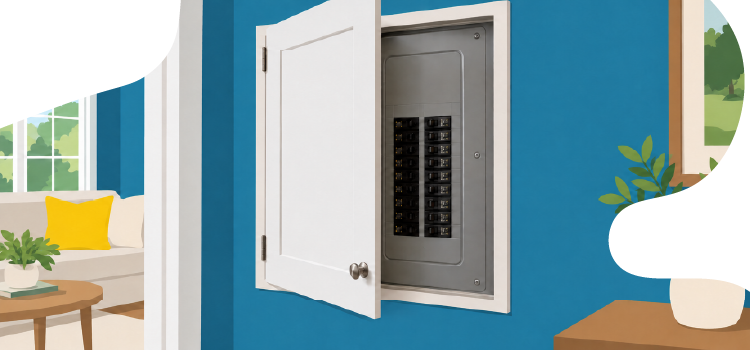
Yes, you can generally hide an electrical panel with a decorative cover, as long as the panel remains easy to reach and open. The cover should not block the panel door or reduce the clear working space in front of it.
Think of your electrical panel as something you want out of sight, but never out of reach. If a breaker trips or the power needs to be turned off, you should be able to get to the panel quickly without moving a bookcase, finding a screwdriver, or taking apart your décor.
As a general guide for covering your electrical panel, keep about 36 inches of clear space in front of the panel, at least 30 inches of working-space width, and about 6½ feet of clear height. The panel door should also have enough room to open at least 90 degrees.
Exact requirements may vary based on your electrical equipment and local code. Before installing a permanent or built-in cover, ask a licensed electrician or your local building department to confirm what is allowed.
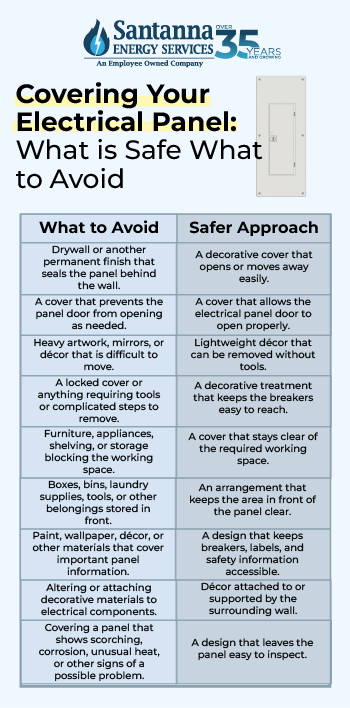
Electrical Panel Covers: What to Avoid and What’s Safer
| What to Avoid | Safer Approach |
| Drywall or another permanent finish that seals the panel behind the wall | A decorative cover that opens or moves away easily |
| A cover that prevents the panel door from opening as needed | A cover that allows the electrical panel door to open properly |
| Heavy artwork, mirrors, or décor that is difficult to move | Lightweight décor that can be removed without tools |
| A locked cover or anything requiring tools or complicated steps to remove | A decorative treatment that keeps the breakers easy to reach |
| Furniture, appliances, shelving, or storage blocking the working space | A cover that stays clear of the required working space |
| Boxes, bins, laundry supplies, tools, or other belongings stored in front | An arrangement that keeps the area in front of the panel clear |
| Paint, wallpaper, décor, or other materials that cover important panel information | A design that keeps breakers, labels, and safety information accessible |
| Altering or attaching decorative materials to electrical components | Décor attached to or supported by the surrounding wall |
| Covering a panel that shows scorching, corrosion, unusual heat, or other signs of a possible problem | A design that leaves the panel easy to inspect |

How to Cover an Electrical Panel Safely: 14 Ideas
An electrical panel may not be the nicest thing to look at, but the good news is that you do not have to leave it fully exposed. You can help it blend into the room safely with a decorative cover while still keeping it easy to reach.
Here are 14 simple ideas to cover your electrical panel, from artwork and mirrors to wall treatments, that can make your panel less noticeable without limiting access:
1. Create a Hinged Art Cover
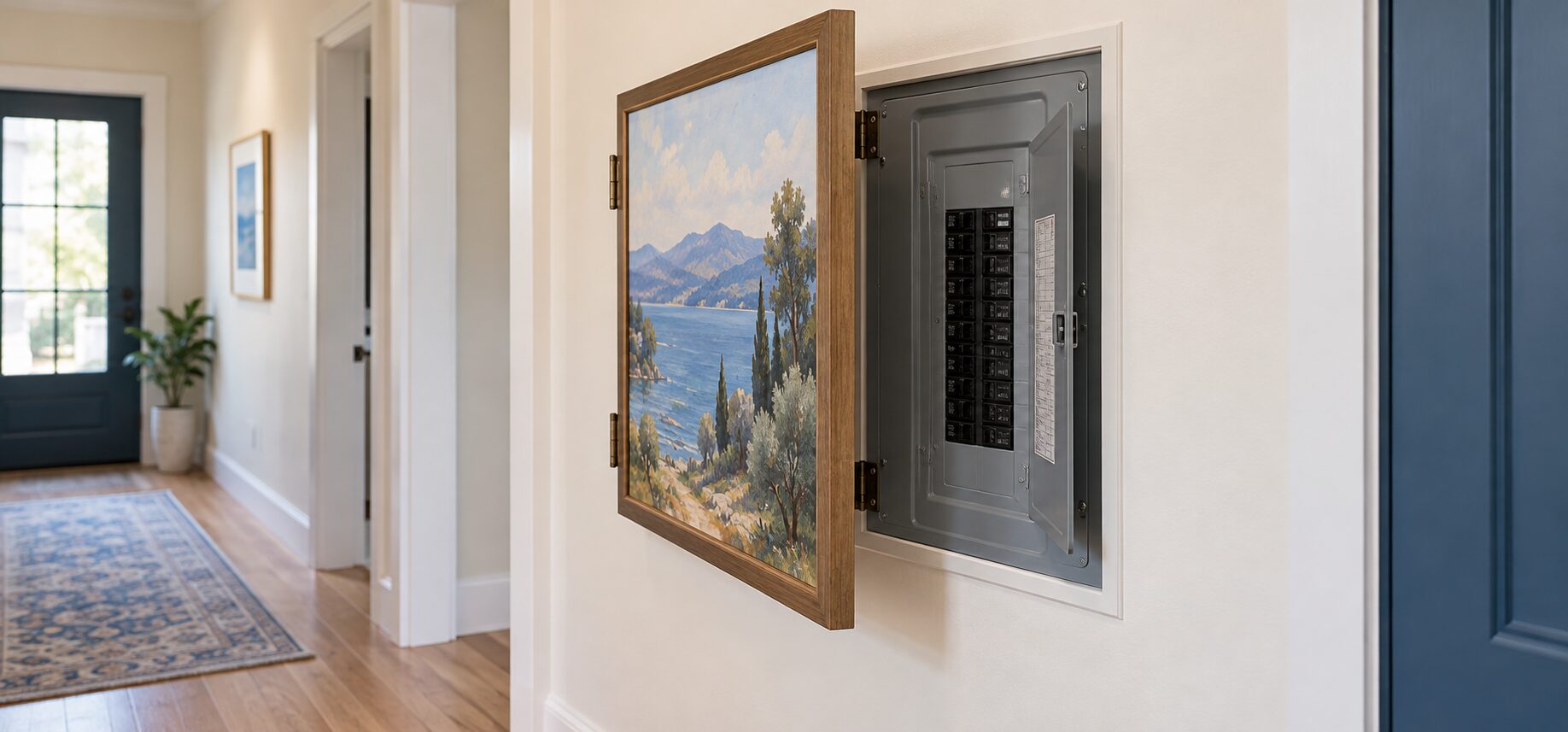
Hinged artwork gives you the look of a regular wall picture while allowing it to swing open when you need the electrical panel. This can work especially well in a living room, hallway, bedroom, or entryway, where artwork already feels like a natural part of the space.
Simply choose artwork that covers the panel and is easy to swing open. Make sure the artwork and hinges do not interfere with the electrical panel door or the working space around it.
2. Hang Lightweight, Easy-to-Remove Artwork
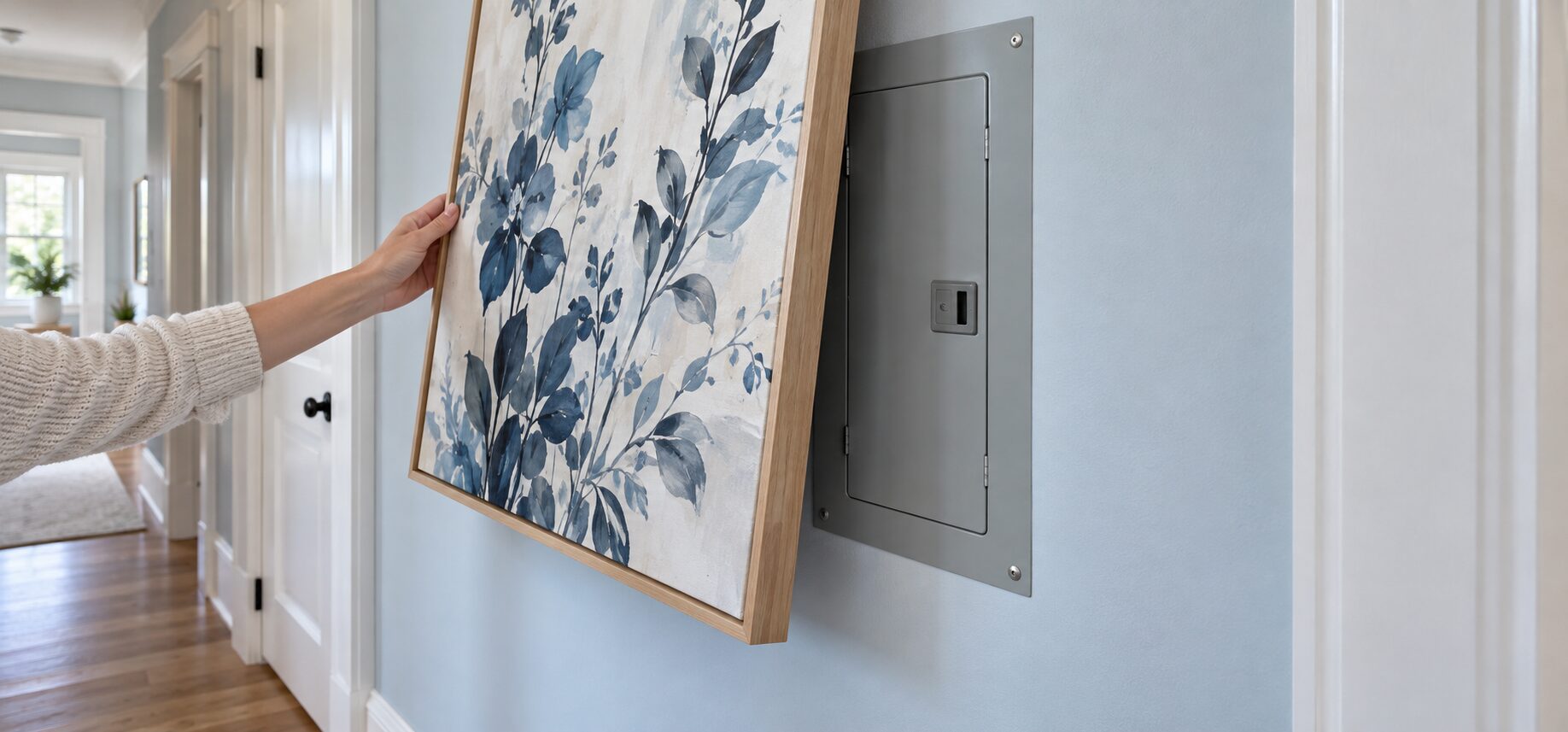
A lightweight canvas or framed print can disguise an electrical panel without creating a permanent barrier. This simple option can fit naturally in bedrooms, living rooms, hallways, or home offices, especially if you want something that coordinates with your existing décor.
The key is keeping it genuinely easy to remove, so try moving it before deciding it works. If the artwork is large, heavy, or awkward enough that reaching the breakers becomes a chore, consider a hinged option instead.
3. Turn It Into a Family Command Center
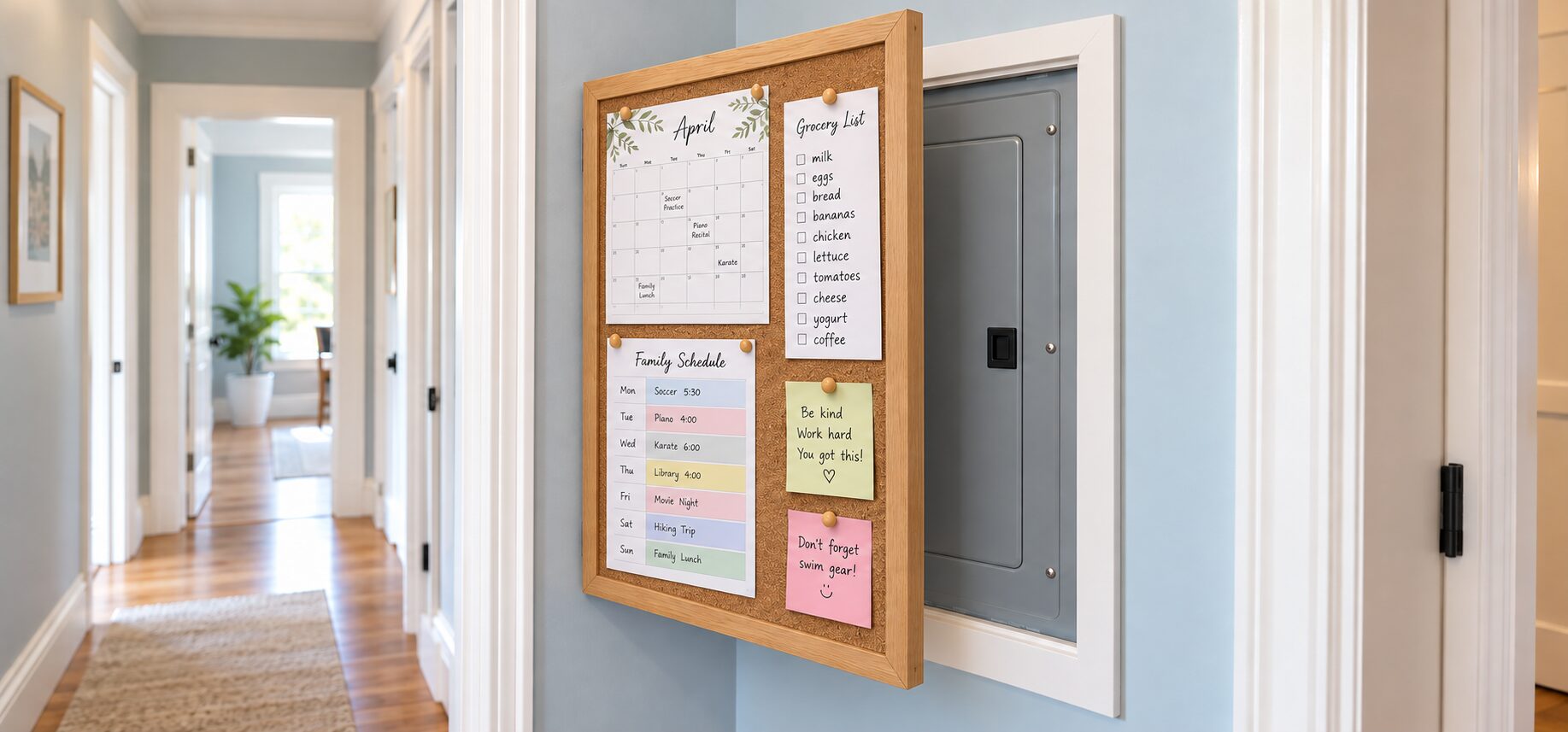
For the perfect DIY electrical panel cover, turn your cover into a command center that’s useful while disguising what’s behind it. Calendars, schedules, grocery lists, and reminders could live on a cover that opens or moves completely out of the way when you need the panel.
Just keep the setup simple. Papers, baskets, hooks, and other accessories shouldn’t gradually turn the area around the electrical panel into storage.
4. Use a Bulletin Board or Message Board
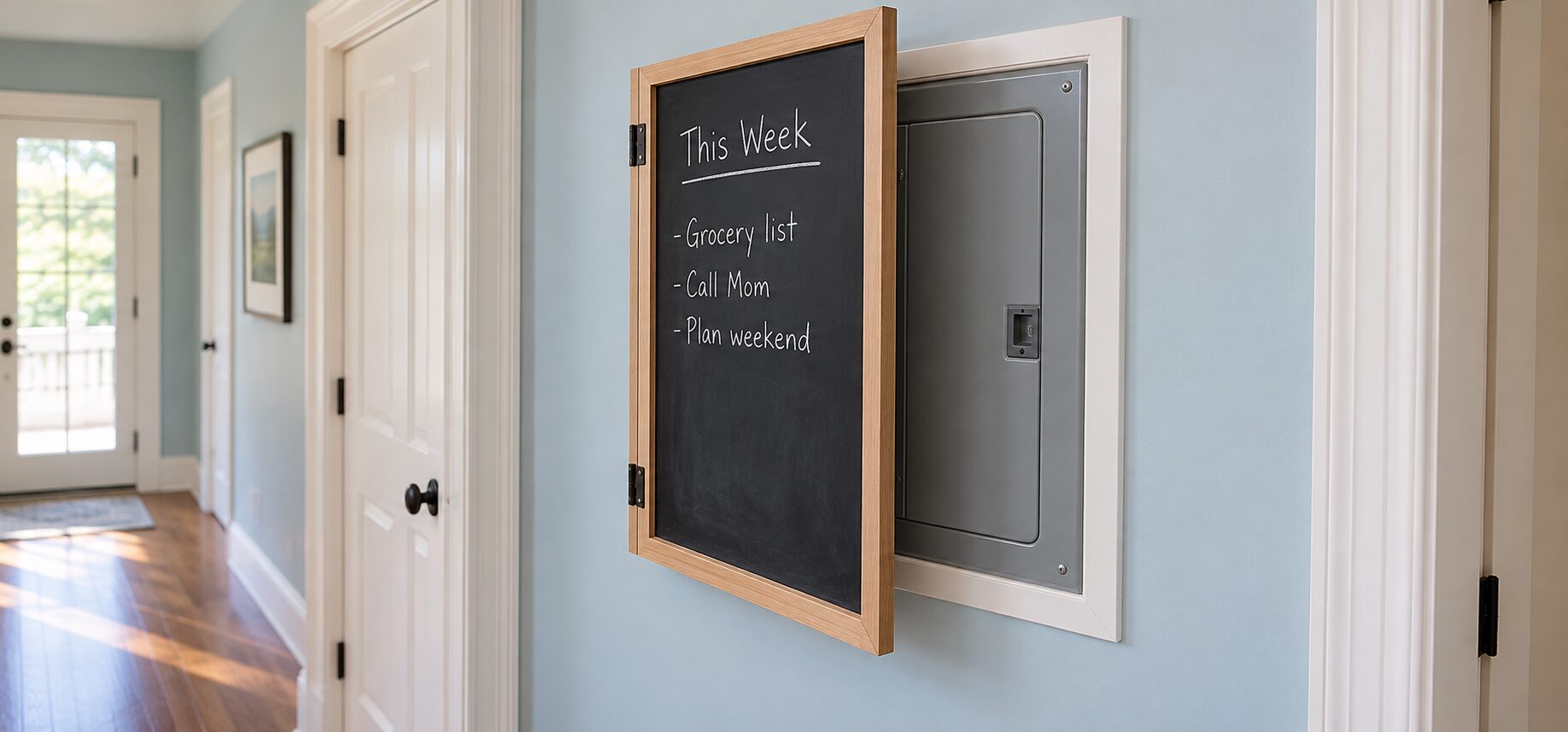
A lightweight bulletin board, chalkboard, or whiteboard can turn an awkward wall feature into a useful place for notes and reminders. It can make particular sense in a home office, kitchen, mudroom, or hallway where you would use a message board anyway.
Look for one that opens or can be removed easily. Keep papers and other materials from interfering with access to the panel.
5. Make It Part of a Gallery Wall
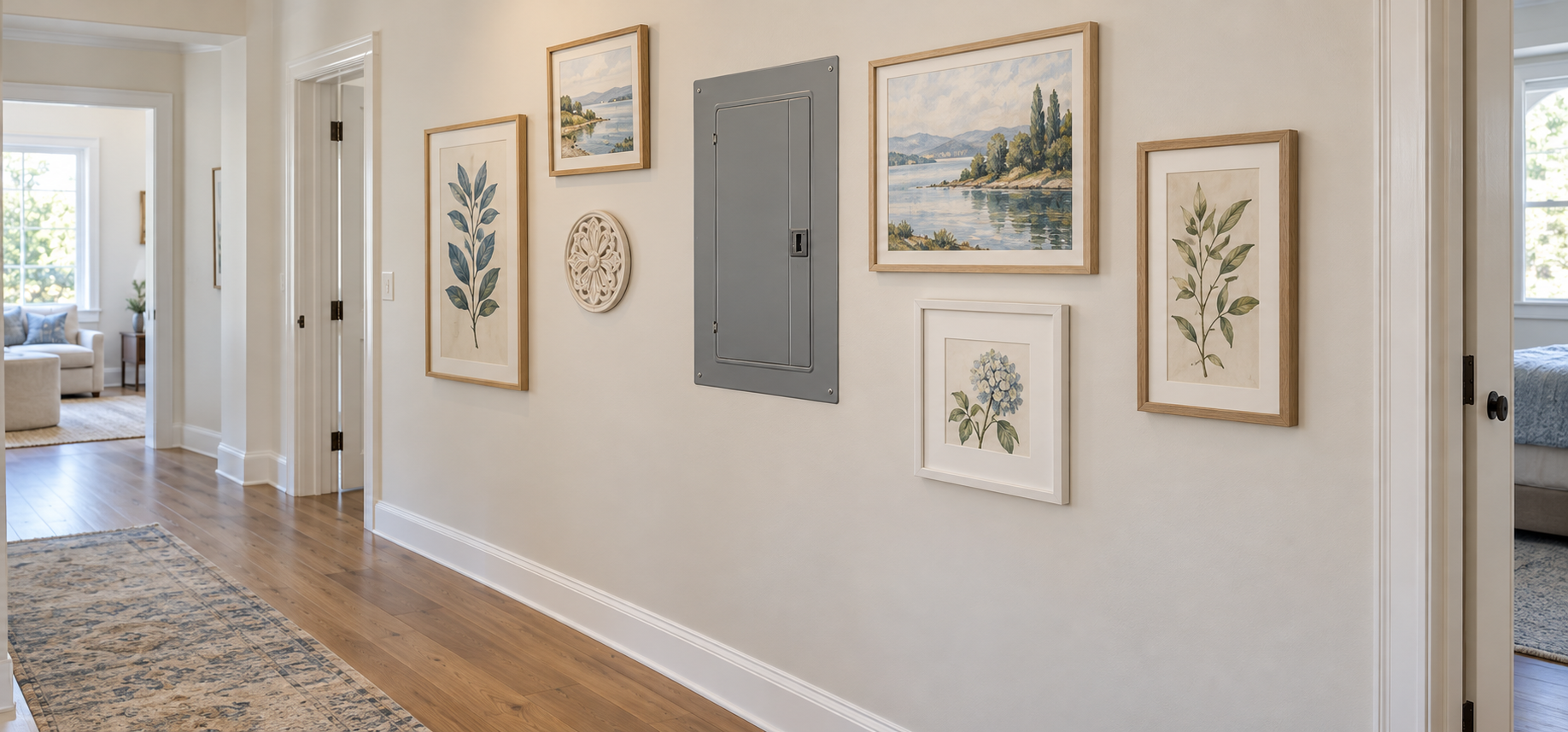
Sometimes the easiest way to hide an electrical panel is not to cover it at all. Instead, surround it with coordinated pictures, prints, and wall décor to draw attention away from the panel and make the entire wall look more intentional.
This approach can work beautifully in living rooms, stairways, hallways, and home offices because the electrical panel remains directly accessible. As you arrange the frames, make sure they do not interfere with opening the panel door.
6. Add a Decorative Door Over the Panel
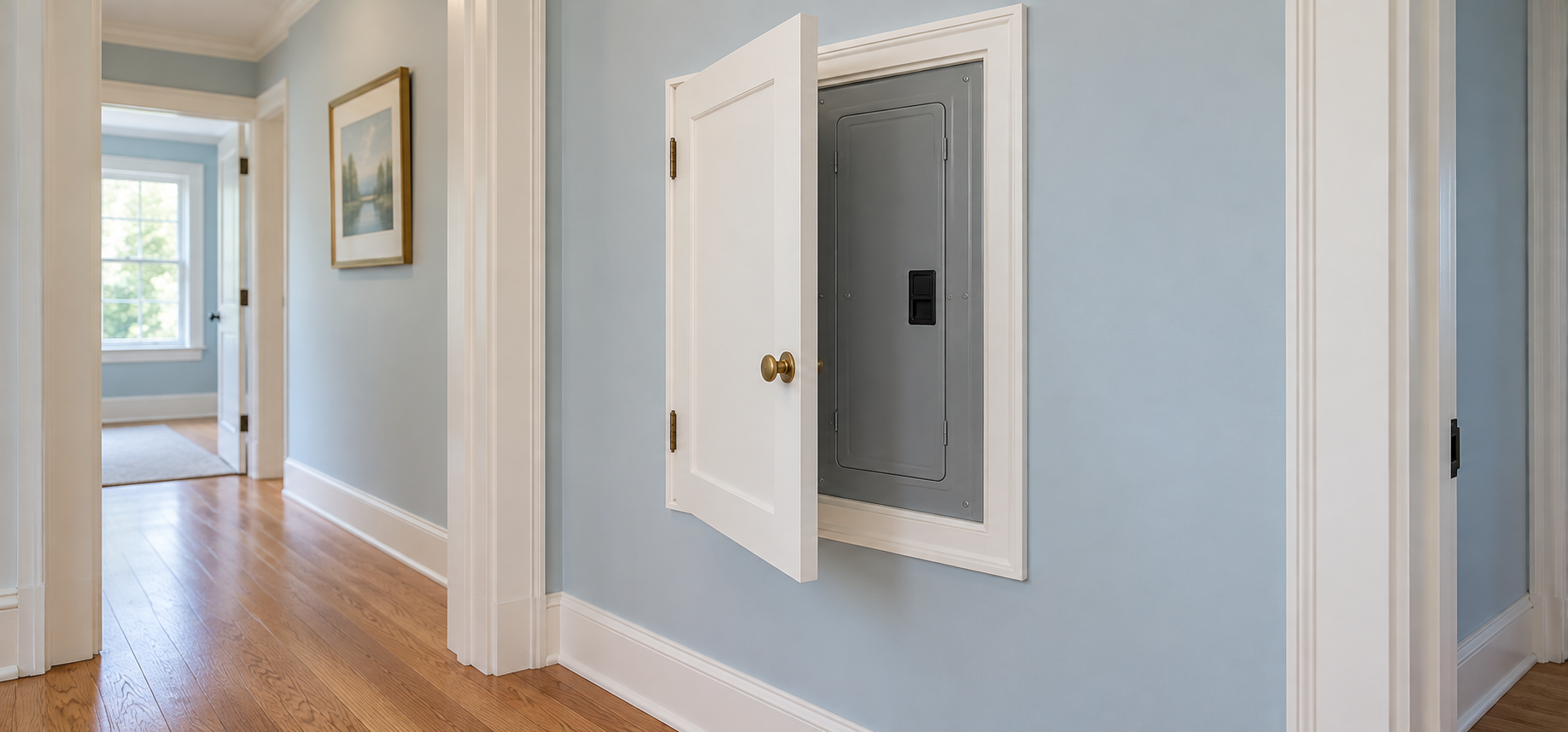
One of the best ways to cover your electrical panel is to DIY a door for it. A decorative door can make an electrical panel look like an intentional part of the room while still allowing access when you need it. Depending on the style, this can work in hallways, finished basements, living spaces, mudrooms, and utility areas.
Before choosing this option, remember that you’re essentially adding a second door in front of the panel. Both the decorative door and the electrical panel door need to open easily without creating an obstacle or interfering with the required working space.
7. Create a Rotating Display Panel
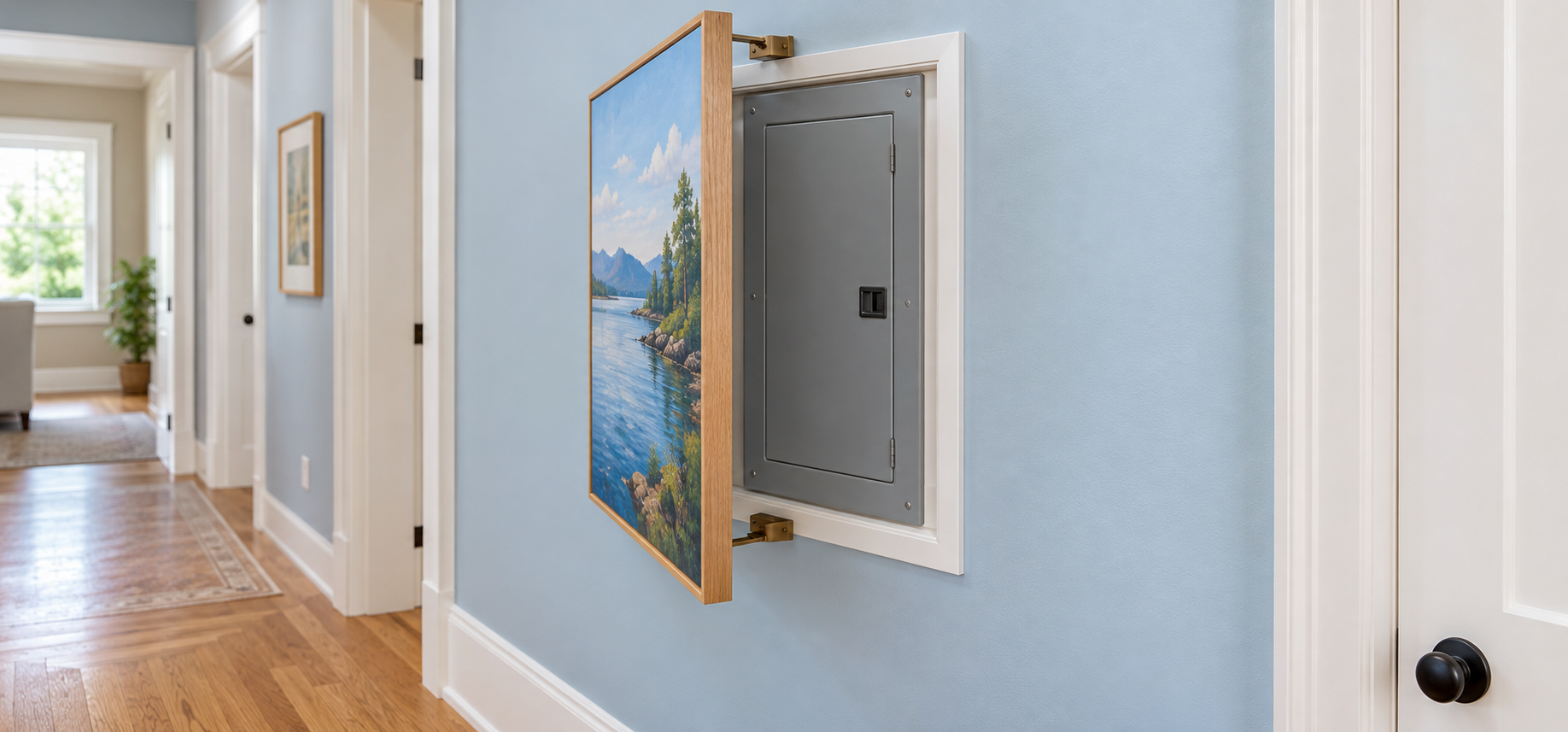
Looking for more ideas to cover your electrical panel? A rotating display panel can disguise your electrical panel and pivot away from the wall when you need access. The front can feature artwork, family photos, or another decorative design, making it an interesting option for a hallway, home office, or finished basement.
For this design to work, keep the rotating panel lightweight and make sure it can move completely out of the way. It should not interfere with the electrical panel door or required working space. Because this design requires mounting hardware near the panel, consider professional help if you’re unsure what’s behind the wall or where it’s safe to install the hardware.
8. Disguise It With a Slatted Wall Feature
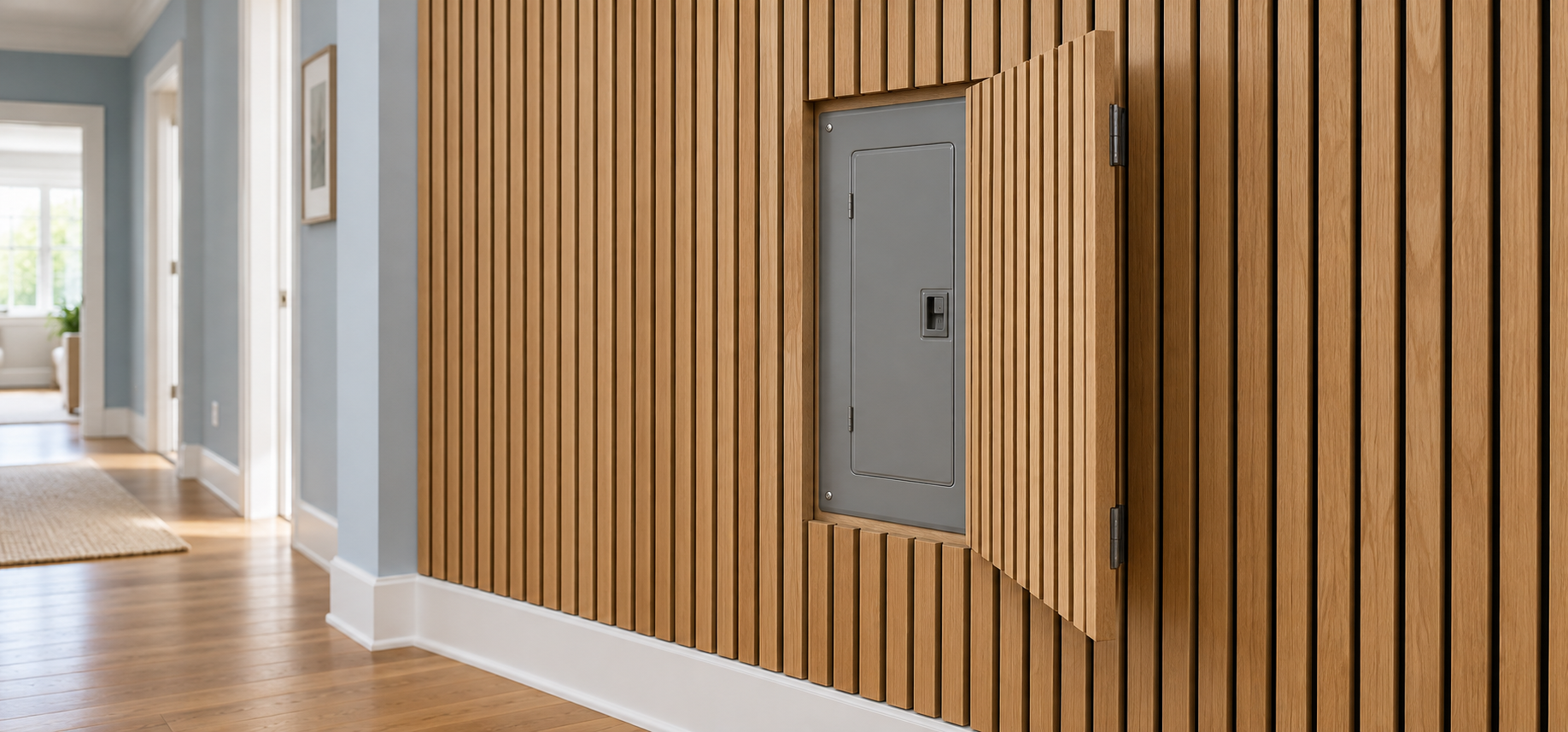
A slatted wall treatment can help an electrical panel disappear into a larger feature wall instead of looking like a separate metal box. This approach can suit modern living rooms, entryways, hallways, and finished basements, particularly when the rest of the wall already uses a similar design.
The section concealing the electrical panel should still allow easy access rather than permanently enclosing it. Because this is a more involved wall treatment, plan carefully around the panel door and required working area.
9. Use a Hinged or Lightweight, Easy-to-Move Mirror
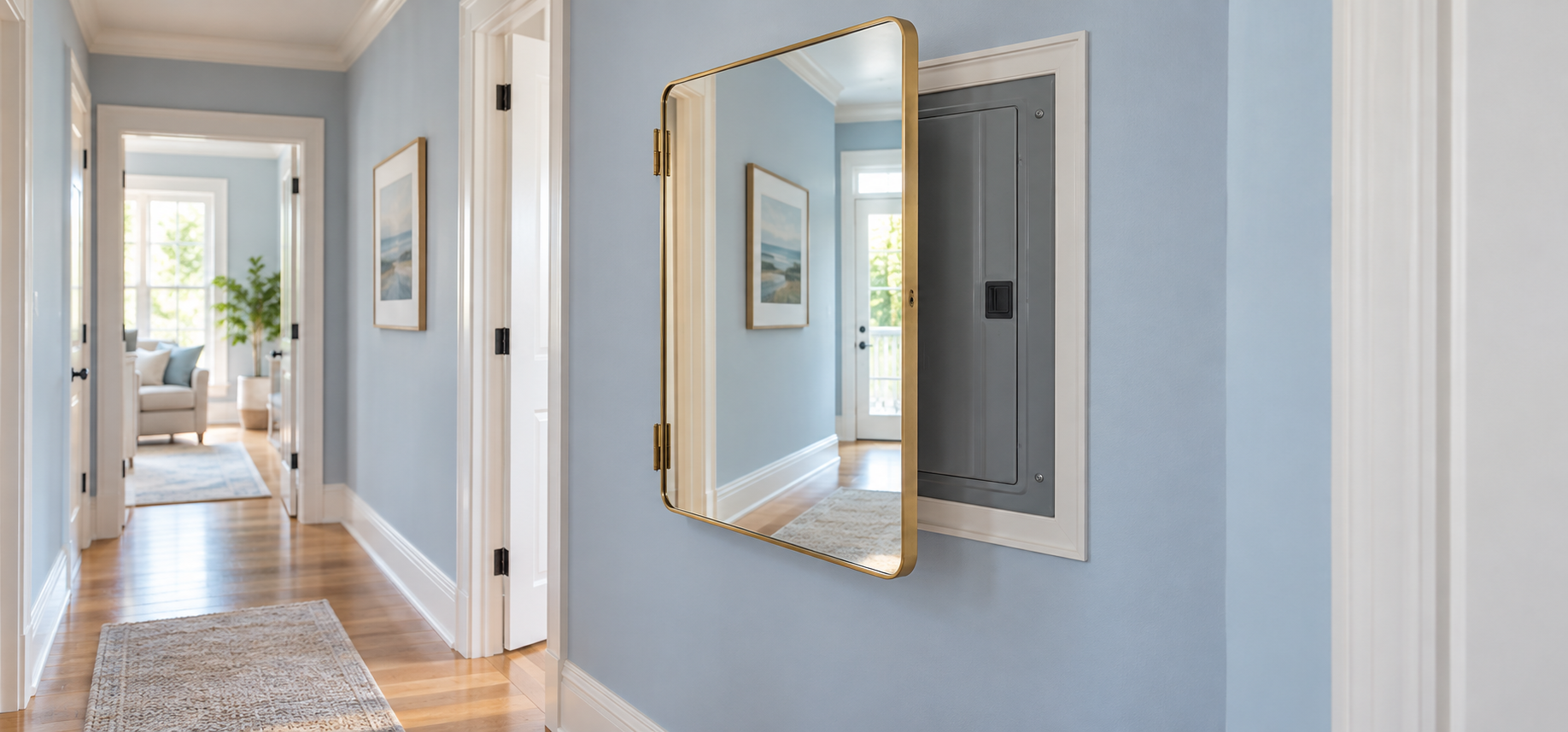
A mirror can disguise an electrical panel while serving a purpose you already need in the room. This makes it especially useful in entryways, hallways, bedrooms, or dressing areas, where a mirror won’t look like it’s there simply to hide something.
If possible, choose a hinged mirror because it can swing away instead of needing to be lifted off the wall. Avoid a mirror that is so heavy or awkward that moving it could delay access to the breakers.
10. Add a Decorative Frame or Trim Around the Panel
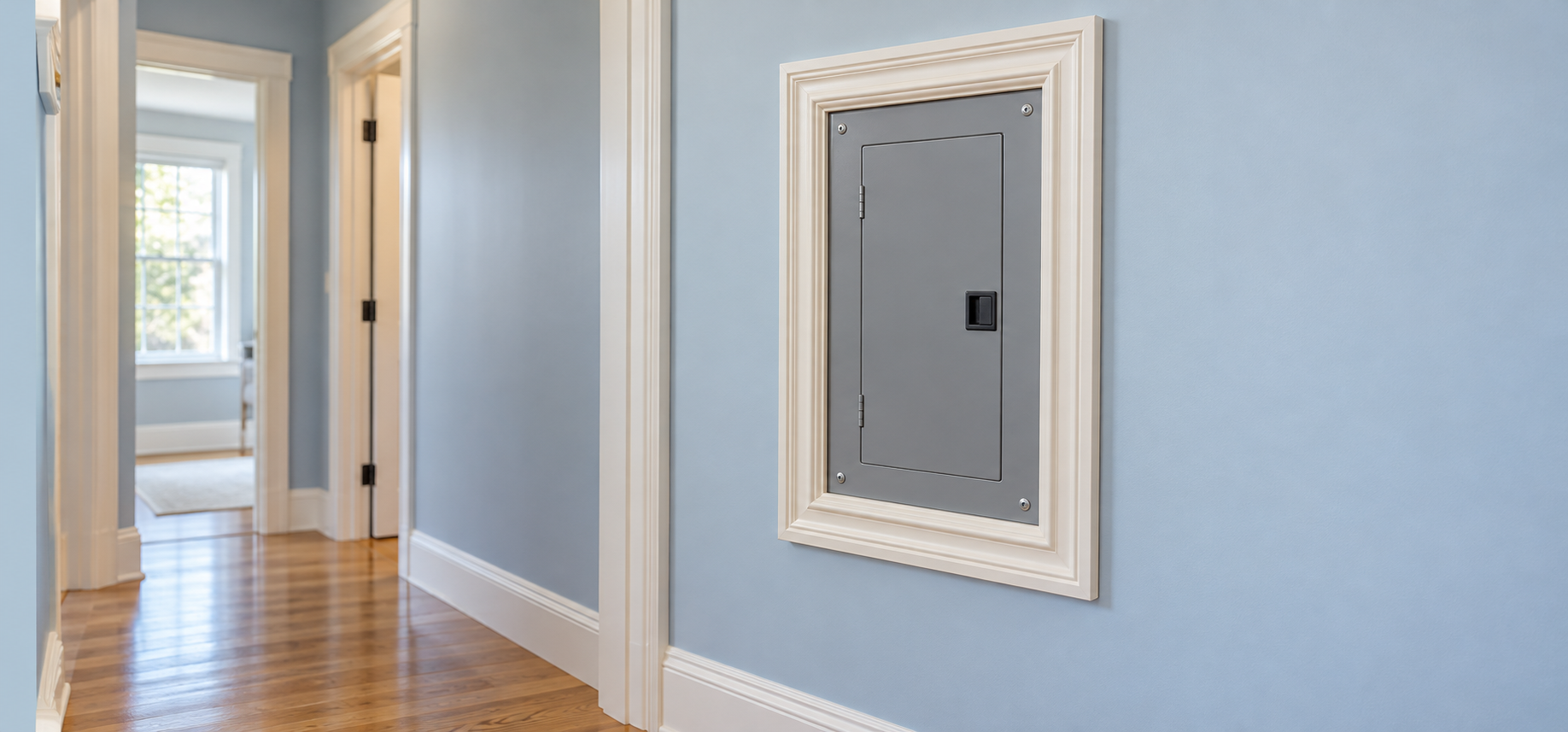
Instead of covering the electrical panel, you can make it look more intentional by adding decorative framing or trim to the surrounding wall. This can be a simple choice for almost any finished room where hiding the panel completely isn’t practical.
The advantage of this option is that nothing needs to sit directly in front of the panel. Just keep the trim clear of the panel door, labels, and other parts of the equipment that need to remain accessible.
11. Use a Movable Folding Screen
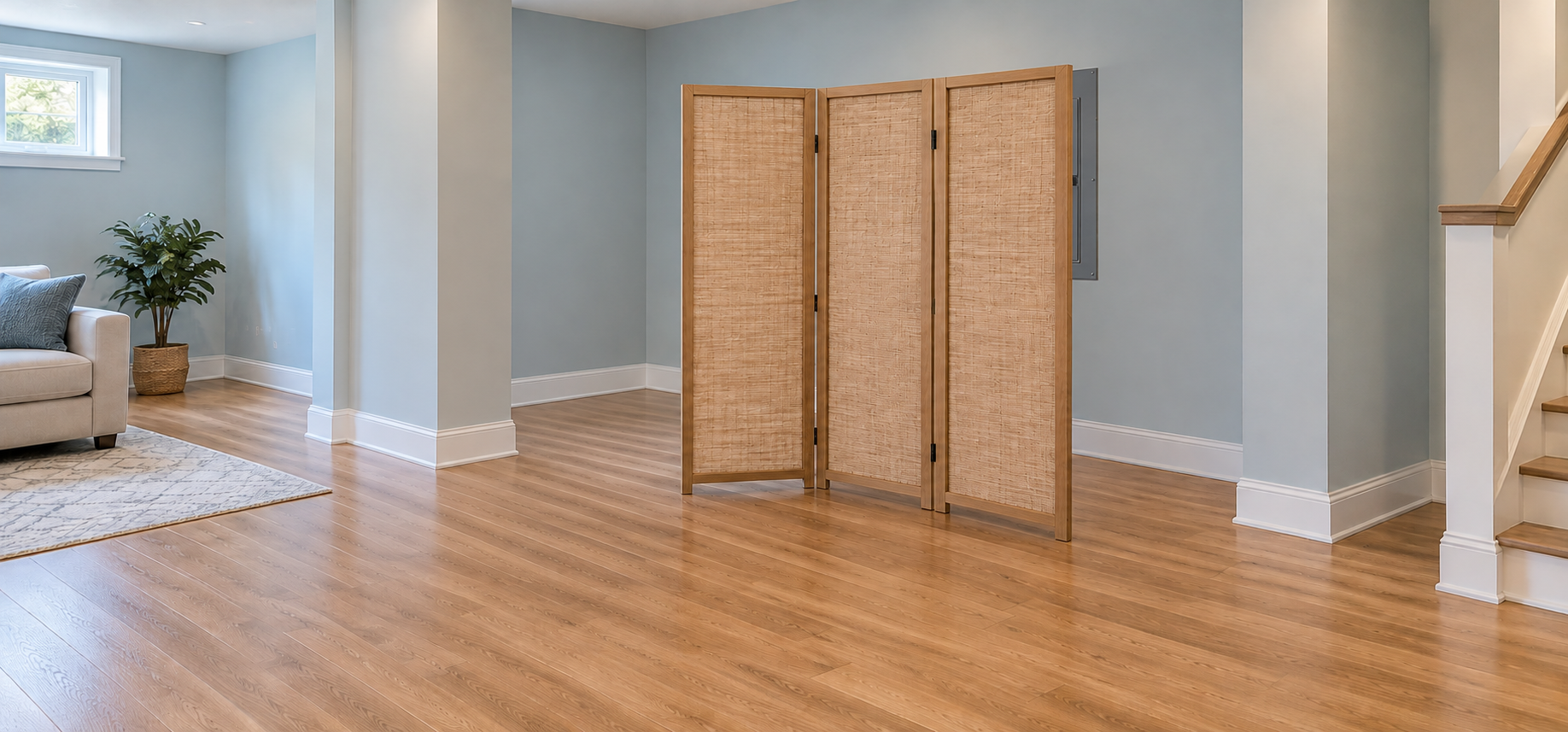
A folding screen can hide the electrical panel from view without attaching anything directly over it. This works best in a larger room or finished basement where you have enough space to position the screen away from the electrical panel.
Placement is important here. Don’t put the screen in the required working space directly in front of the panel simply because it can be moved. Instead, place it farther away to block the line of sight while keeping the panel area clear.
12. Hang a Lightweight Fabric or Curtain Treatment
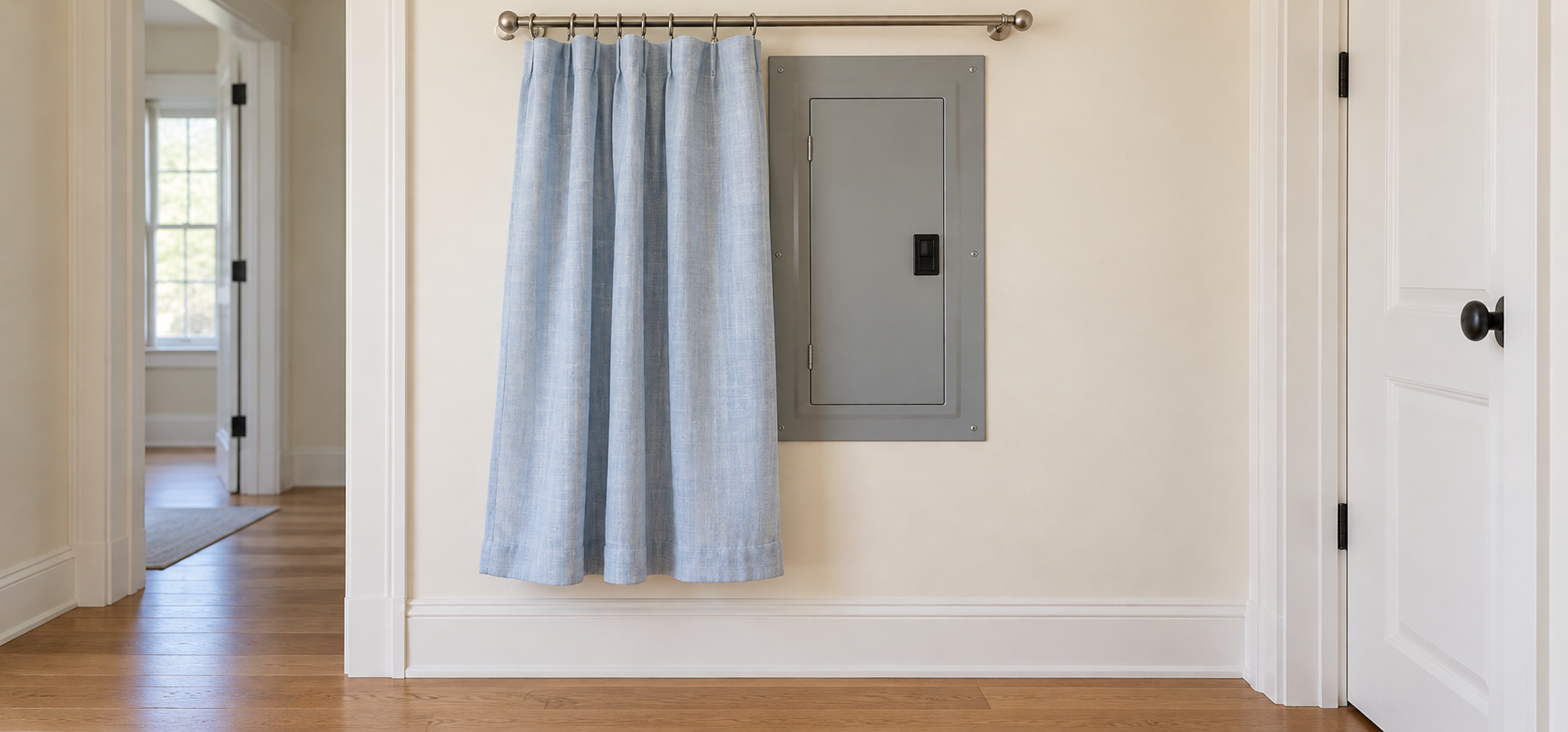
A lightweight curtain or fabric wall hanging can soften the look of an electrical panel area and may be easy to move aside. It can fit naturally in some utility rooms, multipurpose spaces, or casual areas where fabric already complements the room.
If you choose this option, make sure the fabric moves completely out of the way. The fabric, curtain rod, and other hardware shouldn’t interfere with the electrical equipment, its door, or required working space. Avoid simply draping fabric directly against the panel.
13. Blend the Surrounding Wall With Paint or a Mural
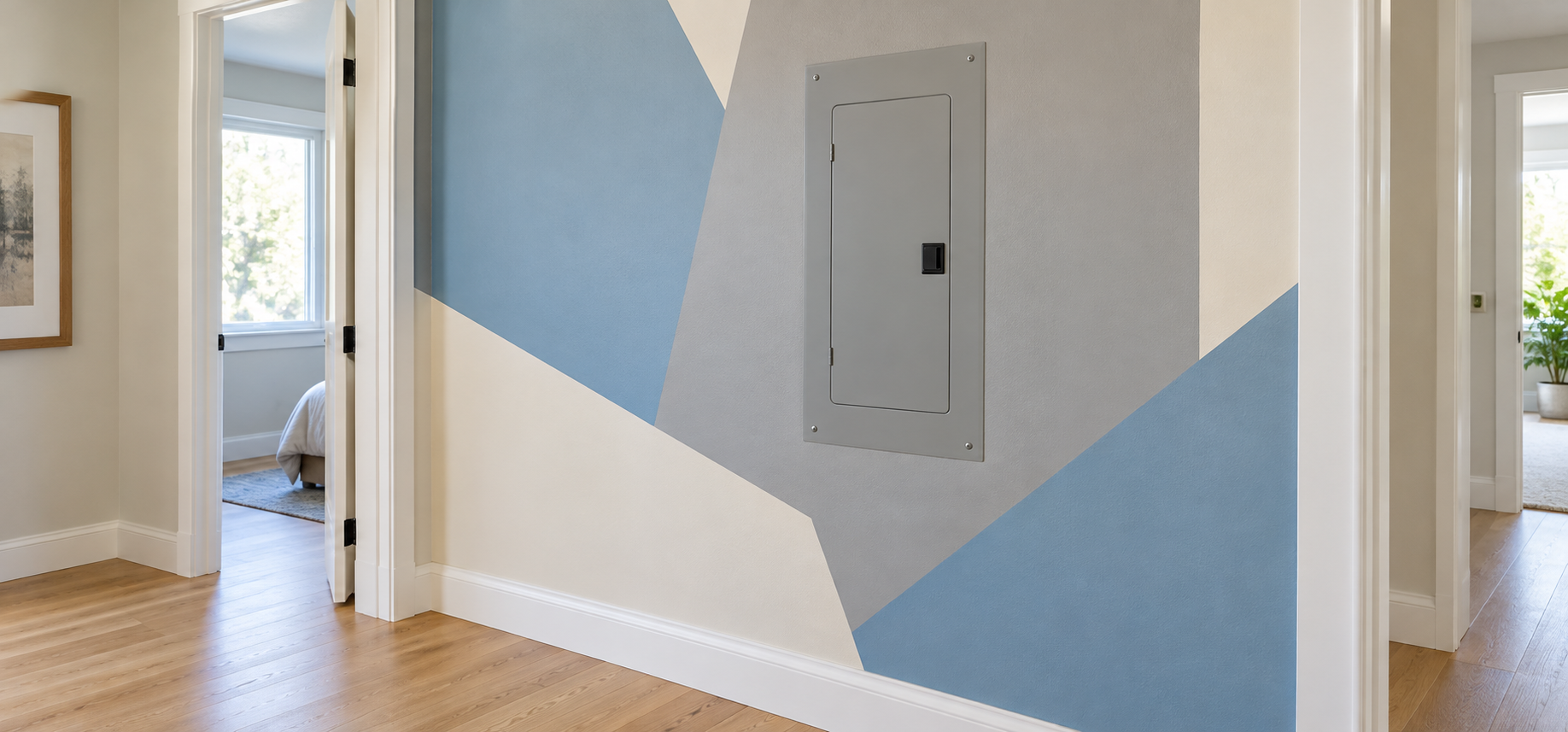
You don’t always need to put something over an electrical panel to make it less noticeable. DIY your electrical panel cover with paint! Try using a coordinated paint treatment or mural on the surrounding wall to draw attention elsewhere and help the panel blend into the room. This can be particularly fun in children’s rooms, creative spaces, hallways, or finished basements.
Be cautious about painting the electrical equipment itself. Don’t cover breakers, labels, warnings, identification, or other important information. Check the manufacturer’s instructions before applying anything directly to the panel enclosure.
14. Use Wallpaper or a Patterned Wall Treatment Around It
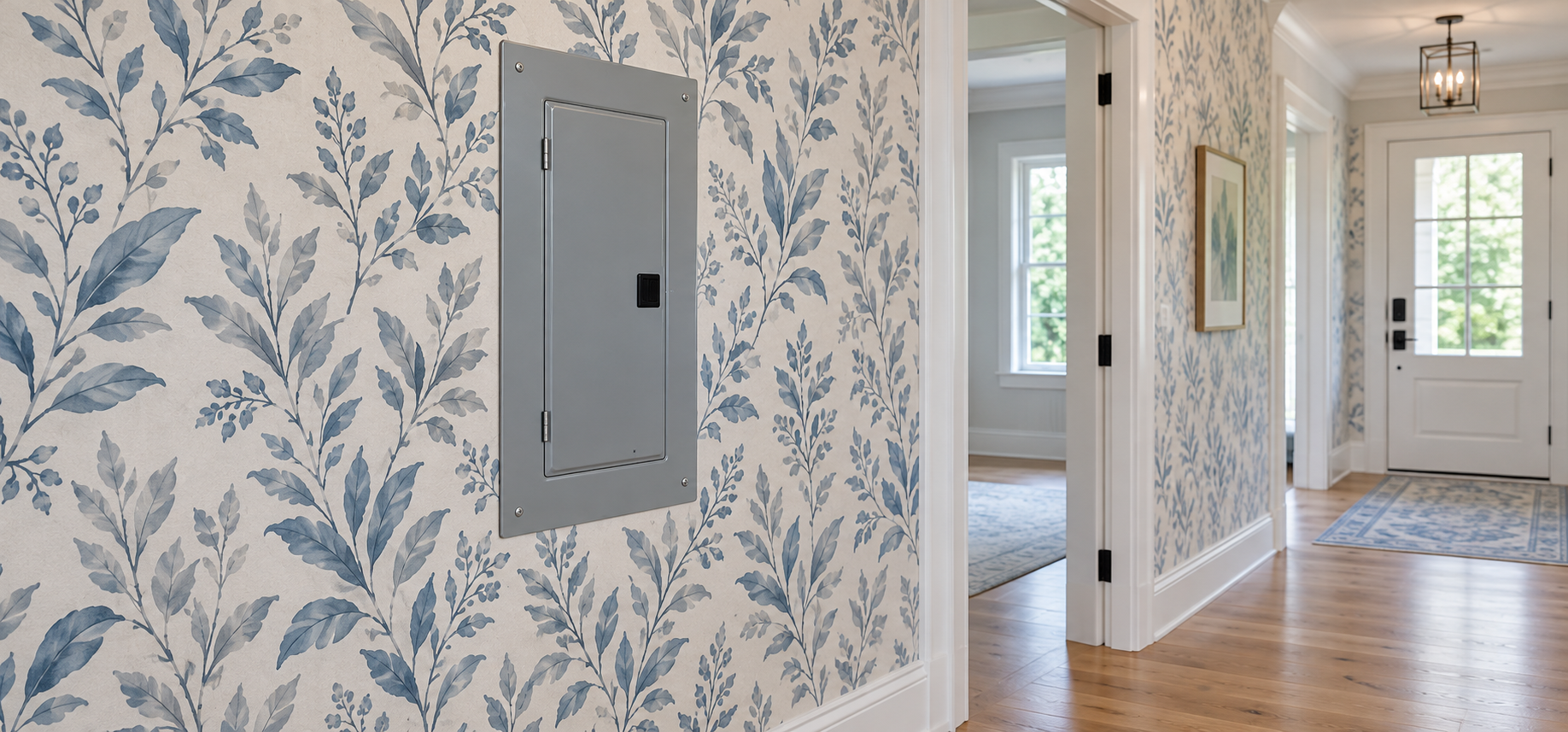
Wallpaper or another patterned wall treatment can make the wall itself the focal point so the electrical panel doesn’t stand out as much. This electrical panel cover option can work well in entryways, home offices, hallways, or other decorative feature walls.
Using wallpaper on the surrounding wall is different from applying it directly to electrical equipment. Don’t cover labels, warnings, openings, or anything else that needs to remain visible or accessible.
You don’t have to choose between easy panel access and a finished-looking room. Choose a cover that fits your space but opens or moves easily when you need the breakers. Keep the panel door and required working space clear.
For permanent or built-in designs, check local requirements and consult with a licensed electrician when needed.
Why Electrical Panels Need to Stay Accessible
Your electrical panel needs to stay accessible because it controls the circuits in your home. If a breaker trips or the power needs to be shut off, you don’t want to move heavy furniture or take down complicated décor just to reach it.
Easy access also helps when a licensed electrician needs to perform maintenance, troubleshoot a problem, or inspect the panel.
This doesn’t mean the panel has to stand out. You can help it blend into the room, but whatever you place around or over it should still let you reach, open, and use it easily.
FAQs
Can you put furniture in front of an electrical panel?
No. Furniture should not block the required working space in front of an electrical panel, even if it can be moved.
Can you put a cabinet around an electrical panel?
A cabinet may be possible in some installations, but it cannot restrict access, required working space, or operation of the electrical panel. Because permanent cabinetry can create clearance problems, check with a licensed electrician and your local code authority before building around the panel.
How much clearance does an electrical panel need?
Most residential electrical panels need at least 30 inches of working-space width, 36 inches of clear space in front, and 6½ feet of headroom. Exact requirements can vary by equipment and local code.
Does an electrical panel have to be visible?
No. An electrical panel can be decoratively concealed, but it must remain readily accessible with the required working space clear. Never permanently seal or block access to the panel.
Covering an electrical panel isn’t just about hiding something you don’t want to see. The right idea for an electrical panel helps cover and blend it into your home while keeping the breakers easy to reach, the panel door easy to open, and the required working space clear. Whether you choose artwork, a decorative door, or another simple option, make sure it never gets in the way when you need the panel.
A well-covered panel is one less thing to think about in your home. If you’re looking to simplify another part of your home energy experience, explore Santanna’s Unlimited Energy Plan to see how a predictable monthly electricity supply charge can help provide fewer surprises throughout the year.*
Make your electrical panel less noticeable, not less accessible, and keep thoughtful energy choices at the heart of your home.
* Restrictions apply. Enrollment based upon program eligibility. Customers using more than 125% of normal monthly usage as determined by Santanna may be required to switch plans.
Jenna Mendez is an experienced energy content professional who has spent four years researching, writing, and managing authoritative educational content for Midwest energy consumers at Santanna Energy Services. As a lifelong Illinois resident, Jenna brings firsthand knowledge of the region’s climate, communities, and household energy needs to her work.
She specializes in translating complex energy topics into clear, practical guidance about electricity and natural gas costs, appliance energy use, energy efficiency, and everyday home living. Drawing on industry research, Santanna customer data, and insights from experienced energy professionals, Jenna incorporates this knowledge into her content to help homeowners better understand their energy choices and make informed decisions for their households.