

How to Keep Chicken Water From Freezing (Without Wasting Power)

by Jenna Mendez
24.2 min read
If you’ve ever stepped outside on a frosty Midwest morning to find your chickens staring at a solid block of ice instead of fresh water, you’re not alone. Winter hits hard in the Midwest, and when temperatures drop below freezing, keeping your flock’s water liquid can feel like a full-time job. It’s one of those small but constant battles every backyard chicken keeper faces.
Luckily, you’ve come to the right place. We’ve consulted with Santanna’s employee-owners who own chickens, and we have the scoop on the best solutions for you.
In this guide, we’ll walk you through proven methods, both electric and non-electric, to stop water from freezing, save time, and keep your flock healthy and hydrated. Ready to turn those icy mornings with your flock into easy ones? Let’s get started.
Key Points of This Article:
- To keep chicken water from freezing, use heated bases, heated water founts, or insulated containers, and always plug devices into outdoor-rated GFCI outlets for safety.
- If electricity isn’t available, simple methods like using black rubber tubs, building a mini greenhouse, adding a sealed saltwater bottle, or refilling with warm water can help delay freezing.
- Regular cleaning, proper container choice, and safe electrical practices are essential for maintaining unfrozen water and keeping chickens healthy during cold months.
Backyard Chicken Ownership in the Midwest
Backyard chicken ownership is booming across Illinois, Ohio, and Pennsylvania, where many homeowners raise small flocks for fresh eggs and sustainable living.
Chicago, in particular, has no limits on how many chickens you can own in the area! Chicken ownership in Ohio has increased in recent years as more people have become interested in maintaining backyard flocks or owning poultry as pets.
But winter care looks different here than in warmer regions. Subzero nights, high winds, and lake-effect snow can quickly freeze water, even in insulated coops. That's why Midwest chicken keepers rely on practical, energy-smart tricks that fit their regional climate, from insulated rubber tubs to low-watt heated bases. If you're new to chicken ownership, keep reading for some helpful tips!
Why Does Chicken Water Freeze So Fast in the Winter?
If you've watched your chicken's water quickly turn to ice, even when the day doesn't seem that cold, you're seeing basic physics at work. Here's why your chicken's water freezes so fast:
Water loses heat faster than it can hold it, especially when surrounded by cold air and wind. Once the water temperature dips below 32°F (0°C), ice starts to form, but in winter conditions, it often happens much sooner than expected.
Most chicken waterers are small and wide, exposing more of the surface to freezing air. That large surface area allows heat to escape quickly, especially on windy days or when the container sits directly on frozen ground. Even a light breeze can speed up this process, pulling warmth away before the sun or insulation can help.
Sunlight, material type, and coop placement can make a noticeable difference in how fast your chicken's water freezes, but when temperatures fall into the teens or single digits, even well-positioned water can freeze solid within hours.
Top Factors That Cause Chicken Water to Freeze Quickly
- Heat loss: Water naturally releases warmth into the surrounding cold air. The wider the surface of the container, the faster that heat escapes. This is why shallow, open pans tend to freeze much quicker than deep, narrow buckets.
- No insulation: Many chicken waterers are made of thin plastic or metal that lacks insulation. Without a barrier to slow heat transfer, cold air easily penetrates the container, rapidly lowering the water temperature.
- Still water: Water that sits completely still freezes faster because nothing disturbs the thin ice layer that begins forming on the surface. Any gentle movement (like a floating object or mild vibration) can delay freezing by breaking up that ice layer.
- Placement: The environment around the waterer plays a big role. Containers kept in a sunny, sheltered area stay unfrozen longer than those in open, windy spots. However, even direct sunlight can't fully stop freezing once the temperature falls far below zero.
That's why choosing the right setup is essential to keeping your chicken hydrated and healthy all winter long.
How to Keep Chicken Water From Freezing
Now that you understand why chicken water freezes so quickly, the next step is to figure out how to prevent it. Below are practical, homeowner-friendly solutions for keeping chicken water from freezing that genuinely work for Midwest winters:
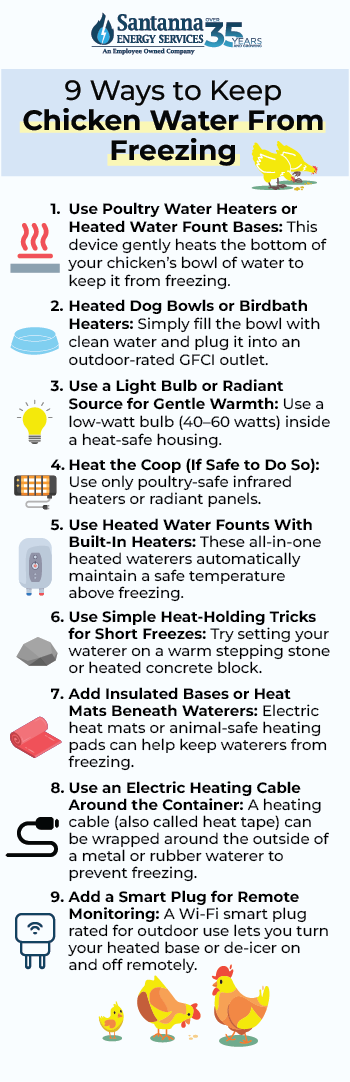
1. Use Poultry Water Heaters or Heated Water Fount Bases
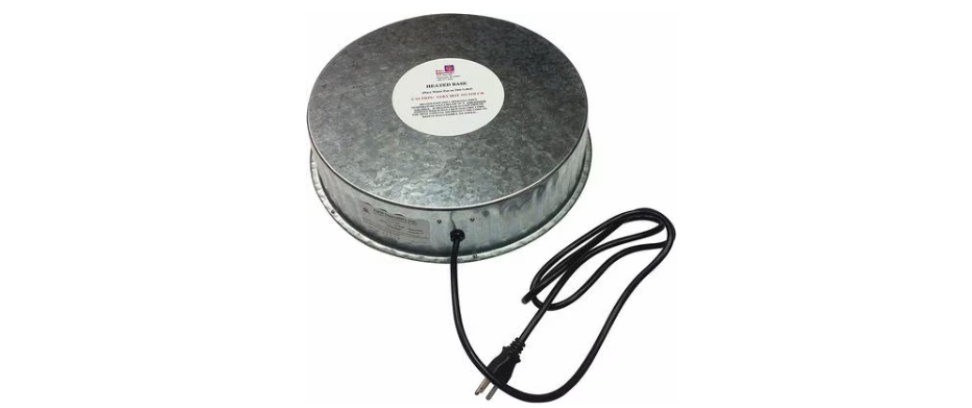
This solution simply and gently heats the bottom of your chicken's bowl of water to keep it from freezing. Simply place your metal waterer on top of the heater and plug it into a grounded GFCI outlet, a special type of electrical plug that protects you from shocks when using electricity outdoors or in wet areas.
We recommend a Farm Innovators HP-125 Heated Base as one of the best poultry water heaters for cold-weather setups.
Keep in mind that these devices typically use between 60 and 125 watts, about the same as a household light bulb. So, while this appliance won't affect your energy bill too much, it'll still add to it over time.
The steady, low-level heat keeps the water temperature just above freezing, even during single-digit mornings. This is one of the most reliable long-term solutions, especially for coops already wired for electricity.
2. Try Heated Dog Bowls or Birdbath Heaters
Heated dog bowls or birdbath heaters are another plug-and-play option that works well for smaller flocks. Simply fill the bowl with clean water and plug it into an outdoor-rated GFCI outlet. These bowls use about 30–70 watts, while birdbath heaters use up to 250 watts for larger volumes.
The built-in heating element prevents ice from forming at the surface and keeps water accessible throughout the day. They're simple to clean, energy-efficient, and a great choice if you prefer minimal maintenance.
We spoke with one of our employee-owners who cares for his own backyard flock of nine, and he swears by heated dog bowls for winter care. With seven years of experience as a chicken caretaker, Jim Roberts, Lead Software Developer at Santanna Energy Services, shared, "Electric outdoor dog bowls keep [my chicken] water from freezing. They're easy to set up and take back in at night, and they turn on automatically when temperatures drop near freezing."
Just remember to keep cords protected from moisture and pecking.
In regions where freezing temperatures are less extreme but still possible, electric dog bowls and heated bases can be simple, safe options.
3. Use a Light Bulb or Radiant Source for Gentle Warmth
If your coop already has electricity, you can use a low-wattage bulb (40–60 watts) inside a heat-safe housing, such as a metal can or cinder block, to gently heat your chicken water.
Be sure to place it close enough to warm the waterer but far enough to avoid contact with flammable materials like straw or shavings.
The gentle heat from the bulb radiates upward, slightly warming the surrounding air and the base of the waterer. This method works best in enclosed or sheltered coops where wind exposure is limited. It's inexpensive, though it requires careful setup to ensure fire safety.
4. Heat the Coop (If Safe to Do So)
Some flock owners use small heaters to warm their coops gently if the temperature falls below 35°F. If you choose this route, use only poultry-safe infrared heaters or radiant panels, and never seal the coop completely. Chickens still need ventilation!
If you're looking for a great heater for your coop, we recommend the SunStar Ceramic Infared Heater from FarmTek. This model is ideal for larger flocks and coops.
Keeping the overall temperature just above freezing helps delay water from turning to ice and reduces stress on your birds. However, overheating can cause condensation, which is more dangerous than cold itself, so moderation is key.
5. Use Heated Water Founts With Built-In Heaters

These all-in-one heated waterers automatically maintain a safe temperature above freezing. Simply fill, plug in, and place in a protected area.
The built-in thermostat senses temperature changes and activates only when needed, saving energy and ensuring water availability around the clock. They're ideal for busy homeowners who want consistent results with minimal daily upkeep.
If you're looking for a reliable, all-in-one heated waterer that can safely plug into a GFCI outlet and keep your flock's water ice-free all winter, we recommend the Premier 1 All-Season Heated Poultry Waterer (3 Gallon). It turns on automatically when temperatures drop near freezing and shuts off when not needed—helping you save energy.
6. Use Simple Heat-Holding Tricks for Short Freezes
For short-term cold snaps, try setting your waterer on a warm stepping stone or heated concrete block that's been inside your house for a few hours. You can also slip hand warmers beneath insulated containers for temporary warmth.
These methods rely on thermal mass, in which warm objects release stored heat slowly into the surrounding water. While not long-lasting, they're great for quick fixes during sudden temperature drops.
7. Add Insulated Bases or Heat Mats Beneath Waterers
Electric heat mats or animal-safe heating pads can help keep waterers from freezing when placed under a metal or rubber base. These mats provide gentle, even warmth that radiates upward to slow ice formation. Always use models rated for outdoor or poultry use, keep them dry, and plug them into a GFCI outlet for safety.
8. Use an Electric Heating Cable Around the Container
A heating cable (also called heat tape) can be wrapped around the outside of a metal or rubber waterer to prevent freezing from the sides. These cables are low-wattage and thermostatically controlled, automatically turning on near freezing temperatures. Make sure the cable never overlaps or touches plastic directly, and follow the manufacturer's directions to avoid overheating.
9. Add a Smart Plug for Remote Monitoring

Keeping your chicken water from freezing is easier when you can control your heater without stepping outside. A Wi-Fi smart plug rated for outdoor use lets you turn your heated base or de-icer on and off remotely, helps you track energy use, or set automatic schedules during cold snaps.
We recommend the EIGHTREE Outdoor Smart Plug (IP44 Waterproof, Dual Outlet). It's compatible with Alexa and Google Assistant, weather-resistant, and perfect for managing coop equipment from your phone. Just plug your water heater into it and connect it to a GFCI outlet.
How to Keep Chicken Water From Freezing Without Electricity
Not every coop has access to power, and that’s perfectly okay. You don’t need fancy equipment or high energy bills to keep your flock’s water from turning to ice. With a few smart, low-cost methods, you can use sunlight, insulation, and a little creativity to extend the life of your chickens’ water even on freezing days. Below are effective, safe, and easy-to-implement ways to keep chicken water from freezing without electricity:
1. Use Black or Dark Rubber Tubs
Dark-colored rubber tubs are one of the simplest and most effective ways to slow freezing. Rubber holds heat longer than metal or thin plastic and doesn’t crack in freezing temperatures.
To use this method, simply replace your usual waterer with a black rubber feed tub and place it where it can get plenty of direct sunlight during the day (ideally a south-facing area near the coop).
The dark surface absorbs heat from the sun, slightly warming the water and delaying the freezing process. Larger tubs work best because greater water volume cools more slowly. The added benefit? If a thin layer of ice does form, you can easily flex the rubber to pop it out without damaging the container.
2. Build a Mini Greenhouse or “Sunroom” Around the Water
Making one is easier than you think! You can do so by using clear plastic panels, old storm windows, or even a transparent storage tote turned upside down with a few openings for airflow. Then place the structure over or around the water container, positioning it to face the sun’s path during the day.
This simple enclosure traps heat and blocks cold wind, keeping the area a few degrees warmer than the outside air. The Penn State Extension notes that even small temperature increases can significantly delay ice formation.
Chicken caretaker Val Mena, an employee-owner at Santanna Energy Services with three years of experience and a flock of more than 85 birds, has her own innovative approach. Val creates a cozy “sunroom” for her chickens. She says, “The chickens live in a metal barn-style coop that’s equipped with solar-powered heating lamps, which provide just enough warmth when needed.”
3. Use a DIY Saltwater Bottle
Fill a plastic bottle with water and about 3–4 tablespoons of salt, then seal it tightly and place it in the chicken’s water tub. The saltwater won’t mix with the drinking water (since the bottle is sealed) but will stay liquid at lower temperatures.
The saltwater bottle moves slightly as temperatures change or the wind blows, disrupting the formation of ice crystals on the surface. This simple, low-cost trick is backed by poultry keepers across cold states as an easy way to extend the time before water freezes.
4. Refill With Warm Water Throughout the Day
Start the morning by filling your waterers with lukewarm water (around 70–90°F) and check them midday for a quick refill. If possible, keep extra buckets indoors to swap out as needed.
Warmer water takes longer to reach freezing point, and keeping an extra container ready saves time on bitterly cold days. It’s a hands-on method, but especially useful for smaller flocks or when the cold snap is temporary.
5. Add Floating Objects to Prevent Surface Ice
Drop a few ping-pong balls or small floating toys into your water container. When the wind blows, these objects move the surface water slightly, breaking up early ice formation.
Still water freezes faster than moving water. The subtle movement from floating objects slows ice buildup and buys you several extra hours before freezing, especially at temperatures above 20°F.
6. Keep Containers Insulated and Elevated
Wrap your water buckets or tubs in foam, bubble wrap, or an old blanket (kept dry) and set them on wood blocks, cinder bricks, or straw bales instead of directly on frozen ground.
Insulation keeps the heat from escaping too quickly, while elevation prevents the cold ground from drawing heat from the water. Together, they extend the time water stays above freezing, even without electricity.
7. Keep Water and Feed Outside the Main Coop
It might seem logical to move the water inside the coop for warmth, but doing so increases humidity, which can lead to frostbite on your chickens’ combs and wattles. Instead, place food and water just outside the coop but in a sheltered, easy-to-reach spot.
Proper placement keeps the coop dry and warm while still allowing the birds quick access to hydration during the day. Managing moisture also helps maintain cleaner bedding and a healthier environment.
8. Use Thermal Mass and Insulation
Thermal mass means using materials that store and slowly release heat, such as water, stone, or soil. You can take advantage of this principle by partially burying your water container in the ground or placing it inside an insulated box lined with straw, hay, or foam panels. The ground naturally holds warmth better than the air during cold months, and the insulation reduces the rate of heat loss from the water.
This setup works particularly well for stationary coops or water stations near a barn wall where temperatures are slightly higher. It’s an easy, low-maintenance way to keep water liquid longer without relying on electricity.
You don’t need electricity to keep your chickens’ water from freezing. Just a bit of creativity and consistency. Whether it’s harnessing sunlight, adding insulation, or refilling with warm water, these simple techniques use natural principles to slow freezing and protect your flock. When combined, these can save you time, money, and stress all winter long while keeping your chickens healthy and hydrated.
Safety Tips for Using Electricity in the Coop
Electric heating devices can make winter chores easier, but they also increase the risk of fire or electrical shock if not used properly. Here’s how to keep your flock safe when using electric water heaters or de-icers:
1. Always use a GFCI outlet.
Plug all heaters, de-icers, or smart plugs into a ground fault circuit interrupter (GFCI) outlet. This type of outlet automatically cuts power if moisture or an electrical imbalance is detected, greatly reducing the risk of shock.
2. Use outdoor-rated cords and plugs.
Choose heavy-duty, weatherproof extension cords rated for outdoor use. Avoid indoor cords as they can crack or short-circuit in cold, damp air.
As a seasoned flock owner, Jim Roberts explains, “My coop is insulated with lights and outlets that were professionally wired. All the heating equipment I use is UL-rated, so it’s safe even through cold snaps.”
3. Keep cords and devices off the ground.
Elevate cords on hooks or run them through PVC piping to protect from snow, mud, or pecking. Never leave connections where water or bedding can reach them.
4. Avoid flammable contact.
Keep all electric devices at least 12 inches away from straw, shavings, or wooden walls. Place heaters on non-flammable surfaces like bricks or concrete blocks.
5. Inspect regularly.
Check cords and plugs daily for damage. Replace anything cracked or frayed immediately. Even small wear can cause sparks or shorts in cold conditions.
6. Use thermostatic control.
Devices that turn on only when temperatures drop near freezing reduce overheating risk and energy use. Most quality de-icers and heated bases include this feature.
7. Never use space heaters inside coops.
Space heaters are a major fire hazard in small wooden structures. Instead, rely on poultry-rated radiant panels or infrared heaters, mounted safely and used sparingly.
8. Keep waterers level and secure.
Stable placement prevents tipping and spills, as well as moisture near outlets, which is a leading cause of coop fires.
Electricity and moisture can safely coexist in the coop when managed carefully. Use outdoor-rated equipment, keep cords dry and protected, and rely on thermostatically controlled devices to do the heavy lifting, not constant high heat.
How to Set Up a Heated Chicken Waterer
Getting a heated chicken waterer ready for winter is actually pretty simple, and once it’s set up, it can save you from the daily chore of breaking ice. Here’s an easy way to do it:
- Pick a safe power connection. Use a heavy-duty outdoor extension cord plugged into a GFCI outlet to prevent shocks or short circuits. Keep the cord protected from moisture and curious pecks by threading it through PVC tubing or using a weatherproof cord cover.
- Elevate the waterer on a flat surface. Place the waterer on a stable, raised base, like a few bricks, a wooden board, or a cinder block. Lifting it off the cold ground helps retain warmth and keeps debris or bedding from ending up in the water.
- Install the heater properly. Attach the heated base or built-in element following the manufacturer’s directions. These heaters are designed to maintain the water temperature just above freezing, enough to stop ice from forming without overheating or wasting energy.
- Check it each day. Heated waterers do most of the work, but a quick daily look ensures everything is running safely. Make sure the water level is steady, the cords are secure, and the outlet area stays dry.
- Keep it clean. Even in cold weather, mineral deposits and algae can appear. Give your waterer a quick clean every few days with a little dish soap or diluted vinegar to keep it fresh and safe for your flock.
Once everything is in place, your heated chicken waterer will handle the hard part for you. With minimal upkeep, your birds will always have fresh, unfrozen water no matter how chilly it gets outside.
Heated Base vs. Heated Water Fount: What Works Best to Heat Chicken Water
If you have electricity available in your coop, using a heated device can save you time and prevent constant refilling during winter. But not all electric water heaters are the same, and choosing the right one matters for both safety and cost. Two of the most common options are the heated base and the tank heater. Both keep your chickens’ water from freezing, but they work in slightly different ways and use different amounts of energy.
Heated Base
A heated base is a flat, metal or plastic plate that you place under a traditional waterer. It gently warms the container from the bottom, keeping the water temperature just above freezing. Heated bases usually use around 125 watts, which is roughly the same as running a standard light bulb. They’re great for smaller coops or moderate Midwest winters because they maintain steady warmth without overheating the water.
Heated Water Fount with Built-In Heater
A heated water fount combines the container and heating element in one sealed, thermostatically controlled unit. It automatically switches on when temperatures drop near freezing and turns off when they rise, helping to save energy while maintaining a steady water temperature.
These all-in-one systems are designed for convenience and safety. They require minimal setup, reduce the risk of exposed cords, and work best in covered or enclosed coops where they’re protected from snow and wind.
Which One’s Best for You?
If you already have a standard metal or plastic waterer and want a cost-effective way to keep it from freezing, a heated base is a reliable option. But if you’d rather have a low-maintenance, plug-and-go solution, a heated water fount offers greater ease of use and built-in temperature control and is ideal for busy coop owners who prefer set-it-and-forget-it simplicity.
Estimated Energy Cost to Run Chicken Water Heaters During Winter at 17.10 cents /kWh (January 2025 Average Residential Rate)
| Device Type | Wattage | Daily Cost | Weekly Cost | Monthly Cost (30 days) | 3-Month Winter Cost | Best For |
| Heated Base | 125 W | $0.51/day | $3.59/week | $15.39/month | $46.17/winter | Small to medium coops; mild to moderate cold climates |
| Built-In Heated Fount | 100 W | $0.41/day | $2.87/week | $12.31/month | $36.94/winter | Medium flocks; low-maintenance plug-and-go setup in covered coops |
Which Container Materials and Sizes Keep Water From Freezing Longest?
When it comes to keeping your chickens’ water from freezing, the container you use matters just as much as the temperature outside. The type of material and size of your waterer can determine how quickly it loses heat and how often you’ll be breaking ice on cold mornings.
Black rubber containers are generally the best choice for freezing temperatures because of their flexibility and durability. They naturally hold heat longer than metal. They don’t crack easily when ice forms, and any frozen water can usually be loosened by flexing or tapping the tub; no need for tools. This makes it the safest, longest-lasting option for outdoor use.
Metal containers, on the other hand, conduct heat and cold very quickly. While they work well when paired with heated bases, they can cause water to freeze faster when used alone in unheated conditions. Metal also tends to rust over time and can become slippery or difficult to handle in freezing weather. If you use a metal waterer, make sure it’s designed for winter use and placed on a heated surface.
Plastic containers are lightweight and affordable, but they’re not as durable in extreme cold because they easily become brittle as temperatures drop and can crack when ice expands inside. Insulated or thick-walled plastic waterers perform better and are a good option when electricity is available to prevent freezing.
Container size and depth also play a big role. The larger the volume, the slower the water freezes because it takes more time for the cold air to pull heat from a greater mass of water. A deep bucket (at least 2–3 gallons) will hold temperature better than a shallow pan, which exposes more surface area to the cold. For this reason, avoid wide, flat dishes that freeze solid in just a few hours.
Choosing the right container helps you minimize energy use, reduce maintenance, and extend the time between refills. In most cases, a large, dark-colored rubber tub is the best all-around option for cold climates like Illinois, Ohio, and Pennsylvania—durable enough for winter, easy to clean, and resistant to cracking even in subzero temperatures.
Cleaning and Maintenance Tips to Prevent Chicken Water From Freezing
Keeping your chickens’ water clean and well-maintained is one of the easiest ways to stop it from freezing too fast. A clean container holds heat better, prevents ice from forming as quickly, and keeps your flock healthy through cold weather.
Here are simple, step-by-step tips to help prevent chicken water from freezing:
- Check waterers daily. Inspect your chicken waterers every morning and evening during freezing weather. Remove any thin ice or slush right away before it builds up overnight.
- Dump and refill regularly. Empty old or dirty water each day and refill with fresh, clean water. Even slightly warm water (around 70–90°F) can delay freezing for several hours.
- Thaw safely if ice forms. Never strike a frozen waterer to break the ice. Instead, pour in a small amount of warm (not boiling) water or bring the container indoors to thaw naturally.
- Clean weekly with mild soap or vinegar. Use a mild dish soap or a mix of one part vinegar to three parts water to scrub away algae, feed residue, and mineral buildup. Rinse thoroughly so no cleaning product remains.
- Unplug and wipe heated bases before cleaning. If you use a heated waterer, always unplug it first. Wipe with a damp cloth instead of submerging in water, and check that cords and plugs are dry and free of cracks.
- Inspect containers for cracks or rust. Look over each container once a week for cracks, leaks, or rust spots. Damaged materials allow cold air to penetrate faster, which speeds up freezing. Replace or repair immediately if needed.
- Keep the area around the waterer dry. Standing water and spilled feed can freeze solid, making maintenance harder. Keep the base elevated on a wooden block or cinder brick to stay off the cold ground and prevent quick heat loss.
- Store a backup container indoors. Keep an extra waterer filled and thawed inside your garage or barn so you can swap it in quickly during severe cold snaps.
- By following these cleaning and maintenance habits, you’ll help your chicken waterers stay ice-free longer, reduce daily chores, and keep your flock hydrated and healthy all winter long.
FAQs
Do chickens need warm water or just unfrozen water in winter?
Chickens don’t need warm water, just unfrozen, fresh water. Room-temperature or slightly cool water is fine as long as it’s available throughout the day. Warm water isn’t harmful, but it cools quickly in cold weather. The goal is to keep water above freezing, not to heat it.
Is it safe to add salt to chicken water to prevent freezing?
No, never add salt directly to your chickens’ drinking water. Salt can lead to dehydration or salt poisoning in poultry. If you want to use salt as a freezing deterrent, place it in a sealed bottle that floats in the waterer instead. The saltwater bottle trick helps prevent surface ice without mixing salt into the drinking water.
Are solar panels or battery packs practical for this use?
Solar and battery systems can work, but only in mild conditions or with small heaters.
Will moving the waterer inside the coop cause humidity issues?
Yes, it can. It’s better to keep waterers just outside the coop or under a covered run where there’s airflow but protection from wind and snow.
How often should I check the water when it’s below 10°F?
When temperatures drop below 10°F, check the water at least two to three times per day. Even heated systems can freeze during extreme cold. Morning, midday, and late-afternoon checks ensure your flock always has access to fresh, unfrozen water and help prevent dehydration during the harshest winter days.
Keeping your flock’s water from freezing isn’t just about convenience; it’s about their health and well-being. Consistent access to clean, unfrozen water helps your chickens stay hydrated, digest food properly, and maintain normal egg production even during the coldest months.
As you plan your winter setup, aim for a balance between convenience, cost, and safety. The right combination of container type, placement, and heating method can save time, reduce energy use, and keep your birds comfortable all season long.
If you rely on electric heaters or other powered equipment in your coop, make sure your energy source is safe, steady, and efficient. Explore Santanna’s energy solutions for an electric plan that helps you care for your home—and your flock—with confidence.
Jenna Mendez is a Midwest native with lifelong roots in Illinois and time spent in Ohio during college, giving her a deep understanding of the Midwest region’s people, climate, and energy needs. She brings firsthand experience and local insight to topics that matter to Midwest homeowners, especially energy efficiency, sustainability, and home living. Jenna specializes in writing about eco-friendly living, all things Midwest, renewable energy, and practical ways to reduce energy costs. Jenna brings a trusted, and local hometown voice to every article she writes, helping readers live well, and sustainably, right where they are.