

Musty Smell in Your House? Causes, Removal, and Smart Energy Tips

by Jenna Mendez
32.7 min read

That damp, stale odor can sometimes seem to appear out of nowhere. Maybe you notice it more after a rainstorm. Maybe it greets you when you walk back into the house after a vacation. Or maybe it shows up in the basement or hits you right when the air conditioner kicks on.
Then you clean the room. You open the windows for fresh air. You spray air freshener or light a candle. For a little while, it seems better, and then the smell slowly comes back again.
A lot of homeowners assume it is just an "old house smell." But in most cases, it is not simply the age of the home, it's the smell of must. In a recent internal survey, 89% of our employee‑owners said they've noticed a persistent musty smell in their own homes, highlighting how widespread moisture‑related odors really are.
A musty smell is usually a sign that moisture is hiding somewhere inside the house and that can affect how comfortable your home feels and how hard your heating or cooling system must work, which ultimately affects your energy bill.
In this guide, you will learn why your house smells musty, how to find the real source, how to remove the smell properly, and how musty smells can increase your energy costs. Most importantly, you will discover practical steps that can help keep your home fresh, comfortable, and efficient all year long. Let's get started!
Key Points of This Article:
- Common causes that create a musty smell in your house include high humidity, hidden leaks, poor ventilation, damp basements, and materials like carpet or insulation that absorb moisture.
- Extra humidity can quietly raise your energy bill because your cooling system must run longer to remove both heat and moisture, which can add about $32 more per month if the AC runs two extra hours per day.
- Improving airflow, managing indoor humidity, and fixing small moisture problems early can help keep your home fresher while supporting more efficient heating and cooling.
Why Does My House Smell Musty?
Your house usually smells musty because moisture is trapped in areas that do not dry easily. These areas can include below your living space, inside walls, floors, or ceilings, or within your air system or soft materials.
In most cases, the smell itself is not the real problem but a warning sign that moisture has been sitting somewhere longer than it should, creating conditions where mold, mildew, and bacteria can begin to grow even if you cannot see them yet. Even small amounts of hidden dampness can produce a musty smell in your home.
In many Midwest homes, this moisture often builds up from humid summer air, naturally damp basements, small plumbing leaks, condensation on windows, or limited airflow during colder months when homes stay sealed to conserve heat.
During summer, air conditioners may cool the air but not remove enough humidity when run times are short, allowing damp air to settle into walls, floors, fabrics, and other surfaces.
Moisture is the most common cause of a musty smell in your house, but it is not the only one. Musty odors can also develop in rooms that stay closed for long periods, in aging materials that have absorbed odors over time, or in HVAC systems, carpets, and fabrics that hold onto particles and humidity. Even dust buildup in unused spaces can mix with damp air and create that familiar stale smell.
One tricky part is that you may not see visible mold at first. Materials like drywall, wood framing, carpet padding, insulation, and furniture can quietly absorb moisture and slowly release odor into the air. That is why most homeowners often notice a musty smell in their house first in closets, basements, or rarely used rooms where airflow is weaker.
You may also notice the smell becoming stronger after rain, early in the morning, when opening a closed room, or when your HVAC system turns on. These patterns can help you identify where moisture or stale air is collecting.
Over time, if the underlying cause is not addressed, the odor can spread beyond one room. The most effective way to get rid of a musty smell in a house is not to mask it but to identify what is causing it and correct the moisture problem at its source.
What's the Difference Between a Musty Smell and a Mold Smell?
A musty smell is usually described as damp, stale, or earthy. It can remind you of a wet basement, old books in a storage box, or towels that stayed in the washer overnight.
Many homeowners notice it when they open a closet that has been closed for weeks or walk into a basement after a humid day. It often builds up slowly and feels stronger in enclosed areas like basements, closets, laundry rooms, or guest bedrooms.
A mold smell, on the other hand, is often stronger and harder to ignore. It may smell sharper, heavier, or slightly sour. Some people describe it as a rotting or wet soil odor that does not go away even after cleaning or using an air freshener.
For example, if you clean a bathroom but still notice a strong smell near one wall or under the sink, it could point to mold growth rather than just stale air.
You can smell mustiness even if you do not see visible mold because moisture alone can create that stale odor before mold growth becomes obvious. Materials like drywall, carpet padding, wood, and insulation can absorb moisture and release a damp smell without showing dark spots or surface growth.
The important thing to remember is that both musty and mold smells usually signal that moisture is present somewhere in the home. Even if the source is not obvious right away, the odor is often your first clue that something damp needs attention.
Is There a Difference Between Mold and Mildew?
The difference between mold and mildew is that mildew is usually a surface problem, while mold can grow deeper into materials.
Mildew often appears as thin, flat patches that look white, gray, or light brown. You may notice it on shower walls, window sills, or damp fabrics, especially in areas where moisture tends to linger. The good news is that mildew usually stays on the surface, which means it is often easier to clean.
Mold behaves differently. It can grow into porous materials like drywall, wood, insulation, and carpet padding. It may appear darker and look fuzzy or spotty.
Because it spreads beneath surfaces, mold can cause more damage over time and may require deeper cleaning or repairs.
Both mold and mildew develop when moisture remains present for too long. According to the U.S. Environmental Protection Agency, the most effective way to prevent mold and mildew is by controlling moisture by drying any water-damaged areas and materials within two days to reduce the risk of mold developing.
What Causes a Musty Smell in a House?
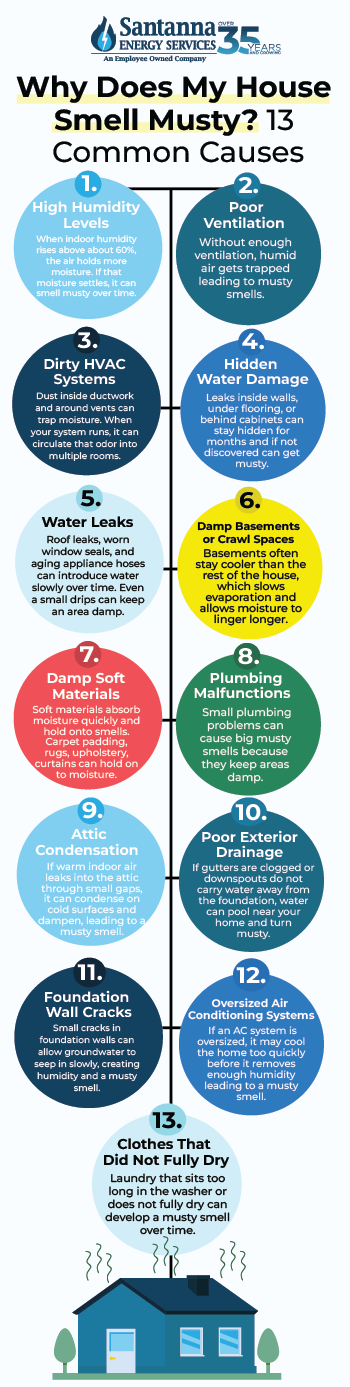
Most musty smells come from moisture that stays trapped somewhere in your home, but the source can vary. Sometimes it comes from humid air, hidden leaks, poor airflow, or materials that stay damp longer than they should.
Here are some of the most common causes of why your house smells musty:
1. High Humidity Levels
When indoor humidity rises above about 60%, the air holds more moisture than your home can comfortably handle. That moisture can settle into walls, ceilings, carpet, insulation, furniture, and flooring. It also collects moisture on cooler surfaces, like basement walls and window frames.
Midwest summers are especially humid and can lead to musty smells in your home. After a hot day, outside air can carry moisture into your home every time doors open. If your AC is not removing humidity well, the house can feel cool but still smell damp, and can eventually turn into a musty smell over time.
Bathrooms, kitchens, and laundry rooms can add even more moisture through showers, cooking, and washing clothes.
2. Poor Ventilation
Homes need steady air movement to remove moisture, odors, and stale air. Without enough ventilation, humid air gets trapped. Over time, that trapped air can cause a musty smell in a house, especially in bathrooms, laundry rooms, and basements.
This often happens in winter when windows stay closed for months. It also happens in homes where bathroom fans vent into the attic instead of outdoors, or where kitchen fans do not vent outside. If moist air has nowhere to go, it settles into building materials and fabrics.
3. Dirty HVAC Systems
Dust inside ductwork and around vents can trap moisture, especially in humid months. Mold can also form near cooling coils where condensation naturally occurs. When your system runs, it can circulate that odor into multiple rooms, which is why some homeowners notice a musty smell throughout the house instead of just one spot.
A common clue is when the smell becomes stronger when the heat or AC turns on, or it seems to come directly from vents. That does not always mean there is mold in your ductwork, but it does mean the system needs attention.
In many cases, if odors clearly start when the HVAC turns on, they improve after the system is inspected and cleaned. Checking the drain pan, coil area, and filter is often the first practical step.
4. Hidden Water Damage
Some of the most stubborn musty smells come from moisture you cannot easily see. Leaks inside walls, under flooring, or behind cabinets can stay hidden for months.
Materials like drywall, insulation, and subflooring can hold moisture and slowly release odor into the room. You may notice clues like peeling paint, warped flooring, or soft drywall near baseboards.
If something feels damp or spongy, moisture may be trapped behind it.
5. Water Leaks
Roof leaks, worn window seals, and aging appliance hoses can introduce water slowly over time. Even a small drip under a sink or behind a washing machine can keep an area damp enough to create a musty smell in a house.
Leaks are often more noticeable after storms or heavy rain, even when you do not see visible water. That happens because moisture can seep into insulation or framing, dry slowly, and leave an odor behind.
Many homeowners find relief by inspecting vulnerable areas after heavy rain and replacing old hoses on washing machines and dishwashers. Checking around windows, the water heater area, and the basement ceiling can also help catch leaks early.
6. Damp Basements or Crawl Spaces
Basements often stay cooler than the rest of the house, which slows evaporation and allows moisture to linger longer, which could be a reason your house smells musty. Ground moisture can also move through concrete foundation walls. Even when a basement looks clean, humidity in the air or moisture in the concrete can still create musty odors that spread through the home.
The most immediate solution is to use a basement dehumidifier and make sure water is draining away from your foundation outside. Small drainage improvements, such as extending downspouts or improving grading around the foundation, can noticeably lower basement humidity and reduce the risk of musty smells returning.
7. Damp Soft Materials
Soft materials absorb moisture quickly and hold onto smells. Carpet padding, rugs, upholstery, curtains, cardboard boxes, and stored clothing are common odor holders. Once they get damp, they can smell musty for weeks, even after the air feels dry again.
This is especially common in basements where boxes sit directly on concrete floors. Concrete can hold moisture, and cardboard absorbs it like a sponge. Closets can also trap moisture, especially if they are against exterior walls.
A simple action that can reduce this is to dry fabrics completely before storing them, and avoid placing boxes directly on basement floors. Using plastic bins and leaving a little airflow around stored items also helps.
8. Plumbing Malfunctions
If you're wondering, 'Why does my house smell musty?' Take a closer look at your plumbing. Small plumbing problems can cause big musty smells because they keep areas damp. Slow pipe leaks, loose fittings, and minor overflows can create moisture in cabinets or wall cavities. Because these spaces are hidden, moisture can sit unnoticed until odor builds up.
Plumbing malfunctions can also include issues like a toilet seal leak, a dripping shut-off valve, or an older water heater that is slowly sweating or leaking. Even minor moisture under a sink can make an entire kitchen smell musty over time.
The simplest way to handle this is to inspect under sinks and around water heaters regularly. If you see water stains, damp wood, or a musty cabinet smell, that is a sign that moisture has been sitting there.
9. Attic Condensation
If warm indoor air leaks into the attic through small gaps, it can condense on cold surfaces like nails, roof decking, and ductwork. Over time, moisture can dampen insulation and wood framing.
When this happens, you may notice a musty smell in your house in upstairs bedrooms or closets. It can also lead to insulation that does not perform as well, which affects comfort and heating costs.
A good first step is to make sure attic insulation and ventilation are balanced properly. Sealing attic air leaks also helps prevent warm, moist air from reaching cold attic surfaces.
10. Poor Exterior Drainage
If gutters are clogged or downspouts do not carry water away from the foundation, water can pool near your home. That moisture increases the chance of basement dampness, crawl space humidity, and foundation seepage, all of which can create musty odors.
Poor drainage often shows up as musty smells after rain or during spring thaw. You may not see standing water inside, but moisture outside the foundation can still raise humidity indoors.
To prevent this from worsening, start by cleaning gutters and making sure downspouts carry water several feet away from the foundation. Simple grading improvements around the home can also help water flow away from the basement rather than toward it.
11. Foundation Wall Cracks
Small cracks in foundation walls can allow groundwater to seep in slowly. You may not see active water running down the wall, but damp concrete can raise humidity and create a persistent musty smell.
Foundation cracks can also worsen over time if water continues to enter. The smell often becomes more noticeable in corners, near baseboards, or in areas where furniture or storage blocks airflow.
Focus first on sealing visible cracks and monitoring basement humidity. If you notice recurring dampness after storms, it may be worth getting a professional opinion on drainage or foundation sealing.
12. Oversized Air Conditioning Systems
This one surprises many homeowners. If an AC system is oversized, it may cool the home too quickly and shut off before it removes enough humidity. The temperature feels fine, but the air still feels damp.
That damp feeling can explain why your house smells musty, especially in basements or closed rooms. You might notice this if your home feels clammy or if there is condensation on vents or windows, even when the AC is running.
A practical next step is to have a professional evaluate whether your system is properly sized (or check out our blog) and whether your settings support humidity control. Sometimes fan settings and run times also matter because they affect how well your system removes humidity, not just how quickly it cools the air.
13. Clothes That Did Not Fully Dry
Laundry that sits too long in the washer or does not fully dry can explain why your house smells musty. That odor can transfer to closets, bedrooms, and even furniture if damp clothing is stored too soon. A single load of damp towels can make a whole hallway smell musty if it gets put away before drying.
Start by making sure the laundry dries fully before folding or storing. If the smell lingers in fabrics, rewashing with proper drying time can usually fix it.
How To Find the Source of a Musty Smell in Your House
If your house smells musty, the fastest way to solve it is to find where the moisture is coming from. This part is not about cleaning yet. It is about narrowing down the source so you are not guessing or wasting time.
Think of it like being a detective in your own home. A musty smell usually gets stronger the closer you get to the problem area, so your goal is to figure out whether it is coming from one room, one system, or spreading through the whole house.
Here's a simple step-by-step check to find the source of a musty smell in your house and make your next move much clearer:
Step 1: Smell Rooms Individually
Walk through your home and pause in each area for a moment. Closets, laundry rooms, basements, and spare bedrooms are often the biggest clues.
If the smell is strongest in one specific area, that is usually where moisture is building up. If it smells musty everywhere, it may be connected to your HVAC system or a widespread humidity issue.
Step 2: Check Basements and Crawl Spaces
The basement or crawl space is the main source of musty odor because these areas are cooler, darker, and closer to ground moisture, which makes dampness last longer.
Pay attention to corners, baseboards, and areas behind stored items. Even if the basement looks dry, humidity can still be high enough to create an odor.
Step 3: Look for Condensation and Stains
Musty smells often appear in places where moisture has been sitting for a while, even if the area does not look obviously wet.
Take a few minutes to look around for small signs that water or humidity may be building up. Look for things like:
- Water stains on ceilings or walls
- Bubbling paint or peeling wallpaper
- Warped flooring
- Condensation on windows
- Damp spots on basement walls
These signs do not always mean active leaks, but they do point to areas where moisture has been present.
Step 4: Inspect Under Sinks and Behind Appliances
Some of the most common hidden sources are under kitchen and bathroom sinks, behind toilets, and behind appliances like washing machines, dishwashers, or refrigerators with water lines.
Open the cabinet and use a flashlight to check for damp spots, water stains, or soft wood along the cabinet floor and plumbing connections.
If you notice moisture, wipe the area dry and leave the cabinet doors open for a while to help airflow. And if you see an active leak or ongoing dampness, it's best to repair it as soon as possible or have a plumber fix the issue at the source.
Step 5: Check HVAC Vents and Airflow
Stand near a few vents while your heating or cooling system is running. If the musty smell gets stronger when air blows, your HVAC system may be picking up moisture or odor from somewhere and circulating it.
Also, notice how the airflow feels in different rooms. If certain areas have weak airflow, moisture can linger longer there and allow that musty smell to build up.
Step 6: Consider a Professional Inspection If the Smell is Widespread or Persistent
If you have checked the common areas and the smell is still strong, it may be coming from inside the walls, under the flooring, or within the HVAC system itself.
A professional can use moisture meters or inspection tools to locate hidden damp areas without tearing things apart. Once you find the source, you can choose the right fix and stop the smell from coming back.
Why Does My House Smell Musty After Rain?
If your house smells musty after rain, it usually means moisture is entering or building up faster than your home can dry.
When the ground becomes saturated, humidity rises around your home, and water can seep through small foundation cracks, basement windows, roof flashing, or worn window seals. Even if you do not see puddles, that extra moisture can settle into basements, crawl spaces, attics, or wall cavities where airflow is limited.
Rain also increases outdoor humidity because of evaporation, which can drift indoors and linger, especially in cooler spaces that dry slowly.
In many cases, the storm itself is not the real problem. It simply reveals a weak spot in the home, such as clogged gutters, poor drainage, small leaks, or high basement humidity.
If you notice a musty smell after every heavy rain, it is a good idea to check areas near the foundation, attic, and windows for hidden moisture before the problem gets worse. Think of it as your home's early warning sign that water or humidity may be finding its way inside.
Why Does a Musty-Smelling Home Often Have Higher Energy Bills?
A musty smell in your house usually means one thing: there is extra moisture in your home. And removing that moisture requires energy.
When the air inside your home feels damp, it often feels warmer than it actually is. Even if the thermostat shows a comfortable temperature, humid air can make rooms feel sticky or heavy. When that happens, many people lower the thermostat or let the AC run longer to feel cooler.
The part that often gets overlooked is that your air conditioner does two jobs at the same time. It cools the air and removes moisture from it. When humidity is high, the system has to run longer to handle both tasks, ultimately increasing your electricity bill.
Some people also add a portable dehumidifier to help dry out a basement or a musty-smelling room. That can help with comfort, but it also adds another source of electricity use.
To give you a clearer idea, here's how a musty smell in a house can increase your electricity bill:
If you run a small dehumidifier like the Spacekey 95 oz model rated at 88 watts for 8 hours per day, it uses about 21.12 kWh per month. At the U.S. average electricity rate of 17.78 cents per kWh in November 2025, that costs about $3.76 per month just to remove moisture and eliminate the musty smell in your house.
If it runs for 12 hours per day, the cost increases to about $5.63 per month. If the unit runs continuously, the monthly cost can rise to around $11.27.
Now consider your air conditioner.
If humid weather causes your AC to run about 2 extra hours per day, and it uses around 3 kWh per hour, that adds about 180 kWh in one month. At 17.78 cents per kWh, that is roughly $32 more that month, all in an effort to remove moisture and to help your home smell less musty.
The musty smell itself does not raise your energy bill, but the moisture behind it does because your cooling system has to run longer or additional equipment may be needed to remove that moisture, which increases electricity use. That is why a house that smells musty and has higher summer energy bills often shows up at the same time. When moisture is not controlled, comfort costs more.
How To Remove a Musty Smell from a House
To remove a musty smell from a house, you need to do two things at the same time.
First, dry out the moisture that is causing the odor. Second, remove the smell from the materials that absorbed it. Air fresheners usually do not work because they cover the scent without fixing the underlying cause.
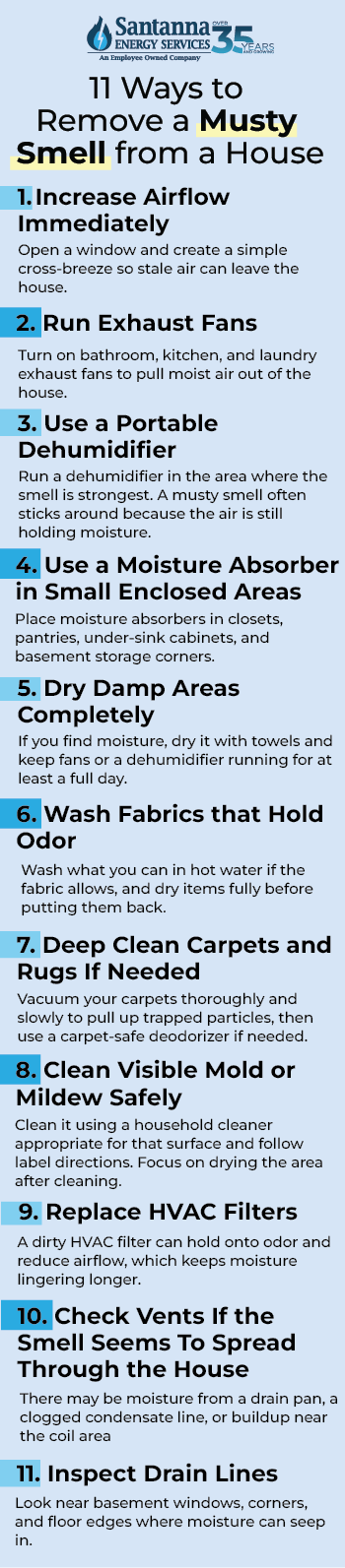
Here is a clear action plan that focuses on removal:
Increase Airflow Immediately
Open windows if outdoor humidity is lower than inside and create a simple cross-breeze so stale air can leave the house. If you can, place a box fan in one window facing outward to push musty air out while another window brings fresher air in. Musty smells linger when air stays still, so getting air moving is often the fastest way to make the home feel better right away.
Run Exhaust Fans
Turn on bathroom, kitchen, and laundry exhaust fans to pull moist air out of the house. These rooms generate a lot of humidity, and removing that damp air helps reduce the musty smell faster. If a fan is weak, leave the door open and use a portable fan to help move air out of the space.
Use a Portable Dehumidifier
Run a dehumidifier in the area where the smell is strongest, especially basements, finished lower levels, or a damp bedroom. A musty smell often sticks around because the air is still holding moisture, even if surfaces feel dry. Empty the tank often so it can keep working, or use a drain hose if your model allows it.
Use a Moisture Absorber in Small Enclosed Areas
If you're wondering how to remove a smell from your house, try placing moisture absorbers in closets, pantries, under-sink cabinets, and basement storage corners where airflow is limited to trap dampness and odor. They will not solve a major moisture problem, but they can reduce the smell in tight areas while you work on drying the home.
Dry Damp Areas Completely
If something is still damp, the smell will keep coming back and cause your house to smell musty. Check under sinks, behind toilets, around the water heater, near washing machines, and along basement walls and corners. If you find moisture, dry it with towels and keep fans or a dehumidifier running for at least a full day, so the area dries out, not just the surface.
Wash Fabrics that Hold Odor
Musty smells often cling to soft materials like curtains, throw blankets, cushion covers, bath mats, and laundry that has sat too long. Wash what you can in hot water if the fabric allows, and dry items fully before putting them back. If the smell is in stored clothing, rewash and let it air out before returning it to closets or drawers.
Deep Clean Carpets and Rugs If Needed
Carpet fibers and padding can absorb moisture and hold odor for weeks. If you're looking to remove a musty smell from your house, vacuum your carpets thoroughly and slowly to pull up trapped particles, then use a carpet-safe deodorizer if needed. If the smell seems strongest near the floor or comes back quickly after cleaning, the padding underneath may still be damp and may need deeper drying or professional cleaning.
Clean Visible Mold or Mildew Safely
If you see small areas of mold or mildew on hard surfaces, clean them using a household cleaner appropriate for that surface and follow label directions. Focus on drying the area after cleaning, because moisture left behind is what allows odor to return. If the growth is widespread or keeps coming back, that often points to hidden moisture that needs deeper inspection.
Replace HVAC Filters
A dirty HVAC filter can hold onto odor and reduce airflow, which keeps moisture lingering longer. Replacing the filter every 3 months is a quick step that can improve how your system circulates air. If the smell spreads throughout the home, this is a smart first move before doing anything more involved.
Check Vents If the Smell Seems To Spread Through the House
Stand near a few supply vents when your system turns on. If the musty smell gets stronger when air blows, the HVAC system may be picking up moisture from a drain pan, a clogged condensate line, or buildup near the coil area. In that case, an HVAC inspection can help pinpoint the source so the smell does not keep recirculating.
Inspect Drain Lines
If the smell flares up after storms, basements and crawl spaces are often the first place to check. Look near basement windows, corners, and floor edges where moisture can seep in. Even if you do not see standing water, running a dehumidifier and increasing airflow for at least 48 hours can help dry out damp air and reduce odor.
How Long Does It Take To Get Rid of a Musty Smell in a House?
In many homes, a musty smell can improve in a few days to about two weeks, as long as the moisture source is removed and the damp area actually dries out. This timeline depends on what is causing the odor and what absorbed the moisture.
If it is mostly humid air and a few damp fabrics, you may notice a difference within a couple of days once you increase airflow and lower the humidity. If the smell is coming from a basement, carpet padding, drywall, insulation, or a slow hidden leak, it can take closer to one or two weeks because those materials hold moisture longer and dry more slowly.
If you have completed the drying and cleaning steps and the smell does not improve after about two weeks, that is often a sign that moisture is still present somewhere, or that something deeper is staying damp and needs a closer look.
How To Get Rid of Old House Smell
An old-house smell often comes across as stale, dusty, slightly woody, or faintly smoky. Some homeowners describe it as a mix of aged wood, old paper, stored fabrics, and long-closed air. It can remind you of an older library, an antique shop, or a house that has been closed up for years.
Unlike a musty, moisture smell, an old-house smell does not usually get stronger after rain or during humid weather. It is more constant and tied to aging materials and long-term air circulation patterns rather than active dampness.
Here are solutions that are especially relevant for older homes:
Clean or Seal Old Wood Surfaces
Older homes often have exposed wood trim, hardwood floors, staircases, and built-ins that have absorbed years of smoke, cooking odors, and humidity. Even if the wood looks clean, it can hold scent deep inside the grain.
Refinishing hardwood floors or resealing wood trims can dramatically reduce lingering odors in older homes.
Replace or Deep Clean Older Carpet Padding
In older homes, carpet padding can be decades old, even if the carpet itself was replaced. Padding absorbs moisture and odor more than surface carpet. If a room still smells stale after cleaning, the padding underneath may be the real source.
Replacing old padding can make a bigger difference than replacing furniture.
Inspect and Update Original Insulation
Many older Midwest homes still have outdated insulation in walls or attics. Older insulation can hold onto odor from past moisture events, cooking, or smoke. If your home has been renovated in stages, you may have mixed insulation types.
Updating old insulation can reduce trapped odor and improve energy efficiency at the same time.
Clean or Replace Old HVAC Ductwork
Older homes sometimes have original ductwork that has collected dust and debris for decades. If your home has undergone remodeling, old ducts may contain construction dust, insulation particles, or debris. A professional duct inspection can determine whether cleaning or replacement is appropriate.
Address Closed-Off Room Layouts
Older homes were often designed with smaller rooms and limited airflow between spaces. If certain rooms always smell stale, it may not be moisture. It may simply be airflow limitations built into the design.
Adding return vents, improving circulation, or adjusting HVAC balancing can help older layouts feel fresher.
Repaint with Odor-Sealing Primer
If previous owners smoked indoors or if the home absorbed years of odor, repainting with a stain- and odor-blocking primer before applying fresh paint can help seal those smells permanently. This is especially helpful in older plaster walls.
Check Chimneys and Fireplaces
Older homes often have wood-burning fireplaces. Even unused chimneys can hold soot and old smoke residue. If the smell seems stronger near the living room or fireplace area, a chimney inspection and cleaning may help.
Improve Airflow and Monitor Humidity
Even in older homes, stale smells often get worse when humidity builds up in enclosed spaces. Running bathroom or kitchen exhaust fans regularly helps remove damp indoor air, especially after showers or cooking. Using a simple humidity monitor can also give you a clearer picture of what is happening inside your home.
Keeping humidity in a balanced range helps prevent smells from settling back into materials.
Old house smells often build slowly over time. They are not always caused by moisture alone but by materials that have absorbed years of everyday living. When you improve airflow and manage humidity, those older spaces can start to feel noticeably fresher while still keeping the character that makes the home unique.
Smart Energy Tips To Prevent Musty Smells From Returning
Preventing musty smells is really about managing moisture and airflow before your home has a chance to feel damp again. The good news is you do not need to overhaul your entire house to make a difference. Small, energy-smart habits and a few practical home checks can help your home stay drier, fresher, and more comfortable through humid Midwest summers and sealed-up winters.
Here are prevention tips that also support efficient heating and cooling in your home:
Keep Indoor Humidity in the 30%-50% Range
Musty smells tend to return when indoor air stays damp for long stretches. According to the EPA, indoor humidity should generally stay between 30% and 50% to limit the moisture that mold and mildew need to grow, while still keeping the air comfortable for your skin, sinuses, and wooden materials inside the home.
Use Your HVAC Fan Setting the Right Way for Your Home
Moving air helps clear out damp air in rooms that do not get much airflow. In many homes, using the fan setting to circulate air during humid stretches can help keep the home feeling less stale. If your home tends to feel clammy, a technician can also confirm whether your fan setting supports humidity removal instead of working against it.
Seal Air Leaks That Let Humid Air Sneak In
Small gaps around doors, windows, rim joists, and attic access points can pull humid outdoor air into the home. That extra moisture can build up in basements, closets, and closed rooms, even if the rest of the home feels fine. Sealing these leaks can reduce both humidity problems and wasted heating and cooling.
Make Sure Bathroom and Kitchen Fans Actually Vent Outside
A fan that vents into an attic or a poorly vented duct can move moisture into the wrong place, which can create odor problems over time. Ensuring these fans vent outside helps remove moisture at the source and reduces the chance of damp buildup in walls and ceilings.
Keep HVAC Maintenance on a Regular Schedule
A well-maintained system manages moisture better and keeps air moving evenly. Routine maintenance can prevent small issues like water buildup, restricted airflow, or dirty components from turning into a recurring musty smell problem. It also helps your system run more efficiently year-round.
Clean AC Drain Lines and Confirm Proper Drainage
Moisture has to leave your home somewhere. If drain lines clog or drainage is not working properly, water can sit where it should not. Keeping drain lines clear is one of the simplest ways to prevent moisture-related odors from returning during cooling season.
Improve Attic Ventilation To Reduce Winter Condensation Issues
Better attic ventilation helps control moisture and protects insulation and framing from dampness. This can also reduce musty smells that show up in upstairs closets or bedrooms.
Insulate and Air Seal Key Areas on Your House To Prevent Condensation
Condensation often forms when warm indoor air hits cold surfaces, like exterior walls, rim joists, or poorly insulated attic spaces. Improving insulation and sealing air leaks helps reduce those cold spots, which reduces the chance of moisture buildup that leads to odor.
Use a Humidity Monitor To Spot Problems Early
A small humidity monitor is a simple tool that gives you an early warning before musty smells return. When you can see humidity levels rising, you can respond sooner with ventilation or dehumidification instead of waiting until the odor shows up.
Monitor Seasonal Energy Use
Humidity control often increases electricity usage in summer, especially if your AC runs longer or you use a dehumidifier more often. If you notice your usage spikes during humid Midwest months, it may help to review your energy plan options so your budget feels more predictable. Some homeowners choose plans designed for predictable costs during high-usage seasons*, such as Santanna's Unlimited Energy plan, if it fits their household and comfort needs.
FAQs
Can a musty smell go away on its own?
Sometimes, but only if the moisture level drops and the source dries out completely. If humidity falls and damp materials dry fully, the odor may fade. However, if moisture remains trapped in walls, flooring, or fabrics, the smell usually returns.
Do air purifiers help with musty smells?
Air purifiers with HEPA filters are designed to remove most tiny airborne particles, such as Aspergillus, which can trigger allergies and may help reduce odor in the air. However, they do not remove moisture or fix the source of the smell. If damp materials remain, the odor can continue.
What's the difference between using an air purifier and improving ventilation?
An air purifier filters the air that is already inside your home. Ventilation replaces stale indoor air with fresh outdoor air. Ventilation helps remove moisture and odors at the source, while air purifiers mainly reduce airborne particles.
Do I need a dehumidifier as well?
You need a dehumidifier if indoor humidity is consistently above 60% because it can help reduce moisture in the air and limit conditions where mold and mildew grow. Lowering humidity is often necessary to fully eliminate musty smells.
Does running the AC remove musty smells?
Air conditioners remove both heat and moisture from the air, which can help reduce humidity-related odors. However, if mold is growing on surfaces or inside materials, the AC alone will not eliminate the smell.
Can a house smell musty without mold?
Yes. A musty smell can occur simply from excess moisture and poor airflow, even before visible mold appears. Damp materials and high humidity alone can create a stale, earthy odor.
Can carpets and furniture absorb and hold musty smells?
Yes. Porous materials such as carpet, upholstery, curtains, and padding can absorb moisture and odor particles. If they stay damp, they can continue releasing musty smells until they are fully dried or cleaned.
A musty smell is usually a sign that moisture is lingering somewhere in your home. When you identify the source, fix the damp area, and take steps to prevent it from returning, you protect your comfort, your indoor air quality, and the materials that keep your home strong and insulated.
For Midwest homeowners, seasonal humidity, heavy rain, and long winters can make moisture harder to manage. When airflow and humidity are under control, heating and cooling systems tend to run more efficiently, which helps stabilize energy use and reduce unexpected spikes in your bill.
If your home relies heavily on cooling or dehumidification during humid months, choosing an energy plan that supports predictable supply charges can make budgeting easier. Santanna's Unlimited Energy plan is one option some homeowners explore for added predictability by making your supply charges stable during high-usage seasons.* It is simply about giving yourself fewer surprises and more confidence in your home's year-round comfort.
* Restrictions apply. Enrollment based upon program eligibility. Customers using more than 125% of normal monthly usage as determined by Santanna may be required to switch plans.
Jenna Mendez is a Midwest native with lifelong roots in Illinois and time spent in Ohio during college, giving her a deep understanding of the Midwest region’s people, climate, and energy needs. She brings firsthand experience and local insight to topics that matter to Midwest homeowners, especially energy efficiency, sustainability, and home living. Jenna specializes in writing about eco-friendly living, all things Midwest, renewable energy, and practical ways to reduce energy costs. Jenna brings a trusted, and local hometown voice to every article she writes, helping readers live well, and sustainably, right where they are.