
Is It Cheaper To Repair or Replace Your Window Air Conditioning Unit?

by Tyler Castle
28.3 min read
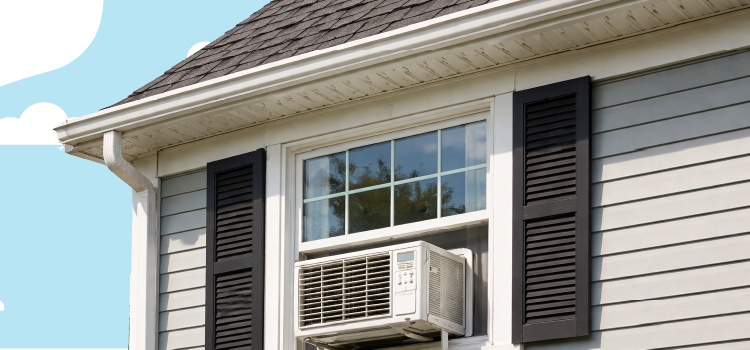
Summer hits, the heat kicks in, and suddenly your window air conditioner isn’t doing its job. Maybe it’s blowing warmer air than usual, making a sound you’ve never heard before, or running nonstop without cooling the room. That’s when the big question pops up: is it cheaper to repair or replace your window air conditioning unit?
It’s a common situation for many homeowners in the Midwest, and it can be confusing when you’re trying to balance comfort, cost, and energy use. Drawing from our years of experience serving Midwest communities and helping residents manage their energy supply, we understand the critical role your AC plays in your comfort and your budget
At Santanna Energy Services, we believe in empowering our customers with clear, reliable insights. That’s why, in this guide, we’ll share our expertise, and we’ll walk through the signs, costs, and key factors that can make your choice clearer. Let’s dive in.
Key Points of This Article:
- Window air conditioners typically last 8–10 years, and their age and efficiency play a major role in deciding whether to repair or replace them.
- Minor issues like dirty filters or clogged coils are inexpensive to fix, making repair the better short-term option for newer units.
- It is generally cheaper to repair a window air conditioner upfront, but replacing becomes more cost-effective when the unit is older, inefficient, or requires a major repair.
- New ENERGY STAR models offer better cooling and lower energy bills, which can save homeowners more money over time compared to maintaining an aging unit.
How Does a Window Air Conditioner Work?
Before we get into the nitty-gritty, let's break down how a window air conditioner works. Knowing how it works helps you spot if the issue is a simple fix (like a dirty filter) or a sign your whole unit is toast, saving you from wasting money on the wrong choice.
A window air conditioner works by pulling warm air from your room, cooling it down, and sending the heat outside. It repeats this cycle again and again to keep your home comfortable.
Inside the unit, a fan draws in warm air and pushes it over very cold metal coils. These coils absorb the heat from the air. The AC then blows the cooled air back into your room so your space gets cooler.
At the same time, another set of coils in the back of the unit releases the heat outdoors through the metal fins you see on the outside of the AC. This is how the unit moves heat out of your home.
Pretty straightforward, right? Now that we've got the basics down, let's chat about how long your window AC might last before it starts needing some serious attention.
How Long Do Window Air Conditioners Last?
Most window air conditioners last about 8 to 10 years, according to Consumer Reports. The exact lifespan of your specific unit depends on how often you use the unit, how hot and humid your summers are, and how well you clean and maintain it.
Units that run all day in the summer or sit in very humid areas may wear out faster, while ACs used only a few months a year can last longer.
As a window AC gets older, it often has to work harder to cool your home. That means it may blow weaker air, take longer to cool the room, use more electricity, and need more repairs.
Understanding the age of your window AC is key to making informed decisions. If it's nearing the end of its typical 8-10 year lifespan, replacing it can save money on energy bills and prevent future repairs. If it's still relatively new, a simple repair or cleaning might restore it to like-new performance.
Is It Cheaper to Repair or Replace a Window Air Conditioner Unit?
In most cases, it's cheaper to repair a window air conditioner unit upfront, but replacing becomes the more cost-effective option when the unit is older than 8–10 years, losing efficiency, or facing a major repair.
Small issues like dirty coils, clogged filters, or worn sensors are inexpensive to fix and can quickly restore performance.
But once a unit starts cycling more, using more electricity, or experiencing expensive failures like compressor or refrigerant problems, a replacement usually saves more over the long run.
So, Should You Repair or Replace Your Window Air Conditioner? Here’s How to Decide
In most cases, repairing a window air conditioner is cheaper upfront, but replacing becomes the more cost-effective option when the unit is older, inefficient, or needs a major repair.
Over time, the air conditioner naturally becomes less efficient over time, and older window AC can use significantly more electricity than new ENERGY STAR models. That means your decision affects more than just the upfront cost, but it also impacts your monthly energy bills, your comfort, and how hard your AC has to work during summer heat.
Let’s walk through the key signs that show whether you should repair or replace your window air conditioner, so you can choose the option that saves you money and keeps your home comfortable:
When to Repair Your Window Air Conditioner
Choose repair if your AC is still in good condition overall and the problem is minor or inexpensive to fix.
The unit is still new (under 5 years old)
Newer ACs typically have several efficient years left. A repair usually restores your unit to full performance at a lower cost than replacement.
The repair issue is minor
Cleaning dirty filters or coils, replacing a capacitor, resetting a thermostat sensor, or clearing fan dust can quickly fix cooling problems. If any of these issues happen to you, this isn’t a strong indicator that you’ll need to replace your unit.
The repair cost is low
If the repair is far below half the cost of a new unit, repairing gives you better short-term value. Shoot for a budget that’s less than $100. Anything more than that, consider having your unit looked at by an HVAC professional for a final verdict.
The unit remains energy efficient
If your AC cools well without raising your electric bill, maintaining it is often smarter than replacing it. Who doesn’t want a cheaper electricity bill?
You’ve kept up with maintenance
When the AC is regularly cleaned and cared for, most issues tend to be simple fixes, not major breakdowns. In this case, a minor repair will do your system some good.
The unit fits a unique window size or bracket setup
If replacing requires special parts or a custom fit, repairing is often more practical. This can save you time and prevent the hassle of tracking down a compatible model that fits your unique setup.
You only need it to last one more season
If you’re planning to move or upgrade your home soon, a repair helps you get through the season without buying a new unit. Just remember that if you’re selling your home, you’ll need to disclose the condition of your AC unit to potential buyers, even if it’s only a temporary fix.
The issue started suddenly
Sudden performance drops usually point to a small, fixable problem rather than long-term wear. These quick changes often mean something minor has shifted (like a loose wire, dirty sensor, or clogged filter) rather than a major system failure.
When to Replace Your Window Air Conditioner
Choosing when to replace your window air conditioner can either be obvious or not so. Here are a few signs you should replace your window air conditioner rather than replace it:
The unit is old (8–10 years or more)
Window ACs lose power and efficiency with age. If your unit is well over 10 years old, you should consider a replacement. New units cool faster and use much less energy, which can save you more in the long run than you would save with replacing parts.
The repair is major
Problems like compressor failure, refrigerant leaks, severe motor issues, or burnt wiring usually signal that the unit is nearing the end of its lifespan. For these major replacements, don’t attempt to do these yourself. Always consult a licensed HVAC technician to keep yourself safe and avoid additional damage to your home.
The repair cost is high
If the repair cost is close to or more than half the price of a new AC, replacement usually saves more long term. If the quote for your repair exceeds more than $250, we recommend going for the full replacement to save more in the long run.
The unit is no longer efficient
Older models can use significantly more electricity, often 20–40% more than newer models, according to ENERGY STAR (source), especially during hot, humid Midwest summers when ACs run longer.
The unit breaks down repeatedly
If you’ve had multiple repairs in a single season or the AC keeps losing cooling power, ongoing repairs may end up costing more than a new unit.
The AC makes loud or unusual noises
Grinding, rattling, or squealing often suggest failing internal components that aren’t worth repairing. These sounds typically point to worn bearings, loose internal parts, or motor damage, all issues that tend to get worse over time and can be more expensive to fix than replace.
The AC produces odors
Burning smells can indicate electrical failure, while musty smells may point to internal mold that can’t be fully cleaned. These are all problems you could probably solve with the help of a professional but, why waste the time and the money if a new unit can help you start from scratch?
Your energy bills have increased noticeably
If your electric bill keeps rising even when usage is normal, this could be a sign that your air conditioning may be losing efficiency. While this is not always the cause of a high electric bill, this certainly isn’t something to ignore if it persists.
Older window air conditioning units have to work harder and use a lot more electricity to do their job simply because of wear and tear on their parts. In doing so, this could lead to consistently high electricity bills if even if you’re steady with your usage.
Electrical or rust-related damage
Severe rust can weaken the AC structure and damage wiring, making replacement necessary for safety. Rust often develops when a unit sits in a humid window space for years, and once it spreads to internal components, it can compromise both performance and electrical reliability, leading to irreversible damage.
Issues that typically require replacement
Refrigerant leaks, compressor failure, major electrical damage, or corroded components are usually beyond cost-effective repair.
How Much Does It Cost to Fix a Window Air Conditioner?
Fixing a window air conditioner in usually costs between $100 and $300, depending on the problem. Simple issues like cleaning dirty coils or replacing a small part are often on the lower end of the range, while more complicated repairs can cost more.
Keep in mind that prices to fix your window air conditioning unit may also go up during hot and humid months, when HVAC technicians are busier, and demand is higher.
Cities like Columbus, Chicago, and Pittsburgh may have slightly higher repair rates because of higher labor costs.
For example, if a technician quotes $400 or more for a repair in the summer and you don’t think you’ll be comfortable without an air conditioning unit while it’s being repaired, it may be a sign that replacing the unit could be a smarter and more affordable long-term option.
What Factors Affect Air Conditioner Repair Costs?
Knowing what affects repair costs helps you understand whether you’re paying for a quick, easy fix or sinking money into a unit that’s nearing the end of its life. It also makes it easier to compare repair quotes, avoid unnecessary charges, and decide when replacing the AC will save you more money and energy in the long run.
Here are the key things that affect how much you’ll pay:
1. The type of problem
Some issues are simple, like cleaning coils or replacing a capacitor. These repairs are quick and usually inexpensive. But major issues (such as compressor failure or a refrigerant leak) require more time, tools, and expertise, which raises the cost. The more complicated the repair, the higher the price.
2. The age of the AC
Older window ACs often cost more to repair because parts wear out, become harder to find, or no longer match current standards. As units age, repairs may only provide a short-term fix, which can increase long-term costs.
This is why age is an important part of deciding whether repairing or replacing makes sense.
3. The cost of replacement parts
Capacitors, sensors, and filters are inexpensive. Compressors, motors, and control boards are not. If your repair involves a high-priced part or one that’s no longer made, the cost goes up quickly — and replacing the unit may be the better option.
4. Labor and service fees
Technicians charge for their time, and fees vary depending on your location and how difficult the repair is. Simple repairs can be done in minutes, but more complex issues require disassembly or testing, which increases the labor cost.
5. How accessible the unit is
If your window AC is easy to remove, open, and repair, the cost will be lower. But if the unit is installed tightly, positioned high on a wall, or in a hard-to-reach spot, repairs take longer and may cost more.
6. Whether the unit is properly maintained
Well-maintained ACs usually cost less to fix because problems are caught early. Units with clogged filters, rust, or heavy dust buildup can take longer to diagnose and clean, which raises the repair cost.
7. Your local climate
In hot, humid regions like the Midwest, ACs run longer and experience more wear. That can lead to more complicated repairs because the unit is working harder through the season. Technicians in high-demand areas may also charge more during peak summer months.
How Much Does It Cost to Replace a Window Air Conditioner?
Most well-known brands fall between $159 and $686 for a window air conditioner replacement, giving homeowners a wide range of options depending on their room size and budget.
Newer units also tend to be more energy efficient, which means lower monthly bills, a key reason many homeowners choose replacement over repairing an older, power-hungry unit.
To make the cost clearer, here are real examples from top brands and popular models:
Window AC Replacement Cost Comparison
| Brand & Model | Price | Wattage | Room Size (Sq. Ft.) | Product Description |
| Midea U-Shaped Window AC | $379.99 | 115 watts | Up to ~150 sq ft | Ultra-quiet and energy-saving design; very low wattage makes it cheaper to run. Best for small rooms. |
| Frigidaire 5,000 BTU Window AC | $159.00 | 450 watts | Up to ~150 sq ft | Affordable, reliable, and efficient for small bedrooms, nurseries, or offices. |
| GE Smart Window AC (10,000 BTU) | $465.00 | 900 watts | Up to ~350 sq ft | Good for medium-sized rooms; stronger cooling power with smart features and moderate energy use. |
| LG 23,500 BTU Dual Inverter Window AC | $686.30 | 2,290 watts | Up to ~1,450 sq ft | One of the largest window ACs on the market; powerful enough for big living rooms or open layouts. |
When deciding to repair or replace an air conditioner, it’s not just about the immediate cost, it’s also about how efficiently the unit will cool your home and how much electricity it will use each month.
Newer ENERGY STAR units, like the ones listed above, are designed to cool better while using less energy. Over time, this can save you more money than repairing an older model that may continue breaking down and using more power.
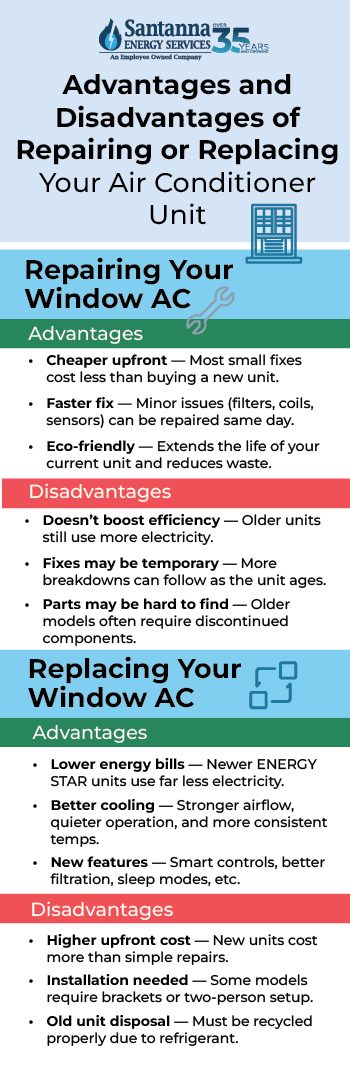
Advantages and Disadvantages of Repairing Your Air Conditioner Unit
Still deciding which path is right for you? Let us help!
Repairing your window air conditioner has its own benefits and trade-offs, especially when you look beyond the immediate issue. Here’s what homeowners can gain by choosing a repair:
Advantages of Repairing
Lower upfront cost
Repairs typically cost much less than purchasing a new unit, making it the more budget-friendly option in the short term. This makes repairs especially appealing for homeowners working within a tight budget or who just need a quick fix to stay comfortable.
Extends the life of your current unit
A small fix can add a few more years of usable life, letting you plan for a future upgrade on your own timeline. This can be especially helpful if you’re saving for a larger home project or planning a move.
Environmentally friendly
Repairing reduces waste and keeps appliances out of landfills, which is better for the environment. Extending your AC’s lifespan also delays the need for new materials and manufacturing, reducing your overall carbon footprint.
Faster return to comfort
Minor repairs can restore cooling within the same day, which is helpful during heatwaves. Quick fixes minimize downtime and get your home back to a comfortable temperature faster.
No need to reinstall or refit
Since the unit stays in place, you avoid the time and effort of shopping for a new AC that fits your window. This convenience is valuable for uniquely sized windows or older homes with unconventional setups.
Disadvantages of Repairing
Repairing may not improve your energy efficiency
Repairs usually don’t fully upgrade the unit’s efficiency, so older ACs may still use more electricity than modern models. This can lead to higher long-term energy costs even if the unit is functioning again.
Repairs can become frequent
As units age, one repair may be followed by another, leading to unpredictable costs. Frequent breakdowns can signal that the AC is nearing the end of its usable lifespan.
Old features remain outdated
Older ACs lack newer advancements like improved air filtration, quieter motors, or Wi-Fi control. This means your repaired unit may still fall short on comfort and convenience compared to newer models.
Parts may be difficult to find
Manufacturers often discontinue parts for older models, making repairs slower or more expensive. When parts become rare, repair timelines increase and costs may rise, making replacement more attractive.
Advantages and Disadvantages of Replacing Your Air Conditioner Unit
Now, let’s look at the full picture of replacement. Replacing your window AC is a bigger decision that affects your home’s comfort, energy use, and long-term expenses.
Here are some advantages and disadvantages of replacing your window air conditioning unit:
Advantages of Replacing
Lower long-term energy bills
Newer ENERGY STAR models use far less electricity, which helps reduce summer cooling costs. Over time, this added efficiency can noticeably lower your monthly energy bill, especially during peak summer usage.
Better overall performance
New ACs cool faster, maintain more stable temperatures, and operate more quietly. This means greater comfort throughout your home and fewer frustrations during heatwaves.
Access to modern features
Many units now offer smart controls, better filtration, energy-saving modes, and more precise thermostats. These upgraded features can make everyday cooling easier, more efficient, and more tailored to your needs.
More reliable during extreme heat
New units are less likely to fail during high-demand periods, giving you peace of mind in summer. This reliability reduces the risk of inconvenient breakdowns during the hottest days of the year.
Longer lifespan moving forward
A new AC typically lasts 8–10 years, giving you many seasons of dependable cooling. This long-term durability adds value and ensures you won’t need another replacement anytime soon.
Disadvantages of Replacing
Higher upfront cost
Buying a new window AC is more expensive than most repairs, which may stretch some budgets. This higher initial investment can be a hurdle even if long-term savings are expected.
Installation effort required
Larger units can be heavy or require a bracket, meaning you may need assistance. The installation process may also take more time if your window setup is unusual or requires added support.
Must properly dispose of the old unit
ACs contain refrigerants and components that require special recycling procedures. Proper disposal adds an extra step and sometimes an additional cost for homeowners.
Choosing a new model can take time
With many brands, BTU sizes, and efficiency levels, selecting the right unit can feel overwhelming. Researching options can be time-consuming, especially if you want to compare energy usage, features, and long-term savings.
How Many Watts Does a Window Air Conditioner Use?
A typical window air conditioner uses around 1,500 to 2,000 watts.
This is just an average, as window air conditioners use different amounts of electricity depending on their size, cooling power, and age.
Of course, smaller units for bedrooms use far less wattage, while larger units for living rooms or multi-room spaces use much more. Knowing the wattage of your window air conditioning unit helps you estimate how much it costs to run your AC and what size unit you need for your space.
Understanding how many watts your window AC uses is important because wattage directly affects both the cooling power of the unit and how much it costs to run.
The chart below breaks down common wattage levels so you can quickly match the right AC size to your room and avoid overspending on energy.
Common Window AC Wattage Levels and Recommended Room Sizes
| Wattage | Typical BTU Range | Best For (Room Size) | What This Means for You |
| 115 watts | ~1,000–2,000 BTU (rare, ultra-small models) | Under 100 sq ft (small office, tiny bedroom, enclosed porch) | Uses very little electricity but provides very light cooling; not suitable for most homes. |
| 450 watts | ~5,000 BTU | Up to 150 sq ft (small bedroom, nursery, dorm room) | Ideal for single small rooms; one of the most common and energy-efficient small AC sizes. |
| 900 watts | ~8,000–10,000 BTU | 250–400 sq ft (medium bedroom, small living room) | Good balance of cooling power and energy use for mid-sized spaces. |
| 2,300 watts | ~18,000–24,000 BTU | 700–1,400 sq ft (large living rooms, apartments, open layouts) | Powerful cooling; uses the most electricity but can cool large areas or multiple connected rooms. |
Disclaimer: These wattage ranges are based on common specifications from top window AC brands and models. Actual wattage may vary depending on the unit’s age, efficiency rating, and design.
How Much Electricity Does a Window Air Conditioner Use?
A window air conditioner that uses between 115 and 2,229 watts uses around 0.92 kWh and 18.32 kWh hours a day if you run your unit for eight hours.
It’s important to note that window air conditioners use different amounts of electricity depending on their size and wattage.
Smaller units can use very little power, while larger ones use much more to cool bigger spaces.
Here’s how much electricity you can expect to be used by your window air conditioner if you leave it on for eight hours a day:
Electricity Usage of Common Window Air Conditioners Based on an 8-Hour Daily Usage
| Wattage | Daily Use (8 hrs/day) | Weekly Use (7 days) | Monthly Use (30 days) | Summer Season Use (120 days) |
| 115 watts | 0.92 kWh | 6.44 kWh | 27.6 kWh | 110.4 kWh |
| 450 watts | 3.6 kWh | 25.2 kWh | 108 kWh | 432 kWh |
| 900 watts | 7.2 kWh | 50.4 kWh | 216 kWh | 864 kWh |
| 2,290 watts | 18.32 kWh | 128.24 kWh | 549.6 kWh | 2,198.4 kWh |
How Much Does a Window Air Conditioner Cost to Run?
A window air conditioner can cost anywhere from $0.16 to $3.23 to run a day, but the exact cost depends on the unit’s wattage, how many hours you use it, and your state’s electricity rate.
Looking for a more local estimate? We’ve calculated the typical running costs for four of the most common window air conditioner sizes, calculated using average electricity rates in Ohio, Pennsylvania, and Illinois.
This breakdown shows how much you can expect to spend if you run your AC for 8 hours a day during the summer, giving you a clearer picture of what different unit sizes actually cost to operate.
All electricity rates are based on the latest residential data from the U.S. Energy Information Administration (EIA) as of August 2025.
Cost to Run a Window Air Conditioner in Ohio at 17.61¢ per kWh
| Wattage | Energy Consumption | Daily | Weekly | Monthly (30d) | Summer (120d) |
| 115 watts | 0.92 kWh | $0.16 | $1.13 | $4.86 | $19.44 |
| 450 watts | 3.6 kWh | $0.63 | $4.44 | $19.02 | $76.08 |
| 900 watts | 7.2 kWh | $1.27 | $8.88 | $38.04 | $152.15 |
| 2,290 watts | 18.32 kWh | $3.23 | $22.58 | $96.78 | $387.14 |
Cost to Run a Window Air Conditioner in Pennsylvania at 19.94¢ per kWh
| Wattage | Energy Consumption | Daily | Weekly | Monthly (30d) | Summer (120d) |
| 115 watts | 0.92 kWh | $0.18 | $1.28 | $5.50 | $22.01 |
| 450 watts | 3.6 kWh | $0.72 | $5.02 | $21.53 | $86.14 |
| 900 watts | 7.2 kWh | $1.44 | $10.05 | $43.07 | $172.28 |
| 2,290 watts | 18.32 kWh | $3.65 | $25.57 | $109.59 | $438.36 |
Cost to Run a Window Air Conditioner in Illinois at 18.09¢ per kWh
| Wattage | Energy Consumption | Daily | Weekly | Monthly (30d) | Summer (120d) |
| 115 watts | 0.92 kWh | $0.17 | $1.16 | $4.99 | $19.97 |
| 450 watts | 3.6 kWh | $0.65 | $4.56 | $19.54 | $78.15 |
| 900 watts | 7.2 kWh | $1.30 | $9.12 | $39.07 | $156.30 |
| 2,290 watts | 18.32 kWh | $3.31 | $23.20 | $99.42 | $397.69 |
Will a New Window Air Conditioner Lower My Electric Bill?
A new window air conditioner can lower your electric bill if your current unit is older or working harder than it should.
For example, in a typical Ohio bedroom, an older 900-watt window AC running 8 hours a day would use about 7.2 kWh daily. At Ohio’s average rate of 17.61 cents per kWh, that costs around $1.27 per day. A newer ENERGY STAR model with the same cooling power might use only 450 watts, costing about $0.63 per day under the same rate. Over a 30-day month, that saves about $19, and over a 120-day Ohio summer, the savings add up to roughly $76.
These savings come from newer units cooling faster and using less energy, while older units lose efficiency and need more electricity to keep a room comfortable. So if your window AC in your Ohio home is 8–10 years old, loud, or running nonstop, upgrading to a newer model can noticeably lower your summer energy costs.
How to Install a Window Air Conditioner
Installing a window air conditioner is usually straightforward, but doing it properly is important for your safety, comfort, and energy bill. The U.S. Department of Energy (DOE) notes that a correctly installed unit cools better, wastes less electricity, and prevents warm outdoor air from leaking into your home. Here’s what you need to know:
Choose the right-sized unit for your room.
An AC that’s too small will run nonstop and use more electricity. One that’s too big won’t cool evenly.
Use a window near a wall outlet.
Extension cords and power strips can be unsafe for window ACs, so plug the unit directly into the wall.
Check that the AC fits your window and comes with the needed brackets.
Many units include support brackets or adjustable side panels that help secure it in place.
Carefully lift and position the AC into the window opening.
Keep the back of the unit tilted slightly downward (about half an inch) to allow water to drain outside.
Secure the unit using the provided screws.
This keeps the AC stable and prevents it from shifting when the window is closed.
Extend the accordion side panels to seal gaps.
Proper sealing keeps hot outdoor air out and helps your AC run more efficiently.
Check for leaks or gaps around the unit.
Adding weatherstripping can improve cooling and reduce energy waste.
Turn on the AC to test airflow and cooling.
Make sure the unit blows cool air steadily and that no warm air is leaking around the edges.
Get help if the AC is heavy.
For safety, call a professional installer—especially for heavy units, unusual window sizes, or older homes that need extra support.
How to Keep Your Window Air Conditioner Running Efficiently
Air conditioner repairs can add up quickly, especially during the hot summer months when your window AC is working its hardest. The good news is that many repair costs can be reduced, or even avoided, by taking care of your unit throughout the year.
The U.S. Department of Energy and ENERGY STAR both emphasize that simple, regular maintenance can prevent the most common AC problems and help your unit run more efficiently. This not only saves you money on repairs but also lowers your energy bill and extends the life of your AC.
Here’s what homeowners should know:
- Clean or replace the air filter regularly: A dirty filter makes the AC work harder, which can cause overheating, weak airflow, or frozen coils. Cleaning it every month in summer helps prevent many common repair issues.
- Keep the coils clean: When dirt builds up on the evaporator or condenser coils, the AC can’t release heat properly. This puts stress on the unit and can lead to costly repairs. Cleaning coils once or twice a year keeps your AC running smoothly.
- Make sure the AC is installed properly: A poorly installed unit can tilt the wrong way, leak water inside, or strain the motor. Ensuring the AC is stable and sealed correctly helps avoid mechanical problems.
- Check for air leaks around the unit: Gaps let hot outdoor air in, forcing your AC to run longer than necessary. Sealing leaks with weatherstripping reduces wear on the unit and lowers energy use.
- Avoid overworking the AC: Running your AC nonstop on very hot days can strain older units. Using blinds, fans, or closing unused rooms helps reduce the workload and prevents overheating.
- Schedule a tune-up before summer heat hits: A simple inspection—checking refrigerant levels, cleaning internal parts, tightening screws, and testing sensors—can prevent breakdowns during peak season.
- Fix small problems early: Strange noises, weak airflow, or warm air often mean something small needs attention. Addressing issues early prevents them from turning into a major repair.
- Make sure your home’s electrical outlet is in good condition: Loose or damaged outlets can cause the AC to short cycle or shut off, which may look like an AC problem but is actually an electrical one.
- Use a surge protector for storms: Power surges can damage your AC’s electrical components. Protecting the unit helps avoid expensive electrical repairs.
Understanding these simple steps helps you stay ahead of costly problems and keep your AC running efficiently throughout the summer. Small habits really do protect both your comfort and your wallet.
How Do I Dispose of an Old Window Air Conditioner Safely?
Disposing of a window air conditioner isn’t as simple as putting it out with regular trash. In many states—including Illinois, Ohio, and Pennsylvania—AC units are classified as appliances or “white goods,” which means they contain chemicals and components that must be removed safely before the unit can be thrown away or recycled.
According to the Illinois Environmental Protection Agency (Illinois EPA), appliances such as refrigerators, freezers, dehumidifiers, and air conditioners were banned from landfills in 1994 unless their hazardous components are removed first. These parts can include:
- CFC refrigerant gas (Freon)
- Mercury switches
- Polychlorinated biphenyls (PCBs)
- Oils and electrical components
Because of these materials, only landfills with a special Illinois EPA–approved operating plan may accept air conditioners—and only after the refrigerant and other hazardous parts have been safely removed by certified professionals.
Here’s what homeowners should do:
- Never place an air conditioner directly in the trash or on the curb: It is illegal in many states because of the refrigerants and chemicals inside the unit.
- Have the refrigerant removed by a certified technician: Only trained professionals (EPA Section 608 certified) are legally allowed to remove refrigerant like Freon.
- Use an appliance recycling or drop-off program: Many counties and cities have designated collection sites that accept window AC units once the refrigerant is removed.
- Call your local landfill or waste authority: Some landfills can accept ACs only if they follow EPA-approved white goods disposal rules.
- Take the unit to a scrap metal yard after components are removed:This is often the easiest option. Once the refrigerant and hazardous parts are safely taken out, the remaining metal can be recycled.
- Ask retailers if they offer haul-away service: Some stores will pick up and properly dispose of your old AC when you buy a new one.
By disposing of your window air conditioner properly, you’re protecting the environment from harmful chemicals, following state disposal laws, and ensuring valuable metals are recycled instead of being wasted. It’s an important final step whenever you replace an aging or broken AC unit.
FAQs
Are ENERGY STAR window air conditioners worth it?
Yes. According to ENERGY STAR, certified window air conditioners use 9% less energy than standard models. They cool more efficiently, reduce electricity bills, and often include better temperature sensors, quieter operation, and smart features. For most homeowners, especially in hot or humid regions, they are worth the investment.
Do window air conditioners use more energy during high humidity?
Yes. Window air conditioning units use more energy when humidity is high because they must remove both heat and moisture from the air. This makes the unit run longer and work harder, increasing energy use compared to drier days.
How often should you replace a window air conditioner?
Most window AC units last 8–10 years, according to Consumer Reports. Replace it sooner if it becomes noisy, struggles to cool, breaks down often, or your energy bills increase even when usage stays the same.
Why is my air conditioner running but not cooling?
Common reasons include a dirty filter, blocked coils, low refrigerant, frozen evaporator coils, or sensor and thermostat problems. Sometimes the unit is also too small for the room, causing it to run nonstop. Cleaning the filter or coils often helps, but refrigerant or mechanical issues usually require a technician.
Deciding whether to repair or replace your window air conditioner comes down to understanding your unit’s age, efficiency, repair history, and how much energy it uses during the summer months. A well-maintained AC can keep your home cool, but even small inefficiencies can lead to higher electricity use — especially during heatwaves when your system runs longer than usual. Knowing when it’s time to upgrade helps you stay comfortable while also protecting your budget.
And when it comes to managing your cooling costs, Santanna gives you an easy way to stay in control. With our Unlimited Energy plan, your supply charge stays the same every month, no matter how often your window AC runs.* That means no surprises during the hottest days of the year — just predictable costs and peace of mind.
If you want a simpler, more stable way to power your home through summer and beyond, explore Santanna’s Unlimited Energy plan and see how it fits your lifestyle.
* Restrictions apply. Enrollment based upon program eligibility. Customers using more than 125% of normal monthly usage as determined by Santanna may be required to switch plans.
Tyler is an experienced energy professional, having worked for Santanna Energy Services, for the past four years. He is passionate about renewable energy and believes that diversifying the energy grid is the key to a sustainable future. Tyler is dedicated to supplying consumers with the best possible energy solutions and works diligently to make sure that Santanna can deliver the highest quality service.