

The Pros and Cons of Long-Term Electricity Contracts

by Tyler Castle
22.8 min read

Choosing an electricity contract often feels like a small decision until you’re living with it month after month. Contract length plays a bigger role than many people realize, shaping how often you shop for rates, how predictable your bills feel, and how much flexibility you have when life changes.
If you’re new to energy and wondering whether locking in longer is a smart move or if shorter commitments give you the upper hand, you’re not alone. The differences aren’t always obvious at first glance, especially in deregulated energy markets.
Luckily, you’ve come to the right energy experts to help you explore this subject. As an energy supplier with over 35 years of experience crafting and offering energy contracts and plans that truly fit the needs of our customers.
Below, we’ll break down how contract length affects your electricity experience, what trade-offs come with each option, and why the “right” choice depends more on your lifestyle than the length itself.
Key Points of This Article:
- Contract length affects flexibility, budgeting, and rate stability.
- Short-term contracts (3–9 months) offer freedom but require frequent renewals and may face frequent price changes.
- Long-term contracts (12–36 months) provide stability but limit flexibility and may have termination fees if the contract is ended early.
- Choose based on how long you’ll stay in your home, your budget style, and comfort with price changes.
What Is a Short-Term Electricity Contract?
A short-term electricity contract is an agreement that usually lasts 3, 6, or 9 months, where you agree to keep the same plan and rate structure for a brief period of time.
These contracts give residents the flexibility to switch plans more often, which is why they’re commonly chosen by renters, frequent movers, or shoppers who like to track energy prices and switch when they see a better deal.
Short-term contracts are a reasonable choice for those who value flexibility or expect changes in their living situation.
However, shorter contract terms can expose plan holders more often to seasonal or market-driven rate changes, which is important to know before choosing a plan.
Knowing this helps you make smarter decisions about timing, budgeting, and how often your rate structure might change, especially in deregulated states where you can choose your electricity supplier.
Pros and Cons of Short-Term Electricity Contracts
Short-term energy contracts are popular among those who want more flexibility, but they aren’t the right fit for everyone.
Let’s walk you through the biggest advantages and drawbacks so you can see whether a short-term contract fits your lifestyle, your budget, and how you prefer to manage your energy plan.
The Pros of a Short-Term Contract
High flexibility
Short-term contracts give you the freedom to switch energy plans and/or suppliers more often, which is helpful if you like having options or want the ability to change plans as your needs change.
This flexibility also allows you to adapt to changes in the energy market quickly. With this, it gives you more opportunity to explore rates when rates drop and lock in a potentially lower rate for long-term cost savings.
It’s easy to take advantage of new rates
If you spot a better offer or promotion, a short-term contract lets you move to that plan sooner instead of waiting years for your current agreement to end. This can be especially useful in competitive markets where promotional rates change frequently.
Beneficial when market prices are dropping
When electricity prices are trending downward, short-term contracts allow you to switch into lower-cost plans more quickly as long as the timing lines up. This flexibility gives you more control over timing your renewals around favorable market conditions to capitalize on potential savings.
Safer for renters or people who might move
If you expect to move or you’re not sure how long you’ll stay in your home, a short-term agreement reduces the risk of paying early termination fees if you move out of your utility’s or supplier’s service area. It also makes it easier to align your contract length with your lease or relocation plans.
A great option for first-time energy shoppers
Shorter terms let you try a supplier without a long commitment, which is helpful if you’re new to energy shopping and want to test the experience before settling in. This can help you learn how billing works, learn about customer service, and test a variety of plan types without feeling locked in.
It’s helpful if your energy needs might change soon
If you’re expecting a lifestyle shift, like working from home, adding new appliances, or growing your household, a short-term plan lets you adjust to a new plan type sooner. That flexibility helps keep your energy agreement aligned with how your home actually uses electricity.
Short-term plans let you try a supplier without long-term pressure
Some suppliers only offer long commitments, but at Santanna, we understand that choosing your energy plan can feel like a big commitment. That’s why we offer a range of contract terms for both electricity and natural gas, so customers can experience the service, the rate structure, and the overall feel of a plan before committing long-term.
We give you room to test things out without the pressure of a long contract. See your options for long and short-term contracts now!
The Cons of a Short-Term Electricity Contract
Rates can sometimes be higher
Short-term contracts may cost more because suppliers take on more risk with shorter commitments, which can lead to slightly higher rates. Since suppliers can’t rely on a customer staying locked in for long, they may price plans higher to account for market volatility.
But keep in mind, this isn’t always the case with all short-term contracts you’ll find out there.
There’s more frequent renewals
Short-term agreements end quickly, with some ending just after three months. With a short-term electricity contract, you’ll need to shop for new plans more often, which could be a pain to remember and keep track of because, hey, life happens!
If you forget to renew, you may be moved to a month-to-month variable rate depending on the supplier. Variable electricity plans offer a significant risk of instability if you’re not on top of market shifts.
Even though suppliers are expected to notify you before your contract ends, renewal timelines can still catch people off guard, especially if you’re juggling other priorities.
If you’re a Santanna customer, the process of renewal is designed to feel more predictable. We send advance renewal notices and automatically renew customers on ‘like’ plans to help avoid unexpected changes, though it’s important to note that renewal policies can differ from one supplier to another.
There’s more exposure to seasonal price changes
Electricity rates shift all the time, and sometimes even on a daily basis. Because your contract ends more often, you may end up renewing during peak seasons like winter or summer when available rates might be higher due to increased demand.
It’s not ideal for homeowners who prefer long-term stability
If you want a “set it and forget it” experience, the constant renewals and decisions that come with short-term contracts may feel inconvenient. Depending on the plan type you choose, the constant renewal could make budgeting and your bills much less predictable, leading to unnecessary stress if you get caught renewing at a time of high rates.
It’s harder to keep a plan you love long-term
If you find a plan type that works really well for your home, a short-term contract means you may risk losing access to that same offer you had when prices or promotions change.
While you’ll most likely be able to renew your electricity contract on the same plan (probably as a longer contract length, though), you’ll definitely have to enroll at a different rate than you locked in before.
There’s more decision-making as prices and plans change
Even though the contract length doesn’t affect your rate, switching plans more often means you’ll need to choose a new plan type frequently, which adds more decisions to your year. That might be added stress you just don’t need.
What Is a Long-Term Electricity Contract?
A long-term electricity contract is an agreement that typically lasts 12, 24, or 36 months. The contract length simply tells you how long you agree to stay with your supplier.
It’s important to note that your contract length does not determine how much you’ll save on your energy bill over time; potential savings come from which plan type you choose.
Long-term contracts are popular in Midwest states in part because the region experiences strong seasonal swings in energy demand. Cold winters increase heating needs, while hot summers raise electricity use for cooling, which can contribute to periods of higher and more volatile market prices. For many homeowners, a long-term electricity contract feels appealing as a way to reduce exposure to those seasonal rate fluctuations and add predictability to their energy planning.
Pros and Cons of Long-Term Energy Contracts
Long-term energy contracts can be a good fit for homeowners who prefer staying with one supplier and one plan type for a while, but they’re not the right choice for everyone. Here’s a quick look at what long-term agreements are like, so you can decide whether a longer commitment matches your home, your habits, and how you prefer to manage your energy plan.
The Pros of a Long-Term Electricity Contract
There’s a more predictable rate structure
A long-term contract can make your monthly energy costs feel more consistent over time, which is helpful for homeowners who like knowing what to expect for an extended period.
Most long-term electricity contracts can be locked in at 12, 24, or even 36 months. So, a long-term commitment helps you know what to expect without having to constantly monitor your plan.
There are fewer renewals and less rate shopping
With longer terms, you won’t have to shop for rates, compare plans, or sign new contracts as often. This reduces the hassle of tracking renewal dates, reviewing new offers, and making repeated decisions, saving time and mental energy each year, especially for homeowners who prefer a more hands-off approach to managing their energy plan.
It’s easier for long-term budgeting
Knowing that your rate structure will stay the same for a longer period makes it easier to plan household budgets, especially if you’re managing multiple bills or major expenses.
You’ll have the ability to keep a good rate structure longer (if chosen at the right time)
If you select a rate structure when prices are generally lower, a long-term contract allows you to keep that structure for a year or longer, which can be financially beneficial over time.
You should note though, that electricity rates change all the time. So, while you’ll lock in a good rate now, chances are when you renew your contract again, you won’t get the same rate as before.
It helps avoid renewing during high-demand seasons
Because you renew less often, you’re less likely to be forced into choosing your next contract during peak seasons like extreme winter or summer, when many available market rates tend to be higher.
This is only true if you sign up for your contract initially during off-peak seasons like fall and spring. If you initially enrolled in summer when demand is high, depending on the length, your contract will likely end at the same time.
It creates continuity with your supplier
Long-term contracts allow you to build a steady relationship with your energy supplier. For many homeowners, trust and familiarity make the experience smoother and more comfortable over time.
A longer contract term also gives you time to build familiarity and confidence with your supplier.
By the time renewal comes around, some customers decide that staying with a supplier they trust is worth it, even if the new rate is slightly higher than switching, because the service, reliability, and overall experience matter more than starting over with an unfamiliar provider.
It supports long-term planning for your home
If you’re staying in the same home for several years, a long-term electricity contract keeps your energy agreement consistent and removes the stress of making frequent changes.
It sometimes comes with perks for committing longer
Some suppliers, like Santanna, offer bill credits or monthly rewards for longer-term agreements, which can add extra value beyond the rate alone.
These incentives are designed to reward customers for committing longer by helping offset costs, provide monthly perks, or add flexibility during higher-usage periods, making the overall contract feel more beneficial over time.
The Cons of a Long-Term Electricity Contract
There’s less flexibility if market rates drop
While market drops can happen, with a long-term contract, you can’t always switch right away if market prices fall. If a better offer comes along, you may have to wait until your contract ends or pay a fee to leave early, and you’ll likely miss out on the opportunity to capitalize.
Early termination fees (ETFs) may apply
Most suppliers charge a fee if you end your contract before it’s over. This can be inconvenient if your plans change unexpectedly, such as moving, downsizing, or adjusting your budget.
It’s not ideal if you expect to move soon
If you’re renting or might relocate within the next year to a new service area not covered by your supplier, a long-term contract may not be the best option.
Contracts usually can’t transfer if you move to a new utility area, which can lead to fees for having to cancel early.
The contract might outlast your energy needs
Life situations change. You might add new appliances, reduce usage, or have people move in or out of your home. A long-term contract can feel mismatched if your energy habits shift before the contract ends.
Less room to adjust if your financial situation changes
If your income or monthly budget changes, being tied to the same agreement for years can limit your ability to explore other plan types that might better fit your new financial needs.
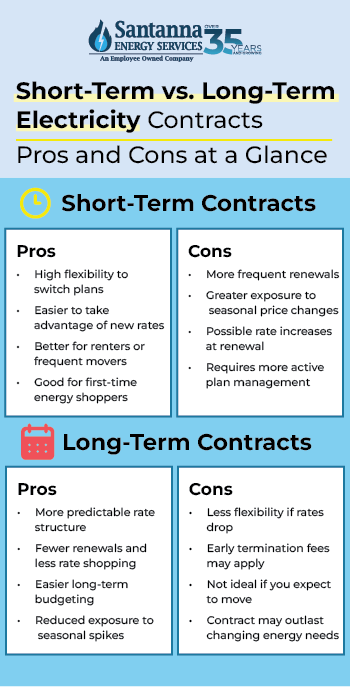
Short-Term vs. Long-Term Electricity Contracts: Key Differences
Before choosing a contract, it helps to see how short-term and long-term plans compare side by side.
While both options can work for different types of households, they offer very different experiences when it comes to flexibility, budgeting, and how often you need to shop for rates.
Below are the key areas where the two contract types differ and why they matter:
Flexibility
Short-term plans offer more freedom to switch suppliers or find new rates if need be. Depending on your plan type, long-term plans can lock in stability and make your costs more predictable but limit how often you can change your plan.
Rate Stability
Depending on which plan type you choose, long-term contracts let you keep the same rate structure for a longer period, so you revisit your choices less often. Short-term plans reset more often, which means you may be choosing a new rate more frequently.
Budget Predictability
A long-term contract does not guarantee predictable bills on its own, but it does let you keep the same rate structure for a longer period. This can make your energy costs feel more predictable over time, especially if you prefer fewer changes in how your bill is structured.
Short-term contracts, on the other hand, require more frequent renewals, which may lead to changes in your rate more often.
Renewal Frequency
Short-term plans renew more often, which means more shopping and decision-making. Long-term plans require fewer renewals, making them easier to manage.
Risk Tolerance
Short-term plans are better suited for residents comfortable with market swings. Long-term plans work for those who prefer protection from sudden price increases.
Seasonal Exposure
Short-term plans expose you to seasonal spikes more often since renewals can happen during peak summer or winter months. Long-term plans can protect you from these fluctuations.
Comparison Chart: Short-Term vs Long-Term Electricity Contracts
| Feature | Short-Term Contract | Long-Term Contract |
| Flexibility | High. You can switch often. | Low to medium. You are committed for longer. |
| Rate Stability | Low to medium. Can change more often, depending on the plan you choose at each renewal. | High. Keep the same rate structure longer, so you revisit your choice less often. |
| Budget Predictability | Low to medium. More frequent renewals can lead to more changes over time. | High. Easier to plan around the same setup for a longer period, as long as you choose a plan that fits your budget. |
| Renewal Frequency | High. Frequent renewals every 3–9 months. | Low. Fewer renewals every 1–3 years. |
| Risk Tolerance Needed | High. You will be making more frequent decisions in response to market offers. | Low. You are making one decision that carries through for a longer time. |
| Seasonal Exposure | High. Renewals may land during peak demand. | Low. Your rate is locked in through all seasons. |
How To Decide Between a Short-Term and Long-Term Electricity Contract
Choosing the right electricity contract is much easier when you focus on the few factors that matter most. Every home is different, so the best plan depends on how you live, how you use energy, and what you need for stability and budgeting.
Let’s walk you through the most important factors to consider before choosing a short-term or long-term electricity contract:
1. How Long You Plan to Stay in Your Home
If you expect to stay put for a couple of years, a long-term contract can give you stability in what your bill will look like month over month, especially if you don’t see any long-term changes in your energy use.
If you’re renting or might move soon, a short-term contract keeps things flexible and helps you avoid early termination fees. This is especially helpful if you’re looking to move out of your utility or supplier’s service area altogether.
2. Preference for Stability or Flexibility
If you like to plan ahead and prefer fewer changes to your energy agreement, long-term contracts can make things feel more predictable over time. Short-term plans can help you catch new offers more often, but they also mean you will be revisiting your contract more frequently.
When choosing your energy contract length and type, remember that a long-term Fixed-Rate plan is helpful if you want rate stability during changes in the energy market, and an Unlimited Energy plan offers predictability with no surprises or spikes in your supply charge no matter how much energy you use.*
Both options can help you make smarter decisions about budgeting, managing market risk, and planning ahead, especially when energy prices fluctuate throughout the year.
3. Your Comfort Level With Price Changes
Energy prices can rise during extreme weather or high-demand seasons if your contract renewal window falls during this time.
If that kind of timing concerns you, a longer contract can help by keeping your plan’s rate structure in place for a longer period. This reduces the chances of being forced to renew during a high-demand season, when rates are often higher, which is more likely to happen with shorter-term contracts that renew more frequently.
If you’re okay with some ups and downs, in the energy market and have a budget set aside for locking in a higher rate, a short-term plan may be fine.
4. Your Budgeting Style
Long-term contracts support steady, more predictable monthly bills, which is great for those who plan ahead. Short-term plans can help you catch lower rates, but they may also lead to occasional bill swings.
If you’re consistently monitoring the energy market and can plan for the right times to lock in a lower rate, a short-term plan may be right for you.
5. Your Home’s Energy Usage Patterns
If your home uses a lot of energy year-round (think a big household, remote work, heavy heating or cooling) longer-term stability can help. If your usage changes often or seasonally, a shorter term might give you more flexibility.
6. Your Region’s Seasonal Energy Demands
Midwest winters raise heating demand, and hot summers increase electricity use for cooling. Long-term plans can help protect you from these seasonal spikes.
Are Long-Term Energy Contracts Worth It?
Long-term energy contracts can make sense if you already like your plan type and benefits and want to avoid shopping around again for a while. In this case, a longer agreement can give you that continuity.
Whether a long-term contract is a good fit depends on a few things:
- how long you plan to stay in your home
- your budgeting style
- how much you value consistency
- additional benefits that come with the longer commitment
Short-Term vs. Long-Term Electricity Contract: Which Is Better?
There isn’t one contract that works best for everyone. The better choice depends on your home, your budget, and how much control or flexibility you want.
If you want flexibility, a short-term contract is usually the better fit.
If you want stability, a long-term contract is often the stronger choice.
Short-term contracts fit people who may move soon or like to shop for new rates more often. Long-term contracts support homeowners who want predictable rates, fewer renewals, and protection from sudden price spikes.
Think of it like this:
- Short-term = more freedom to switch
- Long-term = more peace of mind and stability
Once you understand these differences, it becomes easier to choose a plan that feels right for your lifestyle.
Which Contract Is Right for You?
Now that you know how these contracts differ, here’s a quick way to decide what matches your situation. These simple lists can help you choose based on your needs, habits, and comfort level:
Choose a Short-Term Electricity Contract if…
- You rent or think you might move soon
- You like switching plans frequently
- You track prices or enjoy shopping for deals
- You don’t mind seasonal bill changes
- You want the most flexibility with the least commitment
Choose a Long-Term Electricity Contract if…
- You like the idea of fewer changes to your energy agreement
- You expect to stay in your home for at least a year
- You do not follow energy market trends and prefer to decide once and keep it
- You prefer fewer renewals and less paperwork over time
- You tend to choose plans that focus on predictability and peace of mind
How To Choose the Right Electricity Contract
Choosing the right electricity contract is easier when you understand a few key things that directly affect your bill, your peace of mind, and your long-term comfort at home. Let’s break down the most important steps to help you choose smartly and avoid surprises:
1. Check your utility’s Price to Compare (PTC)
The PTC is the basic electricity rate your utility charges if you don’t choose a supplier. It helps you see if another plan is cheaper, more expensive, or simply more stable. Checking the PTC first makes sure you don’t pick a plan that costs more than it should.
2. Compare contract lengths
Shorter contracts (like 3 or 6 months) give you more freedom to switch. Longer contracts (like 12 to 36 months) keep your agreement in place for a longer time. Knowing the length helps you avoid choosing a contract that does not match your preferences.
3. Review early termination fees
Many energy plans charge a fee if you leave the contract early. They do this because life changes happen, like moving or changing homes. Knowing the fee up front helps you avoid surprise charges later.
4. Understand your plan options
Energy plans come in different styles, and knowing the difference helps you pick what fits your home best.
- Fixed-Rate Plan for stability
Your rate stays the same every month. This is great if you want a steady rate and don’t want to worry about market price changes.
- Unlimited Energy Plan for predictability
You pay the same supply amount every month no matter how much electricity you use.* This makes budgeting easier, especially during hot summers or cold winters.
- Earth-Friendly Plan for environmental support
A renewable energy plan supports clean energy. This is a good choice if you want to reduce your carbon footprint while still locking in a steady rate.
5. Make sure the supplier serves your utility area
Not all suppliers work with every utility. This is important because your plan must match the utility that delivers power to your home. Checking this first saves you from choosing a plan you can’t actually use.
6. Look at renewable or rewards-based options
Some plans give perks like bill credits, rewards, or other benefits. Added perks can help during times when rates may be higher. You may also be rewarded for choosing a longer-term plan.
7. Think about how long you’ll stay in your home
If you want fewer changes to your agreement and prefer not to think about it often, a long-term contract is often the stronger choice. Short-term contracts fit people who may move soon or like to shop for new rates more often.
8. Check the supplier’s reputation
Choose a supplier that is clear about their prices and terms. Good suppliers make things easy to understand and avoid hidden fees. This helps you feel confident and protected with your energy plan.
FAQs
What is the ideal contract length for electricity plans?
Many residents choose 12 months for balance and stability.
Can I switch plans before my contract ends?
Usually you can, but early termination fees may apply depending on the supplier.
How do electricity rates in the Midwest compare to the national average?
When averaging electricity rates from Ohio, Illinois, and Pennsylvania, the Midwest comes out to 19.04 cents per kWh as of September 2025, which is roughly 8% higher than the national average of 17.62 cents per kWh. This means many Midwest homeowners are paying more than the national average, making it even more important to choose the right electricity contract for stability and protection from future increases.
What happens when my energy contract expires?
Depending on your supplier, you may roll into a month-to-month plan unless you select a new contract. At Santanna, we provide plenty of notice on your renewal options and will roll you onto a ‘like’ contract to avoid major surprises.
Are long-term electricity contracts really cheaper?
Not always. Long-term electricity contracts are not guaranteed to be cheaper. Their main benefit is convenience and fewer contract changes, not automatic savings. Any potential savings depend on the rate you choose and how market prices move over time.
Choosing between a short-term and long-term electricity contract comes down to understanding how each option affects your budget, your comfort level, and your long-term plans. When you know how contract lengths work, what to look for before signing, and how different plans protect you from market changes, it becomes much easier to pick the option that truly fits your home.
Some homeowners prefer the freedom of short-term plans, while others appreciate choosing a setup they can keep in place for a longer time with a long-term contract. The key is choosing the combination of plan type and contract length that gives you the right balance of flexibility, predictability, and peace of mind.
If predictable monthly costs matter to you, there’s an option designed specifically for that. Santanna’s Unlimited Energy plan gives you the same supply charge every month, no matter how much electricity you use*, which can be especially helpful during high-usage seasons. You can explore this plan and see how it fits your home here.
* Restrictions apply. Enrollment based upon program eligibility. Customers using more than 125% of normal monthly usage as determined by Santanna may be required to switch plans.
Tyler is an experienced energy professional, having worked for Santanna Energy Services, for the past four years. He is passionate about renewable energy and believes that diversifying the energy grid is the key to a sustainable future. Tyler is dedicated to supplying consumers with the best possible energy solutions and works diligently to make sure that Santanna can deliver the highest quality service.