
Tornado Watch vs Tornado Warning: What’s the Difference?

by Jenna Mendez
27.3 min read
Severe storms are common across the Midwest, but tornado alerts can still cause uncertainty. When a tornado watch or tornado warning appears on your phone, you might not be sure how seriously to take it and what actions, if any, you should take right away.
This guide is written by a born-and-raised Midwesterner who has experienced tornado seasons firsthand and understands how confusing these alerts can feel in real life. Also, at Santanna Energy Services, we serve thousands of homeowners across the Midwest, which means we’re familiar with how severe weather can impact homes and daily life throughout the region.
Below, we’ll explain the difference between a tornado watch and a tornado warning in simple terms, and we’ll walk you through what to do before, during, and after severe weather, with a focus on keeping your home and family safe. If you’ve ever wondered how seriously to take an alert, keep reading.
Key Points of This Article:
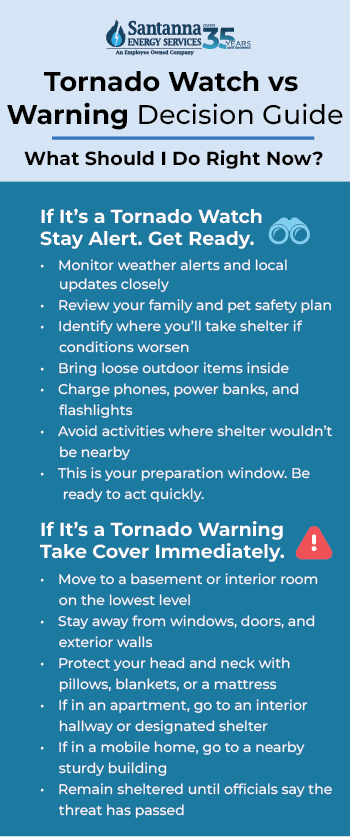
- A tornado watch means conditions are favorable for tornadoes to form, giving you time to prepare, stay alert, and monitor weather updates.
- A tornado warning means a tornado has been detected or is imminent, and you must take shelter immediately in a basement or interior room away from windows.
- Tornadoes can develop quickly, especially at night or during heavy rain. So, relying on official alerts, multiple weather sources, and prepared safety plans is essential.
What is the Difference Between Tornado Watch vs Tornado Warning?
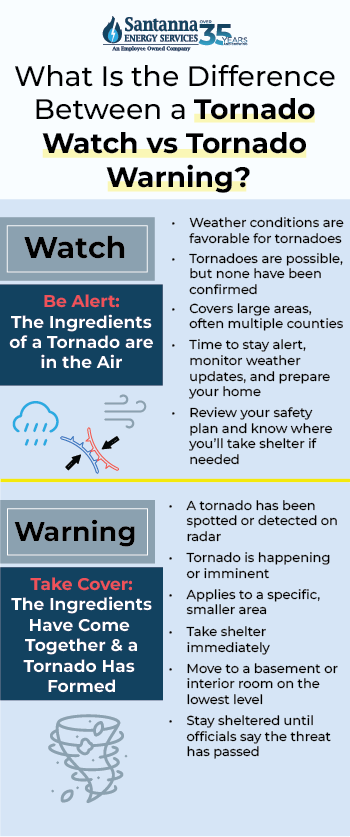
The National Weather Service defines a tornado watch as “a period when weather conditions are favorable for tornadoes to form.” This means tornadoes are possible, but none have been confirmed yet.
During a watch, you may notice storms developing, increasing winds, heavy rain, or a darkening sky. In some cases, tornado sirens may go off, but that doesn’t mean there’s a threat; it’s just a warning.
This is the time to stay alert and prepare. Be sure to monitor weather updates closely, make sure phones are charged, review where you would take shelter, and secure outdoor items just in case the warning turns into a watch.
On the flip side, a tornado warning is much more serious. It means a tornado has been spotted by trained observers or detected on radar.
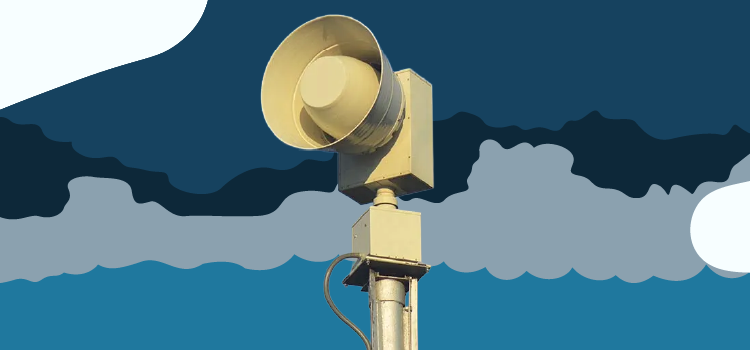
During a tornado warning, the sky may look very dark or greenish, rain may be heavy, and winds can increase rapidly. During a tornado warning, the sirens around your area will most definitely sound off to alert people outdoors, and you should not wait for a siren to take action and get to safety.
Plan to take cover immediately in a basement or interior room on the lowest level of a sturdy building. Don’t wait it out or stand on your porch and wait for the tornado to roll in (I know, this is a very Midwestern thing to do, but try to resist the urge!) because you never truly know how fast a tornado is traveling until it’s too late. It’s important to stay sheltered until officials confirm the warning has ended, even if conditions outside seem to improve.
In simple terms, a tornado watch tells you to be ready and prepared, while a tornado warning tells you to act right away.
What Is a Tornado Watch?
A tornado watch means weather conditions are favorable for tornadoes to develop. During a tornado watch, this means tornadoes are possible, but none have been confirmed yet. This is your signal to stay alert and prepare your home.
While a watch doesn’t immediately mean take cover, during this time, it’s important to at least have a game plan in case the situation worsens.
Tornado watches aren’t rare. Our internal survey revealed that 78% of employee-owners at Santanna Energy Services have been in an area under a tornado watch, which shows how important it is to know what this alert means.
In my experience with tornado watches, if you’re outside or in a car, it’s best to start thinking about where you could safely go if a warning is issued. Avoid putting yourself in situations where shelter isn’t nearby.
A tornado watch usually covers a large area, such as multiple counties or an entire region, and is often issued hours before severe weather moves through.
An easy way to remember it is this: watch means be ready.
How Long is a Tornado Watch Supposed to Last?
Tornado watches are usually issued for about 4 to 8 hours according to the National Weather Service. These may be canceled early if conditions improve or extended if severe weather continues. It’s best to stay alert until the weather clears completely.
Tornado watches can turn into warnings with little notice, so this period is your best opportunity to stay informed and ready to act.
What Should You Do During a Tornado Watch
Now, let’s get into the most important step if you should encounter a tornado watch: what to do and how to protect yourself. During a tornado watch, your focus should be on preparation.
Here’s what I found the most helpful when a tornado watch was in effect:
Monitor weather alerts and local updates so you are ready to act quickly if a warning is issued.
It doesn’t matter if you’re streaming your favorite show and you just have to see how it ends. Pause whatever you’re doing and turn on the weather channel or pull up the app immediately.
You don’t want to be surprised by any changes in the weather and not have time to take cover because you procrastinated.
Review your family and pet safety plan and make sure everyone knows where to go if conditions worsen.
I have pets, and even during a tornado watch, I prepare them by keeping leashes and collars easily accessible or already on them when storms approach. This makes it much easier to move quickly to safety instead of scrambling during a warning.I also keep blankets and pillows ready in the basement in case my family needs to shelter there for an extended period. In addition to keeping everyone more comfortable, these items can help protect against debris or falling objects if a tornado watch turns into a warning.Finally, I bring any important or sentimental items into the basement so they’re close by. Having essentials and valuables within reach provides peace of mind during an already stressful situation.
Bring loose outdoor items inside to prevent them from becoming dangerous debris.
If you have time, I always like to bring in lawn chairs or at least tie down loose items. According to the National Weather Service, even F1 tornadoes can have wind speeds of up to 112 miles per hour, which means even the most non-threatening items like a pool float or a lounge chair cover can be deadly.
Charge phones, power banks, and flashlights in case the storm leads to a power outage.
As soon as I hear there’s a tornado watch issued, I immediately put my phone on the charger. You never know how quickly your situation can change and your power can go out.In fact, 80% of power outages that occurred from 2000 to 2023 were weather-related. A tornado watch is a great time to charge your phone before winds pick up and potentially knock out your power.
Check that everyone in your household can receive emergency alerts, including children and older family members.
Make sure alerts are enabled on all phones and devices, and that volume settings are loud enough to wake someone if a warning is issued overnight. Nighttime tornadoes occur, too!
For children or older adults who may not use smartphones, it’s important to have a backup plan, such as a weather radio, smart speaker alerts, or another household member responsible for notifying them immediately.
What Is a Tornado Warning?
A tornado warning signals immediate danger and tells you a tornado has touched down or is moments away from doing so. You need to take cover immediately.
Tornado warnings are issued by the National Weather Service when a tornado is confirmed by radar or reported by trained spotters. Unlike a watch, a warning applies to a smaller, specific area where the storm is actively occurring or about to occur.
An easy way to remember it is this: a warning means take cover now. A tornado might be heading your way.
How Long is a Tornado Warning Supposed to Last?
According to the National Weather Service, tornado warnings are usually issued for a duration of about 30 minutes.
This shorter time frame reflects the immediate danger of an active or developing tornado. In my experience, tornado warnings can be issued for longer depending on how fast the storm is moving.
Some warnings may last only a few minutes, while others can be extended or reissued if the storm remains dangerous or changes direction.
The most important rule is to stay sheltered until officials confirm the warning has ended, even if the storm seems to quiet down outside.
What to Do Immediately During a Tornado Warning
It’s important that you don’t take a tornado warning lightly. This means go time. Here are some of the most important ways you can stay safe during a tornado warning:
Take shelter in a basement or interior room on the lowest level of your home.
The lower you are into the ground, the less likely you’ll be swept away by a tornado or hit by debris. I always keep a corner of my basement ready for tornado warnings. It’s an empty space with nothing that can fall on me and away from windows, so if the windows shatter, the glass won’t cut me.If you don’t have a basement, consider taking shelter in a hallway bathroom with no windows and holding onto the toilet if the tornado is going right over your house.
Stay away from windows, doors, and exterior walls.
In more than 100 miles per hour wind, glass can shatter super easily. You might be tempted to sit by a window during a tornado warning to see what’s going on outside, but don’t. In the same way, doors can slam and even come off the hinges and make for pretty nasty injuries if you’re too close.
Protect your head and neck with pillows, blankets, or a mattress.
These items add an extra layer of protection against flying debris or falling objects, which are among the most common causes of injury during a tornado.Even during the off-season, it’s a good idea to store some blankets and pillows in your tornado shelter to use later, so you’re not left unprepared.
If you live in a mobile home, go to a nearby sturdy building or designated shelter.
Mobile homes are especially vulnerable to high winds and flying debris, even during weaker tornadoes, so having a pre-identified shelter location can significantly reduce your risk of injury.
Remain in shelter until officials say the threat has passed.
Never judge the absence of sound or the way the sky looks as a signal that the threat is over.
Tornadoes can be deceptive. There are moments during a tornado when winds briefly die down or you’re in the eye of the storm. According to Action 5 News, this calm does not mean the danger is over.
Tornadoes can quickly regain strength, change direction, or be followed by additional rotating storms, which is why it’s critical to stay sheltered until authorities confirm the warning has officially ended.
Tornado Watch vs Tornado Warning: Key Differences at a Glance
| Feature | Tornado Watch | Tornado Warning |
| Meaning | Conditions are favorable for tornadoes | A tornado has been spotted or detected |
| Urgency | Prepare and stay alert | Take cover immediately |
| Area covered | Large areas, often multiple counties | Smaller, specific locations |
| Timeframe | Hours | Minutes |
| Home response | Prepare your home and monitor updates | Shelter right away in a safe location |
Is a Tornado Watch or Warning Worse?
A tornado warning is worse than a tornado watch because it means a tornado is happening or about to happen in your area; it’s not just possible.
A tornado watch signals potential danger. Weather conditions are favorable, but there is still time to prepare, stay informed, and make sure your home and family are ready. Life can usually continue as normal during a watch, as long as you stay alert.
A tornado warning signals immediate danger. A tornado has been spotted or detected on radar, and action is required right away. This is not the time to wait, double-check forecasts, or step outside to look. You should already be moving to your safe place.
The key difference comes down to timing and urgency. A watch gives you a preparation window. A warning means that the window or caution has closed, and sheltering should already be happening.
How To Know If a Tornado is Coming
Tornadoes can develop quickly, which is why knowing the warning signs and where to get reliable information matters. Here are the signals to know if a tornado is coming:
- Pay attention to official weather alerts first. If you’ve heard or feel like a tornado is around the corner, stop what you’re doing and pull up the weather channel. Tornado watches and warnings that are issued by the National Weather Service or your local news are the most reliable way to know when conditions are developing or when immediate danger is present.
- Use multiple alert sources. Emergency phone alerts, weather apps, local news, and weather radios help ensure you receive warnings even if one system fails.It’s always a good idea to enable notifications on these apps to ensure you’re getting the information you need as immediately as possible.A tip I find helpful is to enable location services on your phone too. This ensures that these apps can pick up your precise location to ensure you’re getting the most accurate reports in your area. Having your location on your phone enabled also helps family, friends and police locate you if a tornado hits and you’re stranded or in danger.
- Watch for changes in the sky. Dark or greenish clouds, large hail, frequent lightning, or fast-moving storm clouds can all signal that a storm is becoming more severe and may produce a tornado. These visual cues often appear as thunderstorms intensify, but they should be treated as warning signs to stay alert, not confirmation that a tornado has formed.
- Notice sudden weather shifts. A quick calm after strong wind or rain can sometimes happen just before a tornado develops or as a storm reorganizes. This sudden change can be misleading, so it’s important not to assume the storm has passed just because conditions briefly improve.
- Listen for unusual sounds. Loud, continuous roaring, whistling, or intense wind noise may indicate rotating winds or a tornado nearby. These sounds can sometimes be heard even when visibility is poor, especially during heavy rain or at night.
- Do not rely on visual signs alone. Tornadoes can form rapidly, after dark, or behind heavy rain where they are difficult or impossible to see. Because of this, visual confirmation should never replace official weather alerts or warnings.
Act on alerts immediately. If a tornado warning is issued, take cover right away rather than waiting for confirmation.
What Does a Tornado Sound Like?
Many people describe the sound of a tornado as a loud, continuous roar. It is often compared to a freight train, a rushing waterfall, or strong wind tearing through trees and buildings.
If you hear the sound of a freight train and see that the tornado isn’t moving in one direction or another but is getting bigger, it’s coming right at you, and it’s time to take cover immediately.
The sound can grow louder very quickly as a tornado moves closer. In some cases, you may hear debris hitting your home, rattling windows, or intense wind pressure before you ever see anything outside.
Not all tornadoes are loud or easy to hear, especially at night or during heavy rain. Because of this, sound should never be your main warning sign. Always rely on official alerts and take cover immediately if a tornado warning is issued.
What Tornado Sirens Mean (And What They Don’t)
Tornado sirens are designed to warn people outdoors of immediate danger. When you hear a tornado siren, it means you should seek shelter right away, not step outside to see what’s happening.
It’s also important to understand what sirens do not mean. In my experience, a siren does not confirm that a tornado is directly over your home. It signals that a dangerous situation exists in the area and that you should take protective action immediately.
You should know that relying on sirens alone can be risky. If you’re indoors, asleep, wearing headphones, or living farther from a siren location, you may never hear it.
This is why having weather alerts on your phone, weather radios, and access to local news are considered much more reliable ways to receive tornado warnings.
More on Tornado Sirens Around the Midwest
In many communities, including the part of Illinois I live in, tornado sirens are tested regularly, often on a set schedule such as the first Tuesday of the month around 10 A.M. These tests are routine and 99% of the time, do not indicate an active storm.
In parts of Ohio, tornado sirens go off much more often; usually every Tuesday at noon.
The safest approach is to treat sirens as a warning and to keep your eyes and ears open and be on the lookout for shifts in the weather. Always rely on official weather alerts for accurate, timely information, and take cover immediately when a tornado warning is issued.
What To Do During a Tornado in an Apartment
Apartments can present different challenges during severe weather, especially when you don’t have access to a basement. But don’t worry, I have tips for this, too. Knowing where to go and what to avoid can help reduce risk when a tornado warning is issued. Here’s what to do:
- Move to an interior hallway, bathroom, or designated shelter area on the lowest level of the building. These areas are typically more structurally protected and place more walls between you and flying debris, which is one of the biggest dangers during a tornado.
- Choose locations without windows whenever possible. Windows can shatter under extreme wind pressure or from debris, increasing the risk of serious injury.
- Stay away from exterior walls, glass doors, and balconies. These parts of a building are more exposed to wind and debris and are more likely to sustain damage during a tornado.
- Avoid elevators and use stairs only if you need to move to a safer area. Elevators can stop working during power outages or mechanical failures, while stairs provide a safer and more reliable way to reach lower, interior shelter areas.
- Protect your head and neck with your arms, a pillow, or a bag if available. Head and neck injuries are common during tornadoes, and even basic padding can help shield you from falling debris.
- Remain in your shelter area until officials confirm the tornado threat has passed. Conditions can change quickly, and leaving shelter too early can put you at risk from lingering winds, debris, or additional storms.
Why Tornadoes Are Harder to Detect at Night and During Heavy Rain
Yes, tornadoes can happen at night if the conditions are right. Tornadoes are often harder to detect at night and during heavy rain because they are not always visible, even when they are nearby.
Some tornadoes are rain-wrapped, meaning they are surrounded by heavy rain and clouds that hide them from view.
Tornadoes that happen after dark are especially dangerous. Darkness makes it harder to see changes in the storm, and many people may be asleep when warnings are issued. This can reduce reaction time and increase risk.
Because of these conditions, deciding based on what you can see outside is not always reliable. Many tornadoes form quickly and may not look dramatic from the ground, especially during heavy rain.
This is why official weather alerts matter more than visual confirmation, and if you hear tornado sirens going off at night, don’t assume it’s testing. For your own safety, be proactive and take cover. Tornado warnings are issued based on radar data and reports from trained spotters, not just what people can see.
The safest approach is to trust alerts and take shelter immediately when a warning is issued, even if the storm outside does not appear severe.
How Do I Know If My Home is in the Tornado Warning Zone?
The fastest way to know if your home is in a tornado warning zone is through official alerts. Emergency phone alerts, weather apps, local news, and weather radios will specify if your location is affected.
Tornado warnings are location-specific. They often apply to a particular part of a county or city, not the entire region. Alerts may include street names, landmarks, or a highlighted area on a map to show where the danger is.
If you receive a tornado warning alert, assume it applies to you unless you are clearly told otherwise. It’s safer to take cover immediately rather than wait to confirm your exact location during an active storm.
What States Are in Tornado Alley?
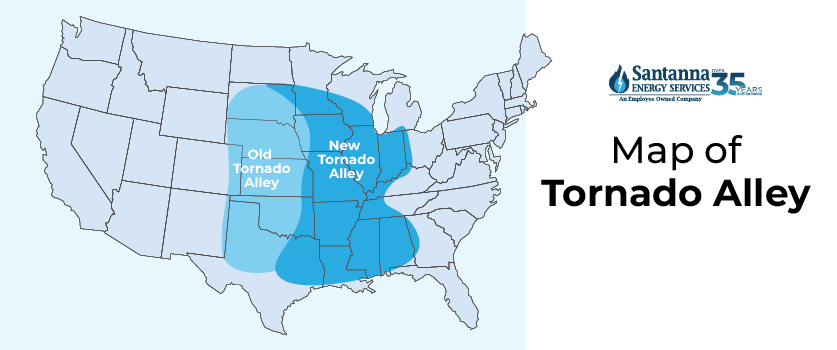
Tornado Alley refers to parts of the United States where tornadoes are more common, especially during spring and early summer. According to National Geographic, Tornado Alley stretches across much of the Great Plains and into parts of the Midwest.
States most often associated with Tornado Alley include Texas, Oklahoma, Kansas, and Nebraska. Tornado activity is also common in parts of Colorado, New Mexico, Missouri, Iowa, and nearby states that experience similar weather patterns.
In recent years, tornadoes have also been recorded more frequently outside the traditional Tornado Alley region, including parts of the Midwest and Southeast. This means tornado risk is not limited to one specific area.
Even if your state is not listed above, it’s still important to stay alert and pay attention to weather alerts. Tornadoes can occur in many parts of the country, and being informed is one of the best ways to stay safe.
What Months Are Tornadoes Most Likely to Occur in the Midwest?
In the Midwest, tornadoes are most likely to occur between April and July. During these months, changing weather patterns create the right conditions for strong thunderstorms that can produce tornadoes.
However, tornadoes are not limited to these months. The Weather Channel states that a tornado can happen at any time of year, including during fall and winter storms, especially when strong cold fronts move through an area. These off-season tornadoes can be just as dangerous because they are often unexpected.
Even though spring and early summer are the most active months, tornadoes can occur at other times of the year. Staying aware of weather alerts helps you respond quickly when conditions change.
Common Tornado Myths That Can Put You at Risk
Misinformation during severe weather can lead to dangerous decisions. It’s important to know the right information about tornadoes because it could cost you everything.
These are the most common tornado myths I’ve heard that can put homeowners and families at greater risk:
- “Opening windows reduces pressure.”
This is false. Opening windows does not protect your home and wastes valuable time. Strong winds and flying debris are the real dangers during a tornado, not pressure changes.
- “Highways and overpasses are safe places to shelter.”
This is false. Overpasses can act like wind tunnels, increasing wind speed and debris risk. The National Weather Service advises against sheltering under bridges.
- “Tornadoes only happen in Tornado Alley.”
This is false. While some regions see more tornadoes, they can occur in many parts of the country, including areas outside traditional Tornado Alley.
- “If it gets quiet, it’s safe.”
This is false. A sudden calm can sometimes happen just before or during a tornado. Quiet conditions do not mean the danger has passed.
- “I’ll have time to see the tornado before it gets close.”
This is false. Tornadoes can form quickly and may be hidden by rain or darkness, leaving little time to react.
Understanding what is not true can be just as important as knowing what to do. Relying on official alerts and taking shelter quickly helps reduce risk.
Why Tornado Risk Matters in the Midwest
Tornado risk in the Midwest is tied to how weather systems move through the region. Warm, moist air often meets cooler air masses, creating conditions that can fuel strong thunderstorms.
Spring storm systems in particular can develop quickly and cover wide areas, sometimes producing tornadoes with little warning. While the Midwest does not experience tornadoes as frequently as some Central Plains states, areas like Ohio, Illinois, Indiana, and Pennsylvania still see significant tornado activity each year.
This means severe weather awareness is important even outside well-known tornado regions. Staying informed and understanding alerts helps you respond faster when storms develop.
Energy Safety Tips During a Tornado
Severe storms can disrupt electricity and gas service without warning. And we wouldn’t be a helpful energy supplier or supporting the protection of our communities if we didn’t share our best energy safety tips when a tornado hits.
These tips focus on reducing safety risks, protecting your home’s energy systems, and helping you avoid common hazards during active tornado conditions. Here’s what you can do to ensure your safety:
- Unplug sensitive electronics if time allows. Power surges caused by lightning or sudden outages can damage TVs, computers, routers, and smart home devices. Unplugging them ahead of time can help prevent costly repairs.
- Avoid using electrical appliances during active storms. Flickering power or sudden surges increase the risk of shock or appliance damage.
- Keep flashlights and battery-powered lights nearby. Avoid using candles, which increase fire risk if winds or damage are present.
- Never use generators indoors or near windows. Generators must always be used outdoors, away from doors, windows, and vents, to prevent carbon monoxide poisoning.
- Do not use grills or gas stoves for indoor heating. These can release dangerous fumes and create fire hazards during outages.
- Know how to safely shut off gas if instructed by authorities. If there is structural damage or a suspected gas leak, turning off the gas supply can reduce fire risk. Only do this if emergency officials recommend it.
- Avoid touching downed power lines or damaged electrical equipment. Always assume downed lines are live and extremely dangerous.
- Limit opening the refrigerator and freezer during outages. Keeping doors closed helps food stay cold longer if power is lost.
- Wait to plug appliances back in after power is restored. Gradually reconnect devices to avoid overloads or surge damage when electricity returns.
- Have backup charging options ready. Power banks or car chargers can help keep phones powered for alerts and emergency communication.
How Can I Prepare My Home for a Tornado?
Preparing your home before severe weather hits can make a big difference when a tornado watch or warning is issued. The goal is to reduce last-minute stress and help your household respond quickly.
- Keep emergency supplies ready. Have a basic kit with flashlights, batteries, bottled water, snacks, a first-aid kit, and any essential medications stored in an easy-to-reach place.
- Identify safe shelter areas in advance. Know which room in your home is safest and make sure everyone in the household knows where to go without hesitation.
- Secure outdoor items. Bring in or tie down patio furniture, trash bins, and tools so they do not become dangerous debris during high winds.
- Have backup power and charging options. Power banks, battery-powered lights, and car chargers can help you stay connected during outages.
- Understand your energy setup. Know the difference between your utility company and your energy supplier so you know who to contact if power goes out.
- Plan for food and refrigeration. Keep your freezer full when possible and have a plan to limit food loss if electricity is interrupted.
- Review your insurance coverage. Make sure your homeowners’ insurance is up to date and understand what is covered before storm season begins.
Taking these steps ahead of time helps reduce stress, protect your home, and keep your family safer when severe weather threatens.
What You Should Do After a Tornado
Once the tornado has passed, focus on safety first. Conditions can still be dangerous even after the storm ends.
- Check for injuries first. Make sure everyone in your household is safe and provide first aid if needed before inspecting property damage.
- Watch for structural damage. Be cautious around damaged roofs, walls, or ceilings that could collapse.
- Stay away from downed power lines and flooded areas. Always assume power lines are live and avoid standing water, which may be electrically charged.
- Report power outages to your utility company. Utilities handle repairs and restoration. Avoid attempting electrical fixes yourself.
- Use generators safely and outdoors only. Never run generators inside your home, in your garage, or near windows or doors.
- Reconnect appliances gradually once power returns. This helps prevent overloads or damage from sudden surges.
- Check food safety if power was out for several hours. When in doubt, throw it out to avoid foodborne illness.
Taking these steps helps protect your household and reduces the risk of injury or additional damage after severe weather.
Does Homeowners’ Insurance Cover Tornado Damage?
Most standard homeowners’ insurance policies include coverage for tornado-related damage. This usually includes damage from strong winds and fallen trees or debris that hit the structure.
However, there are important limits to understand. Flood damage is typically not covered by homeowners’ insurance. If a tornado causes heavy rain that leads to flooding inside your home, that damage would usually require a separate flood insurance policy. This distinction often surprises homeowners, especially after severe storms.
Coverage can also vary depending on your policy and provider. Some policies may have specific deductibles for wind or storm-related damage, while others may place limits on certain types of repairs or personal property claims.
If your home is damaged by a tornado, it’s important to document everything as soon as it’s safe to do so. Take photos or videos of visible damage and contact your insurance provider to understand the next steps. Reviewing your policy ahead of storm season can also help you know what to expect and avoid confusion during an already stressful time.
FAQs
How often do tornado watches turn into warnings?
Not all tornado watches turn into warnings. According to the National Weather Service, a tornado watch just means conditions are favorable. Many watches expire without a tornado forming, but warnings are issued when a tornado is actually detected or reported.
Can I drive during a tornado watch or warning?
During a tornado watch, driving is generally safe, but you should stay alert and be ready to change plans if conditions worsen.
During a tornado warning, driving is dangerous and strongly discouraged because tornadoes can change direction quickly and visibility may be poor. If you are already driving and cannot reach a sturdy building, leave your vehicle and move to a low-lying area like a ditch, covering your head with your hands. Never shelter under a bridge or overpass.
Is it safe to stay at home during a tornado warning?
Yes, if you shelter correctly and do not live in a mobile home. The safest place is a basement or an interior room on the lowest level of your home, away from windows. Avoid exterior walls, doors, and garages.
How do I know if it’s safe to go outside after a tornado?
Only go outside after official sources confirm the warning has ended. Even then, watch for hazards like downed power lines, damaged structures, broken glass, and gas leaks. If you smell gas or see electrical damage, stay clear and contact authorities.
Where is the safest place to go during a tornado warning?
The safest place is a basement or an interior room on the lowest level of a sturdy building, away from windows. Bathrooms, closets, and interior hallways often provide better protection. Mobile homes are not safe, so residents should go to a nearby sturdy shelter if possible.
Understanding the difference between a tornado watch and a tornado warning helps you act with confidence when severe weather hits. A watch gives you time to prepare, while a warning means it’s time to take cover immediately. Knowing what each alert means and how to respond can make a stressful situation feel more manageable.
If you’re looking for ways to feel more prepared at home, having a predictable supply charge can help during high-demand storm seasons. Explore our Unlimited Energy Plan and see if it’s a good fit for your household.
Jenna Mendez is a Midwest native with lifelong roots in Illinois and time spent in Ohio during college, giving her a deep understanding of the Midwest region’s people, climate, and energy needs. She brings firsthand experience and local insight to topics that matter to Midwest homeowners, especially energy efficiency, sustainability, and home living. Jenna specializes in writing about eco-friendly living, all things Midwest, renewable energy, and practical ways to reduce energy costs. Jenna brings a trusted, and local hometown voice to every article she writes, helping readers live well, and sustainably, right where they are.