

What Is a Delivery Charge on My Electricity Bill?

by Tyler Castle
10.9 min read

The “delivery charge” on an electric bill is one of those line items that makes people pause, and it’s a question we hear often from homeowners reviewing their monthly bills for the first time or after switching suppliers. What is it? Why does it change? And what does it actually cover? We hear this question often from homeowners reviewing their monthly bills for the first time or after switching suppliers.
This is one of the most confusing parts of an electric bill, especially for homeowners who have both a utility and a supplier. If you have questions about your delivery charge, you’ve come to the right place.
As an energy supplier with 35 years of experience working with utilities in deregulated energy markets across five states in the Midwest, we know exactly how delivery charges work.
This guide breaks it down in plain language using utility-set, state-regulated facts: what the delivery charge is, why it matters, and how it fits into your overall bill. No jargon. No guesswork. Just clear, useful answers. Let’s dive in!
Key Points of This Article:
- The delivery charge on your electricity bill is a state-regulated fee charged by your utility to cover the cost of delivering power to your home, including grid maintenance, poles, wires, and customer service.
- Every electricity bill has two main parts: the supply charge, which you can control by choosing a supplier and plan, and the delivery charge, which is fixed by your utility and cannot be negotiated.
- Delivery charges vary by utility and location because they depend on factors like infrastructure age, maintenance needs, and weather-related costs, all approved by state regulators.
- While you cannot eliminate delivery charges, you can reduce the usage-based portion by lowering your electricity consumption through energy-efficient habits, smart home technology, and long-term upgrades.
What Is a Delivery Charge for Electricity?
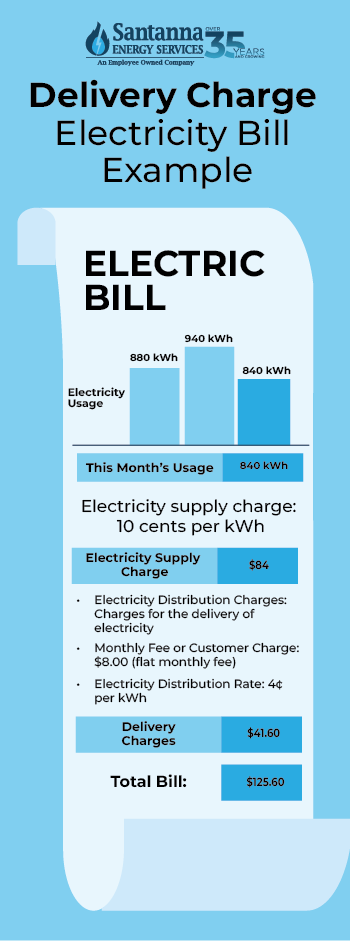
The delivery charge on your electricity bill is the fee your utility company charges to deliver electricity to your home.
Your delivery charge for electricity pays for grid maintenance, poles, wires, transformers, outages, and customer service. This fee is regulated by your state and doesn’t change even when you switch suppliers.
You’ll always pay this delivery fee no matter if you choose to supply your energy with a supplier or to stay under the utility.
Think of it this way: even if you shop around for a better supply rate, the same utility you get your energy from is still using its poles, wires, and crews to get power to your house. So, as long as you still need a delivery of electricity to your home, this charge will always stay on your bill.
The Two Main Parts of Your Electricity Bill and Why They Matter
Every electricity bill is built on just two main parts: the supply charge and the delivery charge. Each one has a different job, and that’s why you see both on your bill at once every month.
You’re not alone if this seems confusing. In fact, in an internal survey, 59% of our own team reported they didn’t understand the difference before working at Santanna.
Once you understand these two sections, the rest of your bill becomes much easier to read.
1. Supply Charge
Your supply charge is the portion of your electricity bill that reflects how much power your home uses, calculated in kilowatt-hours (kWh) based on your usage and your supply rate. This can come from an energy supplier if you choose one, or from your main utility if you stay with their default service.
This charge is measured in kilowatt-hours and is calculated by multiplying how much electricity your home used over a certain billing period by your supply rate.
This is the part you have control over, depending on which supplier and plan type you choose. Your supply charge takes up roughly 30% of your monthly bill and can fluctuate depending on your plan type.
If you want more predictability in your supply charge, consider signing up for an Unlimited Energy, or flat-fee, plan.
2. Delivery Charge
Your delivery charge comes from your utility regardless of where your energy supply comes from. This charge includes taking care of the poles, wires, and other parts of the grid, along with fixed fees and state-required programs.
A small part of the charge can go up or down depending on your electricity use. Even though this portion varies with usage, the delivery charge itself is not something you can shop for or negotiate, since it’s set by your local utility and approved by the state.
Quick Comparison Between Delivery Charge vs. Supply Charge
| Bill Section | Who Controls It | What It Covers | Can You Change It? |
| Delivery Charges | Your Utility | Power lines, poles, substations, meters, repairs, state-required fees | No — this stays the same no matter who your supplier is |
| Supply Charges | Your Energy Supplier | The electricity you use and the price you pay per kWh | Yes — you can choose your supplier and plan type |
Do All Utilities Charge the Same Delivery Rate?
Not all utilities charge the same delivery rate. It can vary a lot, even within the same state. That's because every utility has different costs to take care of the power grid in their area.
Some utilities have older equipment that needs more repairs, others have more miles of power lines to maintain, and some deal with tougher weather that causes more outages.
All of these factors change how much it costs them to deliver electricity to homes. Even though the state has to approve every utility's delivery rates, the amount you pay is still based on your utility's specific needs and expenses.
This is why your delivery charge may be higher or lower than someone in a nearby city or someone serviced by a different utility. It's tied to the cost of keeping your local grid running safely, not to which supplier you choose.
Do All Electric Companies Charge a Delivery Fee?
All electric companies that deliver power to homes charge a delivery fee because it covers the cost of maintaining and operating the electric grid. This charge comes from your utility, regardless of which supplier you choose.
Why Is My Electricity Delivery Charge So High?
Electricity delivery charges are often high because utilities must maintain aging infrastructure, respond to storms, meet state safety requirements, and handle higher electricity demand.
Delivery charges have grown in recent years because utilities are dealing with higher costs to keep the power grid safe, reliable, and up to date. Here are a few of the biggest reasons your delivery charge may seem high:
1. Infrastructure and Grid Maintenance
A big part of the delivery charge covers the cost of maintaining and upgrading the power grid. This includes long-distance transmission lines, neighborhood power lines, substations, poles, and meters.
Utilities also have everyday operating costs like meter reading, billing, and customer service. All of this keeps the grid safe and working, but it adds to the delivery portion of your bill, and during times of heavy use, your delivery charge could increase.
2. Repairs and Emergency Response
When storms damage equipment, utilities must send crews to repair lines and restore power. These emergency responses are built into delivery costs so the system can recover quickly and safely, but sometimes these disasters could cause more damage than anticipated. In this case, delivery charges could increase.
3. Your Usage Increased
A small portion of the delivery charge varies with your electricity use. You may see it rise during high-demand seasons like summer or anytime your household is using more power, like if you're home more often or have extra people in the house.
How To Reduce Electricity Delivery Charges
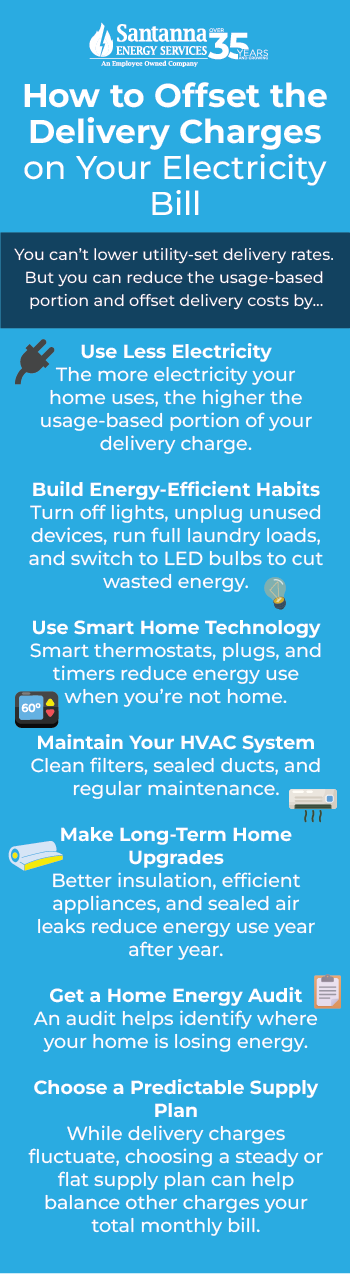
While you can’t directly lower utility-set delivery rates, you can reduce the usage-based portion of your delivery charge and offset high delivery costs by using less electricity.
However, you can offset high delivery charges by reducing your overall electricity use. When you use less energy, the usage-based portion of your bill goes down, which can help balance out the fixed delivery costs you can’t change.
Here are practical ways to do that:
1. Use Energy-Efficient Habits
Simple daily habits can make a noticeable difference in how much electricity your home uses. Turning off lights, unplugging devices, running full laundry loads, choosing LED bulbs, and avoiding wasted electricity all help reduce your total usage, which can lower the usage-based portion of your delivery charge.
2. Use Smart Home Technology
Smart thermostats, smart plugs, and timers help manage energy use automatically. By reducing unnecessary electricity use during peak times or when no one is home, these tools can help keep both your supply and usage-based delivery costs lower.
3. MaintainYour HVAC System
Heating and cooling typically account for the largest share of a home’s electricity use. Regular maintenance, changing filters, sealing duct leaks, and keeping your system in good condition helps it run more efficiently and use less power overall.
4. Explore Alternative Energy Options
Solar panels, community solar programs, or battery systems can reduce how much electricity you need from the grid. Pulling less power from the grid can lower the usage-based portion of your delivery charge over time.
5. Consider Long-Term Energy Upgrades
Home improvements like better insulation, high-efficiency appliances, new windows, and sealing air leaks reduce energy loss year after year. These upgrades can lead to long-term reductions in electricity use, helping offset rising delivery costs.
6. Get a Home Energy Audit
Many utilities offer free or low-cost home energy audits. An expert evaluates where your home is losing energy and recommends the most impactful improvements, helping you focus on changes that can deliver real savings.
7. Reduce the Usage-Based Portion of Your Delivery Charge
While you can’t change utility-set delivery rates, part of the delivery charge is tied to how much electricity you use. Lowering your overall usage, especially during high-demand periods, can help reduce the variable portion of your delivery costs.
8. Choose an Energy Plan That Offsets Delivery Costs
Even though delivery charges are fixed by your utility, you can choose an energy supply plan that offers more predictability. Plans with steady or flat supply charges can help balance out delivery cost fluctuations, making your total monthly bill easier to manage.
Why You Still Pay Delivery Charges After Switching Suppliers
You will always pay delivery charges because your utility is the one responsible for delivering electricity to your home, and your utility company never goes away even after you switch to a supplier.
Because they’re responsible for keeping the electricity grid safe and reliable, they’re required by the state to charge delivery fees to cover those costs. This means you will pay delivery charges whether your supplier is Santanna, your utility’s default supplier, or another licensed supplier.
FAQs
Do delivery charges change by season or usage?
Yes, delivery charges change by season or usage. Delivery charges can change based on your electricity usage because part of the charge is calculated per kilowatt-hour (kWh). Some utilities may also have higher delivery-related costs during extreme weather seasons when demand on the grid is higher.
Can you avoid electricity delivery charges?
No, if your home is connected to the electric grid, delivery charges are mandatory because they pay for the lines, poles, and maintenance that keep power flowing.
The only exception is a home that’s completely off-grid and generates all of its own electricity, such as through a full solar-and-battery system. But even then, if you have an off week where you don’t produce enough electricity to meet your demand, you still might need to pull from your utility to supply your remaining energy. In this case, you’ll be charged a delivery fee.
Are delivery charges fixed, or do they change every month?
Delivery charges include a fixed monthly fee and a variable fee based on how much electricity you use. The fixed part stays the same, while the usage-based part changes each month depending on your kWh usage.
Now that you know what the delivery charge covers and how it fits into your overall bill, the whole picture starts to feel much more straightforward. You can easily see what stays the same, what changes, and how to make smarter choices to manage your monthly energy costs.
Looking for more control over your bill charges? Santanna’s Unlimited Energy plan gives you a predictable supply charge every month,* helping you stay in control even when delivery fees fluctuate.
A predictable monthly supply charge can help balance out the fluctuations of your electricity bill, giving you a steadier foundation for your budget since you’ll always know what to expect from your supply charge.
If you’re looking for a more predictable and stress-free way to handle your energy costs, explore our Unlimited Energy plan and see how well it fits your home.
* Restrictions apply. Enrollment based upon program eligibility. Customers using more than 125% of normal monthly usage as determined by Santanna may be required to switch plans.
Tyler is an experienced energy professional, having worked for Santanna Energy Services, for the past four years. He is passionate about renewable energy and believes that diversifying the energy grid is the key to a sustainable future. Tyler is dedicated to supplying consumers with the best possible energy solutions and works diligently to make sure that Santanna can deliver the highest quality service.