

What Is Radiant Energy? How It Affects Your Home and Energy Use

by Tyler Castle
15.9 min read
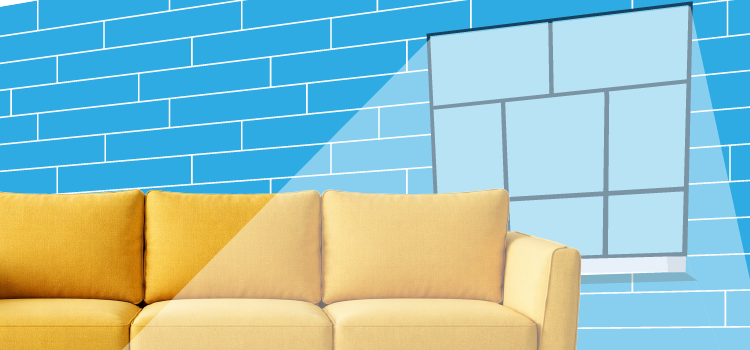
On a cold evening, the heat is running and the thermostat says the house is warm, yet the room still feels chilly near the windows or along the floor. Or on a sunny afternoon, one room feels noticeably warmer than the rest, even though the temperature setting hasn't changed. If this sounds familiar in your home, you're not alone.
Most homeowners think comfort is all about air temperature, so it's frustrating when a room doesn't feel the way the thermostat says it should. The good news is that nothing is wrong with you or your home. This is very common in houses of all ages.
Radiant energy helps explain why this happens. It affects how heat and light move through rooms, surfaces, and windows. Once you understand it, cold spots, warm floors, and uneven comfort start to make a lot more sense.
At Santanna, we've spent decades working with homeowners and utilities across the Midwest, helping people understand how energy behaves in real, lived-in homes. In this guide, we will walk you through what radiant energy is, where you notice it most inside your home, and why it plays such a big role in comfort and energy use.
Key Points of This Article:
- Radiant energy is energy traveling as heat or light.
- Radiant energy warms people and surfaces directly, which is why some spaces feel comfortable without strong airflow.
- Your thermostat measures only the air temperature, not the warmth or coldness of the surfaces around you; radiant energy makes rooms hotter, which is why what you feel might not match the temperature setting on your thermostat.
- Small adjustments like managing sunlight, sealing gaps, adding rugs, or moving furniture can noticeably improve the impact radiant energy has on your comfort without changing your heating or cooling system.
What Is Radiant Energy?
Radiant energy is energy that travels as heat waves and moves through space without direct contact. You experience it every day through warmth and light you can feel or see, even if you’ve never called it that or thought much about it.
Think about sunlight warming your living room through the windows. Or the warmth you feel when you stand near a fireplace. That heat and light reaching you directly is radiant energy at work.
Unlike heat that moves through air or by touch, radiant energy does not need a medium like air to travel. It moves outward from its source and reaches people and surfaces directly, which is why comfort does not always match the thermostat reading.
How Does Radiant Energy Work?
Radiant energy follows a simple path from source to surface. Here’s how radiant energy works:
Step 1: Radiant Energy Leaves a Source
Radiant energy starts at a source, like the sun, a fireplace, or a space heater. Once it leaves that source, it travels in straight lines. It doesn’t drift with the air or slowly spread through contact the way warm air does.
Step 2: Radiant Energy Travels Through Space
Here’s the part people often find surprising: radiant energy doesn’t need air to keep going. It can travel through empty spaces and through clear materials like glass. That’s why sunlight comes through your windows and warms your floors and furniture.
Step 3: Radiant Energy Hits Objects
When radiant energy reaches something in your home, like a wall, floor, piece of furniture, or your body, one of three things happens. The energy can bounce off, pass through, or soak into the surface.
Step 4: Radiant Energy Turns Into Heat
When the energy soaks into a surface, that surface warms up. Floors, walls, furniture, and even people can hold this warmth for a while.
Step 5: Warm Surfaces Affect How a Room Feels
This is where comfort comes in. The temperature of those surfaces plays a big role in how a room feels overall. That’s why two rooms with the same thermostat setting can feel completely different when you walk into them.
Once you understand how surface temperatures affect comfort, it becomes easier to see why radiant energy matters in everyday life at home.
Why Radiant Energy Should Matter to You as a Homeowner
Radiant energy matters because it directly affects how comfortable your home feels and how often you adjust your thermostat.
It explains everyday frustrations like why your feet feel cold on the floor even when the heat is on, or why sitting near a window feels uncomfortable at night even though the thermostat says everything is fine.
Once you understand radiant energy, those moments start to click. You realize your home isn’t broken, and you don’t need to keep chasing comfort by turning the thermostat up or down. It helps you see how surfaces, sunlight, and room layout shape how your home feels, and why small changes can sometimes make a bigger difference than you expect.
What Are Examples of Radiant Energy?
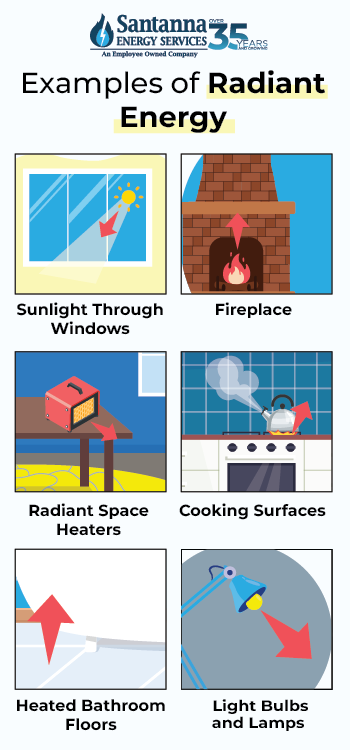
Radiant energy shows up in everyday moments at home, often without you realizing it. Any time you feel warmth or see light without direct contact, radiant energy is at work. Below are some everyday examples of radiant energy in your home:
Sunlight Through Windows
Sunlight is the most familiar example of radiant energy. It travels through space and passes through your windows, warming floors, furniture, and walls it hits. Even if the air temperature stays the same, the room can feel warmer because those surfaces absorb radiant energy directly from the sun. That’s why a sunny room often feels cozy, even on a cold day.
Fireplaces
If you’ve ever stood near a fireplace, you’ve felt radiant energy immediately. The warmth hits your skin right away, without waiting for the air in the room to heat up. That direct heat traveling from the flames to you and nearby surfaces is radiant energy at work.
Radiant Space Heaters
Radiant space heaters give off warmth that travels directly to people and nearby objects. Because that heat moves outward in straight lines, you feel warmer almost right away. Even before the air temperature changes, your body and nearby surfaces absorb that radiant heat, making the space feel comfortable faster.
Cooking Surfaces
Ovens, stovetops, and toasters give off radiant energy when they are hot. You can feel warmth on your face or hands without touching them. That heat traveling directly from the hot surface to you is radiant energy.
Heated Bathroom Floors
Radiant floor heating systems are a direct, built-in example of radiant energy. The floor releases heat upward, warming your feet and the surrounding surfaces first. The air warms second, which is why these rooms often feel comfortable without strong airflow or blowing air.
Light Bulbs and Lamps
Light bulbs emit radiant energy in the form of visible light and a small amount of infrared heat. If you feel warmth when standing close to a lamp or notice a light fixture heating nearby surfaces, that warmth comes from radiant energy.
Sun-Warmed Exterior Walls and Roofs
During the day, exterior walls and roofs absorb radiant energy from the sun. As those surfaces warm up, they can affect indoor comfort by increasing surface temperatures inside the home, especially on sunny afternoons.
So, what does all of this actually mean for how your home feels and how much energy you use?
How Radiant Energy Affects Your Home and Energy Use
Radiant energy affects your home by changing how comfortable rooms feel, which often influences how you use heating and cooling. When surfaces like windows, walls, and floors are cold or hot, your body reacts to them even if the air temperature stays the same. That reaction often leads to adjusting the thermostat to try to feel comfortable.
For example, on a cold winter evening, the thermostat might be set to 70°F, but sitting near a cold window can still feel uncomfortable. That cold surface pulls heat from your body, so you turn the heat up. The system runs longer, which uses more energy and eventually shows up on your bill.
In summer, sunlight warming floors or furniture can make a room feel hot long after the sun has moved. As a result, the air conditioner keeps running even though the air temperature itself seems reasonable.
When radiant comfort is more balanced, these situations happen less often. Rooms feel comfortable at normal settings, and heating or cooling systems do not need to run as long or as frequently. Over time, that steadier use can help keep energy bills more predictable, because you are not constantly adjusting the thermostat to compensate for uncomfortable surfaces.
How Can You Control Radiant Heat Gain and Loss?
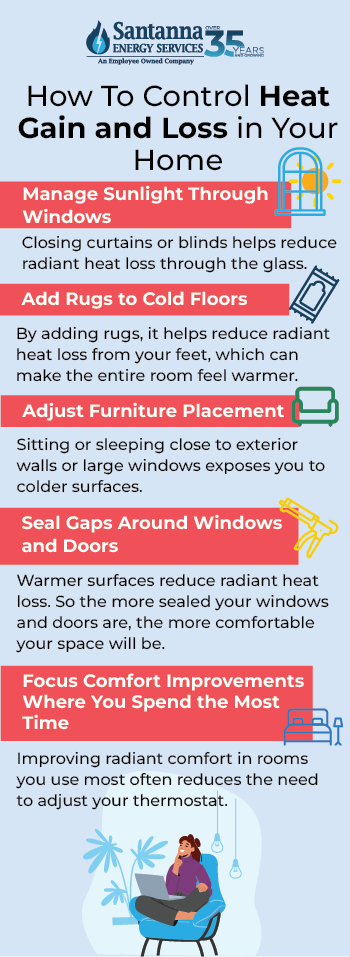
The good news is that improving radiant comfort doesn’t require replacing major equipment. Small, practical changes can make a noticeable difference in how your home feels. Here are few ways to keep your home feel more balanced without replacing equipment:
Manage Sunlight Through Windows
Have you noticed how rooms feel colder near windows at night in winter? Closing curtains or blinds helps reduce radiant heat loss through the glass. In summer, using shades during the sunniest parts of the day limits radiant heat gain and helps keep nearby surfaces closer to room temperature.
Add Rugs to Cold Floors
Hard surfaces like tile, hardwood, or concrete tend to stay cooler, especially in basements and ground-level rooms. By adding rugs, it helps reduce radiant heat loss from your feet, which can make the entire room feel warmer.
Adjust Furniture Placement
Sitting or sleeping close to exterior walls or large windows exposes you to colder surfaces that pull heat from your body. Moving furniture slightly inward can reduce radiant heat loss and improve comfort.
Seal Gaps Around Windows and Doors
Sealing gaps around windows and doors helps nearby surfaces stay warmer, not just the air. Warmer surfaces reduce radiant heat loss and make rooms feel less drafty.
Focus Comfort Improvements Where You Spend the Most Time
Improving radiant comfort in rooms you use most, such as living areas and bedrooms, often reduces the need to adjust the thermostat. When these spaces feel comfortable, the entire home feels easier to manage.
When radiant heat gain and loss are better controlled, surfaces stay closer to the air temperature. This makes your home feel more comfortable and helps your heating and cooling system run more steadily without major changes.
Why Your Thermostat Doesn’t Match How Your Home Feels
The reason your thermostat doesn’t match how your home feels is because it only measures the temperature of the air, not how warm or cold the surfaces around you are. But your body reacts to both. If nearby windows, walls, or floors are cold, they can pull heat away from your body, making you feel chilly even when the thermostat says the room is warm.
Radiant heat warms people and surfaces directly, not just the air. When the surfaces in a room are warm, your body stays warmer too. That is why radiant heat often feels comfortable at lower thermostat settings. The room feels steady and cozy instead of drafty.
At home, comfort is not just about a number on the thermostat but how the space feels when you are in it.
How Radiant Energy Affects the Temperature of Different Rooms in Your Home
Radiant energy can make rooms in the same house feel very different, even when the thermostat setting is the same. Here's how radiant energy affects different rooms in your home:
Living Rooms with Large Windows
Living rooms often have the largest windows, which means they are strongly affected by radiant energy. During the day, sunlight can warm floors and furniture, making the room feel comfortable without changing the air temperature. At night, those same windows can allow radiant heat to leave the room, causing the space to feel cooler.
Bedrooms at Night
Bedrooms often feel colder at night because radiant heat escapes through windows and exterior walls after the sun goes down. Even if the air temperature stays steady, cooler surfaces around the bed can make the room feel chilly, which is why extra blankets are common.
Basements and Slab Floors
Basements and homes with slab floors are affected by radiant energy because concrete and stone tend to stay cool. Cold floors pull heat away from your body, especially through your feet, making the entire space feel colder than the thermostat suggests.
Kitchens and Tiled Spaces
Kitchens and bathrooms often have tile, stone, or other hard surfaces that change temperature quickly. These surfaces can feel cold in the morning and warmer later in the day after cooking or sunlight. This is why tiled rooms often feel cooler than carpeted rooms, even with the same air temperature.
While room layout explains where radiant energy affects comfort, seasonal changes explain when those effects are strongest.
How Radiant Energy Shows Up in Midwest Homes by Season
If you live in the Midwest, you've probably noticed that your home's comfort changes with the seasons, even when your heating or cooling system hasn't changed. Radiant energy plays a big role in this, as sunlight, outdoor temperatures, and surface heat behave differently throughout the year.
Winter: Window Heat Loss and Cold Surfaces
In winter, radiant heat inside your home moves toward colder surfaces like windows and exterior walls. Even with the heat running, these cold surfaces can pull warmth from your body, making rooms feel chilly. This is why sitting near windows often feels colder in winter, especially at night.
Summer: Sun Exposure and Radiant Heat Gain
In summer, the sun's radiant energy can enter through windows and heat floors, walls, and furniture. These surfaces absorb that energy and release it slowly, which can make rooms feel warm long after the sun has moved. Afternoon sun exposure is often the reason some rooms feel hotter than others.
Is Radiant Energy Kinetic or Potential?
According to Solar Schools, radiant energy is a form of kinetic energy, which means it is energy in motion. It travels outward as waves of heat or light from a source and is felt immediately.
Radiant energy only becomes stored heat after it is absorbed by a surface, such as when sunlight warms a floor. Potential energy, on the other hand, is stored energy. Radiant energy does not sit still or wait to be used. It only becomes stored energy after it is absorbed by an object.
So, while sunlight is traveling through your window, it's radiant energy. Once your floor warms up and holds that heat, it becomes stored energy in the material.
The Difference Between Radiant Energy vs Other Types of Energy
The chart below shows how radiant energy differs from other types of energy, such as heat stored in materials or warm air moving through a room, and why those differences affect comfort.
Radiant Energy vs Other Types of Energy Comparison Chart
| Type of Energy | How It Moves | Simple Home Example | Why It Feels Different |
| Radiant Energy | Travels as waves through space | Sunlight warming a room, heat from a fireplace | Warms surfaces and people directly |
| Thermal Energy | Stored heat in materials | Warm floors, heated walls | Affects how warm a room feels over time |
| Conduction (Used with Natural Gas or Electricity) | Moves through direct contact | A hot pan heating a countertop | Requires touching surfaces |
| Convection (Used with Natural Gas or Electricity) | Moves through air or liquid | Warm air from vents rising | Heats the air first, not surfaces |
| Electrical Energy | Moves through wires | Powering lights or appliances | Must be converted to heat or light |
This chart helps explain why some energy feels immediate and cozy, while other types take longer to affect comfort in your home.
How Does Radiant Energy Work With Air-Based Heating?
Most homes use air-based heating, like a furnace that blows warm air through vents. Even in these homes, radiant energy is still at work. The two do not compete with each other. They work together to shape how your home feels.
Air-based heating warms the air first. As that warm air moves through a room, it heats surfaces like walls, floors, furniture, and ceilings. Once those surfaces warm up, they begin giving off radiant energy. That radiant warmth helps the room feel more balanced and comfortable.
This is why comfort often improves after the heat has been running for a while. The air warms first, then surfaces absorb and release heat, allowing radiant energy to reduce cold spots and sharp temperature swings.
Is Radiant Energy Safe for the Environment?
Radiant energy is harmless to the environment. It isn't a fuel, a chemical, or a pollutant. It's simply the form energy takes as it travels through space as heat or light.
What matters environmentally is the source of that radiant energy. When it comes from natural sources like the sun, it supports cleaner energy use. And when homes are designed or improved to manage radiant heat better, they tend to waste less energy overall.
Radiant energy can also be used for environmental purposes because it can enhance comfort without necessarily requiring constant heating or cooling adjustments. If a house is comfortable at a constant setting, then energy systems will work in a more predictable and efficient manner.
FAQs
Is radiant floor heating cheaper to run?
Radiant floor heating can be more energy-efficient than some other heating methods because it warms surfaces instead of just the air. This often allows for lower thermostat settings and can reduce energy use, especially in well-insulated homes.
Does radiant heating use more or less energy than forced air?
Radiant heating systems are usually more efficient than forced-air systems because they eliminate heat loss through ducts and warm surfaces directly. This can lead to lower energy use in many homes, though costs also depend on insulation, climate, and system type.
Does my furnace use radiant energy, or just warm air?
A typical furnace primarily heats and distributes warm air through ducts (forced air). However, once that warm air heats surfaces in a room, those surfaces emit radiant energy, which helps shape comfort. The furnace itself is mainly an air-based heat source.
Radiant energy affects how heat and light move through your home, shaping comfort, room temperature, and how much energy your home uses.
At Santanna, we have spent decades helping homeowners across the Midwest understand how energy works in real, lived-in homes. We see how comfort challenges often lead to changes in energy use, not because something is wrong, but because people are trying to make their home feel right.
If your energy use shifts from season to season as you work to stay comfortable, having a predictable supply charge can bring peace of mind. Our Unlimited Energy Plan is designed to support easier budgeting, even when your energy needs vary. With a consistent supply charge, you'll know what to expect on your monthly bill.*
* Restrictions apply. Enrollment based upon program eligibility. Customers using more than 125% of normal monthly usage as determined by Santanna may be required to switch plans.
Tyler is an experienced energy professional, having worked for Santanna Energy Services, for the past four years. He is passionate about renewable energy and believes that diversifying the energy grid is the key to a sustainable future. Tyler is dedicated to supplying consumers with the best possible energy solutions and works diligently to make sure that Santanna can deliver the highest quality service.