

Why Is My Room So Hot? Common Causes and Energy-Smart Fixes

by Jenna Mendez
26.4 min read

If you are sitting in a room that feels warm, stuffy, or uncomfortable, you are not imagining it. Many homeowners deal with rooms that stay hotter than the rest of the house, even when the air conditioner is running.
One room feels fine, another feels miserable, and lowering the thermostat does not always fix the problem. In fact, in a recent internal survey, 94% of Santanna Employee-Owners surveyed said they have adjusted the temperature based on how their room felt rather than the actual temperature reading. This adjustment often just makes other rooms too cold and drives up energy costs.
As an energy supplier for Midwest residents, we understand this issue can be frustrating and cause concerns about energy bills. The good news is that hot rooms usually have clear causes, and many have simple fixes.
This guide explains why a room feels hot, how to spot the most common causes, and what you can do to make a room feel cooler without overcooling your entire home.
Key Points of This Article:
- A hot room is usually caused by extra heat getting in, poor airflow, or trapped warm air, and identifying which one applies can prevent you from overcooling your entire home.
- Lowering the thermostat several degrees to fix one warm bedroom can add roughly $26.67 to your bill at the U.S. average electricity rate of 17.78 cents per kWh.
- Simple steps like closing blinds early, improving airflow, and turning off heat-producing electronics can cool a room without forcing your AC to run longer.
- When one room runs hot, your AC runs longer to compensate, and longer runtime directly increases your energy use.
Why Your Room Can Run Hot
When your room runs hotter than other parts of your home, there's almost always a reason behind it. When this happens, most hot rooms fall into one of three categories that explain their temperature difference:
- Too much heat is getting into the room
- Not enough cool air is reaching the room
- Warm air is getting trapped inside
Here's what this means for you:
If too much heat is getting into your room, your AC has to work harder just to keep up, and the temperature struggles to balance out. This often happens with strong sunlight, warm attics, unsealed windows, or poor insulation. As a homeowner, that means longer cooling cycles and higher electricity use, even if the rest of the house feels fine.
If not enough cool air is reaching your room, your air conditioning system may be running normally, but that space isn't getting its fair share. This can happen because of blocked vents, longer duct runs, closed doors, or dirty filters. In this case, lowering the thermostat will not fix the root issue. It simply makes other rooms colder while the problem room still struggles.
If warm air is getting trapped inside, the room can feel heavy and uncomfortable even if the temperature reading does not look extreme. This often happens in upstairs bedrooms, rooms over garages, or spaces with limited airflow. When air cannot circulate out, the room holds onto heat longer than it should.
Sometimes the cause is obvious, like direct afternoon sun pouring through a window. Other times, it is less visible, involving airflow patterns, insulation levels, humidity, or the way the home was designed. In many Midwest homes, it is not just one issue. There are usually a few small factors working together.
The good news is that once you identify which of these three patterns is happening, you can make targeted changes instead of guessing or constantly lowering the thermostat.
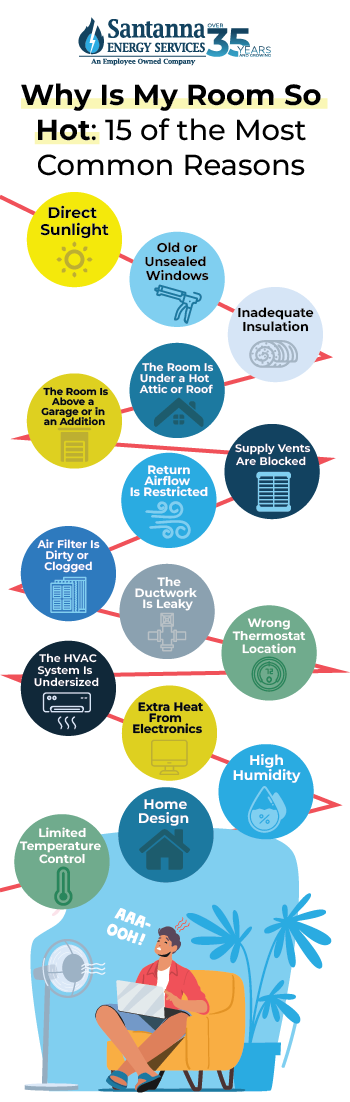
Why Is My Room So Hot: 15 of the Most Common Reasons
If you've been walking into your room and thinking, "Why is my room so hot even though the AC is running?" you're not alone. It can feel confusing and frustrating, especially when you expect your cooling system to be doing its job.
Below are 15 of the most common reasons your room may feel hotter than it should, and what might actually be causing it:
1. Direct Sunlight Is Heating the Room Through the Windows
Sunlight entering through windows turns into trapped heat that lingers in the room. You may notice that the blinds feel warm or the room cools down after sunset. This can make your room feel hotter than it actually is.
A quick solution? Closing blinds or curtains during peak sun hours can immediately reduce how much heat builds up inside.
2. Old or Unsealed Windows Are Letting Warm Air In
If the area around your windows feels warmer than the rest of the wall, or you sense slight drafts on hot days, heat may be entering through small gaps or older windows. Even tiny openings allow outdoor heat and humidity to seep inside.
Adding temporary weatherstripping or sealing visible gaps can help limit that unwanted heat transfer.
3. The Room Has Poor or Inadequate Insulation
If the ceiling or exterior walls feel warm to the touch, or the room stays hot even after the sun goes down, insulation may not be slowing heat transfer effectively. Insulation acts like a barrier that reduces how quickly outdoor heat moves indoors.
Improving attic insulation or sealing gaps long-term helps, but in the short term, keeping air circulating with a fan can prevent heat from settling.
4. The Room Is Under a Hot Attic or Roof
Energy Efficiency Experts states that upstairs or spaces below a roof often trap more heat because the attic can become extremely warm on sunny days without proper ventilation, causing heat to radiate downward into living spaces.
If your bedroom is on the top floor and always feels warmer than downstairs, this is likely the cause. Using ceiling fans to move air away from the ceiling and keeping blinds closed during the day can reduce that buildup.
5. The Room Is Above a Garage or in an Addition
Rooms built over garages or added onto the home later often behave differently from the rest of the house. These areas may have less insulation or longer duct runs.
If the room feels hot in summer and harder to heat in winter, its structural location may be the reason. Keeping the door open when possible and improving airflow into the space can help balance temperatures.
6. Supply Vents Are Blocked, Closed, or Obstructed
If airflow from the vent feels weak or furniture is covering part of it, cool air may not be reaching the room properly. Sometimes the fix is simpler than you expect.
Your HVAC system depends on open supply vents to distribute air evenly. Opening vents fully and moving furniture away from them can quickly improve airflow and restore balance.
7. Return Airflow Is Restricted or the Room Has Poor Ventilation
Air must circulate out of the room in order for cool air to flow in. If return vents are blocked or the door stays closed, the room can feel stuffy and warm.
You may notice it gets hotter when the door is shut. Keeping doors slightly open or ensuring return vents are clear allows air to move more freely.
8. The Air Filter Is Dirty or Clogged
Clogged filters reduce airflow and make cooling uneven across rooms. If your AC seems to run longer than usual or airflow feels weaker overall, the filter may be limiting performance.
Replacing the filter regularly is one of the simplest ways to improve cooling efficiency.
9. The Ductwork Is Leaky, Long, or Poorly Balanced
If your room has always been warmer than others and airflow seems weaker, the ductwork delivering air to that space may be losing air along the way or not being properly balanced.
Air follows the path of least resistance, so leaks reduce what reaches the room. While duct repairs require professional inspection, improving circulation with a fan can help temporarily.
10. The Thermostat Is Located in a Cooler Part of the House
If the thermostat sits in a hallway or downstairs area that cools faster, it may signal the AC to shut off before your room reaches a comfortable temperature. The system responds to the thermostat's location, not the warmest room.
Keeping interior doors open and using fans to move cooler air into warmer spaces can help even things out.
11. The HVAC System Is Undersized or Aging
If your AC runs for long periods but the room never fully cools, the system may be struggling to keep up with demand. This can happen if the unit is too small for the home, older, or less efficient.
Before lowering the thermostat further, reducing heat gain from sunlight and improving airflow can often ease strain on the system.
12. Electronics and Appliances Are Adding Extra Heat
Computers, TVs, gaming consoles, chargers, and even some lamps give off heat while they run, and in a smaller room, that warmth can build up fast. You might notice the room feels warmer when devices are on, or when several things are plugged in on the same side of the room. Some electronics also use a small amount of power even when they are "off," which can add a little background warmth over time.
A quick step is to turn off unused devices, switch to LED bulbs, and use a power strip so you can fully power down chargers and electronics when you are not using them.
13. High Humidity Is Making the Room Feel Hotter Than It Is
Humidity reduces the body's ability to cool itself, making rooms feel warmer than the thermostat reading. The U.S. Centers for Disease Control and Prevention explains that high humidity increases heat stress by limiting the body's natural cooling process. While this might not fully explain why your room is hot, if your body is hot, your mind can make you think your room is hot too.
Running exhaust fans or using a dehumidifier can help reduce moisture and improve comfort without lowering the thermostat.
14. The Home's Design Creates Uneven Temperature Zones
Multi-level homes, corner rooms, and rooms with multiple exterior walls naturally experience more exposure to outdoor temperatures. Heat rises, and single-zone HVAC systems may not balance levels perfectly.
Recognizing that structural design plays a role helps explain why some rooms consistently run warmer. Improving airflow and using fans strategically can help reduce that imbalance.
15. Limited Temperature Control Across Rooms
If your home uses one thermostat for the entire house, it may not detect that one room feels warmer than the rest. The system adjusts based on where the thermostat is located, not where it feels hottest. That can leave certain rooms consistently uncomfortable.
Smart thermostats with room sensors and zoning features can adjust cooling based on specific areas of the home. This more targeted control can help make your room feel less hot without overcooling the rest of the house.
Room-by-Room Scenarios: Why Bedrooms, Offices, and Bonus Rooms Run Hot
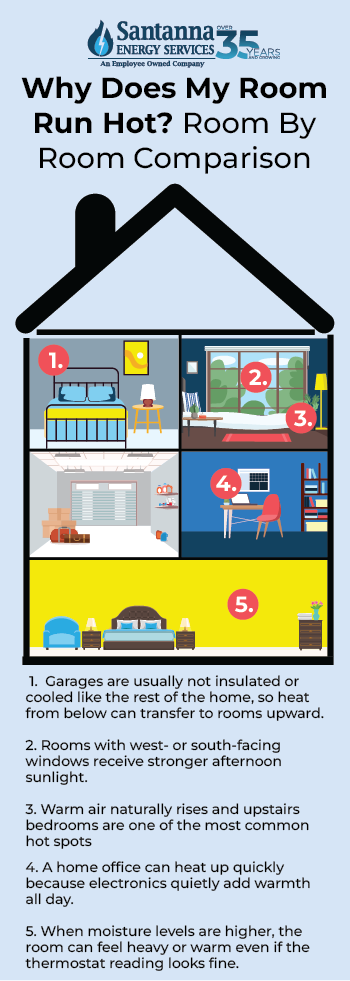
Sometimes it helps to pause the technical explanations and simply look at the room itself. Certain spaces in a home tend to run hot for very predictable reasons. When you think about how the room is built, where it sits, and how it's used during the day, things often start to click.
If you reside in one of these rooms often, here's what might explain why these rooms are hotter than others:
Upstairs Bedroom
Upstairs bedrooms are one of the most common hot spots in Midwest homes. Warm air naturally rises, and attics above the room can store significant heat during the day.
Even after sunset, that stored heat slowly radiates downward, which is why the room often feels warmest at bedtime.
Home Office with Electronics
A home office can heat up quickly because electronics quietly add warmth all day. Computers, monitors, printers, routers, and chargers all release heat while running.
In a smaller room, that internal heat gain builds up faster than many homeowners realize.
A Bonus Room Over the Garage
Rooms built over garages are often harder to keep comfortable. Garages are usually not insulated or cooled like the rest of the home, so heat from below can transfer upward.
Longer duct runs to these rooms can also reduce how much cool air reaches the space.
Sun-Facing Bedroom
Rooms with west- or south-facing windows receive stronger afternoon sunlight. Glass allows radiant heat inside, and once floors, walls, and furniture absorb that heat, the room holds onto it.
Even with the AC running, that room may feel like it is constantly playing catch-up.
A Basement Bedroom That Feels Muggy
Basements are often cooler, but can feel uncomfortable due to humidity. When moisture levels are higher, the room can feel heavy or warm even if the thermostat reading looks fine.
Managing humidity often improves comfort more than lowering the temperature.
Why Does My Room Get So Hot at Night?
If your room feels hottest right at bedtime, the reason is usually connected to what happened earlier in the day or how the house behaves after dark.
Let's take a closer look at the most common reasons your room may feel hotter at night and what might actually be happening in that space:
Heat Stored During the Day Is Still Releasing
Even after sunset, your room may still be giving off heat it absorbed earlier. Walls, ceilings, floors, and furniture hold warmth from sunlight and attic heat and release it slowly over several hours. That is why the room can feel warm even when it is dark outside.
Warm Air Collects Upstairs Overnight
Warm air naturally rises, and in multi-level homes it tends to gather on upper floors. At night, when doors are closed and airflow slows, that warm air can settle in upstairs bedrooms instead of circulating back through the house.
Bedroom Doors Reduce Air Circulation
Closing the bedroom door for privacy or noise control can trap warm air inside. When air cannot move freely back toward return vents, the room may feel stuffy even if the AC is running.
Electronics Used in the Evening Add Lingering Heat
TVs, computers, gaming systems, and lamps release heat while running. When used right before bed, they warm the air and nearby surfaces. Even after turning them off, that heat remains in the room for a while.
Your Body Heat and Bedding Add to the Warmth
Your body naturally releases heat while you sleep. In a room that is already slightly warm, heavy bedding or low air movement can make the space feel hotter than the thermostat reading suggests.
Outdoor Temperatures May Not Drop Enough
On humid or very warm summer nights, outdoor temperatures may stay high. Without cooler outdoor air to offset indoor heat, the room has fewer opportunities to naturally cool down.
What Helps Keep Your Room Cool at Night
Turn off electronics earlier in the evening so the room has time to cool. Run a ceiling or box fan to keep air moving across the bed. Crack the bedroom door open slightly so warm air can escape. Use lighter bedding if the room tends to feel heavy.
Small adjustments often make bedtime noticeably more comfortable without lowering the thermostat.
Why Is One Room in My House So Hot?
When only one room feels uncomfortable, it usually means that space is behaving differently from the rest of the home. It may be gaining heat faster, losing cool air more easily, or receiving less airflow than other rooms. Even if your AC is working properly, that one room can still run warmer because of how it is positioned or used.
Here are some of the factors why one room in your house is so hot:
More Sun Exposure
If that room faces west or south, it likely receives stronger afternoon sunlight than other rooms. Glass lets radiant heat in, and once floors and walls absorb it, the room stays warmer longer than shaded areas of the house.
Longer Duct Runs
If the room sits at the end of the home or farthest from the HVAC system, cooled air has to travel farther to reach it. Along the way, some air pressure can be lost, which means that room may receive less cooling than rooms closer to the system.
Blocked or Restricted Vents
If the supply vent in that room is partially covered by furniture, curtains, or rugs, the room simply does not get its share of cooled air. Other rooms cool normally, while that space lags behind.
More Exterior Walls or Roof Exposure
Corner rooms, rooms under the attic, or rooms above garages have more surfaces exposed to outdoor temperatures. That extra exposure allows more heat transfer compared to interior rooms surrounded by conditioned space.
Higher Daily Use and Electronics
If the room is used more often than others, especially as a home office or media room, electronics quietly add heat throughout the day. That internal heat gain can make the space feel warmer even if airflow is technically working.
A simple test can help you narrow it down.
If the room feels noticeably better when the door is open or when a fan is running, that is a strong sign the issue is airflow balance rather than a major AC problem. That can be a relief to realize.
If the room stays hot no matter what you try, even with better circulation, the cause may be heat exposure, insulation differences, or the way that part of the house absorbs and holds warmth.
Either way, this quick check gives you a clearer starting point so you can move forward with confidence instead of guesswork.
How To Get Hot Air Out of a Room
When a room feels hot and stuffy, it is often because warm air has nowhere to go. Heat rises and settles, and if it cannot circulate out, the space can start to feel heavy and uncomfortable. This is especially common in upstairs bedrooms, bonus rooms, or spaces that stay closed most of the day.
The goal here is simple: remove the warm air that is already inside and replace it with cooler air.
Here are practical ways to air out a room, and why each one works:
Open the Door First
When a door stays closed, warm air builds up because it has nowhere to go. Even opening the door a few inches allow trapped air to mix with cooler air from the hallway. That small opening often reduces the "stuffy" feeling within minutes.
Create a Cross-Breeze
Air moves best when it has both an entry and an exit. If outdoor air is cooler than inside, open one window in the room and another window elsewhere in the house. This creates natural airflow that pulls warm air out instead of letting it linger.
Use a Fan to Push Warm Air Out
Placing a fan in a doorway or window facing outward actively removes hot air from the room. Without direction, fans only circulate the same warm air. Pointing the fan outward helps the room release stored heat faster.
Pull Cooler Air In from Another Room
If the rest of the house feels cooler, position a fan near the doorway aimed into the room. This pulls conditioned air from nearby spaces and helps balance the temperature more quickly.
Use Window Fans at the Right Time
Window ventilation only works when outdoor air is actually cooler. If it is hotter or humid outside, opening windows can make the room feel worse. Use window fans in the evening or early morning when outside temperatures drop.
Clear Supply and Return Paths
Air must move in and out freely for cooling to work properly. If vents are blocked or return airflow is restricted, warm air gets trapped. Keeping these pathways clear allows the room to cycle air instead of holding onto heat.
Reduce New Heat While Venting
If electronics, lamps, or appliances are still running, they continue adding warmth to the air. Turning them off while airing out the room prevents new heat from replacing the heat you are trying to remove.
These steps help the room "reset." They work best when the space feels trapped or stagnant rather than simply overheated from outside exposure.
How Do You Cool Down a Hot Room?
Cooling a hot room means preventing new heat from building up while improving comfort inside the space.
If the room feels too warm overall, here are broader steps you can take to start bringing the temperature back down in a practical way:
1. Stop Heat Before It Builds
If sunlight hits the room during the day, close blinds or curtains early. Once sunlight warms the floor, walls, and furniture, that heat lingers for hours.
Blackout or thermal curtains can noticeably reduce how much heat enters through windows.
2. Improve Air Movement Around You
Turn on a ceiling fan so it spins counterclockwise in warm months. This pushes air downward and helps your body cool itself.
A box fan placed across from your bed, desk, or couch can make the room feel several degrees cooler even if the thermostat stays the same.
Remember, fans cool people, not rooms. Turn them off when the room is empty.
3. Reduce Extra Heat Inside the Room
Small heat sources can add up quickly, especially in smaller rooms where warmth builds faster.
Turn off lamps that use incandescent bulbs, since they release more heat than newer lighting options. Power down TVs, gaming systems, and computer monitors when they are not in use, because they give off heat while operating. Unplug chargers and devices that you are not actively using, as they can still generate warmth.
Switching to LED bulbs can also help, since LEDs produce less heat and use less electricity than traditional incandescent lighting.
4. Manage Humidity
If the room feels sticky or heavy, humidity may be the real issue.
High humidity makes your body feel warmer because sweat does not evaporate as easily. The U.S. Environmental Protection Agency recommends indoor humidity between 30% and 50% for comfort.
Run bathroom and kitchen exhaust fans regularly, and consider using a dehumidifier if the room often feels muggy.
5. Support Your Cooling System Instead of Overworking It
Instead of lowering the thermostat for the entire house, focus on improving conditions in the hot room first.
Small changes like blocking the sun, improving airflow around your body, and reducing internal heat often solve the problem without forcing your AC to run longer.
6. Know When the Issue Is Bigger Than the Room
If the room stays hot no matter what you try, the cause may be insulation, duct balance, or system sizing.
At that point, airflow adjustments help less, and a professional evaluation may be worth considering.
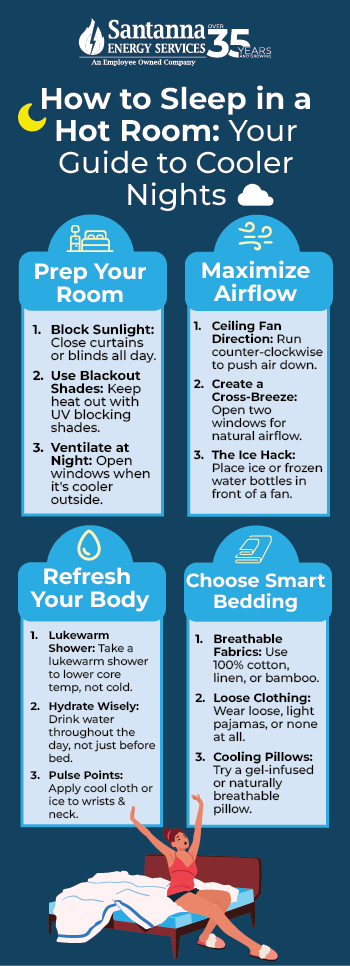
How To Sleep in a Hot Room
If your bedroom feels hot right now, focus on comfort around your body and air movement first. You do not need a major fix before bedtime. Small changes can noticeably improve how the room feels within minutes.
Try these simple resets before you get into bed:
Turn On a Ceiling Fan or Box Fan
Turn on your ceiling fan so it spins counterclockwise in warm months, or place a box fan so it blows gently across the bed.
Moving air helps your body release heat more efficiently, even if the actual temperature does not drop right away. You will often feel cooler within minutes because airflow improves how your skin cools itself.
Crack the Bedroom Door Open
Open the bedroom door slightly before going to sleep. When the door stays closed, warm air becomes trapped inside the room.
Allowing even a small opening gives that heat a path to escape and lets cooler hallway air circulate in. The room will begin to feel less heavy and stagnant.
Clear the Supply Vent and Airflow Path
Check that nothing is blocking the supply vent or the space under the door. Rugs, bed skirts, furniture, or storage boxes can quietly restrict airflow.
When air can move freely in and out, your cooling system works more effectively in that space. You may notice stronger airflow and more consistent comfort.
Turn Off Lamps, TVs, and Chargers
Power down electronics earlier in the evening and unplug devices you are not using.
Televisions, computers, chargers, and some lamps give off heat while operating, and that warmth lingers in the room after they are turned off. Giving the room time to cool before bedtime reduces leftover heat buildup.
Use Lighter, Breathable Bedding
Choose lighter sheets and avoid heavy blankets if the room tends to feel warm.
Thick fabrics trap body heat close to your skin, which makes the room feel hotter than it actually is. Breathable bedding allows heat to escape more easily and helps your body stay comfortable overnight.
These small actions will not change the outdoor temperature, but they can make the room feel noticeably more comfortable by bedtime without lowering the thermostat or making your AC work harder. Sometimes it only takes a few simple tweaks to create a space that feels calm, cooler, and ready for rest.
Should I Just Lower the Thermostat to Cool My Room?
Lowering the thermostat by 1 or 2 degrees can help temporarily, but dropping it several degrees to fix one hot room usually does not solve the real problem.
For example, if your thermostat is set to 74°F and one bedroom feels warm, lowering it to 71°F might cool the entire house more than necessary. The AC will run longer to bring every room down to 71°F, even if the rest of the home is already comfortable.
When your system runs longer, your energy usage increases. Even small temperature changes repeated every day can add noticeable kilowatt-hours over a month.
Lowering the thermostat may help if the whole house feels warm. But if only one room is hot, it is usually better to improve airflow, block sunlight, or reduce internal heat in that specific space first.
If you do adjust the thermostat, try lowering it just 1°F at a time and see if comfort improves before making bigger changes. That way, you stay in control of both your comfort and your energy use, without putting unnecessary strain on your cooling system.
How Do I Know If My Hot Room Needs Professional Help?
You should seek professional help when the room stays hot even after you have tried the simple, safe checks, or when you notice signs that point to a bigger airflow, duct, or equipment issue.
Here are the moments when calling a pro is usually worth it:
- You feel little to no airflow from the vent, even with the vents open. That often points to a deeper airflow or duct problem that is hard to spot from the room itself. A technician can measure airflow and check for duct leakage.
- The room stays hot no matter the time of day, even after you block the sun and improve air movement. When a room is always warmer, it can be linked to insulation gaps, hidden air leaks, or duct issues. If you want a clear answer without guessing, an energy assessment can help.
- You see ice on the indoor coil or refrigerant line, or the system is struggling unusually hard. That can be a sign of a problem that needs professional handling.
- You notice water leaking, repeated moisture, or a musty smell that does not go away. A little condensation can be normal, but ongoing moisture can lead to mold issues.
- The system is behaving strangely, like cycling on and off too often, making new noises, or causing sudden bill spikes. Those are often signs that the system is working harder than it should to achieve comfort, and a technician can check what is driving the extra runtime.
HVAC technicians can help with airflow and equipment issues. Home energy assessments can identify insulation or air leak problems.
Does a Hot Room Mean My Energy Bill Will Be Higher?
Yes, a hot room can mean a higher energy bill. A hot room often makes you lower the thermostat or let the AC run longer. When the AC runs longer, your home uses more electricity. And when you use more electricity, your bill goes up.
Here is a simple hypothetical example.
Let's say one bedroom feels too warm at night. So you lower the thermostat from 74°F to 71°F. The rest of the house was already comfortable, but now the AC runs longer to cool every room just to fix that one space.
Now imagine this causes your AC to use an extra 150 kilowatt-hours (kWh) in one month. That is a realistic amount during hot summer weeks if the system runs an extra hour or two each day.
By using the most recent electricity rate from the U.S. Energy Information Administration, which is 17.78 cents per kWh, here is the math:
150 kWh × $0.1778 = $26.67 more that month
Remember this: A hot room does not change your energy rate; it increases how much electricity your system uses.
When one room runs hot, your AC runs longer to try to compensate. Longer runtime means higher energy use.
That is why fixing the room issue directly improves comfort and can lower your energy bill at the same time. When airflow, insulation, or heat gain is corrected, your system does not have to work as hard.
How Predictable Energy Planning Reduces Surprises During High‑Usage Months
Higher summer usage is normal. Air conditioning is one of the largest contributors to household electricity use, together with space heating, according to the U.S. Energy Information Administration. When temperatures rise, your system naturally runs more.
What often feels stressful is not just the higher usage, but also the unpredictability it brings to your bills.
When supply pricing fluctuates, it can make budgeting for your energy needs feel uncertain during months when you already expect to use more energy. That is where predictability matters.
Santanna's Unlimited Energy plan offers predictable supply charges no matter how much electricity you use.* It is designed to bring predictability during seasons when usage naturally rises. So, when your AC runs longer because of heat, humidity, or a hot room, you are not dealing with changing supply pricing on top of increased usage.
Usage changes are normal. Midwest summers bring higher cooling demand. Predictable supply charges simply help you manage that reality with more clarity and fewer surprises.
FAQs
Why is my upstairs bedroom always hotter?
Warm air rises and attics store heat, making upper floors naturally warmer.
Should I close vents in other rooms?
No. Closing vents can reduce system efficiency and increase pressure in ducts.
What's the fastest way to cool a room without lowering the thermostat?
Increase air movement with a ceiling fan running counterclockwise.
Can electronics really make that much difference?
Yes. Electronics release heat while operating, which is especially noticeable in smaller rooms.
Is it normal for rooms to feel different temperatures?
Yes. Sun exposure, airflow balance, and home design naturally create temperature differences.
Hot rooms are common and usually fixable. Once you understand why a room runs hot, you can make small, targeted changes instead of guessing or constantly adjusting the thermostat.
Comfort is not about making the whole house colder. It is about helping each room work better.
At Santanna Energy Services, we believe understanding how your home uses energy leads to calmer decisions, fewer surprises, and better comfort all season long.
If higher usage during warm months is part of your home's pattern, Santanna's Unlimited Energy plan can make budgeting easier with predictable supply charges.* It is one more way to bring clarity and steadiness to your energy planning.
* Restrictions apply. Enrollment based upon program eligibility. Customers using more than 125% of normal monthly usage as determined by Santanna may be required to switch plans.
Jenna Mendez is a Midwest native with lifelong roots in Illinois and time spent in Ohio during college, giving her a deep understanding of the Midwest region’s people, climate, and energy needs. She brings firsthand experience and local insight to topics that matter to Midwest homeowners, especially energy efficiency, sustainability, and home living. Jenna specializes in writing about eco-friendly living, all things Midwest, renewable energy, and practical ways to reduce energy costs. Jenna brings a trusted, and local hometown voice to every article she writes, helping readers live well, and sustainably, right where they are.