

Why Your House Gets So Dusty & What It Means for Your Energy Use

by Jenna Mendez
23.5 min read

Every home has dust, but when it builds up quickly, shows up near vents, or seems worse during certain seasons, it can feel like something isn't quite right and can actually affect your energy bills in the long run.
As an energy supplier with over 35 years of experience in the energy industry, we have been helping homeowners understand how common household habits affect their energy bills, and dealing with dust is no different! In many cases, dust is not just about cleaning. It is connected to how your home moves and filters air every day.
Dust is often a visible clue about how your home is operating behind the scenes. This guide breaks down what really causes dust, how it connects to your energy use, and what simple steps can bring more comfort, better airflow, and steadier bills.
Key Points of This Article:
- Most household dust starts inside your home, and when your furnace or AC runs longer, it keeps those particles moving rather than creating new ones.
- Leaky ducts can reduce heating and cooling efficiency by up to 20%, which means your system may run longer while also spreading more dust through the house.
- If dust returns within a few days, it is often a sign of airflow or filtration issues, not poor cleaning habits.
- Even small airflow issues can increase AC runtime by just 5% to 10% and add noticeable energy use during peak cooling months.
- Simple steps like changing filters regularly, sealing small air leaks, and balancing airflow can reduce dust in your home and help keep energy bills more predictable.
Why Is My House So Dusty?
Your house is often dusty due to a combination of indoor dust sources, HVAC airflow issues, and outside particles entering through small air leaks.
It is easy to assume it is just a cleaning issue, but dust is often linked to how air circulates in your home.
In many Midwest homes, dust accumulates faster than you might expect. Daily activities constantly release tiny particles into the air, HVAC systems keep those particles in motion, and small gaps around ducts, doors, and windows give even more dust a pathway to circulate throughout your home.
If it feels like you clean and dust still comes back fast, you are not alone. The issue usually is not that the house is dirty. It is because dust is constantly being created and recirculated.
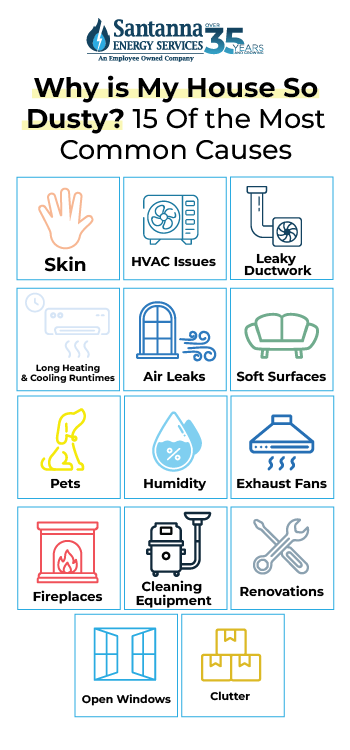
Here are the main reasons why your house is so dusty:
Most Dust Starts Indoors
Most everyday dust comes from normal living. According to the American Lung Association, "an average person sheds about 1.5 grams of skin cells each day," which is a significant contributor to indoor dust. Pet dander, fabric fibers, and lint also build up naturally over time.
When you walk across the carpet, sit on furniture, change bedding, or vacuum, those settled particles can easily lift back into the air and move around your home.
That cycle repeats throughout the day, even in very clean households.
HVAC Issues That Recirculate Dust
Your heating and cooling system moves air through the entire house. If the air filter is dirty, too basic, or does not fit tightly, fine dust can bypass it and continue circulating.
Leaky Ductwork
Leaky ductwork adds another layer. If ducts run through attics, basements, crawlspaces, or garages and have small gaps, they can pull dusty air from those areas and spread it indoors.
The system then becomes a pathway for dust movement.
Longer Heating and Cooling Runtime
The more your system runs, the more air moves. The more air moves, the more particles get lifted and re-settle.
During long winter heating seasons or extended summer heat, your furnace or AC may run frequently. That extra circulation makes dust more noticeable, even if the amount of dust being created has not changed.
This is one reason dust often feels worse during peak seasons.
Air Leaks Let Outdoor Dust In
Small gaps around windows, doors, attic penetrations, and rim joists allow outside air to enter. That air often carries soil dust, pollen, and fine particles.
Older homes are especially prone to this. Even when everything looks sealed, tiny openings can allow steady dust infiltration.
If dust feels gritty instead of soft, outdoor air may be contributing more than you think.
Soft Surfaces That Store and Release Dust
Carpets, rugs, curtains, mattresses, and upholstered furniture act like dust reservoirs. They trap particles deep inside the fibers.
When disturbed by walking, sitting, or even air movement, those particles are released back into the room. This can make dust feel like it is "coming back" quickly after cleaning.
Deep layers may also release dust weeks after it first settled.
Pets and Household Activity
Pets increase dust load significantly through hair, dander, and whatever they track indoors. Busy households with more foot traffic naturally stir up more particles. More movement equals more dust in circulation.
Humidity and Seasonal Air Changes
Very dry air allows dust to float longer before settling. Static can also make particles cling to surfaces.
Very humid air can make dust feel heavier or stickier in certain rooms. Seasonal swings in humidity change how dust behaves and where it settles.
Exhaust Fans and Negative Pressure
Another reason why your house is so dusty is that bathroom fans, range hoods, and dryers push air out of your home. When air leaves, replacement air must enter.
If that replacement air comes through small cracks instead of a controlled source, it can pull dusty air from attics, walls, basements, or garages into living spaces.
This is called negative pressure, and it is more common than homeowners realize.
Fireplaces, Candles, and Combustion Sources
Wood-burning fireplaces, candles, incense, and even frequent cooking can release fine particles into the air.
These particles settle like dust, especially near vents and in sunlight. They may appear darker or soot-like, making them more noticeable.
Attached Garage Influence
Attached garages are often overlooked as sources of dust. Car residue, concrete dust, stored boxes, and yard equipment create fine particles.
Each time the door between the garage and house opens, small amounts of that air can enter the home.
Cleaning Equipment That Re-Releases Dust
Sometimes the problem is not the cleaning itself but the equipment being used. Some vacuums with weak seals or poor filtration release fine particles back into the air.
If dust seems worse after vacuuming, it may be because fine particles were redistributed instead of captured.
In most cases, better filtration can help reduce that cycle.
Renovations or Insulation Breakdown
Home projects like drywall sanding, flooring installation, or attic work can leave fine dust that circulates for weeks.
In older homes, deteriorating attic insulation can also shed small particles that enter through ceiling gaps or duct openings.
Open Windows on Windy or Dry Days
Fresh air is great, but windy or dry conditions can carry in significant outdoor dust and pollen. You may not notice immediately, but surfaces often show the dust buildup the next day.
Cluttered or Open Storage Areas
Open shelving and decorative surfaces do not create dust, but they provide more landing space for it.
More exposed surfaces make dust more visible and harder to fully remove, even when cleaning regularly.
The simplest way to think about it is that dust is usually a clue about airflow. When it comes back quickly, your home is either creating particles, drawing them in from outside, or moving them around more than you realize.
Where Does Dust Come From?
Dust comes from both inside and outside your home, but most visible household dust is created indoors. In fact, even in tightly sealed homes, indoor activity alone can generate a steady supply of particles.
Even when windows are closed, indoor sources continue producing dust daily. That is why dust is not just a cleaning issue. It is also an airflow issue, because once particles are created, air movement determines where they settle.
Indoor Sources of Dust
Indoor sources are usually the biggest contributors, especially in homes where people and pets are active throughout the day.
These include:
- Skin cells and pet dander
- Fabric fibers from clothing and furniture
- Carpet and rug fibers
- Bedding and laundry lint
- Cooking particles
- Everyday movement
Simple daily routines like walking across a room or fluffing a blanket can lift particles back into the air. If dust feels soft and light, it is often coming from these indoor sources.
Outdoor Sources of Dust
Outdoor dust can also enter your home in small but steady ways.
It often comes through:
- Open doors and windows
- Shoes and pets
- Attached garages
- Small gaps around doors and windows
- Construction, farm fields, or busy roads nearby
If dust feels gritty instead of soft, outdoor particles may be playing a larger role. Dry, windy days can increase infiltration, even if everything looks closed and secure.
Common Signs Your House Is Dustier Than Normal
Your house may be dustier than average if you notice patterns, not just dust.
Have you found yourself wiping the same surface twice in one week? Or seeing buildup in the same spots, no matter how often you clean? That repetition is usually a clue.
Dust alone is normal. Every home has it. But patterns tell you how your home is moving air and whether something may need attention behind the scenes.
Here are the common signs your house may be dustier than normal and there may be a problem with your HVAC system:
Dust Returns Within 1 to 3 Days After Cleaning
When dust comes back this quickly, it usually means particles are still circulating instead of being captured by your filter. It can feel frustrating, especially when you just cleaned.
Most of the time, this points to airflow moving dust around rather than trapping it. Over time, that same circulation can make your system run longer and feel less steady.
Faster Buildup Near Vents or Return Grilles
If dust collects most heavily near supply vents or return grilles, it often means your HVAC system is redistributing particles.
It can be a sign that filtration, duct sealing, or airflow balance needs attention. Sometimes it also means the system is moving more air than necessary just to keep things comfortable.
One Room Consistently Dustier Than Others
When one room gets dusty faster, airflow may be uneven. That space could have blocked vents, poor return circulation, or slight pressure differences.
Over time, uneven airflow can affect comfort and make the system work harder to balance temperatures. In many cases, this is an adjustment issue, not a major repair.
Visible Dust Floating in Sunlight Daily
Seeing dust in sunlight is normal, but seeing a heavy amount every day may mean particles are staying airborne longer than they should.
That can suggest filtration or humidity levels are not quite where they need to be, which may also affect how efficiently the system runs. Small adjustments like these can improve comfort and help your system run more steadily.
A Dusty Smell When the Heat First Turns On
This is common at the start of the heating season. It usually means dust settled in ducts or on heating components during warmer months. In most homes, this fades after a few cycles.
If the smell lingers, it may be worth checking filters and airflow to make sure everything is running cleanly.
Filters Getting Dirty Faster Than Expected
If your air filter looks clogged sooner than expected, your home may be producing more dust or pulling it in from outside.
A clogged filter restricts airflow, which can lead to longer runtimes and reduced efficiency. Replacing filters regularly helps protect comfort and steady energy performance.
Dust Collecting Quickly Along Baseboards and Corners
Heavy buildup in corners often means those areas have slower airflow. When air movement is uneven, dust settles instead of being pulled back toward return vents.
Improving circulation can help reduce buildup and create more consistent comfort throughout the home.
Rooms Feeling Stuffy Even When the System Runs
Stuffy air can signal restricted airflow or filtration issues. When air does not move properly, dust lingers instead of being filtered out.
Over time, this can cause temperature swings and longer heating or cooling cycles. The good news is that airflow adjustments often make a noticeable difference.
Allergy Symptoms Feeling Worse Indoors
If symptoms improve outdoors but worsen inside, airborne particles may be circulating more than they should. Many people first notice dust issues through how the air feels.
That is usually a sign to take a closer look at filtration, airflow balance, or air sealing to improve indoor air quality.
One or two of these signs can be completely normal, especially during long Midwest heating seasons. But when several appear together, they often point to airflow, filtration, or seasonal energy patterns that deserve a closer look. Dust is visible. The way your home moves air is the real story behind it.
Does Running the Heat or AC Make My House Dustier?
Yes, running your heat or AC can make your house feel dustier because it moves air more often and keeps particles circulating. If it seems like dust gets worse during peak heating or cooling seasons, you're not alone. Many homeowners notice the same thing once the system starts running more often.
Heating and cooling systems push air out through supply vents and pull it back through return vents. That constant airflow lifts settled dust and redistributes it throughout the home. So even though the system does not create dust, it can make existing dust more noticeable.
This is why you may see more dust during the heating season or long summer cooling stretches. The more the system runs, the more air moves. The more air moves, the more dust gets stirred up and resettles on surfaces.
If the air filter is dirty, low quality, or not fitted tightly, even more dust can circulate. Keeping the filter clean helps reduce how much dust gets moved around.
So, the short answer is yes. Your HVAC system can make your home feel dustier, especially when it runs frequently, because it keeps dust in motion.
How Ductwork Contributes to Dust
Ductwork can contribute to dust when there are small gaps or loose connections that allow unfiltered air to enter the system. This is especially common in basements, attics, crawlspaces, or garages where dust tends to settle.
If ducts have openings in those areas, they can draw in dusty air and circulate it through the house. It is not something most homeowners see, but it happens quietly behind walls and ceilings.
Sealing ducts can improve heating and cooling efficiency and reduce the risk of pollutants entering the system. Return ducts are especially important because they pull air back to the unit, so leaks on that side can act like a vacuum.
ENERGY STAR notes that leaky ducts can also reduce efficiency by up to 20%, which may cause your system to run longer to keep your home comfortable. When that happens, you may notice both increased dust movement and longer runtimes.
Some dust inside the ductwork is normal. Ducts do not create dust. But if they are not sealed properly, they can circulate more of it and make the system work harder than it needs to.
Can a Dusty House Increase Your Electric Bill?
Yes, a dusty home can increase your electricity bill. While dust itself does not use electricity, the conditions that cause excess dust can affect how much energy your home uses. This leads to higher bills because your HVAC system has to work harder to correct temperature imbalances.
When airflow is restricted, your heating or cooling system has to run longer to reach the same temperature. A dirty filter limits airflow, forcing your system to work harder.
Here is the simple connection:
If your system runs longer, it uses more energy. When dust builds up on parts like the evaporator coil, cooling performance can drop, which also leads to longer run times.
For example, the U.S. Department of Energy notes that central air conditioning can use more than 2,000 kWh per year in an average home. If dust and airflow issues cause your AC to run just 5% to 10% longer, that could be roughly 100 to 200 extra kWh per year.
Using a typical residential electricity price around 17.78 cents per kWh, that's about $18 to $36 per year, or roughly $2 to $6 per month during the months you're cooling the most. Your actual numbers can be higher or lower depending on your system, weather, and local rate.
So, dust is not the direct cause of a higher bill. But it can be a visible sign that airflow and system efficiency need attention.
Why a Clogged Filter Makes Your System Work Harder
When your filter is clogged, the blower has to work harder to pull air through. Think of it like trying to breathe through a thick cloth.
Less air reaches your rooms, so the system runs longer just to hit the same temperature. That is when rooms start feeling stuffy or uneven.
ENERGY STAR explains it simply: a dirty filter restricts airflow, making the system work harder to keep you comfortable.
The good news is that this is one of the easiest issues to prevent. Checking and changing the filter once a month helps your system breathe, run more smoothly, and maintain comfort without working overtime.
How To Eliminate Dust from Your Home
Avoiding dust buildup starts with understanding how it enters and moves through your home. Once you see how air carries particles from room to room, it becomes less about cleaning and more about managing airflow.
If dust keeps returning quickly, it usually means something in the airflow, filtration, or entry points needs small adjustments. The goal here is not more cleaning but better control of how air and particles behave inside your home.
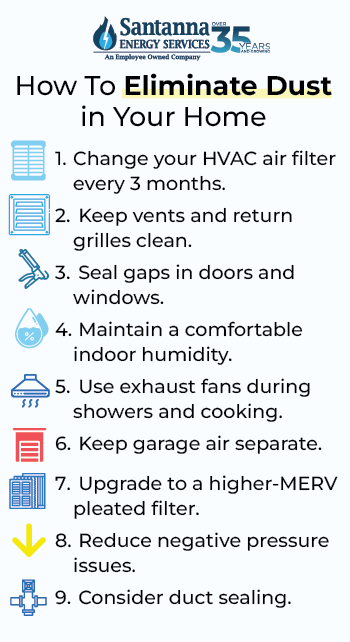
Here are practical ways to reduce dust from building up in your home in the first place:
Change your HVAC Air Filter Every 3 Months
Most manufacturers, including brands like Carrier, recommend replacing standard HVAC filters every 3 months. During heavy heating or cooling seasons, it is wise to check the filter monthly.
A clean filter traps dust before it circulates through your home. When the filter becomes clogged, airflow slows down, and particles are more likely to recirculate.
Replacing it regularly reduces dust movement and helps your system operate more steadily and efficiently. It is one of the simplest fixes that makes a noticeable difference.
Keep Vents and Return Grilles Clear
Furniture, rugs, and curtains can block airflow if they cover vents or return grilles. When air cannot move freely, circulation becomes uneven, and dust may settle more heavily in certain rooms.
Keeping vents clear supports balanced airflow and helps your system pull particles back toward the filter.
Seal Visible Gaps Around Doors and Windows
Small air leaks allow outside air and fine particles to enter your home. Even tiny openings can bring in more dust than you might expect, especially during windy or cold seasons.
Sealing visible gaps reduces uncontrolled airflow and limits how much outdoor dust gets pulled inside. It also helps maintain more stable indoor temperatures.
Maintain Comfortable Indoor Humidity
Very dry air allows dust to stay airborne longer before settling. Balanced indoor humidity helps particles settle more predictably and can make dust less noticeable.
Managing humidity can improve comfort and help your heating and cooling system run more consistently during winter and summer. When air feels balanced, your furnace or AC does not have to work as hard to maintain steady temperatures.
Use Exhaust Fans During Cooking and Showers
Cooking and showering release moisture and fine particles into the air. Running exhaust fans helps remove those particles before they settle on surfaces.
Just be mindful not to run them longer than needed, since that can affect airflow balance.
Keep Garage Air Separate
If you have an attached garage, minimizing how long the door between the garage and home stays open reduces the amount of dusty air entering your living space. Garages often contain fine concrete dust and vehicle residue that can easily travel indoors.
Simple habits like closing the door fully, avoiding leaving it propped open, and keeping the garage floor and storage areas tidy can help reduce how much dusty garage air enters your home.
Upgrade To a Higher‑MERV Pleated Filter
A higher‑MERV pleated filter helps eliminate dust at the source by capturing much smaller particles before they circulate through your home's airflow. Pleated filters have more surface area and are designed to trap more dust, pet dander, and fine particles than basic fiberglass filters.
It is important to choose a filter your system can handle. A filter that is too restrictive can reduce airflow, so balance matters.
Reduce Negative Pressure Issues
Negative pressure occurs when exhaust fans or airflow imbalances pull air into your home from unwanted places like attics, basements, garages, or wall cavities. If dust enters through small cracks instead of a controlled source, it can contaminate the air from surrounding spaces.
To fix this, run exhaust fans only long enough to push dusty air out of your home, and seal air gaps around doors, windows, and attic access points.
Consider Duct Sealing if Dust Persists
If dust builds up unevenly between rooms or seems excessive despite regular maintenance, duct sealing may help. Properly sealed ducts reduce the chance of pulling dusty air from attics or crawlspaces and can also support more efficient heating and cooling.
Every lived-in home produces dust. The key is managing airflow, filtration, and daily habits, so dust becomes more predictable and easier to control. When air moves properly and particles are captured effectively, your home feels cleaner and more comfortable overall.
Which Air Filter Should You Choose?
The best air filter is one that catches dust without making your system struggle to move air. But with so many options on the shelf, how do you know which one is actually right for your home?
It does not have to be the most expensive option. It just needs to match your system and your home's needs. Here's a simple breakdown:
Fiberglass Filters
These are the thin, basic ones. They catch larger dust and lint, but not as many of the finer particles. Air moves through them easily, which most systems handle well.
If your main goal is protecting the equipment rather than improving air quality, these are often what builders install by default.
Pleated Filters
These are the most common upgrade. They have more surface area, so they catch more dust and pet dander than the basic ones. For many homes, this is a comfortable middle ground.
They offer better filtration without usually restricting airflow too much, which is why many homeowners settle here.
Washable Filters
These can work well, but only if you clean them regularly. If they stay dirty, they block airflow just like a clogged disposable filter.
If you do not clean them, they will not work properly.
Thicker Filters (if your home has a deeper slot)
Some systems use thicker filters. These often do a better job catching dust while still allowing good airflow because they have more room for particles to collect.
Not every system is built for them, so it is worth checking what your unit is designed to handle.
You may also see something called a MERV rating on the package. That number tells you how well the filter captures particles. Many homes are designed around a moderate rating. Higher numbers can catch smaller particles, but they can also make airflow tighter if your system isn't built for it.
If you switch filters and notice weak airflow or rooms feeling stuffy, the filter may be too restrictive.
Do Air Purifiers Actually Reduce Dust?
Air purifiers can reduce airborne particles, but they can't fix dust sources or airflow issues.
The Environmental Protection Agency explains that most portable air cleaners are designed to reduce particle levels within a room. That can help with fine particles floating in the air, but they do not eliminate dust sources or correct airflow imbalances in the home.
If dust keeps returning quickly, it's usually better to look at filters, ductwork, and air leaks first. Air purifiers can be helpful support, but they are not the full solution.
How To Reduce Dust at Home
Even in a well-sealed home, everyday habits can contribute to how much dust builds up. Soft surfaces, fabrics, and daily movement all generate and redistribute particles. It is something most of us do not think about until we notice buildup again.
These practical habits help limit how much dust accumulates between cleanings and reduce how often it returns:
Choose Lower-Lint Fabrics When Possible
Some rugs, blankets, and decorative fabrics shed more than others. If you have ever shaken out a throw blanket and seen fibers float in the air, you have seen this in action.
Choosing lower-shedding materials gradually reduces how much new dust gets created indoors.
Vacuum Regularly With a HEPA-Filter Vacuum
Vacuuming with strong filtration helps capture fine particles instead of releasing them back into the air. Some vacuums without proper sealing allow dust to escape during use.
A vacuum with HEPA filtration keeps those particles contained, which reduces the amount that resettles on furniture and floors later.
Use Microfiber Cloths Instead of Feather Dusters
Feather dusters tend to move dust around more than remove it. You wipe one surface, and it settles somewhere else.
Microfiber cloths trap dust inside their fibers, so it actually gets removed instead of just relocated.
Remove Shoes at the Door
Shoes track in soil, pollen, road residue, and other outdoor debris. When those particles are spread across floors and carpets, they can easily be stirred back into the air.
Leaving shoes at the door is one of the simplest ways to reduce how much outdoor dust enters your home.
Groom Pets Regularly
Pets naturally shed hair and dander. If you have a pet, you already know how quickly it adds up.
Brushing them regularly removes loose hair before it spreads through the house and settles on surfaces.
Wash Bedding and Curtains Regularly
Fabric collects skin cells, lint, and fibers over time. You may not see it, but it builds up.
Washing sheets, pillowcases, blankets, and curtains removes those particles before they get stirred back into the air.
Deep Clean Soft Surfaces Periodically
Mattresses, couches, and carpet padding hold dust deep inside. Surface cleaning does not always reach those layers.
Occasional deep cleaning helps remove buildup that would otherwise keep releasing particles over time.
Manage Fabric-Heavy Areas Carefully
Carpets, curtains, bedding, and upholstered furniture naturally hold dust. Movement, even just walking through a room, can release it back into the air.
Regular vacuuming with good filtration helps capture particles before they get released back into the air during normal movement.
Avoiding dust is really about managing airflow and entry points. When your home's air moves predictably and your system filters properly, dust becomes far less noticeable and much easier to stay on top of.
Dust is a normal part of living in any home. If it feels like it's building up faster, pay attention to the pattern.
How quickly does it return? Is it worse during the heating season? Those clues often point to airflow and system behavior, not just cleaning habits.
In many Midwest homes, longer furnace runtimes mean more air moving and more dust being stirred up. When filters are clean and airflow is balanced, your system runs more efficiently, and your home feels more comfortable. Small maintenance habits make a real difference.
And because heating systems run so often during Midwest winters, having predictable energy planning matters too. When your home is working harder during cold months, a predictable supply charge can make budgeting feel more manageable.
Santanna's Unlimited Energy Plan is designed to provide predictable monthly supply charges*, even during long heating seasons. That stability supports the same goal as good airflow and maintenance: a home that feels easier to manage.
* Restrictions apply. Enrollment based upon program eligibility. Customers using more than 125% of normal monthly usage as determined by Santanna may be required to switch plans.
Jenna Mendez is a Midwest native with lifelong roots in Illinois and time spent in Ohio during college, giving her a deep understanding of the Midwest region’s people, climate, and energy needs. She brings firsthand experience and local insight to topics that matter to Midwest homeowners, especially energy efficiency, sustainability, and home living. Jenna specializes in writing about eco-friendly living, all things Midwest, renewable energy, and practical ways to reduce energy costs. Jenna brings a trusted, and local hometown voice to every article she writes, helping readers live well, and sustainably, right where they are.