
How Much Electricity Does a Pool Pump Use?

by Jenna Mendez
Updated: October 8, 2026
17.1 min read
Key Points of This Article:
- Pool pumps can use a significant amount of electricity—typically 90–270 kWh per month—making them one of the largest energy users in a home, especially during summer when they run daily.
- The type of pump matters most: single-speed pumps use the most energy, dual-speed are moderately efficient, and variable-speed pumps use the least—potentially reducing energy use by up to 90%.
- Runtime is the biggest driver of energy use, with most pumps running 8–12 hours per day (or longer in hot weather), which can significantly increase monthly electricity bills.
- You can lower costs by improving efficiency—such as using a variable-speed pump, reducing unnecessary runtime, and maintaining the system—with average operating costs ranging from about $18 to $47 per month depending on the setup.
Pool pumps often run for hours each day, especially during hot Midwest summers when pools are used the most. But many homeowners don't realize how much electricity they use or how that translates into real costs.
As an electricity supplier who's served Midwest homeowners for over 35 years, we've seen how seasonal habits like pool use can quietly increase energy usage, and we're here to help you make sense of it.
Depending on the type you use, a pool pump can use between 90-270 kilowatt-hours of electricity per month. Compared to other appliances in your home, this is a significant amount of electricity. But how can this translate on your bill in the summer? Let's find out.
What Types of Pool Pumps Are There, and How Do They Use Electricity?
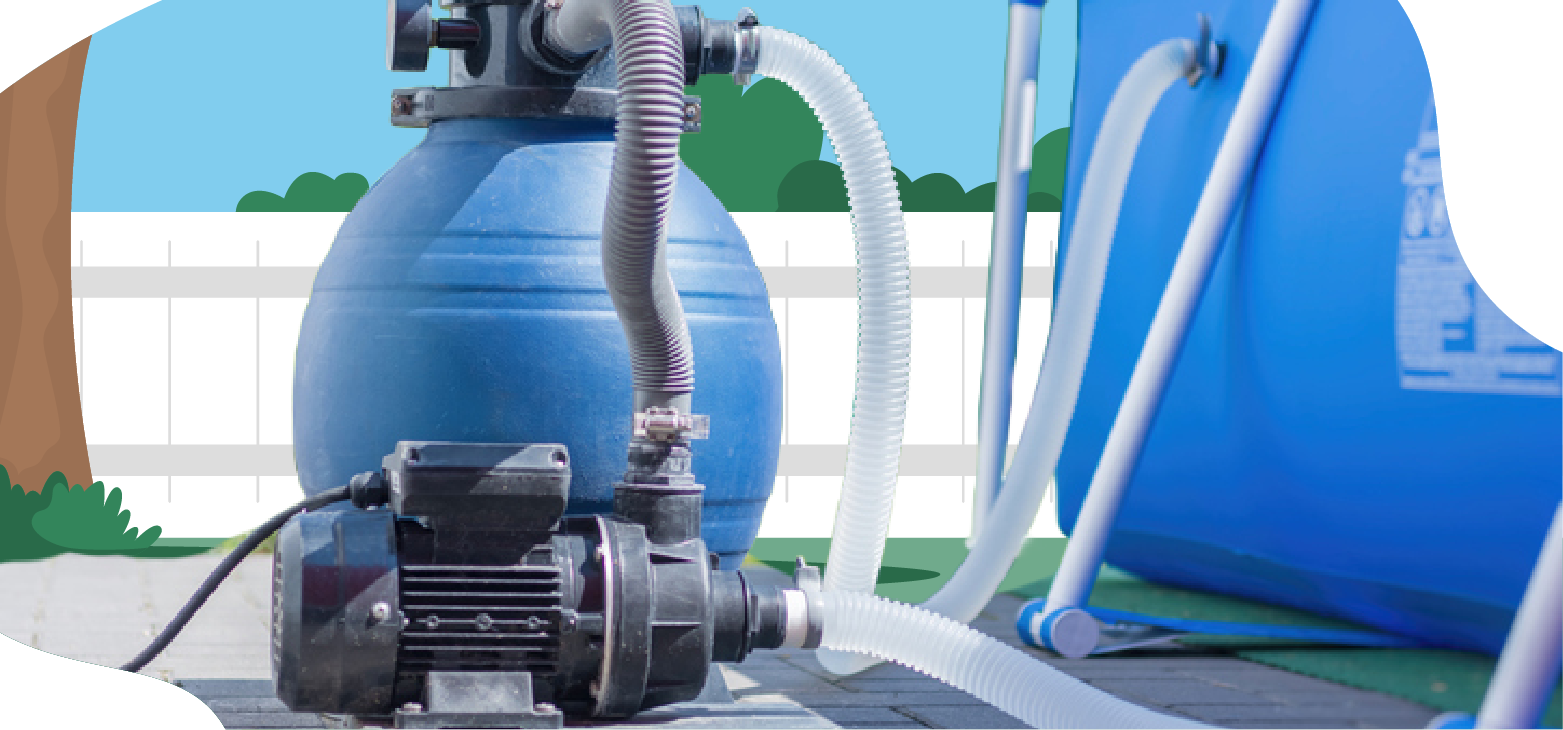
Pool pumps come in three main types: a single-speed, dual-speed and variable pump; each one uses electricity differently based on how it controls speed and power.
Even though all pool pumps do the same job of circulating and filtering water, the way they run has a direct impact on how much energy they use. That difference can show up clearly on your electric bill, especially during the summer when your pump runs every day.
Let's walk through the main types of pool pumps and how each one uses electricity:
Single-Speed Pool Pump
A single-speed pool pump uses electricity at a constant, full-power level every time it runs.
Because it cannot adjust its speed, it uses the same amount of energy whether your pool needs heavy cleaning or just basic circulation. This makes it the least energy-efficient option with a single-speed pool pump using around 9 kilowatt-hours of electricity per day.
Moreover, a typical 1.5 HP single-speed pump using 1,100–1,200 watts for 8 hours a day can use around 270 kWh per month and may cost about $288 for the unit. Many older homes still have this type because it is simpler and has a lower upfront cost, but the steady energy use can add up over time, especially when it runs for several hours each day.
Dual-Speed Pool Pump
A dual-speed pool pump uses electricity at one of two fixed settings, either high or low, depending on how it is being used. A dual-speed pool pump can use anywhere from 6-7 kilowatt-hours of electricity a day.
And a 1.5 HP dual-speed pump using 1,100–1,200 watts for 8 hours may use around 180-210 kWh per month and cost about $288 for the unit. This model gives homeowners a practical way to lower energy use while still keeping upfront costs relatively affordable.
The high speed setting on a dual speed pool pump is typically used for tasks like vacuuming or cleaning, while the low speed is used for regular daily circulation. Since the pump can run at a lower setting most of the time, it uses less electricity compared to a single-speed pump.
Variable-Speed Pool Pump
A variable-speed pool pump uses electricity based on adjustable speed settings, allowing it to run at lower power when full speed is not needed. A variable-speed pool pump uses 3-4.5 kilowatt-hours of electricity a day.
And a 1.5 HP variable-speed pump using 1,100–1,200 watts for 8 hours may use around 90-135 kWh per month and typically costs about $500-$600 for the unit.
While it has a higher upfront cost, the lower daily energy use can help reduce electricity costs over time, especially during months when the pump runs regularly.
Instead of running at full power all the time, a variable-speed pool pump can operate more efficiently by matching the speed to the pool's needs. This reduces how much electricity it uses over the course of the day.
Note that actual energy usage for each pool pump model depends on runtime, settings, and system efficiency.
Do Pool Pumps Use a Lot of Electricity?
Pool pumps can use a significant amount of electricity between 90-270 kilowatt-hours of electricity per month In fact, according to the U.S. Department of Energy, a pool pump can be one of the largest energy users in your home, often second only to your air conditioner or heat pump, and it may cost up to about $270 per year in electricity.
Pool pumps are often one of the largest electric motors in your home, and their energy use adds up over time. What really drives electricity use is how long the pump runs.
Swim University notes that most pool pumps run around 8 to 12 hours per day, often including the hottest part of the day. During periods of heavy use, extreme heat, or when treating cloudy water or algae, pumps may run longer, sometimes up to 24 hours.
While hot weather does not directly increase how much electricity the pump uses per hour, it can lead to longer runtimes because higher temperatures can increase algae growth and reduce water clarity, requiring more circulation.
Because of this extended runtime and the fact that pool pumps run in the background on a set schedule, they can quietly become a steady part of your home's daily energy use.
Using a more efficient pump and running it only as long as needed can help reduce that energy use while still keeping your pool in good condition.
How Much Electricity Does a Pool Pump Use?
A pool pump typically uses about 270 to 360 kWh per month for pumps in the 1.5 HP to 2 HP range, depending on the pump size and type.
For most homeowners, this means a pool pump can add a few hundred kilowatt-hours to your monthly electricity use, especially during the summer when it runs daily. The exact amount depends on the pump's horsepower and how it operates, but even small differences in size and runtime can make a noticeable difference in your overall energy use.
In simple terms, the more powerful your pump is and the longer it runs each day, the more electricity it will use over the course of a month.
To better understand how these numbers vary, let's look at how much electricity a pool pump use per month, week, day and through the summer season:
Average Pool Pump Electricity Use by Type at 1.5 HP (Assumes 8 hours of usage per day and approximately 94 summer days of use per year)
| Pool Pump Type | Estimated Wattage | Hourly Use (kWh) | Daily Use (kWh) | Weekly Use (kWh) | Monthly Use (kWh) | (94 Summer Days)
(kWh) |
| Single-Speed Pool Pump | 1,119 W | 1.119 | 8.952 | 62.664 | 268.56 | 841.49 |
| Dual-Speed Pool Pump | 783 W | 0.783 | 6.264 | 43.848 | 187.92 | 588.82 |
| Variable-Speed Pool Pump | 448 W | 0.448 | 3.584 | 25.088 | 107.52 | 336.90 |
To estimate electricity use, we converted horsepower to watts using 1 HP = 746 watts and multiplied it by the pump’s horsepower. This helps give a simple estimate since most pool pumps are labeled in horsepower. Actual usage may vary based on the pump type and how it is used.
Which Pool Pump Type Uses the Least Amount of Electricity?
Variable-speed pool pumps use the least electricity when compared to the same horsepower. Because they can adjust their speed instead of running at full power all the time, they can reduce energy use by up to 90% while still keeping your pool properly circulated.
This is because it can adjust its speed throughout the day instead of running at full power all the time. A single-speed pump runs at one constant speed, while a dual-speed pump can switch between two fixed speeds. In contrast, a variable-speed pump can run at many lower speeds, using only the amount of power needed at any given time.
Because all pumps in this comparison are based on the same 1.5 HP, the difference in electricity use comes from how each pump operates. Single-speed pumps run at full power all the time, while dual-speed and variable-speed pumps reduce energy use by running at lower speeds when full power is not needed.
In simple terms, even if two pumps have the same horsepower, a variable-speed pump will usually use less electricity because it adjusts its power instead of running at full speed all day.
What Factors Affect Pool Pump Energy Consumption the Most?
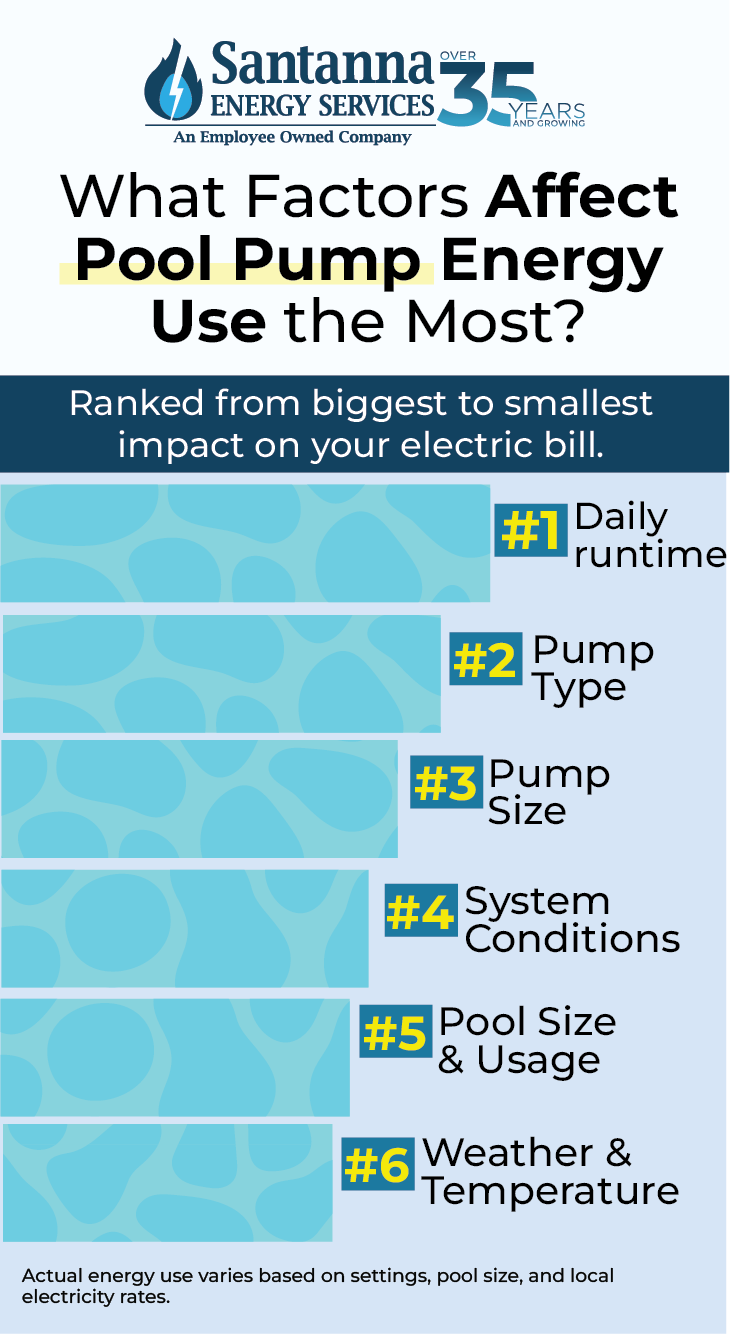
Pool pump energy use depends on pump type, runtime, pool size, system condition, and your electricity rate. Even if two homes have a pool, their electricity use can look very different.
Here are the main factors that affect how much electricity your pool pump uses, starting with the biggest impact:
Daily Runtime
Daily runtime affects energy use because the longer your pool pump runs each day, the more electricity it consumes overall.
The more hours it runs, the more electricity it uses. Many homeowners run their pumps longer than necessary, which can increase energy use without providing much added benefit.
Pump Type (Efficiency Differences)
Pump type affects energy use because different pumps run at different speeds and levels of efficiency.
Single-speed pumps run at full power all the time, while dual-speed and variable-speed pumps can operate at lower settings when full power is not needed. This difference can lead to noticeable changes in monthly energy use.
Pump Horsepower (HP)
Pump horsepower affects energy use because higher horsepower pumps require more electricity to move water through your pool system.
Higher horsepower pumps move water faster, but they also use more electricity. If your pump is larger than what your pool actually needs, it may be using more energy than necessary every time it runs.
Pump Size
Pump size affects energy use because a pump that is too large for your pool will use more electricity than needed to circulate water.
A pump that is too large can move water faster than necessary, which increases electricity use without improving performance. A properly sized pump helps balance efficiency and effectiveness.
System Condition (Dirty Filters, Leaks)
System condition affects energy use because dirty filters, clogs, or leaks make your pump work harder and run longer to move water.
When there is resistance in the system, the pump has to work harder and may run longer to maintain proper circulation, which increases electricity use over time.
Pool Size and Usage
Pool size and usage affect energy use because larger pools and frequent use require more water circulation and longer pump operation.
More water and more activity mean the pump needs to run longer to keep the pool clean, which increases overall energy use.
Weather and Temperature
Weather affects energy use because hotter conditions often lead to longer pump runtime, even though the pump does not use more electricity per hour.
During hot weather, pools are used more often and may need more circulation to maintain water quality, which increases total energy use over time.
How Long to Run a Pool Pump Each Day
Most residential pool pumps should run about 8 to 12 hours per day to maintain proper circulation and water quality. The exact runtime depends on factors like pool size, pump type, weather conditions, and how often the pool is used.
Smaller pools or those with efficient variable‑speed pumps may need fewer hours, while larger pools or older single‑speed pumps often require longer runtimes.
In general, the goal is to circulate the entire pool volume efficiently, not to run the pump all day especially during hours when you’re not using your pool.
How Does a Pool Pump’s Electricity Use Compare to Other Home Appliances?
A pool pump can use more electricity than many common household appliances, especially during the summer when it runs daily.
To put this into perspective, here’s how a typical pool pump compares to other appliances in your home based on estimated monthly electricity use.
Pool Pump vs. Common Household Appliances Monthly Electricity Use Comparison
| Appliance | Estimated Monthly Electricity Use |
| Pool Pump (1.5–2 HP) | 90–270 kWh |
| Central AC | 630 kWh |
| Window AC Unit | 180 kWh |
| Refrigerator | 108 kWh |
| Dryer | 60 kWh |
| Dishwasher | 22.5 kWh |
| Oven | 25 kWh |
| Computer | 24 kWh |
| TV | 12 kWh |
| Microwave | 5 kWh |
| Coffee Maker | 5 kWh |
Appliances like your dryer or refrigerator run regularly, but they usually use much less electricity than a pool pump that runs for several hours each day.
In many homes, a pool pump can use more electricity than most kitchen appliances combined and is often only matched or exceeded by systems like central air conditioning.
How Much Does It Cost to Run a Pool Pump?
It typically costs about $18 to $47 per month to run a pool pump, depending on the pump size, type, and how long it runs each day.
At the average electricity rate of 17.45 cents per kWh reported from the U.S. Energy Information Administration (EIA) as of January 2026, a 1.5 HP single-speed pool pump costs about $47 per month in terms of electricity use, while a 1.5 HP dual-speed pump costs around $32 per month. A 1.5 HP variable-speed pump is the cheapest at about $18 per month.
For most homeowners, this means a pool pump can add a noticeable amount to your monthly electricity bill, especially during the summer when it runs daily for several hours. The total cost depends on your pump's horsepower, how efficiently it runs, and how many hours you use it each day.
To better understand how these costs compare, let's look at the cost breakdown by pool pump type below.
Average Pool Pump Cost by Type at 1.5 HP (Based on $0.1745 per kWh from the U.S. Energy Information Administration and 8 hours of usage per day)
| Pool Pump Type | Estimated Wattage | Hourly | Daily | Weekly | Monthly | The Summer Season (94 Days) |
| Single-Speed Pool Pump | 1,119 W | $0.20 | $1.56 | $10.94 | $46.86 | $146.64 |
| Dual-Speed Pool Pump | 783 W | $0.14 | $1.09 | $7.65 | $32.72 | $102.52 |
| Variable-Speed Pool Pump | 448 W | $0.08 | $0.63 | $4.38 | $18.76 | $58.77 |
Which Pool Pump Type Gets the Biggest Savings?
Variable-speed pool pumps offer the biggest savings when compared to the same horsepower because they adjust their speed and use less electricity over time.
What really matters is how the pump operates. Single-speed pumps run at full power all the time, while variable-speed pumps can run at lower speeds for longer periods. This allows them to use less electricity in real-world use, even if the upfront cost is higher.
In simple terms, if you are looking for long-term energy savings, variable-speed pumps are usually the most efficient option, especially when compared to the same size.
How Does a Pool Pump Affect Your Overall Home Energy Use?
A pool pump increases your overall home energy use by adding a steady, daily load on top of your other appliances, especially during the summer months.
During warmer weather, your home is already using more electricity from systems like your air conditioner, fans, and everyday appliances. When you add a pool pump that runs for several hours a day, it becomes part of your home’s baseline energy use, which means your total electricity use is not just higher, but consistently higher throughout the day.
Pool pumps run 8 or more hours each day in the background, which can quietly add to your total electricity usage even though nothing else has changed in your routine.
Another common situation is during very hot days; your air conditioner runs longer to keep your home comfortable while your pool pump runs at the same time. When both systems are running at the same time for extended periods, your daily energy use can increase more than expected.
This combined demand is most noticeable during peak summer months, when multiple systems are running together and for longer hours. Because of this, budgeting for energy can feel more difficult.
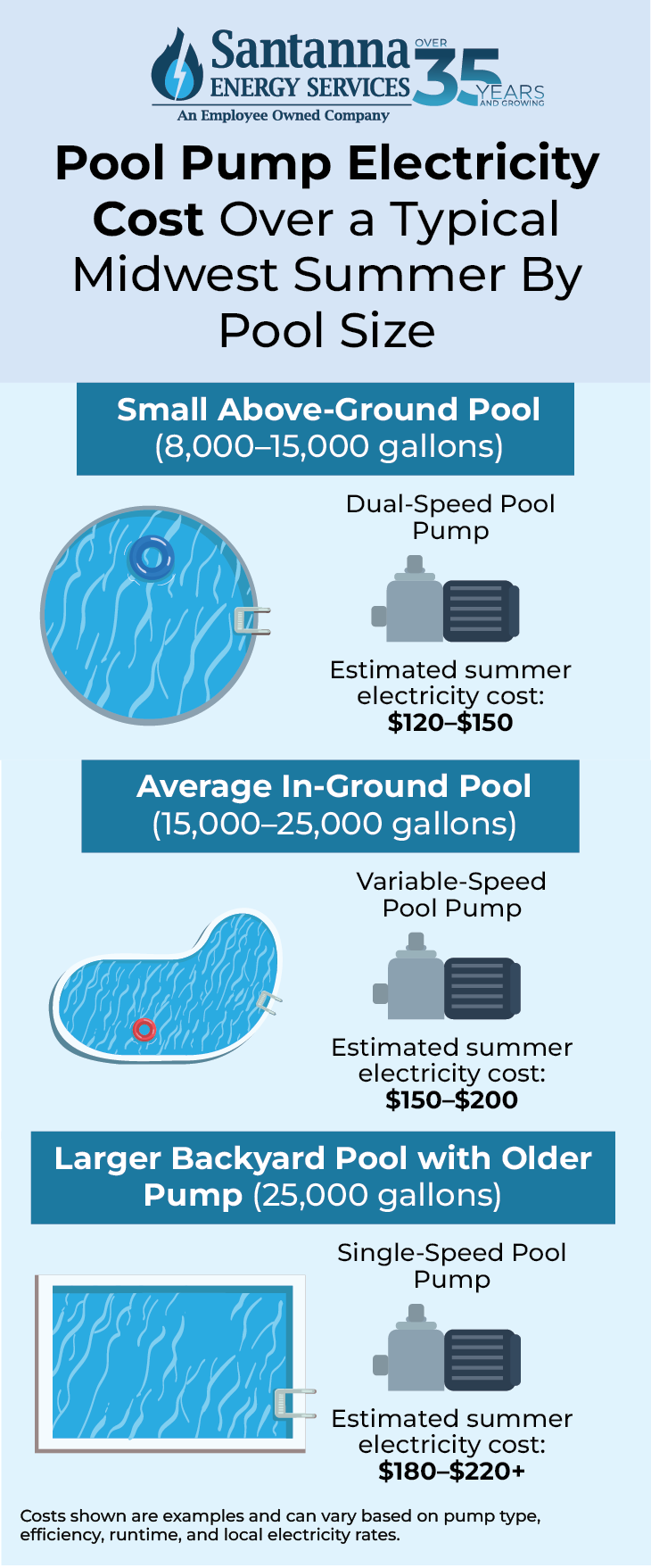
Pool Pump Electricity Cost Over a Typical Midwest Summer (Example Scenarios)
Pool pump costs can vary depending on your pool size, pump type, and how long it runs each day, but looking at real-life examples can help you understand what to expect.
In the Midwest, many homeowners use their pools for about 94 summer days, so even small differences in setup can lead to noticeable changes in total energy cost.
Here are a few common scenarios of how having a pool and a pool pump can inflate your electricity bill:
Small Above-Ground Pool
A small above-ground pool (an 8,000–15,000 gallon pool that’s 12–18 ft wide) typically uses a lower horsepower pump and shorter runtime each day.
For example, a 1 to 1.5 HP pump running about 6 to 8 hours per day may cost around $120 to $150 over the summer season. Because the pool is smaller and easier to circulate, it typically requires less energy to maintain clean water.
Compared to an average in-ground pool, a smaller pool can sometimes cost a bit less to run than an average in-ground pool.
Average In-Ground Pool
An average in-ground pool (in the 15,000–25,000 gallon range) often uses a mid-sized pump and runs longer to maintain proper circulation.
For example, a 1.5 to 2 HP pump running about 8 hours per day may cost around $150 to $200 over the summer. This is one of the most common setups, and costs can vary based on how efficiently the pump runs and how often the pool is used.
Larger Backyard Pool with Older Pump
In pools over 25,000 gallons, older single-speed pumps often drive higher electricity use simply because they lack efficiency controls.
For example, a 1.5 HP or higher single-speed pump running 10 to 12 hours per day may cost around $180 to $220 or more over the summer season. Older pumps run at full power all the time, which can significantly increase energy use, especially during hot weather or heavy pool use.
For example, compared to a newer or more efficient pump, an older single-speed model like this could add roughly $10 to $20 per month to your electricity bill during the summer, depending on your local electricity rate and how long the pump runs each day.
These examples show that your total cost depends on a combination of pump size, runtime, and efficiency. Even within the same neighborhood, two homes with pools can have very different energy costs based on how their systems are set up and used.
Can Running Your Pool Pump at Night Save You Money on Energy?
Running your pool pump at night helps you save money if your electricity plan allows for lower rates during off-peak electric hours.
For most homeowners on standard fixed-rate or flat-fee plans, the cost of electricity stays the same throughout the day. In these cases, running your pump at night will not reduce your energy cost, since you are using the same amount of electricity overall.
Outdoor temperature also does not significantly change how much electricity your pump uses per hour. However, it can affect how long your pump needs to run. For example, during very hot days, your pool may need more circulation to stay clean, which can increase total energy use.
In simple terms, running your pool pump at night does not automatically save money. It mainly makes a difference if your plan includes time-based pricing or if cooler conditions help reduce how long your pump needs to run.
FAQs
How many hours should I run my pool pump daily to minimize costs?
Most residential pool pumps should run about 8 to 12 hours per day to maintain clean water while avoiding unnecessary energy use.
Do pool pumps need to run every day?
Yes, most pool pumps need to run daily to circulate water and maintain proper filtration and chemical balance.
Running a pool can make summer more enjoyable, but it also adds a steady layer of energy use that often shows up in your bill once the season is in full swing. The key is knowing that your total cost comes down to how your pump runs, how long it runs, and the rate you are paying for that energy.
The good news is this is manageable once you understand it.
And while you can control how your pool uses energy, having a plan that helps keep your costs predictable can make things even easier. With Santanna’s Unlimited Energy plan, you can enjoy your pool season without second-guessing every hour it runs* and explore a setup that keeps your supply charge predictable all season long.
Restrictions apply. Enrollment based upon program eligibility. Customers using more than 125% of normal monthly usage as determined by Santanna may be required to switch plans.
Jenna Mendez is an experienced energy content professional who has spent four years researching, writing, and managing authoritative educational content for Midwest energy consumers at Santanna Energy Services. As a lifelong Illinois resident, Jenna brings firsthand knowledge of the region’s climate, communities, and household energy needs to her work.
She specializes in translating complex energy topics into clear, practical guidance about electricity and natural gas costs, appliance energy use, energy efficiency, and everyday home living. Drawing on industry research, Santanna customer data, and insights from experienced energy professionals, Jenna incorporates this knowledge into her content to help homeowners better understand their energy choices and make informed decisions for their households.