
How Long Does Food Last in a Power Outage? Fridge Safety

by Tyler Castle
Updated: June 1, 2026
12.8 min read
Key Points of This Article:
- Food usually stays safe in a fridge for up to 4 hours if left unopened during a power outage.
- Foods like milk, meat, eggs, and leftovers become unsafe once refrigerator temperatures rise above 40°F.
- Preparing ahead with simple things like ice packs, thermometers, and a backup cooler can help reduce food waste during storm season.
- Even if food looks or smells normal after an outage, harmful bacteria that can cause foodborne illness may still grow if it was warm for too long.
The power finally comes back on after an outage, and like many homeowners, you're probably standing in front of the fridge thinking, "Okay… is this food still safe to eat?"
Power outages are very common. In a recent internal survey, we found that 85% of Santanna employees have experienced a power outage in the past year, and food safety concerns are a priority.
The quick answer to food safety during a power outage: Food in the refrigerator is usually safe for up to 4 hours if the door stays closed. A full freezer stays safe for about 48 hours, and a half-full freezer for about 24 hours. After that, perishable foods should be thrown away if they have been above 40°F for more than 2 hours.
But what should you throw away and when? We follow food and safety recommendations from FoodSafety.gov and the U.S. Food and Drug Administration (FDA), and are here to share the answer.
How Long Does Food Last in a Fridge During a Power Outage?
Food in the fridge is usually safe for up to 4 hours during a power outage if the door stays closed.
After the power goes out, your refrigerator starts to warm up right away. As long as the door remains closed, the cold air inside helps keep food at a safe temperature for a short period of time.
Once the temperature rises above 40°F for more than 4 hours, bacteria can begin to grow more quickly, increasing the risk of foodborne illness such as vomiting, diarrhea, abdominal pain, and flu-like symptoms, according to the FDA.
Perishable items are the most sensitive during this time. Foods like milk, meat, eggs, and leftovers should be handled carefully because they can spoil quickly once the fridge warms up. Even if they look or smell fine, they may no longer be safe to eat if they have been above 40°F for too long.
If you are not sure how long the power has been out, it is safer to assume the fridge has been warming and treat perishable food with caution. Keeping the door closed and limiting how often you check inside can help you get the most out of that 4-hour safety window.
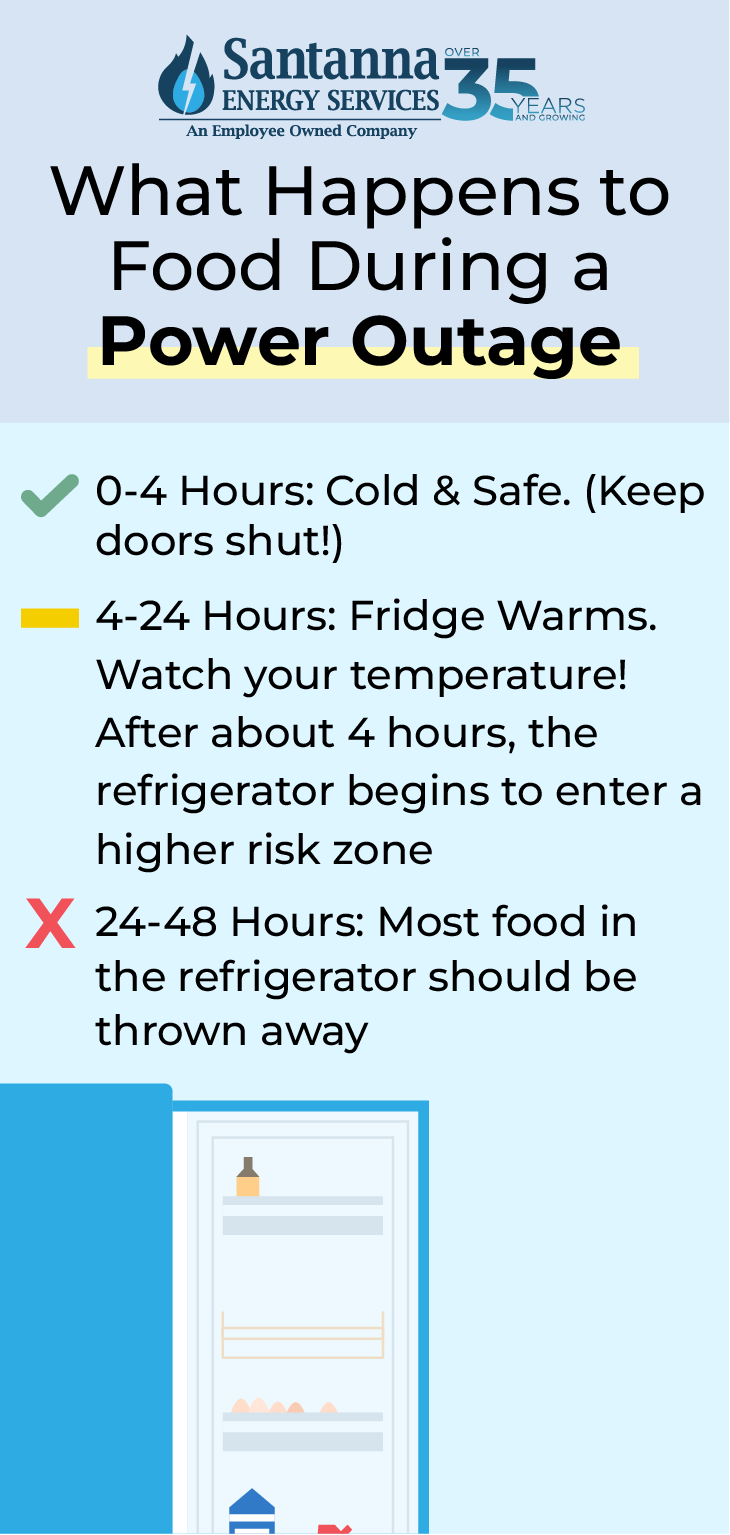
What Happens to Food During a Power Outage? An Official Timeline
Food safety during a power outage depends on how long the power has been out and how quickly your refrigerator warms up.
When the power goes out, your refrigerator does not lose its cold temperature all at once. Instead, it slowly warms up as the hours pass.
Here’s a simple timeline of what typically happens to refrigerated and frozen food during a power outage as temperatures slowly begin to rise, and what to do about it:
0–4 hours
During the first 4 hours, food in the refrigerator is generally safe as long as the door stays closed. The cold air trapped inside helps keep the temperature below 40°F for a short period. In the freezer, food remains frozen and safe because it holds cold much longer than the fridge.
This is the safest window, and your main goal is to avoid opening the doors so that cold air does not escape.
4–24 hours
According to the FDA, after about 4 hours, the refrigerator enters a higher-risk zone, or the “danger zone,” where food rises above 40°F.
Perishable foods like milk, meat, eggs, and leftovers may start to warm up and reach unsafe temperatures. Even if they still feel cool, they may no longer be safe to eat. When in doubt, throw it out.
24–48 hours
By this point, most food in the refrigerator should be thrown away, especially perishable items. The fridge is no longer able to keep food at a safe temperature.
Here’s a quick look at what typically happens to food during a power outage as temperatures begin to rise:
Power Outage Food Safety Timeline (Fridge vs Freezer)
| Time Without Power | Fridge | Freezer |
| 0–4 hours | Safe if unopened | Safe |
| 4–24 hours | Risk begins for perishable food | Usually safe if unopened |
| 24–48 hours | Unsafe for most perishable food | Depends on ice crystals and temperature |
What Food Should You Keep and Throw Away After a Power Outage?
Once you know roughly how long the power has been out, the next step is figuring out what food is still safe to keep and what is safer to throw away. This is usually the most confusing part because many foods may still look or smell normal after the power comes back on.
The good news is that not everything needs to be thrown away immediately. The key is knowing which foods are most sensitive to temperature changes so you can make confident decisions without second-guessing every item in the fridge.
The guide below breaks it down by food type to help make the process easier and less overwhelming during or after a power outage:
Fridge Food During a Power Outage: What To Keep vs What To Throw Away (After 4+ Hours Without Power)
| Food Type | What To Do After 4+ Hours | Why? |
| Milk, cream, yogurt | Throw away | Spoils quickly at unsafe temps |
| Raw or cooked meat, poultry, seafood | Throw away | High risk of bacteria growth |
| Lunch meats, hot dogs, bacon, sausage | Throw away | Very temperature sensitive |
| Eggs and egg dishes | Throw away | Unsafe once warmed |
| Cooked leftovers, casseroles, soups | Throw away | Bacteria grows rapidly |
| Cut fruits and vegetables | Throw away | More exposed to bacteria |
| Fresh uncut fruits and vegetables | Keep | Natural outer protection |
| Hard cheeses | Keep | Lower moisture = slower spoilage |
| Butter and margarine | Keep | More stable at warmer temps |
| Condiments (ketchup, mustard, etc.) | Keep | High acidity prevents bacteria growth |
| Bread, cakes (no cream) | Keep | Low moisture |
| Peanut butter and jelly | Keep | Shelf-stable |
Disclaimer: This guidance is based on food safety recommendations from FoodSafety.gov. Their official chart was used as a reference to help simplify food safety decisions during a power outage.
Freezer Food During a Power Outage: What To Keep vs What To Throw Away (By Time Without Power)
| Time Without Power | Food Type | Keep or Throw Away | Safety Reason |
| 0–24 hours (freezer closed) | All frozen foods | Keep | Still frozen and safe |
| Meat, poultry, seafood | Keep | Temperature remains safe | |
| Frozen meals, leftovers | Keep | No significant thawing yet | |
| Ice cream | Keep | May soften slightly but still safe | |
| 24–48 hours (full freezer) | Food with ice crystals | Keep | Still partially frozen and safe |
| Meat, poultry, seafood | Keep if still cold | Safe if below 40°F | |
| Frozen meals and leftovers | Check before keeping | Depends on internal temp | |
| Ice cream | Throw away if melted | Texture and safety affected | |
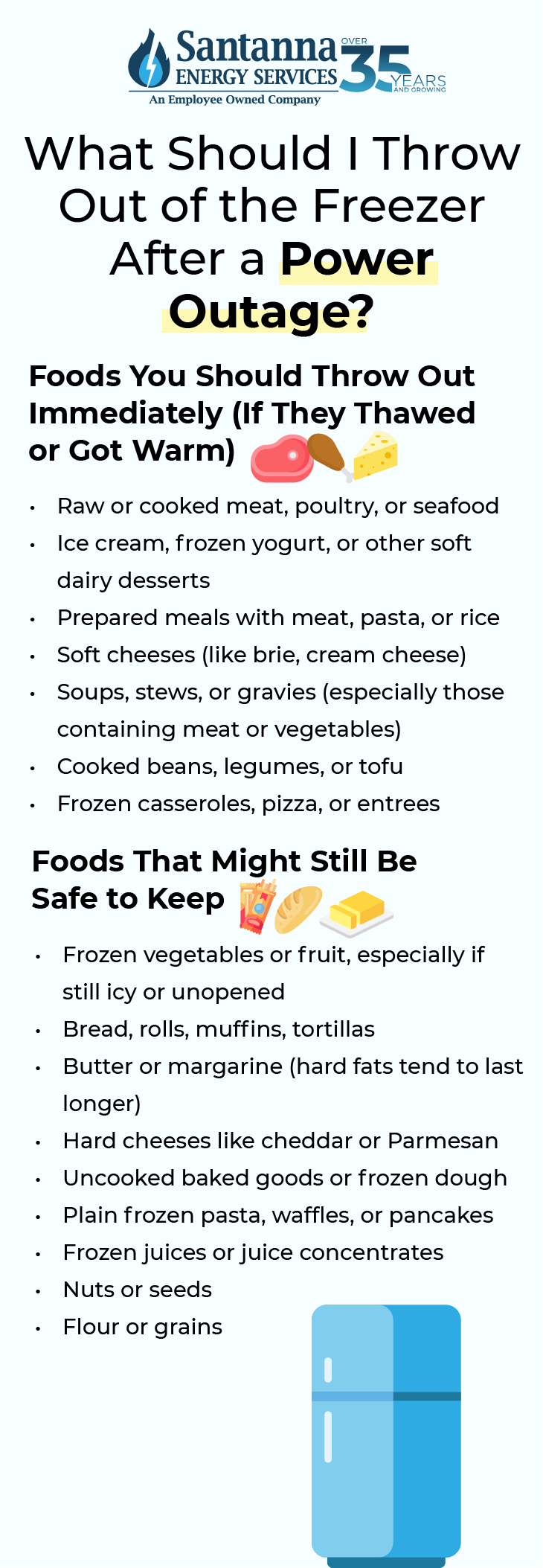
| After 24 hours (half-full) OR 48+ hours (full) | Any fully thawed meat, poultry, seafood | Throw away | High risk once above 40°F |
| Thawed frozen meals or leftovers | Throw away | Mixed ingredients increase risk | |
| Soft or shredded cheeses | Throw away if thawed | Spoil faster | |
| Ice cream (melted) | Throw away | Unsafe and degraded | |
| Fruits and vegetables | Keep if still cold | Safe but texture may change | |
| Bread and baked goods | Keep | Low risk of bacteria growth | |
| Hard cheeses | Keep | Holds up well |
Disclaimer: This guidance is based on food safety recommendations from FoodSafety.gov. Their official chart was used as a reference to help simplify food safety decisions during a power outage.
Even if food looks or smells fine, it may not be safe to eat. Harmful bacteria, including pathogenic bacteria that cause foodborne illness and spoilage bacteria that cause food to deteriorate, can grow without changing the smell, taste, or appearance of food.
When you are unsure, it is safer to throw food away to avoid the risk of foodborne illness.
How To Keep Food Cold During a Power Outage
The most important thing you can do during a power outage is slow the rate at which your fridge warms up, so your food stays cold for as long as possible.
When the power goes out, your refrigerator does not lose its temperature right away. It starts to warm up gradually, and small actions can either help keep the cold in or let it escape faster.
Here are the key steps you can take right away to help keep your food cold and protected during a power outage:
Keep the fridge and freezer doors closed
Keeping the doors closed helps trap cold air inside your fridge and freezer. These appliances rely on cold air to maintain a safe temperature, and once it escapes, the inside warms up much faster.
Even opening the door for a few seconds can shorten how long your food stays safe.
Electric generator brand OUPES found that opening a fridge just twice an hour reduced its safe window for food by 30%.
Keep track of when the power went out
Knowing when the outage started gives you a clear timeline to work from later. This helps you decide whether your food is still within a safe window or if it has been out too long. Without that reference, it becomes much harder to make confident decisions.
Use a cooler with ice for essential items
If you expect the outage to last longer, moving high-risk foods like milk, meat, and leftovers into a cooler with ice can help keep them cold. A cooler can act as a backup and give these items extra time before they reach unsafe temperatures.
Add ice or frozen items if available
Adding ice packs, bags of ice, or frozen water bottles can help slow down how quickly the fridge warms up. These extra cold sources help maintain a lower temperature for longer, especially during extended outages.
These simple steps can help you extend how long your food stays safe and reduce how much you have to throw away during a power outage.
How To Prepare for Food Safety Before a Power Outage
According to ClimateCentral.org, power outages are 60% more likely to occur during the hottest parts of the year.
Summer power outages can become especially risky for refrigerated and frozen food. Higher outdoor temperatures can cause food to spoil much more quickly once refrigeration is lost, sometimes sooner than the 4-hour safety window.
Getting ready early gives you more control over what happens to your food. Here are a few simple ways to prepare before an outage happens:
- Keep a fridge and freezer thermometer on hand: This helps you check if food is still within a safe temperature range without relying on guesswork.
- Have ice packs or frozen water bottles ready: These can help keep your fridge colder for longer or be used in a cooler if needed.
- Plan for a backup cooling option: Having a cooler available makes it easier to move high-risk foods like milk, meat, and leftovers if the outage continues.
- Keep your freezer well stocked: A fuller freezer holds its temperature longer than one with empty space, which can help protect frozen food.
- Know your local weather patterns and outage risks: Being aware of storm seasons or extreme weather alerts can help you prepare before outages happen.
Preparing ahead of time does not take much effort but can help you protect your food, reduce waste, and feel more confident during a power outage.
How Can You Tell if Food in the Fridge Is Still Safe To Eat After a Power Outage?
You can tell if food in the fridge is still safe by checking a few key things right when you open the door, including how the food feels and what type of food it is.
If you are unsure where to start, don't worry. Here is a simple checklist that can help you quickly decide what may still be safe to eat and what is better to throw away:
Quick Fridge Check After a Power Outage
- Check how cold the fridge still feels: If the fridge still feels cold inside, your food may still be safe, especially if the door stayed closed. If it feels warm, perishable foods are more likely to be unsafe.
- Start with the most sensitive foods first: Check items like milk, meat, eggs, and leftovers first. These spoil faster and are more likely to become unsafe compared to condiments or whole fruits.
- Look at whether the food is still cold to the touch: Food that still feels cold has a better chance of being safe. If it feels warm or room temperature, it should be thrown away.
- Check for liquids or changes in texture: If food is sitting in liquid, looks separated, or has changed texture, it may have warmed up too much and should be discarded.
- Do not rely on smell or taste: Harmful bacteria can grow even if food looks and smells normal, so tasting food to check if it is safe is not recommended.
- Focus on what you know, not what you guess: If you are unsure how long the power was out or how warm the fridge got, it is safer to throw away perishable food.
This will help you make decisions based on what you can actually see and feel, instead of trying to remember rules while the power is out.
FAQs
Can you refreeze food after a power outage?
You may still refreeze the food if it contains ice crystals or has stayed at or below 40°F, but the quality may be affected.
Is it safe to eat food that smells fine after an outage?
Not if it's perishable food that warmed up too much. Food may contain harmful bacteria even if it looks and smells normal.
Should I put food outside if it is cold outdoors?
You should not rely on outdoor temperatures because they can vary and may not keep food consistently below 40°F.
Can a portable power station help prevent food loss?
Yes, a portable power station can temporarily power a fridge or freezer to help keep food cold.
If I only have one cooler, what food should I move first when my power goes out?
You should move high-risk perishable foods like meat, dairy, and leftovers first.
Power outages can happen, and knowing how long food stays safe and what to keep or throw away helps you stay prepared and protect your home with confidence.
For Midwest homeowners, where storms and extreme weather are part of the year, these simple habits can help you reduce food waste, make smarter decisions, and keep your home running more efficiently when the power comes back on.
While no energy plan can prevent storm-related power outages, predictable energy costs can make the unexpected easier to manage. Explore Santanna's Unlimited Energy plan to keep your monthly supply charge predictable.* It's one less thing to worry about, so you can focus on keeping your home comfortable and your routine running smoothly no matter the season.
* Restrictions apply. Enrollment based upon program eligibility. Customers using more than 125% of normal monthly usage as determined by Santanna may be required to switch plans.
Tyler is an experienced energy professional, having worked for Santanna Energy Services, for the past four years. He is passionate about renewable energy and believes that diversifying the energy grid is the key to a sustainable future. Tyler is dedicated to supplying consumers with the best possible energy solutions and works diligently to make sure that Santanna can deliver the highest quality service.