
Hard Water vs Soft Water: Which One Is Costing You More on Your Energy Bill?

by Tyler Castle
Updated: June 29, 2026
15.2 min read
Key Points of This Article:
- Hard water contains more minerals like calcium and magnesium, while soft water has been treated to remove them.
- Soft water is generally better for energy efficiency and appliance performance.
- Hard water may add anywhere from about $63 to $530 per year to energy costs, with electric water heaters often seeing the biggest increase.
- The most practical ways to reduce costs from hard water are to flush your water heater, clean mineral buildup, use efficient appliances, and consider a water softener if hard water is causing noticeable problems.
When exploring their energy costs, most homeowners focus on heating, cooling, and major appliances. But there is another factor that often gets overlooked: the type of water flowing through your home.
When comparing hard water vs. soft water, here's what to know: the materials found in hard water can build up inside your water heater and appliances, making them work harder and use more energy. Soft water, on the other hand, helps systems run more smoothly and efficiently.
Many homeowners already suspect there is a connection. In a recent Santanna Energy Services employee-owner survey, 80% of respondents said they believe water quality can impact a home's energy usage.
But how much does water type actually affect energy consumption? When comparing hard water and soft water, which one typically costs more in energy use over time, and how much of a difference does it really make in your home?
That's what we're here to answer. As an energy supplier serving the Midwest for over 35 years, we understand how different systems in your home, including your water heater and appliances, affect your overall energy use. We're here to help you make sense of how factors like water quality can influence your energy bill and what that means for your home.
In this guide, we'll break down the differences between hard water and soft water, how each affects your water heater and other appliances, which uses more energy, and practical steps you can take to reduce unnecessary costs.
What Is Hard Water vs Soft Water?
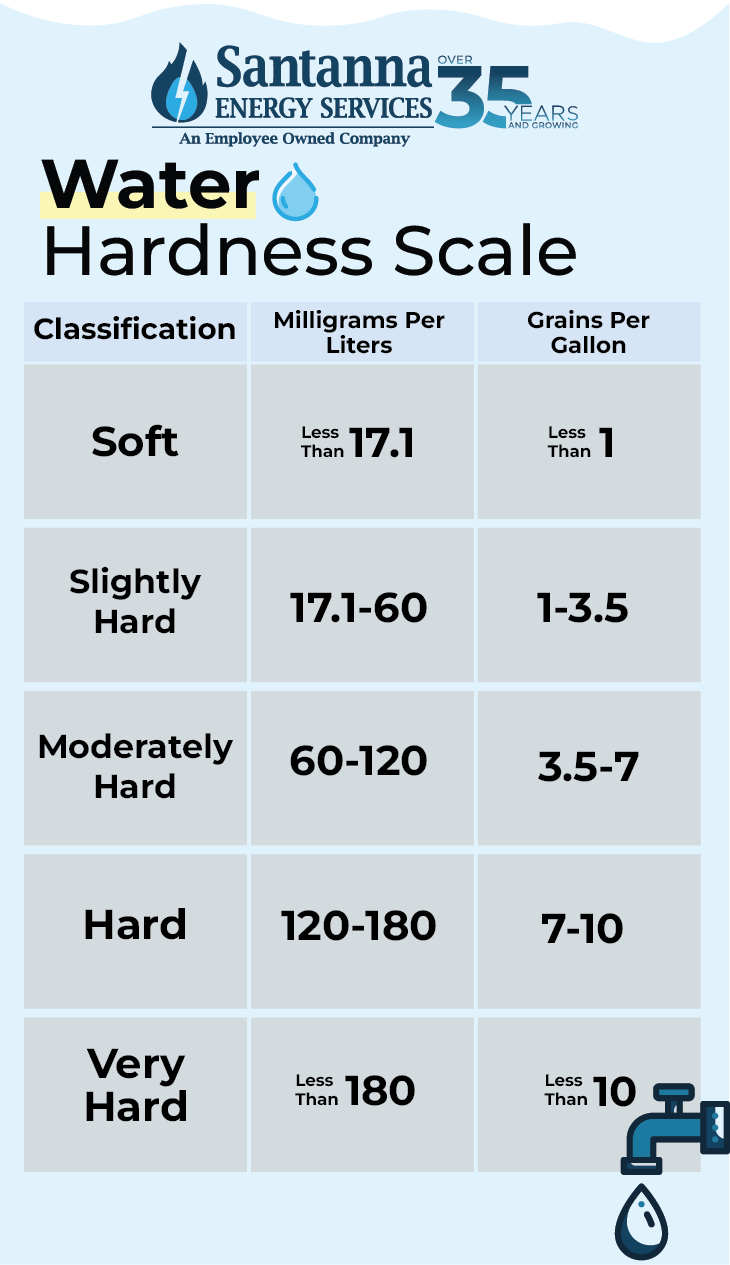
Hard water naturally contains more dissolved minerals, including calcium and magnesium, while soft water has been treated to reduce or remove those minerals.
According to Homewater 101, hard water is found in about 85% U.S. homes and is most common in the Midwest, especially in areas like Chicago and Northern Illinois.
Hard water is generally safe to use, but the minerals it contains can leave deposits in pipes, fixtures, water heaters, and appliances.
Over time, those deposits can create buildup, often called scale, and affect how smoothly water moves through your home and how efficiently your systems work.
Soft water is different. Water softeners use a process called ion exchange to remove hard minerals like calcium and magnesium.
That means soft water is less likely to leave buildup, and as a result, your water heater and water-using appliances may run more smoothly.
For homeowners, the difference between hard and soft water is not only about how water feels. It can also affect how efficiently your home uses energy, especially when water heating and appliance performance are involved.
Hard Water vs Soft Water: Which Costs More Over Time?
Hard water usually costs more over time than soft water because mineral buildup can make water heaters and appliances less efficient, leading to an added energy cost that can range from about $63 to $530 per year, depending on whether you use a gas or electric water heater, your water hardness, and your usage.
Electric water heaters tend to show the biggest difference. Based on a typical usage example of 380 to 500 kilowatt-hours (kWh) per month, hard water could add about $20 to $44 per month in electricity costs, or roughly $240 to $530 per year.* For natural gas water heaters, the added cost may be closer to $5 to $9 per month, or about $63 to $105 per year, which could add about 3.6 to 6 therms per month.**
The impact of hard water extends beyond monthly utility costs. Over time, mineral buildup can reduce the efficiency of water heaters and other appliances, forcing them to work harder to deliver the same performance. According to SoftPro Water Systems, hard water may reduce appliance energy efficiency by 30% to 50%, depending on water hardness and the condition of the equipment.
Quick Payback Chart: How Much Can Hard Water Cost You?
| Number of people in the home | Water heater type | Water hardness level | Hot-water habits | Estimated annual impact | Typical payback |
| 1–2 people | Gas | Moderately hard | Low to average | Low: $50–$150/yr | 5–10+ yrs |
| 1–2 people | Electric | Hard / very hard | Average to high | Medium: $150–$350/yr | 3–7 yrs |
| 3–4 people | Gas or electric | Hard / very hard | Average | Medium: $150–$350/yr | 3–7 yrs |
| 3–4 people | Electric | Hard / very hard | High | High: $350–$700+/yr | 1–4 yrs |
| 5+ people | Gas or electric | Hard / very hard | Average to high | High: $350–$700+/yr | 1–4 yrs |
Note: Ranges are estimates and can vary based on local rates, water chemistry, and your water heater’s age/condition. “Annual impact” reflects a combination of extra water-heating energy plus common hard-water costs (maintenance/cleaning/product use). “Typical payback” assumes a professionally installed softener often costs roughly $1,000–$3,000 before ongoing salt/water use.
Soft water helps reduce the extra costs of hard water by allowing your systems to run more efficiently. With less buildup, your water heater and appliances can operate with less strain, which can help keep energy use lower and support longer-lasting performance.
In simple terms, hard water can increase both your visible costs, like your monthly energy bill, and hidden costs, like maintenance and early replacement of appliances.
What Appliances Are Most Affected by Hard Water?
Hard water does not impact just one system. It affects several appliances across your home, especially those that rely on heating water or regular water flow.
As buildup develops, these appliances may take longer to do the same job, which can lead to increased energy use over time.
Water Heater (Biggest Impact)
The water heater is the most affected by hard water because it relies directly on heat transfer. As buildup forms inside the tank or on heating elements, it takes longer to heat water and requires more energy to maintain the temperature.
Minerals settle at the bottom of the tank or coat heating elements, creating a layer of buildup that acts like a barrier between the heat source and the water. This often leads to longer run times and higher overall energy use.
Washing Machines
Hard water can make it harder for detergent to work effectively. This can lead to longer wash cycles or the need for additional detergent to get clothes clean. Over time, this added effort can increase both energy and water use.
Dishwashers
Mineral residue can build up inside the dishwasher and on dishes. This can affect cleaning performance and may require longer or repeated cycles to achieve the same results. As a result, the appliance may use more energy than expected.
Showers and Faucets
Buildup can also form in showerheads and faucets, which may reduce water flow and affect temperature consistency. When water pressure drops or temperature fluctuates, it can lead to longer usage times, which indirectly increases energy use.
How Can You Tell the Difference Between Hard Water and Soft Water at Home?
You can tell the difference between hard water and soft water by looking for signs like mineral buildup, how your water behaves, and how your appliances perform over time.
In most homes, you do not need a test right away to notice the difference. Hard water usually leaves visible signs on surfaces and can affect how well cleaning works. Soft water tends to feel and perform differently in everyday use, especially when it comes to washing, rinsing, and how smoothly appliances run.
Signs You Might Have Hard Water
- White or chalky residue on faucets, showerheads, or sinks
- Spots or film left on dishes and glassware after washing
- Soap or shampoo does not lather easily
- Clothes may feel stiff or look dull after laundry
- Reduced water pressure from buildup in fixtures
- Appliances like dishwashers or washing machines may not clean as effectively
- Water may take longer to heat or feel inconsistent in temperature
These signs often develop gradually, which is why hard water can go unnoticed at first. Over time, they can point to mineral buildup affecting both cleaning performance and system efficiency.
Signs You Might Have Soft Water
- Soap and shampoo lather quickly and rinse off easily
- Little to no residue on faucets, dishes, or glassware
- Clothes may feel softer after washing
- Water flows more consistently through fixtures
- Appliances tend to run more smoothly and maintain performance over time
Soft water usually feels easier to use in daily routines because it does not leave buildup behind. This can help your systems operate more consistently and avoid the gradual efficiency loss that can happen with hard water.
If you are unsure, you can also confirm by using a simple home test kit or checking your local water quality report.
How Can You Quickly Test if You Have Hard Water or Soft Water?
If you are noticing some of these signs at home, you can try a quick and simple soap test to get a better idea of your water type.
Step 1: Fill a clear bottle halfway with tap water. This gives you a clean sample of the water coming directly from your home.
Step 2: Add a few drops of liquid soap. Use basic liquid soap so you can clearly see how it reacts with the water.
Step 3: Shake the bottle for a few seconds. This mixes the soap and water so you can observe how easily bubbles form.
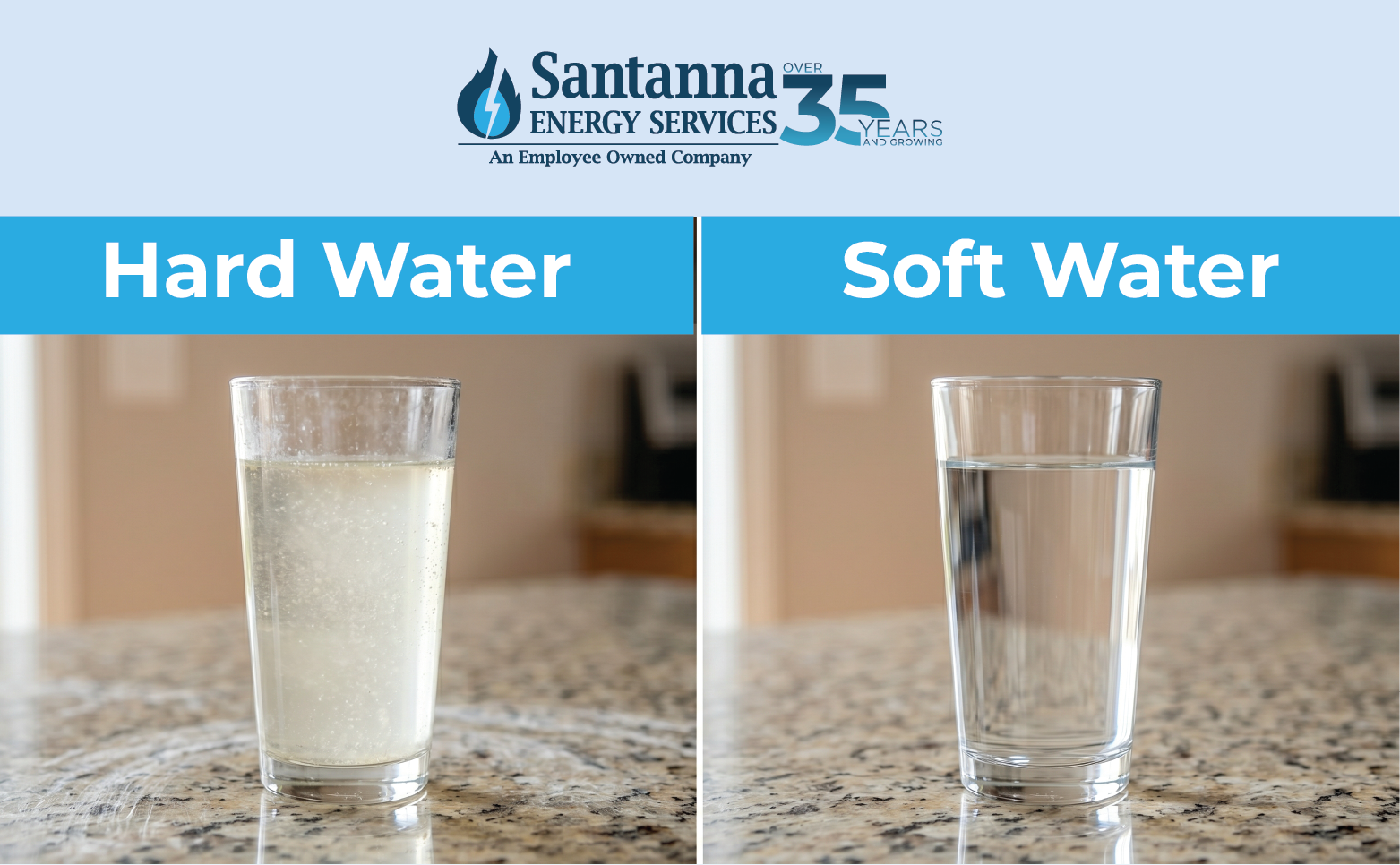
If you see a lot of bubbles and the water looks clear, you likely have soft water. If there are few bubbles and the water looks cloudy, that is a common sign of hard water because minerals make it harder for soap to lather.
This quick test is not exact, but it can give you a helpful first clue about your water and whether it may be affecting how efficiently your home runs.
Hard Water vs. Soft Water: The Pros and Cons of Each Water Type
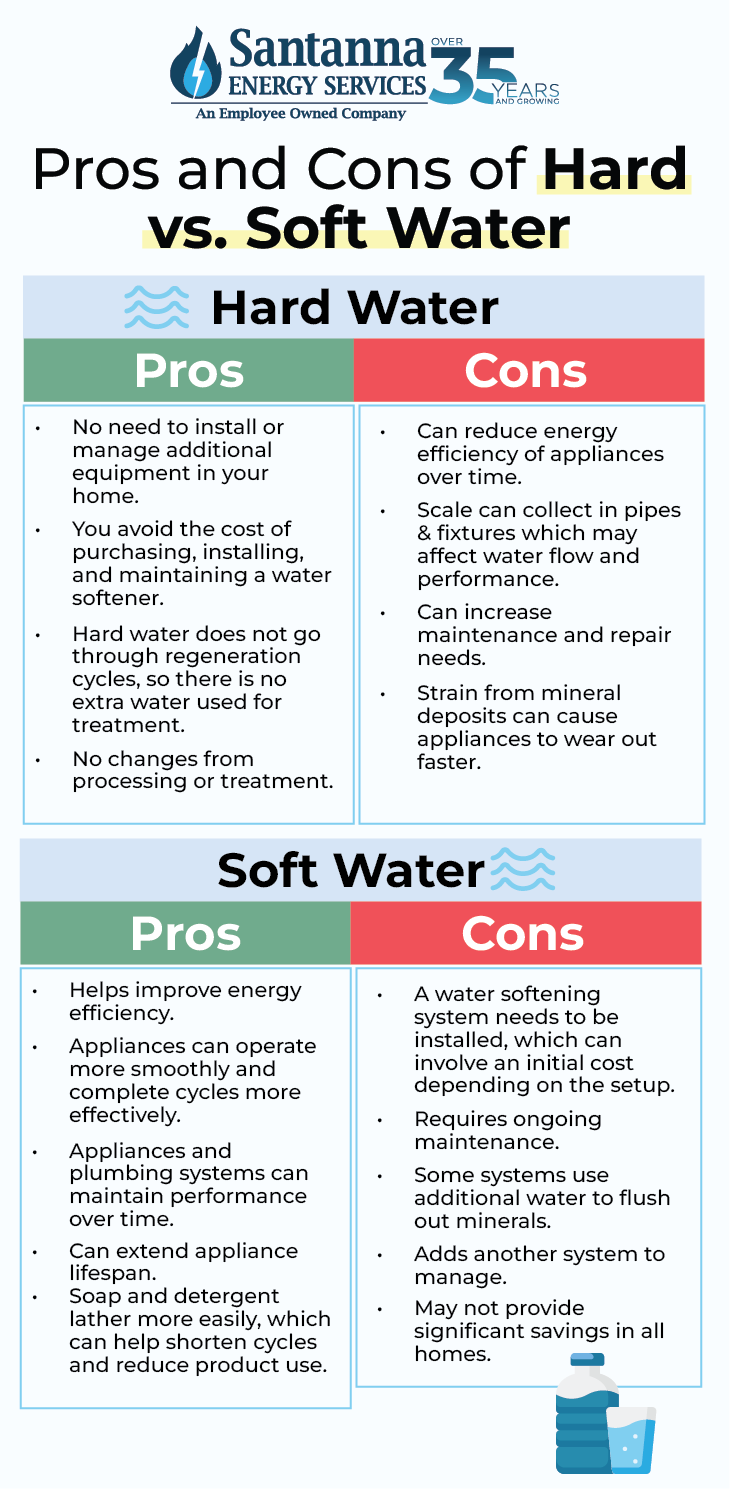
Hard water and soft water each come with pros and cons, and understanding both can help you see how they affect your home’s efficiency, maintenance needs, and overall costs over time.
Here is a simple breakdown of how each one compares:
Pros of Hard Water
Here are the advantages of hard water:
- No installation or added system needed: Hard water comes directly from your local water supply, so there is no need to install or manage additional equipment in your home.
- No upfront or maintenance costs: Since there is no treatment system involved, you avoid the cost of purchasing, installing, and maintaining a water softener.
- No added water use from treatment systems: Hard water does not go through regeneration cycles, so there is no extra water used for treatment.
- No changes from processing or treatment: The water remains in its natural state as it enters your home, without added steps or adjustments.
Cons of Hard Water
Here are the disadvantages of hard water:
- Can reduce energy efficiency over time: Mineral buildup can form inside your water heater and appliances, making it harder for them to operate efficiently and often leading to higher energy use.
- Leads to buildup in plumbing and appliances: Scale can collect in pipes, fixtures, and internal parts, which may affect water flow and performance.
- Can increase maintenance and repair needs: As buildup grows, it can cause systems to work harder and may lead to more frequent servicing or cleaning.
- Can shorten appliance lifespan: The added strain from mineral deposits can cause appliances to wear out faster and need replacement sooner.
- Reduces cleaning efficiency: Soap and detergent do not work as effectively, which can lead to longer cycles or the need for more product.
Pros of Soft Water
Here are the advantages of soft water:
- Helps improve energy efficiency: Without mineral buildup, your water heater can transfer heat more easily, which helps reduce how long it needs to run.
- Supports better appliance performance: Appliances can operate more smoothly and complete cycles more effectively when there is no buildup affecting internal parts.
- Reduces wear and tear on systems: With less strain from mineral deposits, appliances and plumbing systems can maintain performance over time.
- Can extend appliance lifespan: Reduced buildup helps systems last longer and may delay the need for replacement.
- Improves cleaning efficiency: Soap and detergent lather more easily, which can help shorten cycles and reduce product use.
Cons of Soft Water
Here are the disadvantages of soft water:
- Requires upfront installation: A water softening system needs to be installed, which can involve an initial cost depending on the setup.
- Requires ongoing maintenance: Systems need regular upkeep, such as adding salt and occasional servicing, to continue working properly.
- Uses water during regeneration cycles: Some systems use additional water to flush out minerals, which can slightly increase water usage.
- Adds another system to manage: Homeowners need to monitor and maintain the system to ensure it continues working effectively.
- May not provide significant savings in all homes: In homes with only mildly hard water, the improvement in efficiency and cost savings may be smaller.
This comparison helps you see the trade-offs clearly. While hard water may seem simpler at first, soft water often supports better efficiency and performance over time, especially in homes where mineral buildup is more noticeable.
What Are Smart, Practical Ways to Reduce Energy Costs from Hard Water?
You can reduce energy costs associated with hard water by improving system efficiency and managing mineral buildup before it affects performance. Even small steps can help your water heater and appliances run more smoothly, reducing unnecessary energy use over time.
Below are simple and practical ways you can manage hard water and improve efficiency in your home:
Flush Your Water Heater Regularly
Flushing your water heater helps remove sediment and mineral buildup that collects at the bottom of the tank over time. When this buildup is left in place, it makes it harder for the system to heat water efficiently. By flushing it regularly, you help your water heater run more smoothly and avoid using extra energy just to reach the same temperature.
Lower Your Water Heater Temperature
Lowering your water heater temperature reduces the amount of energy needed to heat and maintain hot water. If your temperature is set higher than necessary, your system works harder than it needs to. Setting it to a safe and practical level can help reduce energy use while still meeting your daily needs.
Use Energy-Efficient Appliances
Upgrading to energy-efficient appliances can help offset the impact of hard water. Newer models are designed to use less energy and water while maintaining performance. Even if some buildup occurs over time, efficient appliances can still help reduce overall energy use compared to older systems.
Clean Buildup from Fixtures and Appliances
Mineral deposits can form on showerheads, faucets, and inside appliances. Cleaning these regularly helps maintain proper water flow and consistent performance. When water flows more easily, systems do not have to work as hard, which can help reduce unnecessary energy use.
Install a Water Softener if Needed
If hard water is causing noticeable buildup and affecting performance, installing a water softener can help reduce mineral levels before they enter your home. This can improve efficiency across your water heater and appliances, helping them run with less strain over time.
Use the Right Amount of Detergent and Cleaning Products
Hard water can make it tempting to use more soap or detergent, but using the right amount helps prevent excess residue from building up inside appliances. This can support better performance and help systems run more efficiently.
Schedule Regular Maintenance for Water-Using Systems
Routine maintenance for your water heater and appliances can help catch buildup early before it starts to affect performance. Keeping systems clean and in good condition helps them operate more efficiently and reduces the chance of higher energy use over time.
Pay Attention to Changes in Performance
If you notice longer heating times, reduced water pressure, or appliances not working as well as they used to, these can be early signs of buildup. Addressing these changes early can help prevent further efficiency loss and avoid unnecessary energy use.
FAQs
When does a water softener pay for itself?
It depends on your water hardness and usage, but savings can come from lower energy use and reduced appliance repairs over time.
Can you write off a water softener on taxes?
In most cases, no, unless it qualifies under specific medical or home improvement exemptions.
Can hard water ruin my appliances?
Hard water can shorten appliance lifespan by causing mineral buildup that reduces efficiency and performance.
Do water softeners raise your water bill?
Water usage may increase slightly during regeneration, but the impact is usually minimal compared to efficiency benefits.
Hard water may seem harmless, but over time, it can quietly increase energy use and wear down your home systems. Understanding how your water affects efficiency is a simple step that can help you avoid unnecessary costs.
For many Midwest homeowners, where hard water is common, these small inefficiencies can add up and show up in your monthly energy bill without an obvious cause. While maintaining your appliances and improving efficiency can help, some factors that influence your energy costs are not always easy to control.
That’s why many homeowners look for greater consistency in other areas of their energy experience. Santanna’s Unlimited Energy plan keeps your monthly supply charge the same throughout your contract term, helping bring stability to one part of your energy bill regardless of changes in usage.*** Explore our Unlimited Energy plan to see if it’s the right fit for your home.
* Estimate calculated by using the average residential electricity rate of 17.65 cents per kWh as of February 2026 from the U.S. Energy Information Administration.
** Estimate calculated by using the average residential natural gas rate of $15.07 per thousand cubic feet as of February 2026 from the U.S. Energy Information Administration.
*** Restrictions apply. Enrollment based upon program eligibility. Customers using more than 125% of normal monthly usage as determined by Santanna may be required to switch plans.
Tyler is an experienced energy professional, having worked for Santanna Energy Services, for the past four years. He is passionate about renewable energy and believes that diversifying the energy grid is the key to a sustainable future. Tyler is dedicated to supplying consumers with the best possible energy solutions and works diligently to make sure that Santanna can deliver the highest quality service.