
How to Keep Your Home Cool in Summer: 28 Tips for a Comfortable Home

by Jenna Mendez
14.2 min read
Key Points of This Article:
- Keeping your home cool is not just about lowering the thermostat; reducing heat buildup, improving airflow, and managing indoor humidity can help improve comfort while reducing the strain on your AC.
- Some of the best ways you can keep your home cool this summer are to limit your home's exposure to natural light, consider installing a programmable thermostat, maintain your HVAC system, and, when temperatures are cool enough, use fans and open windows to circulate air as much as possible.
Summer heat can make it feel like your home is working against you. Your AC runs for hours, certain rooms never seem to cool down, and your energy bill starts climbing just when you need relief the most.
It's easy to assume the solution is simply lowering the thermostat, but that's often only part of the problem.
If you're looking for easy and cost-effective ways to cool your home in the summer, this guide is for you. Let's dive in!
Why Does Keeping Your Home Cool Get So Expensive in Summer?
During summer, cooling is often one of the largest contributors to higher electricity bills because of air conditioners. According to the U.S. Department of Energy, air conditioners use about 12% of the electricity in U.S. households, amounting to about $29 billion annually for homeowners.
Let’s take a closer look at several factors that contribute to higher cooling costs during summer:
- Your home absorbs heat all day long: By afternoon, your home may be much warmer inside, making it difficult for your AC to fully catch up, especially in upstairs rooms and spaces with direct afternoon sunlight.
- Humidity can make your home feel even hotter: Humid air can make your home feel warmer than the thermostat reading and increase your air conditioner’s runtime by 9%. A 3,000-watt AC running eight hours daily could use about 65 extra kWh per month.
- Everyday activities inside the home also add heat: Cooking with the oven, running the dryer, taking hot showers, using older light bulbs, and even electronics can slowly warm up indoor spaces throughout the day.
- Cool air can escape faster than your home can hold it: Older homes may have weaker insulation, air leaks, poor airflow, or hot attic spaces that make it harder to keep cool air inside.
- Long heat waves can make your AC run much longer: When temperatures stay high for several days in a row, walls, attics, windows, and floors continue holding heat well into the evening.
The good news is that keeping your home cooler isn’t just about lowering the thermostat; it’s about implementing small changes that can make your home feel more comfortable while helping your cooling system run more efficiently.
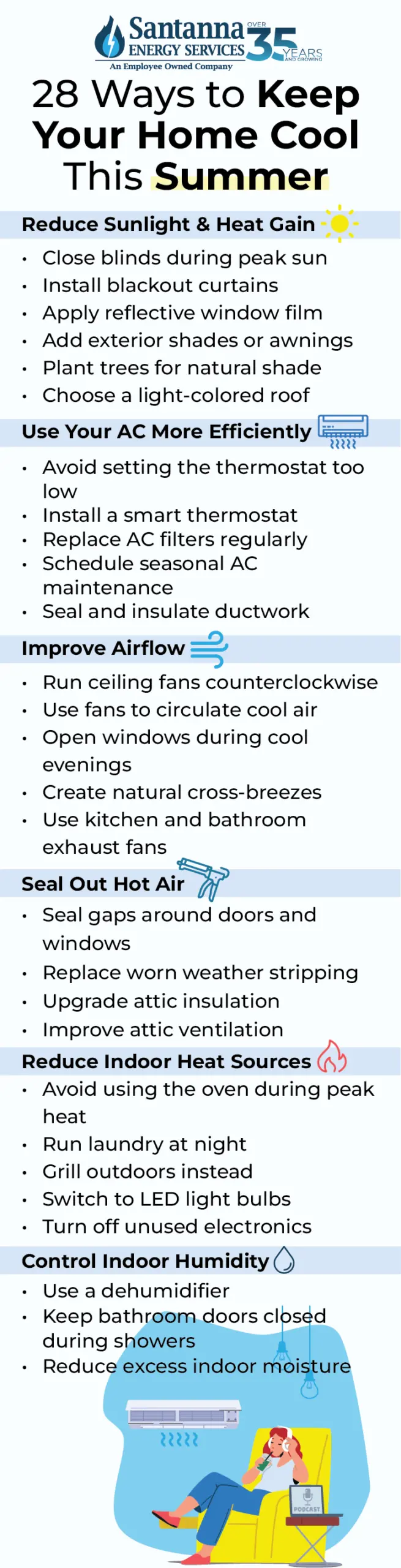
How To Keep Your Home Cool in Summer: 28 Tips For a More Comfortable Home
To keep your home cool in summer, focus on reducing heat before it enters your home, improving airflow, managing indoor humidity, and using your cooling system efficiently.
Here are 28 tips that can help reduce indoor heat buildup, improve comfort, and keep your home cooler throughout the summer:
1. Close Blinds and Curtains During Peak Afternoon Sun
One of the simplest ways to keep your home cooler in summer is to close blinds, curtains, or drapes on windows that receive direct sunlight. According to studies, the right window coverings can reduce heat gain by as much as 33%, helping keep rooms cooler during the hottest part of the day.
2. Use Blackout Curtains or Reflective Window Coverings
Blackout curtains and reflective window coverings help reduce the amount of heat entering your home through windows, which are often one of the largest sources of summer heat gain.
Less heat entering through your windows can help keep rooms more comfortable and reduce the workload on your cooling system.
3. Add Reflective Window Film to Sun-Facing Windows
Reflective window film can reduce solar heat gain through windows by up to 80%, helping limit the amount of heat and sunlight entering your home.
Homes with large windows or direct afternoon sun may benefit the most, allowing natural light indoors while reducing unwanted heat buildup.
4. Install Exterior Shades or Awnings to Reduce Direct Sunlight
Exterior shades and fabric awnings help stop sunlight before it reaches your windows, which can reduce solar heat gain by about 55% to 65%, often more effectively than indoor curtains alone.
Shaded windows tend to stay cooler throughout the day, especially during long stretches of intense summer sun.
5. Plant Trees or Landscaping for Natural Outdoor Shade
According to the U.S. Department of Energy, strategically placed trees can help lower the air temperature around your home by up to 6°F, while shaded areas beneath trees can be as much as 25°F cooler than nearby paved surfaces exposed to direct sunlight.
Planting trees, shrubs, or other landscaping around your home can help reduce the amount of sunlight reaching windows, walls, and outdoor surfaces, making it easier to stay comfortable during hot weather.
6. Use a Light-Colored Roof to Reduce Heat Absorption
Light-colored roofs reflect more sunlight and absorb less heat than darker roofing materials. According to ENERGY STAR, a light-colored roof that reflects about 80% of sunlight can stay up to 50°F cooler than a gray roof that reflects only 20%.
A cooler roof can help reduce attic heat buildup and limit the amount of heat entering rooms below.
7. Adjust Your Thermostat Strategically Instead of Setting it Extremely Low
Keeping your thermostat between 70°F and 78°F can help maintain comfort while reducing unnecessary cooling demand during summer.
Setting the thermostat extremely low does not cool your home faster. It usually just makes your AC run longer.
8. Install a Programmable or Smart Thermostat
A programmable or smart thermostat helps your cooling system run more efficiently by automatically adjusting energy-saving temperatures based on your schedule. Instead of cooling an empty house all day, it can reduce unnecessary AC runtime and better match cooling when it’s actually needed.
This can help reduce wasted energy while making temperature management easier throughout the day.
9. Change Your AC Air Filter Regularly
A clean air filter helps air move more easily throughout your home. Dirty filters can reduce airflow, make rooms feel warmer, and force the AC to run longer to maintain the same temperature.
Checking and cleaning the filter monthly during summer and replacing it about every three months can help keep your AC running efficiently and improve overall cooling performance during hot weather.
10. ScheduleRegular AC Maintenance to Improve Cooling Performance
Routine AC maintenance can help your cooling system operate more efficiently during hot weather. Small issues like dirt buildup, weak airflow, or worn parts can reduce performance and make the system work harder than necessary.
Addressing minor problems early may help prevent larger cooling issues later in the season.
11. Seal HVAC Ducts to Reduce Cooled Air Loss
Duct leaks and loose connections can reduce heating and cooling efficiency by up to 20% in some homes. Leaky air ducts can allow cooled air to escape before it reaches the rooms that need it, leading to uneven temperatures throughout the house.
According to ENERGY STAR, sealing and insulating ductwork can improve system performance, reduce energy costs, and may eventually offset the cost of the improvement through energy savings.
12. Set Ceiling Fans to Rotate Counterclockwise in Summer
During summer, set your ceiling fans to rotate counterclockwise to push air downward and create a cooling breeze.
The moving air can help you feel cooler, allowing you to stay comfortable without relying heavily on your AC.
13. Use Fans to Circulate Cool Air in the Rooms You Use Most
Use fans to help circulate cool air throughout the rooms you use most often. This can make temperatures feel more even and comfortable throughout the day.
Fans can be especially useful in rooms that tend to feel stuffy, warm, or unevenly cooled during summer afternoons.
14. Open Windows at Night When Outdoor Temperatures Are Cooler
Open your windows during the evening or early morning when outdoor temperatures are lower than indoor temperatures. Cooler nighttime air can help remove heat that builds up inside your home during the day.
This can help your home feel cooler the next day before the afternoon heat arrives.
15. Create Cross-Breezes to Improve Natural Airflow
Create a natural cross-breeze by opening windows on opposite sides of your home. This allows cooler outdoor air to flow in while pushing warmer indoor air out.
Better airflow can help rooms feel fresher and more comfortable without relying entirely on your AC.
16. Use Bathroom and Kitchen Exhaust Fans To Remove Heat and Humidity
Cooking, showers, and hot water use can add heat and moisture to your home. Using exhaust fans helps remove that warm, humid air before it spreads throughout the house, helping rooms feel cooler and more comfortable.
17. Seal Gaps and Air Leaks Around Doors and Windows
Air leaks and other home efficiency issues can waste as much as 25% to 40% of the energy used to cool your home. Small gaps around doors and windows can allow cool indoor air to escape while letting hot outdoor air enter.
Sealing those gaps can help your home stay cooler longer and reduce unnecessary AC runtime during summer.
18.Check Weather Stripping to Prevent Hot Air from Entering
Weather stripping helps create a tighter seal around doors and windows to limit unwanted heat transfer. Worn or damaged weather stripping can allow warm outdoor air to leak indoors throughout the day, especially during extreme summer heat.
Replacing weather stripping where needed can help keep cool air inside and reduce unnecessary AC runtime.
19. Upgrade Attic Insulation and Air Sealing If Needed
According to the U.S. Department of Energy, improving attic insulation and sealing air leaks can reduce heating and cooling costs by an average of 15%.
These improvements help slow down the amount of heat entering your home through the attic, making rooms more comfortable during hot weather.
20. Reduce Attic Heat Build up with Proper Ventilation
Proper attic ventilation and insulation can reduce a home’s total energy costs by around 10% while improving comfort during hot weather. Ventilation helps remove hot air that builds up under the roof during summer, reducing the amount of heat transferred into the rooms below.
This can help upstairs rooms stay cooler and reduce the workload on your cooling system.
21. Avoid Using the Oven During the Hottest Part of the Day
Ovens can quickly add a surprising amount of heat to your home, especially during hot summer afternoons when indoor temperatures are already rising. Using the oven during peak heat hours can warm up kitchens and nearby rooms, causing your AC to work harder to remove that extra heat.
If possible, save baking for the evening, use smaller appliances like microwaves or air fryers, or prepare meals that require little to no cooking during the hottest days of summer.
22. Run Laundry and Dishwashers During Cooler Evening Hours
Laundry machines and dishwashers generate both heat and humidity while running. During summer afternoons, that extra heat can make indoor spaces feel warmer and force your cooling system to work harder to maintain comfortable temperatures.
Running these appliances during the evening, early morning, or cooler parts of the day can help reduce unnecessary indoor heat buildup and make it easier for your home to stay comfortable.
23. Grill Outdoors Instead of Cooking Indoors During Extreme Heat
Outdoor grilling keeps cooking heat outside instead of adding it to your kitchen and nearby rooms. During very hot days, indoor cooking can quickly warm up the house and force your AC to work harder to remove that extra heat.
Grilling outdoors can help keep indoor temperatures more comfortable while reducing unnecessary cooling demand.
24. Switch to Energy-Efficient LED Lighting
LED bulbs use about 75% less electricity than older incandescent bulbs and produce much less heat.
If you have multiple lights running throughout the evening, switching to LEDs can help reduce indoor heat buildup while lowering electricity use.
25. Reduce Unnecessary Heat from Electronics and Devices
TVs, gaming systems, computers, and charging devices all create small amounts of heat while running. During summer, turning off devices when they’re not being used can help reduce unnecessary heat buildup throughout the day.
26. Use a Dehumidifier to Help Your Home Feel Cooler
Using a dehumidifier can help your home feel cooler during summer by removing excess moisture from the air and lowering indoor humidity levels. High humidity often makes rooms feel sticky and warmer than the actual temperature, even when the AC is running.
By reducing humidity, a dehumidifier can improve comfort and help rooms feel cooler without needing to lower the thermostat as much.
27. Keep Bathroom Doors Closed During Hot Showers
Hot showers release moisture into the air that can quickly spread throughout your home.
Keeping bathroom doors closed and using the exhaust fan can help contain humidity and prevent nearby rooms from feeling warmer or more humid.
28. Reduce Indoor Moisture During Humid Summer Days
Limiting long hot showers, fixing plumbing leaks, and improving ventilation can help reduce excess moisture inside your home.
Lower indoor humidity can make your home feel cooler, less sticky, and more comfortable during humid summer weather.
How Can You Keep a Garage Cool in Summer?
You can help keep a garage cooler in summer by reducing trapped heat, improving airflow, blocking direct sunlight, and slowing down how much outdoor heat enters the space during the day.
Garages often become one of the hottest areas of a home during summer because they usually have less insulation, limited airflow, and large doors that absorb heat for hours under direct sunlight.
The good news is that small changes around ventilation, insulation, airflow, and shading can help make garages feel much more manageable during hot weather. Here are some practical ways to help keep your garage cooler during summer:
Open Windows or Use Fans to Push Hot Air Out
Hot air can build up quickly inside garages during summer afternoons, especially when there is very little airflow. Opening windows, using portable fans, or adding ventilation can help move trapped hot air out of the garage and improve circulation inside the space.
Add Insulation to the Garage Door and Walls
Many garages absorb heat quickly because they have very little insulation compared to the rest of the home. Adding insulation to garage doors, walls, or ceilings may help slow down how much outdoor heat enters the space during hot weather.
Keep the Door Between the Garage and House Closed
Attached garages can quietly spread heat into nearby rooms during summer. Keeping the interior garage door closed and sealing small air leaks around shared walls or doors may help prevent extra heat from moving into the home.
Add Shade Around the Garage
Garages that sit under direct afternoon sunlight often become much hotter throughout the day. Trees, exterior shades, awnings, or even lighter-colored garage doors may help reduce how much heat the garage absorbs from the sun.
Avoid Running Heat-Producing Equipment During Peak Heat
Charging large equipment, running appliances, or using power tools inside the garage during hot afternoons can make temperatures rise even faster. Limiting extra heat sources during the hottest hours of the day may help keep the garage more comfortable.
Even small changes that improve airflow, reduce trapped heat, and block direct sunlight can help garages feel much cooler during long summer heat waves.
FAQs
Does Lowering the Thermostat Cool Your House Faster?
No, lowering the thermostat much colder does not cool your house faster because most air conditioners cool at the same speed regardless of the temperature setting.
Is It Better to Leave the AC On All Day?
It is usually more energy efficient to leave your AC on all day and raise the thermostat while you are away rather than turning it off completely. This is especially true when using an ENERGY STAR certified smart thermostat that can automatically adjust cooling based on your schedule.
Which Windows Make a House Hottest?
South and west-facing windows usually make a house hottest because they receive strong afternoon sunlight during the warmest part of the day.
How Often Should You Change Your AC Filter During Summer?
Most homeowners should check their AC filter monthly during summer and replace it about every 1 to 3 months, depending on usage, pets, and indoor dust levels.
In many homes, staying comfortable comes down to reducing heat buildup, improving airflow, managing humidity, and helping your AC work more efficiently. Small changes like blocking afternoon sunlight, sealing air leaks, and reducing indoor heat can add up over time.
While you cannot control the weather outside, you can take steps to make your home more comfortable during hot summer days.
If your household prefers predictable supply charges and fewer surprises during peak cooling season, Santanna’s Unlimited Energy plan can help provide added peace of mind when electricity use starts climbing.*
After all, summer is easier to enjoy when you’re focused on staying comfortable instead of worrying about your energy bill.
* Restrictions apply. Enrollment based upon program eligibility. Customers using more than 125% of normal monthly usage as determined by Santanna may be required to switch plans.
Jenna Mendez is a Midwest native with lifelong roots in Illinois and time spent in Ohio during college, giving her a deep understanding of the Midwest region’s people, climate, and energy needs. She brings firsthand experience and local insight to topics that matter to Midwest homeowners, especially energy efficiency, sustainability, and home living. Jenna specializes in writing about eco-friendly living, all things Midwest, renewable energy, and practical ways to reduce energy costs. Jenna brings a trusted, and local hometown voice to every article she writes, helping readers live well, and sustainably, right where they are.