

What Is Low-E Glass and How Does It Affect Energy Efficiency?

by Jenna Mendez
Updated: October 9, 2026
15.9 min read
Key Points of This Article:
- Low-E glass uses a nearly invisible coating to reduce heat transfer, helping keep your home cooler in summer and warmer in winter without blocking natural light.
- For most Midwest homeowners, windows that combine Low-E glass with double-pane construction offer the best balance of comfort, energy efficiency, and year-round performance.
- Low-E glass may reduce heating and cooling costs by up to 30% to 50%, which could translate to about $223 to $371 in cooling-cost savings over a four-month summer, depending on your home and energy use.
- If you're already planning to replace your windows, choosing Low-E glass can be a smart long-term investment, but compare your options based on your climate, budget, and your home's overall energy efficiency.
Windows do more than let in natural light and provide a view outside. They can also let heat enter your home during summer and allow indoor heat to escape during winter, making it harder for your HVAC system to keep your home comfortable. So, can Low-E glass windows pay off in energy costs in the long run?
Over the years as an energy supplier serving the Midwest, for over 35 years, we've seen how features like insulation, airflow, and window performance can all affect your home's comfort and energy use.
In this guide, we'll explain what Low-E glass is, how it works, and how it may help improve your home's comfort and energy efficiency throughout the year.
What Is Low-E Glass?
Low-E glass is a type of window glass with a thin, nearly invisible coating that helps reduce heat transfer while still allowing natural light to enter your home. The term “Low-E” stands for “low emissivity,” which simply means the glass is designed to slow down the movement of heat through your windows.
According to Berkeley Lab.gov, more than 80% of residential windows use Low-E windows; Low-E windows can help reduce unwanted heat gain in summer, reduce heat loss in winter, and support better overall energy efficiency.
While it is not a replacement for good insulation or an efficient HVAC system, it can be one part of a home that helps reduce heating and cooling demand over time.
How Does Low-E Glass Work?
Low-E glass works by slowing the movement of heat through your windows while still allowing natural light to enter your home.
Think about sitting near a sunny window on a hot summer afternoon. Even with the air conditioner running, that spot can still feel warmer than the rest of the room. During winter, the same window may feel chilly even though the heat is on. One thing many people don’t realize is that much of this comes from heat moving through the glass.
During summer, Low-E glass reflects some of the sun’s heat away while still letting daylight brighten your home. This can help rooms stay more comfortable and reduce how hard your air conditioner needs to work.
During winter, Low-E windows helps reflect indoor heat back into your home instead of letting it escape through the windows. This can help reduce chilly spots near windows and make it easier for your heating system to maintain a comfortable temperature.
What Are the Different Types of Low-E Coatings?
The two main types of Low-E coatings are passive Low-E coatings and solar control Low-E coatings; the difference comes down to how much of the sun’s heat they allow to pass through the glass.
Let’s take a closer look at the differences between the two:
Passive Low-E Coatings
Passive Low-E coatings, also known as soft coatings, allow more of the sun’s warmth into the home while still helping reduce heat loss. They are often used in colder climates where homeowners want to take advantage of natural sunlight during winter.
Solar Control Low-E Coatings
Solar control Low-E coatings, also known as hard coatings, are designed to block more of the sun’s heat, helping keep homes cooler during hot weather. They are often used in areas where reducing cooling demand is a higher priority.
Which Low-E Coating Is Better for Midwest Homes?
For most Midwest homeowners, solar control Low-E glass is often the preferred choice because it helps reduce unwanted heat gain during hot summers while still providing insulation benefits during cold winters.
Midwest states experience a wide range of weather conditions throughout the year, from freezing winter temperatures to hot, humid summer days. Because cooling costs can rise quickly during summer, many modern Low-E windows are designed to limit solar heat gain while still helping retain indoor warmth during winter.
For most homes in Illinois, Ohio, Pennsylvania, and other Midwest states, a solar control Low-E coating designed for mixed climates typically provides the best balance of comfort and energy efficiency year-round.
Best Low-E Glass for Cold Climates
Homes in colder northern climates often benefit from passive Low-E glass.
Because passive Low-E coatings allow more of the sun’s natural warmth to enter the home, they can help capture solar heat during winter while still reducing heat loss through the window. This can be especially helpful in areas with long heating seasons and abundant winter sunlight.
Best Low-E Glass for Hot Climates
Homes in warmer climates often benefit from solar control Low-E glass.
These coatings are designed to block more solar heat before it enters the home, helping keep indoor temperatures cooler and reducing the workload on air conditioning systems during hot weather.
According to Vitro Architectural Glass, specific high‑performance low‑e glasses can reduce emissivity to approximately 0.02, meaning Low‑E glass reflects nearly all heat, making it highly effective at reducing heat transfer.
Best Low-E Glass for Mixed Climates
For areas that experience both hot summers and cold winters, such as much of the Midwest, solar control Low-E glass designed for mixed climates is often the recommended option.
These windows are designed to strike a balance between reducing summer heat gain and retaining indoor warmth during winter, helping homeowners stay comfortable throughout the year.
What Are the Benefits of Low-E Glass?
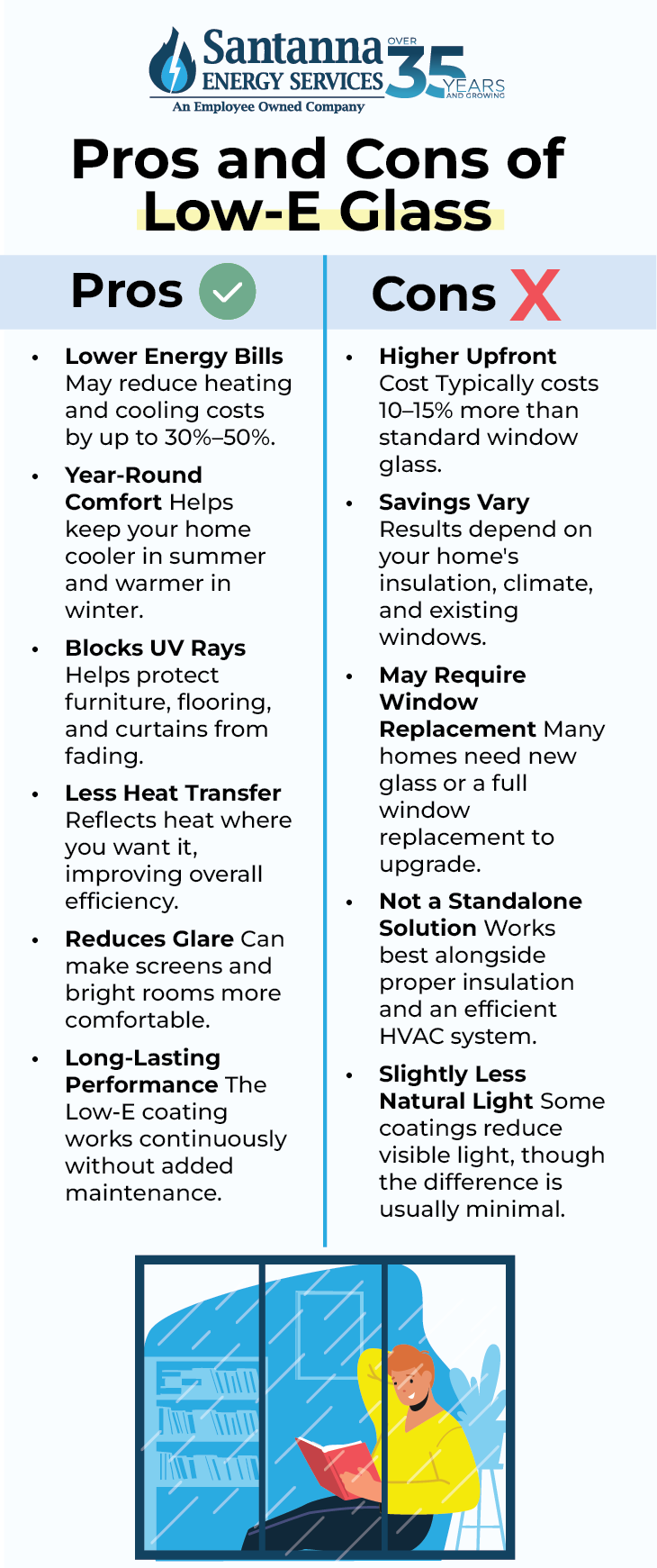
The benefits of Low-E glass include improved energy efficiency, more comfortable indoor temperatures, reduced heat gain during summer, reduced heat loss during winter, and added protection from harmful UV rays.
It may not seem like much, but the type of glass in your windows can make a noticeable difference in how comfortable your home feels throughout the year. By helping manage heat more effectively, Low-E glass can also reduce the workload on your heating and cooling system.
Let’s take a closer look at some of the key benefits Low-E glass may provide for your home:
Lower Heating and Cooling Costs
One of the biggest potential benefits of Low-E glass is reducing the amount of energy needed to heat and cool your home; according to McCasland Glass, Low-E glass may help reduce heating and cooling costs by up to 30% to 50%.
When less heat enters through windows during summer and less heat escapes during winter, your heating and cooling system may not need to work as hard to maintain a comfortable indoor temperature. Over time, this can help reduce heating and cooling demand, which may contribute to lower energy costs.
Helps Reduce Unwanted Heat Gain
Rooms that receive direct sunlight can often become much warmer than the rest of the house, especially during summer.
Low-E glass helps reduce some of that incoming heat, which can help prevent rooms from overheating throughout the day. This can be particularly beneficial for large windows, sun-facing rooms, and spaces that tend to feel warmer than the rest of the home.
Helps Retain Indoor Heat During Winter
During cold weather, heat naturally tries to move from the warm indoors to the colder outdoors.
Low-E glass helps slow this process by keeping more of your indoor warmth inside the home. This can help rooms feel warmer and more comfortable while reducing the amount of heat your heating system needs to replace.
Improves Indoor Comfort
Low-E glass can help make your home feel more comfortable by reducing temperature differences from one room to another.
By helping reduce heat gain in summer and heat loss in winter, it may reduce hot spots near sunny windows and cold spots near windows during the colder months.
Improves Window Performance Over Time
Low-E glass is designed to help reduce heat transfer year after year, making it a long-term feature that can support your home’s energy efficiency. Unlike other seasonal upgrades, the coating on Low-E windows works continuously to help manage heat without requiring any additional maintenance.
While Low-E glass is not a replacement for good insulation or an efficient HVAC system, it can be one part of a well-designed home that stays comfortable and uses energy more efficiently over time.
Helps Reduce UV Exposure and Protect Interior Surfaces
Sunlight does more than add heat to a room. Over time, it can also contribute to fading on furniture, hardwood floors, carpets, curtains, and other household items.
Low-E glass can help reduce the amount of ultraviolet (UV) light entering your home, which may help slow fading and protect the appearance of your interior furnishings.
May Reduce Glare
Bright sunlight shining directly through windows can sometimes create glare on televisions, computer screens, phones, and other surfaces.
Depending on the type of Low-E coating used, some homeowners may notice reduced glare and improved visual comfort in rooms that receive strong sunlight.
What Are the Disadvantages of Low-E Glass?
The disadvantages of Low-E glass may include a higher upfront cost, varying benefits depending on your home and climate, and the fact that energy savings are not guaranteed for every homeowner.
While Low-E glass can improve comfort and energy efficiency, the results can vary from one home to another. Factors like your local climate, the condition of your current windows, and your home’s overall energy efficiency all play a role in how much benefit you’ll see.
Let’s take a closer look at some of the potential drawbacks to consider before deciding if Low-E glass is the right choice for your home:
Higher Upfront Cost
According to Panda Window and Doors, Low-E glass can be roughly 10%–30% higher in upfront costs compared to standard glass windows.
While some homeowners may recover part of that investment through lower heating and cooling costs over time, the savings are usually gradual rather than immediate.
Benefits Vary by Climate and Home
The benefits of Low-E glass can vary depending on your climate, your home’s design, and the condition of your current windows. Homes with older windows, large sun-facing windows, or greater exposure to summer heat often see more noticeable improvements in comfort and energy efficiency than homes that already have newer, energy-efficient windows.
Existing Windows May Need Replacement
In many cases, homeowners cannot simply add a Low-E coating to their existing windows. Depending on the condition and design of the current windows, upgrading to Low-E glass may require replacing parts or all of the window unit.
Replacing a window can cost anywhere from $750 – $12,000 or more!
Energy Savings Are Not Guaranteed
While Low-E glass can help reduce heat gain and heat loss, the amount of energy you save depends on factors like your home’s insulation, air leaks, HVAC system, thermostat settings, and everyday energy habits.
If you don’t utilize other energy saving practices in your home, savings from Low-E windows could be eaten up in other energy waste.
Some Coatings Can Slightly Affect Visible Light
Low-E glass is designed to allow natural light into your home, but some coatings may slightly reduce the amount of light that passes through the window compared to clear glass. In many homes, the difference is small and often goes unnoticed, though it’s worth comparing options if maximizing natural light is a top priority.
How Much Can Low-E Glass Reduce Energy Costs?
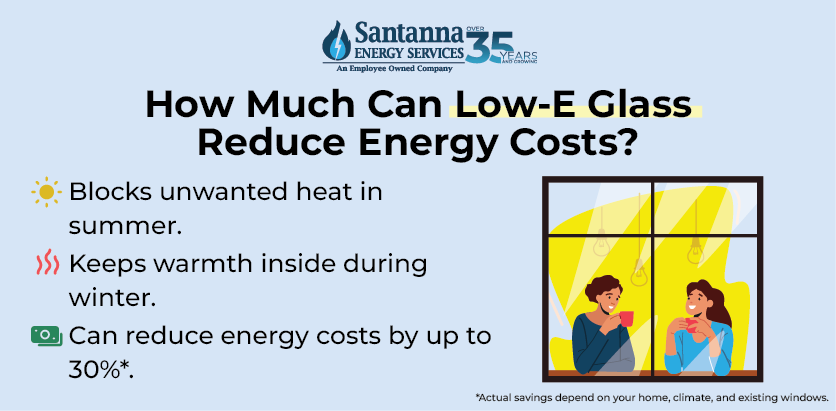
Low-E glass may help reduce heating and cooling costs by up to 30% to 50% in some homes, although actual savings depend on factors such as your climate, windows, insulation, and everyday energy habits.
Homes with older single-pane windows typically see greater improvements than newer double-pane homes. If your home already has modern insulated windows, the savings may be more modest.
For example, if your home uses 1,000 kWh of electricity per month during the summer cooling season, using the May 2026 average residential electricity rate of 18.44 cents per kWh, your monthly electricity cost would be about $184.40. In this example, Low-E glass could translate to approximately $56 to $92 in monthly cooling-cost savings, or about $223 to $369 over a four-month summer.
Homes in states like Ohio, where both hot, humid summers and cold winters increase heating and cooling demand, may benefit from reducing heat gain in summer and heat loss in winter.
Keep in mind that every home is different. Window size, sun exposure, insulation levels, thermostat settings, and local weather conditions can all affect how much Low-E glass may help reduce your energy costs.
Low-E Glass vs. Other Window Energy-Saving Options: What's the Difference in Energy Efficiency?
Low-E glass is one of several ways to improve your windows' energy efficiency. Other popular options include window film, tinted glass, and double-pane windows, each offering different benefits for comfort, heat control, UV protection, and cost.
The best choice depends on your home's current windows, your budget, and whether you're looking for a simple upgrade or a long-term solution.
Let's take a closer look at how these common window energy-saving options compare:
Comparing Common Window Energy-Saving Options
| Feature | Low-E Glass | Clear Glass | Window Film | Tinted Glass | Double-Pane Windows |
| Energy Efficiency | High | Low | Moderate | Moderate | High |
| Heat Transfer | Low | High | Moderate | Moderate | Low |
| Summer Comfort | Excellent | Poor | Good | Good | Excellent |
| Winter Comfort | Excellent | Poor | Limited | Limited | Excellent |
| UV Protection | High | Low | High | Moderate | Varies |
| Glare Reduction | Moderate | Low | Moderate | High | Low |
| Natural Light | High | High | Moderate | Reduced | High |
| Upfront Cost | Higher | Low | Low to Moderate | Moderate | Higher |
| Installation | New glass or window required | Existing window | Applied to existing glass | New glass or film | New window required |
| Best For | Year-round efficiency and comfort | Basic window performance | Budget-friendly upgrades | Reducing glare and sunlight | Long-term insulation and comfort |
| Typical Cost to Upgrade | 10–30% more than standard glass | Baseline | $7–$24 per sq. ft. installed | $317-$942 depending on your project | $250–$800+ per window (materials only) |
Which Option Offers the Best Energy Efficiency?
For most homeowners, windows that combine Low-E glass with double-pane construction offer the best overall energy efficiency. Together, they help reduce heat transfer throughout the year, making it easier to keep your home comfortable in both summer and winter.
While window film and tinted glass can help reduce glare and block some of the sun's heat, they generally don't provide the same level of year-round insulation as Low-E double-pane windows.
If you're planning to replace your windows and want the best balance of comfort, energy efficiency, and long-term value, Low-E double-pane windows are often the preferred choice.
Is Low-E Glass Worth It?
In a recent survey, we asked our employee-owners if they've upgraded the windows in your home to something more energy efficient, and 45% of respondents said they have.
We dug deeper and asked Santanna employee-owners what prompted them to think about replacing their windows and the most common answers came down to rising energy bills, uneven room temperatures, and aging windows were mentioned far more often than appearance.
Actual savings will vary based on your climate, energy prices, window size, insulation, and everyday energy use. However, if you're already planning to replace your windows, choosing Low-E glass can be a smart long-term investment in comfort, energy efficiency, and potential energy savings.
A Low-E Glass Upgrade is Probably Worth it if…
- Your windows are over 20 years old.
- Certain rooms are always hotter or colder than the rest of the house.
- Your energy bills have consistently and steadily increased.
- You're already replacing your windows.
- You want to improve comfort year-round.
Low-E glass windows may not be worth it if…
- Your current windows are already modern double-pane Low-E windows.
- You're hoping new windows alone will dramatically lower your bills.
- Your biggest problems are poor insulation or air leaks.
How Can You Tell If Your Windows Have Low-E Glass?
One of the easiest ways to check if your windows have Low-E glass is to perform a simple reflection test at home. While it is not a perfect method, it can give you a quick clue without needing special tools or professional help.
Here's how to do it:
- Step 1: Wait until it is dark outside.
- Step 2: Hold a flashlight, lighter, or candle a few inches from the window.
- Step 3: Look closely at the reflections of the light in the glass.
- Step 4: Double-pane windows typically show four reflections, while triple-pane windows may show six.
- Step 5: Check whether one of the reflections appears slightly different in color, such as a faint blue, green, or purple tint. If one reflection has a different color than the others, the window may have a Low-E coating.
Keep in mind that this test is not always definitive, but it can provide a helpful clue if you're unsure whether your windows have Low-E glass.
FAQs
How Long Does Low-E Coating Last?
Low-E coating is designed to last as long as the window itself and can often remain effective for 25 to 30 years or more under normal conditions.
Does Low-E Glass Keep Heat In or Out?
Low-E glass does both by helping keep unwanted heat out during summer and retaining more indoor heat during winter.
Does Low-E Glass Make Rooms Darker?
No, Low-E glass is designed to allow natural light into your home while reducing heat transfer and UV exposure.
What Is the Difference Between Low-E Glass and Tinted Glass?
Low-E glass is designed to improve energy efficiency by reducing heat transfer, while tinted glass primarily reduces sunlight and brightness by darkening the glass.
Can Existing Windows Be Converted to Low-E Glass?
In some cases, homeowners can apply Low-E window films, but upgrading to true Low-E glass typically requires replacing the existing glass or window unit.
Is Low-E Glass Better for Cold or Hot Climates?
Low-E glass can improve energy efficiency in both cold and hot climates because different Low-E coatings are designed to manage heat in different ways.
Low-E glass is a simple example of how small improvements around the home can make a meaningful difference over time. By helping reduce heat gain during summer and heat loss during winter, Low-E glass can improve comfort, support better energy efficiency, and help your heating and cooling system work more effectively throughout the year.
Of course, windows are just one piece of the puzzle. A comfortable, energy-efficient home often comes from a combination of smart upgrades, good insulation, efficient heating and cooling, and an energy plan that fits your household's needs.
If you're looking for more predictable energy costs alongside your home's efficiency improvements, Santanna's Unlimited Energy plan can help provide added peace of mind with a predictable supply charge and fewer surprises on your bill.*
After all, when you've invested in making your home more energy efficient, it helps to have an energy plan that offers a little more predictability too.
* Restrictions apply. Enrollment based upon program eligibility. Customers using more than 125% of normal monthly usage as determined by Santanna may be required to switch plans.
Jenna Mendez is an experienced energy content professional who has spent four years researching, writing, and managing authoritative educational content for Midwest energy consumers at Santanna Energy Services. As a lifelong Illinois resident, Jenna brings firsthand knowledge of the region’s climate, communities, and household energy needs to her work.
She specializes in translating complex energy topics into clear, practical guidance about electricity and natural gas costs, appliance energy use, energy efficiency, and everyday home living. Drawing on industry research, Santanna customer data, and insights from experienced energy professionals, Jenna incorporates this knowledge into her content to help homeowners better understand their energy choices and make informed decisions for their households.