

Smart Home Energy Management: Does It Actually Save You Money?

by Jenna Mendez
Updated: July 24, 2026
15.9 min read
Key Points of This Article:
- Smart home energy management can help homeowners reduce wasted energy by automating heating, cooling, lighting, appliances, EV charging, and other everyday systems.
- Depending on the upgrades used, homeowners may save anywhere from a few dollars per month to more than $100 per month by using smart home energy management.
- While smart devices do use a small amount of electricity, the energy they help save often outweighs their own power use. Whether smart home technology is worth the cost depends on the devices installed, household energy habits, electricity rates, and how well homeowners use schedules, automation, and monitoring tools.
Smart home devices, from smart thermostats and lighting controls to connected appliances and energy monitoring systems, promise to make life easier while helping lower energy bills. More homeowners are wondering whether these technologies actually save money or if they're simply convenient gadgets.
As an energy supplier who helps homeowners understand how energy is used every day, we know that the answer is often more about habits and automation than the technology itself.
In this guide, we'll explain how smart home energy management works, which devices can make the biggest difference, where savings are often overstated, and how to decide whether smart home technology is worth it for your home.
What Is Smart Home Energy Management?
Smart home energy management is the use of connected devices, automation, and simple controls to help homeowners manage how and when energy is used throughout the home.
In simple terms, smart home energy management helps reduce unnecessary energy use without requiring you to constantly adjust things yourself.
For homeowners, the biggest benefit is having more control over energy use. Many households use energy without realizing it.
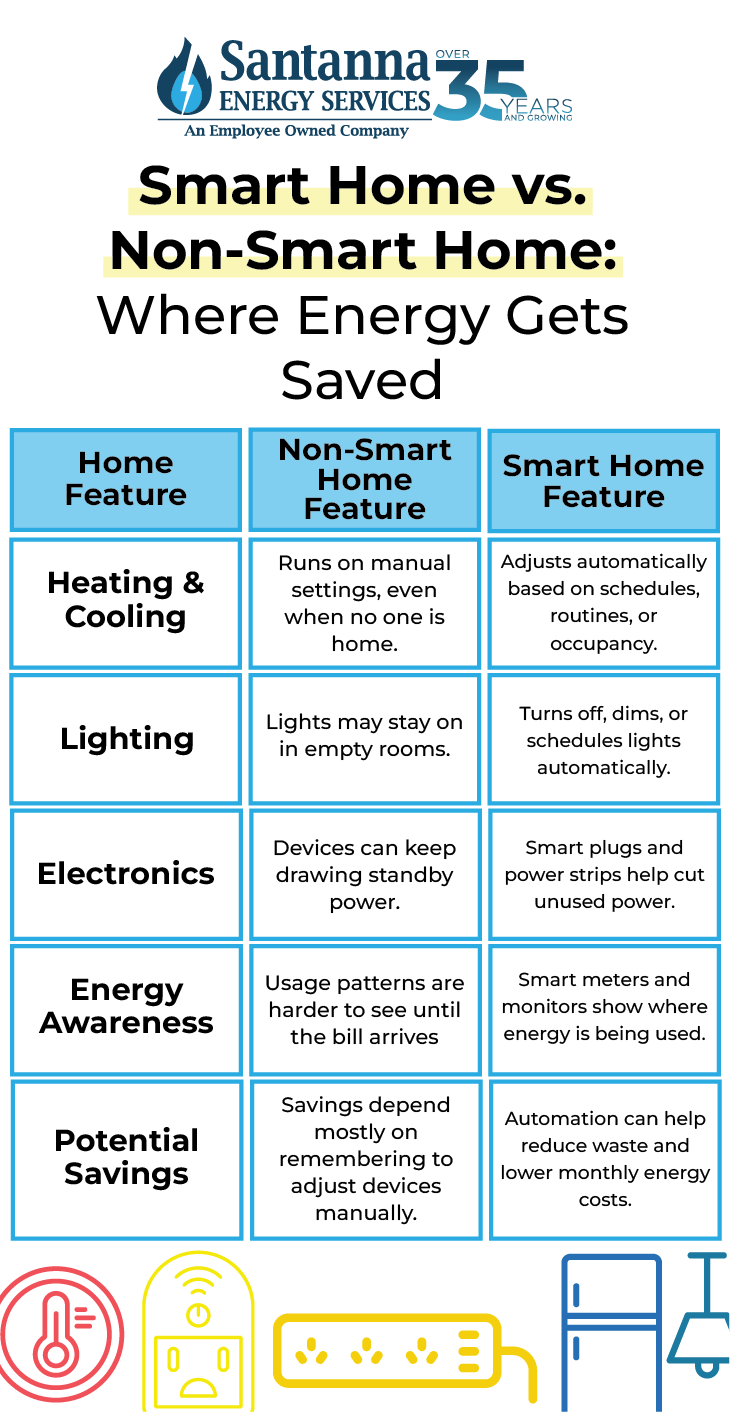
Lights may stay on in empty rooms, heating and cooling systems may run when nobody is home, or electronics may continue using electricity even when they're not actively being used. Smart home energy management helps identify and reduce some of this everyday energy waste.
How Do Smart Home Energy Management Systems Work?
Smart home energy management systems work by connecting devices throughout your home so they can be monitored, controlled, and automated from a central location.
Some homes use a central smart home hub that allows multiple devices to work together through a single platform, while others connect devices directly through individual apps. The setup varies depending on the products being used, but the goal is usually the same: making it easier to manage energy use without constantly thinking about it.
Many smart home systems can automate tasks based on routines, schedules, or occupancy. Instead of manually adjusting devices every day, homeowners can create rules that allow certain actions to happen automatically.
Which Household Systems Can Be Managed Through Smart Technology?
Many of the systems homeowners use every day can be managed through smart technology, including heating and cooling, lighting, appliances, water heating, electric vehicle charging, outdoor watering, and even window coverings.
Some of the most common household systems that can be managed through smart technology include:
- Heating and Cooling Systems – Smart thermostats and connected temperature controls can manage heating and cooling through scheduling, remote access, occupancy settings, and automated adjustments.
- Lighting Systems – Smart lighting systems can control when lights turn on, off, or dim based on timers, motion detection, daylight levels, or homeowner preferences.
- Appliances and Electronics – Smart plugs, smart power strips, and connected appliances can be used to schedule operation, enable remote shutoff, and monitor device activity.
- Water Heating Systems – Some smart water heaters allow users to set heating schedules, adjust temperatures remotely, and view system status through connected controls.
- Electric Vehicle Charging – Smart EV charging equipment can schedule charging sessions, track charging activity, and coordinate charging times with household routines or rate plans.
- Irrigation and Outdoor Systems – Smart irrigation systems can manage watering schedules using weather data, soil conditions, seasonal settings, or manual controls in an app.
- Window Coverings and Shading Systems – Smart blinds and shades can open or close according to schedules, sunlight conditions, room settings, or broader home automation routines.
The important thing to remember is that smart home energy management is not limited to a single device.
Can Smart Home Energy Management Save You Money and Improve Your Energy Efficiency?
Yes, smart home energy efficiency can help homeowners save money and improve energy efficiency by reducing unnecessary energy use throughout the home.
The amount you may save depends on the devices you use, how much energy your household consumes, and how consistently automation features are used.
Based on the reported savings ranges discussed throughout this article, homeowners who combine multiple smart home technologies may potentially reduce energy-related costs by approximately 15% to 50% or more in certain situations.
Beyond potential savings, smart home energy management can also improve energy efficiency by helping homeowners use energy more intentionally.
Instead of relying on memory to manage thermostats, lighting, appliances, and charging schedules, automation can help reduce waste while maintaining comfort and convenience.
How Much Can Smart Home Devices Save?
Depending on the smart home upgrades used, homeowners may save anywhere from a few dollars per month to more than $100 per month in certain situations from smart home energy efficiency.
The largest savings opportunities often come from devices that help manage heating and cooling, improve lighting efficiency, reduce standby power, or shift electric vehicle charging to lower-cost hours.
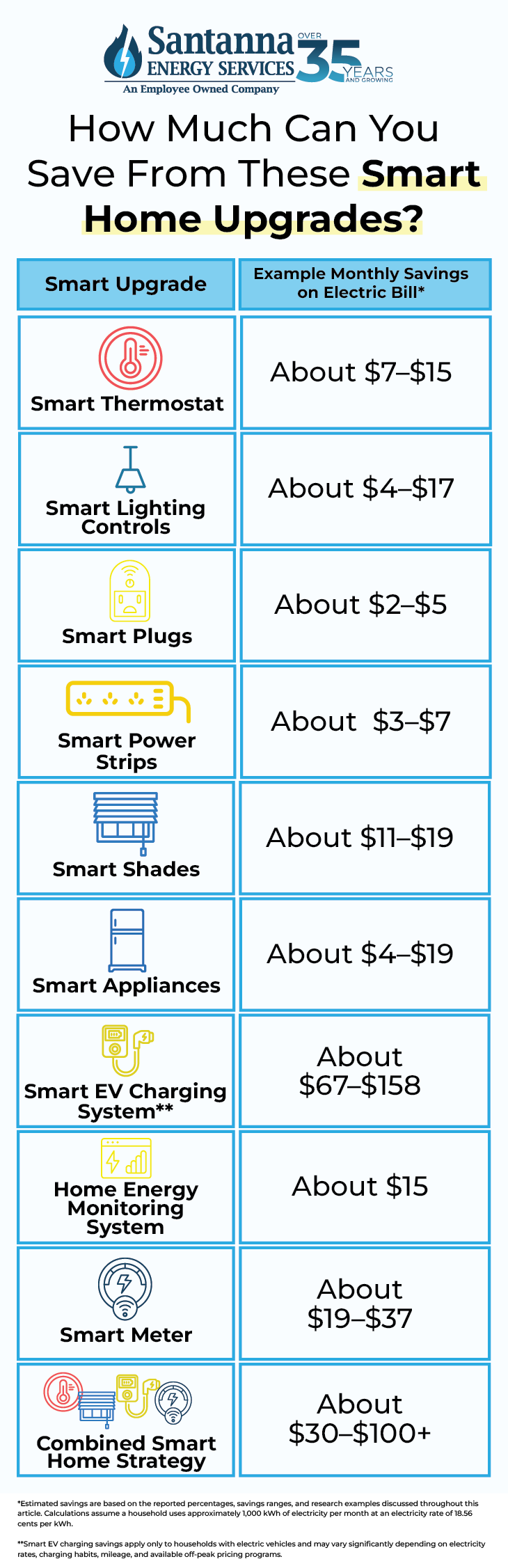
To keep the comparison simple, for our estimates, we assume that this household uses 1,000 kWh of electricity per month and pays the average residential electricity rate of 18.56 cents per kWh, according to the U.S. Energy Information Administration (EIA) as of March 2026.
Actual savings will vary depending on your home's size, climate, energy habits, appliance efficiency, electricity rate, and how smart home devices are used. These examples are intended to show how the reported savings ranges from various smart home technologies may translate into real-world monthly energy costs.
Estimated Monthly Energy Bill Savings From Common Smart Home Upgrades
| Smart Upgrade | Example Monthly Savings on Electric Bill* |
| Smart Thermostat | About $7–$15 |
| Smart Lighting Controls + LED Bulbs | About $4–$17 |
| Smart Plugs | About $2–$5 |
| Smart Power Strips | About $3–$7 |
| Smart Shades and Smart Blinds | About $11–$19 |
| Smart Appliances | About $4–$19 |
| Smart EV Charging System** | About $67–$158 |
| Home Energy Monitoring System | About $15 |
| Smart Meter | About $19–$37 |
| Combined Smart Home Strategy | About $30–$100+ |
*Estimated savings are based on the reported percentages, savings ranges, and research examples discussed throughout this article. Calculations assume a household uses approximately 1,000 kWh of electricity per month at an electricity rate of 18.56 cents per kWh.
**Smart EV charging savings apply only to households with electric vehicles and may vary significantly depending on electricity rates, charging habits, mileage, and available off-peak pricing programs.
Smart Home Energy Management Systems That Can Help Lower Energy Bills
Smart home energy management systems can help lower energy bills by reducing unnecessary heating, cooling, lighting, appliance use, and other everyday sources of energy waste throughout the home.
Below are some of the most common smart home energy management systems and how they may help you reduce energy consumption, improve efficiency, and potentially lower monthly energy costs.
Smart Thermostats
Smart thermostats are often one of the most effective smart home devices for reducing energy costs because they help manage heating and cooling automatically.
According to ENERGY STAR, homeowners using smart thermostats have reported average heating and cooling savings of around 8%.
Since heating and cooling are typically among the largest energy expenses in a home, even small temperature adjustments can make a noticeable difference over time.
For example, a smart thermostat can automatically reduce heating or cooling when nobody is home and return the home to a comfortable temperature before family members arrive. This helps reduce unnecessary HVAC use while maintaining comfort throughout the day.
Smart Lighting Controls
Smart lighting controls can help reduce electricity use by automatically turning lights on and off, creating schedules, or adjusting lighting based on room occupancy.
Studies suggest that lighting systems using occupancy sensors and automated controls may reduce lighting-related energy use by roughly 20% to 60% by helping ensure lights are only used when needed.
When paired with LED bulbs, the savings potential can be even greater because LED bulbs use up to 90% less energy than traditional incandescent bulbs while providing the same amount of light.
For homes with dozens of light fixtures used every day, automatically reducing unnecessary lighting can help lower electricity use while requiring little effort from homeowners and can lead to better smart home energy efficiency.
Smart Shades and Smart Blinds
Smart shades and smart blinds help manage how much sunlight enters the home during different times of the day.
Research has found that automated shading systems may contribute to HVAC energy savings ranging from approximately 12% to 20% in homes located in regions that experience both heating and cooling seasons.
Closing shades during hot summer afternoons can help reduce unwanted heat indoors, while opening them during cooler months can allow sunlight to naturally warm certain rooms.
Smart Plugs
Smart plugs can help lower energy costs by giving homeowners more control over individual devices and electronicsleading to smart home energy efficiency.
Depending on the devices being managed and how often they would otherwise be left running, homeowners may save approximately $20 to $60 per year by using smart plugs to automatically turn devices off when they are not needed.
For example, a smart plug can automatically turn off a lamp, coffee maker, fan, or other device when it is not being used. While the savings from any single device may be small, automatically managing multiple electronics throughout the home can help reduce unnecessary electricity use over time.
Smart Power Strips
Smart power strips can help reduce standby power from groups of electronics that remain plugged in throughout the day.
Studies have found that smart power strips can reduce electricity consumption from connected electronics by helping limit standby power, with reported reductions ranging from approximately 20% to 48%, depending on the devices connected.
Smart power strips can automatically cut power to these devices when they are not being used.
Smart Appliances
Smart appliances can help homeowners use energy more efficiently through scheduling features, energy-saving settings, and improved performance.
Some smart dishwashers, washers, dryers, and water heaters allow homeowners to schedule operation during off-peak hours or monitor energy consumption through a mobile app. These features can help reduce unnecessary energy use and provide greater visibility into household consumption patterns.
According to ENERGY STAR, certified appliances typically use less energy than comparable conventional models, with savings varying by appliance type and in some cases reaching up to 50% less energy use.
Smart EV Charging Systems
Smart EV charging systems can help homeowners reduce electric vehicle charging costs by allowing charging to occur during lower-cost hours.
Depending on electricity rates, driving habits, and charging needs, reported savings can range from $800 to $1,900 per year.
For households that charge electric vehicles frequently, shifting charging to lower-cost hours may be one of the largest smart-home energy-saving opportunities available. Some systems allow charging to occur during specific hours when electricity costs may be lower, helping homeowners manage charging costs more effectively.
Smart Meters
Smart meters help homeowners track how much energy their home is using throughout the day.
Some studies have found that homeowners who actively use smart meter data to monitor and adjust their energy use may reduce overall energy consumption, with reported savings often ranging from approximately 10% to 20%.
Unlike traditional meters that only record total usage, smart meters can provide more frequent usage information that helps homeowners understand energy patterns over time.
Home Energy Monitoring Systems
Home energy monitoring systems help homeowners understand which appliances, devices, and activities use the most energy.
Research suggests that homeowners who regularly use home energy monitoring systems may reduce energy use by gaining better visibility into where electricity is being consumed throughout the home.
Some studies have reported average energy savings of around 8% after homeowners begin actively monitoring their usage leading to better smart home energy efficiency.
Do Smart Home Devices Increase Electricity Use?
Yes, smart home devices use electricity, but most use only a small amount of power compared to the energy they may help save. Because smart devices stay connected and ready to receive commands, they continue using a small amount of electricity even when they are not actively being used.
For most homeowners, however, the electricity used by these devices is relatively small compared to the energy they can help save.
For example, a smart thermostat may help avoid cooling an empty home for several hours each day, while smart lighting controls can prevent lights from staying on in unused rooms. Smart plugs can also automatically turn off electronics that would otherwise continue using electricity around the clock.
In other words, smart home energy management uses a small amount of electricity to help reduce much larger sources of energy waste throughout the home. For many homeowners, the energy saved through automation and better control often outweighs the electricity the devices themselves consume.
Is Smart Home Energy Management Worth the Cost?
For many homeowners, smart home energy management can be worth the cost if the technology helps reduce ongoing energy waste and is used consistently.
The payback period depends on which devices are installed, how much energy the household uses, and how much energy is being wasted before the upgrade but you can generally payback your smart home devices in 4-37 months.
Lower-cost devices such as smart plugs, smart power strips, and lighting controls may recover their costs within months, while larger investments such as smart thermostats, smart blinds, and EV charging systems may take longer to pay for themselves.
The biggest factor is often not the technology itself but how it is used. Homeowners who take advantage of schedules, automation, and energy monitoring features are typically more likely to see meaningful savings than those who simply install the devices and rarely use their energy-saving functions.
In addition to potential energy savings, many homeowners also value the added convenience, comfort, automation, and control that smart home systems can provide. For some households, those benefits can be just as important as the financial savings.
How Long Could It Take for Smart Home Devices to Pay for Themselves?
| Smart Upgrade | Example Cost | Example Monthly Savings | Estimated Payback Period |
| Smart Thermostat | $259.99 | $7–$15 | About 17–37 months |
| Smart Lighting Controls | $63.65 | $4–$17 | About 4–16 months |
| Smart Plugs | $9.29 | $2–$5 | About 2–5 months |
| Smart Power Strips | $39.99 | $3–$7 | About 6–13 months |
| Smart Shades and Smart Blinds | $189.99 | $11–$19 | About 10–17 months |
| Home Energy Monitor | $267.75 | $15–$37 | About 7–18 months |
| Smart EV Charging System* | $779.00 | $67–$158 | About 5–12 months |
*Smart EV charging savings apply only to households with electric vehicles and may vary significantly depending on electricity rates, charging habits, mileage, and available off-peak pricing programs.
Note: Estimated payback periods are based on the example device costs and potential monthly savings discussed throughout this article. Actual results will vary based on household energy use, electricity rates, climate, equipment costs, and how consistently smart home features are used.
It's important to remember that actual results will vary from one household to another. Factors such as home size, climate, energy habits, occupancy patterns, and electricity rates can all influence how much a homeowner may save.
How Can You Maximize Savings From Smart Home Energy Devices?
Homeowners can maximize savings from smart home energy devices by using automation consistently, focusing on the biggest sources of energy use, and combining smart technology with efficient energy habits.
While smart devices can help reduce energy waste, the greatest savings usually come from how the technology is used. A few simple adjustments can often make a bigger difference than adding more devices.
Start With Heating and Cooling Controls
If you only invest in one smart home upgrade, start with heating and cooling controls.
Set schedules that automatically adjust temperatures when the house is empty and return the home to a comfortable temperature before family members arrive. Because heating and cooling often account for a large portion of household energy use, even small adjustments can add up over time.
Keep Your HVAC System Well Maintained
Replace HVAC filters regularly, keep vents clear, and schedule routine system maintenance.
Even the most advanced smart thermostat can only do so much if the heating and cooling system is not operating efficiently.
Use Automation Features Instead of Manual Controls
Take time to set up schedules, occupancy sensors, and automatic controls on your smart devices.
The biggest benefit of smart home technology is that it can perform energy-saving tasks automatically. The more you rely on automation, the less you have to remember to manage energy use yourself.
Automate Frequently Used Lighting
Focus on rooms where lights are commonly left on, such as kitchens, living rooms, hallways, and outdoor spaces.
Use schedules, motion sensors, or automatic shutoff settings to reduce unnecessary lighting throughout the day. Pairing smart controls with LED bulbs can increase savings even further.
Reduce Standby Power With Smart Plugs and Power Strips
Connect televisions, gaming systems, printers, chargers, and other electronics that remain plugged in around the clock.
Set smart plugs or power strips to automatically cut power when devices are not being used to help reduce unnecessary electricity consumption.
Review Your Energy Usage Data Regularly
Check your smart meter or home energy monitoring system periodically to see where energy is being used.
Look for appliances, devices, or habits that may be increasing energy consumption and identify opportunities to make adjustments.
Schedule High-Energy Activities More Efficiently
Use smart scheduling features for activities such as EV charging, laundry, and dishwashing whenever possible.
Automating these tasks can help homeowners better manage energy use and avoid running multiple high-energy appliances at the same time.
Combine Smart Technology With Efficient Energy Habits
Use smart home technology to support energy-saving habits, not replace them.
Simple actions such as turning off unnecessary lights, managing thermostat settings wisely, and reducing wasted energy can help homeowners get the most value from their smart home devices.
FAQs
Do smart lights use electricity when turned off?
Yes, most smart lights use a very small amount of electricity when turned off because they remain connected and ready to receive commands.
What is the best smart device for lowering energy bills?
For most homeowners, a smart thermostat is often one of the best smart devices for lowering energy bills because it automatically manages heating and cooling, which are typically major sources of household energy use.
Do smart home devices work without Wi-Fi?
Some smart home devices can still perform basic functions without Wi-Fi, but features such as remote control, automation, and app access may be limited or unavailable.
And while smart home technology can help you use energy more efficiently, it's only one part of the equation. Partnering with an energy supplier that offers more predictable supply charges can help make monthly energy costs feel easier to manage as well.
Santanna's Unlimited Energy plan is designed to provide predictable supply charges throughout the year,* helping reduce surprises when it comes to the supply portion of your energy bill. Because when smart home technology and a predictable energy plan work together, homeowners can spend less time worrying about energy and more time enjoying a comfortable home.
* Restrictions apply. Enrollment based upon program eligibility. Customers using more than 125% of normal monthly usage as determined by Santanna may be required to switch plans.
Jenna Mendez is a Midwest native with lifelong roots in Illinois and time spent in Ohio during college, giving her a deep understanding of the Midwest region’s people, climate, and energy needs. She brings firsthand experience and local insight to topics that matter to Midwest homeowners, especially energy efficiency, sustainability, and home living. Jenna specializes in writing about eco-friendly living, all things Midwest, renewable energy, and practical ways to reduce energy costs. Jenna brings a trusted, and local hometown voice to every article she writes, helping readers live well, and sustainably, right where they are.