

Fixed-Rate Electricity Plans: All You Need to Know

by Chris Tessler
Updated: June 29, 2026
13.6 min read

Key Points of This Article:
- A fixed-rate electricity plan locks in your electricity supply rate for the length of your contract, helping protect you from market-driven rate increases.
- While your supply rate stays the same on a fixed-rate electricity plan, your total electricity bill can still change based on usage, utility delivery charges, taxes, and fees.
- The best electricity plan depends on your household's comfort with changing rates, desire for stability, contract preferences, and long-term energy goals.
For many homeowners, electricity bills can feel unpredictable, especially during high-demand seasons like summer. That is one reason fixed-rate electricity plans often catch people's attention.
But fixed-rate plans also raise important questions: Does a fixed-rate plan keep your entire bill the same every month? Are fixed rates always the lowest option? And how do you know if locking in a rate is actually the right move for your household?
As an electricity and natural gas supplier with more than 35 years of experience providing fixed-rate electricity plans to thousands of customer across the Midwest, we're here to walk you through how fixed-rate electricity plans work, what affects your bill, the advantages and trade-offs to know, and how to decide whether a fixed-rate plan makes sense for your lifestyle.
What Is a Fixed-Rate Electricity Plan?
A fixed-rate electricity plan is an electricity plan where your electricity supply rate stays the same for a set period of time, even if electricity market prices go up or down.
For many homeowners, the biggest advantage of a fixed-rate plan is protection from changing markets rates throughout the year. When market conditions shift due to demand, weather, or broader energy trends, your supply rate does not change during your contract term, making your electricity bills more stable.
Many households choose fixed-rate plans because they want consistency in the electricity rate they pay per kilowatt-hour or therm, without having to track or respond to market fluctuations throughout the year.
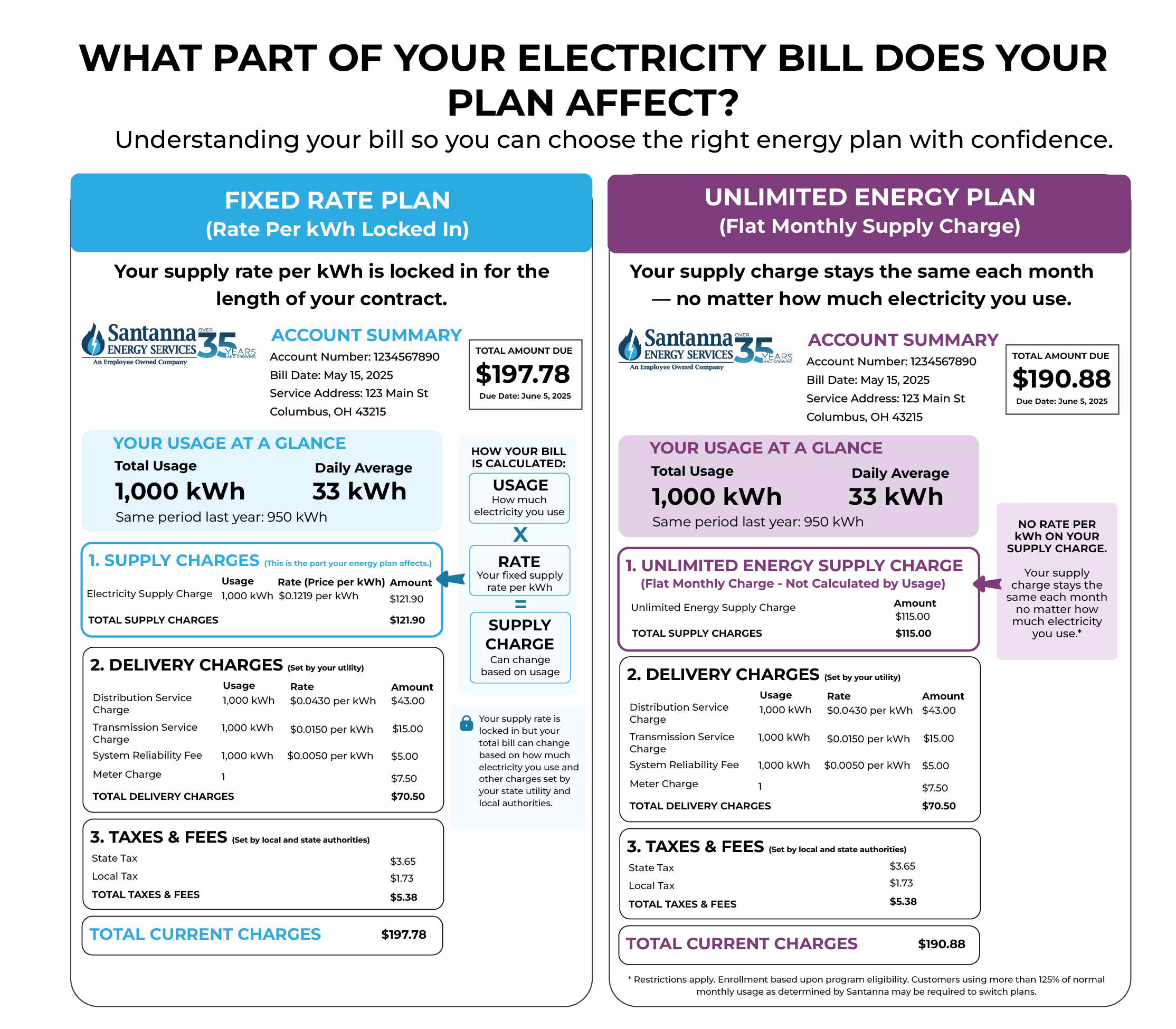
It is important to note that while your supply rate is locked, your supply charge can still vary based on how much electricity you use.
Fixed-Rate Electricity Plan Example
Here's how your bill can be protected under a fixed-rate electricity plan:
Let's say a homeowner enrolls in a fixed-rate electricity plan with a supply rate of 10 cents per kilowatt-hour (kWh).
If that household uses 900 kWh of electricity during the month, their electricity supply charge would be approximately $90.
The following month, the electricity market rate could rise to 13 cents per kWh, but the homeowner would continue paying the same 10-cent supply rate throughout their contract term.
Meanwhile, a person on a plan whose rate varies like a variable rate plan in the same scenario could increase to approximately $117 and can pay up to 30% more simply because of their plan choice.
What Are the Advantages of a Fixed-Rate Electricity Plan?
Fixed-rate electricity plans can help provide homeowners with more stable electricity pricing throughout their contract term, especially during seasons when energy demand and market prices may fluctuate.
Below are some of the biggest benefits homeowners often look for when choosing a fixed-rate electricity plan.
Protection From Sudden Electricity Price Changes
During periods of unusually high electricity demand like summer, wholesale electricity prices have historically increased significantly in some markets.
According to CBS News, the average electricity bill is projected to be 10.5% higher in 2026 from June and September compared to the same period last year because of increased electricity demand.
With a fixed-rate plan, the electricity supply rate on your bill stays locked throughout the agreement instead of changing month to month. For many homeowners, fixing your rate in this way can lead to added protection that can help reduce concerns about unexpected rate increases during the year because of higher energy demand from the grid.
Simpler Rate Consistency
Many homeowners prefer not having to constantly monitor changing electricity prices or wonder whether supply rates could suddenly increase next month and leave them with a surprisingly high bill.
Fixed-rate plans can feel simpler and easier to manage because the electricity rate stays consistent throughout the agreement. For households that value steadier energy planning, that consistency may feel more comfortable long term.
A Locked Supply Rate Over Time
For many households, one of the biggest benefits of a fixed-rate electricity plan is a locked-in in supply rate.
Knowing the electricity supply rate will stay the same throughout the contract can help homeowners feel more confident planning around everyday energy use, seasonal weather changes, and monthly household expenses without worrying as much about sudden rate fluctuations.
What Are the Potential Downsides of Fixed-Rate Electricity Plans?
Fixed-rate electricity plans can help provide more stable electricity pricing, but they may not be the right fit for every homeowner or every situation.
Below are some of the most common downsides homeowners may want to think about before enrolling in a fixed-rate electricity plan.
Your Rate Will Not Automatically Drop if Market Prices Fall
With a fixed-rate plan, your electricity rate stays the same throughout the contract, even if electricity market prices go down later.
While this can help protect homeowners from rising prices, it also means you may not benefit from lower market rates until your contract ends and you potentially get a lower rate or you switch plans.
Your Rate Stays the Same Even During Lower-Price Periods
Electricity prices can sometimes drop lower during what are often called "shoulder seasons," usually during spring and fall when weather is milder and overall energy demand tends to decrease.
Homeowners with fixed-rate plans usually continue paying the same locked supply rate throughout the agreement, even during periods when short-term market prices temporarily decrease.
For some households, the trade-off is deciding between stable pricing year-round or the chance of lower short-term rates during lower-demand seasons.
Fixed-Rate Plans May Not Fit Every Household
Some homeowners simply prefer more flexibility instead of committing to a longer-term agreement.
Households that are comfortable with changing electricity prices or expect their living situation to change soon may prefer exploring other plan options depending on their needs.
Are Fixed-Rate Electricity Plans Worth It?
Fixed-rate electricity plans may be worth it for homeowners who want stable electricity rates instead of worrying about rates changing throughout the year and don't want to constantly monitor energy rates.
Homeowners pay the same supply rate whether they use electricity during hot afternoons, late evenings, weekends, or overnight hours. For many families, this can make electricity costs feel simpler and easier to manage month after month.
For some homeowners, the biggest benefit of a fixed rate electricity plan is protection from changing markets rates.
While the total monthly bill can still change based on how much electricity the household uses, the supply rate itself stays stable throughout the contract. That added protection can feel helpful during summer or winter months when electricity use naturally increases and energy prices fluctuate.
Fixed-Rate vs. Variable-Rate Electricity Plans: What's the Difference?
The main difference between fixed-rate and variable-rate electricity plans is how your electricity supply rate is handled over time: Fixed-rate plans keep your supply rate consistent for the length of your contract while variable-rate plans change based on market conditions and may increase or decrease from month to month.
Some homeowners prefer fixed-rate plans because they want rate consistency during their contract period. Others prefer variable-rate plans because they are comfortable with rates that can change with the market.
Fixed-Rate vs. Variable-Rate Electricity Plans: What Homeowners Should Know
| What to Compare | Fixed-Rate Plan | Variable-Rate Plan |
| How pricing works | Your electricity supply rate stays the same during the contract term | Your electricity supply rate can change from month to month |
| Can the rate increase unexpectedly? | Usually no during the contract term | Yes, rates may rise depending on market conditions |
| Can the rate decrease? | Usually stays the same during the contract | Yes, rates may sometimes decrease |
| Easier for budgeting? | Yes, because the rate stays stable | Monthly costs may feel less predictable |
| Best for homeowners who want | Protection from changing markets rates | Flexibility and short-term pricing changes |
| Risk during high-demand seasons | Lower exposure to sudden market spikes | Higher exposure to changing market prices |
| Contract structure | Often includes a set contract term | May offer more short-term flexibility |
| Good fit for | Stability-focused households | Those comfortable with changing rates |
For many homeowners, fixed-rate plans feel easier to manage because the electricity supply rate stays more consistent throughout the agreement. Variable-rate plans may offer more flexibility, but monthly electricity costs can become harder to predict if market prices suddenly increase.
What is a Good Fixed-Rate for Electricity?
A good, fixed electricity rate depends on several factors, including where you live, the current energy market, your utility's price to compare, and the length of the contract.
To help determine a good, fixed rate for electricity, we recommend using your utility's price to compare (PTC) as a benchmark. Anything at or lower than this rate should be considered a good, fixed rate for electricity.
For example, if your utility's electricity supply rate is 10 cents per kilowatt-hour and a supplier offers a 12-month fixed-rate plan at 9.5 cents per kilowatt-hour, some homeowners may view that as a competitive option.
Comparing supplier offers against the price to compare can help homeowners evaluate whether a fixed-rate plan is competitive in their area.
Is a Fixed-Rate Electricity Plan Right for Your Home?
A fixed-rate electricity plan may be a good fit for homeowners who prefer more stable electricity pricing and fewer surprises throughout the year. Some homeowners prefer knowing their electricity supply rate will stay consistent throughout the contract term, while others may feel more comfortable with plans that allow more flexibility.
Below are some situations where a fixed-rate electricity plan may or may not feel like the right fit for your home and lifestyle.
A Fixed-Rate Electricity Plan May Be a Good Fit If You:
- Prefer more stable electricity rates
- Feel uncomfortable with changing energy rates
- Use more electricity throughout the day
- Work from home regularly
- Prefer longer-term rate consistency
- Don't want to constantly monitor changing rates
A Fixed-Rate Plan May Feel Less Ideal If You:
- Prefer maximum flexibility
- Expect to move soon
- Are comfortable with changing monthly electricity rates
- Want the ability to switch plans frequently
- Do not mind monitoring electricity market changes more closely
For many homeowners, fixed-rate plans are less about trying to predict electricity prices and more about wanting steadier energy costs throughout the year.
What To Look for Before Choosing a Fixed-Rate Electricity Plan
Before choosing a fixed-rate electricity plan, it is important to look beyond just the advertised electricity rate and understand how the plan may fit your household's needs long term.
Below are some important things homeowners often review when comparing fixed-rate electricity plans and choosing the best energy plan for their energy goals.
Contract Length
Review how long the fixed electricity rate lasts and whether the contract length fits your household plans.
Some homeowners prefer shorter contracts for added flexibility especially if they plan on moving soon, while others feel more comfortable locking in a stable rate for a longer period of time.
The most common fixed-rate contract length is long-term at around 12-36 months. While short term can fall anywhere from 3-6 months in length.
Early Termination Fees
Some fixed-rate plans may include a fee if you cancel the contract before it ends.
This can matter for homeowners who may move, switch plans early, or simply prefer more flexibility. Reviewing possible cancellation fees ahead of time can help avoid surprises later.
Renewal Terms
It is important to understand what may happen when the contract expires and whether the electricity rate could change afterward.
Some plans may automatically renew under different pricing terms if homeowners do not select a new plan before the agreement ends. Keeping track of your contract expiration date can help you review your options ahead of time.
Renewable Energy Options
Some fixed-rate electricity plans may include electricity supported by renewable energy sources or renewable energy credits depending on the supplier and plan type.
For homeowners interested in earth-friendlier energy options, reviewing whether renewable energy is included may be an important part of comparing plans.
Billing Transparency
Understanding how pricing, fees, and charges appear on your electricity bill can help homeowners avoid confusion later.
A plan that clearly explains supply charges, contract details, and billing terms may feel easier to manage long term compared to plans with unclear pricing structures.
Customer Support and Supplier Reputation
Regardless of plan, many homeowners value clear communication, reliable customer support, and transparent billing when comparing electricity plans.
Having access to helpful customer service and easy-to-understand plan information can make managing your electricity account feel much less stressful over time.
The best fixed-rate plan is usually the one that matches your home's energy habits and comfort level with protection from changing markets rates.
If you want a more detailed step-by-step guide, explore our blog on how to choose the best energy plan for your home and energy goals.
Common Fixed-Rate Electricity Plan Myths Homeowners Should Know
Fixed-rate electricity plans are often misunderstood, especially when homeowners hear the word "fixed" and assume every part of the electric bill stays exactly the same each month.
In reality, fixed-rate plans mainly keep the electricity supply rate stable during the contract term, while other parts of the bill can still change depending on electricity usage, taxes, and utility charges.
What Homeowners Often Misunderstand About Fixed-Rate Plans
| What Some Homeowners Think | Reality | What Homeowners Should Know |
| A fixed-rate plan gives you a fixed total electric bill | No | Electricity usage, utility delivery, taxes, and fees can change your monthly bill |
| Fixed-rate plans are more stable than variable-rate plans | Usually yes | The electricity supply rate stays consistent throughout the contract term |
| Variable-rate plans are always cheaper | No | Variable rates can sometimes rise quickly during periods of high energy demand |
| All fixed-rate plans use renewable energy | No | Renewable energy options depend on the specific electricity plan and supplier |
| Fixed-rate plans are always the best choice | Not necessarily | The right plan depends on your budget, lifestyle, flexibility needs, and comfort with changing rates |
| Predicting market prices makes variable plans easy to manage | Rarely | Electricity prices can shift quickly because of weather, demand, and changing market conditions |
| Switching plans changes your utility company | No | Your local utility still delivers electricity and responds to outages |
For many homeowners, understanding these differences can make comparing electricity plans feel much less confusing.
Choosing the right electricity plan often comes down to finding a balance between pricing stability, flexibility, and overall comfort with your monthly energy costs.
FAQs
How do you know what kind of electricity rate plan you currently have?
You can usually find your rate plan type by checking your electricity supply section, contract details, or supplier information on your energy bill, or by contacting your electricity supplier directly.
What protection does a fixed-rate electricity plan provide?
A fixed-rate electricity plan helps protect homeowners from sudden increases in electricity supply rates during periods of high energy demand or market volatility.
What happens when a fixed-rate electricity contract ends?
It depends on the supplier. Some will keep customers on a similar fixed-rate plan while others will move customers to a variable-rate or month-to-month plan unless they enroll in a new plan beforehand.
Can you switch from a variable-rate plan to a fixed-rate plan?
Yes, homeowners can usually switch from a variable-rate plan to a fixed-rate plan, although contract terms and timing may vary by supplier and state.
Fixed-rate electricity plans offer consistency in your electricity supply rate for the duration of your contract. While your total bill can still vary based on usage, the rate you pay per unit of electricity remains unchanged.
The right electricity plan ultimately depends on your household budget, energy habits, and comfort level with changing electricity prices. Some homeowners prefer flexibility, while others simply want fewer surprises and more confidence when planning monthly expenses. Many people would rather spend less time worrying about electricity rates and more time enjoying their home.
If having a locked electricity supply rate and protection from changing market prices sounds like a better fit for your household, Santanna's Fixed-Rate Electricity Plan is designed to keep your electricity supply rate consistent throughout your contract term, even as energy markets change. Because when Midwest weather already keeps homeowners guessing, your electricity supply rate doesn't have to.
Chris Tessler is a seasoned professional in the deregulated energy industry with over 15 years of experience and previously served as President and Chief Operating Officer of Santanna Energy Services. Throughout his career, he has honed his skills in commodity trading, risk management, and retail energy supplier operations. Chris has a passion for leveraging new technologies to address challenges at the intersection of the energy industry, carbon economy, and climate change.