

Whole Home Battery Backup: Everything Homeowners Should Know

by Brennan Lambrecht
Updated: October 8, 2026
12.6 min read
Key Points of This Article:
- Whole home battery backup systems automatically keep essential parts of your home running during power outages, providing reliable backup power without the noise or fuel requirements of a generator.
- While whole home backup batteries can power refrigerators, lights, Wi-Fi, and other necessities for many hours, high-demand appliances like air conditioners and electric dryers reduce backup time significantly.
- A typical system can power essential appliances like lights, refrigerators, and Wi-Fi for about 24 hours, though the exact runtime depends on battery size and your home’s electricity use.
- Whether a home battery is worth the investment depends on your outage frequency, energy goals, and how important uninterrupted power is to your household.
Power outages in the Midwest are something many homeowners are already familiar with, especially during strong storms, winter freezes, or sudden grid issues.
These moments are becoming more common in many areas, and they often happen without warning.
For many families, the real concern is not just losing power, but figuring out what to do next. How do you keep your home comfortable and safe when the grid is not working? Some homeowners consider backup batteries as a viable option. But is it right for you?
In this guide, we'll cover what a whole home battery backup actually does, how it works in a real home, and what it can realistically support during an outage, so you can decide if it makes sense for your household.
What Is a Whole Home Battery Backup System?
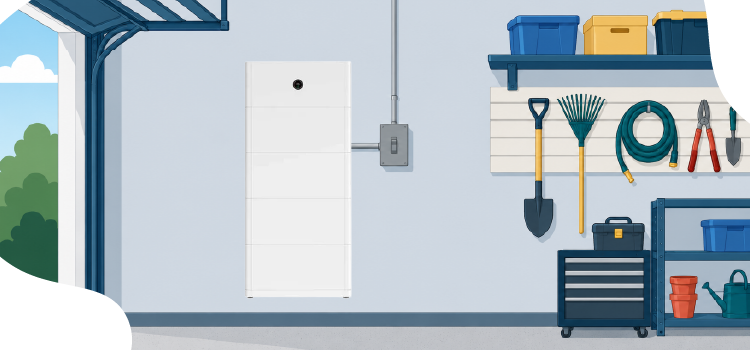
A whole home battery backup system is a large home energy storage unit that stores electricity and automatically powers your home when the main power goes out. It is designed to act as a backup source of electricity so your home does not go completely without power during an outage.
When your home has electricity, the system stores extra energy so it is ready to use later. This stored power can come from the electric grid or from other energy sources if available.
When a power outage happens, your home battery system automatically turns on and begins supplying electricity to your home, so important parts of it can continue running without interruption.
Unlike small portable backup devices that only power a few items, a whole home battery system is built to support either essential parts of the home or a larger portion of it, depending on the setup.
How Whole Home Battery Backup Works Inside a Home
A whole home battery backup system works by storing electricity in your home so it is ready to use when the power goes out. It quietly saves energy while everything is working normally, then automatically steps in during an outage to keep important parts of your home running.
Here is a simple step-by-step breakdown of how it works inside a home:
- Step 1: Your home uses electricity as normal: When everything is working normally, your home receives electricity from the electric grid. If you have solar panels, your home may also receive electricity from the energy they produce.
- Step 2: Extra electricity is stored in a battery: The battery fills up with electricity before you need it. The battery is permanently wired into your home’s electrical system where it’s connected to the electric grid, and it charges using electricity supplied to your home.
If you also have solar panels, the battery can connect to your panels and can store extra solar energy that your home does not use right away. Once the battery is charged, it keeps that stored electricity ready for the next power outage.
- Step 3: A power outage happens: When the grid goes down, your home loses its regular electricity source. This is the moment when backup power becomes important.
- Step 4: The system switches on automatically: The battery backup system turns on by itself within seconds. Homeowners do not need to take any action or flip any switches.
- Step 5: Your home continues running on stored power: The battery begins supplying electricity to important parts of your home such as lights, the refrigerator, Wi-Fi, and other essential needs based on how the system is set up.
- Step 6: The stored energy gets used up: The system keeps powering your home until the stored electricity runs low. How long this lasts depends on how much energy your home is using during the outage.
- Step 7: Power returns and the system recharges: Once grid power comes back or solar energy becomes available again, the battery automatically begins charging again using your home’s normal electricity supply.
Why Homeowners Are Considering Whole Home Battery Backup Today
Many homeowners are considering whole home battery backup because it provides peace of mind during power outages. According to American Clean Power.org, the U.S. installed 8.4 GWh of battery energy storage systems in Q1 2026, surpassing the previous Q1 record by 54%, showing just how common home backup batteries are becoming.
Interest in home backup batteries isn’t just growing across the industry. It’s something homeowners are actively considering as well. In a recent survey of Santanna Energy’s Energy Experts, 53% said they have considered purchasing a whole home battery backup system, reflecting the growing desire for reliable backup power as outages become more common.
When we talked with our Employee-Owners about their thoughts on backup power, Jenna Mendez, Santanna’s Content Marketing Specialist said, “With the weather constantly changing and the grid expanding, I think backup power will become increasingly important and essential. Some people in my area that never lose power lost electricity for more than a day because ComEd couldn’t keep up.”
That’s why backup batteries are becoming more commonplace. Industry estimates project that sales of residential battery backup systems in the United States could grow from about $8 billion in 2025 to roughly $30 billion to $40 billion by 2030, showing that more homeowners are investing in backup power solutions.
What Can a Whole Home Battery Actually Power?
A whole home battery backup can power different parts of your home, but how long it lasts depends on how much electricity each item uses and how your system is set up.
Here is a simple breakdown of what it can typically power and what that means for your energy use:
Essential home needs (most commonly powered)
- Refrigerator and freezer: These use steady, moderate electricity. They are usually included because they are important and do not drain the battery too quickly.
- Lights (basic lighting in key rooms): Lighting uses very little electricity, so it has a small impact on battery life and can usually run for a long time during outages.
- Wi-Fi and internet router: Very low energy use. This is often kept on so you can stay connected for work, school, or emergency updates.
- Phone and small device charging: Low electricity use. Charging phones or laptops does not use much power from the battery.
Comfort systems (may work, but depends on battery size)
- Air conditioning (central or window units): Uses a large amount of electricity. It can drain the battery quickly, especially during hot weather when it runs often.
- Heating systems (electric furnaces or space heaters): High energy use. These systems can shorten backup time significantly if used continuously.
- Water heater (electric): Uses a large burst of electricity when heating water, which can quickly reduce stored energy.
High-demand appliances (limited or short-term use)
- Electric stove or oven: High and constant energy use. Usually not ideal for long backup periods.
- Clothes dryer: One of the highest energy-use appliances in the home. It can drain a battery very quickly.
- Electric vehicle charging: Very high energy demand. Typically paused during outages unless the system is very large.
Whole-home vs partial backup setups
- Partial backup setup: Only selected circuits (like lights, fridge, Wi-Fi) are powered.
Uses less energy, so the battery lasts longer during outages.
- Whole-home backup setup: More or all of the home is powered.
Provides more comfort, but drains the battery much faster depending on usage.
How Does a Whole Home Battery Power Your Appliances?
A whole home battery backup is permanently connected to your home’s electrical system by a licensed installer, and during a your home backup battery turns on automatically to power your home.
Instead of plugging appliances into the battery directly, the battery sends electricity through your home’s existing electrical panel, also called the breaker box. That means the outlets, switches, and appliances you normally use continue receiving power just as they do every day.
If your system is set up for partial backup, only the circuits chosen during installation will receive power when an outage occurs. These often include things like the refrigerator, lights, internet equipment, or other essential areas of the home.
If your system is designed for whole-home backup, the battery supplies electricity to much more of the home’s electrical system. However, how many appliances can run at the same time still depends on the battery’s storage capacity and how much electricity the home is using.
Whole home batteries can typically handle 11.5-13.5 kWh of electricity.
How Long Can a Whole Home Battery Power a House?
A whole home battery can power a house for different amounts of time depending on how much electricity is being used and what appliances are running.
A 10 kWh battery backup can typically keep a home’s essential needs running for at least 24 hours when the home is only using basic electricity like lights, refrigerator, Wi-Fi, and phone charging, and is not relying on high-energy systems such as air conditioning or electric heating.
However, if a power outage lasts longer than a day or continues for multiple days, the battery will eventually run out of stored energy. In these situations, the home will either need the grid to come back online or have the battery recharged through electricity or solar power if available.
This is why many homeowners focus on using battery power for essential needs only during longer outages, so the energy lasts as long as possible.
When more appliances are running at the same time, the stored energy is used up much faster. Heating, cooling, cooking appliances, and other high-energy devices can significantly shorten how long the battery can support the home.
Do You Need Solar Panels for a Whole Home Battery System?
You do not need solar panels to use a whole home battery backup system, but it can help get you more electricity to power your home. Most home battery systems can store electricity directly from the power grid, so they still work even if a home does not have solar installed.
If solar panels are added, the system can store energy that comes from the sun during the day and use it later at night or during a power outage. On average, according to Aurora Solar, a solar panel has a capacity of 250-400 watts which can add an extra 1-2 kWh per day depending on sunlight and system conditions. This can help reduce how much electricity a home pulls from the grid and may provide more flexibility during long outages when the grid is down.
Is a Whole Home Battery Backup Worth It for Homeowners?
A whole home battery backup is worth it for homeowners who want reliable backup power, everyday convenience, and a home that can stay running during unexpected outages. Instead of replacing the electric grid, it is designed to make outages easier to manage and less disruptive to daily life.
Whether it is worth it depends less on cost alone and more on how often you experience outages and how much comfort and control you want when the power goes out.
When it IS worth it
- You experience frequent power outages. If storms, winter weather, or grid issues often interrupt your power, a battery backup can help keep your home running more smoothly.
- You work from home or rely on internet connection. Keeping Wi-Fi, lighting, and essential devices running can help avoid major disruptions during outages.
- You want quiet, automatic backup power. The system turns on by itself and runs without fuel, noise, or manual setup.
- You want to keep essential home comfort during outages. Being able to power basics like refrigeration, lighting, and communication can make outages feel less disruptive.
- You can get money back by supplying electricity back to your utility/supplier.
When it is NOT worth it
- Your area rarely has power outages. If outages are very uncommon or short, the need for a full system may be limited.
- You expect long-term full-home power at all times. Battery systems are designed for backup and essential use, not unlimited full-home operation for long periods.
- You are not planning to manage energy use during outages. The system works best when homeowners prioritize essential appliances instead of running everything at once.
- If you’re moving soon. A backup battery is a permanent installation in your home and doesn’t move once installed.
If your main goal is to keep your home running smoothly during outages with minimal effort, a whole home battery backup can be a good fit. If your priority is simply having a low-cost backup option and outages are rare, you may not need a full system.
In the end, it comes down to how often you lose power and how important it is for your home to stay comfortable and connected when it happens.
FAQs
Can a whole home battery run an air conditioner or heater?
Yes, a whole home battery can run heating or cooling systems, but these high-energy appliances can drain the battery much faster than basic home devices.
Do whole home batteries work without solar panels?
Yes, whole home batteries can store electricity directly from the grid and do not require solar panels to operate.
What happens when the battery runs out during an outage?
When the battery is fully depleted and there is no grid or solar power available, the home will lose backup power until electricity is restored or recharged.
How much maintenance does a home battery backup need?
Most modern home battery systems require very little maintenance, usually just occasional system checks and software updates.
How long do home battery backups last?
Most home battery backup systems last about 10 to 15 years, depending on usage, maintenance, and the specific system model.
Whole home battery backup systems give homeowners a practical way to stay powered during outages, especially when storms, grid issues, or unexpected disruptions happen. The main takeaway is that these systems are not about powering everything all the time, but about keeping your most important parts of the home running so daily life is less interrupted when the lights go out.
For homeowners thinking beyond backup power, energy choices also affect what you see on your monthly bill and how predictable your costs feel over time. With Santanna’s Unlimited Energy plan, you can have more predictable supply charges and fewer surprises month to month, giving you more predictability while you plan for both everyday use and unexpected outages.*
Because when the next outage comes, peace of mind should feel just as reliable as the power you’re counting on.
* Restrictions apply. Enrollment based upon program eligibility. Customers using more than 125% of normal monthly usage as determined by Santanna may be required to switch plans.
Brennan Lambrecht is a marketing professional with six years of experience in creating helpful content for customers. At Santanna, Brennan focuses on researching emerging energy technologies, including virtual power plants, distributed energy resources, home battery storage, and energy-grid innovation. His research is informed by direct conversations with companies operating in the virtual power plant and battery storage space, giving him valuable industry insight into how these technologies work and what they could mean for energy consumers.