

Should You Cover Your Air Conditioner in the Winter?

by Jenna Mendez
13 min read
Key Points of This Article:
- Most outdoor air conditioners do not need to be fully covered in winter because they are designed to withstand normal snow, rain, ice, and freezing temperatures.
- Covering may be helpful if the unit is exposed to falling leaves, branches, roof debris, or frequent winter storms, but homeowners should use a breathable, top-only cover rather than a plastic tarp or airtight full cover.
- The main risks of using the wrong cover are trapped moisture, rust, mold, pest activity, and blocked airflow, especially if the cover stays on too long or encloses the entire unit.
- Before winter, homeowners should clear debris, secure any breathable cover properly, check it after storms, and remove it before turning the air conditioner back on in spring.
As winter arrives and the air conditioner stops running, you may wonder whether to cover the outdoor unit until spring. Some believe a cover protects the equipment from snow and ice, while others have heard that covering it can actually cause damage.
The truth is that the answer depends on what you're trying to protect your air conditioner from and how you cover it. In some situations, covering part of the unit may help prevent certain types of debris from getting inside. In others, using the wrong type of cover or leaving it on too long can trap moisture and create new problems.
In this guide, you'll learn whether you should cover your air conditioner in winter, the mistakes to avoid, and simple ways to help protect your system through the colder months.
Should You Cover Your Air Conditioner in the Winter?
You do not need to fully cover your outdoor air conditioner during the winter because modern central air conditioning units are designed to stay outdoors year-round and withstand normal rain, snow, ice, and freezing temperatures.
In fact, Carrier warns that plastic covers can trap moisture and encourage rust/corrosion, and says that if homeowners do cover the unit, they should use breathable material or cover only the top.
The key takeaway is that covering an air conditioner is not a requirement. Rather than trying to protect the unit from normal winter weather, focus on protecting it from falling debris, heavy impacts, and conditions that could affect its performance when it's time to cool your home again in the spring.
When Should You Cover Your Air Conditioner for the Winter?
You should consider covering your air conditioner for the winter if the outdoor unit is exposed to falling debris or other conditions that could cause unnecessary buildup or physical damage while it isn't being used.
Trane says breathable protection may be worth considering in areas with lots of snow or rain, while specifically warning against tarps and other solid covers that trap moisture.
You may want to use a breathable, top-only cover if:
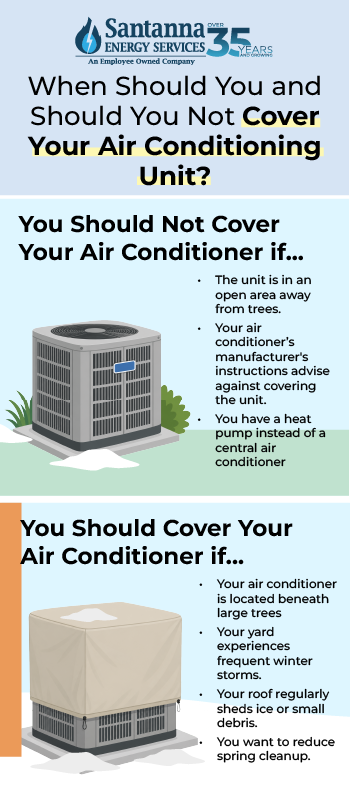
- Your air conditioner is located beneath large trees. Falling leaves, pine needles, twigs, acorns, and seed pods can collect inside the unit throughout the fall and winter.
- Your yard experiences frequent winter storms. Strong winds can blow debris into the condenser, especially if your home is surrounded by trees or shrubs.
- Your roof regularly sheds ice or small debris. If chunks of ice or small branches occasionally fall near the unit, a cover may provide some added protection from minor impacts. If heavy ice regularly falls onto the unit, addressing the source of the problem is more important than relying on a cover.
- You want to reduce spring cleanup. A cover can help keep debris out of the unit, making it quicker to inspect and prepare for the next cooling season.
Even in these situations, a breathable top cover is generally a better choice than fully wrapping the unit. It helps keep debris out while allowing air to circulate and moisture to escape.
When Should You NOT Cover Your Air Conditioner?
You do not need to cover your air conditioner if it isn't exposed to significant debris or if using a cover could trap moisture and create more problems than it prevents. In many cases, leaving a properly installed outdoor unit uncovered is completely normal.
You may not need to cover your air conditioner if:
- The unit is in an open area away from trees. If leaves, branches, and other debris rarely collect around the condenser, there may be little benefit to using a cover.
- Your air conditioner's manufacturer's instructions advise against covering the unit. Some manufacturers provide specific recommendations for protecting their equipment, so it's always a good idea to check your owner's manual.
- You have a heat pump instead of a central air conditioner. Unlike a standard air conditioner, a heat pump often operates throughout the winter to help heat your home. Covering a heat pump while it's in use can block airflow and affect its performance.
If you're unsure whether your air conditioner needs a cover, consider your home's surroundings instead of the weather alone. For many homeowners, normal snow and freezing temperatures aren't the deciding factor. Nearby trees, falling debris, and proper ventilation are usually much more important.
What Are the Benefits of Covering an Air Conditioner for the Winter?
Covering an air conditioner for the winter can help protect it from certain types of debris and accidental damage, but the benefits depend on your home's surroundings rather than the winter weather itself. While most outdoor air conditioners do not need protection from snow or freezing temperatures, a properly used cover can be helpful in specific situations.
Here are some of the potential benefits of covering your outdoor air conditioner during the winter:
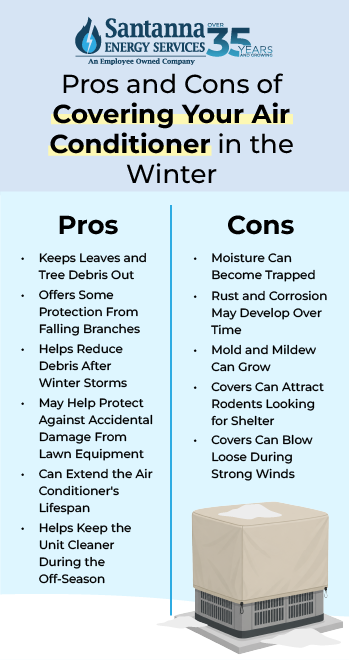
- Keeps Leaves and Tree Debris Out: If your air conditioner is located beneath trees, a cover can help prevent leaves, small branches, and other debris from collecting inside the unit during the fall and winter.
- Offers Some Protection From Falling Branches: A lightweight cover won't stop a large branch from causing damage, but it can provide a small amount of protection against minor falling debris, such as small twigs or branches during windy conditions.
- Helps Reduce Debris After Winter Storms: Strong winds and winter storms can scatter leaves, pine needles, and other yard debris onto your outdoor unit. A cover may help reduce buildup, making spring maintenance quicker and easier.
- May Help Protect Against Accidental Damage From Lawn Equipment During the Off-Season: If you store garden tools, move ladders, or use snow blowers and shovels near the air conditioner during winter, a cover can provide a small layer of protection against minor scratches and scuffs.
- Can Extend the Air Conditioner's Lifespan: Central air conditioners typically last 15 to 20 years, but exposure, maintenance, and operating conditions can affect their lifespan. Keeping debris and trapped moisture away from the outdoor condenser is one small way homeowners can help protect that investment.
- Helps Keep the Unit Cleaner During the Off-Season: A cover can reduce dirt, dust, and outdoor debris that settle on or inside the unit. This can make seasonal inspections and spring startup a little easier.
What Are the Potential Drawbacks of Covering an Air Conditioner for the Winter?
Covering an air conditioner for the winter can sometimes do more harm than good if the wrong type of cover is used or if it's left on for months without ventilation. While a cover may help keep debris out, it can also trap moisture, attract pests, and create conditions that aren't ideal for the outdoor unit.
Here are some potential drawbacks homeowners should consider before covering their air conditioner.
- Moisture Can Become Trapped: A tightly fitted or non-breathable cover can trap moisture inside the air conditioner after rain, melting snow, or temperature changes.
- Rust and Corrosion May Develop Over Time: When moisture remains trapped inside the unit, metal components may be exposed to damp conditions longer than they normally would. Over time, this can contribute to rust or corrosion on certain parts.
- Mold and Mildew Can Grow: Although mold growing inside an outdoor air conditioner isn't common, trapping moisture beneath a cover can increase the chances of mildew developing on surfaces or around accumulated debris.
- Covers Can Attract Rodents Looking for Shelter: A fully covered air conditioner can create a warm, sheltered space that may appeal to mice and other small animals during cold weather. Once inside, rodents may build nests using leaves or insulation and, in some cases, chew on wiring or other materials.
- Covers Can Blow Loose During Strong Winds: If a cover isn't secured properly, strong winter winds can loosen it or blow it completely off the unit.
What Is the Best Air Conditioner Cover for Winter?
For most homeowners, a breathable, top-only air conditioner cover is generally the recommended option. The best air conditioner cover we found is the Covermates Armor Top AC Cover, which protects the top of the condenser while leaving the sides open for ventilation.
Unlike a full cover that wraps the entire unit, a top-only cover helps keep leaves, twigs, pine needles, and other debris out while allowing air to circulate through the sides. This reduces the chance of moisture becoming trapped inside the unit during the winter.
Many air conditioner manufacturers and HVAC professionals recommend a breathable top cover because it strikes a balance between protecting the unit from seasonal debris and allowing it to dry naturally after rain or snow.
Since most debris enters through the top of the condenser, covering only this area is often enough for many homes.
If you decide to purchase a cover, look for features such as:
- Breathable material: Allows moisture to escape instead of becoming trapped inside the unit.
- Top-only design: Helps block leaves and debris while keeping the sides open for ventilation.
- Secure straps or fasteners: Keeps the cover in place during windy winter weather.
- Proper fit: Covers the top of the unit without tightly enclosing the entire condenser.
Comparison of Common Air Conditioner Covers for Winter
| Cover Type | Helps Keep Out Debris | Allows Airflow | Moisture Risk | Recommended For |
| Breathable top-only cover | Excellent | Excellent | Low | Most homeowners |
| Breathable full cover | Excellent | Moderate | Moderate | Homes with heavy debris, if the cover is designed for ventilation |
| Vinyl or plastic full cover | Excellent | Poor | High | Not generally recommended |
| Plastic tarp or garbage bag | Limited | Poor | Very High | Avoid using |
Does Covering an Air Conditioner in the Winter Improve Energy Efficiency?
Covering an air conditioner for the winter does not directly improve energy efficiency because the unit is not running. However, a breathable cover can help keep leaves, pine needles, and other debris out of the outdoor unit, which may support better airflow when cooling season returns.
Nearly half of the energy used in the average home goes toward heating and cooling, according to ENERGY STAR. While covering your AC won't directly lower your winter energy use, keeping the outdoor unit clean and properly maintained can help it operate efficiently when cooling season returns.
ENERGY STAR also reports that airflow problems can reduce HVAC system efficiency by up to 15%. While a winter AC cover isn't an energy-saving device on its own, keeping leaves and debris from accumulating around the condenser is one part of preparing the system for efficient operation when cooling season returns.
How to Properly Cover Your Air Conditioner in the Winter
If you decide to cover your air conditioner for the winter, the best approach is to use a breathable, top-only cover that keeps debris out while still allowing air to circulate. Properly covering the unit can help protect it from leaves and other debris without trapping moisture inside.
Here are a few simple steps you can follow:
1. Turn Off the Air Conditioner for the Season
Before covering the unit, make sure your central air conditioner is no longer needed for the season. This helps prevent accidentally running the system while it's still covered.
2. Remove Leaves and Debris First
Brush away any leaves, pine needles, twigs, or dirt that have collected on or around the outdoor unit. Starting with a clean condenser helps prevent debris from sitting inside the unit throughout the winter.
3. Choose a Breathable Top Cover
Select a cover made from a breathable material that's designed for outdoor air conditioners. A top-only cover is often the best choice because it keeps debris out while allowing the sides of the unit to remain open for ventilation.
4. Secure the Cover Properly
Use the built-in straps or fasteners to keep the cover in place during windy weather. The cover should fit securely without being wrapped tightly around the entire unit.
5. Leave the Sides Open
Avoid enclosing the entire air conditioner with plastic sheeting, tarps, or other airtight materials. Leaving the sides open allows moisture to escape naturally and helps reduce the risk of rust, mold, and pest activity.
6. Check the Cover Occasionally
After heavy winds or winter storms, take a quick look to make sure the cover is still secure and that large amounts of debris haven't collected on top of it. A few minutes of inspection can help prevent problems later.
7. Remove the Cover Before Cooling Season Begins
Once warmer weather returns and you're ready to use your air conditioner again, remove the cover and inspect the unit. Clear away any remaining debris and make sure nothing is blocking the airflow before turning the system back on.
Frequently Asked Questions
Can I leave my AC uncovered all winter?
Yes, you can leave most central outdoor air conditioners uncovered all winter because they are designed to withstand normal rain, snow, ice, and freezing temperatures.
Can snow ruin an outdoor air conditioner?
No, normal snowfall typically does not damage a properly installed outdoor air conditioner, though falling branches, ice on the roof, or poor drainage can.
Can mice get inside a covered air conditioner?
Yes, a tightly covered air conditioner can provide a sheltered space where mice and other small animals may build nests during the winter.
Do air conditioner covers cause mold?
They can if the cover traps moisture, since damp, poorly ventilated conditions may encourage mold or mildew to develop on surfaces inside or around the unit.
When should I remove the cover?
Remove the cover before turning on your air conditioner in the spring and inspect the unit for debris, nests, or visible damage before the first use of the cooling season.
Covering your air conditioner for the winter isn't something every homeowner needs to do. Most outdoor units are built to handle normal snow, ice, and freezing temperatures, so the decision often comes down to your home's surroundings rather than the weather itself.
More importantly, simple habits like clearing debris, maintaining good drainage, and inspecting the unit before winter can go a long way toward keeping your air conditioner ready for the next cooling season.
Just as protecting your air conditioner today can help it perform efficiently when summer returns, choosing the right energy plan can help you prepare for the months ahead. If you're looking for more predictable supply charges and fewer surprises on your electricity bill while keeping your home comfortable year-round, Santanna's Unlimited Energy plan is worth exploring. It offers the confidence of knowing your monthly supply charge stays the same throughout your contract, giving you one less thing to worry about as the seasons change.*
A little care before winter arrives can help your air conditioner be ready when the first warm days of spring return, so you can enjoy comfort at home with greater confidence all year long.
* Restrictions apply. Enrollment based upon program eligibility. Customers using more than 125% of normal monthly usage as determined by Santanna may be required to switch plans.
Jenna Mendez is a Midwest native with lifelong roots in Illinois and time spent in Ohio during college, giving her a deep understanding of the Midwest region’s people, climate, and energy needs. She brings firsthand experience and local insight to topics that matter to Midwest homeowners, especially energy efficiency, sustainability, and home living. Jenna specializes in writing about eco-friendly living, all things Midwest, renewable energy, and practical ways to reduce energy costs. Jenna brings a trusted, and local hometown voice to every article she writes, helping readers live well, and sustainably, right where they are.