
What Causes an Electrical Fire? Signs, Warnings and More

by Jenna Mendez
Updated: September 29, 2026
12.6 min read
Key Points of This Article:
- Electrical fires are typically caused by damaged wiring, overloaded circuits, loose connections, or faulty appliances.
- Electrical fires can start in uncommon places, such as having your charger under a blanket or storing cords under rugs, or from loose outlets, damaged hidden wiring, or overloaded power strips.
- Burning smells, warm or discolored outlets, buzzing, sparks, and breakers that keep tripping can all be signs that something electrical needs attention.
- If an electrical fire starts, get everyone out, call 911 from a safe location, and never use water on electrical equipment that may still be energized.
Electrical fires don't always start with a big spark or an outlet that suddenly catches fire. Sometimes, the problem builds quietly behind a wall, inside an appliance, or from an everyday habit that may not seem risky at first.
That's why knowing what causes electrical fires, like faulty wiring, overloaded electrical outlets, or misused extension cords, can help you catch a potential problem sooner.
While electrical problems and repairs should always be evaluated by a qualified professional, knowing what to watch for can help you recognize potential risks sooner.
In this guide, we'll explain what causes electrical fires, including common culprits and some hazards you might not think of, the warning signs that may signal an electrical problem, and practical steps you can take to help keep your home and family safer.
What Causes an Electrical Fire?
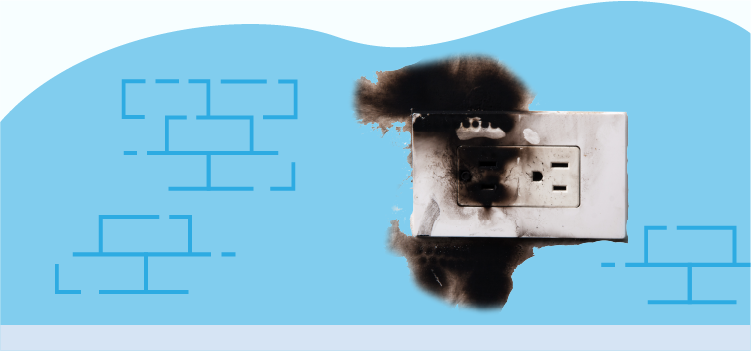
An electrical fire can start when a problem with wiring, connections, cords, outlets, or electrical equipment generates enough heat, sparks, or electrical arcing to set nearby materials on fire.
The source is not always somewhere you can see. What causes of an electrical fire can start at an outlet, appliance, damaged cord, light fixture, electrical panel, or within wiring hidden behind a wall.
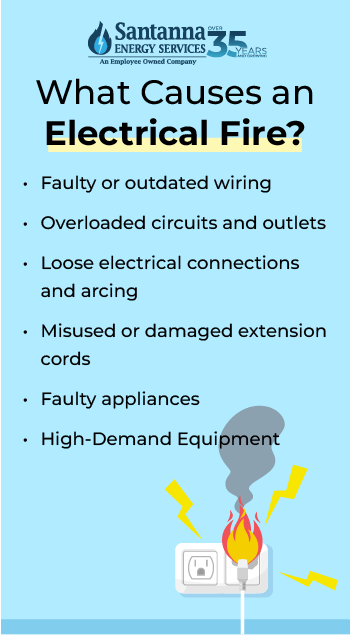
Let's take a closer look at some of the common electrical problems that can lead to a fire:
Faulty or Outdated Wiring
According to the U.S. Fire Administration, electrical wiring and cable insulation are the materials most likely to catch fire first in home electrical fires.
Wiring that is damaged, deteriorating, improperly installed, or no longer suited to a home's electrical needs can increase the risk of fire. Problems can develop as insulation wears down, connections loosen, or previous electrical work creates weak points that may be difficult to see.
Overloaded Circuits and Outlets
An overloaded circuit happens when connected devices demand more electricity than the circuit is designed to safely carry. An outlet can get overloaded when too much equipment draws power from the same circuit, which can cause an electrical fire if the outlet is continuously overloaded.
Circuit breakers are designed to cut power when a circuit is overloaded. If the same breaker repeatedly trips, do not simply keep resetting it without finding out why. Recurring trips can signal a problem that should be evaluated by a qualified electrician.
When we asked Santanna Employee-Owners which electrical safety practice homeowners overlook most, the majority pointed to the same thing: plugging too many devices into a single outlet, power strip, or circuit.
Loose Electrical Connections and Arcing
A loose electrical connection can create heat and allow electricity to arc across a small gap, which can easily cause an electrical fire. That arcing can reach very high temperatures and potentially ignite nearby materials.
Warning signs of a loose electrical connection can include unusual warmth, discoloration, buzzing or crackling sounds, or a burning smell near an outlet, switch, or electrical device.
Misused or Damaged Extension Cords
Extension cords can become a fire risk when they are damaged, overloaded, or used for purposes they were not designed to handle. Frayed insulation, crushed sections, damaged plugs, or other wear can make it unsafe for a cord to carry electricity.
Plugging an extension cord into a power strip can increase electrical fire risk because more outlets do not mean more electrical capacity. Both extension cords and power strips have limits, and connecting too many devices, especially high-demand appliances, can overload the setup.
Always follow the manufacturer's ratings and instructions for cords, power strips, and connected devices.
Faulty Appliances and High-Demand Equipment
A damaged or malfunctioning appliance can create an electrical fire risk. Damaged plugs or cords, worn internal parts, electrical faults, or unusual overheating can all signal a problem with the equipment itself.
Pay attention when an appliance starts behaving differently. An unusually hot plug or outlet, burning smell, visible damage, sparks, or repeated breaker trips when the appliance runs can signal an electrical problem.
What Electrical Fire Hazards Might You Be Overlooking?
Some electrical fire hazards are easier to miss than you might think. A charger tucked under a blanket, a loose outlet, a cord running under a rug, or old wiring behind a wall may not seem like an immediate problem, but they can become unsafe over time.
Let's take a look at some electrical fire hazards you may not have thought about:
Charging Electronics on Beds, Sofas, or Other Soft Surfaces
Charging your phone, laptop, or other device on a bed or sofa can trap heat around the device or charger. Covering a charging device with blankets or pillows can make that problem worse.
The charger and cable matter, too. Damaged cords, loose connectors, or charging equipment that is not appropriate for the device can introduce additional electrical and overheating risks.
Running Electrical Cords Under Rugs
A rug may hide a cord neatly, but it can also hide damage and put the cord in conditions it was not designed to handle. People may walk over it, furniture can press down on it, and repeated pressure can damage the cord over time.
The rug also makes it harder to notice early signs of wear. You may not see a cracked outer covering, crushed section, or other damage until the problem becomes more serious.
Loose-Fitting Plugs and Worn Outlets
A plug that keeps slipping out of an outlet may seem like a small annoyance, but a loose-fitting outlet can mean the electrical connection is no longer as secure as it should be. Poor connections from an outlet to a plug can contribute to heat and electrical arcing, which can cause an electrical fire.
Pay particular attention if an outlet is unusually warm, discolored, buzzing, sparking, or no longer holds plugs securely. These can be warning signs of a problem that could lead to an electrical fire.
Using the Wrong Bulb for a Light Fixture
A light bulb can create a fire risk if its wattage exceeds what the fixture is designed to handle. Higher-wattage bulbs produce more heat, and a fixture that cannot safely manage it may overheat.
Check the fixture or manufacturer's instructions for its maximum bulb wattage and other compatibility requirements. This is especially worth checking when replacing bulbs in older fixtures or when you are unsure what type of bulb was previously installed.
Rodents Damaging Hidden Wiring
Rodents can create an electrical hazard in places you rarely see because they may chew through the protective covering around electrical wiring. The damage can occur in attics, crawlspaces, basements, walls, or other concealed areas and cause electrical fires.
That makes this hazard different from a damaged phone charger sitting on your counter. You may not know the wiring has been affected simply by looking around your living space.
Moisture and Corrosion Around Electrical Components
Water and electrical equipment are a dangerous combination, but the problem is not limited to dropping an appliance into water. Leaks, flooding, persistent dampness, or moisture entering electrical components can damage equipment and contribute to corrosion over time.
If an outlet, appliance, electrical panel, or other electrical component has been exposed to water or shows signs of corrosion, do not assume it is safe simply because it still works. A qualified professional can determine whether the affected equipment needs repair or replacement.
Old or Improper DIY Electrical Work
An electrical problem in your home may have started years before you moved in. Previous homeowners may have added outlets, replaced fixtures, extended wiring, or completed other electrical projects that are now hidden behind walls or finished surfaces.
DIY work is not automatically unsafe, but electrical work that was installed incorrectly, damaged later, or does not meet applicable requirements can create problems that are difficult for the current homeowner to recognize.
If you find unusual wiring, recurring electrical problems, or modifications that make you question how something was installed, a qualified electrician can evaluate the work rather than leaving you to guess what is happening behind the wall.
Electric Blankets and Other Electric Heating Products
Electric blankets, heating pads, and similar products combine electricity with heat, so damage, age, or improper use can create risks that are easy to overlook during everyday use.
Watch for damaged cords, plugs, controls, or heating areas that behave unusually. Folding, bunching, covering, or using these products in ways the manufacturer warns against can also interfere with safe operation.
Follow the product's instructions, stop using equipment that is damaged or overheating, and check for recalls when you have concerns about an older electrical product.
Holiday Lights and Temporary Electrical Setups
Holiday lights and temporary decorations can become an electrical hazard when temporary wiring starts being treated like a permanent part of the home. Damaged light strands, overloaded connections, pinched extension cords, and electrical products used in the wrong environment can all create problems.
What Are the Warning Signs of an Electrical Fire Risk?
Electrical problems often give you clues before they become more serious. You might notice something that looks, sounds, smells, or feels different around an outlet, appliance, cord, or other electrical equipment.
Not every warning sign tells you exactly what's wrong, but it can be your home's way of telling you something needs attention. Here are some common electrical warning signs to watch for around your home:
Common Warning Signs of an Electrical Fire Risk
| Warning sign | What it could indicate | What to do |
| Burning or hot-plastic smell | An electrical component may be overheating | Stop using the affected equipment when safe and have the source professionally evaluated |
| Warm or discolored outlet | Excessive heat or a connection problem | Stop using the outlet and have it evaluated |
| Frequent breaker trips | An overloaded circuit, electrical fault, or another problem | Do not keep resetting the breaker without addressing why it is tripping |
| Buzzing or crackling | A loose connection, arcing, or another electrical problem | Stop using the affected equipment or outlet and have it professionally evaluated |
| Unusual sparks | A problem with an appliance, outlet, plug, or wiring | Stop using the affected equipment and have the cause evaluated |
| Flickering or dimming lights | A possible circuit, connection, fixture, or electrical supply issue | Pay attention to when it happens and seek professional evaluation if it recurs |
| Frayed or damaged cord | The protective covering or wiring inside the cord may be compromised | Stop using the damaged cord or equipment |
| Plug fits loosely in an outlet | The outlet may be worn or unable to maintain a secure connection | Stop using the outlet and have it inspected |
Seeing one warning sign doesn't always mean an electrical fire is about to start. But if something seems unusual or keeps happening, don't brush it off, especially if you notice heat, a burning smell, discoloration, sparks, or a breaker that keeps tripping.
For example, your lights might dim for a moment when a large appliance turns on, and that doesn't always mean something is wrong. But if it starts happening more often or you notice other signs like buzzing, heat, or a burning smell, it's worth having a qualified electrician take a look.
What Does an Electrical Fire Smell Like?
An electrical problem that's overheating may smell like burning plastic, hot rubber, or something unusually sharp or burnt. You may even notice the smell before you can tell exactly where it's coming from.
The smell could come from an outlet, appliance, electrical panel, damaged wiring, or even somewhere behind a wall. If you smell something burning but can't see where it's coming from, don't wait for smoke or flames to take it seriously.
If it's safe, stop using the affected outlet or equipment and have a qualified electrician check the source. If you see smoke or fire or there's an immediate danger, leave the home and contact emergency services.
What Should You Do If an Electrical Fire Starts?
If an electrical fire starts, your first priority is getting everyone safely out of the home. Alert others, leave the house, and call 911 or your local emergency number from a safe location. Never use water on a fire involving electrical equipment because water can conduct electricity and put you at risk of electric shock.
Do not put yourself in danger trying to unplug a burning appliance, reach the electrical panel, or disconnect equipment. The U.S. Fire Administration recommends considering a fire extinguisher only when the fire is small and contained, someone has called the fire department, you are safe from smoke, and you have a clear escape route.
If you do reach for an extinguisher, make sure it's rated for electrical fires. Water and foam extinguishers can conduct electricity back toward you, so look for one labeled Class C, or a multi-purpose ABC extinguisher, which covers electrical fires along with ordinary combustibles and flammable liquids.
FAQs
Can a circuit breaker prevent an electrical fire?
A circuit breaker can help prevent some electrical fires by shutting off power during overloads or short circuits, but it cannot protect against every electrical fault or fire hazard.
Can an electrical fire start inside a wall?
Yes, an electrical fire can start inside a wall if damaged wiring, loose connections, or electrical faults create enough heat or arcing to ignite nearby materials.
What appliances are most likely to cause electrical fires?
Heat-producing and high-demand appliances, such as space heaters, cooking equipment, and clothes dryers, can contribute to home fires, especially when they are damaged, improperly used, or placed too close to combustible materials.
Electrical fires do not always start with an obvious spark or a visibly overloaded outlet. Problems can develop quietly through damaged wiring, loose connections, overloaded circuits, faulty appliances, or everyday habits that put electrical equipment under more stress than it was designed to handle. Knowing the less-obvious risks and paying attention to warning signs like unusual heat, burning smells, buzzing, discoloration, or repeated breaker trips can help you recognize when it is time to call a qualified electrician.
Understanding how electricity moves through your home is also part of making informed energy choices, from using high-demand appliances safely to knowing what you pay for the electricity that powers them.
If you are exploring your electricity options, check out Santanna's Unlimited Energy Plan to see how a predictable electricity supply charge can mean fewer surprises from changes in your household electricity use.*
The more you understand how electricity powers your home, the better prepared you are to use it safely and make energy choices with confidence.
* Restrictions apply. Enrollment based upon program eligibility. Customers using more than 125% of normal monthly usage as determined by Santanna may be required to switch plans.
Jenna Mendez is a Midwest native with lifelong roots in Illinois and time spent in Ohio during college, giving her a deep understanding of the Midwest region’s people, climate, and energy needs. She brings firsthand experience and local insight to topics that matter to Midwest homeowners, especially energy efficiency, sustainability, and home living. Jenna specializes in writing about eco-friendly living, all things Midwest, renewable energy, and practical ways to reduce energy costs. Jenna brings a trusted, and local hometown voice to every article she writes, helping readers live well, and sustainably, right where they are.