
Can You Plug an Extension Cord Into a Power Strip?

by Tyler Castle
Updated: July 28, 2026
9.7 min read
Key Points of This Article:
- You should not plug an extension cord into a power strip. Plugging an extension cord into a power strip can increase the risk of overheating, equipment damage, and electrical fires.
- Extension cords add reach, while power strips add outlets, and using them together can make power overloading more likely.
- If you need more outlets or reach, consider a surge protector, a properly rated extension cord, or additional outlets.
Finding an available outlet is not always easy. Whether you’re setting up a home office, plugging in holiday lights, or trying to reach a device that’s just a little too far from the wall, plugging an extension cord into a power strip can seem like a simple solution.
But is it actually safe? For ultimately safety, you should never plug an extension cord into an outlet. And let us tell you why!
Here’s what you should know before deciding whether you can plug an extension cord into a power strip.
Power Strip vs. Extension Cord: What's the Difference?
The use of surge protectors is more common than you may think. According to our internal survey, more than 90% of participants surveyed use surge protectors regularly in their homes.
The main difference between a power strip vs an extension cord is their purpose. An extension cord is designed to extend the reach of a wall outlet and provide temporary access to power when a device is too far away.
A power strip is designed to add multiple outlets to a single wall outlet, so several devices can be powered in one location.
In simple terms, an extension cord solves a distance problem, while a power strip solves an outlet shortage problem. Because they are designed for different purposes, plugging them together is not always recommended and can increase the risk of overloading the electrical setup.
Power Strip vs. Extension Cord: Quick Comparison
| Device | What Is It? | Primary Purpose | Intended Use |
| Extension Cord | A flexible electrical cord that extends power from a wall outlet to a device farther away. | Extend the reach of electricity. | Temporary power access when a device cannot easily reach a wall outlet. |
| Power Strip | A device that plugs into a single wall outlet and provides multiple outlets. | Add more outlets in one location. | Powering multiple low-to-moderate power devices from a single wall outlet. |
Can You Plug an Extension Cord Into a Power Strip?
In most cases, you should not plug an extension cord into a power strip because it can increase the risk of overheating, equipment damage, overloaded circuits, and electrical fires, especially when multiple devices or high-power appliances are connected.
Combining an extension cord and a power strip can make it easier to draw more electricity than the setup was designed to handle.
While low-power devices such as lamps, phone chargers, and routers may pose less risk, high-power appliances such as space heaters, microwaves, refrigerators, and portable air conditioners can quickly overload the setup.
A little extra caution can go a long way when you need additional outlets or more reach around the home.
What Can Happen If You Plug an Extension Cord Into a Power Strip?
Some of the most common issues that can occur when an extension cord is plugged into a power strip include:
- Overheating: Extension cords, power strips, plugs, and outlets can overheat when they carry more electricity than they are designed to handle.
- Tripped Circuit Breakers: Too many devices drawing power at the same time can overload the circuit and trip the breaker.
- Damaged Cords and Plugs: Heat buildup can damage cords, plugs, and power strips, causing signs of wear such as cracking, melting, or discoloration.
- Damaged Electronics and Appliances: An overloaded setup can place extra strain on connected devices and increase the risk of equipment damage over time.
- Increased Fire Risk: Overheating cords, plugs, outlets, or power strips can increase the risk of an electrical fire.
Warning Signs to Watch For
If you’re using an extension cord with a power strip, watch for these signs that the setup may be overloaded or unsafe:
- Warm or hot cords
- Warm plugs or outlets
- Flickering lights
- Buzzing sounds
- Burning odors
- Discolored outlets or power strips
- Circuit breakers that trip repeatedly
If you notice any of these warning signs, stop using the setup immediately. If you are unsure whether the setup is safe, contact a qualified electrician for guidance.
Can You Ever Safely Plug an Extension Cord Into a Power Strip?
In some situations, an extension cord may be used with a power strip temporarily for low-power devices, but it is generally not considered the safest or most recommended setup.
You may use this arrangement for a lamp, phone charger, router, or laptop charger. These devices typically use far less electricity than high-power appliances such as space heaters, microwaves, portable air conditioners, or refrigerators.
Even then, it should be viewed as a short-term solution rather than a permanent one. If you choose to use an extension cord with a power strip, keep the number of connected devices to a minimum, avoid high-power appliances, and follow the manufacturer’s instructions.
If you find yourself relying on this setup every day, it may be time to consider a safer long-term solution.
How Can You Safely Use Extension Cords and Power Strips at Home?
You can safely use extension cords and power strips by avoiding overloads, using them as intended, and treating extension cords as temporary solutions rather than permanent sources of power.
To help reduce electrical risks, follow these simple safety tips:
- Only Use Extension Cords for Temporary Needs: If you rely on one every day, it may be time to consider a safer long-term solution, such as using a closer outlet or adding additional outlets where needed.
- Avoid Plugging High-Power Appliances Into a Power Strip: Space heaters, microwaves, portable air conditioners, and similar appliances should generally be plugged directly into a wall outlet because they often require more power than other household devices.
- Do Not Overload the Power Strip: A power strip adds outlets, but it does not add more power. Be mindful of how many devices are connected and how much power they use.
- Keep Cords Visible and Unobstructed: Avoid running cords under rugs, carpets, or furniture where they can become damaged or trap heat, and keep them visible so it’s easier to spot potential problems.
- Replace Damaged Cords and Power Strips: If a cord or power strip looks worn, cracked, frayed, discolored, or otherwise damaged, stop using it and replace it. Damaged equipment can increase safety risks.
- Keep Extension Cords and Power Strips Away From Water: Avoid placing cords and power strips near sinks, bathtubs, or other wet areas, as water and moisture can increase the risk of electrical shock and equipment damage.
- Watch for Warning Signs: If a cord, plug, outlet, or power strip feels unusually warm, produces a burning odor, shows visible damage, or repeatedly causes power to shut off, stop using the setup. If you are unsure whether it is safe, contact a qualified electrician for guidance.
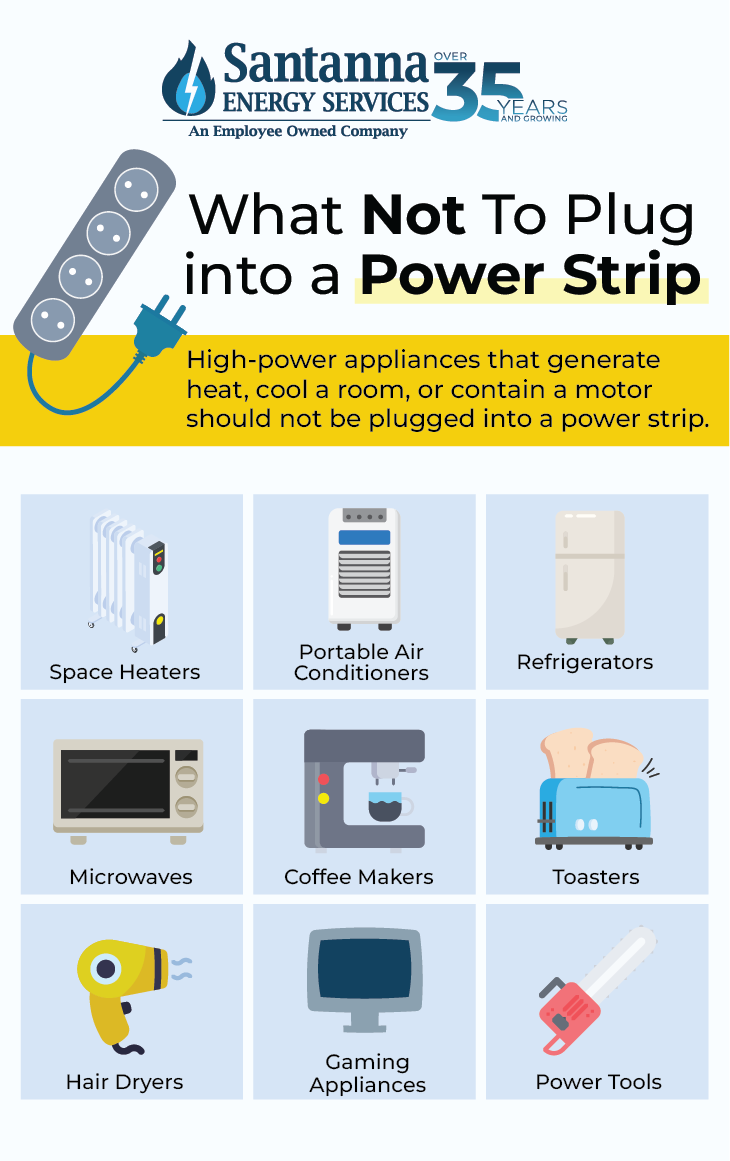
What NOT To Plug into a Power Strip
High-power appliances that generate heat, cool a room, or contain a motor should not be plugged into a power strip.
As a general rule, be extra cautious with devices that:
- Generate heat
- Cool a room or appliance
- Contain a motor or compressor
- Use a large amount of electricity
Some of the most common household devices that should not be plugged into a power strip include:
- Space heaters
- Portable air conditioners
- Refrigerators and freezers
- Microwaves
- Coffee makers
- Toasters and toaster ovens
- Hair dryers and other heating appliances
- Large gaming PCs and high-powered electronics
- Power tools and workshop equipment
These devices often use large amounts of electricity and can increase the risk of overheating, overloaded circuits, equipment damage, or electrical fires, so they are generally safest when plugged directly into a wall outlet.
What Are Safer Alternatives If You Need More Reach or More Outlets?
If you need more reach or more outlets, there are usually safer options than plugging an extension cord into a power strip.
Here are a few alternatives to consider:
Use a Surge Protector Directly in a Wall Outlet
If you need additional outlets for electronics, a surge protector plugged directly into a wall outlet can provide extra outlets while helping protect sensitive devices such as computers, televisions, gaming systems, and routers from power surges.
Use a Heavy-Duty Extension Cord for Temporary Needs
For temporary needs, a properly rated extension cord is often a safer option than combining an extension cord with a power strip, especially for holiday decorations, temporary work areas, or occasional projects around the home.
Move Devices Closer to Existing Outlets
Sometimes the simplest solution is to rearrange furniture, electronics, or appliances so they can reach an existing outlet without additional cords.
Consider Additional Outlets for Frequently Used Areas
If you regularly rely on extension cords or power strips, your home may benefit from additional outlets installed by a qualified electrician where they are needed most.
Consider an Energy-Saving Power Strip for Electronics
For home offices and entertainment centers, an energy-saving power strip can help manage multiple electronics while reducing standby energy use. These power strips help reduce electricity used by electronics that continue drawing power even when turned off.
Frequently Asked Questions
What is daisy chaining?
Daisy chaining is the practice of connecting multiple power strips, extension cords, or both together in a series to reach more outlets or greater distances.
Is it safe to daisy chain power strips with extension cords?
No, daisy chaining power strips with extension cords is generally not recommended because it can increase the risk of overheating, overloading, and electrical fires.
Can a power strip overheat without tripping a breaker?
Yes, a power strip can overheat due to overloading, damage, or improper use even if the circuit breaker does not immediately trip.
How long can an extension cord be used safely?
Extension cords are designed for temporary use, and some workplace safety guidelines limit their use to no more than 90 days before a more permanent wiring solution is needed.
How should you store extension cords when not in use?
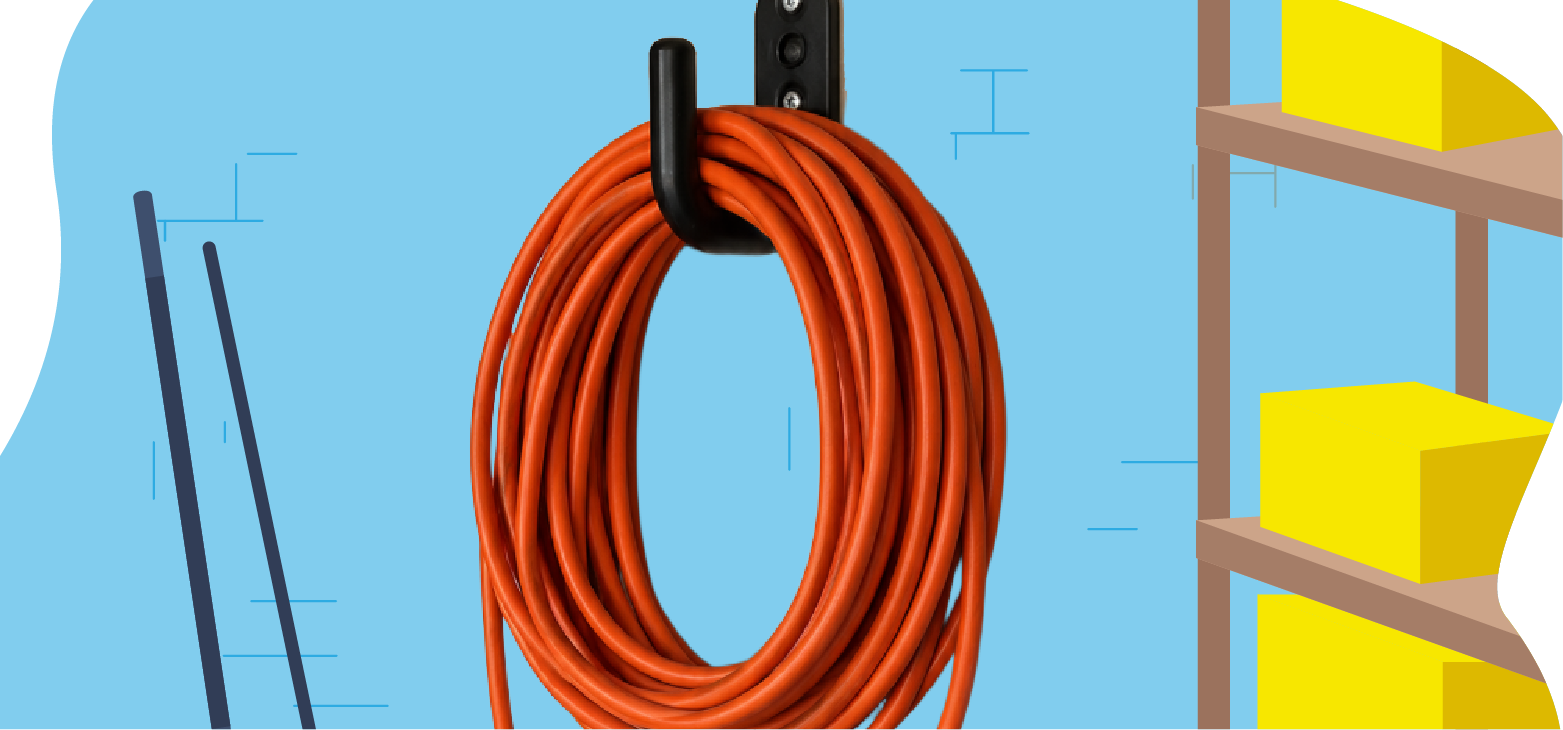
Extension cords should be stored loosely coiled in a clean, dry location away from moisture, excessive heat, and direct sunlight.
Avoid wrapping cords tightly, bending them sharply, or hanging them by the plug, as this can strain the wiring over time. Before storing an extension cord, unplug it, check for fraying or cracks, and make sure it is completely dry.
Plugging an extension cord into a power strip may seem convenient, but it is not always the safest choice. In many cases, the biggest risk comes from how the setup is used and what devices are connected to it. Using extension cords only for temporary needs and avoiding overloaded power strips can help reduce the risk of overheating, equipment damage, and electrical fires.
After all, you have enough to think about without worrying about overloaded outlets or unexpected surprises around your home. The same idea applies to managing your energy costs.
Just as making informed choices about electrical safety can help reduce surprises around the home, choosing an energy plan that fits your household’s needs can help reduce surprises elsewhere. If predictable supply charges are important to you, Santanna’s Unlimited Energy plan may be worth exploring.*
Because the best connections in your home are the ones you don’t have to second-guess.
* Restrictions apply. Enrollment based upon program eligibility. Customers using more than 125% of normal monthly usage as determined by Santanna may be required to switch plans.
Tyler is an experienced energy professional, having worked for Santanna Energy Services, for the past four years. He is passionate about renewable energy and believes that diversifying the energy grid is the key to a sustainable future. Tyler is dedicated to supplying consumers with the best possible energy solutions and works diligently to make sure that Santanna can deliver the highest quality service.