
Home Battery Backup System: Pros and Cons and Who Needs it Most

by Brennan Lambrecht
Updated: October 8, 2026
18.2 min read
Key Points of This Article:
- Some of the pros of a home battery backup system include automatic, quiet backup power for essential appliances during outages, with lower maintenance, no fuel storage, and strong compatibility with solar panels.
- The main drawbacks of a home battery backup system include high upfront cost, limited runtime, professional installation requirements, and the fact that savings or whole-home coverage are not guaranteed.
- The best fit for a whole-home backup battery is typically a homeowner who experiences frequent outages, has solar panels, works from home, relies on medical equipment, or wants quieter, lower-maintenance backup power than a generator provides.
If you've ever been left in the dark during a storm, worried about food spoiling in the refrigerator, a sump pump shutting off, or losing the comfort of heat or access to the internet, you've probably wondered if there's a better way to prepare for the next outage.
With more homeowners looking for reliable backup power, it can be hard to know how home battery systems compare to generators and whether they're worth the investment.
In this guide, you'll learn what a home battery backup system is, how it works, what installation involves, its pros and cons, and who benefits most, so you can decide if it's the right backup solution for your home.
What Is a Home Battery Backup System?
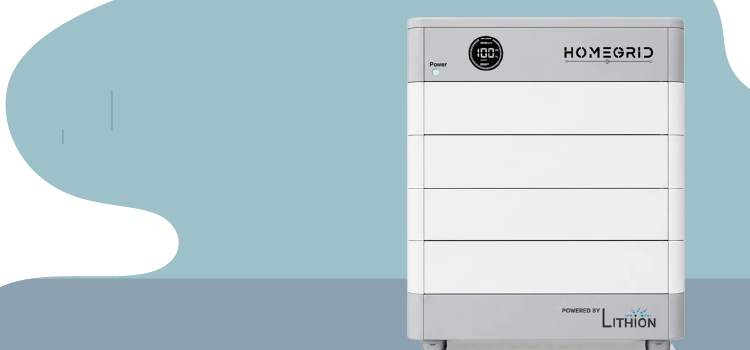
A home battery backup system stores electricity so it can power parts of your home when the grid goes down or when you choose to use the stored energy later. Instead of generating electricity like a generator does, it charges ahead of time from the power grid, solar panels, or both, then automatically supplies that stored electricity when it’s needed.
Think of it as a large rechargeable battery for your home. Just as a phone stores power so you can use it after unplugging it, a home battery stores electricity while power is available and releases it later if your home loses power or if you want to rely on stored energy instead of drawing electricity from the grid.
How Does a Home Battery Backup System Work?
A home battery backup system generally works in three stages:
1. Electricity is Stored
The battery charges using electricity from the power grid, solar panels, or both. If you have solar panels, the battery can store excess electricity your panels generate during the day instead of sending all of it back to the grid.
2. The System Monitors Power
While the battery is charged, the system continuously monitors grid availability and the battery’s charge level. This is what allows most systems to detect an outage and respond automatically, without you having to do anything. Most modern systems include a transfer switch that detects a grid failure and switches your home to battery power within milliseconds, fast enough that most electronics won’t even reset.
3. Stored Power is Used When Needed
The battery discharges stored electricity to your home’s selected circuits during a power outage, or at night when solar production has stopped. Which scenario applies depends on how the system is configured and what it’s designed to do.
What Can a Home Battery Backup System Power?
How much of your home a battery can support largely depends on its capacity, how it’s installed, and what home features you deem necessary during an outage. Systems generally fall into three tiers:
- Essential loads only: Refrigerator, lights, Wi-Fi router, phone chargers, and medical equipment. This is the most common and most affordable setup
- Partial home backup: Essential loads plus a few additional circuits, such as a sump pump, select outlets, or home office equipment.
- Whole-home backup: Nearly everything in the house, including higher-draw appliances like televisions, dryers, and dishwashers. This tier requires the largest, most expensive systems and is less common for a single battery unit.
Most homeowners don’t need a whole-home backup to meet their goals. Sizing a system around your essential loads, rather than your entire home, is usually the most cost-effective approach.
Pros of a Home Battery Backup System
Wondering if a whole home backup battery is right for you? Let’s take a look at some of the biggest pros of the system you should know:
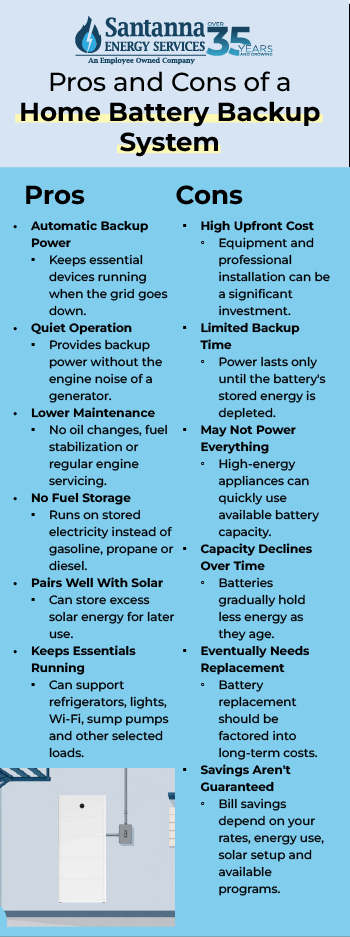
Automatic Backup Power
Most systems detect a grid failure and switch to battery power within milliseconds, fast enough to keep electronics like modems and computers from resetting. When the power goes out with a home backup battery, you won’t be without electricity for long as long as your system is charged.
Keeps Essential Appliances Running
A properly sized home battery can continue powering essential appliances such as your refrigerator, lights, Wi-Fi router, medical equipment, or sump pump during a power outage for 8 to 24 hours, depending on battery capacity and how much you’re running. This helps reduce disruptions and keeps your home safer and more comfortable until electricity is restored.
Helps Protect Refrigerated Food
Keeping your refrigerator and freezer running during an outage can help reduce food spoilage and prevent the cost and inconvenience of replacing groceries after the power returns. Backup batteries often have the capacity to easily power a fridge and freezer during an outage.
Helps Prevent Basement Flooding
If your home relies on a sump pump, a home battery can help keep it operating during a storm-related outage. This can reduce the risk of water damage and costly basement flooding.
Quiet Operation
Unlike many generators that run with a loud engine, home batteries operate quietly. You can continue using backup power without the constant noise, making them a good option in neighborhoods where noise ordinances or close-set homes make a running generator a bigger disruption.
Lower Maintenance
Because home batteries don’t have an engine, they generally require less routine maintenance than fuel-powered generators. There’s no need for oil changes, fuel stabilization, or regular engine servicing.
No Fuel Storage or Refueling
Home batteries use stored electricity instead of gasoline, propane, or diesel. That means you don’t have to keep fuel on hand or refill the system during a power outage.
Works Well With Solar Panels
If your home has solar panels, a battery can store extra electricity produced during the day for use later. During an outage, some systems can continue using that stored solar energy to power selected appliances, depending on how the system is designed.
No Exhaust Emissions During Use
Because home batteries don’t burn fuel while operating, they don’t produce exhaust emissions during normal use, making them a cleaner backup power option than fuel-powered generators.
Can Help Lower Electricity Costs in Some Areas
In areas with time-of-use electricity rates, a home battery can help lower your electricity bill by storing electricity when prices are lower and using it later during more expensive hours. This can reduce the amount of high-cost electricity you purchase from the grid.
Some homeowners can also earn bill credits or incentive payments by participating in a virtual power plant (VPP) program, which allows utilities or energy providers to draw on stored battery power during periods of high electricity demand.
Actual savings vary based on your utility’s pricing plan, your energy use, your battery system, and whether these programs are available where you live.
Helps You Stay Connected During Outages
Keeping your internet router, modem, phones, and computers powered can make it easier to work from home, attend online classes, receive emergency updates, or stay in touch with family and friends during a power outage.
Greater Peace of Mind
One of the biggest benefits of a home battery backup system is knowing your home is better prepared for unexpected outages. Whether it’s keeping your food cold, maintaining internet access, or powering essential medical equipment, having backup electricity can help reduce stress and make already stressful power outages easier to manage.
Overall, a home battery backup system offers more than emergency power. It can help keep your home comfortable, connected, and better prepared during outages while reducing the need for fuel, noise, and ongoing maintenance.
Cons of a Home Battery Backup System
While home battery backup systems offer many benefits, they also have some limitations. Understanding these tradeoffs can help you decide whether a battery backup system is the right fit for your home, energy needs, and budget.
High Upfront Cost
One of the biggest drawbacks is the high upfront cost, which typically ranges from about $5,000 to $20,000+, and can run higher for large whole-home systems, depending on battery capacity, equipment, and installation complexity. Total installed cost varies a lot by region and installer.
Federal Tax Incentives No Longer Apply to Most New Systems
The federal Residential Clean Energy Credit (Section 25D), which previously offered a 30% tax credit on qualifying battery storage systems, ended for systems placed in service after December 31, 2025, following the One Big Beautiful Bill Act signed into law in July 2025.
Homeowners who purchase and install a battery system with cash or a loan in 2026 or later can no longer claim this federal credit. Systems obtained through a solar lease or power purchase agreement (PPA) may still connect to a separate, business-side federal credit claimed by the third-party system owner, and some state and utility-level rebates or incentives remain available depending on where you live.
Limited Backup Time
A home battery can only provide power until its stored electricity is used up. How long it lasts depends on the battery’s capacity, the number of appliances being powered, and how much electricity your household uses during the outage.
Cannot Power Every Appliance at Once
Most home battery systems are designed to keep essential appliances running rather than power an entire home. High-energy appliances such as central air conditioners, electric water heaters, clothes dryers, electric ovens, and electric vehicle chargers can quickly exceed the battery’s available capacity.
If you experience frequent, elongated blackouts, it is recommended to configure your battery to power only essentials so they are more likely to stay powered during the duration of the blackout.
Longer Power Outages May Require Another Backup Solution
If an outage lasts longer than the battery’s stored electricity, you’ll need to wait for utility power to return or recharge the battery if your system is connected to solar panels. In areas where extended outages are common, some homeowners may prefer a generator or a larger battery system.
Battery Performance Gradually Declines
Like most rechargeable batteries, a home battery slowly loses some of its storage capacity over time. Most lithium-ion home batteries are designed to last 10 to 15 years, and after about 10 years, many can still store 70% of the electricity they held when they were new. While the battery won’t suddenly stop working, it may provide less backup power as it ages.
Battery Replacement Is Eventually Required
Home batteries are built to last for many years, but they won’t last forever. Eventually, the battery will need to be replaced, making it another long-term cost to consider when planning your investment.
Savings Are Not Guaranteed
A home battery doesn’t automatically reduce your electricity bill. Any potential savings depend on your utility’s electricity rates, whether time-of-use pricing is available, your energy use, and whether the battery is paired with solar panels.
Professional Installation Is Required
Because a home battery is connected directly to your home’s electrical system, it should be installed by a qualified professional. This adds to the overall project cost and means installation isn’t typically a do-it-yourself project.
May Require Additional Space
Home batteries are commonly installed in a garage, basement, utility room, or outside by the meter. Homeowners with limited indoor space may have fewer installation options depending on the battery model and local building requirements.
We recently surveyed 18 Santanna employee-owners and asked about their preference between a home battery and a generator and 67% of respondents said they would choose a whole home battery over a generator. Most respondents cited cost, ease of installation and quiet operation as reasons to purchase a battery over a generator.
The best choice depends on how often your home loses power, which appliances you need to keep running, how long you expect outages to last, and whether the long-term benefits align with your budget and energy goals.
What Does Home Battery Backup System Installation Involve?
Installing a home battery backup system isn’t a do-it-yourself project. Because the battery connects directly to your home’s electrical panel, it requires a licensed electrician or a certified installer. A typical installation generally includes the following steps:
- Site assessment: An installer evaluates your electrical panel, available space, and energy needs to recommend the right battery size and placement, such as a garage, basement, utility room, or outside the home, typically by the meter.
- Permitting: Most jurisdictions require an electrical permit before installation, and some require follow-up inspection. Requirements vary by city and utility, so timelines can range from a few days to a couple of weeks.
- Electrical work: The installer connects the battery to your panel, and in some cases, adds a subpanel dedicated to the circuits you want backed up. This step also involves the physical installation of the battery, which can often weigh between 200- 500 lbs.
- System configuration: The installer sets up which circuits the battery will power and, if applicable, connects it to existing solar panels.
- Testing and inspection: The system is tested to confirm it switches to battery power correctly, and a local inspector may need to sign off before it’s considered active.
- Activation: Once approved, the system is turned on and ready to charge and discharge automatically.
Installation timelines vary widely depending on your local permitting office, utility requirements, and whether any electrical panel upgrades are needed, but homeowners should generally expect the process, from initial site visit to final activation, to take anywhere a few days to a few weeks.
Do Home Battery Backup Systems Lower Electricity Bills?
A home battery backup system can help lower your electricity bill if your utility offers time-of-use pricing, if you have solar panels, or if you’re enrolled in a virtual power plant (VPP) program. Without one of these situations, a battery’s biggest benefit is usually providing reliable backup power during outages rather than reducing your monthly electric bill.
For example, imagine your utility charges $0.10 per kWh overnight and $0.25 per kWh during peak evening hours. If your battery stores 10 kWh of lower-cost electricity overnight, it would cost about $1.00 to charge. Using that stored electricity instead of buying 10 kWh during peak hours, which would cost $2.50, could save about $1.50 that day before accounting for normal battery efficiency losses. If similar savings occurred 20 days each month, that could add up to approximately $30 per month, or about $360 per year.
If your utility charges the same electricity rate all day, or you primarily use a battery for emergency backup, your monthly savings may be small or nonexistent. For many homeowners, the greatest value of a home battery backup system is the peace of mind that comes from keeping essential appliances running during a power outage, with any potential bill savings serving as an added benefit.
Who Should Consider Installing a Home Battery Backup System?
Interest in home battery backup isn’t universal. In a Santanna Energy Services Energy Experts survey, 53% of respondents said they had considered installing a home battery backup system.
Whether it’s worth the investment depends on how often you lose power, what you need to keep running during an outage, and how important backup power is for your household.
A home battery backup system may be a good choice if you:
- Experience frequent power outages. If storms, fallen trees, or other events regularly interrupt your electricity, a battery can help keep essential appliances running until power is restored.
- Have solar panels. A battery lets you store extra solar electricity produced during the day and use it later in the day, or during a power outage.
- Work from home. Keeping your internet router, computer, and other work equipment powered can help you avoid interruptions during an outage.
- Rely on medical equipment. If someone in your household depends on electrically powered medical devices, a battery can provide an added layer of backup for greater peace of mind.
- Have a sump pump. During heavy rain, a battery can help keep a sump pump running if the power goes out, reducing the risk of basement flooding.
- Live in an area with consistent severe weather. Homes in places that frequently experience thunderstorms, winter storms, hurricanes, or high winds may benefit from having backup power available.
- Have access to a virtual power plant (VPP) program. If your utility or energy provider offers a VPP, a compatible home battery may qualify you to receive bill credits or incentive payments in exchange for allowing stored electricity to be exported to the grid during periods of high demand.
On the other hand, a home battery backup system may not be the best choice if you:
- Rarely experience power outages. If your electricity is reliable throughout the year, the cost of a battery may outweigh its benefits.
- Already have a generator that meets your needs. If your current backup power solution works well and you’re satisfied with it, adding a battery may not provide enough additional value.
- Have a limited budget. Home battery systems are a significant investment, so it may make sense to focus on other home improvements first if backup power isn’t a high priority.
- Don’t rely on backup power. If you can comfortably manage short power outages without major disruptions, a home battery may not be necessary.
Ultimately, there’s no one-size-fits-all answer. The best backup solution depends on your home’s energy needs, your budget, and how prepared you want to be when the power goes out.
Factors to Consider Before Buying a Home Battery Backup System
Before investing in a home battery backup system, consider how your household uses electricity and what you expect the battery to do during a power outage. Choosing the right system isn’t just about buying the largest battery. It’s about finding one that fits your home’s needs, budget, and lifestyle.
Some of the most important factors to consider include:
- Power outage frequency. Homes that experience frequent or extended outages are more likely to benefit from a battery backup system.
- Essential appliances. Decide which appliances and devices you want to keep running, such as your refrigerator, lights, Wi-Fi router, medical equipment, or sump pump.
- Backup duration. Consider how long you typically need backup power, whether it’s a few hours or an entire day.
- Battery capacity. Larger batteries can power more appliances or provide backup power for longer, but they also cost more.
- Solar compatibility. If you already have solar panels or plan to install them in the future, choosing a battery that’s compatible with your solar system may provide greater flexibility.
- Virtual power plant (VPP) availability. If you’re interested in earning bill credits or incentive payments through a VPP, check whether your utility or energy provider offers a program and whether the battery you’re considering is compatible with its requirements.
- Installation requirements. Your home’s electrical system, available space, and any necessary upgrades can affect both installation and overall cost.
- Budget. Consider the total investment, including the battery, professional installation, and any future maintenance or replacement costs.
- Alternative backup options. Compare a home battery with other backup power solutions, such as a generator, to determine which best fits your household’s needs.
The best home battery backup system is the one that matches how your home uses electricity and provides the level of backup power you need without paying for capacity you’ll rarely use.
FAQs
Can a home battery backup system run an air conditioner?
Yes, a home battery backup system can run an air conditioner if it has enough power capacity, but a single battery typically cannot power a central air conditioner for long because it uses a large amount of electricity.
Do home batteries automatically turn on during a power outage?
Yes, most home battery backup systems automatically detect a power outage and switch to battery power within seconds to keep selected circuits running.
Can a home battery be added to an existing solar system?
Yes, many home batteries can be added to an existing solar panel system, although compatibility depends on your current solar equipment and electrical setup.
Can a home battery be charged from the electrical grid?
Yes, many home battery backup systems can charge directly from the electrical grid, even if they are not connected to solar panels.
Is a home battery backup system still worth it without the federal tax credit?
It can be, depending on your priorities. Without the 30% federal credit, the upfront cost is higher than it was for systems installed before 2026, so the decision comes down more heavily to how much you value backup power, whether you have solar or time-of-use rates, and whether state or utility incentives are available in your area.
Many homeowners assume a home battery backup system is the right solution for every home, or that it can power everything during an outage. In reality, the best choice depends on your home’s energy needs, how often you experience power outages, and which appliances matter most when the lights go out. Understanding how home battery systems work, what installation involves, and their pros and cons can help you decide whether they’re a worthwhile investment or if another backup solution better fits your household.
Preparing for unexpected outages is only one part of managing your home’s energy with confidence. Having a better understanding of how your home uses electricity can also help you avoid surprises on your energy bill.
If you’re looking for more predictable electricity supply charges throughout the year, Santanna’s Unlimited Energy plan offers the peace of mind of paying the same monthly electricity supply charge regardless of how much electricity you use*, making it easier to plan ahead no matter what the season brings.
* Restrictions apply. Enrollment based upon program eligibility. Customers using more than 125% of normal monthly usage as determined by Santanna may be required to switch plans.
Brennan Lambrecht is a marketing professional with six years of experience in creating helpful content for customers. At Santanna, Brennan focuses on researching emerging energy technologies, including virtual power plants, distributed energy resources, home battery storage, and energy-grid innovation. His research is informed by direct conversations with companies operating in the virtual power plant and battery storage space, giving him valuable industry insight into how these technologies work and what they could mean for energy consumers.