

What Is a Virtual Power Plant? How VPPs Work

by Brennan Lambrecht
Updated: October 8, 2026
14.5 min read
Key Points of This Article:
- A virtual power plant (VPP) connects home batteries, solar panels, smart thermostats, electric vehicles, and other connected devices to help support the electric grid during periods of high electricity demand.
- Unlike traditional power plants, virtual power plants coordinate existing energy resources across many homes instead of generating electricity from one central location.
- Homeowners may be able to participate in VPP programs if they have eligible equipment, potentially receiving incentives while helping improve grid reliability.
- As electricity demand grows, virtual power plants are expected to play an increasingly important role in creating a more flexible, resilient, and efficient energy system.
You may have heard the term "virtual power plant" while reading about home batteries, solar panels, electric vehicles, or efforts to improve grid reliability during extreme weather. At first glance, it sounds like something complicated or futuristic. But the idea is actually much simpler than it sounds.
A virtual power plant is a network of connected energy resources, such as home batteries, smart thermostats, solar panels, and electric vehicles, that work together to help support the electric grid when electricity demand is high.
As a Midwest electricity supplier, we have seen how energy technology continues to evolve and raise new questions for homeowners. And we are here to explain what a virtual power plant is, how virtual power plants work, how they may affect homeowners, and why they are becoming an increasingly important part of the future energy grid.
What Is a VPP Virtual Power Plant?
A virtual power plant (VPP) is a network of connected energy devices, such as home batteries, solar panels, electric vehicles, and smart thermostats, that work together to help support the electric grid with extra electricity when electricity demand is high.
Unlike a traditional power plant that generates electricity from one location, a virtual power plant brings together energy resources that are already installed in homes and businesses.
These devices can be coordinated to help reduce strain on the grid during periods of high electricity demand.
Virtual Power Plant vs Traditional Power Plant
| Feature | Traditional Power Plant | Virtual Power Plant |
| Location | Single facility | Many locations |
| How It Operates | Generates electricity from one central location | Connects and coordinates energy resources across many homes and businesses |
| Energy Resources | Power plant equipment such as turbines and generators | Home batteries, solar panels, smart thermostats, electric vehicles, and other connected devices |
| Primary equipment | Turbines and generators | Home batteries, solar panels, EVs, smart thermostats |
| Primary purpose | Produces electricity | Balance supply and demand |
How Does a Virtual Power Plant Work?
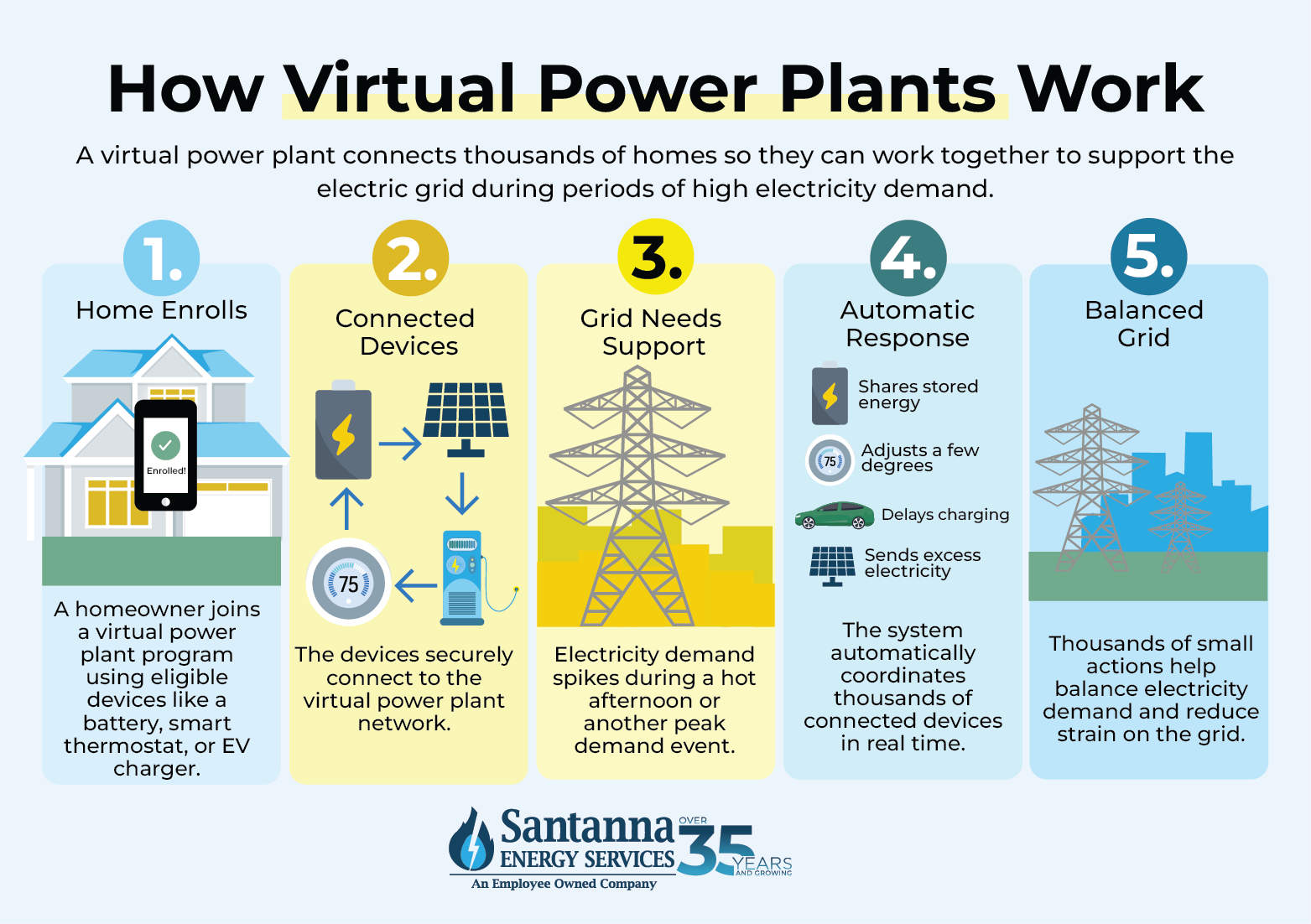
Wondering how do virtual power plants work? A virtual power plant works by connecting energy devices in participating homes and businesses to the electric grid if it needs extra support.
Homeowners who have eligible devices, such as home batteries, smart thermostats, solar panels, or electric vehicle chargers, may choose to enroll in a virtual power plant program.
Once connected, those devices become part of a larger network that can respond during periods of high electricity demand and contribute extra energy to grid.
Virtual power plants coordinate energy resources that already exist in homes and communities so they can work together to help support a more reliable electric grid.
Real-World Examples of Virtual Power Plants (VPP)
Although virtual power plants sound like an emerging technology, they're already operating in many parts of the United States. Utilities, technology companies, and state governments are using VPP programs to help balance electricity demand and improve grid reliability.
Here are some examples:
- Tesla's Virtual Power Plant program allows participating Powerwall battery owners in certain areas to work together as a network that can provide support during periods of high electricity demand. In fact, according to Tesla, its global network of virtual power plants helped prevent outages for 6.5 million homes in 2025 while providing more than 4 million hours of backup power.
- ConnectedSolutions is a virtual power plant program available in parts of the Northeast that connects home batteries and other energy resources to help reduce strain on the grid during peak demand periods.
The Midwest is also beginning to explore virtual power plants. Illinois passed the Clean and Reliable Grid Affordability Act in 2025, which includes directives for the development of new virtual power plant programs and recently took effect June 1, 2026.
What Devices Can Participate in a Virtual Power Plant?
Virtual power plants are made up of connected devices that can generate, store, or manage electricity. Below are some of the most common technologies that help virtual power plants support the electric grid:
Home Battery Storage Systems
Home batteries are the backbone of many virtual power plant programs. They store electricity for later use, allowing homeowners to use backup power when needed or share stored energy during qualifying VPP events.
Solar Energy Systems
Solar panels generate electricity from sunlight, reducing the amount of power a home needs from the grid during the day. When paired with battery storage, excess solar energy can be stored and used later.
Smart Thermostats
Smart thermostats automatically manage a home's heating and cooling schedule. Some VPP programs can make brief temperature adjustments during periods of high electricity demand to reduce overall energy use.
Electric Vehicles and EV Chargers
Electric vehicles contain large batteries that store electricity. Depending on the program, EV charging may be scheduled for times when electricity demand is lower, helping balance energy use across the grid.
Energy Management Software
Energy management software like home energy monitors connect different devices and helps them work together. It monitors electricity demand and coordinates participating resources when grid support is needed.
Why Are Virtual Power Plants Becoming More Popular?
Virtual power plants are becoming more popular because electricity demand is growing, more homes are adopting connected energy technologies, and utilities are looking for new ways to support grid reliability.
The reason virtual power plants are so popular is because:
- Electricity demand is expected to increase significantly in the coming years as more electric vehicles, data centers, and electric-powered technologies come online. More power, more demand.
- There are more home batteries, solar panels, and smart devices than ever before.
- Extreme weather events, rising electricity use, and aging infrastructure have increased interest in grid reliability. Virtual power plants are gaining attention because they can help provide additional support during periods of high electricity demand.
What Are the Benefits of Virtual Power Plants?
As electricity demand continues to grow and more homes adopt more smart home technologies, virtual power plants are becoming an important tool for helping balance how electricity is produced, stored, and used.
Here are some of the best benefits of virtual power plants:
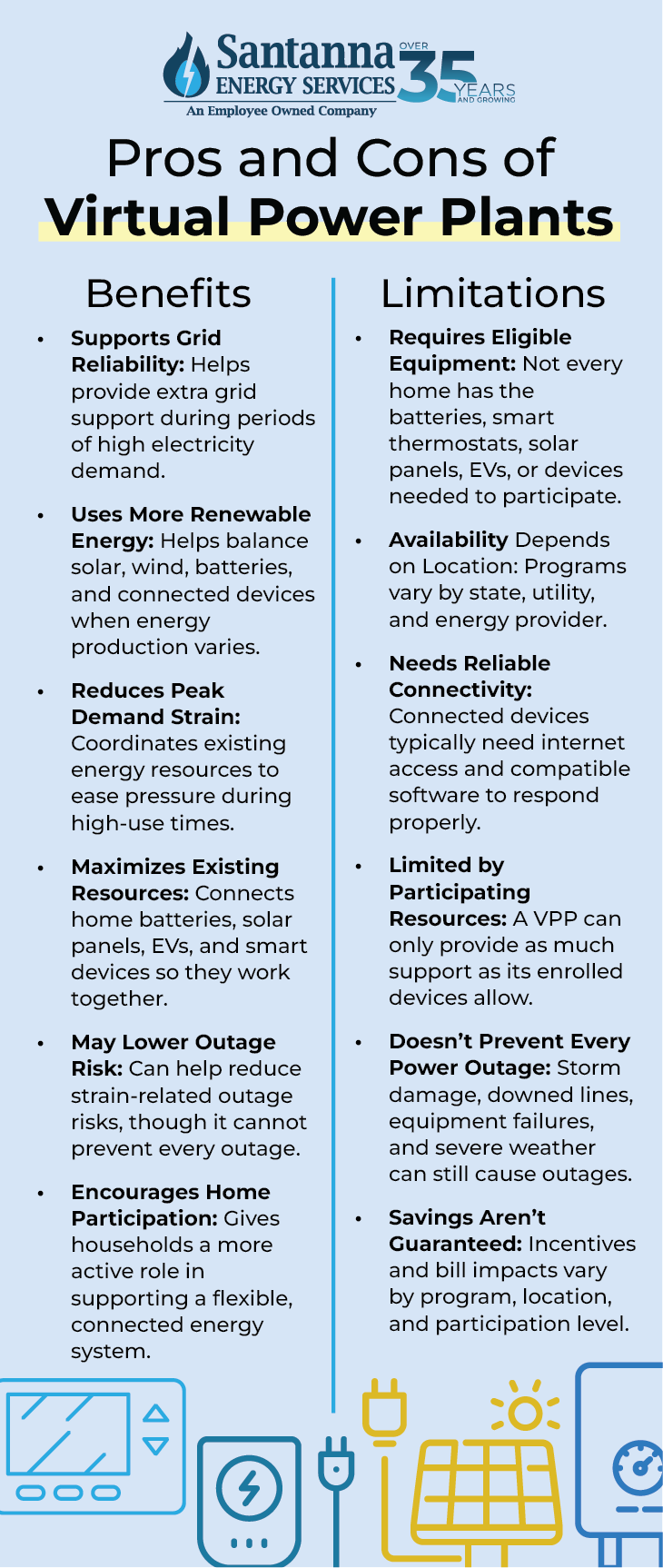
Supports Grid Reliability
One of the biggest benefits of virtual power plants is helping support grid reliability.
According to Beyond Tomorrow, U.S. electricity demand could increase by roughly 25% by 2030, driven by factors such as data center growth, electric vehicles, and increased electrification across homes and industries.
Virtual power plants can help provide additional support during times of high electricity demand by coordinating additional energy resources to the grid in times of stress.
Integrates More Renewable Energy
Virtual power plants can also help support the growing use of renewable energy sources such as solar and wind power.
Because renewable energy production can vary depending on weather conditions and the time of day, batteries and other connected devices can help fill gaps when needed. This makes it easier for the grid to use electricity generated from renewable sources while maintaining reliability.
Reduces Strain During Peak Demand
Rather than relying entirely on additional power generation to meet these spikes in demand, virtual power plants can coordinate existing energy resources to help reduce pressure on the grid.
This can be especially helpful during the hottest and coldest days of the year when electricity use is often highest.
Makes Better Use of Existing Energy Resources
Many homes already have devices that can store energy, generate electricity, or help manage energy use. Virtual power plants help connect these resources so they can work together rather than operating independently.
Can Reduce Risks of Some Power Outages
Virtual power plants may help reduce the risk of some outages by lowering strain on the grid during periods of high electricity demand. However, they cannot prevent every outage, especially outages caused by severe weather, damaged power lines, or equipment failures.
Encouraging Consumer Participation in Energy Management
Virtual power plants allow homes to play a more active role in how energy is managed.
Instead of simply receiving electricity from the grid, participating homes may help support the grid through technologies. This represents a shift toward a more connected and flexible energy system where homes can contribute alongside traditional energy resources.
What Are the Challenges or Limitations of Virtual Power Plants?
Virtual power plants offer several potential benefits, but they also have limitations that can affect participation and performance.
Understanding these limitations can help homeowners develop realistic expectations about how virtual power plants work.
Not Every Home Has Eligible Equipment
Many virtual power plant programs require specific devices such as home batteries, smart thermostats, solar systems, electric vehicles, or connected appliances.
Because not every home has these technologies installed, participation opportunities may be limited for some households.
Program Availability Varies by Location
Virtual power plant programs are not available everywhere.
Some states, utilities, and energy providers have launched programs or pilot projects, while others are still exploring how virtual power plants could fit into their energy plans.
Technology and Connectivity Requirements
Virtual power plants rely on connected devices that can communicate with the broader network.
In many cases, this requires internet-connected equipment and software that can coordinate when devices respond to changing grid conditions. If communication is interrupted, participating devices may be temporarily unable to respond as part of the virtual power plant network.
Limited by the Resources Available
The amount of support a virtual power plant can provide depends on the devices participating in the program. For example, batteries have limits on how much energy they can store, and demand-response programs can only reduce electricity use to a certain extent.
Do Virtual Power Plants Affect Your Electricity Bill?
According to the Virtual Power Plant Partnership's PowerShift report, virtual power plants could help lower overall electricity system costs by making better use of energy resources that already exist in homes and businesses.
The report estimated this could translate to roughly $400 million in annual system-wide savings, or about $140 per household per year, although actual results would depend on program design, implementation, and local market conditions.
While these findings do not guarantee lower electricity bills for individual households.
Virtual power plants do not automatically lower your electricity bill, and savings are not guaranteed.
How Can You Participate in a Virtual Power Plant Program?
Participating in a virtual power plant program is often simpler than many homeowners expect. While requirements vary by program, the process typically looks something like this:
Step 1: Check Whether Programs Are Available in Your Area
Virtual power plant programs are not available everywhere, so the first step is to see whether your utility, energy provider, battery manufacturer, or smart device provider offers a program in your area.
Step 2: Confirm You Have Eligible Equipment
Many programs require certain technologies, such as:
- Home battery storage systems
- Solar panels paired with battery storage
- Smart thermostats
- Electric vehicles or EV chargers
- Other connected energy devices
The types of eligible equipment vary by program.
Step 3: Enroll in the Program
If you meet the requirements, you can typically enroll through the program provider. During enrollment, you'll review how the program works and how participating devices may respond when the grid needs additional support.
Step 4: Let Your Devices Participate
Once enrolled, eligible devices can automatically help support the grid during periods of high electricity demand. In many cases, participation happens in the background with little day-to-day involvement from the homeowner.
The exact process depends on the program, but most virtual power plants are designed to make participation as simple and automated as possible.
Are Homeowners in the Midwest Eligible to Participate in a Virtual Power Plant Program?
Some Midwest homeowners may be eligible to participate in a virtual power plant program, but availability varies by location, utility provider, and the types of energy devices installed in the home.
Virtual power plant programs are expanding across the United States, and states such as Illinois have recently taken steps to support the development of new virtual power plant initiatives. However, participation opportunities are still developing in many areas and may not be available to all homeowners.
How Homeowners Are Paid or Incentivized in a Virtual Power Plant Program
Some virtual power plant programs reward participants for allowing eligible devices to help support the electric grid. Depending on the program, incentives may include:
- One-time enrollment bonuses
- Bill credits
- Annual participation payments
- Performance-based incentives
- Rebates or other rewards
Compensation varies by program and location, and not every virtual power plant offers financial incentives. Be sure to review the program details before enrolling so you understand how, and if, you'll be compensated.
What Should You Know Before Joining a Virtual Power Plant Program?
Before enrolling in a virtual power plant (VPP) program, it's important to understand how the program works, what equipment is required, and what participation may mean for your home:
Equipment Compatibility
Not all batteries, solar systems, smart thermostats, or electric vehicle chargers are eligible for every program. Before applying, confirm that your equipment meets the program's requirements.
Home Comfort Considerations
Programs that include smart thermostats may occasionally make small temperature adjustments during periods of high electricity demand. While these changes are typically designed to be minimal, it's helpful to understand how the program may affect your home's heating or cooling settings.
Participation Doesn't Guarantee Lower Bills
Some homeowners receive incentives for participating, but virtual power plants do not automatically reduce your monthly electricity bill. Any savings depend on the specific program and your level of participation.
Joining Doesn't Automatically Provide Backup Power
Participating in a virtual power plant is different from having a home battery backup system. Whether your home has electricity during an outage depends on the equipment you have installed and how it's configured, not simply on your participation in a VPP.
Can a Virtual Power Plant Prevent Power Outages?
Virtual power plants can help reduce stress on the electric grid, but they cannot prevent every power outage.
By coordinating resources like home batteries, smart thermostats, solar energy systems, and electric vehicles, virtual power plants can help balance electricity demand during periods of heavy energy use. This may reduce the likelihood of grid-related issues in some situations, particularly during peak demand.
However, many outages occur for reasons that virtual power plants cannot control. Think of a virtual power plant as one tool that helps improve the overall resilience of the electric grid.
What Could Virtual Power Plants Mean for the Future of Energy?
According to the U.S. Department of Energy, virtual power plants are expected to play an increasingly important role in helping address rising electricity demand, peak demand, and grid congestion while making better use of energy resources already located in homes and communities.
Researchers also estimate that deploying 60 gigawatts of virtual power plants could reduce resource adequacy costs by $15 billion to $35 billion over the next decade while providing more than $20 billion in additional societal benefits, including improved resilience and lower emissions.
As electricity demand continues to grow, virtual power plants offer a new way to help support the grid without relying entirely on building additional power plants and infrastructure. Instead, they make better use of energy resources that already exist in homes and businesses.
FAQs
Can a home without solar panels participate in a virtual power plant?
Yes, a home without solar panels can participate in a virtual power plant, depending on the program and the types of energy devices installed in the home.
Do virtual power plants generate electricity?
No, virtual power plants do not generate electricity themselves. Instead, they connect and coordinate energy resources such as solar panels, battery systems, smart thermostats, and electric vehicles to help balance electricity supply and demand.
Is a virtual power plant the same as a smart grid?
No, a virtual power plant is not the same as a smart grid; a smart grid is the broader electricity network that uses digital technology, while a virtual power plant is one tool that can operate within that network.
Virtual power plants may sound like something out of the future, but they are already beginning to change how electricity is managed today. By connecting technologies to your home, virtual power plants can help support a more flexible and reliable electric grid while giving homes a bigger role in the energy system.
And while virtual power plants are helping shape the future of energy, many homeowners are still focused on a much more immediate question: "What will my energy costs look like next month?"
That's why having an energy plan with more predictable supply charges can provide valuable peace of mind. Santanna's Unlimited Energy plan is designed to help reduce surprises in the supply portion of your bill, so you can spend less time worrying about unexpected fluctuations and more time enjoying the comforts of home.*
* Restrictions apply. Enrollment based upon program eligibility. Customers using more than 125% of normal monthly usage as determined by Santanna may be required to switch plans.
Brennan Lambrecht is a marketing professional with six years of experience in creating helpful content for customers. At Santanna, Brennan focuses on researching emerging energy technologies, including virtual power plants, distributed energy resources, home battery storage, and energy-grid innovation. His research is informed by direct conversations with companies operating in the virtual power plant and battery storage space, giving him valuable industry insight into how these technologies work and what they could mean for energy consumers.