

How Energy Rate Structures Work (And Why Your Bill Changes)

by Chris Tessler
Updated: May 26, 2026
18.4 min read

Key Points of This Article:
- Your energy bill is shaped by both how much energy you use and how your plan prices that usage.
- Different rate structures (fixed, variable, flat-fee, or time-of-use) determine how predictable or flexible your costs are.
- Living in a regulated or deregulated market affects whether you can choose your energy supplier and plan.
- External factors like weather, demand, and home efficiency can change your bill even if your habits stay the same.
If you've ever opened your energy bill and wondered why it changed when your habits didn't, you're not alone. It's one of the most common questions homeowners have, especially when weather, energy use, and monthly costs can shift quickly.
It's easy to assume your bill is only about how much energy you use. But in reality, there's another important piece behind the scenes: your energy plan rate structure. Even if your daily routine stays the same, changes in energy rate structures can still affect what you pay from one month to the next.
At Santanna Energy Services, we often hear the same question from homeowners: "Why did my bill change this month?" The good news is that once you understand how energy pricing works behind the scenes, those changes start to make a lot more sense.
In this guide, we'll walk you through how energy rate structures work, why your bill changes, and how to make more confident decisions about your choice in energy plans moving forward.
How Do Regulated and Deregulated Energy Markets Affect Your Energy Choices?
Did you know that where you live plays a role in your choice for energy plan options? Understanding energy regulation is the first step to grasping the concept of energy pricing. Whether you live in a regulated or deregulated energy market determines your ability to choose how your energy is priced. Here’s how it works:
In a regulated market, your local utility is the only option you have for both delivering and supplying your energy. In these markets, the utility operates under government oversight, which means rates and services are set through a regulated process.
As a gas and electricity customer under these utilities, you have only a few options to choose from when you decide how your energy is priced and most of time, they aren’t very budget-friendly.
In a deregulated market, found in many states across the U.S., including Midwest states we serve like Ohio, Pennsylvania, Illinois, and parts of Michigan and Indiana, you have more flexibility.
Instead of being automatically placed on a single default energy priced option, you can choose an energy supplier and select from different plans and rate structures based on what fits your needs.
And your local utility still delivers energy to your home, maintains the system, and handles service reliability.
In a nutshell…
- If you stay with your default utility supply: You are typically placed on a standard energy rate that can change over time. This option is simple and requires no action, but it also means you have less control over how your energy is priced and how predictable your monthly bill will be.
- If you choose an energy supplier: You can select from different rate structures that better fit your needs and preferences. This gives you more flexibility to choose how your energy is priced.
This choice is what makes understanding energy rate structures so important. It allows you to decide how predictable or flexible you want your energy costs to be.
How Does Energy Rate Pricing Work?
In deregulated markets, you’re not limited to one default way of paying for energy. Instead, you can choose from different types of plans, each with its own rate structure that determines how your monthly usage is converted into a total cost.
Here’s a look at how your bill is calculated and what goes into pricing:
Your Home Uses Energy Throughout the Month and is Measured
Your home uses electricity or natural gas every day through heating, cooling, lighting, and appliances. This usage builds up over your billing cycle and can change based on weather and your home’s needs.
Throughout the month, your energy use is tracked using standard units, such as kilowatt-hours for electricity and therms or CCF’s for natural gas. This shows how much energy your home used during the billing period and serves as the starting point for your bill.
Your Chosen Rate Structure Is Applied
Once your usage is measured, your selected rate structure determines how that usage is priced. Depending on your plan, the price per unit (or rate) may stay the same, change over time, or vary based on when or by how much energy you use. This is why two homes with similar usage can still have different bills.
Your rate is applied to the amount of energy you used, and your supply charge is calculated.
Delivery and Other Charges Are Added
Next on your bill, your local utility adds delivery-related charges to maintain power lines, pipelines, and system reliability. You may also see smaller charges for system adjustments or maintenance. These help keep your energy service running safely and consistently.
Your Total Bill Comes Together
At the end of the billing cycle, all of these pieces are combined to create your total bill. If your usage increases, your bill can go up. If your rate changes, your bill can also change. When both happen at the same time, the difference becomes more noticeable.
What Factors Affect How Energy Rate Structures Are Set?
So, how does your supplier and utility determine how to set their rate structures? Energy rate structures are shaped by several behind-the-scenes factors that determine how energy is priced for different homes and customers.
While you may not see these details directly on your bill, they influence how your rate is designed and why certain pricing structures exist in the first place.
Here are some of the key factors:
Customer Type
Residential homes, small businesses, and large industrial facilities all have different usage patterns. Because of this, they are often placed into different categories, and each group may have its own pricing structure based on how they use energy.
Type of Electrical Service
Most homes receive standard, lower-voltage service, while larger buildings or facilities may receive higher-voltage service designed for heavier energy use. These differences can influence how rates are designed, even though most homeowners will only see standard residential pricing.
Seasonal Demand
During the summer, higher demand for air conditioning increases the need for electricity. In the winter, heating demand can have a similar effect. Some rate structures are designed to reflect these seasonal patterns causing energy rate to change almost daily, which is why energy costs are higher at certain times of the year.
Energy Supply and Fuel Costs
The cost of producing electricity or natural gas can change over time, and this affects how rates are set because fuel prices, weather demand, and energy supply conditions can all shift throughout the year. These costs are often built into the rate you are charged.
Infrastructure and Maintenance Costs
Energy systems require ongoing maintenance and upgrades to stay reliable. This includes maintaining power lines, pipelines, substations, and other equipment. The cost of keeping this system running safely and reliably is part of how rates are designed over time.
Government Policies and Energy Programs
Policies and programs can influence how energy pricing is structured. These can include requirements to support renewable energy, improve efficiency, or modernize the energy grid. While these programs support long-term improvements, they can also play a role in how rates are developed.
What Are the Most Common Types of Energy Rate Structures?
The most common electricity and natural gas rate structures include fixed, variable, and flat-fee pricing models.
While they may sound technical, they are simply different ways your electricity or gas can be priced depending on your plan and how your home uses energy.
Here is how each one works in real life:
Flat-Fee Energy Rate Structure or Unlimited Energy Plans
A flat-fee or an Unlimited Energy plan provides one consistent supply charge, regardless of how much energy you use.*
The supply charge often makes up 40%–60% of your electricity bill. With an Unlimited Energy plan, you can lock in that supply cost, giving you more control over one of the biggest parts of what you pay each month.
From a budgeting perspective, a predictable supply charge can make monthly budgeting much simpler. Instead of your bill changing with usage, your supply charge stays the same each month, so you always know what to expect.
This option is often helpful for homeowners who want consistency and fewer surprises when energy use goes up.
Fixed-Rate Energy Rate Structure
A Fixed-Rate plan keeps the price (or often referred to as rate) you pay per kilowatt-hour stays the same for the length of your contract.
With a fixed-rate plan, even if market prices rise or fall, the rate you pay per kilowatt-hour stays consistent. On this plan, your total bill can still go up or down, but that’s mainly because your energy use changes, not because of the rate you pay for electricity did.
Variable-Rate Energy Rate Structure
A variable-rate plan allows the price (or rate) you pay per kilowatt-hour to change from month to month.
These changes are often influenced by market conditions, demand, and seasonal factors like weather. This means the rate you pay for energy can go up or down even if your energy usage stays about the same.
Energy shoppers should be cautious when selecting this plan if they’re not comfortable with fluctuations in their monthly energy bills.
Time-of-Use (TOU) Rates
Time-of-use rates charge different rates depending on the time of day you use electricity.
Energy used during peak hours, when demand is highest, costs more. Energy used during off-peak hours, such as late at night or early morning, costs less.
This plan may not be ideal if most of your electricity use happens during peak hours, since those higher rates can add up quickly.
Each of these rate structures affects your bill in a different way. Understanding which one you are on can help you better predict your costs and make more informed decisions about your energy use.
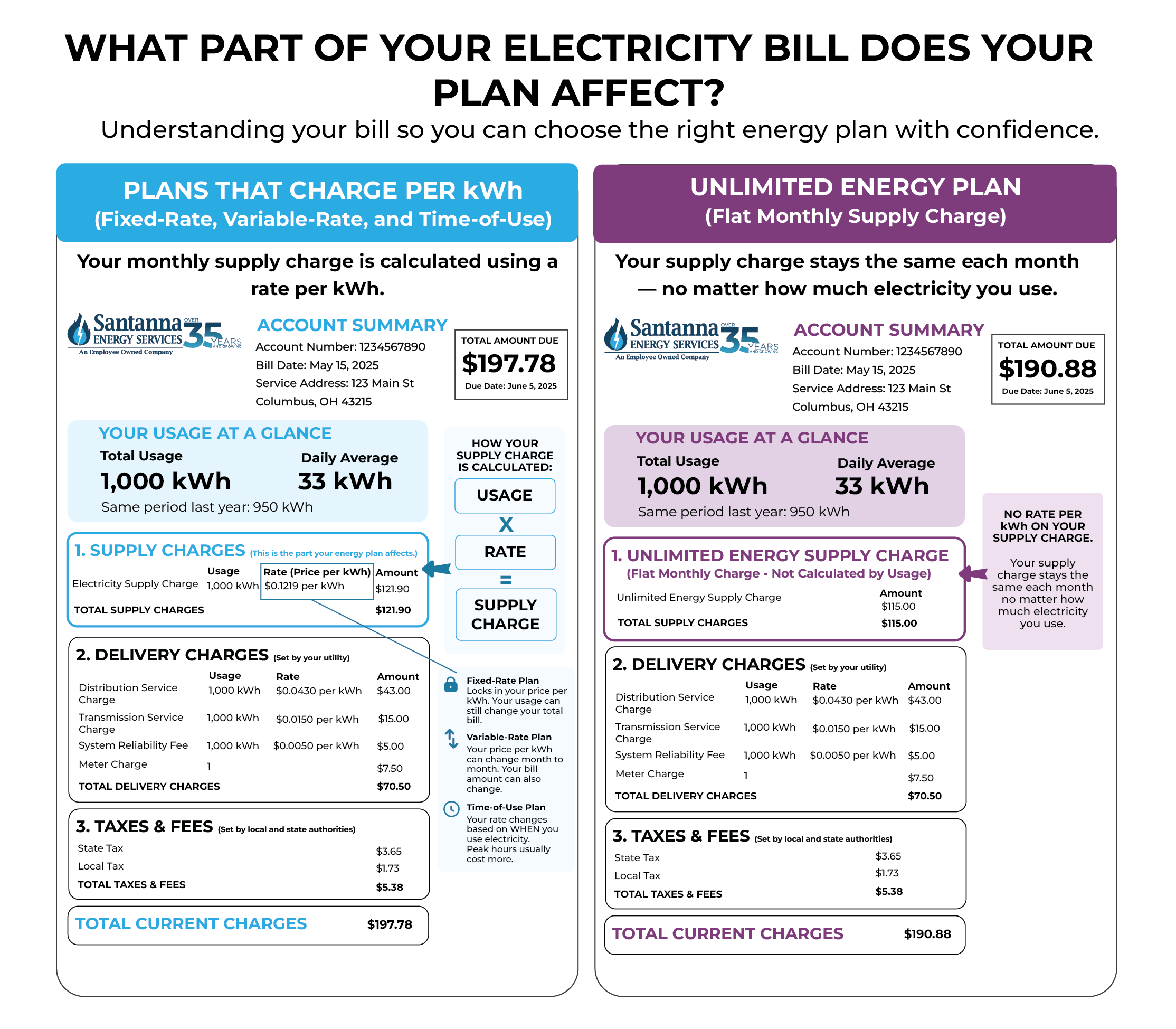
How Do Energy Rate Structures Affect Your Monthly Bill?
Your rate structure doesn’t just set a price; it changes what makes your bill go up or down from month to month. Here are a few quick, real-life snapshots of how different plan types can affect what you pay:
- Flat-fee / Unlimited Energy: Your supply charge stays the same, so even if you use more energy during a hot month, that part of your bill doesn’t swing as much.* On an Unlimited Energy plan, the only thing affected on your bill in your supply charge.
- Fixed-rate: The rate you pay per kilowatt-hour or therm stays locked in. If your bill goes up, it’s usually because you used more electricity (like running the AC more often).
- Variable-rate: The rate you pay per kilowatt-hour or therm on your energy bill can fluctuate depending on market conditions.
- Time-of-Use (TOU): Two months with the same total kWh can cost different amounts depending on when you use that energy during the day. Energy rates can fluctuate during the day with this plan.
The key takeaway: your bill is shaped by both your usage and how your plan prices that usage. Next, let’s look at what that can mean for the same home on different plans.
Same Home, Different Plans: What Your Bill Could Look Like
Even if two homes use the same amount of energy, their bills can still look different. This is because each plan prices energy in a different way.
Let’s look at a simple example of how a fixed-rate and variable-rate plan could have you paying different total energy bills:
Imagine one home uses 1,000 kWh in a month. No matter which plan is chosen, some parts of the bill stay the same. The home still uses 1,000 kWh, and delivery charges from the utility do not change. For this example, let’s say that delivery charges are about $50.
Now, here is where things change: how the energy is priced.
If the home is on a fixed-rate plan and the rate you locked in at, at the beginning of your contract was 10 cents per kWh, the energy supply cost would be $100. After adding the $50 delivery charge, the total bill would be about $150. In this case, the bill only changes if usage changes.
If the home is on a variable-rate plan where monthly rates can fluctuate and the rate increases to 13 cents per kWh, the same 1,000 kWh would cost $130 for supply. With the same $50 delivery charge, the total bill becomes about $180. Here, the usage stayed the same, but the bill increased because the rate changed.
That is the key idea: your bill is not just based on how much energy you use, but also on how your plan prices that energy.
What Other Factors Can Cause Your Energy Bill to Change Other Than Rate Structure?
Your energy bill can change even when your usage seems the same because outside conditions, your home’s efficiency, and daily patterns can affect how much energy your system actually needs.
Here are some of the most common factors:
- Weather and temperature changes: Even slight differences in outdoor temperature can affect how hard your heating or cooling system works. A slightly hotter or colder day can cause your system to run longer, increasing energy use even if your thermostat setting stays the same.
- Humidity levels: During summer, your air conditioner works not only to cool the air but also to remove moisture. Higher humidity can make your system run longer, which increases energy use without you changing your routine.
- Length of your billing cycle: Not all billing cycles are exactly the same length. A month with a few extra days or more extreme weather days can naturally lead to higher energy use, even if your habits stay consistent.
- Home insulation and air leaks: If your home loses air through gaps around windows, doors, or attic spaces, your system has to work harder to maintain the same temperature. This can increase energy use even if you are not doing anything differently.
- Appliance use and daily activity: Small changes in how often you use appliances can add up. Cooking more meals at home, doing extra laundry, or having guests over can increase your energy use in ways that may not be obvious day to day.
- System performance and maintenance: Heating and cooling systems that are not regularly maintained may run less efficiently. Dirty filters or aging equipment can cause longer run times, which increases energy use without any change in your habits.
Your energy bill reflects how your home responds to changing conditions, not just what you do each day. Even when things feel consistent, small changes in your environment or home can lead to different energy use over time.
How Can You Evaluate Your Energy Plan Options as a Homeowner?
You can evaluate your options by comparing pricing stability, usage patterns, and how comfortable you are with changing rates.
Choosing an energy rate structure is not about finding one “best” option for everyone. It is about finding what works best for your home, your routine, and how you prefer to manage your monthly costs. Here’s how you can evaluate your rate options when reviewing energy plans:
Bill Predictability
Some homeowners prefer a steady and predictable bill, while others are comfortable with costs that can change from month to month. If you like knowing what to expect each billing cycle, a rate structure with more consistent pricing can make planning easier. If you are comfortable with some variation, you may be open to options where the rate can adjust over time.
Budgeting Style
Your approach to budgeting can help guide your decision. If you prefer to keep your monthly expenses stable and easy to track, a more consistent pricing structure may feel easier to manage. If your budget allows for flexibility, you may be comfortable with plans where your bill can go up or down depending on usage or pricing changes.
Seasonal Energy Use
Most homes use more energy during the summer when air conditioning runs longer and during the winter when heating demand rises. If your usage tends to spike during certain seasons, it helps to choose a rate structure that still feels manageable during those higher-use months.
Consistency of Energy Use
Some households have steady energy use, while others see noticeable changes from month to month. If your usage stays consistent, your bill may feel more stable even with some pricing changes. If your usage fluctuates often, a more predictable rate structure can help reduce unexpected swings in your bill.
What Drives Your Bill the Most
For some homeowners, the biggest driver of their bill is how much energy they use. For others, the rate itself plays a larger role. Understanding which factor affects your bill more can help you choose a rate structure that better fits your expectations.
Evaluating your options comes down to understanding how your home uses energy and choosing a rate structure, whether from your utility or a supplier, that aligns with how you want your bills to behave throughout the year
How To Check What Energy Plan Rate Structure You’re On
You can check what rate structure you’re on by reviewing your energy bill, looking at your supplier or utility account, and checking any plan or contract details tied to your service.
Here’s how to check in a few easy steps:
Step 1: Look at Your Energy Bill
Your energy bill is usually the easiest place to start because it shows how your energy charges are being listed each month. Look for sections labeled supply charges, rate, price per kWh, or plan details. These parts of the bill can help you see whether your price appears to stay the same or change from one billing cycle to the next.
If you compare a few recent bills and notice that your price per kWh is the same each month, you may be on a pricing structure that stays more consistent. If the price changes from month to month, that may be a sign that your plan allows pricing to adjust over time.
Step 2: Check Your Supplier or Utility Account
If you have an online account with your energy supplier or utility, that is another good place to look. Many accounts include plan details, your current rate, contract dates, or the name of your pricing plan. This can give you a clearer picture of how your energy is being priced beyond what you see on the bill itself.
Step 3: Review Your Plan or Contract Information
If you signed up for an energy plan in the past, you may have received a confirmation email, welcome letter, or contract summary. These documents often explain how your rate works, how long the plan lasts, and whether the pricing is expected to stay the same or change over time.
Reviewing this information can help you understand what you originally agreed to and whether your current plan is still operating the way you expected. This is also a good time to check for renewal dates or any changes that may happen after your current term ends.
Step 4: Compare a Few Months of Bills
Looking at one bill can help, but comparing a few months side by side gives you a much better picture. This helps you separate changes caused by energy use from changes caused by pricing.
This step can also help you spot patterns, such as higher costs during certain seasons or changes that happen when your usage shifts. Seeing those patterns can make your current rate structure much easier to understand.
Step 5: Contact Your Supplier or Utility Directly if You’re Still Unsure
If the details still are not clear, the simplest next step is to contact your energy supplier or utility directly. They can explain what type of rate structure you are on, how your price is calculated, and whether your rate is expected to stay the same or change.
Asking directly can save time and prevent confusion, especially if your bill uses terms that are not easy to understand. Once you know your rate structure, it becomes easier to evaluate whether it still fits your needs.
Knowing what rate structure you’re on helps you understand why your bill looks the way it does and what may cause it to change in the future. It also gives you a better starting point if you want to compare options, manage your monthly costs more confidently, or decide whether your current plan still fits your home and lifestyle.
FAQs
What is ratemaking?
Ratemaking is the process regulators use to set energy prices based on costs, system needs, and policies to ensure reliable service.
Can I choose my electricity supplier in my state?
In deregulated states, you can choose your electricity supplier, while in regulated states, your utility provides your energy by default.
Can I lower my energy rate?
There’s no way you can lower the energy rate you’re paying for your energy since energy rates are set by your utility. But you can control how your monthly bill changes
When you understand how your rate works, your bill becomes easier to predict and manage. What once felt confusing starts to make more sense, and instead of guessing why your bill changed, you can connect it to your usage, your rate, or both.
For Midwest homeowners, where energy use shifts with the seasons, this clarity can make a real difference. It helps reduce bill shock, makes changes less stressful, and allows you to plan ahead with more confidence, especially during high-usage months.
Over time, this understanding helps you make better decisions. Whether you prefer consistency, flexibility, or something in between, exploring your options and choosing what fits your lifestyle can lead to more manageable and predictable energy costs.
Chris Tessler is a seasoned professional in the deregulated energy industry with over 15 years of experience. Throughout his career, he has honed his skills in commodity trading, risk management, and retail energy supplier operations. Chris has a passion for leveraging new technologies to address challenges at the intersection of the energy industry, carbon economy, and climate change, as well as finding innovative ways to promote healthy living and building strong communities in our modern urban environments.