

How Long Do LED Lights Last & How Much Do They Save You Per Year?

by Tyler Castle
Updated: July 28, 2026
15.2 min read
Key Points of This Article:
- LED light bulbs can last between 30,000 and 50,000 hours, which may equal 6 to 17 years or more in many homes before needing replacement.
- LED lights use about 75% less electricity than traditional incandescent bulbs while still providing similar brightness.
- Switching one 60-watt incandescent bulb to a 10-watt LED bulb could save about $19.33 per year in electricity costs based on average daily use.
- Many homeowners find that the biggest benefits of LED lighting come from lower energy use, fewer bulb replacements, and less maintenance over time.
Lighting is something most households use every day in kitchens, living rooms, bedrooms, bathrooms, hallways, and outdoor spaces. While a single light bulb may not seem like a major contributor to your electric bill, the combined impact of dozens of bulbs used throughout the home can add up over time.
That's one reason many homeowners switch to LED lights. Many already know that LEDs use less electricity, but they often wonder what that actually means in everyday life.
With a lifespan of 30,000 to 50,000 hours, LED light bulbs can last 6 to 17 years or longer in many homes before requiring replacement, according to the Department of Energy.
As an electricity supplier serving Midwest homeowners, we at Santanna Energy Services understand how small home energy choices can add up over time. From lighting and appliances to seasonal electricity usage, we're here to help homeowners better understand where energy is used and how everyday decisions may affect overall energy costs.
In this guide, you'll learn more about how long LED lights typically last, how much money they may save each year, and what factors can affect their lifespan and performance throughout your home. Let's get started.
What Are LED Light Bulbs?
LED stands for “light-emitting diode,” which is a small electronic component that produces light when electricity passes through it. Unlike older incandescent bulbs that create light by heating a small wire inside the bulb, LED light bulbs produce light with far less wasted heat while providing similar brightness.
One reason LED lighting has become more common in homes is because it combines longer everyday performance with modern lighting features. Instead of frequently replacing burned-out bulbs, many homeowners can use the same LED light bulbs for years depending on how often the lights are used.
Many homeowners also switch to LED light bulbs because they reach full brightness almost instantly and are available in different color temperatures, from warm, softer lighting to brighter daylight-style lighting.
Do LED Lights Use a Lot of Electricity?
No, LED lights use much less electricity than traditional incandescent bulbs while still producing similar brightness. According to the U.S. Department of Energy, LED lights are designed to use about 75% less electricity and last up to 25 times longer than traditional incandescent lighting.
One reason LED lighting uses less electricity is because it can produce the same amount of light using lower wattage. For example, a traditional 60-watt incandescent bulb can often be replaced with an LED bulb that uses only about 8 to 10 watts.
In simple terms, LED lights allow you to light your home using less energy without sacrificing brightness. Over time, that can help reduce lighting costs while also decreasing how often bulbs need to be replaced.
How Long Do LED Lights Last?
According to the U.S. Department of Energy, LED lights typically last between 30,000 and 50,000 hours or more, which can equal around 15 to 20 years or longer in many homes depending on how often the lights are used. In real household use, many LED lights may last anywhere from around 6 to 17 years or more before needing replacement.
One reason LED light bulbs last much longer than traditional lighting is because they slowly lose brightness over time instead of suddenly burning out.
Most LED light bulbs are considered at the end of their useful lifespan once they reach about 70% of their original brightness, even though the bulb may still continue working.
Several factors can affect how long an LED light bulb lasts, including how often it is used, heat buildup, airflow around the fixture, and overall bulb quality. Bulbs used for many hours each day in kitchens, living rooms, garages, hallways, and outdoor fixtures may wear down sooner simply because they operate more frequently.
Heat can also shorten lifespan over time, especially when bulbs are installed in enclosed fixtures where limited airflow makes it harder for excess heat to escape.
For many homeowners, one of the biggest advantages of LED lighting is fewer bulb replacements. Instead of changing burned-out bulbs every year or two, many LED light bulbs can continue providing light for years under normal household use, helping reduce replacement costs and everyday maintenance over time.
What Affects LED Lights Lifespan?
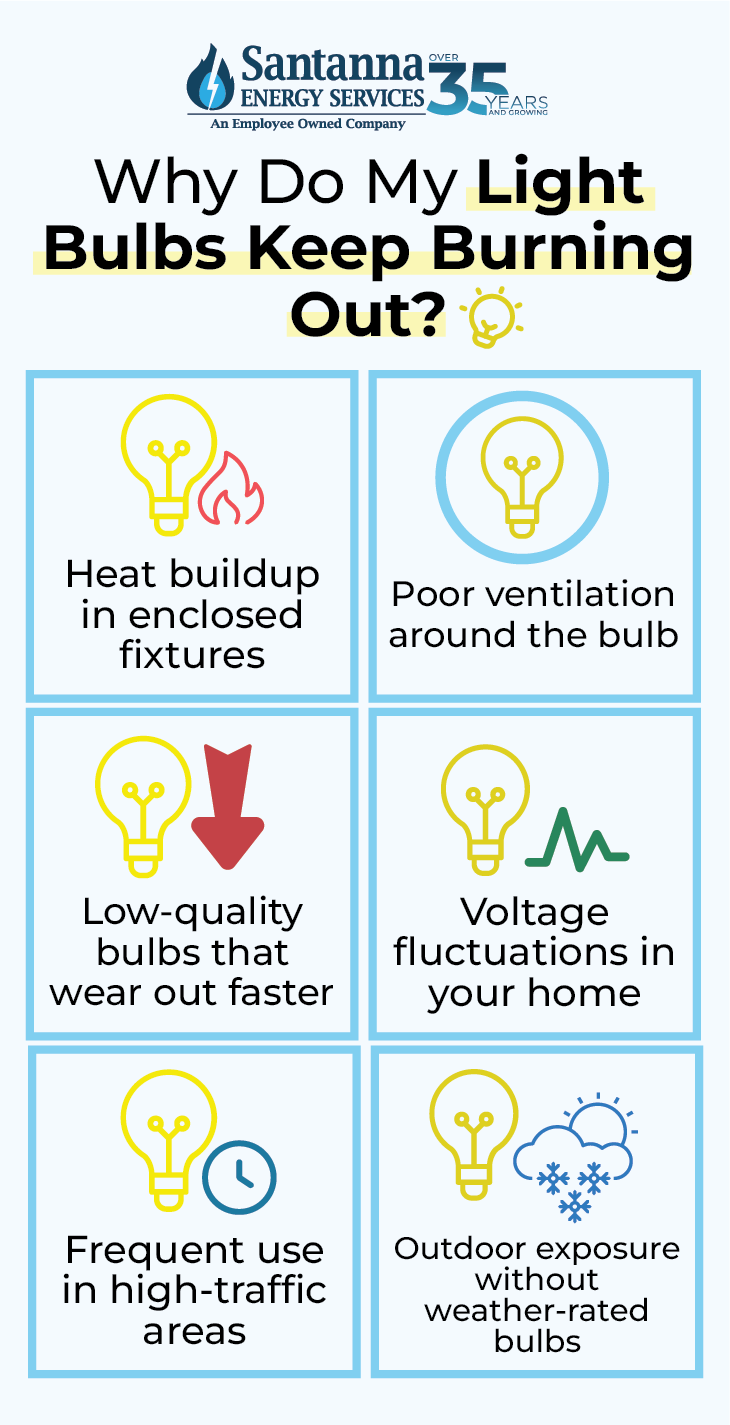
Several everyday conditions inside and outside the home can affect how long LED lights last. Here are some of the most common things that may affect LED light lifespan:
Heat Buildup
Heat buildup is one of the biggest factors that can shorten the lifespan of LED lights because excess heat can slowly damage the internal electronic components over time.
Although LED lights produce less heat than traditional incandescent bulbs, they still generate some heat while operating. If too much heat becomes trapped around the light, the components may wear down faster. Lights used for long hours each day may experience more heat exposure simply because they stay on longer.
Enclosed Fixtures
Enclosed fixtures can sometimes shorten LED light lifespan because heat has less room to escape.
Some ceiling fixtures, recessed lights, and decorative covers trap heat around the light during operation. Over time, that excess heat may affect performance and longevity. Some LED lights are specifically rated for enclosed fixtures to better handle these conditions.
Poor Ventilation
Poor ventilation around a fixture can increase heat buildup and affect how long LED lights last. Fixtures with limited airflow may cause LED lights to run hotter for longer periods, especially in areas where lights are used heavily every day.
Cheap Bulb Quality
Lower-quality LED lights may wear out faster because they are often made with less durable components that may not handle heat, daily use, or electrical fluctuations as effectively over time.
In some cases, lower-quality bulbs may dim earlier, flicker more often, or fail sooner than expected, especially in frequently used fixtures. Higher-quality LED lights are generally designed with better heat management and longer-lasting internal components.
Voltage Fluctuations
Voltage fluctuations inside the home can affect LED light lifespan because sudden changes in electrical flow may cause extra stress on the light’s internal electronics over time. Inconsistent voltage can sometimes lead to flickering, dimming, or shorter bulb lifespan, especially if fluctuations happen frequently.
Frequent Switching On and Off
Frequently turning LED lights on and off can slightly affect its lifespan because each power cycle creates a small amount of stress on its internal components. However, LED lights are designed to handle repeated switching very well, so normal household use is usually not a major concern.
Outdoor Weather Exposure
Outdoor weather conditions can affect LED lights if they are not designed for exterior use.
Rain, humidity, temperature changes, and direct sunlight may affect long-term performance over time. Using outdoor-rated LED lights in exterior fixtures can help improve durability in changing weather conditions.
How Much Money Can You Save By Switching to LED Bulbs?
Switching from a traditional 60-watt incandescent bulb to a 10-watt LED bulb could save you about $19.33 per year in lighting-related electricity costs, based on average daily use and an electricity rate of 17.65 cents per kilowatt-hour (kWh).
While that may not seem like much for a single light bulb, homes often use dozens of lights every day. Over time, those smaller savings can add up across kitchens, living rooms, hallways, bathrooms, garages, and outdoor spaces.
Here's what the estimated annual savings may look like for just one bulb:
Estimated Energy and Cost Savings When Switching From a 60W Incandescent to a 10W LED
(Based on an electricity rate of 17.65 cents per kWh as of February 2026, EIA)
| Usage | 60W Incandescent | 10W LED | Estimated Energy Saved | Estimated Money Saved |
| Per Day (6 hours) | 0.36 kWh | 0.06 kWh | 0.30 kWh | $0.05/day |
| Per Month | 10.8 kWh | 1.8 kWh | 9.0 kWh | $1.59/month |
| Per Year | 131.4 kWh | 21.9 kWh | 109.5 kWh | $19.33/year |
Note: These savings are estimates and can vary based on your local electricity rate, bulb brand, and actual usage hours.
Now imagine those savings across multiple frequently used lights throughout your home. Even replacing a handful of commonly used bulbs in kitchens, hallways, bathrooms, garages, living rooms, and outdoor fixtures may lead to more noticeable yearly lighting savings over time.
To help put those potential savings into perspective, the chart below shows estimated yearly savings when replacing multiple traditional incandescent bulbs with LED light bulbs throughout a home.
Estimated Yearly Savings When Replacing Multiple 60W Incandescent Bulbs With 10W LED Bulbs
(Based on an electricity rate of 17.65 cents per kWh as of February 2026, EIA, and average use of 6 hours per day)
| Number of Bulbs Replaced | Estimated Yearly Energy Saved | Estimated Yearly Cost Savings |
| 5 Bulbs | 547.5 kWh | $96.64 |
| 10 Bulbs | 1,095 kWh | $193.27 |
| 20 Bulbs | 2,190 kWh | $386.54 |
Disclaimer: These savings are estimates and may vary depending on electricity rates, bulb type, and actual household lighting usage.
How were these estimated savings calculated?
Replacing one traditional 60W incandescent bulb with a 10W LED light bulb may save about 109.5 kWh of electricity per year, which equals approximately $19.33 in annual savings, based on an electricity rate of 17.65 cents per kWh and average use of about 6 hours per day.
The chart above shows how those estimated savings may add up when multiple frequently used bulbs throughout a home are replaced with LED light bulbs.
The Hidden Savings Most Homeowners Forget When They Switch to LED Light Bulbs
The savings from LED lighting are not only about electricity use. Some of the biggest long-term benefits come from reduced maintenance, fewer replacements, and everyday convenience around the home.
Here are some hidden savings homeowners may notice over time with longer-lasting LED lighting:
- Less heat added to the home: LED light bulbs produce much less wasted heat than traditional incandescent bulbs, which may help reduce unnecessary indoor heat buildup, especially in rooms where lights stay on for long periods throughout the day.
- Potentially less cooling strain during warmer months: Because LED lighting releases less excess heat, rooms may feel slightly more comfortable during warmer weather, particularly in kitchens, living rooms, home offices, and other heavily used spaces with multiple lights.
- Fewer replacements and less maintenance: Many LED light bulbs are designed to last for years, which can mean fewer burned-out bulbs, fewer replacement purchases, and less time changing lights around the home. This can be especially helpful for high ceilings, stairways, garages, and outdoor fixtures that are harder to reach.
For many households, these smaller everyday advantages are part of what makes LED lighting feel more convenient, lower maintenance, and easier to manage over time.
Are LED Light Bulbs More Expensive Than Traditional Light Bulbs — And Are They Worth It?
Yes, LED light bulbs usually cost more upfront than traditional incandescent bulbs.
For example, a 60W equivalent LED light bulb may cost around $13.48, while a traditional 60W incandescent bulb may cost around $5.91. In this example, the LED light bulb costs approximately $7.57 more upfront. Actual bulb prices can vary depending on the brand, wattage, brightness level, bulb features, and overall product quality.
Although LED light bulbs usually cost more upfront than traditional bulbs, they can often provide greater value over time through lower electricity use and fewer replacements. In our chart above, we found an estimated savings of $19.33 per year by switching one traditional bulb to an LED one.
The difference may become more noticeable in frequently used areas like kitchens, living rooms, hallways, and outdoor fixtures where lights stay on for longer periods each day.
When Is It Worth Upgrading to LED Lights in Your Home?
LED lights often make the biggest difference in homes where lights are used heavily, older bulbs are still being used, or homeowners are tired of constantly replacing burned-out bulbs.
You may notice the biggest benefits from upgrading to LED lighting in situations like these:
- You still use older incandescent or halogen bulbs: Older bulbs generally use more electricity and burn out much faster than LED lighting.
- Lights stay on for several hours each day: Frequently used lighting naturally has a bigger impact on overall household electricity use over time.
- You constantly replace bulbs in the same fixtures: Kitchens, hallways, garages, bathrooms, and outdoor lights often wear out faster because they are used more often.
- You have hard-to-reach lighting fixtures: Longer-lasting LED light bulbs may reduce how often you need ladders for high ceilings, stairways, or outdoor fixtures.
- Outdoor or security lights stay on overnight: Lights used for long nighttime hours generally use more electricity over time than lights used occasionally.
- Your household is home more during the day: Remote work, homeschooling, retirement, or busy family schedules may increase daytime lighting use.
- You use multiple lights throughout the home every evening: The combined impact of many fixtures running daily can add up over time.
- You want lower-maintenance lighting: Longer-lasting bulbs may help reduce the hassle of frequent replacements throughout the home.
For many homeowners, LED lighting upgrades have become most noticeable in homes where lighting is used daily for long periods, and maintenance has become frustrating or repetitive over time.
What Are the Best Ways to Maximize LED Savings at Home?
You can maximize LED savings at home by focusing on the lights used most often, reducing unnecessary lighting use, and choosing quality bulbs designed for long-term performance.
The good news is that getting the most from LED lighting does not require major changes. Let's take a closer look at some simple ways you can maximize LED savings throughout your home:
Replace Your Most Frequently Used Bulbs First
Because LED lights save energy every time they are used, replacing the bulbs in your kitchens, living rooms, hallways, garages, bathrooms, and outdoor fixtures may help you notice energy savings sooner.
Since these areas typically account for the most lighting use, they often have the biggest impact on overall household lighting costs.
Use Natural Light During the Day
Using daylight whenever possible may help reduce unnecessary indoor lighting use.
Opening blinds, curtains, or shades during the daytime can help brighten many rooms naturally, especially home offices, kitchens, and living areas near windows.
Turn Off Unused Lights
Turning off lights in unused rooms can help reduce unnecessary electricity use over time.
Even though LED light bulbs use less energy than traditional lighting, leaving multiple lights on throughout your home can still add to overall household electricity usage.
Choose ENERGY STAR Certified LEDs
ENERGY STAR certified LED light bulbs are tested for energy efficiency, brightness, and lifespan standards.
These bulbs are generally designed to meet certain performance guidelines for long-term household use, which may help you feel more confident about bulb quality and reliability.
Use Smart Timers or Motion Sensors
Timers and motion sensors may help reduce unnecessary lighting use in certain areas of the home.
These features are often used for outdoor lighting, garages, hallways, laundry rooms, basements, or storage spaces where lights may accidentally stay on longer than needed.
Avoid Cheap Low-Quality Bulbs in High-Use Areas
Higher-quality LED light bulbs may last longer in areas where lights are used heavily every day.
Frequently used fixtures in kitchens, living rooms, and outdoor spaces often experience more heat and longer operating hours. In some cases, cheaper bulbs may dim earlier or wear out faster under heavy daily use.
Use the Right Brightness for Each Room
Choosing the appropriate brightness level may help improve comfort while avoiding unnecessary energy use.
Very bright bulbs are not always needed in every space. Bedrooms, dining rooms, and relaxing areas may need softer lighting than kitchens, bathrooms, or workspaces.
Choose Outdoor-Rated Bulbs for Exterior Fixtures
Outdoor-rated LED light bulbs are designed to better handle changing weather conditions.
Rain, humidity, temperature changes, and direct sunlight can affect bulb performance over time if the bulb is not designed for exterior use.
Clean Dust From Light Fixtures Regularly
Dust buildup on fixtures and bulbs can reduce how much light reaches the room.
Keeping fixtures reasonably clean may help maintain brightness without relying on higher-wattage lighting.
FAQs
How long do LED ceiling lights last?
LED ceiling lights often last between 25,000 and 50,000 hours, which can equal around 10 to 20 years or longer depending on how often the lights are used each day.
What happens when LED lights burn out?
Most LED lights usually become dimmer over time instead of suddenly burning out like traditional incandescent bulbs.
Which rooms benefit most from LED lights?
Rooms where lights stay on the longest, such as kitchens, living rooms, garages, and outdoor areas, often benefit the most from LED lighting.
Are LED lights better for outdoor use?
Many LED lights work well outdoors because they are energy efficient, durable, and perform well in cold temperatures when rated for exterior use.
Do LEDs save money if lights are rarely used?
LED savings are usually smaller in rarely used rooms because the lights are on for fewer hours each day.
Can LED lights help reduce summer cooling costs?
Because LED light bulbs produce less heat than incandescent bulbs, they may slightly reduce the amount of extra heat added inside the home during warmer months.
LED lights have become one of the simplest ways for homeowners to reduce everyday electricity use. With longer lifespans, lower energy costs, and fewer bulb replacements, even small lighting upgrades can add up over time.
For many Midwest homeowners, especially during darker winter months when lights stay on longer, understanding how lighting affects electricity use can help make energy costs feel more manageable. After all, nobody wants surprises when they flip on the kitchen light.
And while efficient lighting can help reduce unnecessary energy use, your energy plan also plays a role in how predictable your monthly costs feel. Santanna's Unlimited Energy plan is designed to provide predictable supply charges throughout the year,* so homeowners can focus less on energy bill surprises and more on enjoying a comfortable, well-lit home year-round.
* Restrictions apply. Enrollment based upon program eligibility. Customers using more than 125% of normal monthly usage as determined by Santanna may be required to switch plans.
Tyler is an experienced energy professional, having worked for Santanna Energy Services, for the past four years. He is passionate about renewable energy and believes that diversifying the energy grid is the key to a sustainable future. Tyler is dedicated to supplying consumers with the best possible energy solutions and works diligently to make sure that Santanna can deliver the highest quality service.