

Can a Blocked Exterior Dryer Vent Cause Low Airflow in a Dryer?

by Tyler Castle
Updated: July 28, 2026
14.4 min read
Key Points of This Article:
- A blocked dryer vent can restrict airflow, causing clothes to take 67% to 100% longer to dry and making the dryer work harder with each cycle.
- Drying cycles that normally take about 45 minutes may stretch to 75–90 minutes when a dryer vent becomes heavily clogged.
- A blocked dryer vent could add about 33–49 extra kWh of electricity use per month, potentially increasing annual energy costs by roughly $75–$110 for a typical household.
- Cleaning your dryer vent at least once a year can help improve airflow, shorten drying times, and reduce unnecessary energy use over time.
If your clothes suddenly start taking much longer to dry, the problem may not be your dryer at all. In some cases, a blocked dryer vent outside the home can restrict airflow and make it harder for the dryer to remove heat and moisture effectively.
Common warning signs of a blocked dryer vent can include clothes that remain damp after a full cycle, weak airflow outside the vent opening, excess lint buildup, or a dryer that feels hotter than usual during operation.
Looking for more? In this guide, we’ll cover whether a blocked exterior dryer vent can cause low airflow, how it can impact your energy bill, the warning signs you should watch for, and what you can do to help improve dryer efficiency and airflow around the home.
Can An Exterior Vent, If Blocked, Cause Low Air on a Dryer?
If an exterior dryer vent is blocked, it can absolutely cause low airflow in a dryer.
Why? A dryer is essentially an airflow appliance: heat helps evaporate water, but moving air is what carries that moisture out. When the exterior vent is blocked, the dryer may still generate heat, but the moist air has nowhere to go, so drying slows dramatically even though the appliance feels hot.
This can reduce drying efficiency, increase drying times, trap excess heat inside the dryer, and force the appliance to run longer than normal to dry the same load of clothes.
What Causes a Dryer Vent to Clog in the First Place?
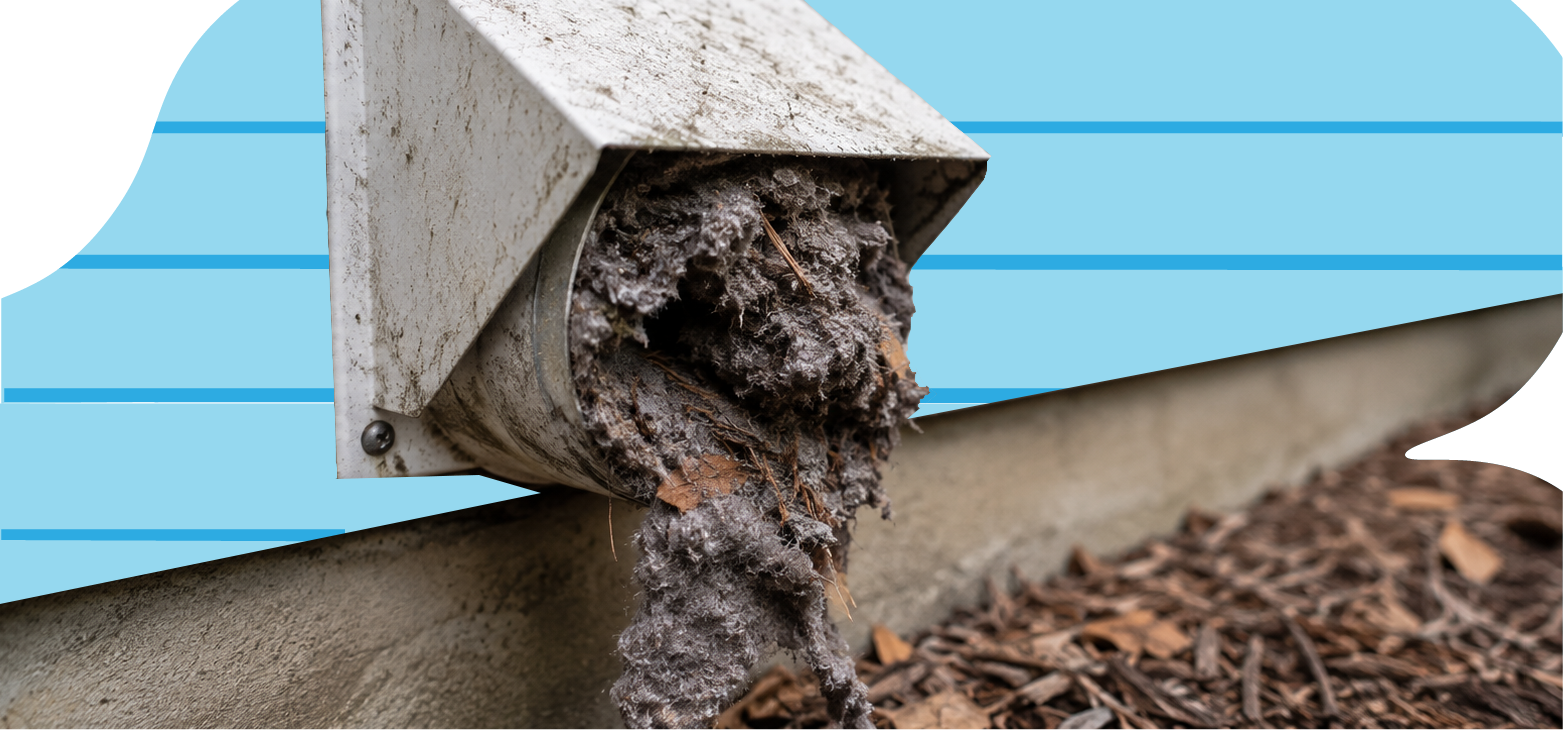
According to Whirlpool, the number one reason a dryer vent can become clogged is because of lint buildup. Other common causes include outdoor debris, crushed vent hoses, or seasonal conditions that restrict airflow over time.
- Lint Buildup Inside the Vent System: Even though the lint trap catches much of the lint from each load, small particles can still move into the vent system during every drying cycle. Over time, lint slowly collects inside the ductwork and restricts airflow.
- Outdoor Debris Around Exterior Dryer Vents: Leaves, dirt, dust, and other outdoor debris can collect around the exterior vent opening and partially block airflow.
- Bird Nests or Animal Blockages: Birds and small animals sometimes build nests inside exterior dryer vents because the openings can feel warm and protected. Nests and debris can quickly block airflow and prevent heat and moisture from venting outside properly.
- Snow, Ice, and Moisture in Colder Midwest Climates: Moisture leaving the dryer may also freeze around the vent flap during very cold temperatures, making airflow more restricted.
- Crushed or Kinked Dryer Hoses: Dryer hoses pushed too tightly against the wall can become crushed, bent, or kinked. Even small restrictions in the hose can reduce airflow.
- Improper Vent Material: Some older homes may still use flexible plastic or thin foil-style vent materials that can sag, trap lint more easily, or restrict airflow over time.
- Heavy Usage or Small Laundry Items: Small items like socks, lint-heavy fabrics, towels, and pet hair can also contribute to additional lint accumulation and blockage over time.
Many of these issues develop gradually, which is why dryer vent clogs often go unnoticed until clothes start taking longer to dry.
How Much Longer Can Clothes Drying Take with a Blocked Vent?
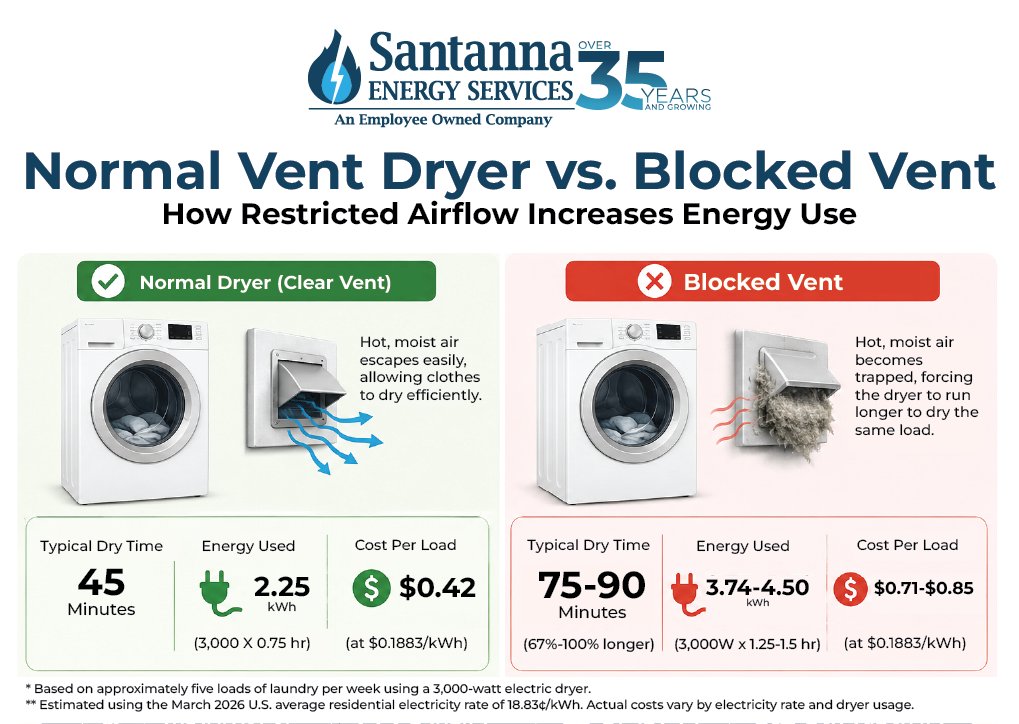
In practical terms, a blocked dryer vent can stretch a 45-minute drying cycle to 75–90 minutes when airflow is heavily restricted, increasing drying time by roughly 67% to 100%.
That extra runtime can increase monthly energy use and may also raise overheating or lint-fire risks.
This happens because the dryer may still produce heat, but restricted airflow keeps moisture trapped inside the system instead of carrying it outside, which can leave clothes damp even after a full cycle.
How Can a Blocked Dryer Vent Increase Your Energy Bill?
A blocked dryer vent can increase your energy bill by $6.20–$9.20 a month because it forces your dryer to run longer and work harder to dry the same load of clothes.
A blocked exterior dryer vent can reduce dryer airflow because it prevents hot, moisture-heavy air from escaping.
For example, if a household runs about five loads of laundry per week using a 3,000-watt electric dryer, those longer drying cycles could potentially add around 33–49 extra kWh per month.
Using the March 2026 U.S. average residential electricity rate of 18.83 cents per kWh according to the U.S. Energy Information Administration (EIA), that could increase electricity costs by roughly $6.20–$9.20 more per month or about $75–$110 more per year
Homes with larger families or heavier laundry usage may see even higher increases over time.
We got our estimate by using this simple formula: Extra dryer cost = dryer power use × extra runtime × number of loads × electricity rate.
We’ve seen how dryer vent restrictions are a good example of how small efficiency problems can quietly affect home energy use.
While a clogged vent may only add a few dollars per month in some homes, repeated appliance inefficiencies across heating, cooling, laundry, and water heating can make monthly energy costs harder to predict.
What Are the Signs Your Exterior Dryer Vent May Be Blocked?
Some of the most common signs of a blocked exterior dryer vent include longer drying times, weak airflow outside the vent, excess heat around the dryer, and lint or moisture buildup near the vent opening.
Because dryer vent blockages often develop gradually, the signs can be easy to overlook at first.
If you’re not sure whether your exterior dryer vent is blocked, here are some warning signs to watch for:
- Clothes Take Longer Than Normal to Dry: If clothes suddenly need much longer to dry than they used to, restricted airflow may be trapping moisture inside the dryer system longer than normal.
- Weak Airflow Outside the Vent Opening: Go outside while the dryer is running and place your hand near the exterior vent opening. Normally, you should feel a steady flow of warm air moving outside. If airflow feels weak, limited, or barely noticeable, lint or debris may be restricting airflow somewhere inside the vent system.
- Dryer Feels Hotter Than Usual: A blocked vent can trap excess heat inside the dryer instead of allowing it to move outdoors properly.
- Laundry Room Feels Warm or Humid: When heat and moisture cannot vent outside properly, warm humid air may remain trapped around the laundry area instead.
- Burning or Musty Smells During Drying Cycles: If you notice unusual burning smells or damp musty odors during operation, lint buildup or trapped moisture may already be affecting airflow.
- Dryer Shuts Off Unexpectedly: If the dryer suddenly stops during cycles or shuts off unexpectedly more often, restricted airflow may be causing excess heat buildup inside the appliance triggering an automatic safety shutoff.
- Exterior Vent Flap Does Not Open Properly: The exterior vent flap should normally open while the dryer is running and close when it stops. If it barely opens, stays closed, or appears stuck, airflow may not be moving through the vent system properly.
What Our Energy Experts Check First
We asked Santanna Energy Services employee-owners what they check first when their dryer isn’t drying well.
- 75% of respondents said they first inspect the lint trap or dryer vent.
- Several mentioned checking both, starting with the lint trap before moving on to the exterior vent.
- One employee-owner also recommended confirming the correct drying cycle is selected before assuming there’s a mechanical problem.
The takeaway? Before assuming your dryer needs repairs, start with the simplest airflow checks.
Why Are Blocked Dryer Vents Dangerous?
According to the National Fire Protection Association, more than 15,000 home fires per year are caused by clothes dryers.
Blocked dryer vents can become dangerous because restricted airflow allows heat, lint, and moisture to build up inside the dryer system instead of venting safely outside the home.
Here are some of the biggest safety concerns homeowners should be aware of:
- Increased fire risk from lint buildup: Lint is highly flammable, and when airflow becomes restricted, hot lint can remain trapped inside the vent system longer than it should. As heat continues building up during repeated drying cycles, the risk of overheating and dryer-related fires may increase.
- Excess heat trapped inside the dryer system: Blocked airflow can prevent heat from venting outside properly, causing temperatures inside the dryer and vent duct to rise higher than normal.
- Poor ventilation for gas dryers: In homes with gas dryers, restricted airflow may increase the risk of exhaust gases remaining near the home instead of venting safely outside.
In addition to safety risks and higher energy use, a blocked dryer vent can lead to several other problems around the home:
- Extra strain on internal dryer components: Longer drying cycles and trapped heat may place additional wear on parts inside the dryer, which can affect appliance performance over time.
- Moisture buildup inside the laundry area: When humid air cannot vent outdoors efficiently, excess moisture may remain trapped around the dryer or laundry room longer than intended.
- Possible musty odors or moisture-related problems: Damp conditions caused by poor ventilation may contribute to unpleasant odors or moisture concerns around the home over time.
- Reduced dryer efficiency and longer drying cycles: As airflow becomes more restricted, the dryer may continue running longer than normal to dry the same load of clothes.
Many blocked dryer vents develop slowly over time, which is why homeowners may not always realize airflow restrictions are creating additional safety and efficiency concerns behind the scenes.
How Hot Does a Dryer Vent Get?
In most cases, dryer vent temperatures range from about 120°F to 160°F, although the exact temperature inside a dryer vent can vary depending on the dryer type, load size, airflow conditions, and drying settings being used.
During normal operation, dryer vents are designed to move heat, moisture, and humid air safely away from the dryer and outside the home. Because of this, it is normal for the air coming from the exterior vent to feel warm or even hot during a drying cycle.
When a dryer vent becomes partially blocked, heat may remain trapped inside the vent system longer instead of moving outside properly. As airflow weakens, temperatures inside the dryer and vent duct can continue rising because hot air has nowhere to escape efficiently.
How Do You Fix a Clogged Dryer Vent and When Should You Call a Professional?
Some clogged dryer vent problems can be improved with basic cleaning and routine maintenance, while more serious blockages may require professional attention.
The good news is that many airflow problems show warning signs before they become major issues. A few simple checks may help identify whether the problem is something that can be addressed with routine maintenance or whether it may be time to call a professional.
Try These Basic Troubleshooting Tips First
If you suspect a clogged dryer vent, here are a few things worth checking first:
- Check the lint trap: A heavily clogged lint filter can reduce airflow during every drying cycle.
- Inspect the exterior vent opening: Look outside for visible lint, leaves, dirt, snow, or debris around the vent flap.
- Make sure the vent flap opens properly: The flap should move freely while the dryer is running.
- Check behind the dryer for crushed hoses: A bent or kinked vent hose can restrict airflow before air even reaches the exterior vent.
- Look for unusually weak airflow outside: Weak airflow may suggest lint buildup or a blockage somewhere inside the vent system.
In many cases, simple maintenance may help improve airflow and reduce future buildup. However, some dryer vent problems can be more difficult to locate or safely clean without specialized equipment.
When It May Be Best to Call a Professional
It may be time to contact a professional if:
- Drying times continue getting longer even after basic cleaning
- Airflow still feels weak outside the vent
- You notice burning smells during drying cycles
- The vent system is long, difficult to access, or routed through walls or ceilings
- Birds, nests, or animals may be blocking the vent system
If airflow problems continue after basic troubleshooting, a professional inspection may help identify deeper blockages or vent issues that are harder to see from the outside.
How Often Should You Clean Your Dryer Vent?
Most homeowners should clean their dryer vent at least once a year to help maintain proper airflow, improve dryer efficiency, and reduce lint buildup inside the vent system.
Regular dryer vent cleaning can help support shorter drying cycles, improve dryer performance, and reduce unnecessary energy use. It may also help lower the risk of airflow restrictions that can contribute to overheating and other dryer vent problems.
For homes with large families, frequent laundry use, or pets that shed heavily, more frequent cleaning is recommended.
How Do You Clean a Dryer Vent Duct?
You can help clean a dryer vent duct by removing visible lint and debris that may be restricting airflow and making the dryer work harder than necessary. Regular cleaning can help support better airflow, shorter drying cycles, and more efficient dryer performance over time.
For many homeowners, dryer vent cleaning does not need to become a major DIY project. The goal is simply to remove visible buildup and help keep air moving properly through the vent system.
Here are the basic steps to help clean a dryer vent duct safely and effectively:
Step 1: Turn Off and Unplug the Dryer
Before checking anything, turn off the dryer and unplug it if possible. This helps create a safer and easier space to look around the vent area.
Step 2: Check Behind the Dryer
Carefully look behind the dryer for visible lint buildup around the vent hose or floor area. While checking, make sure the hose is not crushed, bent, or pushed too tightly against the wall, since restricted hoses can reduce airflow.
Step 3: Remove Visible Lint and Debris
Use a vacuum attachment, soft brush, or cloth to remove any loose lint you can safely reach around the vent connection and nearby openings. Focus only on visible buildup that is easy to access.
Step 4: Inspect the Exterior Dryer Vent
Go outside and check the exterior vent opening for lint, leaves, dirt, nests, snow, or debris around the vent flap. The flap should move freely while allowing air to vent outside properly.
Step 5: Run the Dryer and Check Airflow
After cleaning visible buildup, run the dryer for a few minutes and check the airflow outside. Stronger warm airflow may help indicate the vent system is moving heat and moisture more efficiently again.
If airflow still feels weak, drying times remain long, or the dryer continues overheating, the blockage may be deeper inside the vent system and may require professional cleaning or inspection.
FAQs
Is dryer vent cleaning worth it for energy savings?
Yes, cleaning a dryer vent may help improve airflow, shorten drying times, reduce unnecessary energy use, and help the dryer operate more efficiently.
Should I repair or replace an old dryer vent system?
You may want to replace an old dryer vent system if the vent material is damaged, crushed, outdated, or repeatedly causing airflow problems and lint buildup.
Is it normal for lint to collect outside the dryer vent?
A small amount of lint may appear near the exterior vent, but excessive lint buildup can be a sign of restricted airflow or vent blockage.
Do all homes have an exterior dryer vent?
No, not all homes have a traditional exterior dryer vent, but most standard dryers vent heat and moisture outside through an exterior wall or roof vent. One simple way to check is to look outside for a small vent flap near the laundry room or exterior wall that opens while the dryer is running.
A blocked exterior dryer vent may seem like a small household issue, but restricted airflow can lead to longer drying times, wasted energy, and additional strain on the dryer over time. The good news is that regular inspections and routine vent cleaning can help improve airflow, support better dryer performance, and reduce unnecessary energy use.
After all, who likes paying more for electricity or gas when they do not need to? Small efficiency issues throughout the home can quietly add up over time, especially when appliances are forced to work harder than they should.
That is one reason many homeowners look for ways to bring more predictability to their monthly energy costs. Santanna Energy Services’ Unlimited Energy plan helps provide predictable supply charges throughout the year, helping reduce surprises when seasonal energy use starts to fluctuate.* If you are looking for more consistency and fewer unexpected changes in your energy supply costs, it may be worth exploring whether Santanna’s Unlimited Energy plan is a good fit for your household.
* Restrictions apply. Enrollment based upon program eligibility. Customers using more than 125% of normal monthly usage as determined by Santanna may be required to switch plans.
Tyler is an experienced energy professional, having worked for Santanna Energy Services, for the past four years. He is passionate about renewable energy and believes that diversifying the energy grid is the key to a sustainable future. Tyler is dedicated to supplying consumers with the best possible energy solutions and works diligently to make sure that Santanna can deliver the highest quality service.