

How To Shut Off Gas to a House in an Emergency

by Tyler Castle
Updated: September 22, 2026
12.3 min read
Key Points of This Article:
- Homeowners should only shut off their home’s main gas supply when there is a clear safety reason, and if it is safe to do so, by turning the main shutoff valve near the gas meter one quarter turn until it is perpendicular to the pipe.
- The main gas shutoff valve is typically located near the gas meter outside the home (or in a basement in older or colder-region homes), while individual appliances also have service valves that are not meant for emergency leak situations.
Have you ever smelled something like rotten eggs in your home and wondered, “Is that gas?” It is one of those moments that can make anyone pause and think, what should I do right now? Signs like this might be a recipe for a gas leak.
In situations like this, knowing how to shut off the gas to your house is an important safety step every homeowner should understand before an emergency happens.
But that’s what we’re here for! As a natural gas supplier serving the Midwest for over 35 years, we’re here to help you figure out what to do and how to shut off gas in an emergency. Let’s jump in and break down what homeowners should know and how to respond safely during a gas emergency.
How To Shut Off the Gas to Your House in an Emergency
If it is safe to do so, you can shut off the gas at the main shutoff valve near your gas meter by turning the valve one quarter turn until it sits crosswise to the pipe. When the valve is lined up with the pipe, the gas is on. When it is turned across the pipe, the gas is off.
An important safety note: We want to emphasize that safety comes first. If you smell strong gas or feel unsure about going near the meter, do not try to shut it off yourself, skip our tutorial and leave the area and call 911 and your gas utility from a safe location to receive instructions about what to do next.
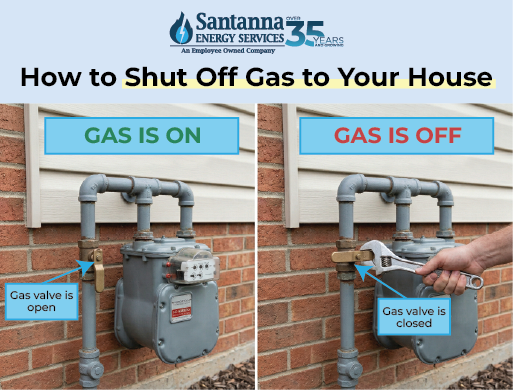
If you’re not in immediate danger, here’s a detailed guide on how to shut off gas to a house:
Step 1: Go to the Gas Meter and Find the Main Shutoff Valve
Look for your gas meter, which is usually outside along the side or front of the house. Find the shutoff valve on the pipe near the meter. It usually has a flat metal tab where a wrench can fit.
Step 2: Place an Adjustable Wrench on the Valve Tab
To shut off the gas to your house, take an adjustable wrench and fit it securely onto the flat valve tab. Make sure the wrench is steady and fully in place before you turn it. Utility guidance commonly recommends keeping a wrench near the shutoff valve so you do not have to search for one during an emergency.
Step 3: Turn the Valve One Quarter Turn
Turn the valve one quarter turn, or 90 degrees, until the tab is crosswise to the pipe, which means the gas flow is shut off.
Step 4: Check That the Gas Is Off
Look at the valve tab. If it is crosswise, or perpendicular, to the pipe, the gas is off. If it is still parallel with the pipe, the gas is still on.
Step 5: Leave the Gas off and Wait for Restoration
Do not turn the gas back on yourself. Once the gas has been shut off, your gas utility or a licensed professional should inspect the system and restore service safely.
Again, shutting the gas off to your home should only be done in an emergency. Knowing where the shutoff valve is and how it works can help you feel more prepared. But in a real emergency, your first priority is always safety.
Where Is the Main Gas Shutoff Valve in a House?
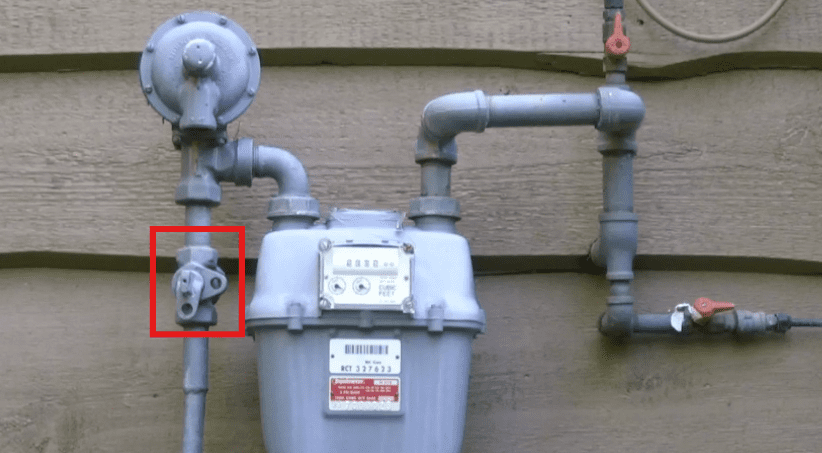
If you’re looking to shut off gas to your house, it helps to know where your main gas shut off is located. In most homes, the main valve is located near the gas meter where the gas line enters the property. It is usually attached directly to the pipe outside the home on the side of the house and often looks like a rectangular metal valve or lever connected to the gas line.
In colder areas or older homes, the meter may also be inside a basement utility area where the gas line enters the home.
Service Valves: How Gas Is Controlled to Individual Appliances
Service valves are small shutoff valves on the gas line that let you stop gas flow to a single appliance, like a stove, water heater, or furnace, without shutting off gas to the entire house.
In most homes, each major gas appliance has its own service valve on the supply line nearby. It allows a technician to safely service, repair, or replace one appliance without disrupting gas service to everything else.
For example, if a water heater needs to be replaced, the service valve for that water heater can be shut off while the rest of the home’s gas system stays on.
Service valves control gas to individual appliances by acting like an on and off point for that one line. When the valve is closed, gas should not flow to that appliance, which is why service valves are often part of routine appliance work.
Service valves are not meant for troubleshooting a suspected leak in the moment. If you smell gas or think there may be a leak, do not stay inside trying to figure out which valve belongs to which appliance and try to shut it off.
Leave the house first and call 911 and your gas utility from a safe location. Once professionals confirm it is safe, they can tell you what needs to be shut off and what should be inspected.
When Is It Safe to Re-Enter Your Home After Smelling Gas?
It is safe to re-enter your home after smelling gas only when your gas utility or emergency responders tell you it is safe and the source of the odor has been addressed.
Even if the smell seems to fade, do not assume the danger is gone. Gas can move through a home in uneven ways, and a leak may still be present even if you cannot smell it as strongly.
That is why the safest rule is to stay out until trained professionals have checked the situation and cleared the home.
In most cases, you will be told it is safe to return only after responders have done one or more of the following: confirmed there is no active leak, shut off gas if needed, inspected the meter or affected equipment, and made sure the area is not at risk of ignition.
If your gas service was shut off, you may also need to wait until the utility or a licensed professional completes the steps needed to restore service safely. If anyone in the home feels dizzy, nauseated, or suddenly unwell, let emergency responders know right away because these symptoms can signal unsafe air conditions.
Can You Turn Gas Back On After an Emergency Shutoff?
Gas service can usually be restored after an emergency shutoff, but homeowners should not turn it back on themselves. In most cases, the gas utility or a licensed professional needs to restore gas service and confirm that the system is safe before gas begins flowing again.
When gas service is restored, professionals typically check the meter, inspect visible gas piping, and make sure appliances can be restarted safely. Some gas appliances may need to be relit or reset, and technicians may verify that connections are secure and that gas is flowing properly throughout the system.
The best step for homeowners is to contact their local gas utility and ask about the process for restoring service at their address. In some cases, the utility will handle the restoration directly. In other situations, they may require a licensed contractor to inspect or repair equipment before service can be turned back on.
Note, if you do turn off your gas supply, some states like Illinois require you to pay a “reconnection fee” to turn your services back on.
Once gas service is restored, follow the instructions provided by the utility or technician. Make sure appliances are restarted properly and avoid using gas equipment until the system has been confirmed safe to operate.
How a Gas Shutoff Can Affect Comfort and Energy Costs During High-Usage Months
A gas shutoff can lower home comfort and increase electricity use, especially during high-usage months when many households rely on natural gas for heating and hot water.
The first change most homeowners notice is comfort. If your furnace runs on gas, your main heat source may stop working. If your water heater uses gas, you may also lose hot water. During colder weather, indoor temperatures can drop quickly, particularly in older homes with basements or drafty areas.
For example, imagine your gas service is off for two days while the utility checks the system. You use two portable space heaters rated at about 1,500 watts each for eight hours a day to keep a couple of rooms warm.
Together, the heaters would use about 24 kilowatt-hours (kWh) per day. Over two days, that adds up to 48 kWh. Using the average U.S. residential electricity rate of 17.24 cents per kWh (December 2025, U.S. Energy Information Administration), that would add about $8.28 to your electric costs during just those two days.
Once gas service is restored, your furnace may run longer than usual to bring the home back to a comfortable temperature. This catch-up period can temporarily increase energy use as the system works to warm the house again.
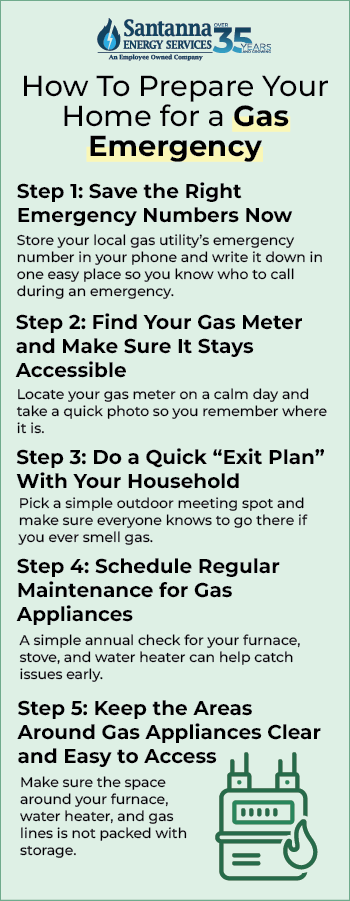
How To Prepare Your Home for a Gas Emergency Before It Happens
You can prepare for a gas emergency before it happens by knowing who to call, knowing where your meter is, and making it easy for your household to leave quickly and safely if something ever smells or feels wrong.
Step 1: Save the Right Emergency Numbers Now
Store your local gas utility’s emergency number in your phone and write it down in one easy place at home, like the fridge or a kitchen drawer. In an actual emergency, most people do not want to waste time searching online or digging through a bill, especially if they are outside and stressed.
If you live in a Midwest state with energy choice, remember that the utility is the one that responds to leaks and emergencies, not your supplier. So, your utility would be the one you’d call if you’re experiencing a gas leak.
Step 2: Find Your Gas Meter and Make Sure It Stays Accessible
Locate your gas meter on a calm day and take a quick photo so you remember where it is. Snap a quick photo of your shut-off valve too, just in case.
Many homes have meters outside near the side or front of the home, and in colder months they can get blocked by snow, landscaping, or stored items. Keeping the area clear helps emergency crews get to it quickly if they ever need to shut off gas for safety.
Step 3: Do a Quick “Exit Plan” With Your Household
Pick a simple outdoor meeting spot, like the end of the driveway or a neighbor’s porch, and make sure everyone knows to go there if you ever smell gas. This sounds basic, but it reduces panic and prevents someone from wandering back inside to grab a phone, keys, or pets. The goal is to make leaving feel automatic.
Step 4: Teach One Simple Rule that Is Easy to Remember
Make sure your household knows this one line: If you smell gas, do not investigate. Leave and call. People naturally want to confirm what is happening, but that is exactly what can waste time or increase risk. In a gas situation, the safest habit is to treat it seriously and let professionals confirm the cause.
Step 5: Schedule Regular Maintenance for Gas Appliances
Many gas-related problems start with appliances that are not running correctly or connections that are worn over time. A simple annual check for your furnace and water heater can help catch issues early. This is not about overdoing it. It is about lowering the chance of surprises during high-usage months.
Step 6: Keep the Areas Around Gas Appliances Clear and Easy to Access
Make sure the space around your furnace, water heater, and gas lines is not packed with storage. In many Midwest homes, these appliances are in basements or utility rooms that become storage areas. Clear access makes inspections and emergency response faster and reduces the chance of accidentally bumping or damaging a line.
FAQs
Can I Turn Off the Gas to Individual Appliances?
Yes, most gas appliances have a shutoff valve nearby that can stop gas to that one appliance, but if you suspect a leak, leave first and call 911 and your gas utility instead of trying to troubleshoot indoors.
Should I Regularly Test or Inspect Gas Valves?
Do not “test” valves by turning them on and off, but do make sure they are accessible and have your gas appliances and fuel burning equipment serviced by a qualified technician on a regular schedule.
What If I Smell Gas Outside Only?
Leave the area immediately and call 911 and your natural gas utility from a phone away from the odor area.
Who Should I Call First If I Suspect Gas Leak?
If you suspect a leak or emergency, call 911 from a safe location first, then notify your gas utility or pipeline operator.
Gas safety is not about doing everything yourself. It is about recognizing the warning signs early, getting your household to safety, and letting the utility and trained professionals handle what comes next.
If you remember just one thing, make it this: stop, leave, and call. That simple plan matters for Midwest homeowners because gas heat is a big part of comfort during high usage months, and a shutoff can temporarily shift your home to higher electricity use and extra costs.
Once everything is safe and back to normal, it can also be a good time to think about long term stability. If you want more predictable supply charges and easier budgeting during high usage months*, Santanna’s Unlimited Natural Gas plan is one option to explore so your supply costs feel more predictable with fewer surprises.
* Restrictions apply. Enrollment based upon program eligibility. Customers using more than 125% of normal monthly usage as determined by Santanna may be required to switch plans.
Tyler is an experienced energy professional, having worked for Santanna Energy Services, for the past four years. He is passionate about renewable energy and believes that diversifying the energy grid is the key to a sustainable future. Tyler is dedicated to supplying consumers with the best possible energy solutions and works diligently to make sure that Santanna can deliver the highest quality service.