

How To Tell If Your House Has Mold and How Mold Affects Your Energy Efficiency

by Jenna Mendez
Updated: September 22, 2026
20.6 min read
Key Points of This Article:
- Mold itself doesn’t raise your energy bill, but the moisture behind it can make your heating and cooling system run longer and less efficiently.
- Small issues like humidity, condensation, or poor airflow can quietly create the right conditions for mold to grow over time.
- Fixing the source of moisture early can help prevent mold from spreading and make your home more comfortable and easier to heat or cool.
- When your home stays drier and air moves properly, your HVAC system doesn’t have to work as hard, which can help keep energy use steadier.
If you’ve ever noticed a musty smell that won’t go away or a room that always feels damp, no matter the season, you may have wondered if mold is starting to form in your home.
Many homeowners notice small changes like a damp corner that never fully dries or a room that feels a little off compared to the rest of the house, but aren’t always sure what those signs mean or what to do next. It’s easy to think of mold as just a surface issue. Something you clean, repaint, or try to ignore for now.
But in many homes, especially across the Midwest, those small signs often point to the start of mold growth.
As an energy supplier in the Midwest for over 35 years, we understand mold often shows up alongside bigger home energy issues, and we’re here to help you understand what your home might be telling you.
In this guide, we’ll walk through how to tell if your house has mold, where it tends to hide, and what causes it to develop in the first place. More importantly, you’ll learn how mold affects energy efficiency so you can make smarter choices for your home.
How Can You Tell If Your House Has Mold?
Mold is not always easy to spot right away, and in many homes, the first clues are subtle rather than visible. You might catch yourself thinking, Why does this room always smell a little off? or Why does this area never seem to dry no matter what I do?
Sometimes you may see it clearly on a wall or ceiling, but more often, it shows up through small changes around your home.
In many cases, mold is less about one visible patch and more about a pattern of moisture that isn’t drying properly.
Here are some of the most common signs that mold may be present in your home:
You Smell a Musty or Earthy Smell
A persistent musty, damp, or earthy smell is often one of the first signs of mold.
Even if you do not see visible growth, that odor can suggest mold is hiding behind walls, under flooring, inside cabinets, in crawl spaces, or around vents. Basements, bathrooms, laundry rooms, and closets are common places where this smell shows up first.
Visible Spots or Discoloration
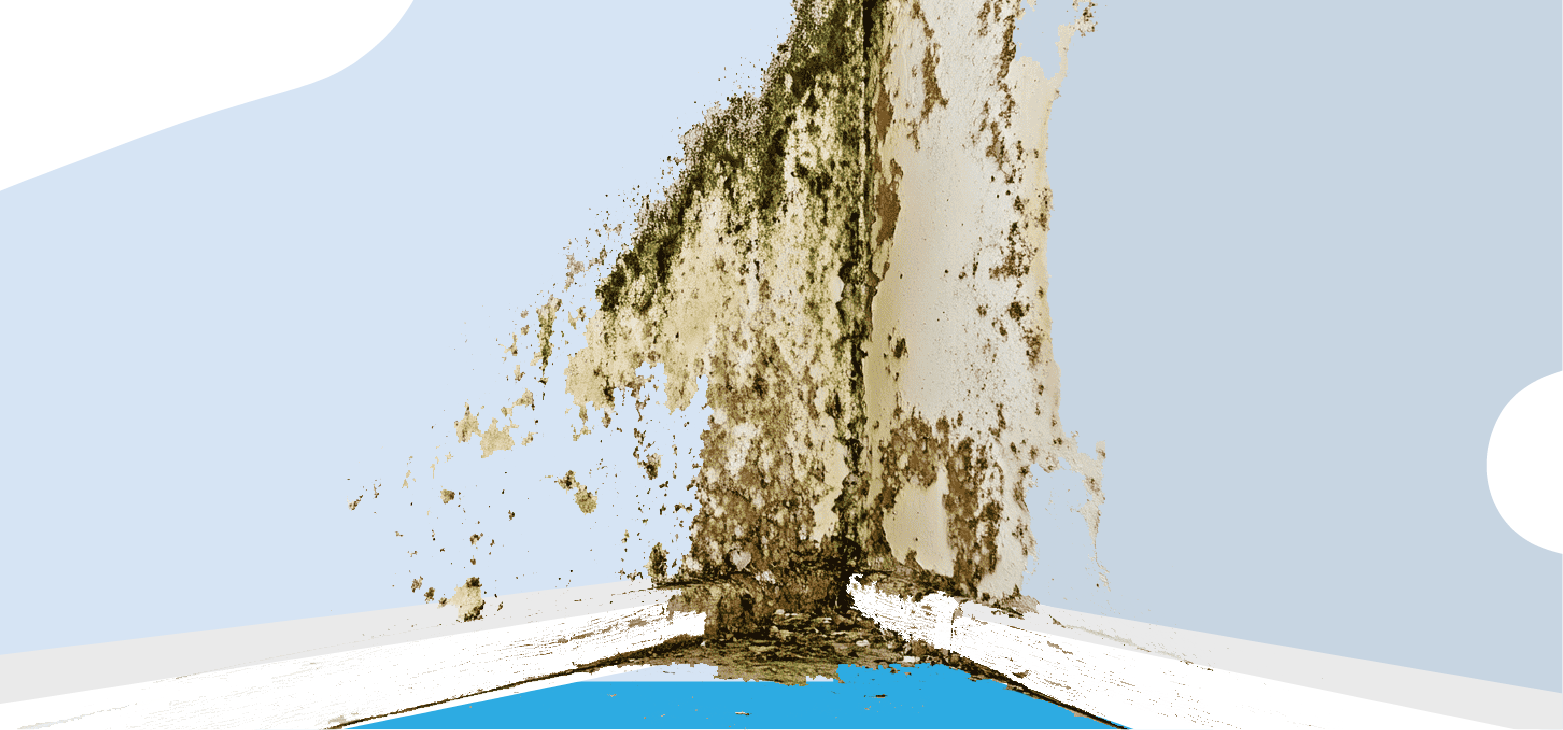
Mold may appear as black, green, white, gray, or brown spots on walls, ceilings, grout, window frames, wood, or other surfaces. Some patches look fuzzy, some look powdery, and others may appear flat or stained.
Not every dark spot is mold, but unusual discoloration in a damp area is worth paying attention to.
Peeling Paint, Bubbling Walls, or Warped Surfaces
When paint bubbles, wallpaper peels, wood swells, or floorboards start to buckle, moisture is often trapped behind the surface.
That trapped moisture can create the right conditions for mold to grow out of sight. In other words, the surface change may be a warning sign, even if the mold itself is hidden.
Persistent Humidity or Condensation
If your windows fog up often, pipes sweat, or walls feel damp to the touch, your home may be holding too much moisture. Regular condensation that does not dry quickly can feed mold growth over time.
Past Water Damage or Leaks
A past roof leak, plumbing issue, basement flood, or appliance leak can leave moisture behind long after the visible water is gone.
If the area was not dried thoroughly, mold may begin to grow later behind drywall, under flooring, or in insulation. Even a small leak can lead to a bigger hidden problem if it happens repeatedly.
Damp or Stained Ceilings and Walls
Water stains, yellow or brown marks, and damp-looking patches on ceilings or walls often point to a moisture problem that can lead to mold growth if not dealt with. Persistent moisture makes the area more likely to develop mold if the source is not fixed.
Mold Around Windows, Vents, or HVAC Areas
Mold often shows up around windows, air vents, return grilles, or other areas where moisture and airflow come together.
If you’re seeing it in these spots, it’s often a sign that something isn’t moving or drying the way it should, and this is a clear sign of how you can find out if your house has mold. It may point to humidity, condensation, or air that isn’t circulating well in that part of your home.
Recurring Mold After Cleaning
If you wipe away a spot and it keeps coming back, the real problem may be moisture inside the wall, under the surface, or somewhere nearby.
Mold that returns usually means the source of moisture has not been fully addressed.
Ongoing Respiratory Discomfort at Home
Ongoing respiratory symptoms indoors can sometimes be one sign that your home’s air quality needs a closer look.
According to Mayo Clinic, mold allergy can cause symptoms such as sneezing, a runny or stuffy nose, cough, postnasal drip, itchy eyes, and throat irritation. In some people who also have asthma, exposure to mold can trigger wheezing, shortness of breath, and chest tightness.
A Room That Always Feels Off
Sometimes the sign is not something you see right away. One room may always feel stuffy, harder to cool, harder to heat, or less comfortable than the rest of the house.
While this does not confirm mold on its own, it can be a clue that hidden moisture, poor airflow, or damp materials are affecting that area.
Where Does Mold Usually Hide in a House?
Mold usually hides in areas where moisture builds up, airflow is limited, and surfaces stay damp longer than they should. Here are some of the most common places mold tends to hide in a home:
Attics Near Vents
Attics can collect moisture when warm indoor air rises and meets cooler surfaces.
This often happens near roof vents, around insulation, or in areas with poor ventilation. If moisture gets trapped there, mold can grow on wood, insulation, or roof sheathing.
Basements and Crawl Spaces
Basements and crawl spaces are common trouble spots because they tend to stay cooler, darker, and damper than the rest of the house.
Ground moisture, leaks, and poor airflow can all create a favorable environment for mold growth in these spaces.
Under Sinks
Mold often hides under kitchen and bathroom sinks because small plumbing leaks can go unnoticed for a long time. Even a slow drip can keep the cabinet area damp enough for mold to grow on wood, drywall, or around the pipes.
Around Windows
Windows are a common place for mold because condensation can build up when warm indoor air meets cold glass or frames. If the moisture keeps returning and does not dry quickly, mold can grow on the trim, sill, caulking, or nearby wall surface.
Behind Drywall
Mold can grow behind drywall after a roof leak, plumbing problem, or ongoing condensation inside the wall.
This is one of the harder places to spot because the surface may look mostly normal at first. Sometimes the clues are a musty smell, bubbling paint, staining, or a wall that feels damp.
Inside HVAC Systems
Mold can also grow inside HVAC systems, especially near drip pans, coils, ductwork, or vents where moisture may collect.
When that happens, the system can move those particles and odors through different parts of the home. This is one reason mold problems may seem hard to trace back to one spot.
How Do I Test for Mold in My House?
To test for mold in your house, you don’t usually need to start with a lab test. In most cases, you can begin by looking for visible signs of mold.
The goal isn’t to confirm mold right away, but to understand what your home is telling you, whether there’s a moisture issue, where it might be, and if the mold is visible or possibly hidden.
Here’s how you can test for mold in your home:
Step 1: Walk Through the House and Look for Visible Signs
Check walls, ceilings, trim, grout, window frames, and areas near vents for spots, stains, or discoloration. Mold may look black, green, white, gray, or brown. If you can already see mold, the U.S. Environmental Protection Agency (EPA) says sampling is usually unnecessary.
Step 2: Pay Attention to Musty Smells
Walk through each room and notice whether any space smells musty, earthy, or damp. A persistent odor can be an early clue that moisture is trapped somewhere.
Step 3: Check for Water or Moisture Problems
Look for leaks, water stains, condensation, damp walls, peeling paint, warped wood, or materials that never seem to dry fully. The EPA says mold begins growing when spores land on wet surfaces, and it stresses that controlling moisture is the key step.
Step 4: Inspect the Most Common Trouble Spots
Take a closer look under sinks, around windows, in basements, crawl spaces, attics, and near HVAC equipment. These are common places where moisture can build up over time and allow mold to grow out of sight.
Step 5: Use a Humidity Monitor if the Home Feels Damp
If the house feels damp but you do not see obvious mold, a humidity monitor can help you spot conditions that may support mold growth. It will not confirm mold on its own, but it can help you understand whether indoor moisture levels may be too high. Since mold needs water or moisture to grow, this can be a helpful clue.
Step 6: Do Not Depend Too Much on DIY Mold Test Kits
Home test kits may sound helpful, but the EPA says there are no federal standards for mold or mold spores, and sampling is often not useful in typical home situations. A kit may not tell you how serious the problem is or where the moisture is coming from.
Step 7: Decide If the Problem Looks Small, Hidden, or Larger Than Expected
If you find a small, visible area, the next important step is usually to fix the moisture source. If you suspect mold behind walls, inside ducts, or across a larger hidden area, that is when professional help may be more useful.
The EPA mold sampling, when needed, should be done by professionals with experience in mold sampling and result interpretation.
Step 8: Act Quickly if You Find Damp or Water-Damaged Areas
If you find a damp area, do not wait too long to deal with it. The EPA says water-damaged areas and items should be dried within 24 to 48 hours to help prevent mold growth.
How Does Mold Affect Your Energy Efficiency?
Mold affects your energy efficiency by signaling moisture, humidity, and airflow problems that can make your heating and cooling system work harder than it should.
Mold itself isn’t really what’s increasing your energy bill, but the damp conditions behind it. When moisture builds up in your home, it can affect how air moves, how well your insulation performs, and how evenly your home maintains temperature.
Here are the most common ways mold-related conditions can affect your energy efficiency:
Insulation Becomes Less Effective
When insulation gets damp, it loses its ability to slow down heat transfer. That means heat can enter more easily in summer and escape more quickly in winter, causing your HVAC system to run longer to maintain comfort and leaving room for mold to grow.
High Humidity Makes Your AC Work Harder
Moist air feels warmer than dry air. If your home has excess humidity, your air conditioner has to remove both heat and moisture, which can increase runtime and energy use.
Your Home Feels Less Comfortable at the Same Temperature
If a room feels damp or stuffy, you may lower the thermostat to try to feel cooler. But if moisture is the real issue, the temperature change may not fully solve the discomfort, leading to longer system operation.
Poor Airflow Keeps Moisture Trapped
Blocked vents, closed-off spaces, or poor ventilation can prevent damp air from moving out of the home. This allows moisture to linger and makes it harder for your system to maintain consistent temperatures.
Hidden Air Leaks Let Heat In and Out
Mold often develops in areas with small gaps or leaks, such as around windows, attics, or walls. These same openings allow outdoor air to enter and indoor air to escape, increasing energy loss.
HVAC Systems May Run Longer Than Needed
When your home has moisture and airflow imbalances, your heating and cooling system may need to run longer cycles to reach and maintain your desired temperature.
Uneven Temperatures Across Rooms
Moisture problems can lead to hot or cold spots in different areas of the home. When one room feels off, you may adjust the thermostat, which can increase overall energy use.
Can You Smell Mold in a House?
Yes, you can often smell mold in a house. It usually has a musty, earthy, or damp odor that seems stronger in closed-off or humid areas.
If you’ve ever walked into a room and noticed a damp, musty smell that doesn’t feel fresh, that’s often how mold first shows up, and it’s easy to brush off at first, especially if nothing is visible.
That smell happens because mold grows in damp places where materials stay wet longer than they should. As it grows, it releases tiny compounds into the air that create that stale, basement-like odor many people recognize. That’s why the smell often shows up in basements, bathrooms, laundry rooms, closets, or other areas that don’t get much ventilation.
Even if you don’t see visible mold, a musty odor can be a sign that something behind a wall, under flooring, around vents, or in another hidden area is staying damp. In many homes, the smell is less about the mold itself and more about the moisture problem allowing it to grow.
A mold smell does not always tell you exactly where the problem is, but it can be an early sign that your home has a moisture issue that needs attention.
What You Can Do To Prevent Mold and Improve Energy Efficiency
You can help prevent mold and improve energy efficiency by reducing moisture, improving airflow, sealing problem areas, and keeping your HVAC system working properly.
In most homes, mold prevention starts with controlling moisture and helping air move properly. When your home stays drier, and air moves the way it should, it becomes harder for mold to grow and easier for your heating and cooling system to keep you comfortable.
Here are some practical ways you can reduce the chances of mold growth while also supporting comfort and energy performance:
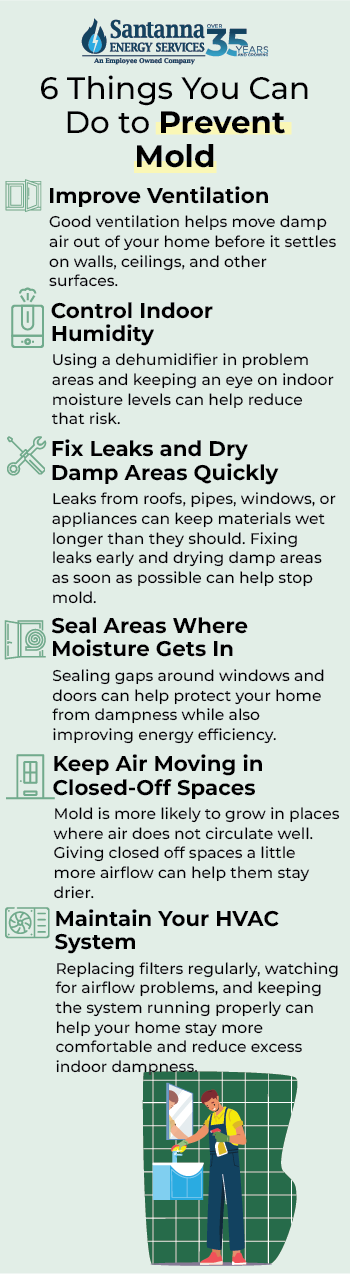
Improve Ventilation
Good ventilation helps move damp air out of your home before it settles on walls, ceilings, and other surfaces. This is especially important in bathrooms, kitchens, laundry rooms, basements, and other areas where moisture builds up quickly.
Control Indoor Humidity
High indoor humidity can make your home feel damp and create the kind of conditions mold needs to grow. Using a dehumidifier in problem areas and keeping an eye on indoor moisture levels can help reduce that risk.
Fix Leaks and Dry Damp Areas Quickly
Leaks from roofs, pipes, windows, or appliances can keep materials wet longer than they should. Fixing leaks early and drying damp areas as soon as possible can help stop mold before it starts spreading.
Seal Areas Where Moisture Gets In
Gaps around windows, doors, attic spaces, and other parts of the home can let in humid air or allow moisture to build up. Sealing those areas can help protect your home from dampness while also improving energy efficiency.
Keep Air Moving in Closed-Off Spaces
Mold is more likely to grow in places where air does not circulate well, such as behind furniture, inside closets, or in packed storage areas. Giving those spaces a little more airflow can help them stay drier.
Maintain Your HVAC System
Your HVAC system helps control both temperature and moisture. Replacing filters regularly, watching for airflow problems, and keeping the system running properly can help your home stay more comfortable and reduce excess indoor dampness.
What Is an Energy-Efficient Mold Barrier and How Does It Help Control Moisture?
An energy-efficient mold barrier prevents moisture from becoming trapped in walls, ceilings, or attic spaces, where it can lead to dampness and mold.
In most cases, this means a product such as an air barrier or smart vapor retarder that helps manage how moisture moves through parts of your home.
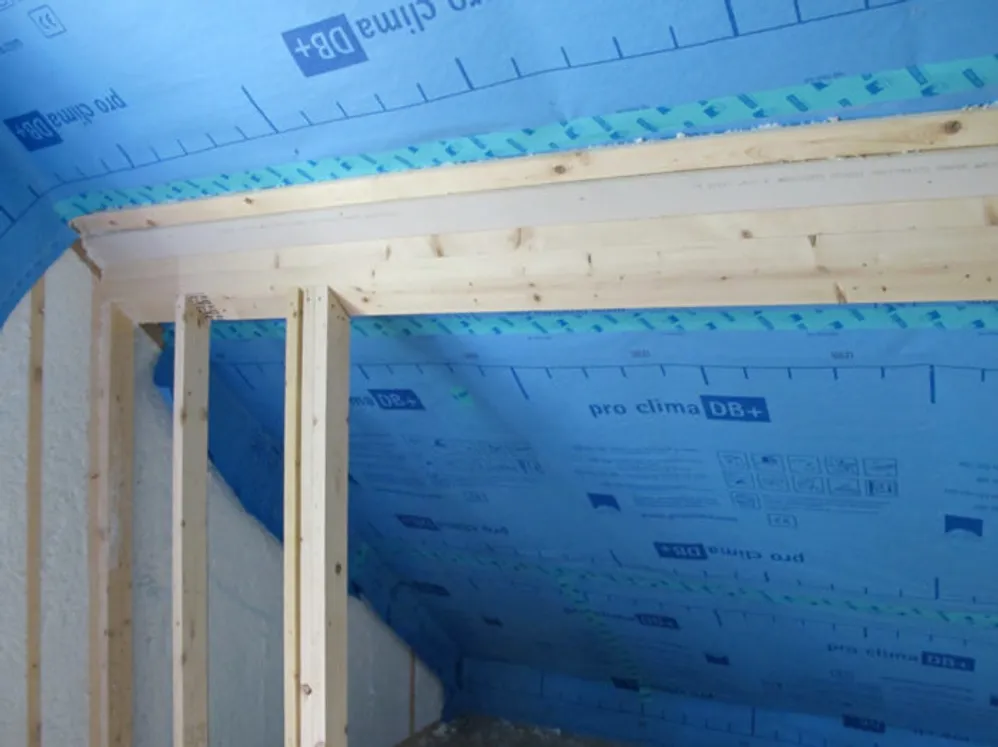
This is usually installed inside wall, ceiling, or floor assemblies, often behind drywall and alongside unfaced insulation, where it helps manage moisture before it builds up inside the home’s structure.
One example is CertainTeed MemBrain, an unfaced air barrier and smart vapor retarder for moisture control. It is designed to respond to changing humidity levels, helping block moisture when needed while also allowing drying when conditions change.
When moisture gets trapped inside a wall or ceiling, that area can stay damp long enough for mold to become more likely. Vapor retarders help slow water vapor from moving into areas where it can turn into liquid moisture.
This can support energy efficiency by helping insulation stay drier and reducing unwanted air leakage, which can make it easier for your home to hold indoor temperatures and reduce strain on your heating and cooling system over time.
It is important to know that an energy-efficient mold barrier is not a fix for existing mold or an active leak. It works best as one part of a bigger moisture-control plan that also includes sealing, ventilation, humidity control, and proper installation for your climate.
How To Get Rid of a Mold Smell in a House
To get rid of a mold smell in your house, you need to address the moisture problem behind it, not just the odor itself.
That musty smell is often a sign that part of your home is staying damp, whether from leaks, humidity, condensation, or poor airflow. If the moisture is not fully addressed, the smell will usually keep coming back, even if the area looks clean at first.
Here’s how to get rid of a mold smell in your house:
Find the Moisture Source
Start by looking for what is causing the dampness. This could be a leak, condensation, high humidity, or an area with poor ventilation. Basements, bathrooms, laundry rooms, under sinks, around windows, and behind furniture are common places to check.
Dry the Area Completely
Once you find the source, the area needs to dry fully. A surface that stays even slightly damp can keep holding that musty smell. Drying the area well helps reduce the conditions that allow mold and odor to linger.
Improve Airflow
Better airflow can help stale, damp air move out of the space. Running exhaust fans, opening up airflow in closed-off areas, and using a dehumidifier in damp rooms can all help the area feel drier and fresher over time.
Check Nearby Materials
Sometimes the smell persists because nearby materials like drywall, carpet, wood, or insulation have retained moisture. If that part of the home keeps smelling musty, it may be a sign that dampness has spread beyond the surface.
Keep Humidity Under Control
If the air in your home stays too humid, musty odors can keep returning even after one area seems dry. Keeping moisture levels under control can help prevent that smell from coming back.
When Should You Call a Professional for Mold Removal?
You should call a professional for mold removal when the situation may be larger or more complicated than it first appears.
In some homes, mold is only the visible part of a bigger moisture problem, especially when dampness has spread into hidden areas or affected building materials. Professional help can provide a clearer look at the full scope of the issue and help make sure the underlying moisture problem is addressed, not just the surface signs.
You should call a professional right away if:
- The mold covers more than 10 square feet. This usually means the problem is large enough to need proper containment and cleanup beyond a typical DIY fix. EPA uses this size as an important threshold for bringing in outside help.
- You suspect mold is hiding behind walls, under floors, or inside other surfaces. If you can smell it but not see it, or notice bubbling paint or warped materials, the issue may be bigger than it looks.
- The mold may be inside your HVAC system, ductwork, or around vents. Once it reaches your HVAC system, ductwork, or around vents, it can spread through your home when the system runs. The EPA advises you do not run your HVAC system if you suspect mold contamination.
- The mold keeps coming back after cleaning or drying the area. When mold returns, it usually means the moisture source has not been fully found or fixed.
- You have repeated leaks, water damage, condensation, or other moisture problems. Mold is closely tied to moisture, so ongoing dampness often means the home needs a more complete inspection. If the water problem is not corrected, the mold problem can return.
- There is a strong musty smell that won’t go away. A lingering odor can mean mold or damp materials are hiding out of sight.
- You notice signs of structural damage. Sagging drywall, warped wood, or stains can point to long-term moisture affecting the structure.
Sometimes it’s worth bringing in a professional sooner rather than later. It’s not just about removing what you can see, but making sure the source is fixed so it doesn’t keep coming back.
FAQs
How do I know if mold is behind the walls?
You may suspect mold behind walls if you notice a persistent musty smell, peeling paint, staining, or damp areas that do not fully dry.
Does mold always mean a moisture problem?
Mold growth almost always indicates a moisture issue, since mold needs moisture to grow and spread, so it usually points to a moisture issue somewhere in the home.
Can high humidity cause mold in a house?
Yes, high indoor humidity can lead to mold growth because mold thrives in moist environments.
Does mold go away on its own?
No, mold does not go away on its own unless the moisture problem is fixed and the affected area is cleaned and dried.
Can you sell a house with mold?
Yes, you can sell a house with mold, but it is usually better to address the issue as early as possible. Mold can raise questions for buyers and affect their confidence in the home, leading to requests for more information, repairs, or price adjustments during the sale process.
Does homeowners’ insurance cover mold?
Homeowners’ insurance may cover mold in some cases, but it usually depends on what caused it. Mold is often not covered when it builds up over time because of ongoing leaks, humidity, poor maintenance, or neglect.
Mold is often a sign that moisture and airflow are out of balance in your home, and those same conditions can quietly affect comfort, HVAC performance, and how much energy you use. When you fix the root cause, your home becomes easier to keep comfortable and more efficient day to day.
For many Midwest homeowners, where humidity and seasonal changes are part of everyday life, managing moisture can help keep your home more balanced and reduce unnecessary strain on your heating and cooling system. That can make your energy use feel steadier, even as the seasons shift.
Once you’ve addressed moisture and improved how your home runs, having a plan that supports steady energy costs can help you stay consistent through seasonal changes. Santanna’s Unlimited Energy plan is one option that can offer stable supply charges during higher-usage months,* making it easier to manage your energy costs with more confidence.
* Restrictions apply. Enrollment based upon program eligibility. Customers using more than 125% of normal monthly usage as determined by Santanna may be required to switch plans.
Jenna Mendez is a Midwest native with lifelong roots in Illinois and time spent in Ohio during college, giving her a deep understanding of the Midwest region’s people, climate, and energy needs. She brings firsthand experience and local insight to topics that matter to Midwest homeowners, especially energy efficiency, sustainability, and home living. Jenna specializes in writing about eco-friendly living, all things Midwest, renewable energy, and practical ways to reduce energy costs. Jenna brings a trusted, and local hometown voice to every article she writes, helping readers live well, and sustainably, right where they are.