

What To Do When Your Power Goes Out

by Tyler Castle
Updated: September 15, 2026
20.8 min read
Key Points of This Article:
- One of the first things you should do is determine whether the outage is limited to your home or affects the whole area, then check your breaker or report it to your utility if needed.
- Prioritize safety by using flashlights instead of candles, unplugging appliances, and avoiding hazards like generators indoors or downed power lines.
- Protect essentials by keeping fridge and freezer doors closed, staying comfortable with weather-appropriate strategies, and staying informed.
- After power returns, restore appliances gradually and expect a temporary increase in energy use as your home systems catch up.
When the power suddenly goes out, it can feel like everything in your home stops at once. One minute everything is running normally, and the next, you're left wondering what just happened and what you should do first.
When the power goes out, one of the first things you should do is confirm if it's just your home or a whole area; if it's just your home, check your breaker box and restore power to any breakers that are switched off. If the power is out in a whole area, be sure to report it to your local utility and prioritize safety as you check your food and wait out the outage.
As an energy supplier in the Midwest for over 35 years, we've seen how quickly power outages can happen and how smart practical steps can help protect your home and avoid unnecessary energy use afterward.
In this guide, you'll learn exactly what to do when the power goes out, how to stay safe and protect your home, and how to prepare for the next one with more confidence.
What To Do When the Power Goes Out
When the power goes out, it helps to take a step back and focus on a few key priorities: understanding what caused the outage, keeping your home safe, and staying as comfortable as possible while you wait for power to return.
Power outages can happen more often than you think. In fact, 85% of Santanna employee-owners say they’ve experienced a power outage in the last year, showing just how common and disruptive outages can be.
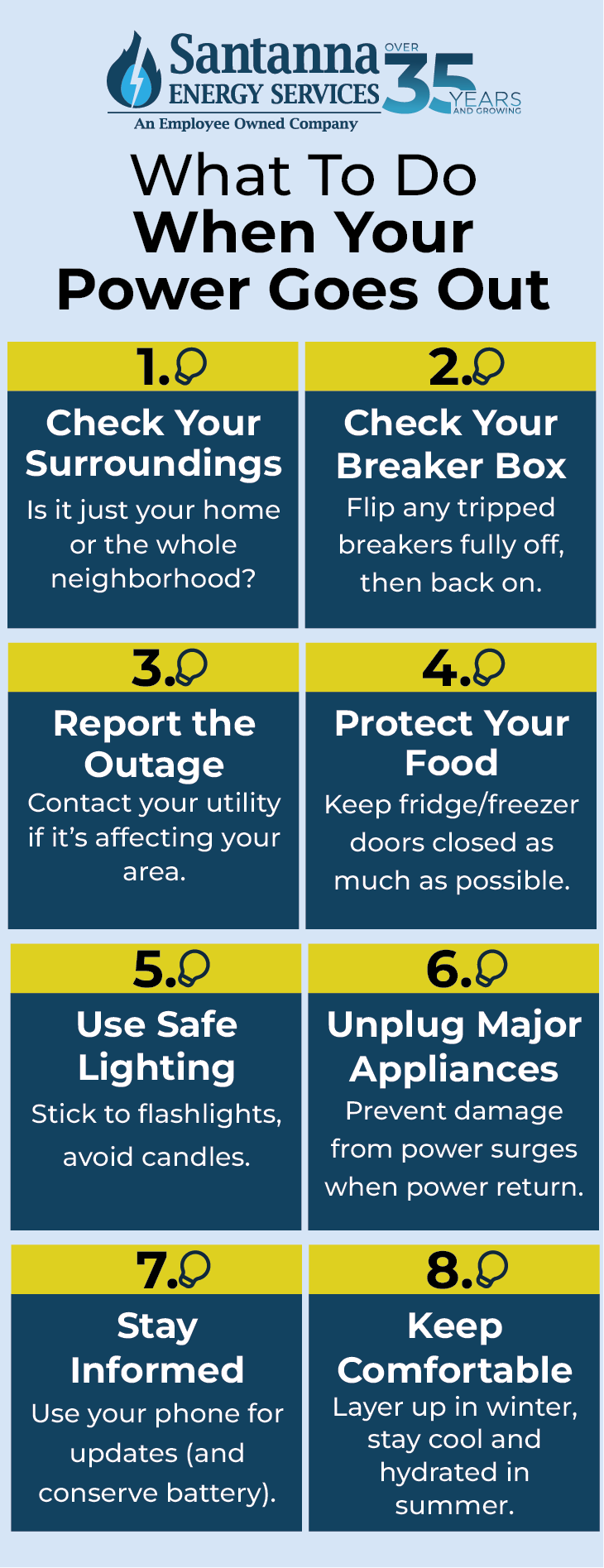
Below are clear, practical steps to help guide you through when the power goes out with confidence:
Prioritize Safety First
When your power goes out, it can be shocking and scary. It’s important to focus on simple steps that reduce the risk of personal harm and protect your home.
If you’re navigating a power outage at night, use flashlights instead of candles to lower the chance of accidental fires and unplugging major appliances can help protect them from damage when power returns.
Check If It’s Just Your Home or the Whole Area
Look outside to see if neighbors or streetlights still have power. This helps you quickly understand whether the issue is inside your home or affecting your neighborhood. Knowing this right away can save you time and help you decide your next step, whether that means checking your breaker or waiting for a utility update.
Report the Outage to Your Utility Company
If the outage affected your whole neighborhood or street, report it to your local utility company. Reporting helps confirm the scope of the outage and allows crews to respond more efficiently. It also helps you stay updated on restoration progress, so you have a better sense of how long the outage may last.
Check Your Electrical Panel Safely
If only part of your home is affected, check your breaker panel for a tripped circuit. A breaker in the middle position may need to be turned fully off and then back on once. Restoring power this way can quickly resolve small issues without waiting for outside help.
If your power doesn’t return after resetting your breakers, this is likely a utility issue, and you’ll have to wait for them to restore your power.
Protect Your Food
“Food preservation is the biggest challenge during outages, especially in warmer months. You hope for a short outage, but prepare for longer ones,” says Ty Cordoba at Santanna Energy Services.
To make sure you’re putting your best food forward when it comes to food preservation during a power outage, keep the refrigerator and freezer doors closed as much as possible to maintain safe temperatures to preserve your food.
According to the U.S. Food and Drug Administration, a refrigerator will keep food cold for about 4 hours, and a full freezer will maintain temperature for 48 hours if doors remain shut.
Limiting how often you open them can help reduce food waste and save you from having to replace groceries after the outage.
Stay Safe and Comfortable
As the outage continues, for many homeowners, comfort quickly becomes the biggest challenge. One Santanna employee-owner shared that extreme heat during an outage made it difficult to sleep, stay focused, and even feel safe indoors.
Dress appropriately for the weather and layer up indoors during winter and use cool water to stay refreshed when needed in the summer. This can make the experience more manageable for everyone in your home.
Practice Generator Safety (If You Use One)
If you use a generator, The Home Depot recommends operating a home generator outdoors and at least 20 feet away from your home, and away from windows or doors, to prevent harmful fumes from entering your home and to reduce the risk of fire hazards.
To make sure your generator can safely power what you need, calculate the total wattage of the appliances you plan to run, then choose a generator rated about 20-25% percent higher. This helps it run more reliably without being overloaded.
Stay Connected and Informed
Use your phone or battery-powered devices to check for outage updates and weather alerts. Staying informed helps you get updates on the restoration status of your area and avoid unnecessary worry. If your phone is dead, consider going to a neighbor’s house or a nearby location with working devices to stay informed.
Keeping my phone charged became the top priority because it was the only way to stay informed during the outage.
Check on Neighbors
If your power goes out and it is safe to do so, consider checking on elderly or vulnerable neighbors. During outages, especially in extreme weather, others may need assistance or reassurance. A quick check-in can help keep your community safer and more connected.
Keep Calm and Use the Time Wisely
Power outages can feel disruptive, but they can also be a moment to slow down. Spending time with family, reading, or doing simple activities like puzzles or board games can help reduce stress while you wait. Staying calm can make the situation feel more manageable and less overwhelming.
Knowing what to do when the power goes out can help you stay safe and reduce stress during unexpected outages.
What To Do If the Power Goes Out in One Room Only
If the power goes out in one room only, the issue is usually limited to your home and is often caused by a tripped breaker, an overloaded circuit, or a problem with something plugged into that area. This type of situation is common and usually does not involve a neighborhood outage or your utility provider.
Below are simple steps you can follow to identify the issue and safely restore power to that room:
Step 1: Check Whether Only One Room Is Affected
Start by confirming that the outage is limited to one room. Turn on lights or check outlets in nearby rooms to see if the rest of the home still has power. If only one room is affected, the issue is likely not a whole-home outage.
Step 2: Turn Off and Unplug Devices in That Room
Before checking anything else, turn off or unplug appliances and electronics in the room. This helps reduce the load on the circuit and lowers the chance of the breaker tripping again right away.
Step 3: Check Your Electrical Panel
Go to your electrical panel and look for a breaker that is out of line with the others or sitting in the middle position. That usually means it has tripped and shut off power to that part of the home.
Step 4: Reset the Tripped Breaker Once
If you find a tripped breaker, turn it fully off first, then turn it back on. This may restore power if the problem was a temporary overload.
Step 5: See If the Power Comes Back Normally
After resetting the breaker, go back and check the room. If the lights or outlets work again and stay on, the issue may have been caused by too many devices running at the same time.
Step 6: Stop If the Breaker Trips Again
If the breaker trips again right away, do not keep resetting it. Repeated tripping can point to a faulty appliance, damaged cord, or wiring problem that needs professional attention.
Step 7: Contact an Electrician If the Problem Continues
If the room still has no power after a reset, or if the breaker keeps tripping, it is best to contact a licensed electrician. This type of issue is usually inside the home, so your utility company would normally not be the one to fix it.
How To Open the Garage Door When Power Goes Out
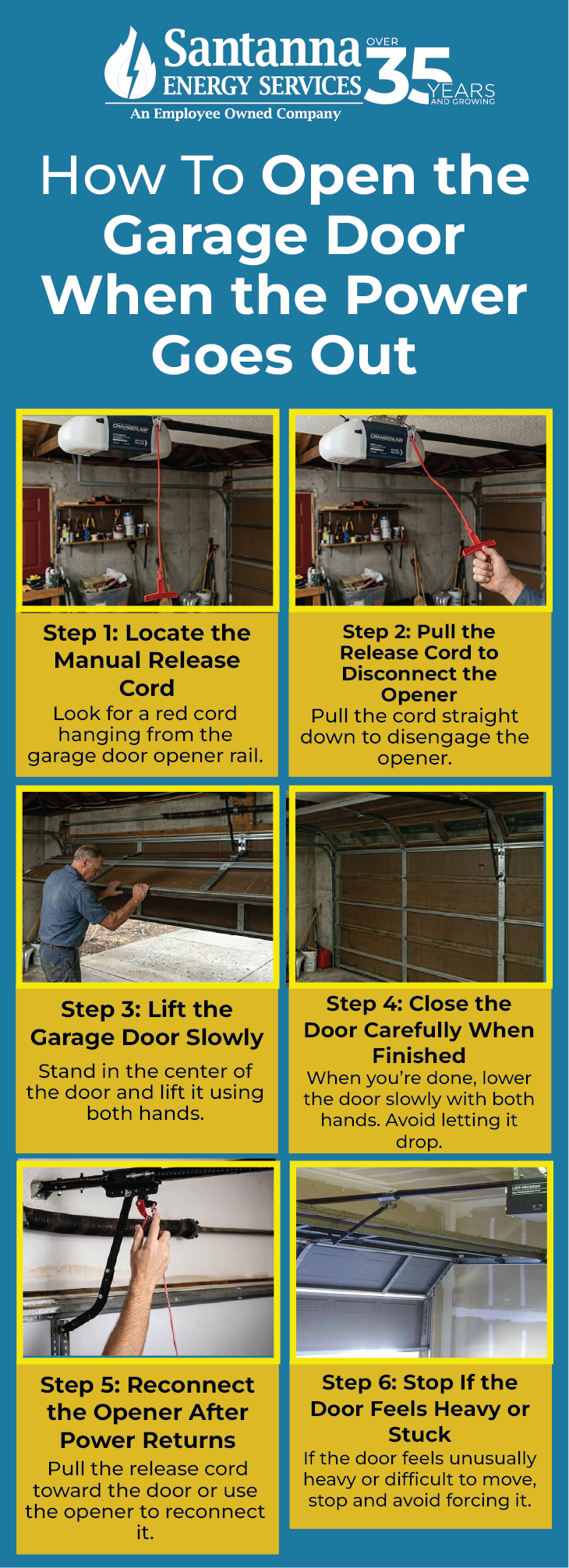
You can still open your garage door during a power outage by switching it to manual operation and lifting it by hand. Most homes are equipped with a simple release feature that allows you to safely access your garage even when electricity is unavailable.
Below are the step-by-step instructions to help you open your garage door safely when power goes out:
Step 1: Locate the Manual Release Cord
Look for a red cord hanging from the garage door opener rail, usually near the center of the door. This cord allows you to switch the door from automatic to manual use.
Step 2: Pull the Release Cord to Disconnect the Opener
Pull the cord straight down to disengage the opener. Once released, the door is no longer connected to the motor and can be opened by hand.
Step 3: Lift the Garage Door Slowly
Stand in the center of the door and lift it using both hands. Most garage doors are designed to be balanced, so they should open with steady, controlled effort.
Step 4: Make Sure the Door Stays Secure
If you need to keep the garage open, check that the door stays fully in place. If it starts to move, guide it back down carefully.
Step 5: Close the Door Carefully When Finished
When you’re done, lower the door slowly with both hands. Avoid letting it drop, and make sure the path is clear.
Step 6: Reconnect the Opener After Power Returns
Once electricity is restored, pull the release cord toward the door or use the opener to reconnect it. The system should return to normal operation.
Step 7: Stop If the Door Feels Heavy or Stuck
If the door feels unusually heavy or difficult to move, stop and avoid forcing it. This may point to a spring or track issue that requires professional help.
How Can You Stay Safe During a Power Outage?
Staying safe during a power outage means being aware of common household risks and making simple choices that help protect your home and everyone in it. Most safety concerns during outages come from how lighting is used, how appliances are handled, and how indoor spaces are managed without power.
Below are common things to avoid to help keep your home and family safe during a power outage:
- Avoid using candles for lighting, as they can easily increase the risk of accidental fires, especially in dark or cluttered areas of the home.
- Avoid opening your refrigerator or freezer too often, since warm air entering can cause food to spoil more quickly.
- Avoid plugging in or turning on all appliances at once when power returns, as this can strain your system and increase the risk of damage from power surges.
- Avoid using generators, grills, or gas-powered equipment inside your home or garage, because they can produce dangerous carbon monoxide that builds up quickly indoors.
- Avoid using ovens or stovetops to heat your home, since they are not designed for that purpose and can create safety hazards.
- Avoid going near downed power lines or damaged electrical equipment outside, and always assume they are live and dangerous.
- Avoid repeatedly resetting breakers if they keep tripping, as this may point to a deeper electrical issue that needs professional attention.
By keeping these safety tips in mind, you can put safety first and help protect your home and everyone in it during a power outage.
How To Stay Warm When the Power Goes Out During Winter Storms or Freezing Temperatures
Staying warm during a power outage in winter means focusing on simple ways to keep heat in, reduce cold air entering your home, and stay comfortable while you wait for power to return.
One Santanna Employee Owner shared her experience with a power outage during a winter storm when she and her family were without electricity for three days.
Joyeeta Banerjee of Santanna Energy Services shared, “it quickly became more than just an inconvenience—it affected basic comfort, safety, and the ability to carry on normal routines. Not being able to cook, stay warm, or reliably communicate added to the difficulty, making it a much more stressful experience.”
If you’re in the same boat, even small adjustments can make a noticeable difference, especially during winter storms when temperatures can drop quickly indoors.
Below are easy, practical steps you can follow to stay warm and comfortable when the power goes out during winter storms or freezing temperatures:
Stay in One Room To Keep Heat In
Gather everyone in one main room and close doors to unused spaces. This helps trap warmth in a smaller area so it does not spread out and cool down quickly. Keeping heat contained can help the room stay warmer for longer and make it easier to stay comfortable.
Dress in Layers and Use Blankets
Wear multiple layers of clothing, including socks and a hat, to help your body hold heat. Use blankets to stay warm, especially when sitting or resting. Layering helps your body retain heat more effectively than wearing a single heavy item.
Close Curtains and Block Drafts
Keep curtains or blinds closed to reduce cold air coming through windows. You can also place towels or blankets along door gaps to help block drafts. Preventing cold air from entering helps your home hold onto the warmth it already has.
Avoid Opening Doors Too Often
Try to limit how often you open doors to the outside. Cold air can quickly enter and lower the temperature inside your home. Keeping doors closed helps maintain a more stable indoor temperature.
Use Safe Heat Sources Only
Avoid using ovens, stovetops, or outdoor heaters to warm your home, as these can create safety risks. Sticking to safe methods helps protect your household while you wait for power to return.
How To Stay Cool When the Power Goes Out During Summer Heat Waves
Staying cool during a power outage in summer means limiting heat buildup inside your home, staying hydrated, and using simple ways to keep your body comfortable until power returns. During Midwest heat waves, homes can warm up quickly without air conditioning, so taking early steps can help prevent discomfort and overheating.
Below are easy, practical steps you can follow to stay cool and comfortable when the power goes out during summer heat waves:
Stay in the Coolest Part of Your Home
Spend time in the lowest level of your home, such as a basement, where temperatures are usually cooler. Avoid rooms that get direct sunlight, especially in the afternoon. Heat naturally rises, so staying in a lower level can help you feel more comfortable and reduce how quickly your body heats up.
Keep Windows and Curtains Closed During the Day
Close blinds or curtains to block sunlight and reduce heat buildup inside your home. This helps keep indoor spaces from warming up too quickly. Direct sunlight can raise indoor temperatures fast, so blocking it early can help your home stay cooler for longer.
Use Airflow When Possible
If it is cooler outside, open windows to allow fresh air to move through your home. Creating cross airflow can help make the space feel more comfortable. Moving air helps your body cool down more easily and can prevent rooms from feeling stale or stuffy.
Stay Hydrated Throughout the Day
Drink water regularly, even if you do not feel thirsty. Staying hydrated helps your body regulate temperature and reduces the risk of overheating. When your body has enough fluids, it can cool itself more effectively, especially in hot and humid conditions.
Limit Heat-Generating Activities
Avoid using appliances like ovens, stoves, or dryers, as they can add heat to your home. Keeping these off can help maintain a cooler indoor environment. Even small sources of heat can build up over time, making your home feel warmer and less comfortable.
By reducing heat inside your home and staying hydrated, you can stay more comfortable and lower the risk of overheating during a summer power outage.
What To Check When Power Is Restored
When power is restored, it’s important to take a few moments to check your home and make sure everything is running safely and as expected. After an outage, systems and appliances may need time to reset, and a quick check can help you avoid issues or damage.
Below are simple things you can check to help your home return to normal safely and smoothly:
- Turn on a few lights and check outlets to confirm that power has fully returned to your home, which helps you quickly see if everything is back to normal or if certain areas are still affected.
- Bring appliances and electronics back on one at a time instead of all at once, as this helps reduce strain on your electrical system and allows everything to restart more smoothly.
- Check your refrigerator and freezer to make sure food is still cold or frozen, and discard any items that have been warm for too long to avoid food safety issues.
- Check and adjust your thermostat as needed, since your heating or cooling system may take time to bring your home back to a comfortable temperature.
- Pay attention to flickering lights or appliances not working as expected, as this may be a sign of a larger issue that could require attention.
Will My Electricity Bill Go Up After a Power Outage?
Your electricity bill might increase after a power outage because your energy use may increase slightly after power is restored, leading to a higher bill during the month you experienced an outage.
When the power comes back, your home works to return to its normal temperature and conditions. Your heating or cooling system may run longer than usual to catch up, especially during very hot or cold Midwest weather. This is often called recovery runtime, and it can add some extra energy use for that day or billing period.
Your refrigerator and freezer also work harder after an outage. As temperatures rise during the outage, these appliances need to run longer to bring food back down to safe levels. This added cycling can contribute to a small increase in overall electricity use.
Here’s how much a power outage could cost you on your electricity bill: For example, a home that normally uses around 900 kWh in a mild month might see usage increase from about 1,050 to 1,100 kWh after a storm-related outage. That is an increase of roughly 150 to 200 kWh as systems work to recover.
At an average rate of about 17.45 cents per kWh as of January 2026 from the U.S. Energy Information Administration, that increase could add approximately $26 to $35 to your bill for that period.
While this may sound noticeable, it is usually temporary and tied to short-term recovery rather than ongoing usage. In most cases, your energy use returns to normal once your home reaches its usual temperature and conditions again.
How Can You Prepare Before the Next Power Outage?
Preparing for a power outage means taking a few simple steps ahead of time so your home can stay safe, comfortable, and easier to manage if the power goes out. Being prepared helps you respond more calmly and avoid unnecessary stress when an outage happens.
Below are simple, practical ways you can prepare your home before the next power outage:
Keep Flashlights and Batteries in Easy-to-Find Places
Store flashlights in areas you can reach quickly, such as bedrooms, kitchens, or hallways. Having reliable lighting ready helps you move safely around your home as soon as the power goes out.
Charge Devices and Keep Backup Power Ready
Keep your phone charged when severe weather is expected, and consider having portable chargers available. This helps you stay connected for updates and communication during an outage.
Stock Basic Food and Water Supplies
Keep a small supply of bottled water and non-perishable food items at home. This helps reduce the need to open your refrigerator often and gives you options if the outage lasts longer.
Use Surge Protectors for Electronics
Plug important electronics into surge protectors to help reduce the risk of damage when power is restored. This is a simple way to protect devices you use every day.
Know How To Report an Outage
Familiarize yourself with your utility company’s outage reporting process. Knowing where to go or who to contact ahead of time can save time and help you act quickly when needed.
When Should You Call for Help If Your Power Goes Out?
You should call for help if the outage appears to be limited to your home, shows signs of an electrical issue, or does not resolve after basic checks.
While many outages are temporary and affect entire neighborhoods, some situations point to a problem inside your home that needs professional attention. Knowing when to stop troubleshooting can help protect your home and keep your household safe.
Below are common situations where it’s best to call for help instead of trying to fix the issue yourself:
- If your neighbors still have electricity but your home does not, the issue may be within your electrical system, and it is a good time to contact your utility or an electrician to help identify the cause.
- If a breaker trips more than once after you reset it, avoid continuing to turn it back on, as repeated tripping can signal an overloaded circuit or a deeper electrical problem that needs to be checked safely.
- If you notice a burning smell, visible sparks, or unusual heat near outlets or your panel, stop using electricity in that area and seek help right away, as these can indicate a serious issue.
- If you see damaged wires, outlets, or parts of your electrical panel, do not try to fix it yourself, since visible damage is a clear sign that a professional should handle the repair.
- If your area has power again but your home still does not, or if only part of your home remains without power, it may point to an issue that needs further inspection.
- If you see downed power lines outside your home, stay away and contact your utility company immediately, as these lines should always be treated as live and dangerous.
FAQs
Can a power outage damage appliances?
Yes, power outages can damage appliances due to voltage spikes or surges when electricity is restored.
How long do power outages usually last?
Most power outages last from a few hours to 4 weeks, depending on the cause and the time needed for utility crews to make repairs.
Why does the power go out during storms?
Power outages during storms are often caused by strong winds, lightning, or falling trees damaging power lines and equipment.
Power outages may be unexpected but knowing what to do can help you stay safe, protect your home, and handle the situation with ease. Simple steps like checking your panel, keeping food safe, and staying comfortable can go a long way.
For many Midwest homeowners, outages are a normal part of stormy summers and cold winters. While you can’t control when they happen, how your home recovers afterward can affect your comfort and even your energy use.
Having a more predictable energy plan can help take some of the uncertainty out of getting back to normal. After an outage, it’s common for energy use to spike as your home cools down, appliances restart, and routines reset. With Santanna’s Unlimited Energy plan, your supply charge stays consistent* through those swings, so one less thing catches you off guard as you settle back in.
* Restrictions apply. Enrollment based upon program eligibility. Customers using more than 125% of normal monthly usage as determined by Santanna may be required to switch plans.
Tyler is an experienced energy professional, having worked for Santanna Energy Services, for the past four years. He is passionate about renewable energy and believes that diversifying the energy grid is the key to a sustainable future. Tyler is dedicated to supplying consumers with the best possible energy solutions and works diligently to make sure that Santanna can deliver the highest quality service.