
Why Do My Lights Flicker? Causes, Fixes & When to Worry

by Tyler Castle
Updated: August 17, 2026
16 min read
Key Points of This Article:
- Lights usually flicker because power is not steady, but the cause can be as simple as a loose bulb or as serious as a wiring or electrical system issue.
- Flickering lights do not directly raise your bill, but the issue behind them can cause appliances to run longer, adding about $16 to $31 to your monthly energy costs.
- Many flickering problems can be fixed with simple steps, such as tightening or replacing a bulb, or avoiding running several high-energy appliances at the same time.
- If flickering happens often, affects multiple rooms, or comes with warning signs like heat, smells, or buzzing, it is important to have an electrician take a closer look.
If you've ever noticed your lights flicker for a split second, you may have paused and wondered, "Is this normal… or is something wrong?" It's one of those small moments that's easy to brush off at first.
Lights can flicker for a variety of reasons, including simple issues like loose bulbs, faulty switches, or bad dimmer switches, or bigger issues like wiring problems, overloaded circuits, or changes in your local power supply. The tricky part is figuring out which one you're dealing with.
As an electricity supplier, we've seen how weather, energy demand, and daily home use can affect how electricity behaves, and we're here to help you make sense of what you're noticing.
In this guide, you'll learn the most common reasons why lights flicker, how to quickly narrow down what's causing it in your home, what's harmless versus what needs attention, and when it's time to take the next step. Let's get started.
Why Do My Lights Flicker?
Lights flicker when the power reaching the bulb is not consistent, causing the light to dim, brighten, or blink.
In most homes, flickering lights come from one of three areas: a small issue at the light itself, how electricity is being used inside the home, or changes in the power supply coming from outside.
This happens when the flow of electricity changes, even for a brief moment. In many homes, these changes are small and happen during normal use, like when appliances turn on. In other cases, flickering can point to a deeper issue affecting how power moves through your home.
Some flickering is normal, especially if it is quick and happens occasionally. But when flickering becomes frequent, lasts longer, or affects multiple lights, it is worth taking a closer look.
Let's examine why your lights flicker and what might be causing it in your home:
Loose or Faulty Light Bulbs
One of the most common reasons lights flicker is that the bulb is not fully secured in the socket.
If the connection is loose, the flow of electricity can cut in and out, even with small movements or vibrations in your home. You might notice this in a lamp or ceiling light that flickers occasionally and then seems fine again. In many cases, simply tightening the bulb or replacing it with a new one will stop the flickering right away.
Incompatible Dimmer Switches
LED lights can flicker because of older dimmer switches. The two may not work well together because many older dimmers were not designed for LEDs and handle electrical loads differently, as explained by Super Bright LEDs.
This often shows up as rapid flickering, lights that do not dim smoothly, or even a faint buzzing sound. You may notice it more when adjusting the brightness, which is a sign that the bulb and switch are not fully compatible.
Faulty Light Switches or Fixtures
Over time, light switches and fixtures can wear out, especially in rooms where they are used often.
Inside the switch or fixture, small parts can loosen or degrade, which can interrupt the flow of electricity. You might notice flickering when you flip the switch, or the light may seem unstable when it is turned on. In some cases, gently touching or adjusting the switch can cause flicking, which is a sign that the connection is not as steady as it should be.
Voltage Fluctuations
Sometimes, flickering is caused by small changes in the amount of power flowing through your home.
When voltage shifts slightly, lights can dim or brighten without warning. You might notice this when several lights change brightness at the same time or when the flickering feels more random. These changes can happen inside your home or from outside sources, and while small shifts are normal, more noticeable changes are worth paying attention to.
Loose Wiring or Connections
Flickering that affects multiple lights or different rooms can sometimes point to a loose connection somewhere in your wiring.
When wires are not securely connected, the flow of electricity can become uneven, which causes lights to flicker, dim, or change brightness unexpectedly. This type of flickering may not follow a clear pattern and can feel random. Because wiring is hidden behind walls, this is not something you can easily see, but it is important to take it seriously since it can become a safety concern if left unchecked.
Overloaded Circuits
Every circuit in your home is designed to handle a certain amount of electricity.
When too many devices are running on the same circuit, especially at the same time, it can put extra strain on that circuit. You may notice lights dimming or flickering when several appliances are in use, like running a microwave while the dishwasher and lights are on. This happens because the circuit is trying to supply power to everything at once, and the demand briefly exceeds what it can comfortably handle.
Utility Company or Grid Issues
In some cases, the cause of flickering is outside your home.
Weather events like strong winds or storms can affect power lines, and high demand in your area can also lead to small changes in how electricity is delivered. If the flickering happens throughout your home and you suspect others nearby may be experiencing the same thing, it may be related to the local power supply.
This is more common during extreme weather or times when many homes are using a lot of electricity at once.
Old or Aging Electrical Systems
In older homes, the electrical system may not be designed for the amount of electricity used today.
Over time, wires, panels, and connections can wear down or become less reliable. This can lead to uneven power flow, which may show up as flickering lights, especially when multiple things are running at once. If your home is several decades old and flickering happens often, it may be a sign that parts of the system are starting to struggle with modern demand.
Loose or Damaged Service Connections (Main Power Line)
The connection that brings electricity from the utility line into your home can loosen or wear over time.
When this happens, power may not enter your home as steadily as it should. This can cause lights across your home to flicker at the same time, sometimes without a clear pattern.
Because this connection is outside or near your meter, it is not something you can check yourself, but it can explain whole-house flickering that feels random.
Problems With the Electrical Panel
Your electrical panel is where power is distributed throughout your home.
If there are loose connections or worn components inside the panel, it can affect how evenly power is sent to different areas. This may show up as lights flickering in multiple rooms or lights changing brightness when different circuits are in use. Panel-related issues are not always obvious, but they can play a big role in how stable your electricity feels day to day.
Outdoor Wiring or Tree Interference
Branches touching or rubbing against power lines can interfere with how electricity flows to your home.
This is more common during windy days or storms when trees move more than usual. You might notice flickering during certain weather conditions, even if everything inside your home seems fine. In these cases, the issue is outside and may affect nearby homes as well.
Extreme Weather and Seasonal Demand
Severe weather and high energy use in your area can affect the stability of the electricity supply.
During very hot summers or cold winters in the Midwest, many homes use heating or cooling systems at the same time. This increased demand can lead to small shifts in power delivery, which may show up as flickering lights. Storms can also temporarily affect power lines, making flickering more noticeable during or after bad weather.
Nearby Construction or Utility Work
If there is construction or utility work happening near your home, it can sometimes affect power lines or local equipment.
This may lead to temporary flickering or brief changes in how electricity is delivered. If the flickering started recently and you have noticed work being done nearby, this could be a factor.
Large Appliances Starting Up (Power Surge at Startup)
Lights can flicker when large appliances turn on because they need a quick surge of electricity to start, which can briefly reduce the power available to your lights. In a recent internal survey we conducted, 29% of respondents confirmed that they've experienced flickering lights when turning on a large appliance.
This is most common with systems like your air conditioner, especially during hot Midwest summers when it runs more often. You may also notice this with refrigerators, microwaves, washing machines, or space heaters.
In most cases, the flicker is quick and only lasts a second, which is normal. However, if the flickering is strong, lasts longer, or happens often, it may be a sign that your system is under more strain than it should be.
How To Tell What’s Causing Your House Lights to Flicker
In many homes, lights that flicker are not random. It usually follows a pattern, even if it is not obvious at first. Paying attention to what else is happening at the same time can help you better understand what is causing it.
So, if you’ve noticed this at home, here’s how you can start narrowing down why this happens.
Check If It Is One Light or Multiple Lights
If only one light is flickering, the issue is often isolated to that bulb or fixture. This is usually a smaller issue and easier to fix.
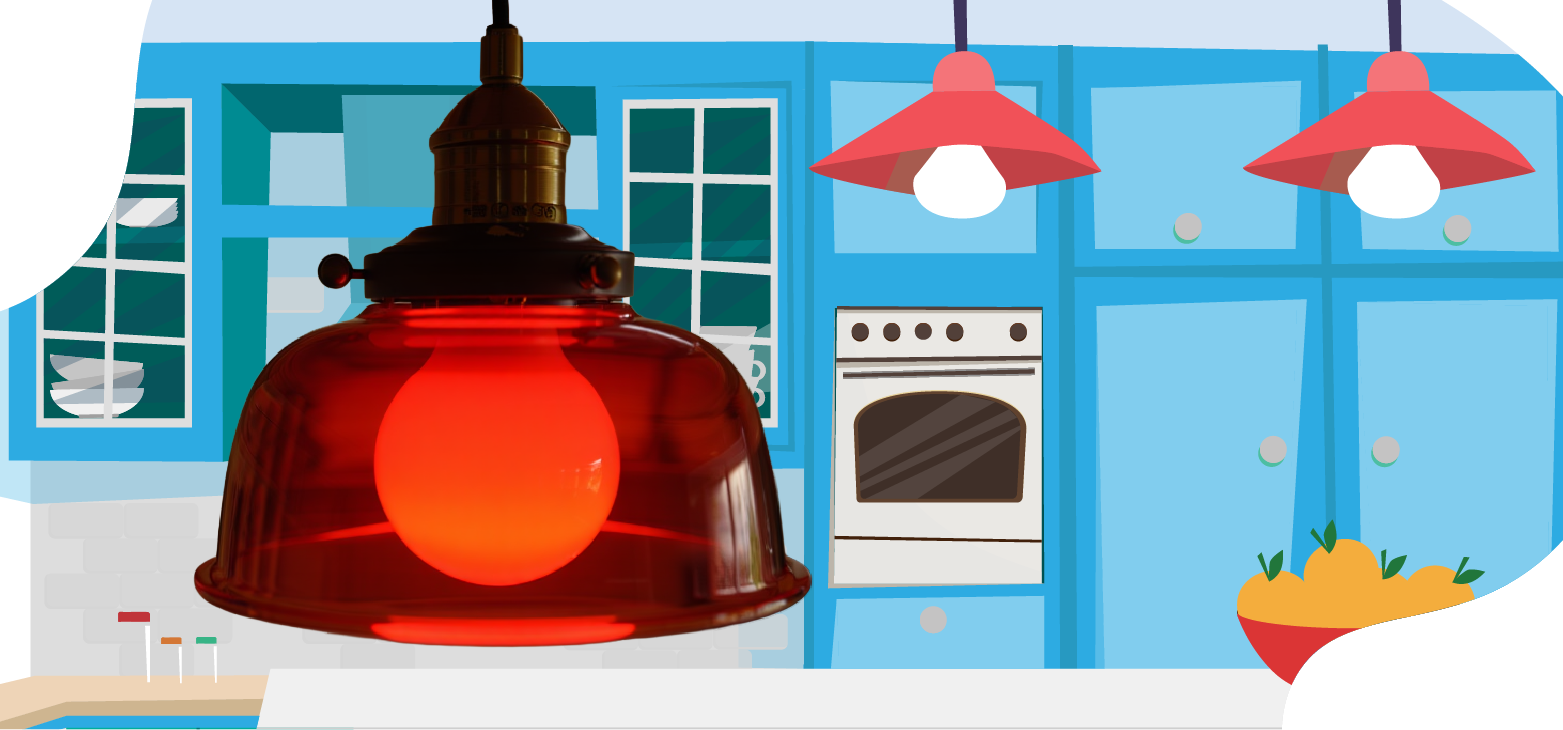
For example, if one kitchen pendant light flickers but the rest of the room stays normal, the cause may be a loose bulb, a worn socket, or a fixture issue. If multiple lights or rooms flicker at the same time, it may point to something affecting a larger part of your home, such as a circuit issue, a panel problem, or a larger change in power coming into the house.
Notice When the Flickering Happens
Think about what is happening in your home when the flicker occurs. If it happens when you turn on appliances like your AC, microwave, or washer, it may be related to how power is being used at that moment.
For example, if your dining room lights flicker every time the microwave starts, that may mean the circuit is feeling the extra demand. If it happens during storms or at certain times of day, it may be connected to outside power conditions, such as weather, grid demand, or utility-related issues.
Pay Attention to How Long the Flicker Lasts
A quick flicker that lasts less than a second is often tied to normal changes in power use.
For example, if the light blinks once when you turn on your vacuum and then returns to normal, that is usually less concerning. Flickering that lasts longer or repeats several times can be a sign of a loose connection, a worn switch, a fixture problem, or another issue that is interrupting power more than it should.
Look For Patterns Over Time
If the flickering happens once in a while, it may not be a concern. But if it starts happening more often, at the same time each day, or under similar conditions, that pattern can help point to the cause.
For example, if your lights flicker most evenings when everyone is home and multiple appliances are running, your home may be dealing with heavier electrical demand at that time. If it happens only during windy weather, the cause may be outside your home.
Think About Recent Changes in Your Home
If you recently added a new appliance, changed light bulbs, or updated a switch, that change may be connected to the flickering. Even small updates can affect how electricity flows through your home.
By walking through these simple checks, you can often narrow the issue down to a small, isolated problem, a home-related issue, or something connected to the power supply outside your home. This makes it easier to decide what to do next.
Can Flickering Lights Increase Your Electric Bill?
Flickering lights do not directly increase your electric bill, but the cause behind the flickering can lead to higher energy use over time.
When your lights flicker, it often means the flow of electricity in your home is not steady. That same inconsistency can affect how well your appliances run, causing systems like your air conditioner or heater to take longer to reach the temperature you set, which means they stay on longer and use more energy.
Here’s how flicking lights can cost you: you might notice your lights flicker when your air conditioner turns on.
If this happens often and your power is not steady, your AC may need more time to cool your home. Instead of running for about 10 hours a day, it may run closer to 11 or 12 hours to reach the same comfort level.
If your system uses around 3,000 watts per hour, that extra 1 to 2 hours of use each day could add about 90 to 180 kilowatt-hours in a month. At an average electricity rate of about 17.45 cents per kilowatt-hour (based on January 2026 data from the U.S. Energy Information Administration), that could increase your bill by roughly $16 to $31 – all because your light started to flicker, indicating a deeper problem.
When Should You Be Concerned About Flickering Lights and Call an Electrician?
You should be concerned about flickering lights and consider calling an electrician when the pattern suggests the issue may go beyond a simple bulb or normal appliance use. Some situations are easy to fix on your own, but others can point to a deeper electrical issue that should not be ignored.
Here are clear signs to take flickering lights seriously and call an electrician:
- Flickering happens often or keeps getting worse: If the flickering is no longer occasional and starts happening regularly, it may be a sign that something is not stable in your electrical system.
- Multiple rooms or lights are affected at the same time: When flickering spreads beyond one area, it can point to a larger issue with how power is being distributed in your home.
- Flickering happens without a clear reason: If it is not tied to turning something on or using a specific light, it may be harder to trace and worth checking.
- Lights dim or brighten noticeably, not just flicker: Larger changes in brightness can signal stronger shifts in power, not just a minor interruption.
- You hear buzzing sounds from switches, outlets, or fixtures: A buzzing noise can mean the electrical flow is not steady and may need attention.
- Switches or outlets feel warm to the touch: Warmth can be a sign that electricity is not moving as smoothly as it should.
- You notice unusual smells, especially a burning odor: Any unusual smell near lights, switches, or outlets should be taken seriously and checked right away.
- Circuit breakers trip often: Frequent breaker trips can mean your system is under strain, which may be connected to the flickering.
How Can You Prevent Flickering Lights in the Future?
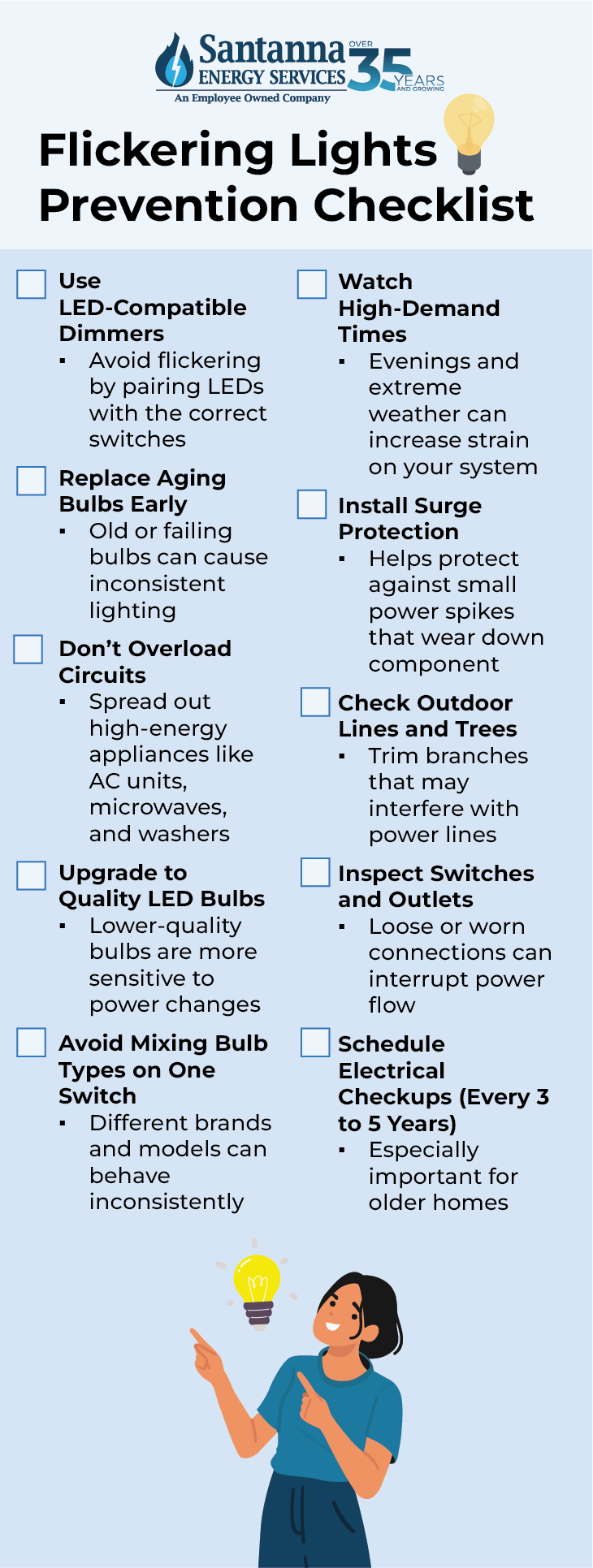
You can help prevent flickering lights by keeping your lighting and electrical system in good condition and being mindful of how electricity is used in your home. Let’s take a closer look at these simple habits that can help keep your lights steady and your system running more smoothly:
- Choose higher-quality LED bulbs (not the cheapest multipacks): Better drivers/components handle small voltage changes more smoothly, so you’ll see less flicker over time.
- Avoid mixing different bulb brands or models on the same switch (especially on dimmers): Even if they’re all “dimmable,” different electronics can behave inconsistently together.
- Add whole-home surge protection (or at least point-of-use surge protectors for sensitive lighting circuits): Repeated micro-surges and spikes can wear out LED drivers and smart switches.
- Have your electrical panel connections inspected/serviced periodically (especially in older homes): Loose neutral/termination issues are a common “whole-house flicker” cause and are preventative-maintenance territory, not DIY.
- Upgrade aging outlets and switch connections (during renovations): Push-in (“backstab”) connections can loosen over time; moving to more secure terminations reduces intermittent issues later.
- Trim trees near service lines before storm season: Branches tend to weaken and break off in heavy winds, which could fall onto power lines, causing lights to flicker. Trim long branches down to prevent this.
FAQs
Why do my lights flicker when my AC turns on?
Your air conditioner is one of the most common reasons lights flicker because AC systems need a strong burst of power when they start, especially during hot summer days when they run more often.
Are flickering lights a fire hazard?
Flickering lights may indicate a fire risk when they are linked to wiring problems, overheating, or damaged electrical components.
What’s the difference between flickering and dimming lights?
Flickering lights change brightness rapidly or intermittently, while dimming lights stay at a lower, steady brightness level.
Do LED bulbs flicker more than incandescent bulbs?
LED bulbs can appear to flicker more than incandescent bulbs because they respond more quickly to small changes in electrical current.
Why do my lights flicker randomly at night?
Lights may flicker randomly at night due to changes in electricity demand, nearby equipment cycling, or minor fluctuations in the power supply.
Flickering lights are often an early signal, not just an annoyance, and while many causes are small, the pattern is what really matters. Paying attention to when and how it happens can help you catch issues early and avoid bigger problems that can affect both comfort and energy use over time.
For Midwest homeowners, where seasonal demand and weather can already put extra pressure on your home, even small inefficiencies can add up. When your system has to work harder than it should, it can quietly affect how much energy you use and what you pay each month.
It’s a good reminder that steady power plays a bigger role in your home than you might think. And if you’re looking for more predictability, especially during those high-usage months, Santanna’s Unlimited Energy plan can help take some of the guesswork out of your bill.* It’s worth exploring if having one less surprise sounds like a win for your home.
* Restrictions apply. Enrollment based upon program eligibility. Customers using more than 125% of normal monthly usage as determined by Santanna may be required to switch plans.
Tyler is an experienced energy professional, having worked for Santanna Energy Services, for the past four years. He is passionate about renewable energy and believes that diversifying the energy grid is the key to a sustainable future. Tyler is dedicated to supplying consumers with the best possible energy solutions and works diligently to make sure that Santanna can deliver the highest quality service.