

Best Humidity for Home + How To Decrease the Humidity

by Tyler Castle
Updated: August 17, 2026
12 min read
Key Points of This Article:
- The ideal indoor humidity range is 30% to 50%, which supports comfort, health, and energy efficiency.
- Humidity that is too high (above 60%) can cause mold, worsen allergies, damage your home, and make the air feel hotter and harder to breathe.
- Humidity that is too low (below 30%) leads to dry skin, irritation, static electricity, and potential damage to wood and furnishings.
- Maintaining proper humidity requires monitoring levels, using humidifiers or dehumidifiers as needed, improving ventilation, fixing leaks, and adjusting HVAC settings for balanced moisture control.
Finding the right humidity level in your home is key to staying comfortable, healthy, and protecting your living space. Too much humidity can make your home feel sticky and promote mold, while too little can dry out your skin and cause breathing issues.
If you're wondering what the best humidity for home is, we've got you covered. We'll explore the ideal humidity levels for different seasons and rooms in your house. You'll also learn practical tips to lower excess moisture and keep your home's humidity balanced all year long. Let's dive in!
What Humidity Should My House Be?
The best humidity for your home ranges between 30% and 50% for optimal comfort and health. To prevent mold growth, it’s best to keep it below 50%. However, you can adjust it based on your comfort preferences.
Some homeowners may prefer slightly higher or lower humidity depending on personal comfort, but drastic deviations can cause health and structural issues. Indoor humidity should align with outdoor levels to reduce condensation and maintain proper airflow. For example, if it’s extremely humid outside, without proper ventilation or control, moisture can build up inside, leading to discomfort and structural damage.
Best Humidity for Home During Summer
If you’re looking for the best humidity for your home during the summer, aim to keep indoor humidity between 30% and 45%.
High summer temperatures cause the air to hold more moisture, making it feel hotter and more uncomfortable. This is why it’s important to keep your home’s humidity on the lower side; a higher humidity level will make your home feel sticky.
For an added layer of protection, use dehumidifiers, air conditioners, or improved ventilation to maintain comfortable levels and prevent mold or mildew.
Best Humidity for Home During Winter
For the best humidity levels in the winter, maintain humidity between 30% and 60%.
Maintaining this range ensures comfort while preventing problems like static shocks, dryness, and respiratory discomfort. It also safeguards wooden furniture and flooring from cracking due to insufficient moisture levels.
Cold air holds less moisture, which can cause dry air inside your home. Low humidity in winter can lead to dry skin, irritated sinuses, and lead to an increase in damage to your floors.
What Is Considered Low Indoor Humidity?
All this talk about high and low humidity might have you wondering, “what is considered a low and high humidity level?”
As a rule of thumb, when indoor humidity drops below 30%, it’s considered low. This low humidity level is common in winter, especially in areas with freezing temperatures and snow like the Midwest and East Coast.
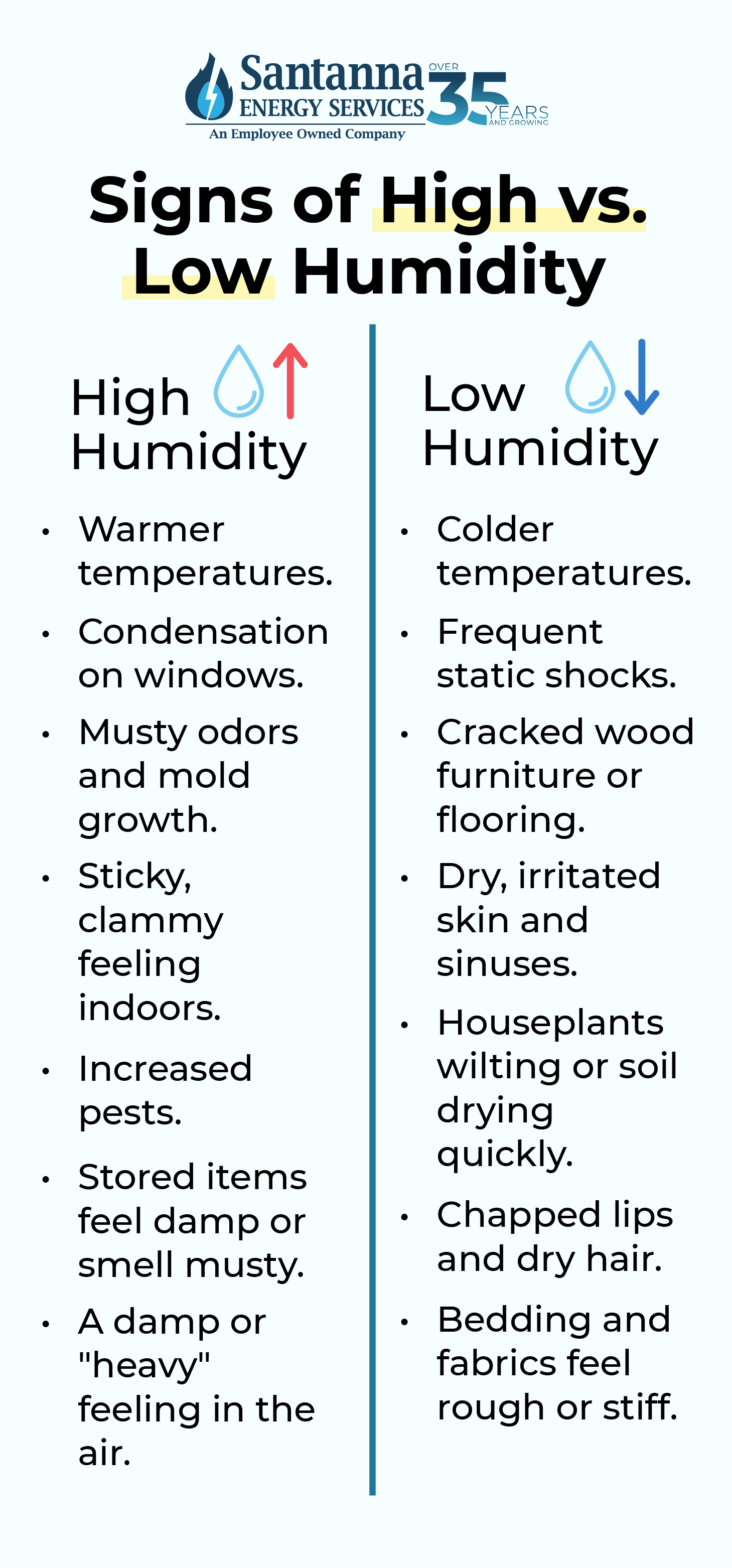
Keep an eye out for dry skin, lips, eyes, and sore throats or even itchiness and irritation. This can be a sign of low humidity in your home.
Consistent low levels of humidity can affect your home as well, leading to wood materials (like floors) to shrink, crack, or warp. Wallpaper can peel and form gaps and in extreme cases, it may fall off entirely. Low humidity levels can cause static electricity to increase causing paint to chip as well.
What Is Considered High Indoor Humidity?
When indoor humidity rises above 60%, it’s considered high. This is more common in the summertime and in most regions that experience consistent summer heat.
High indoor humidity can worsen respiratory issues like asthma and allergies. Homes with high humidity can give off a moist, sticky feeling and promote a foul, muggy odor. Increased humidity creates condensation on windows and encourages mold growth, attracts insects, and can damage furniture and fabrics. Prolonged high humidity can weaken your home’s structural integrity over time, potentially leading to costly repairs.
How to Check the Humidity Levels in Your Home
If you’re wondering how you can find the humidity levels in your home, you can do so with a few simple tools and steps.
The most accurate way to check the humidity levels in your home is by using a digital or analog hygrometer, which measures humidity levels in real time. Digital hygrometers provide real-time humidity readings and often include temperature readings.
Some models can connect to smart home systems for remote monitoring. In the same way, smart thermostats often display your humidity levels in their respective apps or screen menus.
Physical signs like foggy windows, static electricity, and moldy smells can be indications of your humidity levels too if you don’t have access to these devices.
Factors That Affect Humidity Levels in Your Home
There are several factors that affect the humidity levels in your home:
- Weather: Hot temperatures mixed with rain add moisture to the air, increasing humidity. Humidity changes with the seasons and it’s usually higher in summer and lower in winter.
- Home Activities: Things like cooking, taking hot showers, or drying clothes indoors add moisture to the air, contributing to higher humidity levels in your home.
- Ventilation: Airflow) helps control humidity by letting excess moisture escape. Proper insulation keeps outside air (and its moisture) from affecting your home’s humidity levels.
- Plumbing Issues: Things like leaks in pipes, faucets, and under sinks can create constant moisture buildup, raising humidity levels over time.
- Poorly sealed walls, floors, and windows: Allow outside moisture to seep inside, increasing humidity levels indoors.
- Building Materials: Concrete, brick, and wood, can absorb and release moisture, leading to varying levels of humidity.
- Home Location: Homes near water bodies, such as lakes or rivers, are more prone to higher humidity levels.
- Home Decoration: Thick carpeting and upholstered furniture can trap moisture, especially in rooms with poor ventilation.
- Houseplants: Plants release moisture through a process called transpiration, which can raise indoor humidity levels.
What Humidity Level is Uncomfortable?
Humidity levels above 60% are often considered uncomfortable, making the air feel sticky and harder to breathe. High humidity reduces the body’s ability to cool itself through sweat evaporation, leading to overheating and fatigue.
Humidity below 29% can also be uncomfortable, causing dry skin, sore throats, and respiratory irritation.
Does Humidity Make It Feel Hotter or Cooler?
If you’re wondering if humidity makes it feel hotter or colder, the short answer is, it depends on your humidity level!
High humidity makes it feel hotter than the actual temperature because moisture in the air slows down sweat evaporation, preventing natural body cooling.
Low humidity can make cold air feel even colder by speeding up the evaporation of moisture from your skin, leading to chills and dryness. This phenomenon is called the “heat index” or “wind chill effect,” depending on the season.
Does Humidity Increase During Summer?
Yes, humidity typically rises in summer because warm air holds more moisture. Regions near water bodies or with frequent rainfall experience even higher summer humidity. This increase can lead to discomfort, making air conditioning or dehumidification necessary.
Does Humidity Rise or Fall?
Humidity fluctuates based on temperature, weather, time of day and whether it’s relative or absolute humidity.
Relative humidity will be higher (rise) if the air is cooler, and lower (falls) if the air is warmer, assuming the same amount of absolute/specific humidity. Absolute humidity increases with the amount of water vapor in the air, regardless of temperature.
How To Achieve the Ideal Home Humidity Level
Achieving the ideal humidity level (30%-50%) ensures a comfortable, healthy environment and protects your home from damage. Here’s how to do it effectively:
Monitor Regularly: Use a hygrometer to track humidity levels. This device helps you know when adjustments are necessary. In the same way, smart thermostats and HVAC systems often come with built-in sensors to provide real-time data.
Use Humidifiers or Dehumidifiers: In dry seasons, a humidifier adds moisture to the air, reducing issues like dry skin and irritated airways. In humid conditions, a dehumidifier helps prevent mold, mildew, and discomfort by removing excess moisture.
Optimize HVAC Settings: Set your HVAC system to regulate humidity. Many systems can automatically maintain the ideal range through humidity control settings. It’s also a good idea to replace air filters regularly to ensure proper airflow and moisture removal.
Seal and Insulate Your Home: Proper insulation reduces moisture fluctuations by keeping external humidity out. Fix leaks and seal windows to prevent condensation and water intrusion.
How to Decrease the Humidity in Your Home
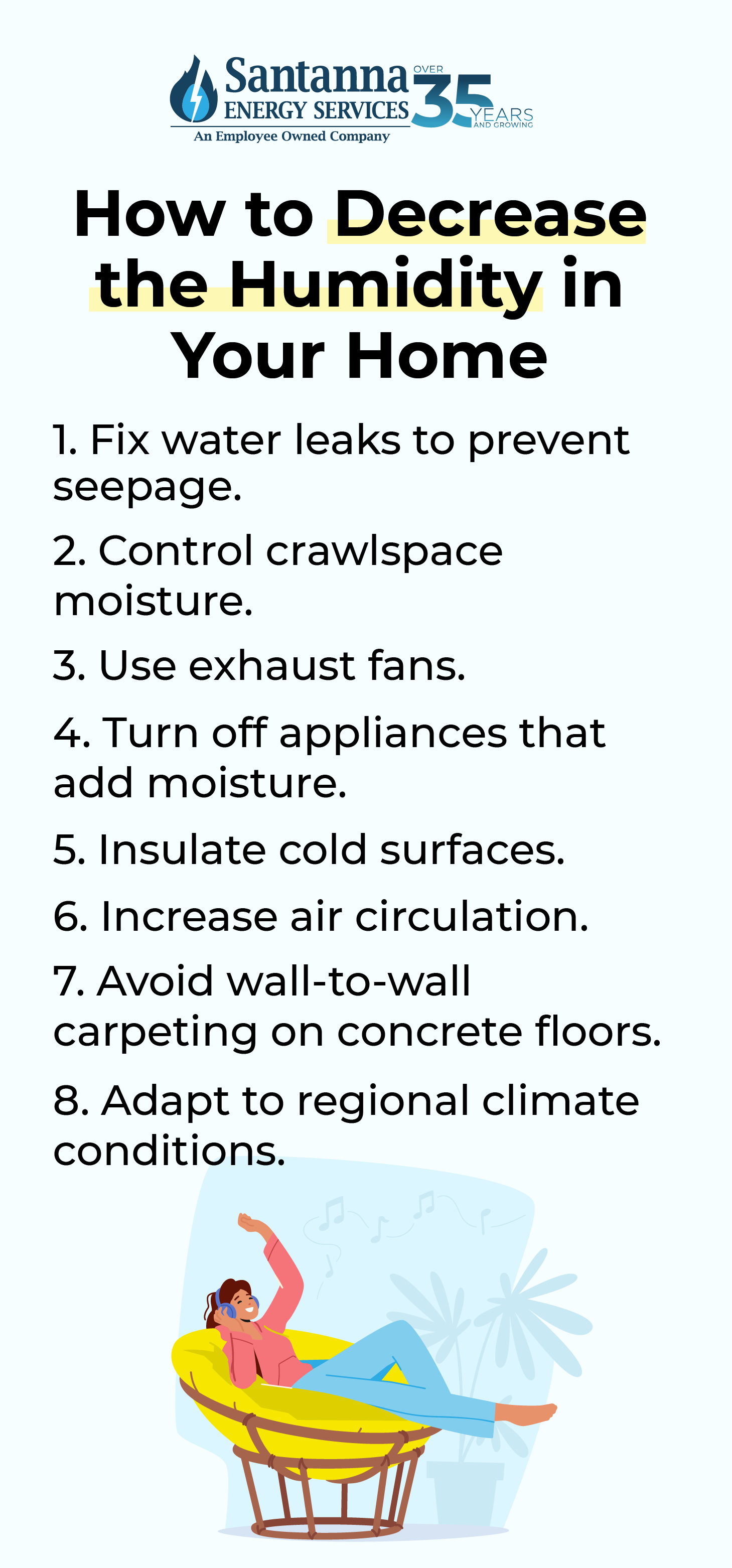
Managing indoor humidity is essential for comfort, health, and home preservation. Here are practical strategies to decrease humidity and prevent related issues:
Fix Water Leaks to Prevent Seepage
Stop water from entering your home and increasing your humidity levels by addressing leaks and moisture intrusion points.
Adjust landscaping to slope away from the foundation to prevent water from pooling near your home and install gutters and downspouts to direct rainwater away from the house. Be sure to repair any leaks around plumbing fixtures, such as sinks and tubs, to prevent damp areas where mold can grow. Lastly, regularly inspect your home for signs of water damage or seepage.
Control Crawlspace Moisture
Crawlspaces are one of the biggest culprits of moisture conducting spaces in your home. To stop this moisture, build up, lay plastic sheeting over the ground in crawlspaces to block rising dampness. Also, ensure proper ventilation in crawlspaces to reduce condensation and improve airflow.
Use Exhaust Fans
Prevent moisture buildup by installing exhaust fans in areas prone to humidity. Run exhaust fans in bathrooms, kitchens, and laundry rooms to vent moist air outside. Most importantly, ensure your clothes dryer is properly vented to the outdoors to avoid excess moisture indoors.
Turn Off Appliances That Add Moisture
Limit the use of appliances that increase humidity when condensation is noticeable. For example, turn off humidifiers or kerosene heaters if you see moisture forming on windows or surfaces.
Insulate Cold Surfaces
Prevent condensation by warming cold surfaces like windows and walls. Install insulation or storm windows to reduce temperature differences that cause moisture buildup. Keeping cold surfaces warm helps avoid water damage and mold growth.
Improve Airflow
Increase air circulation to prevent moisture buildup in stagnant areas. Keep doors between rooms open to allow warm air to circulate and use fans to enhance airflow, especially in corners and near walls. Lastly, move furniture away from exterior walls to promote better air and heat movement.
Protect Flooring and Carpets
Prevent damp conditions on concrete floors by using moisture barriers. Avoid wall-to-wall carpeting on concrete floors, as it can absorb moisture and promote mold. Use washable area rugs instead and, if needed, install a vapor barrier and sub-flooring to block ground moisture.
Adapt to Regional Climate Conditions
Humidity control strategies should be tailored to your climate. In dry regions, devices like evaporative coolers can increase moisture and require regular checks. In humid regions, air conditioners may need longer cycles to effectively remove excess moisture.
Different climates require different construction and insulation techniques to manage humidity effectively.
Impact of Humidity on Heating and Cooling Costs
Humidity levels directly affect how efficiently your heating and cooling systems operate, which can lead to higher energy bills if not managed properly.
When the air is humid, your air conditioner has to cool and dehumidify the air simultaneously. Removing moisture takes extra energy, causing the system to run longer and work harder to maintain a comfortable temperature.
High humidity makes it feel hotter than the actual temperature, often leading homeowners to lower the thermostat. This increases energy consumption and cooling costs. Extended operation of air conditioning units can lead to wear and tear, higher maintenance costs, and shorter lifespan of the system.
In cold weather, low humidity levels make the air feel colder than it is. This happens because dry air speeds up the evaporation of moisture from your skin, which makes you feel cooler. Homeowners may raise the thermostat to compensate for the discomfort caused by dry air, which in turn raises heating costs.
Balance your humidity and keep your energy costs manageable by keeping humidity within the 30% to 50% range reduces strain on both heating and cooling systems, helping maintain efficiency. It also helps to install a programmable thermostat with humidity controls that can optimize both temperature and moisture balance, reducing overall energy consumption.
Common Questions About Humidity for Your Home
Is 70% humidity too high?
Yes, 70% humidity is considered high. At this level, the air feels sticky and uncomfortable, making it harder for your body to cool down through sweating. High humidity can promote the growth of mold, mildew, and dust mites, increasing the risk of allergies and respiratory issues.
Is 25% humidity too low?
Yes, 25% humidity is too low. Air this dry can cause health issues, such as dry skin, irritated eyes, sore throats, and respiratory discomfort.
Does opening windows reduce humidity?
It depends on the outdoor conditions. If the outdoor air is cool and dry, opening windows can help reduce indoor humidity by allowing moist air to escape. However, if it’s warm and humid outside, opening windows can increase indoor humidity levels.
Do Fans Reduce Humidity?
Fans do not directly reduce humidity but can help improve air circulation and make the air feel more comfortable. Fans help evaporate moisture on your skin, allowing your body to cool down more effectively, reducing the perception of high humidity. They also prevent moisture from settling on surfaces, reducing the risk of condensation and mold.
Maintaining the right humidity levels is crucial for ensuring a comfortable, healthy, and well-preserved home. It requires regular monitoring to catch imbalances early and prevent costly repairs or health risks. Balanced humidity enhances air quality, improves the efficiency of your heating and cooling systems, and protects your home from moisture-related issues. By managing humidity effectively, you not only enhance comfort and health but also lower your energy expenses.
At Santanna Energy Services, we have energy solutions designed to give you stability and peace of mind, even as seasonal changes impact your home’s humidity levels. Learn more about our energy plans here.
Tyler is an experienced energy professional, having worked for Santanna Energy Services, for the past four years. He is passionate about renewable energy and believes that diversifying the energy grid is the key to a sustainable future. Tyler is dedicated to supplying consumers with the best possible energy solutions and works diligently to make sure that Santanna can deliver the highest quality service.