
What Makes a Household Appliance Energy Efficient? What To Look for Before You Buy

by Tyler Castle
14.2 min read
Key Points of This Article:
- Energy‑efficient appliances use advanced motors, better insulation, smart sensors, and optimized cycles to perform the same tasks as standard models while using less electricity, gas, or hot water.
- These appliances help reduce long‑term energy costs by minimizing wasted energy during everyday use.
- Before buying an energy‑efficient appliance, consumers should look for the ENERGY STAR label, check the EnergyGuide estimate, choose the right size, and consider how often they will use it.
If you are replacing an older appliance, you have probably seen the phrase "energy efficient" everywhere and wondered if it actually means lower bills or just a higher price tag. Or maybe your refrigerator still works, but your energy costs keep creeping up, and you are not sure what is truly worth upgrading.
Many homeowners ask the same questions. Will energy-efficient household appliances really save money? Why do similar models list different energy costs? And how do you know what matters without getting lost in labels and features?
As an energy supplier, it's our job not only to supply energy but also to help you understand how everyday choices affect energy use over time. In this guide, you will learn what energy-efficient appliances really are, how they reduce electricity costs, and whether upgrading to energy-efficient household appliances is worth it. Keep reading for clarity, without the pressure.
What Are Energy-Efficient Appliances?
Energy-efficient appliances are built with smarter technology, better insulation, and simple controls that help them do the same work using less electricity, less water, or less fuel.
Energy efficiency measures how effectively an appliance uses the energy it receives to perform its intended task, whether that energy is electricity or natural gas. The less energy it needs to use to get the same result, the more efficient it is.
Energy efficiency works by reducing wasted energy during normal use. Efficient appliances run only as long as needed, avoid extra heat or power, and maintain steady performance instead of constantly turning on and off. Over time, this lower energy use can help reduce overall energy costs.
For homeowners, energy efficiency can look different depending on the appliance. A refrigerator mainly uses electricity to stay cold, while a gas dryer uses natural gas for heat and a small amount of electricity to run. A dishwasher may not use much electricity, but it can save energy by using less hot water, which takes a lot of energy to heat.
However, the potential savings on your energy bill also depend on how often you use the appliance, your energy rates, and when you use energy. Energy efficiency helps most over time by reducing energy use, especially when replacing older, frequently used appliances.
What Makes a Household Appliance Energy Efficient?
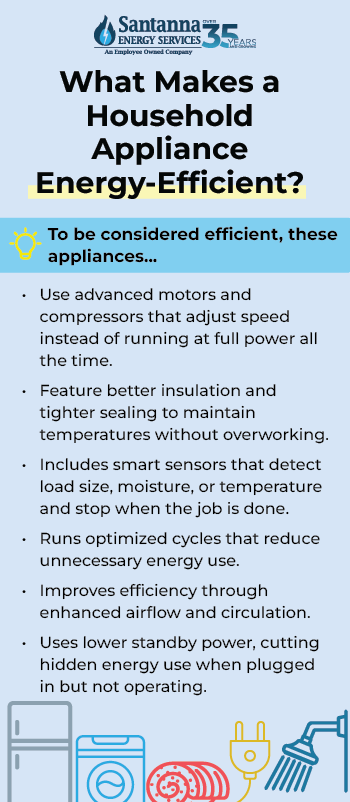
Energy-efficient household appliances are designed to use less energy while doing the same job as a regular non-efficient appliance.
In other words, they are built to deliver the same level of comfort, cleaning power, or performance without using unnecessary electricity, gas, or hot water. Instead of relying on excess heat or longer run times, they are engineered to minimize waste at every stage of operation.
If you’re looking for the nitty-gritty on what makes an appliance efficient outside of just energy use, here’s what goes into it:
Advanced Motors and Compressors
Many newer appliances use variable-speed motors or compressors that can speed up or slow down as needed. This helps avoid running at full power all the time and reduces wasted energy. Appliances with this optimization include fans, lawn mowers, and air conditioners.
Better Insulation and Tighter Sealing
Strong insulation and good seals help appliances retain heat or cold. With this energy-efficient practice, refrigerators stay cold longer, ovens hold heat better, and dishwashers keep heat in during a cycle so they do not need to work as hard.
Smart Sensors and Controls
Smarter sensors help the appliance detect things like load size, moisture level, or temperature. Think of a smart thermostat! With a smart sensor inside, it can detect temperature and automatically adjust its performance to avoid running longer than necessary.
This prevents the appliance from using more energy than necessary and allows the appliance to stop once the job is done.
Optimized Cycles and Smarter Timing
Efficient appliances use cycles designed to clean, dry, or cool evenly without wasting time or energy. Instead of relying on extra heat or longer cycles, they use better timing and control.
Heat Pump Technology
Some appliances use heat pump systems that move and reuse heat instead of creating it from scratch. This can significantly reduce energy use in appliances like water heaters and dryers.
According to the U.S. Department of Energy, the right heat pump can result in savings of up to $300 a year!
Improved Airflow and Circulation Design
Appliances that move air more effectively can do the same job using less energy. When air circulates evenly, temperatures stay consistent throughout the appliance, which reduces the need for extra run time or higher heat levels.
This shows up in refrigerators and freezers that cool food more uniformly, dryers that dry clothes faster, and convection ovens that cook more evenly. By improving airflow, manufacturers help the appliance reach the desired result more efficiently without overworking key components.
Lower Standby Power
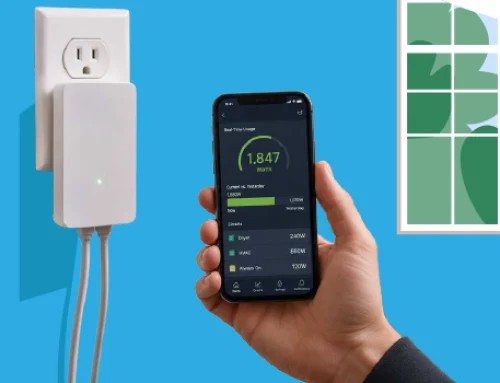
Some appliances are designed to use less electricity when they are turned off but still plugged in. Think of a smart computer or a smart plug; they do just this! Appliances that are plugged in but turned off still use a small amount of electricity that can add up over time.
Upgrading to an appliance that is designed to use lower standby power helps reduce small, hidden energy use over time.
Induction and Convection Cooking Technology
Induction cooktops use electromagnetic energy to heat the cookware itself rather than heating a burner or the surrounding air. Because the heat is generated directly in the pan, less energy is lost to the kitchen, cooking happens faster, and more of the electricity is converted into usable heat for food.
Convection ovens circulate hot air, so food cooks more evenly, which can reduce cooking time or let you use a lower temperature while still getting the same results.
In simple terms, energy-efficient appliances are designed to work smarter, not harder. These features help reduce wasted energy while still giving you the performance you expect at home.
The Lifetime Value of an Energy-Efficient Appliance: Do They Save Money Over Time?
While savings over the life of your appliance can vary by appliance type, according to EnergyStar, using energy-efficient appliances can save you 30% or about $8,750 on utility bills!
Energy-efficient appliances are designed to waste less electricity, gas, and hot water every time they run. Even small savings per cycle add up when an appliance is used daily or weekly for many years.
Another benefit of energy-efficient smart appliances is more predictable energy costs. While an efficient appliance may not lower your bill every single month, it can help smooth out energy use over time. This is especially helpful when replacing older appliances that run constantly or rely on heat.
Energy-efficient appliances can also help reduce wear and tear. Many efficient models run more steadily instead of constantly turning on and off at full power. This gentler operation can support longer-lasting performance when the appliance is used and maintained properly.
So, are they worth it? For appliances you use often, the answer is usually yes. Refrigerators, washers, dryers, and dishwashers tend to deliver the most lifetime value because they run regularly and affect energy use year after year.
The key takeaway is this: energy-efficient appliances usually pay off over time, not overnight. Energy-efficient household appliances are worth the investment if you’re looking balance out your energy use and reduce your energy bills.
What You Should Look for and Consider Before Buying an Energy-Efficient Appliance
Before buying an energy-efficient household appliance, the most important thing to think about is how you actually use it at home.
An appliance that is efficient on paper may not save much if it does not match your household size, habits, or needs. Before you make that purchase, here’s what to look for to ensure your appliance is efficient and right for your home:
ENERGY STAR Label
The ENERGY STAR label means the appliance meets strict energy-efficiency standards set by the US Environmental Protection Agency or the US Department of Energy.
If you see this label, it is a quick signal that the appliance uses less energy overall. While the ENERGY STAR does not guarantee the lowest bill in every home, it does mean the appliance is built to be more efficient than average.
EnergyGuide Label
The EnergyGuide label is a yellow label that shows how much energy the appliance is expected to use in a year and what that energy may cost. This cost is an estimate, not a promise, but it is very useful for comparing similar models.
When using this label, compare appliances that are the same size and type. A bigger appliance often uses more energy, even if it is efficient. The EnergyGuide label can help you see the differences in energy consumption clearly before you buy.
Ensure You Choose the Right Size Appliance for Your Home
Appliance size has a direct impact on how much energy you use over time. Larger appliances require more electricity, gas, or hot water to operate simply because they are built to heat, cool, or power a greater amount of space or capacity.
Even when a model is labeled energy-efficient, a larger version of that same appliance will typically consume more total energy than a smaller one. Choosing a size that truly fits your household’s needs helps you avoid paying for unused capacity, higher operating costs, and unnecessary energy use year after year.
Think About How Often You Will Use the Appliance
Energy efficiency matters most for appliances that run often, because small savings add up faster when an appliance is used every day or several times a week.
Refrigerators, washers, and dryers usually benefit more from efficiency upgrades than appliances used only occasionally. So, think about the ones you’ll use most often; those would be the most beneficial to upgrade to energy-efficient appliances.
Focus on Features You Will Actually Use
Some appliances include extra features or smart settings that sound appealing but may not improve efficiency for everyone.
For example, a built-in screen, interior lighting upgrades, or a high-heat “quick wash” cycle may add convenience, but they do not necessarily reduce energy use, especially if you’re not using these settings consistently. Paying for features you rarely use can reduce the real value of an otherwise efficient appliance.
Consider How the Appliance Fits Your Daily Routines
Energy-efficient household appliances work best when they match how you live. Your laundry habits, cooking style, and daily routines all influence whether efficiency turns into real savings.
For example, if you’re a huge home cook, upgrading your oven to an energy-efficient model can reduce your energy costs over time.
How Energy-Efficient Appliances Reduce Electricity Costs
Energy-efficient appliances reduce electricity costs by using less power each time they run. They are designed to avoid wasted energy by running only as long as needed, using lower heat when possible, and operating more smoothly instead of constantly turning on and off.
According to ENERGY STAR, certified appliances typically use about 10% to 50% less energy than standard models, depending on the appliance type and its use. Using less energy to do the same job means less energy is pulled from your home overall, which can translate into lower utility costs.
Over time, this lower energy use adds up. The savings usually show up gradually as the appliance runs day after day, using less electricity to do the same job. This is why efficiency matters most for appliances you use often, like refrigerators, washers, and dryers, rather than for those used only once in a while.
What Energy-Efficient Appliances Are Worth Upgrading First?
Upgrading appliances can feel expensive, so it helps to know where efficiency actually pays off.
Not every appliance has the same impact on energy use, and replacing the wrong one first may not change your bill much, but upgrading an appliance you use regularly can make all the difference.
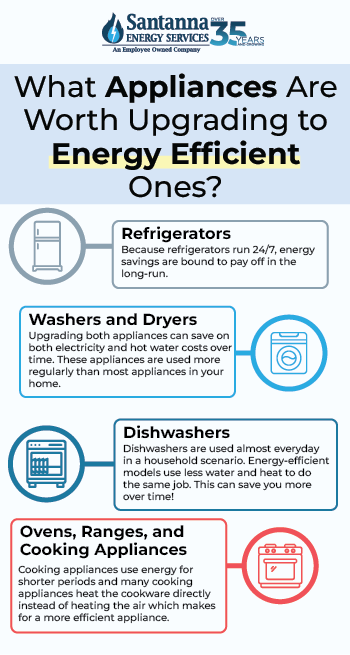
We’ve done the research for you! Here are the appliances you should upgrade to energy-efficient ones that typically make the biggest difference by reducing wasted energy, lowering long-term costs, and improving everyday efficiency in the home:
Upgrade to an Energy-Efficient Refrigerator
Refrigerators are worth upgrading because they run 24/7, so small efficiency gains show up all year. ENERGY STAR reports that an old refrigerator can use about 35% more energy than a new ENERGY STAR model, and replacing an old fridge with an ENERGY STAR refrigerator can save you more than $220 over the 12-year lifetime of the product.
When you shop, focus on the basics that reduce wasted energy: tight door seals, improved insulation, and high-efficiency compressors, plus choose a size that fits your household instead of going bigger than you need.
Upgrade to an Energy-Efficient Washer and Dryer
Laundry upgrades can make sense because they cut both electricity use and hot water use, which many homeowners do not realize affects energy costs.
According to ENERGY STAR, running laundry with a new ENERGY STAR certified washer costs under $90 per year, while a standard washer that is more than 10 years old can cost about $185 each year to operate.
Replacing an old dryer with a certified model can save about $190 over its lifetime, thanks in part to sensors that stop the dryer once clothes are dry.
Consider Upgrading to an Energy-Efficient Dishwasher
Dishwashers are worth upgrading because they use less hot water, which takes a lot of energy to heat.
On average, ENERGY STAR certified dishwashers use about 12% less energy and 30% less water than standard models, according to the U.S. Department of Energy.
When you shop, look for soil sensing, an eco mode, and an option to air-dry, since heat-dry can add extra energy use that you may not need every cycle.
Upgrade to Energy-Efficient Ovens, Ranges, and Cooking Appliances
Cooking appliances use energy for shorter periods, so savings depend on how often you cook and how you cook. If you are upgrading, induction cooktops are one of the most efficient options. They use about 10% less energy than smooth-top electric stoves and are much more efficient than gas models because they heat the cookware directly instead of heating the air around it.
FAQs
Do energy-efficient household appliances perform as well as standard models?
Yes, in most cases they do. Energy-efficient appliances are made to handle the same everyday jobs as standard models.
Are ENERGY STAR certified appliances worth it?
ENERGY STAR certified appliances are often worth it, especially for appliances you use frequently or that run all the time, because they use less energy while delivering the same performance, which can lead to lower energy costs over time.
Do energy-efficient appliances break down faster or last longer?
Energy efficiency does not automatically mean an appliance will break down faster or last longer. ENERGY STAR certification focuses on meeting strict efficiency requirements while still delivering the features and quality you expect, but lifespan depends more on the specific model, how it’s installed, how often you use it, and basic maintenance (like keeping refrigerator coils clean).
How do I avoid phantom energy and wasted power from appliances?
The simplest fixes are to unplug chargers and small devices when not in use, and use a power strip (or advanced power strip) to cut power to TVs, game consoles, and home office setups with one switch.
Does bigger always mean higher energy use?
Often, yes, especially for refrigerators. According to TCL, larger refrigerators generally use more energy, so buying the right size for your household matters.
Choosing energy-efficient household appliances is really about getting a better feel for how energy is used in your home. The biggest savings usually come from appliances that run often, use heat, or stay on all day, like refrigerators, laundry equipment, and anything connected to hot water. Efficiency works best when the appliance fits your home and your actual use.
When you understand what truly drives energy use, it becomes easier to avoid upgrades that sound good but do not make much difference. It also helps set realistic expectations. Energy-efficient appliances are designed to cut wasted energy and support steady, long-term savings, even if they do not lower your bill overnight. That clarity makes planning, budgeting, and everyday energy decisions feel a lot more manageable.
Once you have a clearer picture of where your energy goes, the next step is finding ways to make your costs more predictable. Exploring our Unlimited Energy plan is one simple option for steady electricity supply charges, with no surprises on your supply charge throughout the year.*
* Restrictions apply. Enrollment based upon program eligibility. Customers using more than 125% of normal monthly usage as determined by Santanna may be required to switch plans.
Tyler is an experienced energy professional, having worked for Santanna Energy Services, for the past four years. He is passionate about renewable energy and believes that diversifying the energy grid is the key to a sustainable future. Tyler is dedicated to supplying consumers with the best possible energy solutions and works diligently to make sure that Santanna can deliver the highest quality service.