
Attic Insulation, Ventilation, and Its Relation to Your Energy Bills

by Tyler Castle
Updated: August 31, 2026
25.4 min read
Key Points of This Article:
- Adding proper attic insulation can reduce your home's total energy spending by around 10%.
- Your attic can quietly lose heat in winter and trap heat in summer, forcing your furnace and AC to run longer and increasing your energy bills.
- Sealing small air leaks before adding insulation is often the smartest first step, because insulation works best after the "holes" are closed.
- Simple fixes like insulating the attic hatch or sealing pull‑down stairs can improve comfort and efficiency without a full attic overhaul.
Most homeowners think of their furnace or air conditioner when their energy bill spikes. But one of the biggest energy leaks in your home may be sitting right above your ceiling.
When attic insulation is too thin, uneven, or poorly sealed, heated air escapes in winter and unwanted heat pushes in during summer. Your HVAC system runs longer. Your usage goes up. And yes, your monthly bill usually follows.
In a recent survey conducted among our own employee‑owners, 26% reported checking their attic for insulation or airflow issues, which is an easy way to spot possible energy leaks before they drive up your bill.
If your upstairs feels hotter than the rest of the house, if your winter gas bill jumps during Midwest cold snaps, or if you have wondered whether adding insulation would actually make a difference, you are not alone.
At Santanna Energy Services, we help Midwest residents understand how home efficiency and energy usage work together. In this guide, you will learn how attic insulation and ventilation affect your energy bills, how to spot warning signs, what realistic savings look like, and how to decide what improvements make sense for your home.
What Is Attic Insulation and Why Does It Matter for Energy Efficiency?
Attic insulation is the protective layer in your attic that slows down how quickly heat moves in and out of your home. Its main job is to reduce unnecessary energy loss, so your heating and cooling system does not have to work harder than it should.
Here is why that matters: Your home loses and gains heat through its surfaces, especially the ceiling under the attic. In winter, warm indoor air naturally rises. If the attic is under-insulated, that heat escapes through the ceiling.
The furnace turns on again to replace the lost warmth. The more often that cycle repeats, the more natural gas or electricity you use, and the higher your bill can go, all because your attic is not properly insulated.
During summer, the sun warms your roof, heating up your attic. If there isn't enough insulation, that trapped heat pushes into your living space, and your air conditioner has to run longer just to keep things steady. That means higher electricity usage and a higher electricity bill, even if you never touch the thermostat.
Proper attic insulation improves efficiency by slowing heat transfer. When heat loss and heat gain are reduced, your HVAC system cycles less frequently and runs for shorter periods. And that shorter run time directly lowers your therm or kilowatt-hour usage over time.
In short, attic insulation does not create energy savings on its own. It reduces energy waste. And reducing energy waste is one of the most consistent ways to improve home energy efficiency.
Can Attic Insulation Lower Your Energy Bill?
Yes, attic insulation can lower your energy bill because it reduces how much heating and cooling your home needs to stay comfortable.
In fact, according to the U.S. Department of Energy, homeowners may reduce heating and cooling costs by as much as 20% by adding insulation in key areas like attics, floors, crawl spaces, and basement rim joists, especially when air leaks throughout the home are properly sealed. Overall, that can translate to roughly 10% savings on total household energy costs.
Now let’s bring this closer to home.
Based on Santanna customer data, our customer households use an average of 15.08 MCF per month during peak winter months. The U.S. Energy Information Administration reported the average residential natural gas price in January 2025 at $12.32 per MCF.
When you multiply those together, that works out to about $186 per month during peak winter.
Now imagine if insulation improvements helped reduce heating demand by 20%. On a $186 winter heating bill, that could mean saving around $35 to $40 per month during the coldest stretches.
Insulation will not eliminate every high bill, especially during extreme weather or when market prices fluctuate. But it can reduce wasted energy, help your home hold warmth longer, and make seasonal spikes feel more manageable.
Why Does a Poorly Insulated Attic Make Heating and Cooling So Expensive?
A poorly insulated attic makes heating and cooling expensive because your home loses comfort faster, which forces your furnace or air conditioner to run longer than necessary.
In winter, warm air naturally rises toward your ceiling. If the insulation up there is thin, uneven, or compressed, that heat slips right through. Your furnace kicks back on to replace what was lost, shuts off, then starts up again just to keep the temperature steady.
All that starting and stopping may not seem like much, but it steadily adds to your energy use.
In summer, it works the other way around. The sun beats down on your roof all day, and the attic heats up like a parked car in July. Without enough insulation, that trapped heat pushes into your living space, forcing your AC to work harder just to keep things comfortable. And there’s more!
Small gaps around attic doors, recessed lights, plumbing openings, and ceiling penetrations can quietly let conditioned air leak out. You might not notice it day to day, but those tiny leaks add up over time and can add a few dollars to your energy bill. Every bit of air that escapes has to be replaced, so your system keeps running longer just to maintain the temperature you already set.
If your ductwork runs through the attic, the issue can grow. Heated air in winter can cool down before it reaches your room. Cooled air in summer can warm up before it gets there.
That often leads to thermostat adjustments and longer run times because the rooms never quite feel “right.”
Clear Signs Your Attic Is Costing You Money
Here’s the thing: You usually feel attic problems before you see them on a bill. If your attic is costing you money, it often shows up as comfort issues first, and higher energy use second.
And if you live in the Midwest, especially in an older home, these signs are very common. Seeing one does not mean your house is broken. It just means your attic might be an easy opportunity to improve efficiency.
When we asked our employee‑owners what they did when they noticed issues with their attic, many took action by adding insulation, adjusting vents, sealing drafts, or installing additional venting, highlighting how common and fixable these problems can be.
Here are a few signs that your attic might be quietly driving up your energy bill:
- You’re Experiencing Seasonal Bill Spikes More Than Usual: Your bill could jump in winter or summer, even though your thermostat habits stayed about the same.
- Your HVAC Runs Longer Than Expected: If your furnace or AC seems to run often, takes longer to reach the set temperature, or kicks back on quickly, this could be a sign that your attic is costing you money.
- It’s Hot Upstairs in Summer: Second-floor rooms will feel warm and stuffy, especially in the afternoon and evening, even with the AC on.
- There Are Cold Drafts in Winter: Rooms will feel chilly near ceilings, stairwells, or upstairs hallways, and you feel the urge to keep turning the heat up.
- There Are Uneven Temperatures Between Rooms: One room is comfortable, while the other is always too hot or too cold, especially in the upstairs bedrooms.
- The Attic Hatch or Pull-Down Stairs Feel Drafty: You feel air leaking around the attic door area.
- There Are Ice Dams or Heavy Icicles: Snow melting on the roof and refreezing at the edges can be a sign that heat is escaping into the attic and warming the roof surface.
- There Is a Musty Smell or Visible Moisture: You notice a damp smell upstairs, see dark spots on attic wood, or find insulation that looks damp, which can mean moisture and ventilation issues are reducing insulation performance.
If two or three of these sound familiar, your attic is a strong suspect.
The R-Value of Insulation for Attic Spaces and Why It Matters for Your Energy Bill
The R-value of attic insulation is a measure of how well it slows heat flow. In Midwest homes, having the right R-value often makes a noticeable difference in comfort and heating and cooling costs.
Think of R-value like the warmth rating of a winter coat. A thicker, better coat keeps you warmer because it slows heat from escaping. Attic insulation works the same way.
According to the U.S. Department of Energy, a higher R-value means greater insulating effectiveness, which helps your home hold onto heat better in winter and block heat better in summer.
So how does this relate to your energy bill?
If your attic has low R-value insulation, heat escapes faster in winter. Your furnace turns on more often to replace that lost warmth. In summer, roof heat enters more easily, making your air conditioner run longer. Both situations increase your therm or kilowatt-hour usage.
In colder Midwest states like Illinois, Ohio, Michigan, and Pennsylvania, ENERGY STAR commonly recommends higher attic insulation levels than in warmer climates.
Here are the ENERGY STAR recommended R-value for attic insulation: for many Midwest homes:
- If your attic has little to no insulation, it may need to be built up to around R-60, which is a thicker layer.
- If your attic already has about 3 to 4 inches of insulation, it may need to be increased to around R-49 total to meet today’s common recommendations.
You do not need to memorize those numbers. Many older Midwest homes fall below today’s recommended levels, so if your attic has never been upgraded, your insulation may not be efficient enough for cold winters.
When the R-value is closer to recommended levels, your home holds comfort longer. That usually means less HVAC run time, steadier indoor temperatures, and fewer seasonal spikes on your energy bill.
What Are the Main Types of Attic Insulation?
If you are wondering which attic insulation is “best,” you are not alone. Many homeowners assume there must be one clear winner. In reality, the right choice usually depends on your attic layout, your budget, and whether the bigger issue is low insulation, air leaks, or both.
Some insulation materials are easier to lay across open attic floors. Others are better at filling small gaps and tight spaces. Some are more budget-friendly, while others focus more on air sealing performance.
You don’t need the “most expensive” option. You need the one that solves your specific problem.
Are you trying to add more depth? Stop drafts? Improve overall efficiency?
Once you know that, the decision becomes much simpler. Let’s walk through the main types of attic insulation options so you can see what actually makes sense for your home:
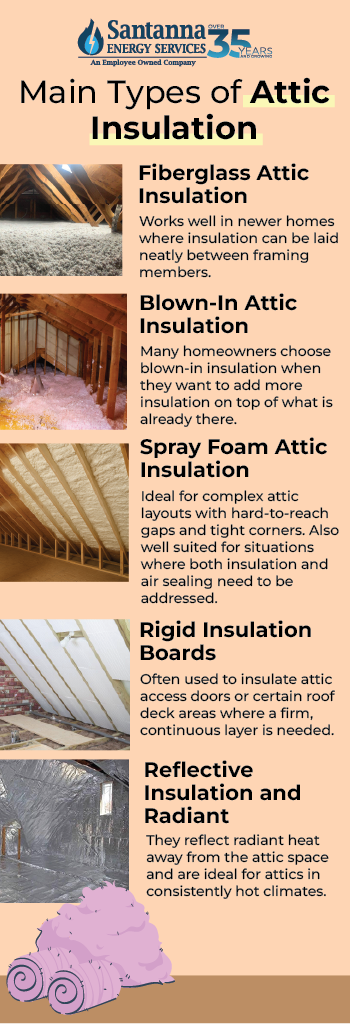
Fiberglass Attic Insulation (batts and rolls)
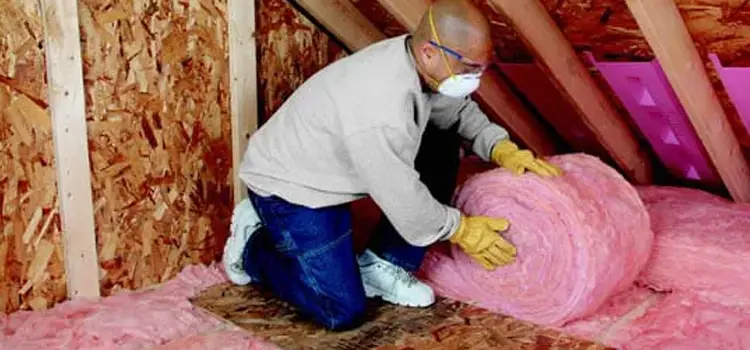
Fiberglass attic insulation batts and rolls are best for open attic floors with visible joist spaces and easy access.
They work well in newer homes where insulation can be laid neatly between framing members. They are usually more budget-friendly and easy to install when the attic layout is simple and unobstructed.
However, they perform best when carefully fitted without gaps. If your attic has a lot of wiring, pipes, or irregular spaces, fiberglass can leave small openings where heat escapes.
Fiberglass batts and rolls are best for attics with open, even framing where insulation can be laid neatly between joists. They are a practical choice for homeowners looking for a lower upfront cost. They also work well for topping up insulation in accessible areas where installation is straightforward.
Blown-In Attic Insulation (loose fill)
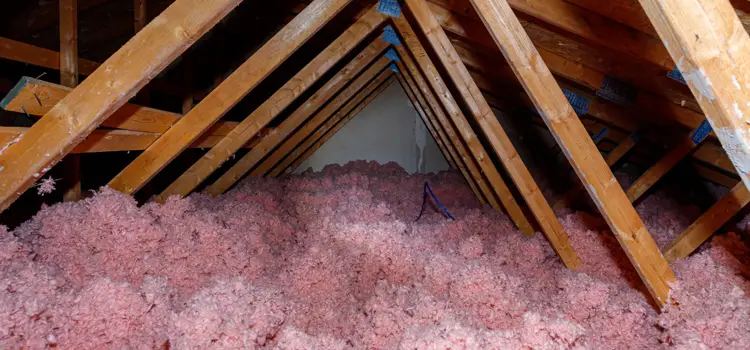
Blown-in insulation is often best for older Midwest homes or attics with uneven coverage.
Because it is applied as loose material, it fills around pipes, wiring, and small gaps more evenly than batts. Many homeowners choose blown-in insulation when they want to add more insulation on top of what is already there.
It is especially helpful when insulation has settled over time and needs to be built back up to modern recommended levels.
Blown-in attic insulation is best for older homes with thin or uneven insulation coverage. It works especially well for large attic floors that need additional depth. It is also a good option when you want to improve coverage without removing existing insulation.
Spray Foam Attic Insulation (foamed-in-place)
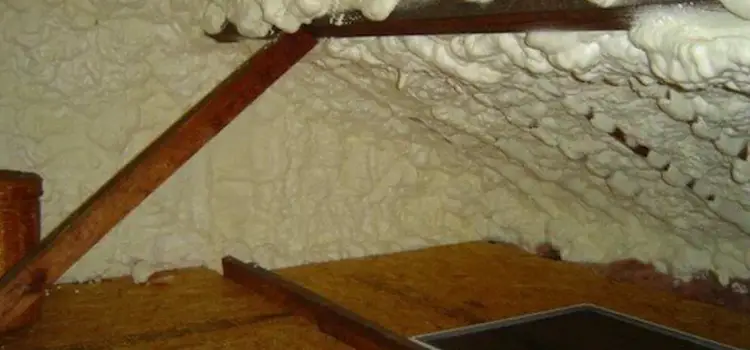
Spray foam is best when air leaks are a major problem.
Unlike other insulation types that mainly slow heat transfer, spray foam also seals gaps and cracks as it expands. This can make a noticeable difference in homes with significant air leakage between the house and attic.
Spray foam attic insulation is usually more expensive and typically requires professional installation. It is not always necessary if your main issue is simply low insulation depth.
Spray foam is best for homes with significant air leakage between the attic and living space. It is ideal for complex attic layouts with hard-to-reach gaps and tight corners. It is also well-suited to situations where both insulation and air sealing need to be addressed simultaneously.
Rigid Insulation Boards
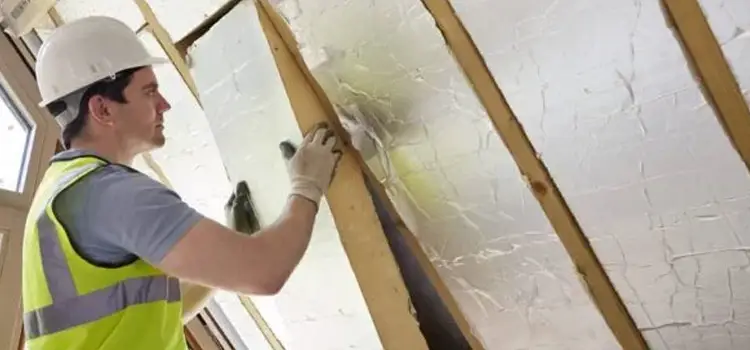
Rigid insulation boards are best for specific problem areas rather than entire attic floors.
They are often used to insulate attic access doors or certain roof deck areas where a firm, continuous layer is needed.
Rigid insulation boards are best for insulating attic hatches and pull-down stairs where heat often escapes. They are also effective for small, targeted areas that need an extra layer of protection rather than full attic coverage.
Reflective Insulation and Radiant (attic heat barrier)
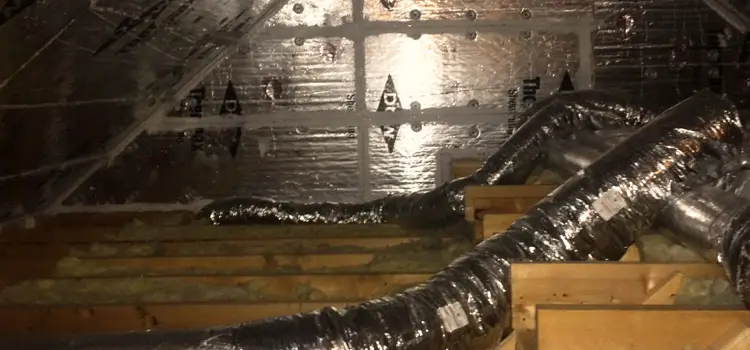
Attic heat barriers, or radiant barriers, are the best attic insulation for reducing heat gain from the sun, mainly during summer.
They reflect radiant heat away from the attic space. In hotter climates, they can make a bigger difference. In Midwest states, they are usually most helpful when combined with proper insulation and ventilation.
Radiant barriers are best for homes with very hot attics during the summer months. They are most helpful when cooling costs are the primary concern and when combined with proper insulation and ventilation for balanced performance.
Attic Door Insulation: The Small Detail That Can Make a Big Difference
Even if your attic floor has good insulation, your attic access door can still be a small but overlooked source of energy loss.
Attic doors, pull-down stairs, and hatch covers are often thin and poorly sealed. Since warm air naturally rises, these openings can act like a small chimney in winter, letting heated air escape into the attic.
In summer, hot attic air can leak back down into your home through the same gap. You might not notice it right away. But over time, that constant air movement makes your furnace and air conditioner run longer.
According to the U.S. Department of Energy, sealing air leaks along with adding insulation is one of the most effective ways to reduce heating and cooling costs. The attic hatch is one of the most common leak points in many Midwest homes.
Simple improvements to your attic door, like adding rigid foam insulation to the back of the attic hatch and installing weatherstripping around the edges, can make a noticeable difference. If you have pull-down stairs, using an attic stair cover or insulated tent adds another layer of protection and helps keep your indoor air where it belongs.
These upgrades are usually affordable and relatively easy compared to full attic insulation projects. And because heat rises, sealing this small opening can make a noticeable difference in comfort and efficiency.
It is a good reminder that energy savings are not always about adding more material. Sometimes they are about closing small gaps that quietly cost you money every season.
How Much Does Attic Insulation Cost?
According to The Home Depot, an average professional attic installation often costs around $1.50 to $2.45 per square foot, with an average cost close to $1.80 per square foot.
Now, your home might come in lower or higher, and that is normal. Costs tend to change based on a few practical details, like how easy the attic is to access, how much insulation you already have, and whether air sealing is needed first.
Attic insulation costs vary because no two attics are exactly the same. Some homes only need a small top-up. Others may need deeper insulation, air sealing, or cleanup before new material is added. These differences can noticeably change the final price.
Average Attic Insulation Installation Cost by Attic Size
| Typical Attic Area (sq ft) | Low Estimate ($1.50/sq ft) | Average ($1.80/sq ft) | High Estimate ($2.45/sq ft) |
| 500 | $750 | $900 | $1,225 |
| 800 | $1,200 | $1,440 | $1,960 |
| 1,000 | $1,500 | $1,800 | $2,450 |
| 1,200 | $1,800 | $2,160 | $2,940 |
| 1,500 | $2,250 | $2,700 | $3,675 |
| 2,000 | $3,000 | $3,600 | $4,900 |
Our estimate assumes professional installation at $1.50 to $2.45 per sq ft, with an average of $1.80 per sq ft.
For a small 500 sq. ft. attic, professional attic installation costs typically range from about $750 to $1,225, while a larger 1,000 sq. ft. attic can run $1,500 to $2,450 depending on material and labor rates.
At the upper end of the range, a 2,000 sq. ft. attic may cost between $3,000 and $4,900 for attic insulation, reflecting the higher material volume and installation time.
Factors Affecting Attic Insulation Cost
Here are the biggest factors that usually affect cost:
- How much insulation needs to be added: Adding a few inches to reach a better R-value costs less than insulating an attic that has very little coverage to begin with.
- Types of attic insulation being used: Blown-in fiberglass or cellulose often costs less than spray foam, which is more labor-intensive and designed to seal air leaks as well.
- Air sealing before insulation: Sealing gaps around attic doors, lights, and plumbing openings improves results but adds time and labor.
- Removal of old or damaged insulation: If insulation is wet, moldy, or heavily compressed, it may need to be removed before new material is installed.
- Attic layout and obstacles: Tight spaces, limited access, lots of wiring, or ductwork can make installation more time-consuming.
Most Midwest homeowners fall somewhere in the middle. A quick inspection usually helps clarify whether your attic needs a simple upgrade or a more involved improvement.
How Often Should Attic Insulation Be Replaced?
Attic insulation usually does not need to be replaced on a set schedule. But your attic insulation should be replaced if the insulation is wet from a roof leak, has a musty smell or visible mold, shows signs of rodents or pests, has been exposed to floodwater, or is badly flattened and missing in spots. Replacement or removal of affected areas is often the safer choice.
In many homes, attic insulation can last for decades as long as it stays dry, fluffy, and evenly in place. Most homeowners replace insulation because something damaged it, not because it "expires."
If the insulation is still dry and covering the attic floor evenly, it often does not need to be removed.
What Should You Fix First: Insulation, Ventilation, or Air Leaks?
If you are trying to lower your energy bill, the best place to start is usually by sealing air leaks first, then improving insulation, and then addressing ventilation if needed.
That might surprise you. Most people assume adding more insulation is the first step. But if air is freely moving between your home and attic, insulation alone will not solve the problem.
Let's walk through it in a simple order:
Step 1: Seal Air Leaks First
Air leaks are often the biggest hidden energy drain.
Warm air rises in winter and can slip through small openings around light fixtures, attic hatches, plumbing lines, and bathroom fans. In summer, cooled air can leak out the same way.
Think of it this way. If you are trying to keep water in a bucket, you fix the holes before adding more water. Sealing air leaks is like fixing those holes.
Step 2: Add or Improve Insulation
Once air leaks are reduced, insulation can do its job more effectively.
Adding insulation helps slow down heat movement in both directions. In Midwest winters, that means holding warmth inside longer. In summer, it means reducing the heat from the roof.
If insulation is already close to recommended levels, a small top-up may be enough. If it is very thin or uneven, adding more depth can make a noticeable difference.
Step 3: Check Ventilation Balance
Ventilation comes next if there are signs of trapped heat or moisture.
If your attic feels extremely hot in summer or you notice moisture or frost in winter, airflow may need improvement. That could mean clearing blocked vents or ensuring there is proper intake and exhaust.
Ventilation supports insulation by helping manage heat and moisture, but it usually works best when air leaks are sealed, and insulation levels are adequate.
If you are unsure where your home stands, start with a simple attic check and a look at your seasonal energy bills. In many Midwest homes, sealing air leaks and improving insulation together provide the most noticeable improvement in comfort and energy use.
Do Attic Exhaust Fans or Attic Vent Fans Lower Cooling Costs?
Attic exhaust fans and attic vent fans can help reduce cooling strain in some homes, but they are not a guaranteed fix for high summer energy bills.
If you have ever wondered whether adding a powered fan to your attic will finally cool down that hot upstairs bedroom, you are asking a common question. The answer depends on what is actually causing the heat buildup.
Here is how these fans work:
An attic exhaust fan, sometimes called an attic vent fan, pulls hot air out of the attic and pushes it outside. The idea is simple: If you remove the trapped hot air, attic temperatures may drop, reducing heat transfer into your living space.
In homes with poor ventilation or extremely hot attics, this can sometimes help lower cooling demand.
But there are a few important things to understand.
If your attic already has balanced passive ventilation with clear soffit and ridge vents, adding a powered attic exhaust fan may not make a dramatic difference. In some cases, a powerful attic fan can even pull conditioned air from the house below if air leaks are present, which can actually increase cooling costs.
That is why insulation and air sealing usually come first. If insulation is thin or air leaks are present, a fan alone will not solve the core problem.
In Midwest climates, attic vent fans can sometimes help during long, humid summer stretches, especially in homes where upstairs rooms overheat. But they work best as part of a balanced system that includes proper insulation and airflow pathways.
So yes, attic exhaust fans can lower cooling costs in certain situations. But they are not a substitute for adequate insulation and proper air sealing. The key is understanding what your attic needs before adding new equipment.
What Attic Insulation Can't Fix
Attic insulation can lower energy waste, but it cannot solve every reason behind a high energy bill. Understanding its limits helps you make smarter decisions.
Let's walk through what insulation simply cannot control:
High Energy Rates
If energy supply rates increase during peak seasons, insulation alone will not prevent your bill from rising. It can reduce usage, but it cannot control market pricing.
An Aging Furnace or Air Conditioner
Older HVAC systems use more energy to produce the same comfort. Even with good insulation, an inefficient system may still drive up usage.
Poorly Insulated or Leaky Ductwork
If ducts are leaking or poorly insulated, conditioned air can escape before it reaches your rooms. That extra system run time increases energy use.
Thermostat Location Issues
If your thermostat is placed near drafts, direct sunlight, or in a warmer upstairs hallway, it may misread the home's temperature and cause unnecessary cycling.
Drafty Windows and Exterior Doors
Heat loss and heat gain can also occur through older windows and doors. Attic insulation will not stop air leakage from other parts of the house.
Extreme Midwest Cold Snaps and Heat Waves
During periods of unusually low or high temperatures, energy usage naturally rises. Even a well-insulated home will use more energy when outdoor conditions are severe.
Here's the bigger picture: Attic insulation is one important piece of the puzzle. When you combine it with air sealing, proper ventilation, sealed ductwork, and a well-functioning HVAC system, it can make a meaningful difference.
But it works best as part of a whole-home approach, not as a single magic fix.
And honestly, that's a good thing. Because when you look at the full picture, you can make upgrades in the right order instead of guessing.
DIY vs Professional Attic Installation: When to Call for Help
You can DIY some attic insulation work, but it is worth calling a professional when safety, air leaks, moisture, or ventilation issues are part of the problem.
If you are thinking, "I can handle a simple upgrade; I just do not want to mess this up," that is a healthy mindset. Many Midwest homeowners successfully complete small attic projects. The key is knowing where DIY ends and where expert help makes the most sense.
Do DIY if…
- You are adding a small top-up in an easy-to-access attic: You can move safely, see what you are doing, and the attic has clear walking paths.
- Your attic is dry and you do not see signs of moisture or mold: No damp insulation, no musty smell, and no visible staining on wood.
- You are insulating the attic door or hatch: Attic door insulation is one of the easiest improvements and can reduce drafts quickly.
- You feel confident with basic safety steps: You can avoid stepping through the ceiling, protect your lungs and skin, and work carefully around wiring.
- You are not dealing with complicated ventilation setups: Soffit vents are visible and not blocked, and airflow paths are clear.
Call a pro if…
- You see moisture, mold, or frost in the attic: This often points to ventilation or air leak issues that need the right fix, not just more insulation.
- Your attic has wiring, recessed lights, or fan openings you are unsure about: Air sealing around these areas can be tricky, and the wrong approach can create safety risks.
- Your insulation is damaged, very dirty, or needs removal: Professional removal is safer and usually required before new insulation is added.
- You want spray foam attic insulation: Spray foam is usually not a DIY-friendly project and needs proper handling and equipment.
- Your ducts run through the attic and rooms still feel uneven: This may involve duct sealing, insulation, and balancing airflow.
- You are unsure whether insulation or ventilation is the real issue: A professional assessment or energy audit can help you spend money in the right place.
If you are on the fence, a good rule is this: DIY works best for simple, visible improvements. A professional is worth it when the attic has signs of moisture, major air leaks, complex layouts, or anything that makes you feel uncertain.
FAQs
Should I insulate the attic door or pull-down stairs?
Yes. Attic doors are one of the most common air leak areas because warm air rises and escapes through small openings. Adding attic door insulation and sealing the edges with weatherstripping can reduce drafts and improve efficiency without a full attic upgrade.
How do I check if my attic insulation is enough?
You do not need special tools. A simple visual check can tell you a lot. If insulation sits below the top of the ceiling joists, looks thin or uneven, or has large bare spots, your attic may be under-insulated. If you are unsure, a home energy audit can provide a clearer picture.
Can too much attic insulation cause problems?
Too much insulation is rarely a problem by itself. However, it should not block soffit vents or airflow pathways. If ventilation is restricted, moisture and heat can build up. The goal is balanced airflow along with proper insulation depth.
Does attic insulation help in summer, or only in winter?
It helps in both seasons. In winter, insulation keeps warm air inside. In summer, it slows heat from the roof from entering your living space. Midwest homes benefit year-round because they experience both cold winters and hot, humid summers.
How long does attic insulation last?
Most attic insulation can last for decades if it stays dry and undisturbed. It may need attention if it becomes wet, moldy, heavily compressed, or damaged by pests. In many cases, insulation does not need to be removed. It simply needs to be topped up and combined with air sealing.
Attic insulation and ventilation can have a real impact on your energy bill. When insulation is thin or uneven, your home loses heat faster in winter and absorbs more heat in summer.
When ventilation is not working properly, heat and moisture can build up and make things worse. A simple order helps by sealing air leaks first, improving insulation next, and then making sure airflow is clear.
This helps you stop guessing. Instead of blaming the furnace or assuming your home is just "old," you can look for clear signs like hot upstairs rooms, drafty winters, longer HVAC run times, and seasonal bill spikes. Once you understand what is happening, it is easier to choose the right fix and avoid spending money on things that will not help much.
After you reduce wasted energy at home, it also helps to think about your energy plan. If you want predictable supply charges* and easier budgeting, you can explore Santanna's Unlimited Energy plan as an option. It is one more way to support a steadier energy budget, especially during high-use months.
* Restrictions apply. Enrollment based upon program eligibility. Customers using more than 125% of normal monthly usage as determined by Santanna may be required to switch plans.
Tyler is an experienced energy professional, having worked for Santanna Energy Services, for the past four years. He is passionate about renewable energy and believes that diversifying the energy grid is the key to a sustainable future. Tyler is dedicated to supplying consumers with the best possible energy solutions and works diligently to make sure that Santanna can deliver the highest quality service.