
How Do Cooling Blankets Work? Can They Help You Use Less AC at Night?

by Tyler Castle
28.6 min read

Hot, humid summers make bedrooms uncomfortable, especially upstairs. If you have ever lowered your thermostat at night just to fall asleep, you are not alone. Many homeowners drop the temperature before bed without looking for another cooling solution, only to see higher cooling costs later.
Cooling blankets can make a great alternative to adjusting the thermostat, so you won't see an increase in your bills. Cooling blankets promise a simple solution: Stay comfortable without lowering the thermostat. But do they actually help?
For years, we at Santanna Energy Services have helped Midwest residents understand how everyday comfort choices affect energy use, and this guide is no different! If you're looking to see how cooling blankets work, when they can help reduce nighttime AC use, and when the real issue may be something else in your home, keep reading.
Key Points of This Article:
- Cooling blankets help manage body‑level heat by improving breathability, moisture wicking, and heat transfer, but they do not cool the air or replace air conditioning.
- Using a cooling blanket may allow homeowners to raise the thermostat at night, which can lead to modest energy savings over the summer by reducing overnight AC use.
- Cooling blankets improve comfort, but if a room stays hot due to insulation issues, poor airflow, high humidity, or solar heat gain, home performance improvements are needed for real relief.
What Is a Cooling Blanket?
A cooling blanket is simply a blanket made with a specialized cooling fabric to help you feel cooler while you sleep. It's important to know that these types of blankets do not create cold air, do not refrigerate your bed, and do not lower the temperature in the room.
But cooling blankets may help cool your body without lowering your thermostat slightly to feel comfortable.
According to Consumer Reports, a cooling blanket is designed to absorb and release body heat, which is why it often feels cool when you first touch it.
Most cooling blankets are made with lightweight fabrics such as bamboo blends, cotton, or certain synthetic materials that transfer heat faster than thick fleece or heavy comforters. Some also focus on moisture control to reduce that sticky and sweaty feeling at night.
Think of it as a comfort tool, not a cooling machine. If your bedroom is warm but not unbearable, a cooling blanket may help you stay comfortable without lowering the thermostat another few degrees.
How Do Cooling Blankets Work?
Cooling blankets work by helping your body release heat more efficiently while you sleep. They do not cool the air in your bedroom; instead, they improve how heat and moisture move away from your body, so you feel less overheated under the covers.
Here are the main ways cooling blankets do just this:
They Start With Heat Dissipation and Conductivity
Traditional blankets trap warmth. That is helpful in winter, but uncomfortable in summer.
Cooling blankets are made with fabrics that transfer heat away from your body more quickly. When you lie down, your body naturally gives off heat. Some materials in cooling blankets allow that heat to move into the blanket and then disperse into the surrounding air instead of staying trapped around you.
This is why many cooling blankets feel cool to the touch at first. The fabric is simply pulling heat away from your skin faster, making the blanket feel cool.
Then There's Moisture Wicking and Evaporation
Your body cools itself by sweating. When sweat sits on your skin or gets trapped in heavy bedding, you feel sticky and uncomfortable.
Moisture-wicking fabrics in cooling blankets pull sweat away from your skin and spread it across the surface of the fabric. This allows it to evaporate more quickly through the cooling fabric.
Naturally, evaporation creates a natural cooling effect. This cooling effect works best when there is some airflow in the room, such as a ceiling fan or circulating air from your HVAC system, for double the cooling impact.
Next, You'll Feel the Breathability and Airflow
Unlike heavy blankets that trap air close to your body, cooling blankets are typically lighter and woven to allow air to move through them. This reduces heat buildup under the covers.
When air can circulate rather than stay trapped, your body feels less insulated, cools down, and stays comfortable at a slightly higher room temperature. This is helpful for homeowners who lower the thermostat at night because their bedding feels too warm.
Lastly, Cooling Blankets Work by Regulating Heat with Phase Change Materials
Some cooling blankets include materials like eutectics and salt hydrates that are designed to absorb and store heat when you get too warm. When your body temperature drops later in the night, that stored heat can be released gradually through the cooling blanket's material.
The goal is to reduce temperature swings during sleep, and cooling blankets can do this by smoothing out changes in body heat so you do not wake up feeling overheated. For people who fall asleep comfortably but wake up hot at 2 or 3 a.m., this feature may help stabilize comfort.
What Are Cooling Blankets Made Of and What Should You Look For?
Cooling blankets are usually made from fabrics that feel light and breathable, mostly from bamboo, cotton, Tencel, or various phase-changing materials. The material matters because it affects how cool the blanket feels, how it handles sweat, and whether it stays comfortable through the night.
Here are the most common materials homeowners will see, along with what to pay attention to when choosing one:
Bamboo viscose
Soft and smooth, bamboo blends in cooling blankets often breathe well and help move moisture away from your skin, which can reduce that sticky feeling at night.
Because bamboo fibers are lightweight and wick moisture efficiently, they're especially useful for sleepers who run hot.
Cotton percale
This crisp, airy cotton weave allows airflow. It does not cling to your body and helps prevent heat from building up under the covers.
Tencel or eucalyptus fibers
Lightweight plant-based fibers feel cool and help manage moisture. This is especially useful if you tend to sweat at night. Tencel's smooth, breathable structure helps reduce humidity against your skin by pulling moisture away and allowing it to evaporate.
Phase change materials
Some blankets include a layer designed to absorb heat when you get warm and release it later as your body cools down. This can help reduce middle-of-the-night overheating by helping maintain a steadier sleep temperature.
Polyester fabrics
Cooling blankets are often made of Polyester-based materials and use technical or engineered fabric blends designed to move heat and moisture quickly while remaining lightweight.
Some poly blends feel cool to the touch because they transfer heat away from the skin faster than natural fibers, while others are designed for quick dry performance, both of which are needed for a comfortable and cool night's sleep!
Lyocell fabric
Remarked in a Forbes study as an excellent material for temperature regulation with a silky feel, Lyocell fabric offers a naturally cool, breathable structure that helps prevent heat and humidity from building up against your skin.
Its ability to wick moisture efficiently makes it especially helpful for sleepers who experience night sweats or prefer a softer, smoother texture than cotton.
In the market for the perfect cooling blanket? When choosing your perfect model, focus on these key features:
- Breathability so air can move through the fabric.
- Moisture control if you wake up sweaty.
- Lightweight feel so it does not trap heat like a heavy comforter.
- Temperature stability if you tend to wake up hot in the middle of the night.
- Easy care so it holds up to regular washing without losing performance.
The goal is simple. Choose a blanket that releases heat and handles moisture well. When it does both, you are more likely to stay comfortable without lowering the thermostat further.
Types of Cooling Blankets and How Each Works
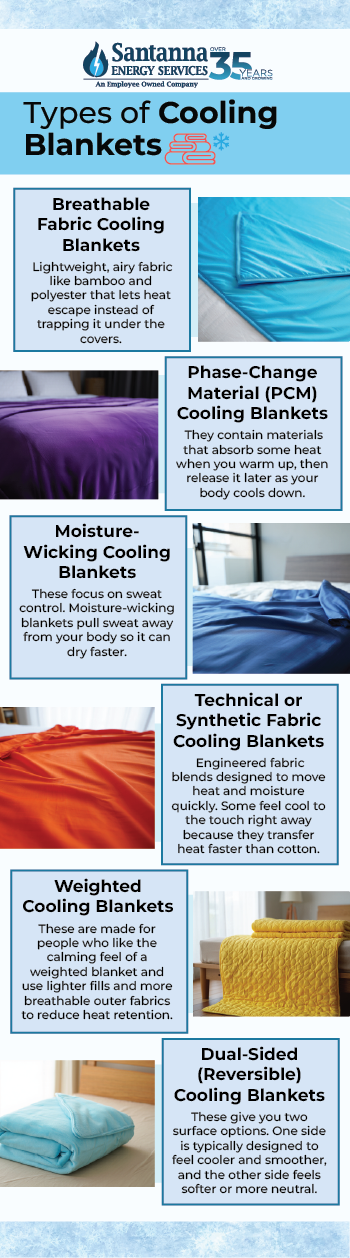
If you're wondering how a cooling blanket works, keep in mind that not every cooling blanket works the same way. Some feel cool because they breathe better. Others focus on pulling moisture off your skin, while some are designed to smooth out temperature swings throughout the night.
Looking for a full breakdown on the types of cooling blankets? Here are the main types, and what each one actually does:
1. Breathable Fabric Cooling Blankets
These are the most common and the simplest. They work by using lightweight, airy fabrics like bamboo and polyester that let heat escape instead of trapping it under the covers. They are a good fit if you mainly feel hot because your current blanket is too heavy or too insulating.
You may see bamboo-based blankets such as LUXOME's lightweight option or Cozy Earth's bamboo blanket, as well as cotton-focused options like Quince's Organic Airy Gauze blanket. These products are typically marketed for warm climates and hot sleepers because they focus on breathability rather than thickness.
Breathable fabric cooling blankets are best for:
- Hot sleepers who hate thick bedding
- Bedrooms that are only slightly warm at night
- Homeowners who want a simple, no fuss comfort upgrade
2. Phase-Change Material (PCM) Cooling Blankets
These are designed to help keep your sleeping temperature steadier. They contain materials that absorb some heat when you warm up, then release it later as your body cools down. The goal is to reduce that pattern where you fall asleep fine but wake up sweating a few hours later.
Phase-change material cooling blankets are best for:
- People who wake up hot at 2 or 3 a.m.
- Sleepers who swing between too warm and too cool
- Bedrooms that warm up as the night goes on
3. Moisture-Wicking Cooling Blankets
These focus on sweat control. When moisture sits on your skin, it makes you feel hotter and stickier. Moisture-wicking blankets pull sweat away from your body so it can dry faster. That helps your body cool itself the way it is meant to.
Moisture-wicking cooling blankets are best for:
- Humid Midwest summer nights
- Night sweats
- People who feel damp and uncomfortable, not just warm
4. Technical or Synthetic Fabric Cooling Blankets
These use engineered fabric blends designed to move heat and moisture quickly. Some feel cool to the touch right away because they transfer heat faster than cotton. Others are made to dry fast and stay light all night. They can be helpful, but comfort depends on how the fabric feels against your skin.
A classic example of a synthetic fabric cooling blanket is the Rest Evercool Comforter made of a hypoallergenic blend of Sorona and Tencel.
Synthetic fabric cooling blankets are best for:
- People who like a smooth, cool-touch feel
- Homeowners who want a lightweight blanket that dries fast
- Sleepers who run hot and want a more "cool fabric" sensation
5. Weighted Cooling Blankets
These are made for people who like the calming feel of a weighted blanket but do not want all the heat that usually comes with it. They use lighter fills and more breathable outer fabrics to reduce heat retention. They still tend to feel warmer than a standard cooling blanket because any weight limits airflow.
Weighed cooling blankets are best for:
- People who sleep better with pressure comfort
- Those who want weight without a heavy, heat-trapping feel
Keep in mind that if you overheat easily, even a "cooling" weighted blanket may still feel too warm in summer, since the blanket's weight limits airflow and can trap heat close to your body despite its cooling materials.
6. Dual-Sided (Reversible) Cooling Blankets
These give you two surface options. One side is typically designed to feel cooler and smoother, and the other side feels softer or more neutral. This is useful if you want flexibility across seasons or if you are not sure what texture you prefer.
Dual-sided cooling blankets are best for:
- People who want options depending on the season
- Couples with different comfort preferences
- Homeowners who want one blanket that works most of the year
If you are choosing between these types, the biggest question is simple: Are you waking up hot because your blanket traps heat, or because your room itself is hot?
Cooling blankets can help with body-level comfort. If the room is truly overheating, you may also need to address airflow, humidity, or insulation for real relief.
Key Benefits of Using Cooling Blankets
Cooling blankets are not magic, but they can make summer nights feel much more manageable. For many homeowners, the biggest benefit is feeling more comfortable in bed without needing to lower the thermostat too much.
Here are the most practical benefits of using a cooling blanket:
1. You're More Comfortable Sleeping in Warm Weather
Cooling blankets are designed to release heat instead of trapping it. That can reduce the tossing, turning, and blanket-kicking that happens when you overheat.
If you normally feel fine when you first fall asleep but wake up hot later, a cooling blanket can help your sleep feel steadier.
2. You're Less Sweaty and Sticky at Night
Some cooling blankets pull moisture off your skin so sweat dries faster. That matters because a damp feeling can make you feel hotter, even if the room is not that warm. For humid Midwest summer nights, reducing that sticky discomfort can be a big quality-of-life improvement.
3. It's a Lighter Alternative to Heavy Bedding
Many people sleep under thick comforters out of habit, even in summer. The problem is that heavy bedding holds warmth around your body. Cooling blankets give you a lighter layer that still feels like you are covered, without the same heat buildup.
4. It Can Support Smarter Nighttime Thermostat Habits
If you lower the thermostat at night mainly because your bedding feels too warm, switching to a cooling blanket may help you stay comfortable at a slightly higher setting, which can save energy in the long run.
5. There's No Plug-In Energy Use for Standard Cooling Blankets
While electric cooling blankets do exist, most cooling blankets are passive, meaning they do not use electricity. That means you can improve comfort without adding another device that runs overnight, which would increase your overall energy costs.
If you are trying to keep nighttime energy use under control, this is one of the simplest comfort upgrades you can make.
6. Easy to Use and Portable
Cooling blankets do not require installation or changes to your HVAC system.
You can use one right away, take it to another room, or bring it when you travel. That makes it a low-effort option for homeowners who want relief without a bigger home project.
What Cooling Blankets Do Not Do To Cool Down Your Space
It is just as important to understand the limits of a cooling blanket as it is to understand how they work in the first place.
Cooling blankets do not change the temperature of your bedroom; they only affect how your body feels under the covers.
Here is what they do not do:
- They do not cool the air in the room. Your bedroom temperature stays the same unless you adjust the thermostat or improve airflow.
- They do not lower your thermostat automatically. Any energy savings only happen if you choose to raise the thermostat because you feel more comfortable.
- They do not replace your air conditioning system. If your home is hot overall, you will still need AC to cool the space.
- They do not fix home performance problems. Issues like poor attic insulation, air leaks, high humidity, or weak airflow will still affect how warm your room feels.
A cooling blanket's main job is to help manage body-level heat, not room-level heat. If your bedroom is only slightly warm, a cooling blanket may allow you to keep the thermostat a little higher and still sleep comfortably.
If your room feels extremely hot, the real issue is likely airflow, insulation, humidity, or AC performance. Knowing this difference helps you make practical comfort choices without expecting a blanket to solve a larger home cooling problem.
Can Cooling Blankets Help You Use Less AC at Night?
Cooling blankets can help you use less AC at night by making it comfortable to raise your thermostat a degree or two without sacrificing sleep quality.
For many homeowners, the reason they lower the thermostat at night is not because the entire house is too hot; it is because the bed feels too warm, and they are too hot.
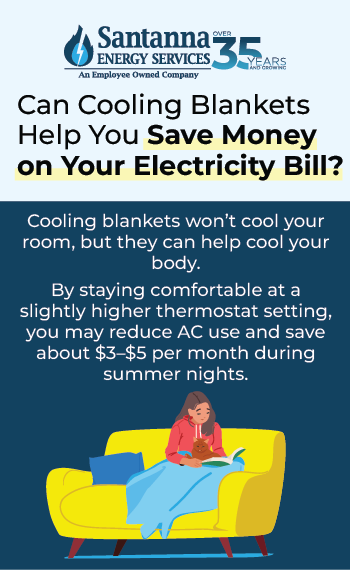
Cooling blankets help you feel cooler by pulling heat and moisture away from your body while you're under the covers, and you can save around $5 a month on your electricity bill by using a cooling blanket instead of adjusting your thermostat!
Here's how it works: the U.S. Department of Energy notes that running your AC at 78°F instead of 72°F can save roughly 6% to 18% on your cooling bill, depending on conditions. A cooling blanket cannot create those savings by itself, but it can help you feel comfortable enough to move your setting in that direction, even a little.
Let's say your household uses 1,000 kWh of electricity in a hot summer month, and about 450 kWh of that comes from air conditioning. If raising your thermostat overnight leads to even a 6% reduction in cooling use, that equals 27 kWh saved in one month.
At a rate of 17.78¢ per kWh, that's $4.80 saved in one month, all from using a cooling blanket and raising your thermostat a few degrees!
Over a four-month cooling season, that could total roughly $19 in savings, simply from a small thermostat adjustment supported by better nighttime comfort.
Again, the cooling blanket does not create the savings on its own. The savings happen because it helps you feel comfortable enough to stop overcooling your home at night.
How Much Could a Cooling Blanket Really Impact Your Energy Bill?
The impact is usually modest, but it can add up over a full summer.
In many Midwest homes, air conditioning makes up a large portion of summer electricity use. If your home uses around 1,000 kWh in a hot month, it is common for 400 to 500 kWh of that to come from cooling.
If a cooling blanket helps you raise the thermostat a few degrees at night, your AC may run less during those overnight hours. That small change can reduce cooling energy use by around 5%.
In practical terms, that might mean saving around 20-25 kWh in a summer month.
At an average electricity rate of 17.78¢ per kWh as reported by the E.I.A, as of November 2025, that equals about $3.50 to $4.50 per month of potential energy savings.
Over a four-month cooling season, that could add up to roughly $14 to $18 in total savings on your electricity bill, all because you chose to sleep with a cooling blanket.
That is not a dramatic drop, but it is meaningful, especially when combined with other smart cooling habits like using ceiling fans, managing humidity, and blocking daytime heat.
The key is behavior. The blanket does not lower your bill on its own. The savings only happen if it helps you avoid overcooling your home at night.
How To Use a Cooling Blanket for Better Comfort and Smarter Nighttime Energy Use
A cooling blanket works best when you treat it like your main layer, not something you pile on top of heavy bedding. The goal is to let your body release heat, not trap it under extra layers. Here is how to get the most comfort out of a cooling blanket and to potentially save energy while doing it:
Use Your Cooling Blanket as the Top Blanket
If you place a cooling blanket under a thick comforter, it cannot do its job well. Use it as the top layer, or by itself, so heat can escape upward instead of getting trapped.
Pair Your Blanket with Breathable Sheets
Cooling blankets work better when the rest of your bedding also breathes. If your sheets are thick or clingy, you may still feel warm even with a cooling blanket. Lightweight cotton, percale, bamboo blends, or linen-style sheets usually feel cooler and allow more airflow.
Keep Air Moving in Your Room
Cooling blankets help with body heat, but airflow helps your body cool down. A ceiling fan or a small box fan can make a big difference because moving air helps sweat evaporate and prevents that hot, still air feeling around your body.
This can be a lower-energy way to stay comfortable compared to dropping the thermostat several degrees.
Manage Humidity if Your Room Feels Sticky
On humid nights, you can feel hot even when the room is not that warm. If your bedroom feels damp or heavy, a dehumidifier can help. Lower humidity makes sweat evaporate faster, which helps you feel cooler. It also helps your cooling blanket work the way it is meant to.
Raise the Thermostat Slowly and Test Comfort
If you want to see if a cooling blanket can help reduce nighttime AC use, do not jump straight to a big change. Try raising your thermostat 1 degree at night for a few days. If you still sleep well, try another degree. This makes it easier to find your comfort zone without waking up hot.
Keep Your Blanket Clean So It Works Properly
Cooling fabrics can hold onto body oils, sweat, and laundry residue over time. Washing your cooling blanket helps it stay breathable and helps moisture move through it properly. A blanket that is clogged with buildup will usually feel warmer.
What Are Common Mistakes When Using a Cooling Blanket?
Cooling blankets can work well, but many homeowners end up disappointed because they use them like a regular blanket and expect the room to feel colder. These are the most common mistakes that get in the way.
Layering It Under Thick Bedding
If you put a cooling blanket under a heavy comforter, the comforter traps heat and blocks airflow. The cooling blanket cannot release heat the way it is designed to. For best results, use it as the top layer or by itself.
Using It in Very High Humidity Without Airflow
On humid Midwest nights, sweat does not evaporate easily. Without a fan or airflow, the blanket may feel less effective, and you may still wake up sticky. Moving air helps the blanket do its job.
Expecting It to Cool the Room
A cooling blanket helps your body feel cooler under the covers. It does not lower the air temperature in your bedroom. If your room is truly hot, the solution may involve airflow, insulation, or AC performance.
Not Adjusting Thermostat Behavior
Cooling blankets do not automatically lower your energy use. If you keep lowering the thermostat the same way you always do, your bill will not change. The benefit comes when the blanket allows you to stay comfortable at a slightly higher setting.
Keeping Heat-Trapping Sheets or Mattress Toppers
If your sheets or mattress hold heat, the blanket can only do so much. Memory foam or thick mattress pads can trap warmth underneath you. Breathable sheets and mattress protectors help improve results.
Choosing the Wrong Type for Your Needs
If you struggle with night sweats, moisture-wicking material matters. If your issue is heat buildup, breathability matters more. Picking the wrong feature can lead to frustration.
Ignoring Room Heat Sources
Electronics, lamps, and closed doors can add heat or reduce airflow in a bedroom. Even small sources of warmth can make the room feel hotter overnight.
Not Washing It Properly
Fabric buildup from sweat, oils, and detergent can reduce breathability over time. If the blanket feels less cool, improper washing may be the reason.
When you use a cooling blanket as the main layer, improve airflow, and make small thermostat adjustments, it is much more likely to feel like a real comfort upgrade instead of a waste of money.
How To Wash a Cooling Blanket
Cooling blankets work best when the fabric stays clean and breathable. Over time, sweat, body oils, and even leftover laundry soap can build up in the fibers. When that happens, the blanket can start to feel warmer and less comfortable.
The goal is to clean it gently so you do not damage the fabric or reduce the cooling feel. Here's how to wash a cooling blanket:
1. Start With the Care Label
Cooling blankets are made from different materials, so washing rules vary.
Before you do anything, check the tag for:
- Water temperature
- Dryer settings
- Whether it should be air-dried
- Whether bleach or fabric softener is allowed
If the label gives specific instructions, follow those first.
2. Use Cold Water and a Gentle Cycle
Cold water (under 86℉) is usually the safest option because it is less likely to damage delicate fibers, shrink the fabric, or break down any special coatings that help the blanket feel cool.
A gentle cycle helps prevent stretching, tearing, or breaking down cooling fibers, especially in blankets made with bamboo blends, technical fabrics, or special coatings.
3. Use a Mild Detergent
Choose a basic detergent that does not leave heavy residue. Avoid harsh cleaners because they can wear down the fabric and make it feel less smooth over time.
4. Skip Fabric Softener and Dryer Sheets
This is one of the biggest mistakes homeowners make. Fabric softener and dryer sheets can leave a coating on the blanket. That coating can reduce breathability and make the fabric hold onto heat and moisture instead of releasing it.
If the blanket stops feeling as cool, laundry buildup is often the reason.
5. Avoid Bleach Unless the Label Allows It
Bleach can weaken fibers and damage coatings used in some cooling blankets. Only use it if the care label clearly says it is safe.
6. Dry Gently
If the label allows machine drying, use low heat. High heat can shrink or damage cooling fabrics and reduce their performance. If the label recommends air drying, lay it flat or hang it in a way that helps it keep its shape.
7. Wash It Often Enough to Keep It Breathable
You do not need to wash it every day, but regular cleaning helps it stay comfortable.
A good rhythm for most households is:
- Every one to two weeks during hot weather
- More often if you sweat heavily at night
- More often if pets sleep on the bed
If your cooling blanket starts feeling less cool over time, washing it the right way can often restore comfort. The fabric cannot release heat and moisture well if it is coated in buildup. Keeping it clean is one of the easiest ways to make sure it continues to work the way you expect.
Are Cooling Blankets Safe to Use?
Cooling blankets are generally safe for most homeowners because most of them are passive. Some cooling blankets are made only from breathable fabrics and do not use electricity, while others plug in and use power to cool the sleep surface. Both types are considered safe when used and maintained properly.
If your blanket does not use electricity, the safety risk is similar to any standard bedding. If it plugs in, follow the manufacturer's instructions, avoid damaged cords, and do not place it under heavy layers that could trap heat around electrical components.
Safety also depends on the materials. Look for fabrics that are OEKO-TEX Standard 100 certified, which means they have been tested for harmful substances. Hypoallergenic and skin-friendly materials are especially important if you have sensitive skin.
Cooling blankets work through breathable fabric, moisture control, and heat transfer. Since they do not generate cold air or use power, the safety risks are similar to any standard blanket when used as directed.
In general, cooling blankets are safe and a low-risk comfort option as long as they are used according to care and safety guidelines.
When Cooling Blankets May Not Help with Improving Comfort
Cooling blankets can improve comfort, but they cannot fix a bedroom that is truly overheating. If your room feels hot even without a blanket, the issue is usually how your home is handling heat, not what is on your bed.
Here are common reasons and what you can do about them:
If Your Room Is Extremely Hot
If the entire room feels warm and stuffy, a cooling blanket will not lower the temperature. To fix this, improve airflow with fans, open interior doors if safe, and check whether cool air is actually reaching the room.
Poor Attic Insulation
Upstairs bedrooms often overheat because heat from the roof moves down through the ceiling. To fix this, upgrading attic insulation helps block that heat and keeps nighttime temperatures more stable.
Air Leaks
Warm outdoor air can leak in through gaps around windows, doors, attic hatches, or duct openings. To fix this, seal air leaks to keep cooled air inside and prevent hot air from entering.
Solar Heat Gain
If your bedroom gets strong afternoon sun, the walls and furniture absorb heat and slowly release it at night. To fix this, use blackout curtains or reflective window coverings during the day to reduce heat buildup.
Weak Airflow or Uneven Cooling
Sometimes the AC is running, but the bedroom is not getting enough cool air, especially in two-story homes. To fix this, make sure vents are open and not blocked, replace air filters regularly, and consider having airflow balanced if one room stays consistently warmer.
Ventilation Problems
Heat can build up in the attic or upper floor and slowly push into bedrooms overnight. To fix this, improve attic ventilation to allow trapped heat to escape before it affects your living space.
Cooling blankets work best when your home is already cooling evenly. If your bedroom is always hotter than the rest of the house, improving insulation, sealing leaks, and fixing airflow will usually have a bigger impact than changing your bedding.
When your home cools efficiently, you do not need to overcool it just to sleep comfortably.
Are Cooling Blankets Worth It?
Cooling blankets can be worth it if your main issue is waking up hot under the covers and you want a simple way to feel more comfortable without lowering the thermostat even more. They are not a replacement for air conditioning, and they will not fix a bedroom that is overheating because of insulation, airflow, or humidity problems. But for many homeowners, they are a practical comfort upgrade that makes summer nights easier.
Pros:
- They can help you feel cooler by reducing heat and moisture trapped in bedding.
- Most are passive, so they do not use electricity.
- They are easy to try without changing anything about your home.
- They may help you avoid overcooling at night if you usually drop the thermostat just to sleep.
Cons:
- They do not cool the room, so results are limited if the bedroom is truly hot.
- Comfort varies by material, and some blankets feel cool at first but warm up over time.
- They work best with good airflow, so humid, still rooms can reduce the effect.
- If the root issue is poor insulation or uneven cooling, home fixes matter more than bedding.
A cooling blanket is worth it when your room is mostly comfortable, but your bedding makes you overheat. If your bedroom is consistently hotter than the rest of the house, you will get better results by improving airflow, humidity control, or insulation first, then using a cooling blanket as the finishing touch.
Do Cooling Blankets Work, Really?
Cooling blankets can absolutely work, but it depends on what you expect them to do.
A standard cooling blanket works by helping your body release heat more easily. It is passive, which means it does not plug in or use electricity. Instead, it improves airflow, moves moisture away from your skin, and allows heat to escape instead of getting trapped under heavy bedding. It does not actively cool the room or the bed. It simply helps you feel more comfortable at the same temperature.
An electric cooling blanket works differently. It is active and uses electricity to change the temperature of the surface you are sleeping on. Instead of just allowing heat to escape, it pulls heat away more directly.
Most electric cooling systems are closer to mattress pads than traditional blankets. They usually include a control unit that plugs into the wall and runs overnight.
There are two common ways these systems work in real homes:
Some circulate cooled water through small tubes inside a pad or blanket layer. The water absorbs heat from your body and moves it back to the unit to be cooled again.
Others move cooled air through a mattress pad or sleep layer to reduce heat buildup around your body.
In simple terms, a standard cooling blanket helps you feel cooler by improving heat release. An electric cooling blanket actively cools the sleep surface itself. Both can improve comfort, but neither replaces air conditioning for cooling the entire room.
FAQs
Do cooling blankets actually lower room temperature?
No. Cooling blankets do not lower the temperature of the room. They help your body release heat more efficiently through moisture evaporation and heat transfer, but they do not change the air temperature.
Can I stop using AC if I buy one?
In most Midwest homes, no. Cooling blankets improve personal comfort, but they do not cool the air in your home. During hot or humid weather, air conditioning removes heat and moisture from indoor air, which bedding alone cannot do.
Do cooling blankets work in humid climates?
They can help, but humidity affects how well they perform. Cooling blankets rely partly on evaporation to help you feel cooler.
Cooling blankets help manage body heat, not room temperature. They can make it easier to raise the thermostat slightly at night, but they work best as part of a smarter cooling approach that includes airflow, insulation, and mindful thermostat habits.
For Midwest homeowners facing humid summers and higher AC use, small comfort choices can support steadier energy use and fewer surprises on your bill. And when cooling demand rises, having a predictable supply rate, like Santanna's Unlimited Energy plan, can make high-usage months easier to manage.*
If you want more consistency in your energy costs while staying comfortable, exploring Santanna's Unlimited Energy plan may be a practical next step.
* Restrictions apply. Enrollment based upon program eligibility. Customers using more than 125% of normal monthly usage as determined by Santanna may be required to switch plans.
Tyler is an experienced energy professional, having worked for Santanna Energy Services, for the past four years. He is passionate about renewable energy and believes that diversifying the energy grid is the key to a sustainable future. Tyler is dedicated to supplying consumers with the best possible energy solutions and works diligently to make sure that Santanna can deliver the highest quality service.