

How To Prepare for Severe Weather in the Midwest

by Jenna Mendez
Updated: June 2, 2026
16.1 min read
Key Points of This Article:
- Severe weather in the Midwest can cause power outages or system strain, so knowing what to do before, during, and after a storm helps you stay more in control.
- Preparing ahead with simple steps like securing outdoor items, charging devices, and building an emergency kit can help you stay safer and avoid last-minute stress.
- Even short storms can quickly disrupt power and make your home less comfortable, which often leads to higher energy use and unexpected costs.
- Severe weather can raise electricity use by about 150-200 kWh and add roughly $25-$33 to your monthly bill.
In the Midwest, severe weather can show up quickly, and it often brings more than just rain or wind. It can interrupt your power, affect how your home holds temperature, and leave you figuring things out in the moment. If you’ve ever been caught off guard by a storm, you know how quickly things can shift from normal to uncomfortable.
It’s easy to think of storm preparation as something you’ll handle when a warning pops up, and that’s completely understandable. Preparing before severe weather helps reduce safety risks, protect your home, and make it easier for you and your household to stay comfortable if conditions suddenly get worse.
We’ve been supplying energy to the Midwest for over 35 years, and we’ve seen how storms impact not just homes, but the way energy flows, how systems respond, and how quickly comfort can change. We’re here to help you make sense of it in a way that feels practical and easy to follow.
In this guide, you’ll learn how severe weather affects your home and energy use, what steps you can take to prepare before a storm hits, and how to stay safe and more in control during and after it passes. Let’s walk through it together.
What Is Severe Weather?
Severe weather refers to strong or dangerous weather conditions that can affect your safety, damage your home, disrupt power, and make it harder to keep your home comfortable.
One reason severe weather happens so often in the Midwest, in particular, is that different types of air regularly meet in this region. Warm, humid air moves up from the Gulf of Mexico in the south, while cooler, drier air comes down from Canada and the Northern Plains. When these air masses meet, the warmer air is pushed upward, which can cause storms to form quickly, sometimes with little warning.
Severe weather can happen in any season and quickly affect daily life, so it’s important to be prepared in advance. Even a short storm can lead to power outages, fallen branches, water issues, or added strain on your heating and cooling system.
How To Prepare for Severe Weather in the Midwest
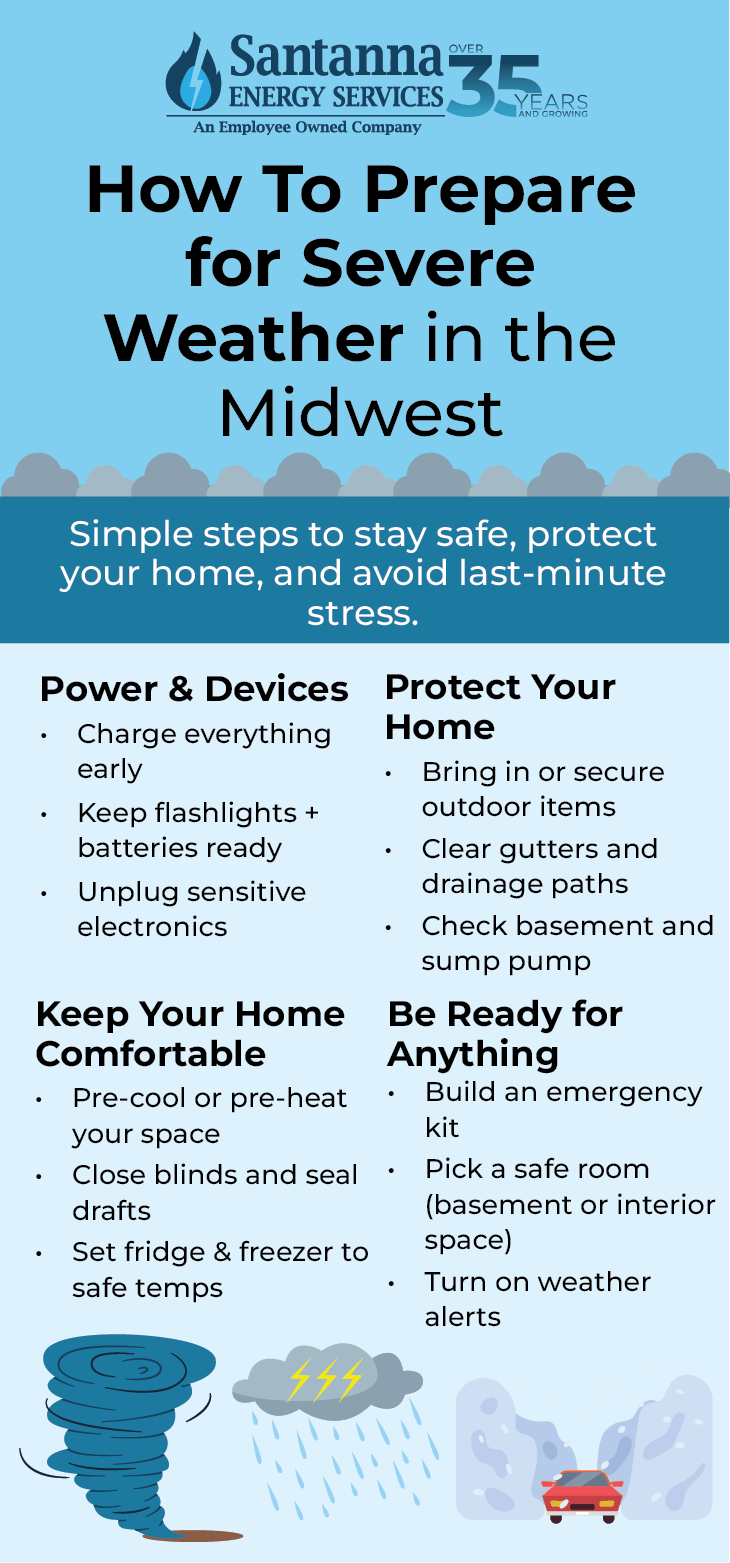
Preparing for severe weather in the Midwest means taking a few simple, specific steps ahead of time so you are not scrambling when a storm is already happening. Because conditions can change quickly, having a clear plan helps you stay safer and more in control.
Let’s walk through the simple steps you can take to prepare your home for severe weather in the Midwest:
1. Build a Grab-and-Go Emergency Kit
Put all essential items in one container so you can access them quickly during an outage.
Here’s what to include in your grab-and-go emergency kit:
- Flashlights (not just your phone)
- Extra batteries
- Portable phone charger or power bank
- Bottled water (at least 1 gallon per person per day)
- Ready-to-eat food (no cooking required)
- First aid kit and medications
- Weather radio (battery-powered or hand-crank)
- Cash in small bills
Keep this kit in one place, not scattered around the house.
2. Charge Devices and Backup Power Early
Before a storm arrives, take time to fully charge the devices you rely on every day.
This includes your phone, power banks, laptops, and any essential equipment. Power outages can happen suddenly, so doing this early ensures you have a way to communicate, check updates, and use basic devices if electricity is interrupted.
3. Protect Your Appliances and Electronics Before a Storm
Before severe weather arrives, unplug important devices like TVs, computers, and small appliances, or use surge protectors if unplugging is not practical.
This action can help prevent costly damage if a power surge were to occur and can keep your home running smoothly when power is disrupted.
4. Secure Outdoor Items Around Your Home
Walk around your property and bring in or secure anything that could be moved by strong winds.
Patio furniture, trash bins, tools, and decorations can quickly become hazards during storms. Taking a few minutes to secure these items helps prevent damage to your home and reduces the risk of debris during high winds.
5. Clear Gutters and Drainage Paths
Make sure water has a clear path to flow away from your home.
Check that gutters and downspouts are not blocked and remove any debris around drainage areas. This is especially important before heavy rain or melting snow, as poor drainage can cause water to build up around your foundation or basement, leading to flooding.
6. Check Your Basement or Lowest Level
In many Midwest homes, basements are one of the first places affected during storms.
Take time to check for signs of moisture, test your sump pump, and move important items off the floor. Even a quick inspection can help reduce the risk of water damage and protect areas that are more vulnerable during heavy rain or flooding.
7. Trim Trees and Watch for Nearby Risks
Look for tree branches that hang over your roof, driveway, or near power lines.
Weak or damaged branches are more likely to fall during storms, especially with strong winds or ice buildup. Trimming these ahead of time helps reduce the chance of property damage or power interruptions.
8. Set Your Home up To Hold Temperature
Before the storm begins, adjust your thermostat so your home can stay comfortable longer if power is lost.
In warmer months, cool your home ahead of time. In colder months, warm it up before the storm arrives. Closing blinds or curtains and sealing obvious drafts can also help your home hold temperature more effectively during an outage.
9. Prepare Your Refrigerator and Freezer
Take a moment to prepare your refrigerator and freezer before the storm.
Set your refrigerator to 40°F or below and your freezer to 0°F to help food stay safe longer if the power goes out. During an outage, keep doors closed as much as possible to maintain cold air inside. This small step can help reduce food loss.
10. Choose a Safe Place Inside Your Home
Decide ahead of time where you will go if severe weather hits.
The safest option is usually a basement or a low-level interior room without windows. Knowing this in advance helps you act quickly and avoid confusion when conditions change suddenly.
11. Setup Reliable Ways To Get Weather Updates
Make sure you have more than one way to stay informed.
Turn on emergency alerts on your phone, use a weather app to track storms, and follow local news updates. Having a battery-powered weather radio is also helpful if power or internet service goes out. Staying informed helps you respond at the right time.
12. Prepare for Longer Winter Outages
During winter storms, outages can last longer due to ice, snow, and road conditions.
Plan ahead for how you will stay warm if your heating system is not running. Keep blankets, extra clothing, and essential items ready, and plan to stay in one main area of your home to help retain heat.
13. Do a Final Walkthrough Before the Storm
Before the storm begins, take a few minutes to walk through your home and make sure everything is ready.
Confirm that windows and doors are closed, outdoor items are secured, devices are charged, and your emergency kit is within reach. This final check helps you catch anything you may have missed and gives you peace of mind.
Preparing ahead of time is about making things easier when the unexpected happens. A few simple steps can help you protect your home, stay safer, and feel more in control when severe weather moves through the Midwest.
How Can You Stay Safe During Severe Weather at Home?
Staying safe during severe weather at home means preparing ahead of time and knowing what to do when conditions change.
Knowing what to expect helps you respond faster and avoid last-minute decisions. Because no two storms are the same, it helps to think through your next steps before anything happens.
Let’s walk through how to stay safe based on the most common severe weather conditions:
Tornadoes: Prepare a Safe Room and Act Fast
Tornadoes can form quickly and leave little time to react, which is why having a plan ahead of time matters. Choose a safe space like a basement or a small interior room on the lowest level of your home.
Keep a few essentials in that space, such as blankets, a flashlight, and your phone, so you can move there quickly. When a tornado warning is issued, go there right away, stay low, and protect your head. Avoid windows, doors, and large open rooms where debris can cause injury.
Thunderstorms: Reduce Electrical Risk and Stay Indoors
Thunderstorms are common and can bring strong winds, lightning, and brief power outages. Before storms arrive, unplug sensitive electronics or use surge protectors to help reduce the risk of damage.
During the storm, stay indoors and away from windows, as wind and debris can break glass. Avoid using electrical appliances or plumbing during lightning, since electricity can travel through wiring and pipes. Staying in a central part of your home can help reduce exposure to outside conditions.
Floods: Prepare To Move Up and Keep Valuables Safe
Flooding can happen quickly, especially after heavy rain or during snowmelt. If your home has a basement or low-lying areas, move important items off the floor ahead of time and make sure water can drain away from your home.
If water begins to rise, move to higher levels immediately and avoid lower areas where water can enter first. Even shallow water can be dangerous, so avoid walking through it and be ready to move to a safer location if conditions worsen.
Blizzards: Prepare To Stay Inside for Longer Periods
Blizzards can bring heavy snow, strong winds, and very low temperatures, often making travel unsafe. Before the storm, make sure you have enough essentials to stay indoors comfortably for a longer period.
During the storm, stay inside and limit movement around the house. Keeping to one main area can help conserve heat if power is affected. Wearing layers and using blankets can help you stay warm until conditions improve.
Ice Storms: Prepare for Slippery Conditions and Power Loss
Ice storms can coat surfaces with freezing rain, making roads, walkways, and even trees dangerous. They are also one of the most common causes of power outages in the Midwest due to ice buildup on power lines.
What Should You Do After a Severe Storm Passes?
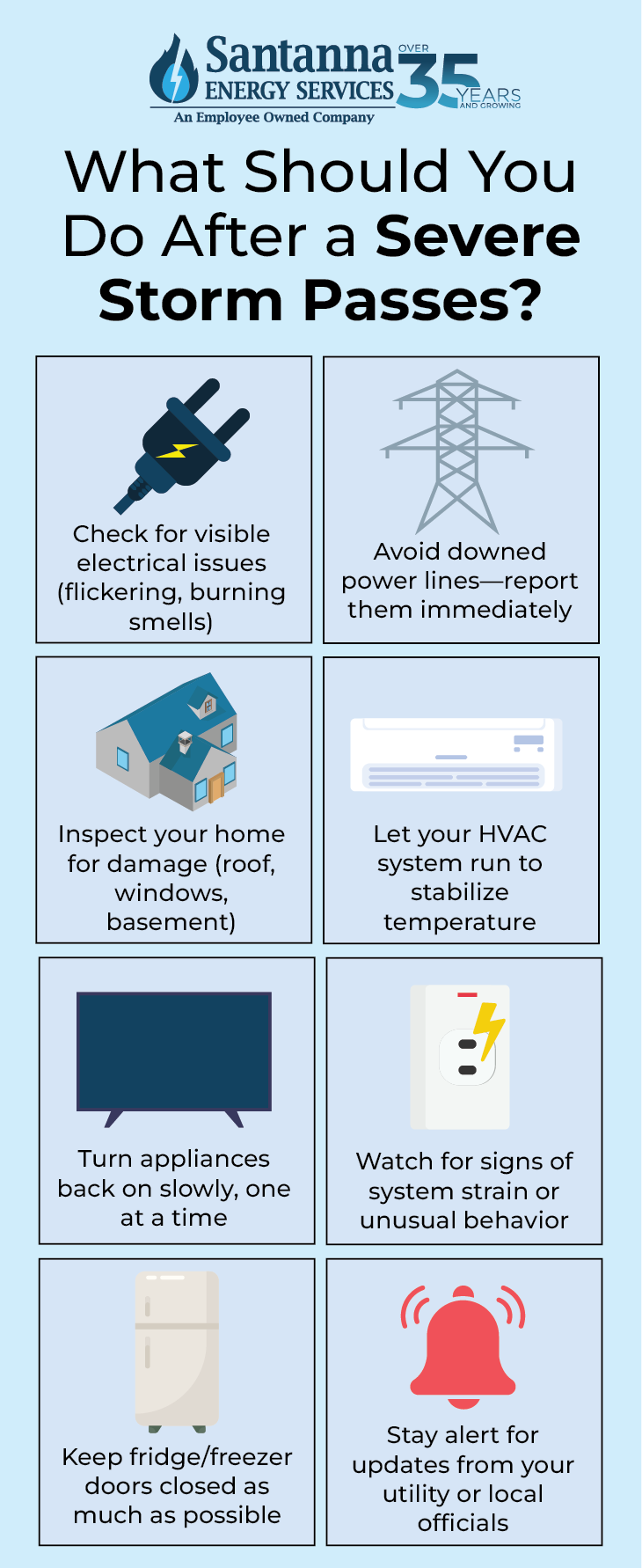
After a severe storm passes, you should check your home carefully, stay alert for safety risks, and allow your systems to return to normal gradually.
It can feel like the hardest part is over, but this is when hidden issues like damage, power problems, or safety risks can start to show up. Moving carefully and knowing what to look for can help you avoid further problems and protect your home.
Let’s walk through the key steps you should take after a severe storm passes:
Check for Electrical Issues Safely
Start by looking for any visible electrical concerns without touching anything that seems unsafe. Watch for signs like flickering lights, a burning smell, or damaged outlets. If something does not look right, avoid using that area and have it checked before turning anything back on.
Look for Signs of System Strain
Storms and power interruptions can affect how your home systems operate. Take a moment to check your HVAC system, breakers, and outlets. If something seems off or is not working as expected, give it time before making adjustments.
Avoid Downed Power Lines
If you see downed power lines near your home, stay far away and report them to your local utility. These lines can still carry electricity and are dangerous even if they appear inactive.
Expect Your HVAC System to Run Longer
After power returns, your heating or cooling system may run longer than usual. This is normal, as your home works to return to your set temperature. Let the system run without interruption so it can stabilize.
Reset Systems Gradually
If you need to turn appliances or systems back on, do it slowly and one at a time. This helps reduce sudden strain on your electrical system and allows everything to come back online more smoothly.
The time after a storm is about checking your home calmly, staying aware of potential risks, and letting your systems recover safely so everything returns to normal.
What Is a Marginal Risk of Severe Weather?
A marginal risk of severe weather means there is a small chance that a few storms could become strong or dangerous.
It is the lowest level on the severe weather scale, but it does not mean nothing will happen. Storms are usually more scattered and less intense than on higher-risk days, but even one storm can still cause problems for your home.
Think of a marginal risk as a “stay aware” kind of day. You may not need to take major action, but it is still a good idea to keep alerts on, check the forecast, and be ready in case conditions change.
How Does Severe Weather Affect Power to Your Home in the Midwest?
Severe weather affects power to your home by disrupting how electricity is delivered through the system that connects power lines to your neighborhood.
When strong storms move through, they can damage power lines, poles, and equipment that carry electricity to homes. Wind can knock branches into lines, lightning can damage equipment, and ice can weigh down wires until they break. When this happens, electricity cannot safely reach your home.
Extreme heat and cold can also add stress to the power grid because more homes are using heating or cooling at the same time.
For homeowners, this usually shows up as flickering lights, short interruptions, or full power outages. It can interrupt the flow of power to your home, which affects everything from lighting to heating and cooling.
How Does Severe Weather Change Your Energy Use at Home?
When weather conditions shift quickly, your home can gain or lose heat faster than usual. During hot and humid storms, your air conditioner may run longer to cool the air and remove moisture. During cold weather, strong winds and low temperatures can make your home lose heat more quickly, causing your heating system to run more often.
Power outages also affect energy use. When power comes back on, your home is essentially starting from scratch. Your HVAC system has to catch up, which can quietly drive up your usage in just a few hours.
For example, a homeowner might normally use around 900 kWh of electricity in a mild month. If that same month includes several severe weather days or a short outage, usage could rise to about 1,050-1,100 kWh. That is an increase of roughly 150-200 kWh, simply because the system had to run longer and recover after the storm.
At an average rate of about 16.36 cents per kWh (as of January 2026 in Illinois), that could mean an additional $25 to $33 on your monthly bill.
Severe weather can also affect natural gas use, especially during cold months. For example, a homeowner might normally use around 6-12 thousand cubic feet (Mcf) of natural gas in a typical winter month. During a colder or storm-heavy period, usage could increase by 1-3 Mcf as the heating system runs longer.
At an average rate of about $13.91 per thousand cubic feet (as of December 2025 in Pennsylvania, according to the EIA), that increase could add roughly $14 to $42 more to your monthly gas bill.
Even if your routine doesn’t change, your energy use can still increase because your home has to work harder to stay comfortable. Other systems like sump pumps, dehumidifiers, or refrigerators may also run more during and after storms, adding to your total usage.
How Can You Keep Your Energy Costs More Predictable During Severe Weather?
In the Midwest, severe weather often leads to higher energy use. Your air conditioner may run longer during hot, humid storms, and your heating system may work harder during cold snaps or winter storms. After a power outage, your system may use more energy to restore your home to a comfortable temperature.
These changes can make your monthly bill less predictable.
One way homeowners manage this is by choosing a plan with a predictable supply charge. Instead of your supply costs changing based on how much energy you use during extreme weather, Santanna’s Unlimited Energy plan keep your supply portion predictable during the term.
This means that even if your usage increases during a storm-heavy month, your supply charge stays consistent*, helping reduce unexpected spikes. For many homeowners, this can make it easier to plan and budget, especially during seasons when energy use is harder to control.
Severe weather can increase how much energy your home uses, but having a predictable supply charge can help you avoid surprises and feel more in control of your monthly energy costs.
FAQs
Why do power outages happen during storms?
Power outages during storms usually happen when strong winds, lightning, ice, or falling trees damage power lines and electrical equipment.
Why does my HVAC system run more after a storm?
Your HVAC system runs more after a storm because it has to work harder to bring your home back to the set temperature after power loss or temperature changes.
Should you unplug appliances before a storm?
Yes, unplugging appliances before a storm can help protect them from damage caused by power surges when electricity is restored.
Is it safe to use a generator during severe weather?
Generators are safe only when used outdoors and far from windows or doors to prevent carbon monoxide poisoning.
How long should you prepare for being without power?
You should be prepared to be without power for at least 72 hours, as recommended by emergency preparedness guidelines.
Severe weather in the Midwest is part of everyday life, but being prepared helps you stay safer, protect your home, and handle sudden changes with more confidence.
The key takeaway is simple: storms do not just affect the weather outside; they affect your comfort and how much energy your home uses, often leading to higher and less predictable bills.
While you cannot control the weather, you can make your energy supply costs more predictable. Unlimited Energy keeps your supply charge the same even when usage goes up*, so you are not left guessing after every storm. If fewer surprises on your bill during stormy months matter to you, the Unlimited Energy plan is worth exploring.
* Restrictions apply. Enrollment based upon program eligibility. Customers using more than 125% of normal monthly usage as determined by Santanna may be required to switch plans.
Jenna Mendez is a Midwest native with lifelong roots in Illinois and time spent in Ohio during college, giving her a deep understanding of the Midwest region’s people, climate, and energy needs. She brings firsthand experience and local insight to topics that matter to Midwest homeowners, especially energy efficiency, sustainability, and home living. Jenna specializes in writing about eco-friendly living, all things Midwest, renewable energy, and practical ways to reduce energy costs. Jenna brings a trusted, and local hometown voice to every article she writes, helping readers live well, and sustainably, right where they are.